
Democrats’ not-so-secret plan to fight midterm malaise
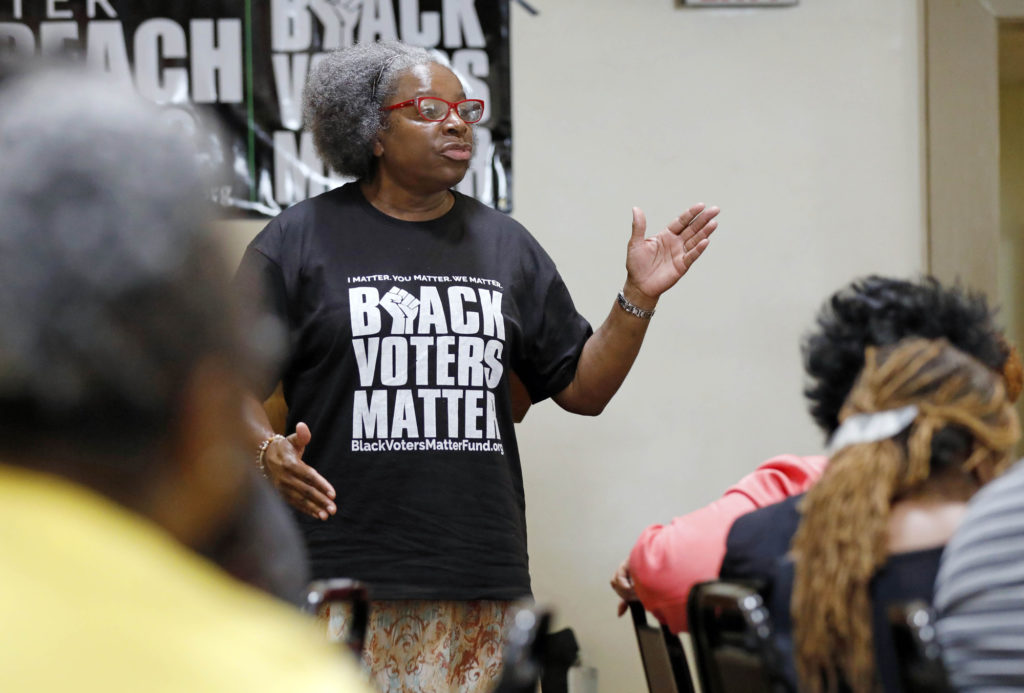
They’re asking pastors to text their congregants about the importance of voting. They’re connecting with thousands of Puerto Ricans displaced by Hurricane Maria. And they’re relying on groups like the NAACP, which has tripled its spending from 2016 to energize black voters. Less than three weeks before Election Day, Democrats are sparing nothing to make sure their voters head to the polls. It’s all part of an effort to avoid the disappointment of previous elections when low turnout dashed high expectations. “2016 was a low point for a lot of us,” said Jamal Watkins, vice president of engagement at the NAACP. “People have awakened and said, ‘Wait a minute, we can’t lose, and we can’t lose like this.’ Folks are fired up to reinvest in turnout.” Younger voters and voters of color tend to stay home in non-presidential elections, making the midterm electorate older, whiter and more Republican-tilting. But that could change this year, Democrats and outside groups say, if unprecedented efforts to reach so-called infrequent voters galvanize people who previously sat on the sidelines. Democrats have reason for optimism: The party saw strong turnout in nearly a dozen federal special elections ahead of the midterms, with Democratic candidates consistently outperforming Republicans. But the organizing flurry comes amid concerns over ballot access and election security, which have become a flashpoint in the high-profile gubernatorial race in Georgia. There is also mounting anxiety about whether efforts to mobilize Latino voters will translate into votes, particularly in several key races in heavily Latino districts. The party is spending big to ward against such threats. The Democratic Congressional Campaign Committee, the party’s arm focused on House races, is spending more than $25 million in 45 battleground districts to mobilize female voters, millennials, African-Americans and Hispanics, officials said. That’s a far more significant investment than past cycles. The committee is putting an emphasis on turning out African-American women, including running advertising focused on black women ages 18-39 in more than 40 districts. The DCCC has also run Spanish-language TV and radio ads across the country. Between field efforts and paid media, voters of color in targeted swing districts will have heard from the DCCC more than 100 times in the closing 60 days of the election. And in a twist, some of the outreach this year will be facilitated by local community leaders instead of anonymous politicos. “As an example of the local voter contact and text messaging program that we are doing, we are partnering with a series of pastors and local validators across the country,” said DCCC Executive Director Dan Sena. “When you’re getting a text message saying ‘hey – early vote’s starting,’ you’re not getting it from someone in Washington D.C. You’re actually getting it from somebody in Georgia that has a big delegation, or you’re getting it from someone on campus that you know.” The Democratic National Committee also beefed up its voter database, purchasing 94 million cellphone numbers, according to a DNC official who spoke on the condition of anonymity to discuss internal strategy. The official said the additional cell phone numbers have helped with voter contact in key races across the country, including encouraging sporadic voters to participate. Republicans say they have their own well-organized, well-funded turnout machine that dwarfs Democrats’ efforts. A Republican National Committee aide said the organization has raised more than $250 million this cycle, invested in 28 states, more than 540 paid staffers and thousands of volunteers who are focused on turning out Republicans who don’t vote often and swing voters who participate more frequently. The committee raised more than $150 million during roughly the same period ahead of the 2014 midterms. The aide said the RNC has made more than 50 million voter contacts, either over the phone or by going door-to-door The Democratic organization effort goes beyond the traditional party structure. NextGen America, the advocacy group backed by billionaire environmentalist and donor Tom Steyer, is injecting more money into a closing push to rally young voters. The group will spend more than $4 million on digital ads across 11 states, targeting more than 4.3 million young voters. NextGen is also running the first political ads on Twitch, a popular video streaming service, as well as places like Reddit, Spotify and Pandora. “Young people in general feel like they’ve really been shut out of the system,” said Aleigha Cavalier, a spokeswoman for NextGen America. “Our goal with digital is to find a message that works for them and actually put it where their eyeballs will see it.” The Human Rights Campaign’s Equality Votes PAC launched a more than $2 million campaign across eight key races spanning digital, direct mail, text and phone voter contact. The NAACP’s campaign is targeting more than 5 million “infrequent” black voters, including in the key states of Florida, Georgia and North Carolina, in a $6 million voter mobilization push, up from $2 million spent on mobilization in 2016. The push includes upward of 20 staffers focused on mobilizing black voters, the majority of those, according to Watkins, working in key states with thousands of on-the-ground volunteers. In Georgia, the organization is targeting more than 700,000 “infrequent” voters. In Florida, the number swells to more than 900,000. The NAACP is not the only group that’s boosting its turnout effort. The AFL-CIO, the nation’s largest labor federation, also shifted its strategy. Julie Greene, who is leading the union’s mobilization efforts, said that in 2014 and 2016, the union experimented with an independent expenditure program that had more of a focus on the general public, rather than the union’s member-to-member program. The union found that its members had not turned out in support of labor-endorsed candidates at the same levels as in the past. The union now hopes to increase turnout among its members by 5 percent, up from 57 percent in 2014. But it is also investing significantly in mobilizing Hispanic and African-American voters. Last week, the union announced plans to air ads on African-American and Spanish-language radio in
National Dems again target Martha Roby’s voting record, this time on the budget
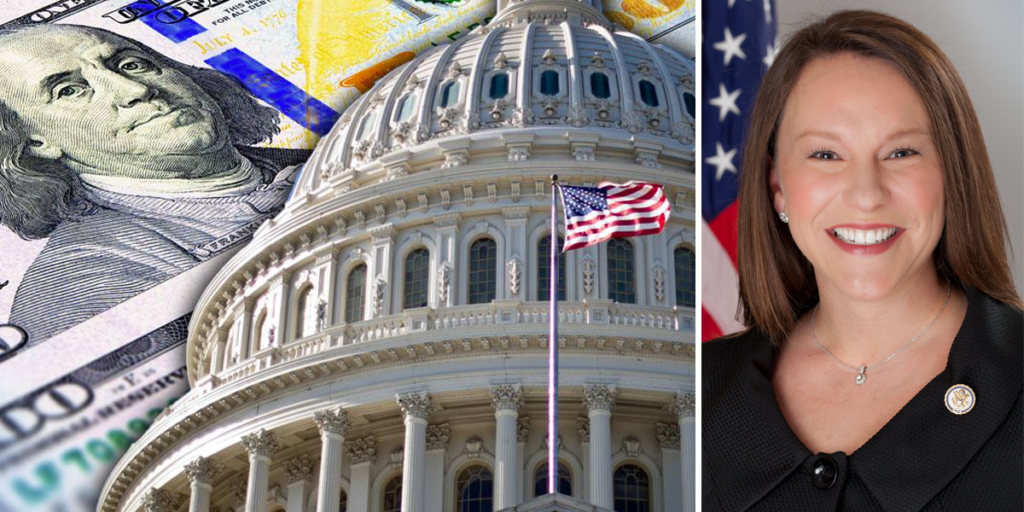
The Democratic Congressional Campaign Committee (DCCC), the official campaign arm of the Democrats in the House, has once again set their sights on Alabama 2nd District U.S. Rep. Martha Roby. Earlier this year, the DCCC named Roby as their sole target in the Yellowhammer State in their efforts to flip the House. On Tuesday, the group honed in on her support of President Donald Trump’s budget. “Despite President Trump’s repeated promises to not cut Medicare or Medicaid, Rep. Martha Roby voted to pass a budget that would do just that, all to finance massive tax cuts for millionaires, billionaires, and big corporations,” the DCCC wrote in a press release. The DCCC is referring to a Thursday House vote, in which the budget passed along party lines, 219-206 vote. The budget resolution for 2018 sets up a process for shielding the GOP tax bill from a filibuster in the Senate. Additionally it: balances the budget in 10 years; endeavors to strengthen America’s military by funding it at levels above the president’s budget and with increased resources for training, equipment and compensation; calls for a vote on a Balanced Budget Amendment this year; and achieves $7 trillion in deficit reduction over ten years through a combination of $6.5 trillion in savings coupled with economic growth. But according to the DCCC those changes come at a price, claiming the budget would cut Medicare by nearly $500 billion and slash Medicaid by $1 trillion. “Voters will not forget that Rep. Martha Roby just voted to cut taxes for millionaires and billionaires, and paid for it by slashing Medicare and Medicaid,” said DCCC spokesman Jacob Peters. “…they’ll be holding Roby accountable at the ballot box next November.” But a spokesperson for Roby says its no surprise the Dems are attacking Roby’s efforts to balance the budget and fund the military. “It is no surprise that Democrats oppose efforts to balance our budget, properly fund our military, and reduce our deficit,” said Emily Taylor, Martha Roby’s spokesperson. “All of these are priorities for Rep. Roby and our unified Republican government, and she will continue to fight for conservative principles like these on behalf of the people she represents.”
National Democrats continue to target Martha Roby’s seat in 2018
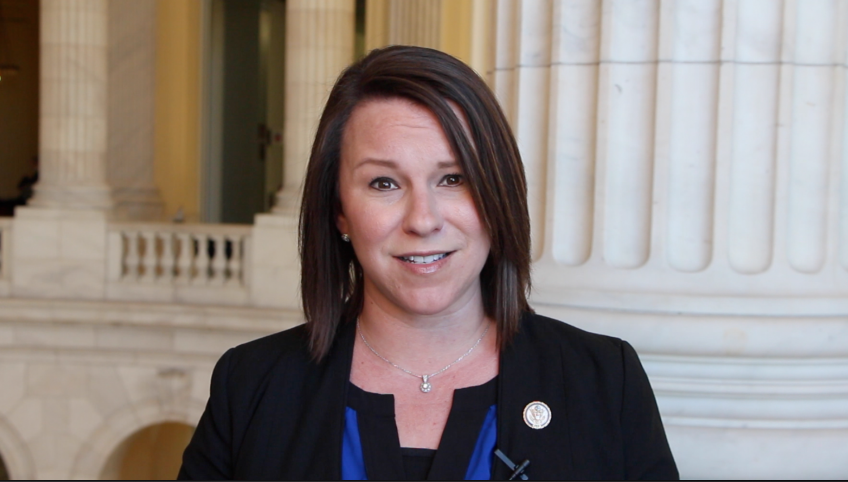
Despite a major loss in the recent Georgia special election national Democrats are still actively working to find a path to flip the U.S. House in 2018. Earlier this year, the Democratic Congressional Campaign Committee (DCCC) identified Alabama 2nd District U.S. Rep. Martha Roby as their sole target in the Yellowhammer State in their efforts to flip the House. Now, six months later — with the next general election being over a year and a half away — the DCCC is continuing to attack her every move, in hopes of capitalizing on any perceived vulnerabilities. When Senate Republicans unveiled their version of an Obamacare repeal bill last week, they saw it was the perfect opportunity to make another statement against Roby. Despite coming from the upper chamber, the DCCC is claiming the bill is only moving forward because “Rep. Martha Roby and House Republicans voted for a bill that would take health care away from millions.” “If Martha Roby thought the Senate would make this health care bill less painful for Alabama families, she was wrong. The Senate didn’t save Martha Roby,” said DCCC spokesperson Cole Leiter in his second statement made against Roby in past five days. “This horrific Repeal and Ripoff bill would not be headed to a vote in the Senate now if Roby had not voted for a bill that rips insurance from 23 million Americans, raises premiums, slaps an age tax on Americans over 50, and destroys protections for people with preexisting conditions. Martha Roby already made her bed and now she has to lie in it.” Despite the left’s attacks, Roby’s not shying away from her support to repeal and replace Obamacare, which has consistently pointed out is hurting her constituents. In fact, she visited the Oval Office last month and pledged her support to President Donald Trump to help build support for repeal and replace in the House. “Washington Democrats should have learned from recent elections that preserving Obamacare isn’t a winning message in Alabama. Our state has suffered average premium increases of more than 200 percent under this law – the highest in the country. Rep. Roby is working with the Trump Administration and her colleagues to repeal this deeply flawed law and replace it with a health care system that lowers costs, increases access, and isn’t run by the government,” said Emily Taylor, Rep. Roby’s spokeswoman. Roby won her fourth term to Congress in November when she defeated Democrat Nathan Mathis 49-41 percent. Her victory was by smaller-than-expected margins following backlash for speaking out against now-President Trump. Roby had been among the first Republican Members of Congress to stand her ground and say she would not vote for Trump following the release of the “Access Hollywood” videotape where he was recorded making crude comments about women. While Roby may have disagreed with the way Trump talked about women, she has since said she has “consistently supported President Trump’s policy initiatives and has said time and again that she wants our president to be successful.”
Angry Dems turn against leaders after House election losses
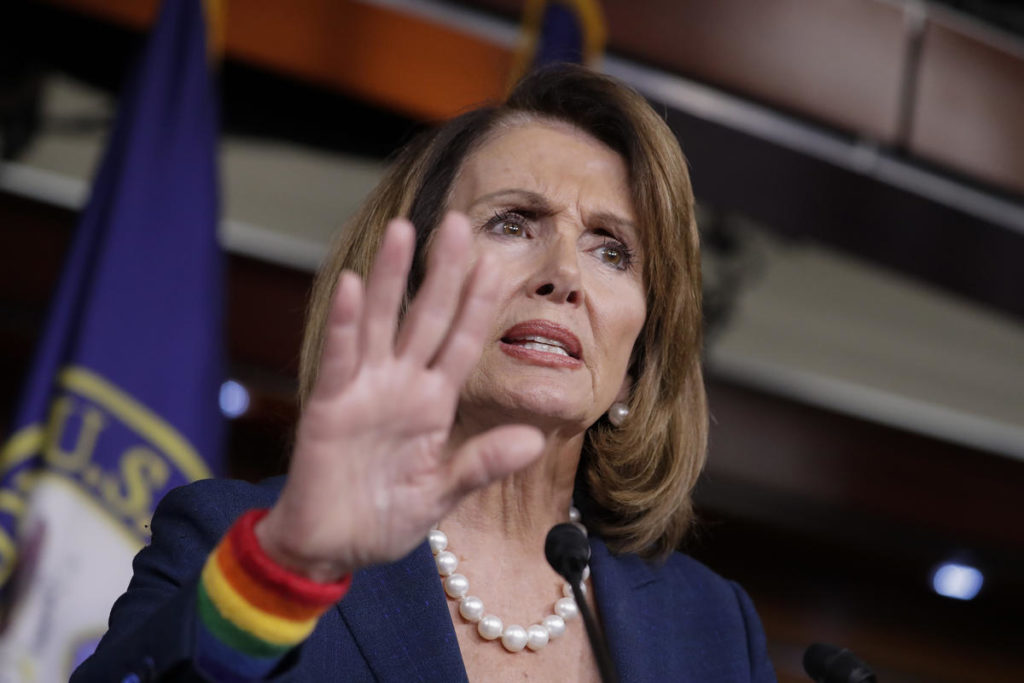
Democratic Party divisions were on glaring display Wednesday as a special election loss in a wildly expensive Georgia House race left bitter lawmakers turning their anger on their own leaders. “We as Democrats have to come to terms with the fact that we lost again,” said Rep. Seth Moulton, D-Mass. “Personally I think it’s time for a new generation of leadership in the party.” The loss in Georgia followed similar disappointments in special House elections in Kansas and Montana, as well as in South Carolina Tuesday night. The Carolina outcome was closer than in Georgia but drew little national attention. In the well-to-do Atlanta suburbs, House Minority Leader Nancy Pelosi of California was the focus of torrents of negative advertising in a House race that cost more than $50 million, the most expensive in history. Republican Karen Handel beat Democrat Jon Ossoff by about 5 percentage points. Although the race was widely viewed as a referendum on President Donald Trump, he was rarely discussed by either candidate, and House Democrats were rattled that the attack ads casting the 77-year-old Pelosi as a San Francisco liberal proved so potent. Some expressed fears about the same tactic being used elsewhere as they aim to take back control of the House in next year’s midterms. Democrats need to pick up 24 House seats to retake the majority. “It makes it a heck of a lot harder,” said Rep. Tim Ryan, D-Ohio, who unsuccessfully challenged Pelosi in a leadership election last fall. “One of the disappointing things from the last couple days is that that approach has a little bit of punch to it, it still moves voters.” Trump’s election as president had papered over the intraparty disputes and generational divides among House Democrats, as lawmakers joined in opposing the White House and trying to channel the energy of their party’s liberal base. But now, after a string of disappointments, those divisions have re-emerged, though Pelosi appears unlikely to face an immediate challenge. Lawmakers are also bemoaning a weak Democratic bench of candidates nationally, and demanding a better strategy for success and a new and stronger economic message that differentiates them more clearly from the Republicans. “If we think we’re going to win these elections because President Trump’s at 35 percent, I think in districts like mine and certainly Georgia and South Carolina, it takes more than that,” said Rep. Tim Walz of Minnesota. “And I’m not sure that that’s there yet. I certainly don’t feel it.” “We need to be focused on next November, and what happens with the reality of health care and trade, tax policies and the impact on working men and women,” said Rep. Debbie Dingell of Michigan. She said she has told Democrats to stop focusing on Russia’s meddling in the 2016 election. Put on defense, House Democratic leaders from Pelosi on down tried to spin the outcome in Georgia as positive, arguing that coming in a close second in the solidly Republican district augured well for their chances of taking back the House next year. “Unfortunately a loss for us, but not good news for them,” Pelosi told the rank-and-file in a closed door meeting Wednesday morning, according to Democrats present. “We gave them a run for their money.” Rep. Ben Ray Lujan of New Mexico, who chairs the Democratic Congressional Campaign Committee that invested millions in the race, argued in a memo to lawmakers, “Despite the loss, we have a lot to be proud of” and “we have a unique opportunity to flip control of the House of Representatives in 2018.” And Rep. Steny Hoyer of Maryland, the No. 2 House Democrat, remarked that “we had no business winning those districts” because of their GOP allegiance. Democratic leaders said there are at least 70 other districts that will be easier terrain for them than the one in Georgia after post-census gerrymandering in GOP-led states created so many heavily Republican districts. In a letter to Democrats late Wednesday, Pelosi insisted majority control of the House is up for grabs. “The president’s numbers are in the thirties and our base is energized,” she wrote. “We must now put forth our message.” Many rank-and-file Democrats were not having it. “We put a lot of resources, a lot of fight, and close is only good in horseshoes,” said Rep. Bill Pascrell, D-N.J. “A loss is a loss is a loss and there’s no excuses.” But prescriptions for how the Democrats should move forward varied. Some on the left argued for a sharper progressive message and more pointed attacks on Republicans and Trump, while Democrats from Midwestern and working-class districts emphasized the importance of an economic message that could appeal to working class voters who were drawn to Trump. One thing most everyone could agree on: Coming in second doesn’t cut it now and wouldn’t be an outcome to celebrate next November. Said Rep. Ed Perlmutter of Colorado: “Closing the gap is great, but it’s not good enough, and we have to do better.” Republished with permission of The Associated Press.
