
University of Alabama team wins $1 million grant to develop tool to combat opioid epidemic
![[Photo Credit: canva.com]](https://altoday.com/wp-content/uploads/2018/10/Canva-Cure-Drug-Cold-Dose-The-Disease-Pharmacy-1024x683.jpg)
Across the country, opioid abuse has reached epidemic levels, severely affecting communities and straining public safety resources. The Institute of Business Analytics, or IBA, a research unit at the University of Alabama’s Culverhouse College of Business, has received an approximate $1 million grant from the Office of Justice Programs at the Justice Department to develop a data-driven tool to help officials better understand the scope of the opioid epidemic in Alabama and how to intelligently allocate resources. The University of Alabama team, which consists of principal investigators Drs. Matthew Hudnall, Jason Parton and Dwight Lewis, will develop the Unified Nexus for Leveraging Opioid Crime Knowledge, or UNLOCK, system that pulls in data from multiple sources and analyzes it using high-powered computing techniques to create reports that will assist field officers, law enforcement administrators, prosecutors, community affiliates, public health providers and researchers in their work combating the abuse of opioids in Alabama. “Critical data about the opioid epidemic comes from a multitude of sources including public health entities, law enforcement and municipalities,” said Hudnall, associate director of the IBA. “UNLOCK brings those data together to create intelligent, actionable recommendations that end users can deploy in their work fighting opioid abuse.” The data that UNLOCK will use includes summarized toxicology information, evidence test results, coroner death report information and other geo-referenced data. This award was made as the result of a highly competitive grant solicitation issued by Office of Justice Programs in the spring titled “Comprehensive Opioid Abuse Site-based Program” that resulted in 46 awards nationwide. “Many of us are very aware of the ways that the opioid crisis has negatively impacted communities and families across the state,” said Parton, director of IBA. “My team and I are excited about the promise of UNLOCK as a tool to counter the crisis.” This story originally appeared on the University of Alabama’s website. Republished with permission from the Alabama NewsCenter.
New $6M water research grant could protect lives, property of Alabamians
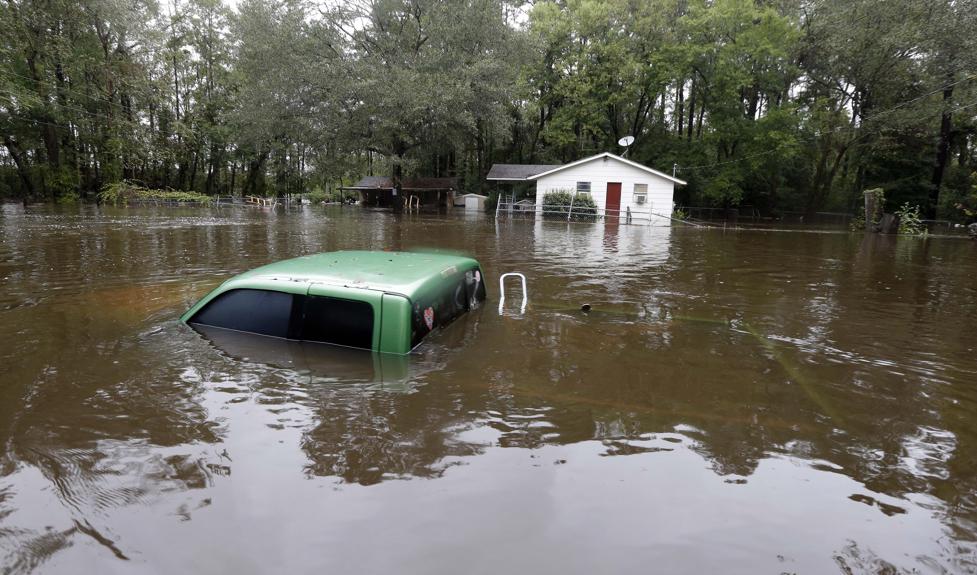
Alabamians lives and property may soon be better protected thanks to a new federal grant to help improve the nation’s water prediction capabilities and forecasts. Alabama U.S. Senator Richard Shelby on Tuesday announced that the National Oceanic and Atmospheric Administration (NOAA) has granted $6 million for water prediction research efforts at the University of Alabama (UA) in partnership with the University Corporation for Atmospheric Research (UCAR). “This is excellent news for the University of Alabama, our state, and the nation,” said Shelby. “The research made possible by this $6 million grant will drive scientific advances to help improve the nation’s water prediction capabilities and forecasts. I am proud to have helped secure this funding that will better protect the lives and property of all Americans.” This funding will support the efforts of UA, UCAR, and NOAA researchers to develop 21st century radar technologies aimed at improving measurements of snow and soil moisture. These improved observations will have the opportunity to advance the predictive and prognostic ability of future versions of the National Water Model, the nation’s first-ever continental-scale hydrologic prediction system operated at the National Water Center in Tuscaloosa, Ala. Scientists at the National Water Center will utilize the data produced by the radars to strengthen research and grow the nation’s water prediction capabilities. “This award further demonstrates the University’s commitment to cultivating a research culture that will have a far-reaching impact,” said Dr. Stuart Bell, University of Alabama President. “We are very pleased to see our research efforts making a significant difference for water resources and for the nation at large.” The university will receive $5 million of the funding while UCAR will receive $1 million to support administration and management of the grant.
U.S. DOT awards University of Alabama $6M infrastructure grant

The U.S. Department of Transportation (DOT) awarded the University of Alabama with $6.025 million grant for the construction of a vehicle and pedestrian overpass over the railroad crossing of Second Avenue, correcting a transportation in Tuscaloosa, Ala. From the $6,025,657 Infrastructure For Rebuilding America (INFRA) grant, $22,608,175 will assist in the overpass construction. “I am proud to announce that the University of Alabama will receive a $6 million INFRA grant for a vital transportation project in the Tuscaloosa area,” said U.S. Senator Richard Shelby. “With ongoing growth and development throughout the state, Alabama’s transportation needs are rapidly changing, and it is imperative that we find the appropriate solutions. I look forward to working closely with my Senate colleagues and this Administration as we continue to address our nation’s critical infrastructure needs.” The $6,025,657 INFRA grant will provide funding for the construction of a bridge over an existing rail line, which will decrease traffic delays and improve safety for residents in Tuscaloosa and surrounding areas. Additionally, it will provide an alternative route for approximately 80,000 vehicles per day, reducing conflicts with the train and other vehicle-pedestrian traffic for those traveling on and off campus. The INFRA grants program was established by DOT in June 2017 to advance the Administration’s principles and help rebuild our nation’s infrastructure. Additionally, INFRA aims to increase the total investment by state, local, and private partners.
Alabamians to decide the fate of four proposed constitutional amendments

Alabama voters on November 6 will decide the fate of four proposed constitutional amendments. Those amendments, all of which passed the 2018 legislative session, will appear as referendums on the general-election ballot now that Secretary of State John Merrill on Friday signed all four proposals. The amendments are: Amendment 1: Allows posting of the 10 Commandments in public buildings, including courthouses and schools. Amendment 2: Designates Alabama a “Pro-Life” state. Amendment 3: Allows changes to the University of Alabama Board of Trustees. Amendment 4: Allowed certain valencies to be filled by appointment rather than special elections. As of February 2018, there were 928 amendments to Alabama’s 1901 Constitution, making it by far the longest state constitution in the country.
UA settles lawsuit pledging resources, policy changes for sexual assault victims

The University of Alabama has reached a settlement agreement in a lawsuit filed on behalf of Megan Rondini, a former student who killed herself after reporting a sexual assault as a student. The University, along with Megan’s parents Michael and Cindy Rondini, issued a statement Tuesday announcing the settlement. Going forward, the university announced they will continue to work to eliminate sexual misconduct, and in the event it does occur, provide support to the victims and hold the perpetrators accountable. Per the settlement, in Megan Rondini’s honor, the University is undertaking the following: The University has committed $250,000 to the Tuscaloosa SAFE Center, Inc. to provide facilities and services to aid and support victims of sexual assault. Additionally, University representatives are taking a key role in supporting the Tuscaloosa SAFE Center and building strong partnerships that will ensure its success. The University currently has several programs to address issues associated with sexual misconduct. The University regularly assesses the programs and efforts in place to eliminate sexual misconduct from the campus community and to provide assistance to those who may be affected by alleged sexual misconduct. In furtherance of that, the University is committing an additional $150,000 by the end of 2019 to continue its efforts to add personnel to its team of employees dedicated to addressing issues associated with sexual misconduct. The University is continually exploring new strategies and innovative technology that will enhance reporting systems and provide important data to the University so that it can better understand campus trends related to sexual misconduct. Over the next five years, the University will contribute a total of $50,000 in a scholarship named after Megan Rondini. The scholarship will give preference to students focusing their studies at the University on biological sciences, veterinary studies, and/or STEM/MBA and a desire to promote gender equity in those fields. The University will posthumously award Megan Rondini a magna cum laude B.S. degree with an accompanying certificate from the University’s Honors College dated May 2018. The lawsuit is still pending and will proceed against T.J. Bunn and two investigators.
Personal experiences build UA students’ strong connections with Miracle Families
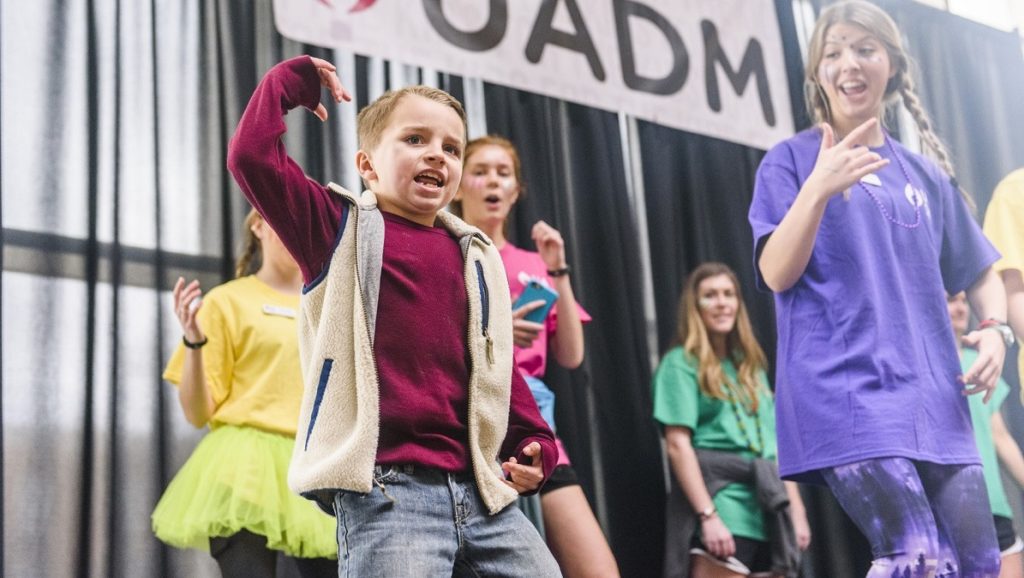
By: Bryant Welbourne | University of Alabama Jack Ebersold and his family know firsthand what it’s like to spend countless hours, days and weeks in a children’s hospital. The Downers Grove, Illinois, native was born eight weeks early and spent the first month of his life in a children’s hospital. “I owe my life to those doctors and nurses who took care of me as an infant,” said Ebersold. “I’ve always wanted to find ways to support families who are in a similar situation.” As a freshman at the UA Dance Marathon, Ebersold came across the UA Dance Marathon table at Get On Board Day. Given his personal experience and knowledge of Dance Marathon groups at other universities, he knew he wanted to get involved. Today, the senior marketing major is director of UADM and recently participated in his last Main Event, the culmination of UADM’s year. “When I arrived at UA, I wanted to dive in and get involved in the community because the community gives so much to the university,” said Ebersold. “The community culture here is special and it’s easy to relate to it, no matter where you come from.” UADM is a student-led organization that provides support to the children and families undergoing treatment at the Children’s Miracle Network Hospital at Children’s of Alabama in Birmingham. Events are held throughout the year to raise money. Over the past year, UADM raised $341,000 for the families. More than 1,000 UA students participated in the 13.1-hour-long Main Event dance marathon held at UA’s Ferguson Student Center on Feb. 17. But UADM is about more than just financial support. Aside from fundraising, each member of the UADM executive committee adopts a Miracle Family that receives emotional support and encouragement from the student and organization throughout the year. During his time as director, Ebersold has worked to increase the number of families adopted by UADM. The organization adopted 19 Miracle Families this year, which is seven more than last year’s number. “It’s important for us to support the Miracle Families during their entire journey,” said Kaitlin Burnash, UADM’s director of family relations. “We go to the kid’s appointments at the hospital and attend their birthday parties so we can celebrate all of their big moments.” Like Ebersold, Burnash has a special connection to UADM’s cause. Two of her childhood friends spent time in children’s hospitals. Those experiences pushed Burnash to not only get involved with UADM at the end of her freshman year, but also spend the last three summers working at a summer camp for children with serious and terminal illnesses. “I’ve been fortunate enough to meet hundreds of amazing families who are on the same journey as our Miracle Families,” said Burnash. “Those experiences have made me really passionate about what we can do to make a difference in their lives.” UADM holds several events for Miracle Kids throughout the year, including a trick-or-treat parade, Christmas toy drive and other fun experiences. But Burnash explains that the organization works to also be there for the families during unsettling times. “When our kids have three-month cancer scans, one of our committee members will go to the Ronald McDonald House the night before and just hang out with the families,” said Burnash. “The parents get really stressed out, but we want to provide a relaxing presence to keep the parents and child focused on something else and make it a positive experience.” The relationships built between UADM members and Miracle Families have proven to be unique, strong and mutually beneficial. Burnash is living proof of the impact these bonds can have on a student. After graduation, the senior from Walnut Creek, California, plans to apply for medical school to pursue a career as a pediatric oncologist. This story originally appeared on the University of Alabama’s website.
University of Alabama granted patent for sideline privacy tent
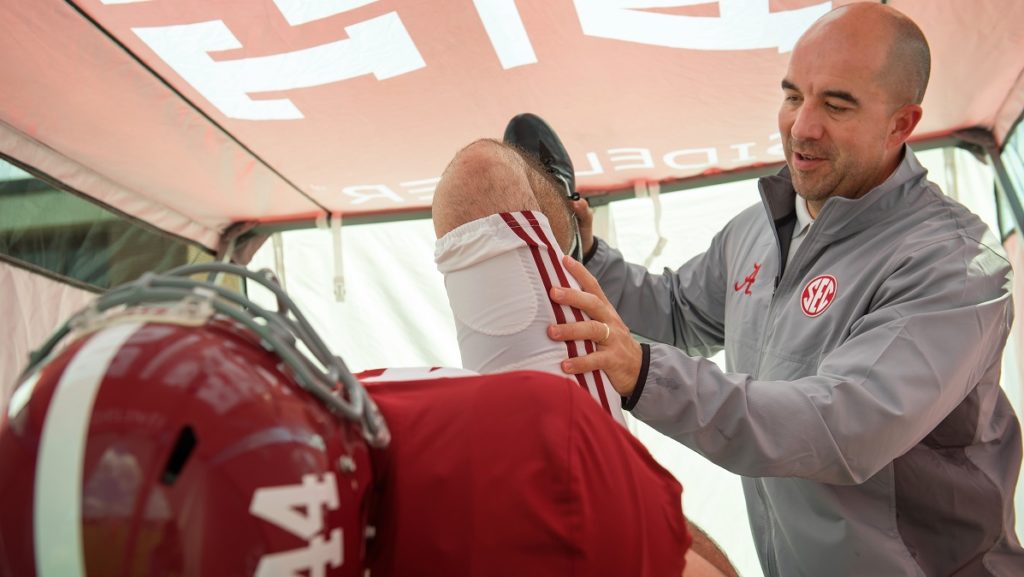
By: Adam Jones | University of Alabama The University of Alabama was recently awarded a patent for a medical privacy tent developed by engineering students and Crimson Tide Athletics, firmly protecting the tent’s unique capability to easily expand or collapse on the sideline of a football field. “The patent clearly adds another layer of protection to what we feel like is a unique idea,” said Jeff Allen, director of sports medicine at UA, who was part of the team that developed the tent. Now called the SidelinER, it can set up within seconds without blocking the view of fans watching the game. Most of the game, the tent is collapsed onto the ground, but if an injured player needs an evaluation by the medical staff, it quickly expands over the examination table. Debuting on the sidelines of Bryant-Denny Stadium in 2015, the SidelinER was used on every sideline in the NFL and by the bulk of major college football teams during the past season. “It’s taken off because physicians and athletic trainers recognize the definite need for a product like this on their sideline,” Allen said. “It’s very easy to operate and easy to use, so people see it can be beneficial.” Addressing a need In 2016, UA’s Office for Technology Transfer licensed the technology to Kinematic Sports, a company formed by Allen and two of the engineering students, Jared Cassity and Patrick Powell, who worked on the senior design project. The United States patent was granted Jan. 2, covering the collapsible and portable design. Allen, Cassity and Powell are the inventors, along with Jared Porteous and Christian Parris, the other two engineering students on the project. They all graduated in 2015. “When the technology was presented, it was clear the idea would directly address a need in the market, so we are thrilled the SidelinER is helping improve treatment of athletes,” said Dr. Rick Swatloski, director of the Office for Technology Transfer. “UA is fortunate to have incredibly innovative faculty, staff and students who generate this and many other innovative technologies.” Allen said his original intention was for the students to create a tent his staff could use for Crimson Tide football games. The finished product turned out to work so well that first season it garnered the attention of the media and the sports medicine and training community. Being on the sideline of a visible football team and flagship university helped, he said. “There’s no question the way the SidelinER has taken off would not have happened without the power of the script ‘A,’” said Allen, referencing UA’s crimson logo. “That ‘A’ is powerful. The support of this university has been incredibly beneficial.” A better exam After three seasons with the SidelinER, Allen said it has become a critical part of sideline medical care. “I can’t believe we did this without the SidelinER,” he said. “I clearly knew there would be a benefit to privacy, but I didn’t realize how much it would improve our medical exam on the sideline. The medical staff and the athlete are much calmer in a private environment, and we get a better medical exam than we used to get.” Kinematic Sports has space in The Edge, a business incubator in downtown Tuscaloosa that is a joint project between UA, the city of Tuscaloosa and the Chamber of Commerce of West Alabama. Cassity leads the company, which is becoming a job creator for the area. “The Edge has been an incredible benefit for us,” Allen said. “We’re proud to be in the city of Tuscaloosa and to be associated with the University of Alabama.” Allen hopes the SidelinER can continue its momentum in college sports as well as prep football with possible applications in emergency response and the military as future markets. This story originally appeared on the University of Alabama’s website.
UA, Naval Observatory partnership to improve precise timing education
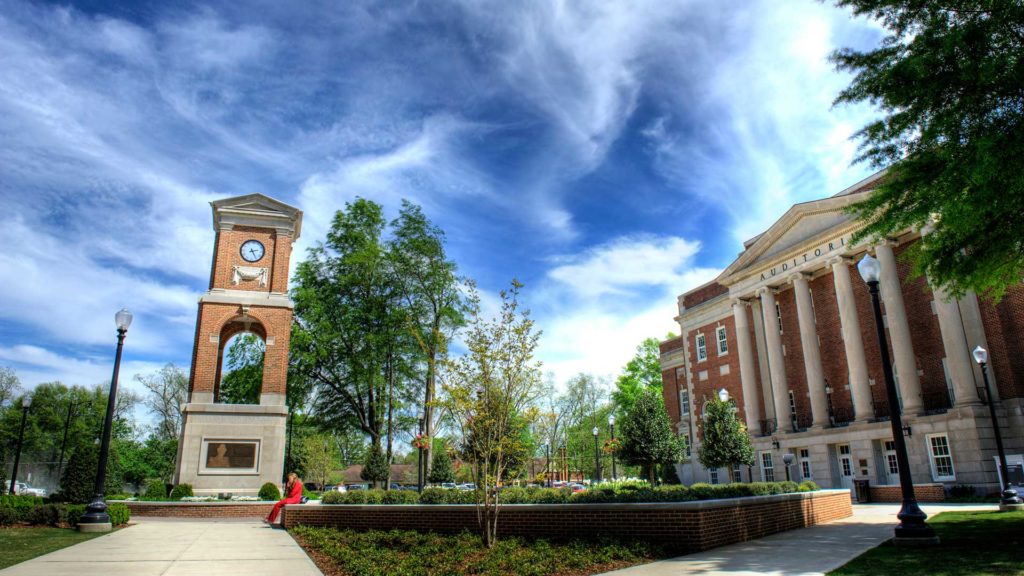
By: Stephanie Kirkland | Director of College Relations The University of Alabama has partnered with the United States Naval Observatory to train UA students in precise timing and time interval technology, which is used in highly precise atomic clocks on which the U.S. military, financial sector, GPS satellites and power grids rely. The partnership will involve an interdisciplinary program drawing on resources from the College of Arts and Sciences and the College of Engineering. It positions UA to be one of the few universities in the world training students in the field. “We’re looking forward to helping the precise-time community get qualified graduates that can make positive contributions right from the start,” said Paul Koppang, director of the USNO Clock Operations Division. “Right now, basically, people are trained on the job when they get there. Another thing this will do is also provide awareness to students that this is a possible career path for them.” Through the partnership, USNO will assist UA in developing curriculum related to precise timing; send staff to present lectures and seminars; loan or donate equipment; offer tours and demonstrations of facilities; and provide academic and career advice to students. UA will develop curriculum to begin training students for future careers in precise timing and will create teaching and research labs with the equipment provided by the USNO. Already, UA’s department of physics and astronomy has developed, and is seeking approval of, concentrations in precision timing for their masters and doctoral degrees. “What’s interesting about this technology is the public doesn’t really know that it exists,” said Dr. Andrew Lemmon, a UA assistant professor of electrical and computer engineering. “But if it stopped working—if atomic clocks that use this technology ceased to operate—everyone would very quickly know about it because things like online financial transactions, GPS and the power grid would be severely disrupted.” But not only are atomic clocks and precise-timing technology important to modern life; they are also used to provide timing for U.S. military installations worldwide. Yet over the last two decades, the number of U.S. experts in precise timing have dwindled. “Nearly all sectors of our economy rely on this silent infrastructure working perfectly in the background of our daily activities, yet the number of experts in the field supporting those activities, and our economy with it, number only a few dozen nationwide,” said Dr. Adam Hauser, a UA assistant professor in the department of physics and astronomy. One type of atomic clock used by the U.S. Department of Defense, called a hydrogen maser, uses the properties of hydrogen atoms to provide a timing reference that is approximately a billion times more stable than time provided by traditional mechanical clocks. Hydrogen masers are made in only one place in the United States, Tuscaloosa, which is how UA faculty got involved. Through a collaborative research program with Microsemi, the company that makes hydrogen masers, Lemmon was able to visit the USNO and learned about their concerns of a dwindling talent pool. Several conversations later, the partnership was born. “We are excited to offer our students the opportunity to receive training in this crucial and growing field,” Lemmon said. This story originally appeared on the University of Alabama’s website.
University of Alabama researchers seek spot-on way to weld super-strong steel
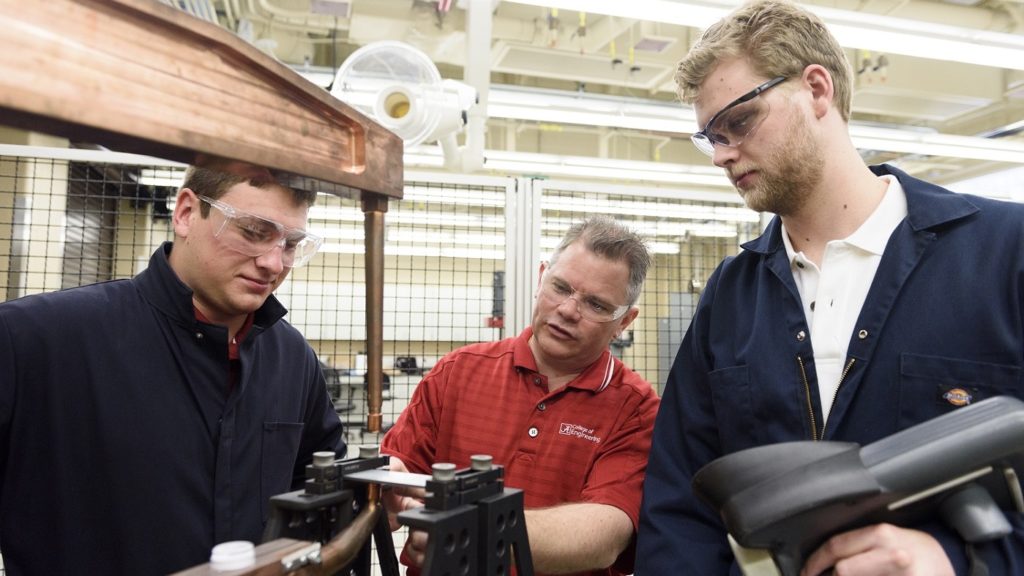
As cars have gotten sleeker and lighter over the decades, nostalgia about cars of yesteryear often romanticize their sturdiness – huge boxes of steel ready to take on any impact. It is a memory often not rooted in the reality of the safety of today’s vehicles. “People have dismissed the idea of lighter cars for decades because you feel safer in a big, heavy car, but that’s not always the case. If I can make something out of a stronger steel, I can use less steel,” said Dr. Luke Brewer, an engineering researcher at the University of Alabama. “It’s all about saving weight while maintaining crash worthiness.” Since humans began smelting iron and carbon in antiquity, steel has continuously become stronger. A new class of steel, known as advanced or ultra-high-strength steels, is emerging in auto manufacturing. Graduate student Tian Liu uses high-powered microscopes to see the structure of the steel before and after a weld. (University of Alabama) The stronger the steel, the less is needed. The less steel, the less weight. The less weight, the less the engine has to work to move the car. The less the engine works, the less fuel needed. And, voila, an improvement in fuel economy, something governments require to lessen emissions and consumers desire to cut operating costs. But transitioning to a new steel is not as simple as swapping out the metal at the factory. Ultra-high strength steels are different in their makeup from other steels, and so what works with the steel of today might not work with the steel of tomorrow. In making a car, steel needs to connect somehow through mechanical methods, such as fastening or interlocking, or through welding. A widely used joining method in modern cars is a type of welding known as resistance spot welding, but joining ultra-high-strength steels this way creates challenges. Changing welding methods at a factory would be a costly move, so the question becomes, can the steel be welded together using a carmaker’s existing technology? One of the companies working to understand and meet this challenge is Daimler, the German auto giant with a manufacturing plant a short drive away from the University of Alabama, Mercedes Benz U.S. International. Researchers in Germany and engineers in Alabama are collaborating with Brewer and others at the university to understand the welding of this new steel and whether it can be integrated into its production lines. “You’re trying to get into something that will get you higher performance, but you have to work around the welding challenges that higher-performance designs can create,” Brewer said. “Mercedes would like to do something even better, but one of the things getting in the way is the ability to weld this steel optimally.” Liquid metal Mercedes’ factory in Alabama uses robotic resistance spot welding to join the body in white, the unpainted car before adding mechanical or electrical parts. Resistance spot welding uses a directed electric current to generate heat and force that presses a metal together in – aptly – one spot, rather than using a welding torch to melt metal together along a seam. The welding process injects about 7,000 amps of currents through the steel in less than a second, leaving a circle no bigger than a dime. (University of Alabama) Spot welding is fast, powerful and clean. The robotic resistance spot welding machines used by Mercedes in Alabama inject roughly 7,000 amps of current through the steel in less than a second, leaving a circle no bigger than a dime in its wake. Each spot can hold up to 4,000 pounds, depending on use, and a vehicle has thousands of welds, as if the car was nailed together by electricity. To protect against corrosion, steels are often coated with zinc; however, during welding, cracks can form in the heated areas when the zinc coating melts and reacts with the underlying steel, a condition called liquid metal embrittlement. With ultra-high-strength steels, welding could exaggerate the embrittlement into a potential structural condition. If Mercedes is going to use resistance spot welding with ultra-high-strength steels, its researchers and engineers must understand the phenomena. “Universities are good at answering why,” Brewer said. “You could solve the problem in industry, but you may not have the opportunity to understand the fundamental reasons why it went away. If you want to be able to do it more efficiently in the future, you need to understand why.” Understanding the fundamentals To help with that understanding, Mercedes donated to UA the same resistance spot welding system used at its Alabama factory. “The point of using the same system is for the research project to be really well integrated into what happens on the factory floor,” Brewer said. With the same materials and same robot, UA researchers examine the welds using two approaches – at the microscopic level and with computer simulations. Dr. Mark Barkey, right, and undergraduate student Brian Fay performed spot welding simulations and then plotted, through changes in color, the levels of stress on cut-away. (University of Alabama) “We’re trying to better understand the fundamentals of what’s going on when you weld the steel, and then we hope to come up with conditions that improve welding and prevent embrittlement,” Brewer said. Welding samples are taken to the UA Central Analytical Facility, which houses high-powered microscopes and probes used to see the weld at the micron level. There, doctoral student Tian Liu can see the structure of the steel, which helps the team grasp how the steel and zinc behave during and after the weld. Also, Dr. Mark Barkey at UA and his students are building computer simulations of the welding process, using the welding system to validate the computer model. “We can save a lot of physical time by doing it on a computer because we can explore and investigate a lot more welding parameters,” Barkey said. “We can tell them the best or worse cases for a weld and use that information in the lab.” “After all, there is not a question of
University of Alabama brings health profession training to rural students
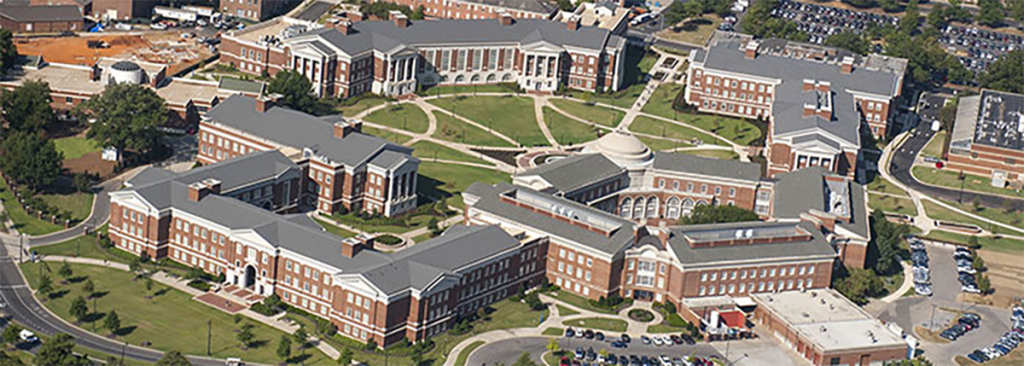
The College of Community Health Sciences at the University of Alabama on Tuesday announced a partnership with Alabama Statewide Area Health Education Centers to develop new education and training opportunities for high school students in rural areas of Alabama. “We are so appreciative of the opportunity to assume responsibility of the CCHS rural high school programs,” said director of the Alabama Statewide Area Health Education Centers, Dr. Cynthia Selleck. “We have a long history of working with high school students. It’s an area where we really shine, and we thank CCHS for their confidence in us to continue to move these programs forward.” For over 20 years, The University’ rural programs have served as a pipeline to equip high school juniors and seniors with training for opportunities in health care after graduation and before they begin college. ASAHEC will be taking the lead role in implementing an after-school health profession education program. “The partnership serves the mission of the College to continue to support the region in terms of leadership in medical education and scholarship through its assistance to our area partners,” stated Dr. Richard Streiffer, dean of CCHS. “Area Education Health Centers have become established nationwide, and this is a historic role in which they have deep experience and success. We are pleased to help Alabama AHEC assume this role for the benefit of our state and its communities.” The AHEC was developed by Congress in 1971 to assists in the recruitment, training and retention of health professionals committed to serving underserved populations. The AHEC program brings resources from academic medicine to address local community health needs. Following the final transition of all high school programs to the AHEC’s management, the University will maintain the Rural Medical Scholars, Family Medicine Residency and Rural Community Health Scholars programs while providing supervision to new high school programs.
Harley Barber expulsion from University of Alabama a missed opportunity
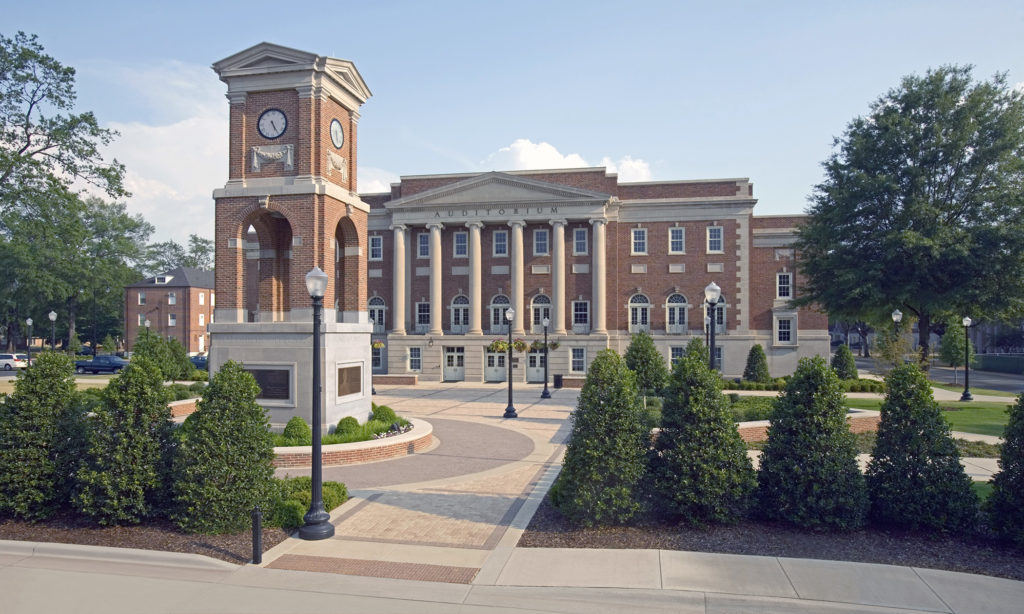
The University of Alabama (UA) missed an opportunity to do what it exists to do: teach. In response to the national attention it received this week, the university expelled student Harley Barber after Barber filmed herself repeatedly making racist comments which then went viral. Before I get to where the University went wrong, let me say so that there is zero doubt — Barber’s comments are disgusting, inexcusable, and indefensible. My commentary on the consequences of her actions should in no way be taken as an effort to defend her hateful speech. That said, this is/was an opportunity for UA to take someone who is clearly immature and ignorant and teach her better. To teach others like her better. Would that have required an investment of time and resources? Yes. Would that investment be worth it for the university, its student body and its community? Yes. There is zero chance that this won’t happen again, a student is found to show intolerance towards another individual or group of individuals, in the digital age that we live in. Rather than expelling her and sending her home, what the administration of UA should have done is offered her guidance and an opportunity to grow and learn. That is after all what going to college is about. If we kicked out people for narrow-mindedness and/or ignorant behavior most campuses would be empty. We don’t know many details about her expulsion, but if it was not conditional on her being able to come back at a later date, I think that’s a tragedy for her and the university. Despite popular opinion at the moment, this young lady is probably not evil. She probably is not going to have a lifetime of racist actions or behaviors. Really what she needs is to have her eyes opened to the realities that hateful discrimination like hers cause. Sit her down with students or facility and put a face and a story behind the effects of hate. Show her the pain that hate has caused. Teach her the history of the intolerable word she used. I’ve never understood the “Zero Tolerance” policy when it comes to mistakes that come from ignorance, insensitivity or even stupidity, as opposed to ones of malice. There is a difference in posting an offensive video saying horrifically stupid thing and committing an act of violence or promoting hateful actions by others. Treating them as equal undermines the concept of personal growth. Barber cannot learn from her bigotry by being sent home, shamed and bullied. She could learn from those around her in an academic setting. She could be placed on probation. Given community service. Given a mentor. Sent to learn about others and hear from them. The opportunities are endless to expand this young woman’s views. Contrary to what has happened in our campuses over the last several years, if not the last decade — our universities are a place for people to grow. Growth requires that we hear contradictory ideas without the comfort of “safe spaces.” Growth requires that we look at our personal biases and challenge what we may strongly believe about ourselves or others. If we can rehabilitate career criminals we can rehabilitate someone who clearly has not been exposed to racial diversity. UA missed an opportunity to better this young lady’s life and to strengthen their campus by making it a place of growth for all. Does she deserve a second chance today? Maybe not. Does she deserve the time and the opportunity to grow? She does. People make mistakes big and small. Who better to educate her and help change her backwards point of views than the diverse staff and student body at UA? If we continue to condemn every backwards thinking individual, rather than take the time to educate them, then we’re dooming our society to continuing in this wayward cycle of hate.
Harley Barber expelled from University of Alabama for racist rants, removed from sorority

University of Alabama (UA) has officially expelled a student for a series of racist video rants that surfaced and went viral Tuesday afternoon. UA President Stuart Bell confirmed Wednesday afternoon Harley Barber, 19, is no longer a student at the university. “The actions of this student do not represent the larger student body or the values of our University, and she is no longer enrolled here,” Bell said in a statement. “We hold our students to much higher standards, and we apologize to everyone who has seen the videos and been hurt by this hateful, ignorant and offensive behavior. This is not who we are; it is unacceptable and unwelcome here at UA.” Barber was also removed from her sorority at UA, Alpha Phi. Late Tuesday night, the national organization responded to the rant by posting a statement on Facebook, noting Barber is no longer a member of the organization: Alpha Phi is a diverse, values-based organization and condemns the language and opinions in these videos. They are offensive and hateful to both our own members and to other members of the Greek and campus community. The Beta Mu chapter leadership and supporting alumnae moved quickly to address the offense, and Ms. Barber is no longer a member of Alpha Phi. Linda Kahangi, executive director of Alpha Phi International Fraternity confirmed the news to Alabama Today. Twitter user @TabisBack outed Barber’s videos Tuesday afternoon. The first video showed Barber turning off a water faucet in an undisclosed bathroom. She ranted: “We do not waste water… because of the poor people in Syria. We don’t waste water. I love how I act like I love black people because I (expletive) hate (n-word) so that’s really interesting but I just saved the (expletive) (n-word) by shutting that water off.” In a second video, Barber ranted about those who were calling her for her use of the n-word on Martin Luther King Jr. Day no less, saying: “I’ve wanted to be an Alpha Phi since I was (expletive) in high school and nobody (expletive) understands how much I love Alpha Phi. And now someone wants to say I’m offensive because I said (n-word)’? You know what? (n-word), (n-word), (n-word). I don’t care if it’s Martin Luther King Day. (n-word), (n-word), (n-word). I’m in the south now, (expletive). So everyone can (expletive) off. I’m from New Jersey, so I can say (n-word) as much as I want. (n-word), (n-word), (n-word). And if anyone else wants to (expletive) snake me on my (expletive) Finsta for saying (n-word)?” Following her ouster from her sorority and the University, Barber told the NY Post she felt horrible and was “so sorry.” “I feel horrible,” Barber told the Post on the way back to her hometown in New Jersey. “I feel so, so bad and I am so sorry… I did something really, really bad. I don’t know what to do and I feel horrible. I’m wrong and there’s just no excuse for what I did.” Read Bell’s entire message below: In light of the racist and disturbing videos posted by one of our students on social media, I want to express my personal disgust and disappointment. Like many of you, I find the videos highly offensive and deeply hurtful, not only to our students and our entire University community, but to everyone who viewed them. The actions of this student do not represent the larger student body or the values of our University, and she is no longer enrolled here. We hold our students to much higher standards, and we apologize to everyone who has seen the videos and been hurt by this hateful, ignorant and offensive behavior. This is not who we are; it is unacceptable and unwelcome here at UA. These types of incidents affect community members differently. If you have been impacted and would like additional support, please access resources here that are available to you on our campus. Over the last year, I have had conversations with many of you who shared your UA experiences with me. You have voiced your pride in the progress we have made, but we still have much work to do. I want to thank all of the students, faculty and staff who met today to have conversations about this event and the steps we can take, individually and collectively, to create a more welcoming and inclusive campus. You have my commitment and the commitment of our leadership team to sustain progress and address directly any issues that arise. I know you join me in taking a stand against this and all reprehensible behavior. As members of this community, we are a family and this is our home. Everyone has a right to feel safe and welcome here. Stuart R. Bell President
