
House clarifies list of crimes that bar right to vote
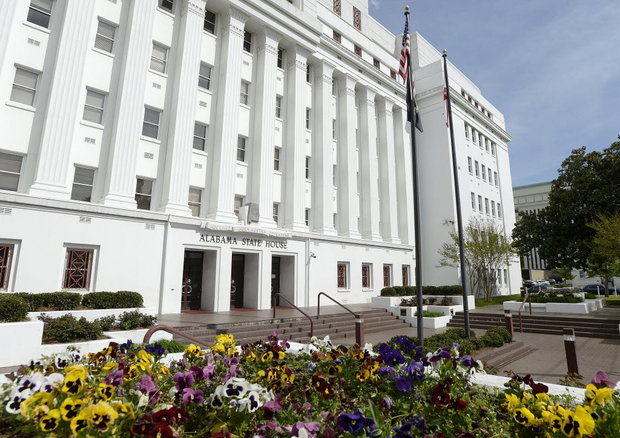
With broad support from both parties, lawmakers in the House passed legislation to clarify voting rights for ex-offenders on Tuesday (99/1). The Kennedy-McClammy Act HB344 offers a comprehensive list of felonies that involve conduct contrary to standards of justice or morality, or moral turpitude. Under Alabama’s constitution, those convicted of a felony involving moral turpitude are disqualified from voting. However, county election boards can make their own judgments on which felonies involve moral turpitude. Republican Rep. Mike Jones said he drafted the legislation to avoid confusion and subjective treatment of ex-offenders. “If we have one definitive list, no county can make up its own definition. The goal today is to be as clear as we can and get all the counties working under one standard,” Jones said. “The Alabama statute provided a starting point, but frankly, there have been crimes passed since then – such as securities fraud and child torture – that weren’t addressed before but would now part of this uniform standard.” The bill outlines 40 felony convictions – including distribution of marijuana, child torture, and securities fraud – that can take away the right to vote. Democrats pointed out that a statewide definition would give those convicted of a felony a clear path to have their vote reinstated, but called for more inclusion of white collar felonies of equal impact. “It’s hypocritical to pick and choose what we’re going to count as a crime,” said Rep. Craig Ford of Etowah County. “If we’re going to do this, we need to include all types of felony fraud convictions, as well as a way to expunge felonies for nonviolent offenders.” If enacted, the law would require the Secretary of State to inform county election boards of the new definition and ensure the standard is followed across the state.
Filibuster delays House decision on voter registration
Debate on a set of voting rights bills was delayed again Tuesday as House Democrats took turns speaking in an effort to filibuster. The bills would push the deadline to register to vote from 14 days to 30 days before an election, require photo ID with all absentee ballot applications, and require county election boards to purge voter lists of possibly deceased or ineligible voters. As speaker after speaker took to the podium Tuesday during the scheduled motion to adopt a special calendar, House Democrats framed the measures as an effort to further challenge – rather than expand – voter rights in Alabama. “Over the last election cycle, we had the lowest voting turnout in state history,” Rep. Darrio Melton said. “And that low turnout was based on the laws we already have. We need to be making this process easier, not more difficult. These new laws would only push us backwards.” Lawmakers urged the House to consider public hearings and further debate on the following proposed laws: HB 293 requires voters to submit photo identification with absentee ballot applications. Under the proposed legislation, no ballot could be issued until the photo ID requirement is satisfied. HB 323 outlines how each county’s board of registrars will investigate reports that a registered voter has died or moved out of their precinct. HB 104 changes deadlines for registering or updating voter information from 14 to 30 days before Election Day. In addition, the measure prohibits campaign materials or partisan outreach within 150 feet of a polling place. Currently, materials and campaign workers are allowed within 30 feet of the polls. By contrast, the Kennedy-McClammy Act, HB 344, sponsored by Rep. Mike Jones, passed to the Senate with bipartisan support (99/1). The act prescribes a comprehensive list of felonies that involve moral turpitude, or conduct contrary to standards of justice or morality. Under Alabama’s constitution, those convicted of a felony involving moral turpitude are disqualify from voting. County election boards are currently free to adopt their own definitions, which can lead to subjective treatment of ex-offenders and uneven reinstatement of voting rights. With adoption of a uniform definition, those convicted of a felony would have clear guidelines for getting their vote reinstated. Because the speeches took place during a routine calendar motion by the House Rules Committee – not during the debate on the bills themselves – there was little opportunity for House Republicans to counter arguments on the provisions in each bill. At the start of the session, Representative Jack Williams told AL.com that he sponsored HB 104 after hearing from poll workers that the tight deadline made it difficult to prepare for Election Day.
Lawmakers announce flat income tax proposal
With the frustration of doing taxes still fresh on the minds of the American people, two Alabama state lawmakers have unveiled a plan that would restructure Alabama’s individual and corporate income tax to permanently change the way taxes are done in the state. Republicans Sen. Bill Hightower of Mobile and Rep. Lynn Greer of Rogersville announced a “radical new approach” to simplify the state’s income tax structure at press conference Tuesday afternoon, according to AL.com. The senator’s plan will serve to remedy what the Times Daily describes as an “unbalanced tax code has posed revenue problems [in Alabama] for decades,” by implementing a flat tax. Defined as “one tax rate that is applied to all income with no exceptions” by the Alabama Policy Institute, a flat tax essentially means that everyone in the state of Alabama would pay the same share of their income, no matter how much or how little they make. Further, a flat tax would not tax savings and investment, promoting job creation and capital formation, in order to help bolster Alabama’s economy. “Every year, [the] state government gives away over $2 billion in incentives, credits, and exemptions,” Hightower said. His plan would solve that problem by reducing the individual income tax rate from 5 percent to 2.75 percent; the corporate rate would drop from 6.5 percent to 4.59 percent, according to details obtained by the Decatur Daily. Designed to be revenue neutral, no official legislation has been filed or made public, should the Alabama Legislature pass the plan, it would still require a constitutional amendment and the endorsement of Alabama voters through a statewide vote before becoming permanent law. That could only happen in a special election, next year’s presidential primary or the general election.
Jeb Bush preparing to delegate many campaign tasks to super PAC
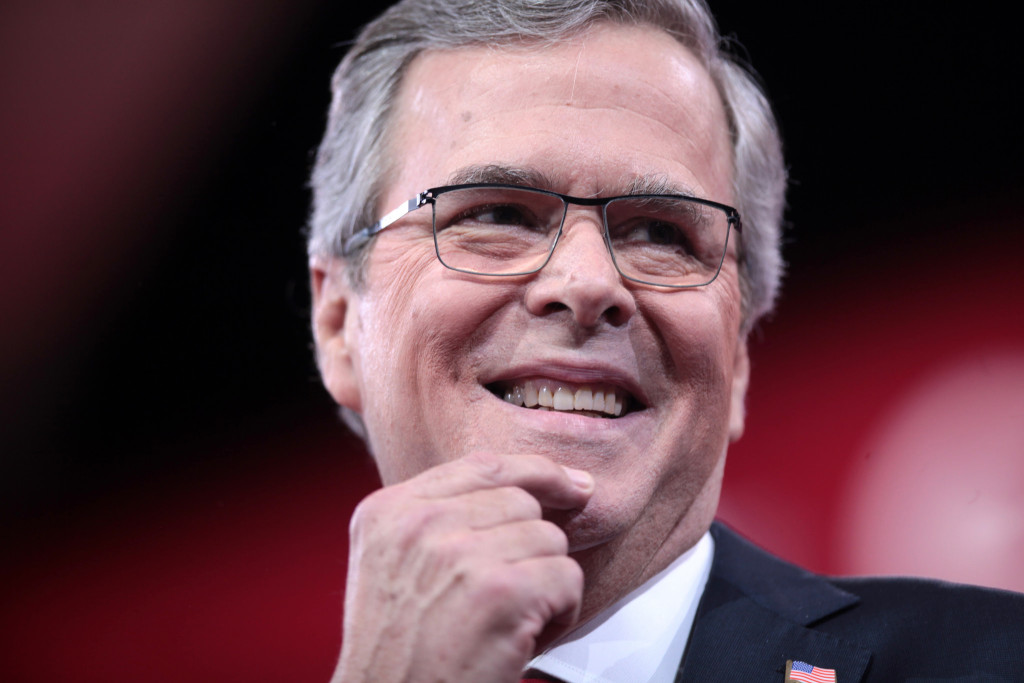
Jeb Bush is preparing to embark on an experiment in presidential politics: delegating many of the nuts-and-bolts tasks of seeking the White House to a separate political organization that can raise unlimited amounts of campaign cash. The concept, in development for months as the former Florida governor has raised tens of millions of dollars for his Right to Rise super PAC, would endow that organization not just with advertising on Bush’s behalf, but with many of the duties typically conducted by a campaign. Should Bush move ahead as his team intends, it is possible that for the first time a super PAC created to support a single candidate would spend more than the candidate’s campaign itself — at least through the primaries. Some of Bush’s donors believe that to be more than likely. The architects of the plan believe the super PAC’s ability to legally raise unlimited amounts of money outweighs its primary disadvantage, that it cannot legally coordinate its actions with Bush or his would-be campaign staff. “Nothing like this has been done before,” said David Keating, president of the Center for Competitive Politics, which opposes limits on campaign finance donations. “It will take a high level of discipline to do it.” The exact design of the strategy remains fluid as Bush approaches an announcement of his intention to run for the Republican nomination in 2016. But at its center is the idea of placing Right to Rise in charge of the brunt of the biggest expense of electing Bush: television advertising and direct mail. Right to Rise could also break into new areas for a candidate-specific super PAC, such as data gathering, highly individualized online advertising and running phone banks. Also on the table is tasking the super PAC with crucial campaign endgame strategies: the operation to get out the vote and efforts to maximize absentee and early voting on Bush’s behalf. The campaign itself would still handle those things that require Bush’s direct involvement, such as candidate travel. It also would still pay for advertising, conduct polling and collect voter data. But the goal is for the campaign to be a streamlined operation that frees Bush to spend less time than in past campaigns raising money, and as much time as possible meeting voters. Bush’s plans were described to The Associated Press by two Republicans and several Bush donors familiar with the plan, who spoke on condition of anonymity because the former Florida governor has not yet announced his candidacy. “This isn’t the product of some genius thinking,” said a Republican familiar with the strategy. “This is the natural progression of the rules as they are set out by the FEC.” Bush spokeswoman Kristy Campbell said: “Any speculation on how a potential campaign would be structured, if he were to move forward, is premature at this time.” The strategy aims to take maximum advantage of the new world of campaign finance created by a pair of 2010 Supreme Court decisions and counts on the Federal Election Commission to remain a passive regulator with little willingness to confront those pushing the envelope of the law. One reason Bush’s aides are comfortable with the strategy is because Mike Murphy, Bush’s longtime political confidant, would probably run the super PAC once Bush enters the race. Meanwhile, David Kochel, a former top adviser to Mitt Romney‘s campaigns and an ally of Bush senior adviser Sally Bradshaw, would probably be the pick to lead Bush’s official campaign. “Every campaign is going to carefully listen to the lawyers as to what is the best way to allocate their resources and how to maximize them,” said Al Cardenas, former chairman of the American Conservative Union and a Bush adviser. “Nobody wants to relinquish any advantage.” For Bush, the potential benefits are enormous. Campaigns can raise only $2,700 per donor for the primary and $2,700 for the general election. But super PACs are able to raise unlimited cash from individuals, corporations and groups such as labor unions. In theory, that means a small group of wealthy Bush supporters could pay for much of the work of electing him by writing massive checks to the super PAC. Bush would begin a White House bid with confidence that he will have the money behind him to make a deep run into the primaries, even if he should stumble early and spook small-dollar donors, starving his own campaign of the money it needs to carry on. Presidential candidates in recent elections have also spent several hours each day privately courting donors. This approach would not eliminate that burden for Bush, but would reduce it. “The idea of a super PAC doing more … means the candidate has to spend less time raising money and can spend more time campaigning,” said longtime Mitt Romney adviser Ron Kaufman, who supports Bush. The main limitation on super PACs is that they cannot coordinate their activities with a campaign. The risk for Bush is that his super PAC will not have access to the candidate and his senior strategists to make pivotal decisions about how to spend the massive amount of money it will take to win the Republican nomination and, if successful, secure the 270 electoral votes he will need to follow his father and brother into the White House. “The one thing you give away when you do that is control,” Kaufman said. Bush will also be dogged by advocates of campaign finance regulation. The Campaign Legal Center, which supports aggressive regulation of money and politics, has already complained to the FEC that Bush is currently flouting the law by raising money for his super PAC while acting like a candidate for president. Others are on guard, too. “In our view, we are headed for an epic national scandal,” said Fred Wertheimer, president of the pro-regulation group Democracy 21. “We intend to carefully and closely monitor all the candidates and their super PACs, because they will eventually provide numerous examples of violations.” All of the major candidates for president
Unpopular at home, Bobby Jindal getting little traction for 2016
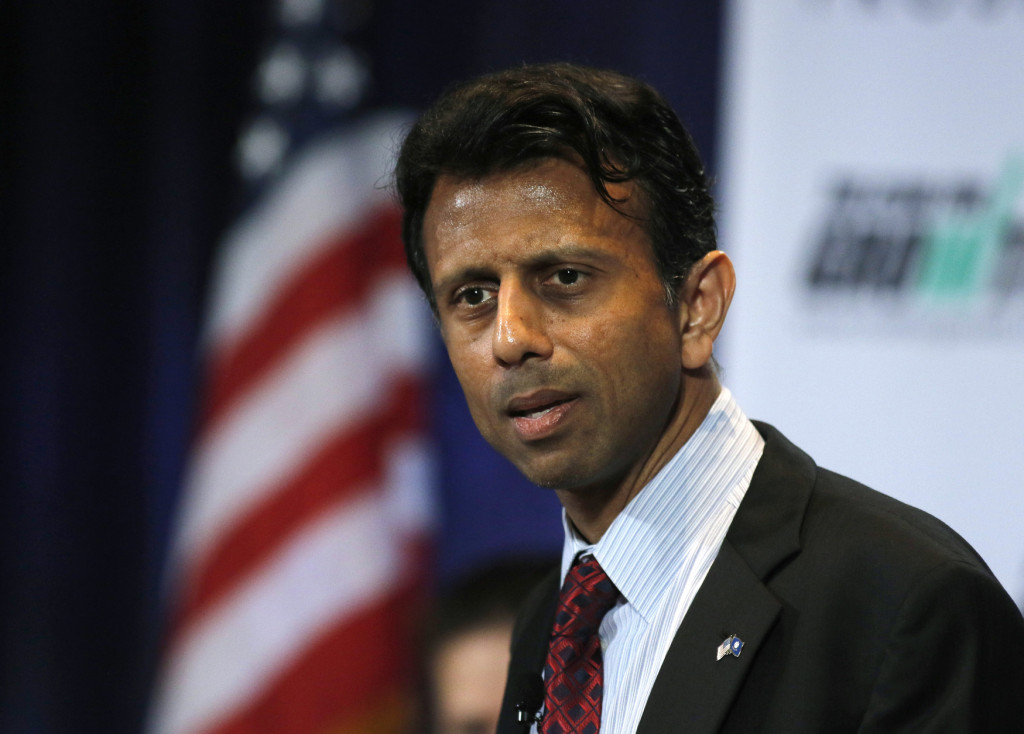
Republican Gov. Bobby Jindal‘s focus on states important in the presidential campaign is drawing lots of criticism at home and doing little apparent good for his 2016 prospects. Lost — at least for now — in a pack of better-known White House contenders, Jindal is taking heat in Louisiana for a $1.6 billion budget shortfall that threatens colleges and health care services with deep cuts. Lawmakers from both parties say his national political ambitions are a distraction. “People, I believe, would love to separate themselves from him,” said Republican state Sen. Robert Adley. Despite frequent travel, his attention to national issues, a good relationship with religious conservatives and plenty of sharp rhetoric against President Barack Obama, Jindal is making little impact in the Republican race. Even so, it’s early in the contest, and the term-limited governor is expected to announce a presidential bid after state lawmakers wrap up their Legislative Session in mid-June. He’s sent political aides to Iowa and recently announced hiring a political operative for New Hampshire. A Catholic convert raised by Hindu parents, Jindal has pivoted from his reputation as a policy wonk to make his religious beliefs the centerpiece of a possible White House campaign. He’s courted evangelical Christians through meetings with pastors and aggressively promoted “religious liberty” in speeches. So far, however, party leaders and key donors have been slow to embrace his national ambitions. And he’s competing for the religious conservative vote against more well-known contenders, like Texas U.S. Sen. Ted Cruz and former Arkansas Gov. Mike Huckabee. “The good news for Governor Jindal is he’s making a good impression with Iowa’s evangelical leaders,” said former Iowa Republican Party chairman Matt Strawn. “The bad news for Governor Jindal is that there’s about a half dozen candidates that are also trying to fish in that pond.” Among Louisiana residents, Jindal’s approval has dipped into the high 20s and low 30s in recent surveys. The governor suggests that’s because “reform is always controversial. Democracy is messy. “But the end result has been a stronger, more prosperous Louisiana for our children,” Jindal told lawmakers last week as the state’s annual Legislative Session began. Yet Jindal’s tax proposals have misfired with lawmakers, who are working on their own budget-balancing ideas in a state where the Legislature traditionally takes its lead on spending plans from the governor. Many South Carolina Republicans who turned out recently to hear Wisconsin Gov. Scott Walker and former Florida Gov. Jeb Bush said they are looking to governors as they decide on a 2016 candidate. Few mentioned Jindal among their top choices. Cary Powell, who works in financial services in Myrtle Beach, likes what Jindal has done in Louisiana and said, “I don’t know why he’s not taking off.” Jindal, said Norm Fay, a Massachusetts native who retired to South Carolina, is a “smart, good conservative.” But, “He can’t win.” Fay explained that he was referring to Jindal’s slight build, his mannerisms and his speaking delivery — all mocked in 2009 when Jindal delivered the GOP response to Obama’s first address to Congress. Matt Mackowiak, a Texas-based Republican strategist, said the Louisiana governor has time to gain traction. “I wouldn’t call it hopeless. The race is still wide open,” he said. But: “Almost everyone in the field is more well-known than he is. Is it an uphill battle? Yes.” Mackowiak said Jindal needs to make more visits to Iowa after Louisiana’s Legislature wraps up its work in two months. More frequent trips, though, risk exacerbating tensions back home. Jindal has been away from Louisiana 45 of the first 100 days of this year, according to an Associated Press tally. His absenteeism is so frequent it sparked an April Fool’s joke from Republican state Sen. Dan Claitor, who tweeted April 1: “Bobby spotted at the Capitol. (April Fool).” Overseas travel has also raised eyebrows. He drew widespread criticism for a London speech in which he repeated heavily disputed claims that Muslims have established “no-go zones” in European neighborhoods that operate outside of local civic control. Even Republicans running to succeed him as governor have picked up on the perception that Jindal has governed Louisiana as if it’s a platform for the White House. One candidate, Republican Sen. David Vitter, said if elected governor, “I’m not going to worry about what national political groups think.” Republished with permission of The Associated Press.
Opt-Out movement accelerates amid Common Core testing
Thousands of students are opting out of new standardized tests aligned to the Common Core standards, defying the latest attempt by states to improve academic performance. This “opt-out” movement remains scattered but is growing fast in some parts of the country. Some superintendents in New York are reporting that 60 percent or even 70 percent of their students are refusing to sit for the exams. Some lawmakers, sensing a tipping point, are backing the parents and teachers who complain about standardized testing. Resistance could be costly: If fewer than 95 percent of a district’s students participate in tests aligned with Common Core standards, federal money could be withheld, although the U.S. Department of Education said that hasn’t happened. “It is a theoretical club administrators have used to coerce participation, but a club that is increasingly seen as a hollow threat,” said Bob Schaeffer with the National Center for Fair & Open Testing, which seeks to limit standardized testing. And so the movement grows: This past week in New York, tens of thousands of students sat out the first day of tests, with some districts reporting more than half of students opting out of the English test. Preliminary reports suggest an overall increase in opt-outs compared with last year, when about 49,000 students did not take English tests and about 67,000 skipped math tests, compared to about 1.1 million students who did take the tests in New York. Considerable resistance also has been reported in Maine, New Mexico, Oregon and Pennsylvania, and more is likely as many states administer the tests in public schools for the first time this spring. The defiance dismays people who think holding schools accountable for all their students’ continuing improvement is key to solving education problems. Assessing every student each year “gives educators and parents an idea of how the student is doing and ensures that schools are paying attention to traditionally underserved populations,” U.S. Department of Education spokeswoman Dorie Nolt said in an emailed statement. Opposition runs across the political spectrum. Some Republicans and Tea Party activists focus on the Common Core standards themselves, calling them a federal intrusion by President Barack Obama, even though they were developed by the National Governors Association and each state’s education leaders in the wake of President George W. Bush‘s No Child Left Behind program. The Obama administration has encouraged states to adopt Common Core standards through the federal grant program known as Race to the Top, and most have, but each state is free to develop its own tests. In California, home to the nation’s largest public school system and Democratic political leaders who strongly endorse Common Core standards, there have been no reports of widespread protests to the exams — perhaps because state officials have decided not to hold schools accountable for the first year’s results. But in deep-blue New York, resistance has been encouraged by the unions in response to Democratic Gov. Andrew Cuomo‘s efforts to make the test results count more in teacher evaluations. In Rockville Centre on Long Island, Superintendent William H. Johnson said 60 percent of his district’s third-through-eighth graders opted out. In the Buffalo suburb of West Seneca, nearly 70 percent didn’t take the state exam, Superintendent Mark Crawford said. “That tells me parents are deeply concerned about the use of the standardized tests their children are taking,” Crawford said. “If the opt-outs are great enough, at what point does somebody say this is absurd?” Nearly 15 percent of high school juniors in New Jersey opted out this year, while fewer than 5 percent of students in grades three through eight refused the tests, state education officials said. One reason: Juniors may be focusing instead on the SAT and AP tests that could determine their college futures. Much of the criticism focuses on the sheer number of tests now being applied in public schools: From pre-kindergarten through grade 12, students take an average of 113 standardized tests, according to a survey by the Council of the Great City Schools, which represents large urban districts. Of these, only 17 are mandated by the federal government, but the backlash that began when No Child Left Behind started to hold teachers, schools and districts strictly accountable for their students’ progress has only grown stronger since “Common Core” gave the criticism a common rallying cry. “There is a widespread sentiment among parents, students, teachers, administrators and local elected officials that enough is enough, that government mandated testing has taken over our schools,” Schaeffer said. Teachers now devote 30 percent of their work time on testing-related tasks, including preparing students, proctoring, and reviewing the results of standardized tests, the National Education Association says. The pressure to improve results year after year can be demoralizing and even criminalizing, say critics who point to the Atlanta test-cheating scandal, which led to the convictions 35 educators charged with altering exams to boost scores. “It seems like overkill,” said Meredith Barber, a psychologist from the Philadelphia suburb of Penn Valley who excused her daughter from this year’s tests. Close to 200 of her schoolmates also opted out in the Lower Merion School District, up from a dozen last year. “I’m sure we can figure out a way to assess schools rather than stressing out children and teachers and really making it unpleasant for teachers to teach,” said Barber, whose 10-year-old daughter, Gabrielle, will be in the cafeteria researching Edwardian history and the TV show Downton Abbey during the two weeks schools have set aside for the tests. Utah and California allow parents to refuse testing for any reason, while Arkansas and Texas prohibit opting out, according to a report by the Education Commission of the States. Most states are like Georgia, where no specific law clarifies the question, and lawmakers in some of these states want protect the right to opt out. Florida has another solution: Gov. Rick Scott signed a bill strictly limiting testing to 45 hours each school year. In Congress, meanwhile, lawmakers appear ready to give states
Alabama environmentalists miffed at oil spill settlement disbursement
More than five years out from the catastrophic Deepwater Horizon oil spill that ravaged the Alabama coastline, everything is still not well according to many state environmental officials and activists. The rub: They contend too much of the $627 million paid out by BP — which underwrote and operated the rig that spilled 3 million barrels of Louisiana light crude into the Gulf — in restoration aid is going to nonessential projects and is otherwise being poorly allocated. A major bone of contention is the $58 million earmarked to rebuild a luxury beachfront hotel destroyed by a hurricane. While the merits of that project are debatable, many enviros are upset that the appropriation doesn’t seem germane: The hotel in question was a casualty of Hurricane Ivan in 2004, not the oil spill. Moreover, they contend much more pressing concerns are being ignored at such projects’ expense. Significant sums are being spent elsewhere to repair ecologically sensitive settings such as Mississippi’s dilapidated Heron Bay, which will receive $50 million for restoration, and four major barrier islands off of Louisiana which will receive a much needed salve to the tune of $318 million. However, much of the struggled-for restitution is being spent with a wandering eye from the acute concerns many experts have urgently raised for years. “We are disappointed,” Jordan Macha, an environmental policy analyst for the New Orleans-based Gulf Restoration Network, told The Associated Press. “We don’t think they fully addressed all the environmental concerns we have raised numerous times.” An additional $28 million will be spent in Gulf Shores to help rectify wind and water damage to the coast, however. And state officials say the relief efforts have to be considered in their totality. “All the projects have to have a nexus to the spill,” Florida Department of Environmental Protection spokeswoman Ashley Williams said. To proponents of greater sensitivity toward narrower, more urgent ecological goals though, it seems like the spill has barely even stopped.
Paul DeMarco: Looking back on the April 27 tornadoes that united our community
As we approach the four-year anniversary of the April 27 tornadoes, there will be a lot of tears shed for those who lost family and friends. We will recall the devastation that took both home and business away from individuals. Memories will last a lifetime for all of us here during the weeks and days as people and communities began to put their lives back together. I recall touring the devastation the next day in Hueytown, Pleasant Grove and throughout West Jefferson wondering how we could ever recover. I am thankful we live in a state where people did not simply wait on help from Washington, D.C. Instead, it was our local people and first responders who did the heavy lifting. It was the outpouring of support from our citizens and our churches that carried the day during the time when recovery efforts were so critical. It was an immeasurable number of meals served by our local church communities to those in need. While police and fire were in the search-and-rescue mode, the local churches stood as safe havens for people to rest, to sleep and to eat. Then as the days became weeks it became even more important for the entire community pitch in to help those in need. We all have stories from that tragic day, but the one I can never shake is a positive one. In the days after the tornadoes, I had talked to the mother, a leader of a local Girl Scout Troop from Homewood that had not been affected by the storms. The girls, about 7 or 8 years old, wanted to do their part to help and they did. They collected household and personal hygiene items like toothpaste, soap and shampoo to donate. After they had collected boxes of items we took a caravan to meet Jefferson County District Judge Eddie Vines. He led the crew of girls to Pleasant Grove where they donated their goods to help in the recovery. That story could be repeated hundreds of times as we recount all of the folks who volunteered their time, donated both goods and services or simply prayed for those in need. When we remember those days, we have a lot to be thankful for in those days of tragedy. I am thankful we live in a state where the people take care of each other, a place where neighbor is always there for their neighbor. Paul DeMarco is a former Alabama state representative This guest editorial originally ran in The Western Star. Republished with permission.
20-year-old Hoover woman leaves to join Islamic State group
A spokesman for a Muslim couple in Alabama on Monday said their 20-year-old daughter fled a Birmingham suburb to join Islamic State militants in Syria after being recruited via the Internet. Hassan Shibly spoke at the mosque on behalf of the parents of the young woman, whom he identified only as Hoda. He said the family has been “extremely traumatized” for months and has been in contact with law enforcement and government officials since she disappeared while also pleading with Hoda to return home. “For them this is worse than losing the life of a child, to have them join such a horrible, horrible gang of violent extremists,” Shibly said, adding the father is worried about the mother’s health. “Nothing can describe the pain they are facing.” Shibly, an attorney and chief executive director for the Florida chapter of the Council on American-Islamic Relations, said Hoda left in November. While he said it’s unclear when Hoda made contact with militants, he said she withdrew from the Muslim community in Birmingham more than a year before her disappearance. The woman’s whereabouts were not immediately known. “The reason she withdrew from the community is because the Muslim community is very vocal against groups like ISIS … she made the decision based on her communication online with them that she wanted to join them,” Shibly said. The family and the Birmingham Islamic Society have spoken out against violent extremism. The account was first reported by Buzzfeed. There have been other reports of young people leaving or attempting to leave the U.S. for the Islamic State in recent months. In a criminal complaint unsealed on Monday, six Minnesota men were charged with terrorism-related offenses after authorities said they failed in attempts to travel to Syria. Shibly said he’s talked with families who have also lost their children to the Islamic State group have similar stories. “It’s often young, naive, impressionable, ignorant troubled youth who are dissatisfied with their life and are seeking a sense of belonging,” he said. “And it’s frankly the same social factors that lead to youth joining various gangs. I think ISIS is just another gang,” he said, using an alternate acronym for the militant group. Members of the Birmingham Muslim community met on Monday evening to discuss how to protect other children from the influence of violent extremists. Republished with permission of The Associated Press.
