
Sen. Bobby Singleton: “This is the right time to legalize medical marijuana”

Amidst reports that his Medical Marijuana Patient Safe Access Act (SB326) may never make it to the House floor, bill sponsor Senator Bobby Singleton said this morning, “I’m optimistic. We’re early in this process – just halfway through this session – and there’s a process for these things.” In an interview with Alabama Today, Senator Singleton said reports that Rules Committee Chairman Senator Jabo Waggoner called the bill “dead” didn’t diminish his resolve for getting the legislation passed this session. “I respect the Senator and his position – and he may vote against the bill – but we’ll be asking his committee to give the bill consideration.” Sen. Singleton also said that he would consider other options for advancing the bill, including a constitutional amendment. “I’m all for the people’s right to vote. It’s entirely possible that we’ll put it before the people and let them have their say.” The Medical Marijuana Patient Safe Access Act would allow patients with one of 25 “serious medical conditions” to be prescribed marijuana by a qualifying physician. Singleton says he introduced the bill after hearing from constituents who were obtaining marijuana illegally in order to manage chronic pain. The Senate Judiciary Committee scheduled a public hearing on the bill for this Wednesday, but canceled the public comment period at the last minute. Instead, the committee issued a favorable report on the bill by a 4-3 vote. Reports by AL.com suggest that the legislation crossed that hurdle because several Republican members weren’t in attendance on Wednesday: Arthur Orr, Greg Reed and Tom Whatley were absent and Sen. Greg Albritton declined to vote. During the meeting, Sen. Phil Williams raised concerns that the bill would encourage dependency or addiction to other illegal drugs. “I’ve worked with a lot of messed up kids,” he said. “All of those who were addicts never intended to become addicts. But in all cases, marijuana was the gateway drug that led them down that path. I’ve seen too many devastated lives to give my support to this bill.”
Lessons reside in Bill Baxley versus Charles Graddick
“Those who fail to learn from history are doomed to repeat it.” George Santayana History teaches us some valuable lessons. Learning the ins and outs of Alabama’s politics has been one of the most fascinating parts of launching this news site. Today, Alabama is one of the reddest states in the nation. Gallup puts it second behind Mississippi in self-identified conservatives. It was not that long ago, however, that Alabama was blue. I’ve been told of an Alabama that was bluer then than it’s red now. I’ve heard stories of the days when the teachers unions, big labor, and trial lawyers ruled the state. The Democratic Party was king. We’re not talking lifetimes ago; we’re talking in the mid- to late ’80s. Fast-forward to today and I’m not even sure there is a Democratic Party in Alabama. In looking back at this latest election cycle it seemed every man or woman running as a Democrat was going at it alone or with local camps as opposed to a state operation. So I’ve asked around about when the turning point was and what caused it. The answer from most was Bill Baxley versus Charles Graddick in 1986. Just hearing Baxley versus Graddick one would think this was a landmark legal case or state legislative battle. Most people involved in Alabama politics have been around since then or long enough to have heard the stories and even know the actors involved. Countless articles and even a book have been written on the fight and the gubernatorial race that changed everything. The short version, for those who don’t know the story, is that the Democratic Party allowed a power struggle between a few to divide everyone. It was a story where one group became so concerned with its own political interest it forgot the people it was supposed to represent. So in that year people decided to make a change. It wasn’t around any issue, but because internal party politics had become so nasty. It began that cycle with the election of the first Republican governor since Reconstruction and culminated in 2010 the Republican control of the governor’s office, Legislature and every statewide constitutional officer. Only one Democrat has been elected to the governor’s office between then and now, Don Siegelman. One of the authors of the book After Wallace documenting the fall of the Alabama Democratic Party, Patrick Cottel, said in a 2009 interview with the Tuscaloosa News, “I think when people feel where they are left out of the process and there are people making decisions for them, they don’t necessarily like that when it comes to Election Day … politicians learn it over and over again.” With some much change it’s interesting to see how much is the same. Republicans have taken up the mantle of power and unfortunately it looks like they have started their own infighting. Punches are thrown every day and not just behind closed doors. Let’s just admit it’s not in a productive way. I disagree wholeheartedly with Gov. Robert Bentley about raising taxes or expanding Medicaid, but calling him names or citing others who will call him names isn’t helping the case against his policies. Whose best interest is that in and what good does it do? Surely it’s not the party I love or the state I have made my home that benefits from that. There is nothing wrong, in fact it’s impossible to avoid, disagreements within political parties these days. With a two-party system umbrellas have gotten big, leaving a lot of room between the moderates and extremes within both parties. It’s important that both sides challenge one another and come to conclusions that are in the best interest of everyone, but let’s do it civilly. What should be avoided is letting it become personal and the political fights in this state seem to be pretty personal right now. The Republican Party is splintering or has splintered into camps, and now seems like a good time to remind everyone that we’ve seen this before and the results … well you can ask the Democrats how it works out. Graddick spoke to a reporter at AL.com this past year about his party’s downfall and succinctly said, “I’d like to say it was me, but it was more the Democratic Party hierarchy. They shot themselves in the foot.” Here’s to hoping those in the circular firing squad within the Republican Party hierarchy put down their gun before its too late. File photo
This week in the Alabama statehouse
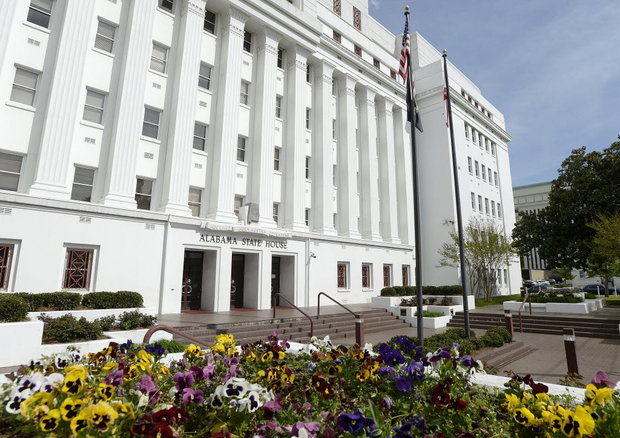
We’re in week seven of the 2015 legislative session — just 14 more working days to go. The Senate got off to a slow start this week, as Democrats vowed to tie up session over a resolution by the Republican majority opposing Medicaid expansion. The Montgomery Advertiser quotes Senate Minority Leader Quintin Ross: “Perception is everything,” he said after the vote. “To give the perception that the entire Legislature opposes expanding Medicaid is not true.” Meanwhile, House Dems tried to run down the clock on a set of controversial voting rights bills. The bills would push the deadline to register to vote from 14 days to 30 days before an election, require photo ID with all absentee ballot applications, and require county election boards to purge voter lists of possibly deceased or ineligible voters. Still, several important bills were introduced at the statehouse this week: • • • Alabamians would pay a flat 2.75 percent state income tax rate under a proposal by Sen. Bill Hightower. Alabamians for Tax Reform called the proposal “a step in the right direction.” • • • Rep. Ed Henry’s bill to ban abortion clinics outside public schools dropped this week. According to a report in the Montgomery Advertiser, the ACLU threatened litigation if HB 527 passes. • • • Everyone with a state driver’s license or ID card who is eligible to vote would be automatically registered under Rep. Darrio Melton‘s Universal Voting Act introduced in the House this week. The bill outlines a procedure for citizens to decline (rather than apply for) the right to vote. • • • Working committees also approved bills to allow private adoption agencies to turn away gay couples on religious grounds and legalize medical marijuana. • • • Finally, the House approved a bill to establish a board of trustees for community colleges and another to establish virtual high schools across the state.
Comcast abandons Time Warner bid after government pushback
What killed Comcast’s $45 billion bid for Time Warner Cable? Regulators’ desire to protect the Internet video industry that’s reshaping TV. A combination of the No. 1 and No. 2 U.S. cable companies would have put nearly 30 percent of TV and about 55 percent of broadband subscribers under one roof, along with NBCUniversal, giving the resulting behemoth unprecedented power over what Americans watch and download. Competitors, consumer groups, and politicians have criticized the deal, saying it would lead to higher prices and less choice. “The proposed merger would have posed an unacceptable risk to competition and innovation, including to the ability of online video providers to reach and serve consumers,” Federal Communications Commission Chairman Tom Wheeler said in a written statement. The Justice Department said that Comcast dropped its bid because of regulators’ concerns that the Philadelphia-based cable giant would become an “unavoidable gatekeeper” for Internet services. One of the concerns consumer advocates and competitors had with the Comcast deal was that it could undermine the streaming video industry that is reshaping TV. Comcast could, for example, require onerous payments from new online-only video providers for connecting to its network. Dish, the satellite TV company behind the new Web video service Sling TV, and Netflix opposed the deal. “It goes to show you how important broadband is,” said Amy Yong, a Macquarie analyst. Regulators have taken other steps that signal how important they consider Internet access. The Federal Communications Commission in February released new “Net Neutrality” rules meant to keep broadband providers from charging Internet companies for “fast lane” access or favoring some content. The broadband industry has sued to stop the rules. “We have to live with it, and respect that, and move on,” Comcast Chairman and CEO Brian Roberts said in an interview on CNBC, referring to the government’s opposition to the deal. “We always structured this deal in a way that would enable us to walk away.” Comcast doesn’t owe Time Warner Cable a breakup fee because the deal didn’t work out. With the deal between Comcast Corp. and Time Warner Cable Inc. called off, a transaction with Charter Communications Inc. aimed at smoothing the way for regulatory approval also falls apart. Even with the Comcast and Time Warner Cable deal being nixed, cable companies are likely to keep combining as costs rise for the shows, sports and movies they pipe to subscribers while video customers decrease. Many analysts expect that Charter Communications could resurrect its own effort to acquire Time Warner Cable. A combined Charter and Time Warner Cable would have 15 million video customers and 16.5 million Internet customers. That’s still smaller than Comcast alone, which has 22.4 million video subscribers and 22 million Internet customers. And the $48.5 billion combination of DirecTV and AT&T is still expected to go through. Shares of Time Warner Cable Inc. rose $2.74 to $151.50 in morning trading while Comcast shares slipped 8 cents to $59.18. Republished with permission of The Associated Press.
Not long ago, Marco Rubio questioned his own readiness for presidency
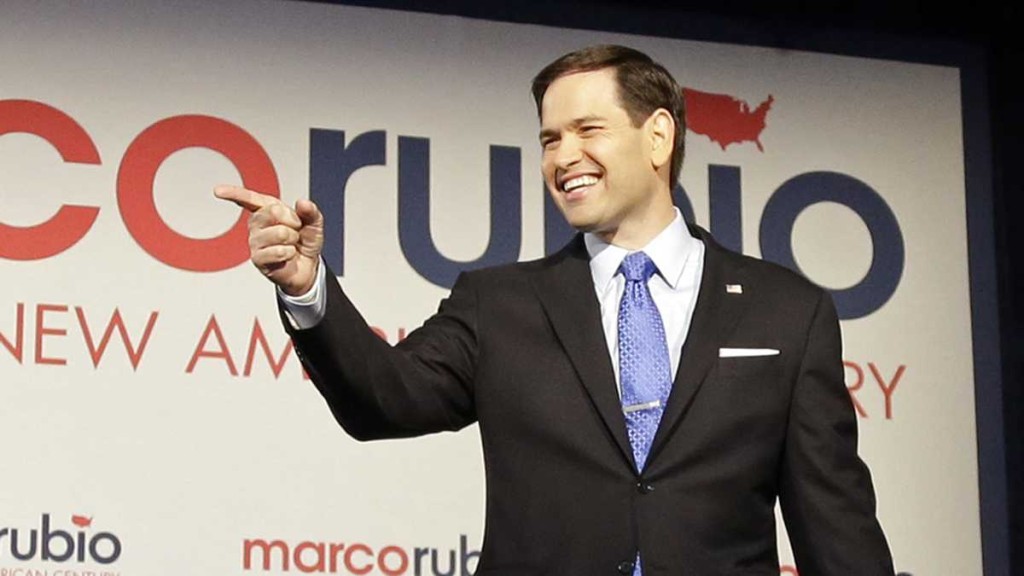
Marco Rubio lacks the experience to be president and Jeb Bush is a brilliant man ready for the job. So said Marco Rubio. Thing is, that was Rubio a few years ago, a man of seeming humility who joked that the only thing he deserved being president of was a condo association. He dismissed in colorful terms the idea that one term in the Senate could make a man ready for the White House. “Everyone I’ve ever known that tries to use their position as a stepping stone for something else has ended up destroying themselves,” he said during a 2012 book tour. Times — and ambition and ego — have changed. Bush, the former governor who guided Rubio’s early political career, won Rubio’s praise as “one of the biggest, best thinkers in the Republican Party” with an “amazing” depth of knowledge on almost every issue. Now Rubio says America doesn’t need politicians from the past. After shooing off the roars of supporters in his 2010 Senate campaign who saw presidential mettle in him — “it’s fleeting and it’s not going to get to my head” — it’s now firmly in his head. He’s hardly the first to be seized with the audacity of presidential hopes, even if others have taken a bit longer to get from you-must-be-kidding to yes-we-can. Barack Obama‘s star turn at the 2004 convention, just two years after being elected to the Senate from a background as a state lawmaker, made clear that the White House was in that young man’s eyes. Few, though, have put down their own bona fides as thoroughly as Rubio did in his rough-and-tumble Senate campaign, when he wanted voters to know that a Senate seat was his total dream and devotion. Then, he was stunned to be recognized at a Florida Panhandle truck stop while making a 400-mile round-trip drive so he could talk to 80 voters. The trip cost him as much as he raised in campaign contributions. Republican leaders in Tallahassee and Washington were trying to force him out of the race and have him run for attorney general so then-Republican Gov. Charlie Crist could have a clean shot at the nomination. “It was unpleasant,” Rubio said at the time, “but I’m glad it happened because it forced me to answer a very simple question to myself and that is, why are you doing this?” He decided “I’m in this because I want to do something.” Rubio began the Senate race 31 points down in polls. Crist was raising $13 for every $1 Rubio took in. But Rubio used Tea Party rallies, the image of Crist embracing Obama and a well-delivered conservative message to top Crist by 20 points and drive him from the party. Along the way he’d poke fun at Obama’s sudden rise to power — a way of playing down suggestions that he could do the same. Like Rubio, Obama announced his presidential plans during his first Senate term. He cracked at one Senate campaign stop that he was running because he wanted a Nobel Peace Prize, “but you’ve got to be in office two weeks to do that, so I’m going to have to wait.” Obama got the prize his first year in office, the Nobel committee citing his support for multilateral diplomacy and for a world without nuclear weapons. The night Rubio won his seat, supporters roared when a speaker asked them if they wanted to see Rubio run for president. The next day Rubio pushed aside that talk. “Politics is full of one-hit wonders,” Rubio told reporters. “The truth is soon you will all go off and cover something else and there will be somebody else out there who’s the flavor of the month, and then I’m still going to be a U.S. senator.” Two years later at a Panama City book signing, a man approached Rubio and said he should run for president in 2016. Rubio dismissed the idea afterward, and pointed to Bush instead. “It’s just amazing to me the depth of knowledge that he has on virtually any issue from foreign relations to the economy and obviously education,” he said. Yet right after the 2012 election, Rubio was the first of the 2016 prospects to visit Iowa. His conviction that he’s ready for the presidency did not develop overnight. Now, Rubio calls on voters to break with leaders of the last century. And his goals are much more ambitious than being a condo association president. Republished with permission of The Associated Press.
