
Jeb Bush donors see him lay out contours of 2016 campaign

Jeb Bush‘s super PAC is raising eye-popping sums in a multipronged effort to define the former Florida governor for Republican presidential primary voters before his rivals can, donors say. The likely candidate met more than 300 of his top donors near Miami Beach’s glamorous South Beach on Sunday and Monday, and began laying out what a 2016 campaign would look like, introducing advisers and outlining issues he would stress. Ever mindful of the public’s supposed aversion to political dynasties, Bush’s team sees it as a priority to cast the brother and son of former presidents as his own man, several who attended the meeting said. “That’s why they are going to define him as a person, so people will have a reason to listen,” said Bill Kunkler, a Bush donor from Chicago who attended. “Then voters can make an informed decision.” The meeting, with a rooftop cocktail party at a luxury seaside hotel, was a way for Bush to thank his most generous contributors, who have helped him sprint through the first months of the year in fundraising as he prepared for an expected candidacy for the nomination. “We’re here to celebrate the successes, not the excesses,” said Al Hoffman, a longtime Bush family friend and veteran donor. “We’re sure to be pounded on raising excessive money. But the point is, when you raise money for a campaign, there’s never enough.” Bush or his aides would not disclose how much he has raised in the more than 60 fundraisers he’s headlined since opening the Right to Rise PAC and super PAC in January. Kunkler said the super PAC’s financial disclosure in July will be a “wowza” moment, and others have said they expect Bush to post a figure multiple times the amount collected by rivals. Bush armed his most loyal and influential supporters, who had contributed at least $25,000 to his super PAC, with information they would need to recruit 10 to 20 others each, donors said. He also introduced members of the team, such as likely campaign manager David Kochel, a strategist with deep background in Iowa who advised Mitt Romney in 2012 and 2008. One of Bush’s challenges could be to avoid the wealthy Romney’s stumbles connecting with low- and middle-income Americans in the 2012 contest. Also at the meeting, Bush, who is bilingual, held a session on outreach to Hispanics, who voted overwhelmingly for President Barack Obama in 2012. He’s traveling to Puerto Rico and headlining a Hispanic Christian leadership conference in Houston this week. On the matter of political dynasties, voter sentiment is somewhat mixed, but a recent national survey suggests Bush’s team is right to be wary. In an NBC News/Wall Street Journal poll last month, 60 percent of registered voters — including 42 percent of Republicans — said Bush represents a return to policies of the past. Almost 40 percent of registered voters said they would feel more comfortable if the nominees were not a Clinton or a Bush. Hillary Rodham Clinton, married to former President Bill Clinton, is seeking the 2016 Democratic presidential nomination. With the aggressive super PAC approach, Bush is at the forefront of a shift in presidential politics made possible by a 2010 Supreme Court decision allowing these organizations to raise unlimited sums from individuals and groups such as corporations and labor unions. They must report their contributions and donors, but are not held to the contribution limits placed on federal campaigns, $2,700 per donor for the primary, and $2,700 for the general election. Bush’s dozens of fundraisers frontload his super PAC financially and politically before he becomes a candidate. Once that happens, he will not be allowed to coordinate strategy with the group or directly raise money for it. When Bush announces his campaign, Hoffman said, “it will be a sprint until the finish.” Republicans familiar with his strategy say Bush is planning to use his super PAC to carry out functions typically done by campaigns, although Bush aides insist he will have enough money to run a robust candidate-driven organization as well. Republished with permission of The Associated Press.
Lab test confirms prosecutor’s staff given pot brownies

A laboratory test has confirmed that a batch of brownies given to an Alabama prosecutor’s staff contained marijuana. Two people who work for Baldwin County District Attorney Hallie Dixon got sick this month after eating brownies at the office. Dixon says a temporary court reporter gave her staff the treats. WKRG-TV reports Dixon now says a lab test found THC, an intoxicating chemical found in marijuana, in the brownies. Dixon says she doesn’t know if anyone can be charged for the pot brownies. She’s asked a district attorney from another county to look at the case. The Alabama Bureau of Investigation has not released the name of the court reporter. Republished with permission from The Associated Press.
What’s at stake in U.S. Supreme Court gay marriage arguments

Just two years ago, the U.S. Supreme Court struck down part of the federal anti-gay marriage law that denied a range of government benefits to legally married same-sex couples. The decision in United States v. Windsor did not address the validity of state marriage bans, but courts across the country, with few exceptions, said its logic compelled them to invalidate state laws that prohibited gay and lesbian couples from marrying. The number of states allowing same-sex marriage has grown rapidly. As recently as October, a little more than one-third of the states permitted same-sex marriage. Now, same-sex couples can marry in 36 states and the District of Columbia. A look at what is now before the Supreme Court, and the status of same-sex marriage around the country: • • • What’s left for the Supreme Court to do amid all this change? The justices on Tuesday are hearing extended arguments, scheduled to run 2½ hours, in highly anticipated cases about the right of same-sex couples to marry. The cases before the court come from Kentucky, Michigan, Ohio and Tennessee, all of which had their marriage bans upheld by the federal appeals court in Cincinnati in November. That appeals court is the only one that has ruled in favor of the states since the 2013 Windsor decision. • • • What’s at stake? Two related issues would expand the marriage rights of same-sex couples. The bigger one: Do same-sex couples have a constitutional right to marry or can states continue to define marriage as the union of a man and a woman? The second: Even if states won’t allow some couples to marry, must they recognize valid same-sex marriages from elsewhere? • • • What are the main arguments on each side? The arguments of marriage-rights supporters boil down to a claim that states lack any valid reason to deny the right to marry, which the court has earlier described as fundamental to the pursuit of happiness. They say state laws that allow only some people to marry violate the Constitution’s guarantee of equal protection under the law and make second-class citizens of same-sex couples and their families. Same-sex couples say that preventing them from marrying is akin to a past ban on interracial marriage, which the Supreme Court struck down in 1967. The states respond that they have always set the rules for marriage and that voters in many states have backed, sometimes overwhelmingly, changes to their constitutions to limit marriage to a man and a woman. They say a lively national debate is underway and there is no reason for courts to impose a solution that should be left to the political process. The states also argue that they have a good reason to keep defining marriage as they do. Because only heterosexual couples can produce children, it is in the states’ interest to make marriage laws that encourage those couples to enter a union that supports raising children. • • • Is the Obama administration playing a role? The administration is backing the right of same-sex couples to marry, although its argument differs in one respect. The plaintiffs say that the state laws should fall, no matter what standard the court applies. The administration calls for more rigorous scrutiny than courts ordinarily apply to most laws, saying it is appropriate when governments discriminate against a group of people. That already is the case for claims that laws discriminate on the basis of race, sex and other factors. But the administration is silent about what the outcome should be if the court does not give gays the special protection it has afforded women and minorities. The Justice Department’s decision to stop defending the federal anti-marriage law in 2011 was an important moment for gay rights and President Barack Obama declared his support for same-sex marriage in 2012. • • • What happens if the court strikes down the state bans? A ruling that same-sex couples have a right to marry would invalidate the remaining anti-gay marriage laws in the country. If the court limits its ruling to requiring states to recognize same-sex unions, couples in states without same-sex marriage presumably could get married elsewhere and then demand recognition at home. • • • What happens if the court rules for the states on both questions? The bans in 14 states would survive. Beyond that, confusion probably would reign. Some states that had their marriage laws struck down by federal courts might seek to reinstate prohibitions on gay and lesbian unions. Questions also could be raised about the validity of some same-sex weddings. Many of these problems would be of the Supreme Court’s own making. • • • Why is that? From October to January, the justices first rejected appeals from states seeking to preserve their marriage bans, then allowed court rulings to take effect even as other states appealed those decisions. The result is that the court essentially allowed the number of states with same-sex marriage to double. • • • Where is same-sex marriage legal? Same-sex couples can marry in 36 states, the District of Columbia and parts of Missouri. More than 500 marriage licenses were issued to same-sex couples in Alabama this year after a federal court struck down the state’s ban. But probate judges have not issued any more licenses to gay and lesbian couples since the Alabama Supreme Court ordered a halt to same-sex unions in early March. Gay and lesbian couples may not marry in Alabama, Arkansas, Georgia, Kentucky, Louisiana, Michigan, Mississippi, most of Missouri, Nebraska, North Dakota, Ohio, South Dakota, Tennessee and Texas. • • • How many same-sex couples are there in the U.S.? Gary Gates, an expert at UCLA’s Williams Institute on the demography of gays and lesbians in the U.S., estimated that there were 350,000 married same-sex couples as of February. Gates relied on Gallup Inc. survey data and Census Bureau information to arrive at his estimate. That’s just 0.3 percent of the nation’s 242 million adults, Gates said.
Black Caucus lawmakers sue to force new legislative elections
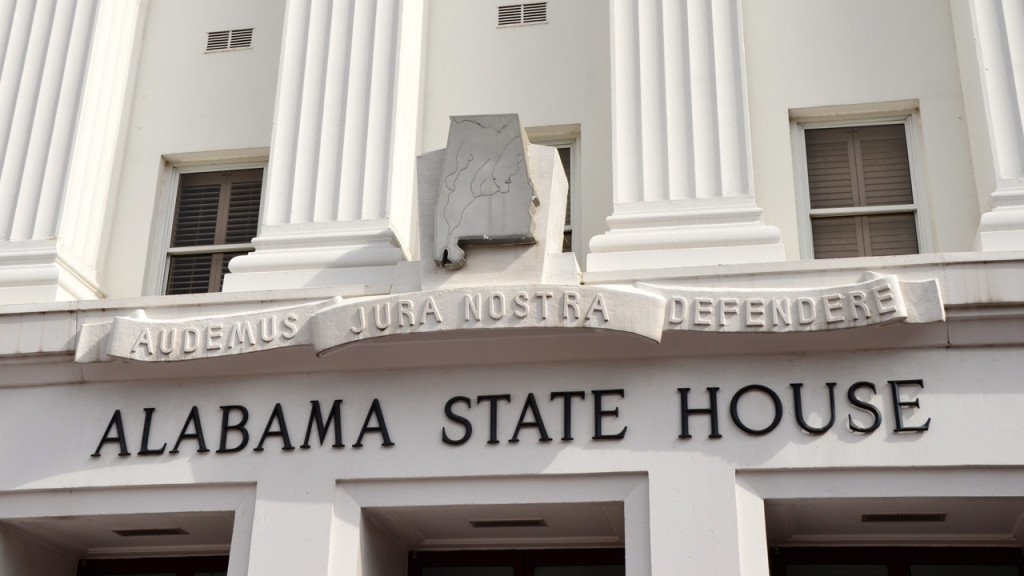
Lawyers for the Alabama Legislative Black Caucus are asking a federal court to toss out the state’s legislative districts and hold new legislative elections next year. Lawyers for black legislators filed the motion Monday after the U.S. Supreme Court sent Alabama legislative districts back for additional review. Black legislators challenged the 2012 plan drawn by the newly elected GOP majority saying that it illegally packed black voters into designated minority districts. Caucus lawyers argue that the legislative districts, “display unmistakable evidence of racial sorting.” They argue the map also improperly split counties and communities of interest. The Supreme Court in March sent the map back to a federal court. State Republicans say they believe the districts will be upheld. Republished with permission of The Associated Press.
Local control plays big role in virtual schools bill’s success
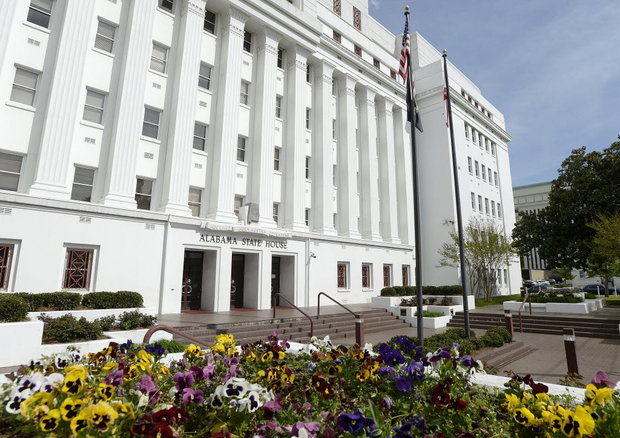
Later this week, Gov. Robert Bentley is expected to sign Senate Bill 72 into law, making Alabama the 30th state with a comprehensive policy for full-time online education schools for high school students. Sen. Dick Brewbaker, who sponsored the legislation, has called the bill “groundbreaking,” highlighting its potential to expand choices for quality education for Alabama students. For some advocates, the agreement on virtual schools came as a surprise after an extended debate over school choice in the state. Duncan Kirkwood, Alabama state director for the Black Alliance for Educational Options, said keeping virtual schools as part of the public school system is one important reason for its popularity among legislators. A key feature of the bill is that students enrolled in the virtual school would be considered public school students, subject to the same testing and graduation requirements as their peers. However, local school boards are able to design or contract virtual school options that meet the needs of its students. The potential, Kirkwood said, is that students who excel in certain subjects will be able to attend college-level classes online and no longer be limited by what their local high school can provide. “This is transformational. In just a few years, we’ve gone Alabama being a place where your zip code determines the education you get to one where parents can choose the right options for their kids – without the burden of private school funding.” During Thursday’s House vote, Rep. Alan Baker applauded the bill’s reliance on local judgment and management of options for students. “I think that technology is rapidly changing how we deliver education. Students sometimes don’t ‘plug in’ to traditional education,” Baker said. “I love the local option so school boards can determine the best delivery method for their students.” If Bentley signs the virtual schools proposal, high school students statewide would be able to attend online classes as early as the 2016-2017 school year.
Loretta Lynch sworn in as new U.S. attorney general
Loretta Lynch was sworn in Monday as the 83rd U.S. attorney general, the first African-American woman to serve as the nation’s top law enforcement official. Speaking before family members, Justice Department lawyers and supporters, Lynch said her confirmation as attorney general showed that “we can do anything” and pledged that the agency would “use justice as our compass” in confronting terrorism, cyberattacks and other threats facing the country. “We can imbue our criminal justice system with both strength and fairness, for the protection of both the needs of victims and the rights of all. We can restore trust and faith both in our laws and in those of us who enforce them,” Lynch said, an apparent reference to ongoing efforts to repair relations between police departments and minority communities that they serve. Vice President Joe Biden administered the oath of office to Lynch at a Justice Department ceremony, calling Lynch an “incredibly qualified” selection. He said Lynch had shown grace during the months-long confirmation process, in which her nomination became caught up in Congress with a dispute over human trafficking legislation. The 55-year-old Lynch was confirmed by the Senate on Thursday. She replaces Eric Holder, who left the position Friday after serving as attorney general for six years. “Ladies and gentlemen, it’s about time — it’s about time this woman is being sworn in,” Biden said to applause. She was previously the U.S. attorney for the Eastern District of New York, which encompasses much of New York City, and is expected to serve as the top federal law enforcement official for the remainder of the Obama administration. Lynch isn’t expected to make radical departures from Holder’s agenda, but has said she hopes to have a productive relationship with Congress. Holder frequently clashed with Republicans on Capitol Hill and was held in contempt during a document dispute stemming from the Fast and Furious federal investigation into gun trafficking. The Harvard-educated Lynch grew up in North Carolina during the civil rights movement of the 1960s, the daughter of a librarian and a fourth-generation Baptist preacher who Biden said would take his child to the courthouse to observe important cases. “I am here to tell you, if a little girl from North Carolina who used to tell her grandfather in the fields to lift her up on the back of his mule, so she could see ‘way up high, Granddaddy,’ can become the chief law enforcement officer of the United States of America, then we can do anything,” Lynch said.
Lawmakers keep VA failures front and center
As a recent spate of news about neglect and fraud in the federal Department of Veterans Affairs continues to develop, a handful of Alabama Congressional delegates are continuing to keep VA issues on the front burner. “I am outraged that our veterans are still being made to wait for medical care,” U.S. Rep. Terri Sewell recently told Alabama Today. “Providing high-quality care and benefits to our nation’s veterans is one of our most fundamental obligations, and we must do more to live up to that promise. I proudly sponsored the Veterans Access, Choice and Accountability Act of 2014, which President Obama signed into law. “This new law has helped VA medical centers across the country hire more physicians and enabled some veterans to seek private care, yet problems still persist at underperforming facilities like the Central Alabama Veterans Health Care System in Montgomery and Tuskegee, Alabama. “We heard more than enough excuses. Our nation’s heroes should not be made to wait for quality care, and to ask them to do so violates our core principles. We need a permanent director who is ready – and willing – to do more for our veterans.” Congressman Bradley Byrne has also taken action to rectify much longer than average wait times at the Central Alabama VA. He recently introduced legislation that would create a new clinic in Mobile to ease the long backlogs currently on the books at VA providers, but has also said the problems run deep and deserve a thorough remediation at the administrative level. “Our veterans have waited far too long for a new VA clinic in Mobile, and it is past time the VA moves the process forward,” Byrne said in a prepared statement last week. “The current Mobile clinic is outdated and too small to adequately meet the needs of our area’s veterans. Years ago the VA committed to the construction of a new clinic in Mobile, but bureaucratic obstacles continue to hold the process up.” Sen. Richard Shelby also spoke with Alabama Today on the matter, indicating that VA scrutiny is a concern in the upper chamber of Congress as well. “It is extremely disappointing and unacceptable that long wait times continue to plague the Central Alabama VA,” said Shelby in a statement special to Alabama Today. “Our veterans in Alabama and across the country deserve better, which is why I will continue to press the VA to correct these issues and fight to ensure that our veterans receive timely and effective health care services.” U.S. Rep. Mike Rogers of Calhoun County in Alabama’s 3rd Congressional District is working on the issue from his position on the coveted House Armed Services Committee. He says he is displeased to say the least about the way Alabama vets are receiving short shrift from those whose job is to serve them. “The mistreatment at these VA facilities, including in Alabama, of our men and women who have served our country in uniform is unconscionable to me,” told Alabama Today. “Our Veterans deserve the very best at these facilities and I hope these wrongs will be made right.” Last week we chronicled U.S. Rep. Martha Roby‘s efforts on VA care access. She was one of the first high-ranking Alabama officials to speak with whistleblower Richard Tremaine, who recently testified before Congress about a years-long pattern of cover ups and denial of responsibility on the part of the Central Alabama Veterans Health Care System where he is associate director. “That culture has festered at Central Alabama for years,” Roby said. “It has carried over through multiple directors, and it isn’t going to change until Secretary McDonald gets serious and puts leadership in place that will clean house. “We need a permanent system director who is empowered and willing to change the lousy culture and turn the place around. I’ll take that message back to Washington … where improving care for veterans remains my top priority.”
Controversial abortion bills to hit House health panel Wednesday
A batch of three Republican-sponsored proposals that would substantially restrict access to abortion for Alabama women are set to be considered in a public hearing before the House Health Policy Committee on Wednesday. Advocates and opponents will get a chance to address the bills briefly, after which lawmakers may or may not take roll call votes on the measures. HB 405 by Rep. Terri Collins of Decatur could almost constitute a de facto ban on abortion procedures outright. The bill, dubbed by Collins the Fetal Heartbeat Act, would prohibit any Alabama doctor from performing an abortion once a heartbeat is detected, usually about six weeks after conception. Women’s groups say a restriction on the procedures so early in the first trimester would preclude nearly all women in a crisis pregnancy situation from accessing an abortion provider in time to satisfy the requirements of such a law. For the Christian Coalition of Alabama, who is backing all three of the bills in part or in sum, that would not necessarily be a bad thing. Montgomery Rep. Arnold Mooney has introduced HB 491 or the Health Care Rights of Conscience Act, which allows doctors who have moral or religious objections to abortion or stem cell research to refuse to participate in such research or any procedures pertaining to those subjects. Mooney’s bill also protects health care providers from criminal or civil penalties resultant from their refusal of services. Hartselle Rep. Ed Henry is also sponsoring a pro-life proposal this Session. Specifically, his HB 527 would introduce an even more systematic threat to abortion clinics and providers by allowing Alabama Department of Public Health officials discretion as to whether or not to issue or renew licenses to facilities that offer reproductive health services that sit anywhere within 2,000 feet — nearly a mile — from a public school. The distance is a guideline borrowed from geographical restrictions place on sex offenders. Henry says the measure is necessary to protect the innocence of children, who might see or hear graphic material during a clash between pro-choice and pro-life protestors, a common sight near Planned Parenthood clinics and other abortion providers. James Henderson, former head of the state Christian Coalition, said his group drafted Henry’s model legislation with an eye toward closing a clinic in Montgomery. The bills will be heard in the Alabama House joint briefing room at 8:30 a.m. Wednesday. A small number of advocates for both sides will be given a chance to address the bills in public testimony. Depending on the tone of that testimony and the disposition of committee Chairwoman April Weaver, the panel will either hold up-or-down votes on the measures shortly after the bills are presented or hold the votes at a further meeting as soon as next week.
Clinton Foundation acknowledges mistakes in revealing donors
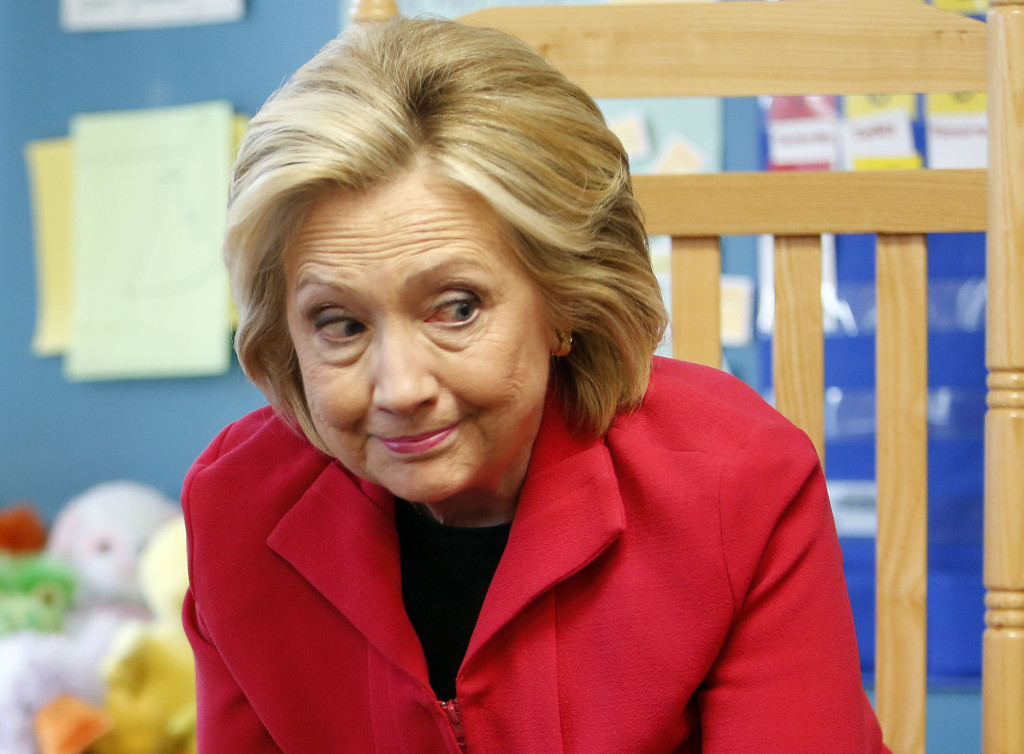
The acting chief executive of the Clinton Foundation says the global philanthropy is working quickly to remedy mistakes it made in how it disclosed donors, saying that its policies on transparency and contributions from foreign governments are “stronger than ever.” Maura Pally posted the statement Sunday on the foundation’s website amid swirling questions about its financial support as Democrat Hillary Rodham Clinton embarks on her presidential campaign. The former secretary of state in recent weeks has sought to dismiss the scrutiny as “distractions and attacks” by Republicans seeking to discredit her, but on Sunday, Pally acknowledged the foundation had made some errors. Pally said the Clinton Foundation expected to refile some of its tax forms, following a voluntary external review, because it had “mistakenly combined” government grants with other donations. She stressed the total revenue was reported accurately and that grants were properly broken out on audited statements on its website. “Yes, we made mistakes, as many organizations of our size do, but we are acting quickly to remedy them, and have taken steps to ensure they don’t happen in the future,” she said. Pally defended the foundation’s charitable work and reaffirmed its commitment to transparency. She explained that it took “unprecedented steps” to avoid potential conflicts of interest with annual disclosure of donors when Clinton became secretary of state in 2009. Now that Clinton is running for president, Pally said, the foundation intends to release the information quarterly and limit foreign government contributions to a “handful of governments.” Pally also described the foundation’s work with the Clinton Giustra Enterprise Partnership, which she said received funding from a separate organization in Canada. She said that partnership does not disclose its donors because under Canadian law they are not disclosed without prior permission from each donor. “This is hardly an effort on our part to avoid transparency,” Pally said. That partnership has come under scrutiny because it is named after Frank Giustra, a Canadian mining billionaire who has donated more than $31 million to the Clinton Foundation since the mid-2000s. The Clinton Foundation was started in 2001 by former President Bill Clinton. Amid the questions about the foundation’s financing, Bill Clinton and daughter Chelsea will be starting a nine-day trip to Africa on Wednesday to highlight the group’s work on issues such as economic growth and empowerment, climate change and empowering women and girls. Republished with permission of The Associated Press.
Auburn report makes case for bold budget proposal from Senate
Everyone watching knew something big was on the horizon to address the budget crisis. In fact, as soon as Monday we’re expected to see the case laid out for at least two proposals to increase revenue with no or limited tax increases. The big plan is a significant expansion of gaming in Alabama. The question is who will make the ultimate decision? Sources say there are two very different proposals being considered. The first is expected to come from the Senate Pro Tem Del Marsh’s office and will put the issue in the hands of the voters by way of a constitutional amendment, The second is a proposal that would require a heavy-handed move by Gov. Robert Bentley to give a sweetheart deal to the Poarch Band of Creek Indians. When voters rejected a constitutional amendment in 1999, it was under very different political and economic circumstances. Voters today may be more open to the idea. The threats surrounding across-the-board budget cuts are being met with significant resistance, as is the governor’s plan to raise taxes. The Senate’s proposal is a direct result of a report commissioned by Marsh’s office by the Institute for Accountability and Government Efficiency (IAGE) at Auburn Montgomery. The report, expected to be released Monday, is titled “Assessment of Lottery and Gaming Programs Across the United States,” and looks at the costs and benefits of existing lottery and casinos in surrounding states. It uses historical evidence to estimate the potential revenue and jobs created by expanding both in Alabama. The surrounding states covered in the report include Arkansas, Florida, Georgia, Louisiana and Tennessee. The economic impact report is based on the premise that Class III gaming would be expanded at the four parimutual sites in the state: Birmingham, Greenetrack, Victoryland and Mobile. All would be expanded with slots and tables. The estimated number of slot machines and tables each casino would have was said to be based on second study “State of Alabama Gaming Market Assessment and Impact Study,” by Global Market Advisors LLC in 2015. A look at the numbers in the AUM report: A staggering 13,000 plus jobs will be created; $331,667,963 is the expected annual revenue from a state-run lottery system, and; Depending on the tax rate, the estimated revenue from expanded casinos will be with a rate of 13 percent, $63,015,148, or up to $73,863,632 with a 15 percent tax rate. That adds up to nearly $400 million in tax revenue to be collected for the general fund with the expansion of both. The Washington Post reported on Alabama’s lottery situation a week ago saying, “Forty years ago, these losing games of chance were illegal in every state. But they have proven so lucrative and politically irresistible that 44 states have since started selling tickets to the lottery. In 2013, state-run lotteries brought in $62 billion, which amounts to $257 in sales to every adult in the nation.” In an interview with The Associated Press in February of last year Bentley had this to say about expanding the lottery: “That is up to the Legislature. That’s a constitutional amendment. I don’t even sign a constitutional amendment.” He went on to say he wouldn’t fight a lottery constitutional amendment in the Legislature: “I always believe in the people’s right to vote.” The people may get to use their right soon.
Angi Stalnaker: Remembering April 27
Every Alabamian has their own story of April 27, 2011, the day of the largest natural disaster in the state’s history when more than 230 Alabamians lost their lives. On that day towns like Hackleburg, Pratt City, and Phil Campbell moved became communities forced to unite after facing unimaginable destruction. Fifty years from now, people will still recount how more than 60 monster tornadoes tore across the land, destroyed homes and schools, and permanently changed the topography of our future. I remember the events of that and subsequent days from the perspective of a staffer for Gov. Robert Bentley. I saw the tragic events as they unfolded and the recovery as a first-hand witness to leadership in the wake of tragedy. Speaking directly to the people By midafternoon that day, countless tornadoes had wreaked havoc on thousands of square miles of the state. The EMA director kept Governor Bentley constantly updated. I saw pictures and video of the devastation from my computer screen in the chief of staff’s suite. The National Guard and every governmental agency and available person were trying to help tornado victims. I was with several other staff members in the governor’s office when he told us he wanted to speak directly to the people of Alabama. A short time later, we crowded into studio at the bottom of Dexter Avenue as the newly inaugurated governor began his address. During the live broadcast, Bentley spoke in a calm authoritative tone. He gave information for those who needed help, numbers to call and other pertinent information. But most of all, he projected the reassuring knowledge that he cared, was in charge, and that help was on the way. Just before that broadcast, Tuscaloosa had been hit by a monster twister. We didn’t know the extent of the damage or how many lives had been lost, but we knew it was bad, really bad. The tornado had just hit head on the governor’s home city, home to three of his sons and six of his grandchildren, and home to his church and to his friends . Yet Governor Bentley delivered his address in a calm and reassuring way. It must have taken great strength to deliver that address, a strength of leadership I don’t know that I’ll ever possess to put the personal aside and do what was best for the state. In that moment, though, and for months afterward, that’s is exactly what he did. 100 days You don’t go into government inherently knowing everything you need to know. There are always things to learn from names and office locations to procedures and policies. This administration was no different and because April 27, 2011, was only the 100th day of the Bentley administration, we were all still very new to the executive branch. We had just made it through inauguration and into our first legislative session. Now we faced the largest natural disaster in Alabama’s history. Nothing prepared us for that, but that may have been an advantage because not knowing how things had been done in the past allowed us to follow the governor’s lead and do what he thought best. That allowed the recovery to go much smoother than anyone anticipated. A little common sense goes a long way. Where do we go? What do we do? When Bentley asked me to be his campaign manager for the 2010 gubernatorial election it was the greatest honor of my life. One opportunity it afforded me was the chance to meet the University of Alabama students who were campaign volunteers and interns. The Bentley Gubernatorial Election Headquarters was at the corner of 15th Street and McFarland just a few blocks from campus so we were always a favorite hangout for politically interested college students. Shortly after the tornado hit Tuscaloosa, many of us who had transitioned to government from the campaign tried to contact the students we had gotten to know. Telephone lines were down, cell phone towers were destroyed, and calling into Tuscaloosa was extremely difficult. For hours, I heard nothing from anyone I tried to reach. At about 8 p.m. my phone rang and the voice on the other end said, “Miss Angi, where do we go? What do we do?” It was a young man from Chicago who had worked feverishly on the campaign. We affectionately referred to him as “Research Joe.” I could tell he was scared and worried. He was with a group of friends but their apartments were mostly destroyed or heavily damaged. They were OK, though, and he asked what to do next. I told him to make it to the campus rec center where there would be people to help. I often wonder what that sweet kid from Chicago thought when he emerged from his tornado-safe place to see what happened around him. I often wonder whether he questioned his decision to come to Tuscaloosa. He graduated with honors and is now in a Northern law school. I’m fairly confident that he will be president one day. As the night progressed, I heard from almost every one of those campaign volunteers who had remained in Tuscaloosa. They were all shaken and scared but alive and uninjured. A tremendous relief, it gave us all a little hope. “Make sure they are fed” As the storms subsided in the evening, the focus turned to recovery. About six of us were with Governor Bentley in his office when he ended a phone call with Art Falkner and Jeff Byard from the EMA Headquarters in Clanton. By that point, the EMA bunker had filled with people well-trained in disaster response. They were going to be in that Chilton County bunker a very long time. Bentley sat silent for a few minutes, then he stood to take out his wallet. He handed me money, and asked me to go buy food and take it to Clanton. I will never forget his words: “We have to make sure they are fed.” I did as instructed
Senate bill would let the people enact laws by popular vote
Major questions like same-sex marriage, education standards, and voting requirements could be put before Alabama voters if lawmakers pass a bill now sitting in the Senate. Senate Bill 73 would amend the state constitution to establish a process for enacting general laws and constitutional amendments by voter initiative measure, rather than through legislation. Sponsored by Sen. Dick Brewbaker, the bill requires lawmakers to treat proposals with enough valid voter signatures like any other bill put before the legislature. If lawmakers reject the proposal, or fail to act on it by the end of the session, the question would be put before voters during the next election. Lawmakers could also write their own alternative proposal for popular vote on the same ballot. If SB 73 passes, Alabama would join 24 other states with an initiative or referendum process. While states often use ballot initiatives to decide on taxes, state spending, and administrative issues, voters in several states used a process similar to the one in SB 73 to decide major, controversial issues: (Examples courtesy of Ballotpedia, a nonpartisan project sponsored by the Lucy Burns Institute) Mississippi voters in 2004 decided that marriage could only take place and be valid only between a man and a woman. Michigan voters decided in favor of stem cell research during the 2008 election. That year, Michigan also used a ballot initiative to legalize medical marijuana; Massachusetts voters did the same two years later. In 2011, Ohio residents voted for exemption from national health care mandates. In 2012, Maine became one of the first states to approve same sex marriage through a popular vote, rather than a court decision or legislative act. With just 14 days left in the 2015 legislative session, Senate Bill 73 still awaits debate in the Senate Committee on Constitution, Ethics and Elections.
