
Rand Paul says comments about Baltimore were misinterpreted
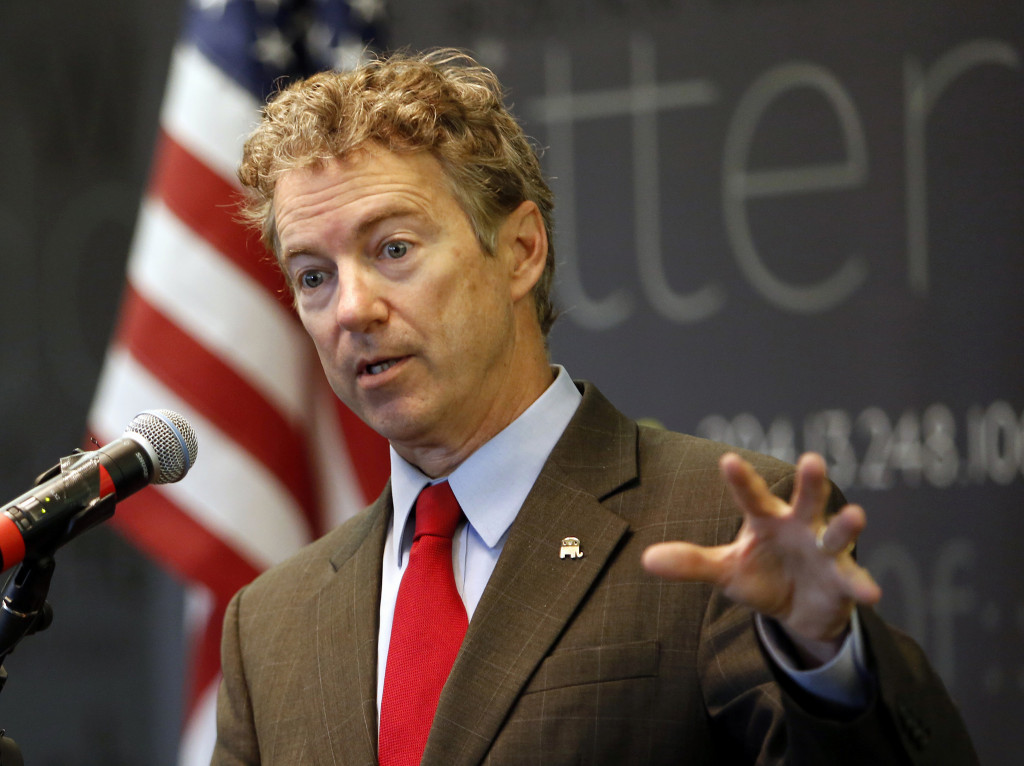
Kentucky Sen. Rand Paul built his presidential campaign on being “a different kind of Republican,” which has meant an outreach to minority voters. But Paul’s comments about the riots in Baltimore after the death of an black man while in police custody have been criticized as out of touch for someone who has spent so much time seeking inroads with the black community. “I came through the train on Baltimore last night, and I’m glad the train didn’t stop,” the Kentucky senator told radio host Laura Ingraham this week, with a slight chuckle. On Friday, Paul regretted that he’d come across as dismissive of the anguish in the city. But he put the blame on Democratic critics, not himself, saying they misinterpreted his remarks. “Saying that you weren’t going to stop, you know, didn’t want to stop during a riot, I thought that was just sort of an offhand thing that wasn’t intended to be anything more than that,” he said. “You always regret offhand comments after you say them because people misinterpret them. But I think people shouldn’t misinterpret my intentions. I’m one of the few people … traveling the country trying to come up with solutions for our big cities.” In the two years leading up to his presidential campaign, Paul has visited troubled big cities such as Detroit, promoting “economic freedom zones” where federal taxes would be slashed temporarily to spur growth. He’s introduced legislation that would restore voting rights to some nonviolent convicted felons and proposes eliminating mandatory minimum sentences for low level drug offenses. After the violence in Ferguson, Mo., he said police departments should be barred from buying excess military equipment. “I think I have shown my concern for our big cities’ problems, my concern for those who live in poverty and my concern for those who are treated unfairly by criminal justice by my actions,” Paul said. “One comment, I don’t think, changes what we are doing.” On Friday, prosecutors announced they had filed charges against six police officers in the death of Freddie Gray, for manslaughter, murder and more. His death led to days of rioting that prompted a response from the National Guard and a citywide curfew. Some blamed the anger on income disparity between Baltimore’s poorest neighborhoods, which are mostly black, and wealthier neighborhoods. “I think the sooner you get justice the sooner you bring back calm,” Paul said of the charges. Asked about income inequality Friday in a meeting with 13 business leaders from northern Kentucky and southern Ohio, Paul said it should be understood in a broad context. “The poor have gotten richer in our country, in every decade, and so have the rich,” he said. “The rich are getting richer at a faster clip and there are some people who are left behind.” He said more economic growth and less national debt would mean “everybody does better.” But he said some problems can’t be fixed by the government. He cited the book Coming Apart by Charles Murray that argues people are more successful if they wait to have children until they are married. “The No. 1 risk factor for poverty in our country is having your kids before you are married,” Paul said. “That’s not me casting aspersions on anyone. It’s just a fact, and we should tell our kids this and try to encourage them to make good decisions.” Republished with permission of The Associated Press. Photo Credit: AP Photo/Ed Reinke
Jim Zeigler to unveil lawsuit to stop schools using tax money for political campaigns
State auditor Jim Zeigler plans a Monday news conference to unveil a lawsuit he’s preparing to stop school boards from using taxpayer money to fund campaigns that promote new tax increases to pay for education programs. The move comes in the wake of the “Build Baldwin Now” campaign launched by the Baldwin County Board of Education — complete with its own website — that sought to inform voters about what they claimed was a pressing need for increased funding for the district. Private and public money was spent in the effort. Zeigler says the latter constitutes an inappropriate allocation of public money. Zeigler’s lawsuit will name four members of the Baldwin County school board as well as Alabama Attorney General Luther Strange as co-defendants. A news release from Zeigler’s office states: As a result of the Defendant Members’ vote, the Baldwin County School Board and the Superintendent of the Baldwin County Public Schools spent in excess of $250,000 of public funds on a political campaign for a “yes” vote. State Auditor Jim Zeigler objected to the Board’s spending of taxpayer funds for the political campaign. Plaintiff Zeigler requested Defendant Strange to investigate the violation and take the matter to the Baldwin County, Alabama grand jury. Instead, Defendant Strange made a news announcement on March 30, 2015, the day before the vote, in which Defendant Strange told Plaintiff Zeigler, the Defendant Board Members, and the news media that the Board’s spending of public funds on a political campaign was legal. Defendant Strange relies on an outdated Attorney General’s Opinion issued in 2003 that said this type spending is legal. Accordingly, Defendant Strange has made himself a necessary party to this legal proceeding. The law which Plaintiffs cite and allege herein and that Plaintiffs aver was violated by the Defendants was not passed until 2010. Defendant Strange and the Defendant Board are using a 2003 Attorney General Opinion to interpret a 2010 law. Plaintiffs aver that this use is clearly improper, since the 2010 law was not in existence when the 2003 Attorney General’s Opinion was issued.
Lawmakers say department shouldn’t tax digital transmission
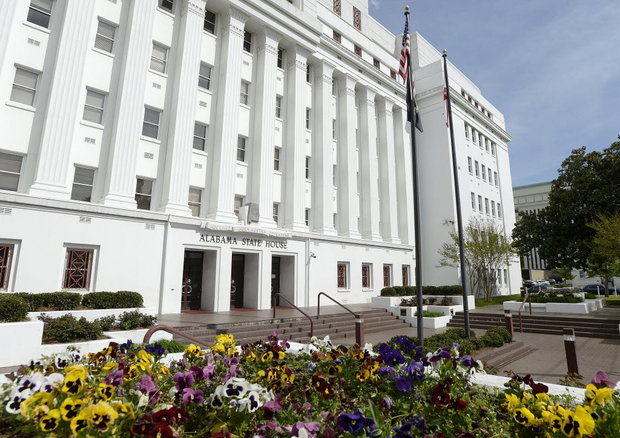
Alabama legislative leaders are asking the Department of Revenue to cancel its plan to tax digital streaming services in the state. Lawmakers in April sent a letter to Revenue Commissioner Julie Magee asking her department to withdraw its plan to tax video and audio services such as Netflix and Pandora. The letter was signed by several members of the Legislature including Speaker of the House Mike Hubbard and Senate President Pro Tem Del Marsh. The rule would require companies to pay a 4 percent rental tax on all sales. A copy of the letter obtained by The Associated Press says new taxes should be approved by the legislature. Revenue officials have said the tax is not a new tax but only an update to existing tax code. Republished with permission of The Associated Press. Photo Credit: AP file photo
Pulitzer winner Joey Kennedy, wife launch animal advocacy website
A new website focusing on animal rights launched this week, though the man behind will be familiar to most Alabama advocates and lawmakers. Pulitzer Prize winner Joey Kennedy and his wife Veronica, a freelance editor and former social media marketer, have launched ALAnimals.com to spotlight animal welfare and protection issues across the state. Kennedy spent more than 33 years as at the Birmingham News and was on its editorial board from 1989 until early this year. In a conversation with ALToday.com, Kennedy said the site will be a clearinghouse of information for animal owners and advocates. “Right now there are dozens of great resources out there, but you’ve got to go to each one,” Kennedy said. “We want to bring that all together so a person can go to our site and get what they need.” One of the site’s major functions will be to spotlight state laws and municipal ordinances concerning treatment of animals and to advocate for stronger protections. “In Alabama, we don’t have a lot of laws that govern animal abuse,” he said. “We finally got a pretty strong abuse law, though it isn’t aggressively enforced.” Among the legislation the group will watch at the state level are Rep. Paul Beckman’s House Bill 548 to place restrictions on puppy mills and Rep. Patricia Todd’s House Bill 563 to treat spay and neuter clinics as veterinary facilities. Kennedy said both proposals sound promising, but may have come too late in the season to be passed this year. “It sounds like it’s on the right track. It’s a baby step, but it’s a good thing. Sometimes you have to go (through the legislative process) three or four times before it finally clicks. What you have to do is introduce it and start walking it through.” In his first post for ALAnimals.com, he called the website a continuation of the animal issues journalism he and his wife have both done over the years. “We have so far to go as a state, on many issues,” Joey Kennedy said. “Animal welfare and protection is among those issues. While we do not have felony laws against animal abuse, many law enforcement officers and prosecutors are slow to make cases, even when the evidence is clear.” While still writing for the Birmingham News and AL.Com Joey Kennedy frequently used his voice and platform as a strong advocate for animals. He was a constant voice in support of legislation to protect nonprofit spay/neuter clinics. Photo credit: By Pugman at en.wikipedia [Public domain], from Wikimedia Commons
#MayDay: 3 bills lawmakers think will boost state’s economic development
Alabama lawmakers will spend this weekend working through Sen. Del Marsh’s gaming legislation for the state economy. In honor of May Day (or International Workers’ Day), here are three other bills moving through the Legislature that could add to the conversation about workforce prospects in Alabama: Sen. Lee Pittman’s legislation to establish a separate board of trustees for Alabama’s two-year colleges is back in the Senate. The bill states that the board would focus on developing highly specialized training programs to prepare entry-level employees to meet growing workforce demands. Under current law, the state board of education is responsible for community colleges, junior colleges, technical colleges, and trade schools. The House Ways and Means Education Committee is considering the Alabama Renewal Act. Sponsored by Rep. Chris Pringle, the legislation would create several new tax credits and small business credits to fuel economic growth. The bill also states that if a company receives Jobs Act incentives and employs veterans for at least 22 percent of its workforce, it can receive an additional tax credit of 0.5 percent of the wages paid to veterans. A proposal from Sen. Quinton Ross would make it illegal for an employer to disqualify an applicant based on their criminal history if their record isn’t directly related to the job. Employers would be barred from even considering a potential employee’s criminal background until a conditional job offer is extended. Ross has argued that the bill would reduce barriers to employment for people with arrest and conviction records, reduce recidivism, and improve economic stability. The Senate panel on fiscal responsibility has not yet voted on the measure.
ICYMI: This week at the Statehouse
What happened at the statehouse this week? Glad you asked! Here are a few things you might have missed from week eight of the 2015 legislative session. •Sen. Cam Ward’s proposal to reform Alabama prisons is inching closer to the finish line. •Victims of domestic violence would have stronger protection under House Bill 320. The legislation passed out of committee this week. •A House panel on commerce considered a bill to add term limits, pay caps, and new members to the Birmingham Water Works Board. •Still no answer on whether ride share services like Uber and Lyft will be coming to Alabama. •Alabama finally has an official crustacean, thanks to legislation passed in the House on Thursday. That was the only bill to come out of the House before lawmakers adjourned for the weekend. Still no word on whether the queen honey bee will become Alabama’s official agricultural insect.
State budget crisis: 3 solutions and a nonstarter on table
The ideal solution to the budget crisis that the state is facing would be to cut, cut, cut. The reality, however, is there will always be those who cry foul and swear that tough cuts can’t be made. They’ll insist government won’t have enough left as if the government will ever have “enough.” So as we limp on to find a solution to the budget crisis it looks like conservatives are left with three viable choices. Tax increases Increased gaming Across-the-board budget cuts The hard-line fiscal conservative position says with certainly tax increases can’t happen. The hard-line social conservative position is do not consider expand gaming or create a lottery. There are conservatives and progressives alike who will say the cuts are too deep and are just unrealistic to fill the whole budget gap. What happens when it’s clear it will likely have to be tax increases or gaming expansion? Which road do you take? Well, I’ll tell you what road you don’t take. You don’t take what amounts to a bribe (even if called something else) to pull a free-market proposal and hand exclusive rights to one group of individuals. That’s the fourth option floating out there that I would say doesn’t seem viable. How can either social or fiscal conservatives say gaming is bad and wrong except when these people do it and so we will grant them a monopoly for it. Let’s also face the reality we already have casino gaming in Alabama. There are also racetracks and neighboring states have lotteries that many Alabama residents play. The moral arguments don’t add up for small government conservatives. All the arguments about the societal costs can be used for smoking and drinking and I don’t see those going away any time soon. Adults have to be able to make decisions on their own. That’s a cornerstone of freedom in our country. So what will it be? We’ll certainly hear more in the coming days as the draft gaming bill is reviewed. What I hope we don’t hear is any true conservatives saying that they’re for handing exclusive rights to one group in exchange for shutting down one of the first rational solutions we’ve seen on the table. Photo credit: Dave Martin/AP
