
Rick Perry to say June 4 if he’ll run again for President

Former Texas Gov. Rick Perry will say whether he is running for president at an announcement next month in Dallas. The longest-serving governor in Texas history has spent months traveling in the early voting states of Iowa, New Hampshire and South Carolina as he gears up for a second White House bid. Perry’s wife, Anita, tweeted the first word of Perry’s plan for an announcement and then emailed supporters about it. “America is facing a time of testing, and it’s clear that we need principled leadership and an optimistic vision to see us through after eight years of the Obama Administration,” she wrote. A spokesman said Friday Perry is not ready to declare his candidacy. “He’s announcing his intentions on June 4,” Perry spokesman Travis Considine said in Washington, where he was traveling with Perry. “He has not said what he’ll be announcing. You’ll have to stay tuned.” Asked if he knew whether Perry had made up his mind, senior adviser Jeff Miller said, “I do know that,” but refused to give any details. When Perry got into the 2012 presidential race, he announced his campaign in South Carolina. He entered as a potential front-runner but flamed out after a series of blunders, including an infamous “oops” moment when Perry couldn’t remember, during a GOP debate, the name of the third Cabinet agency he wanted to eliminate. Perry left office in January and is facing a criminal abuse-of-power indictment in Austin for threatening in 2012 to veto state funding for public corruption prosecutors and then doing so. Besides maintaining his travel schedule, Perry has been studying with policy experts in an effort to make a stronger impression than he did in his first presidential run. Republished with permission of the Associated Press.
GOP wrestling with too many ’16 prospects for a TV debate
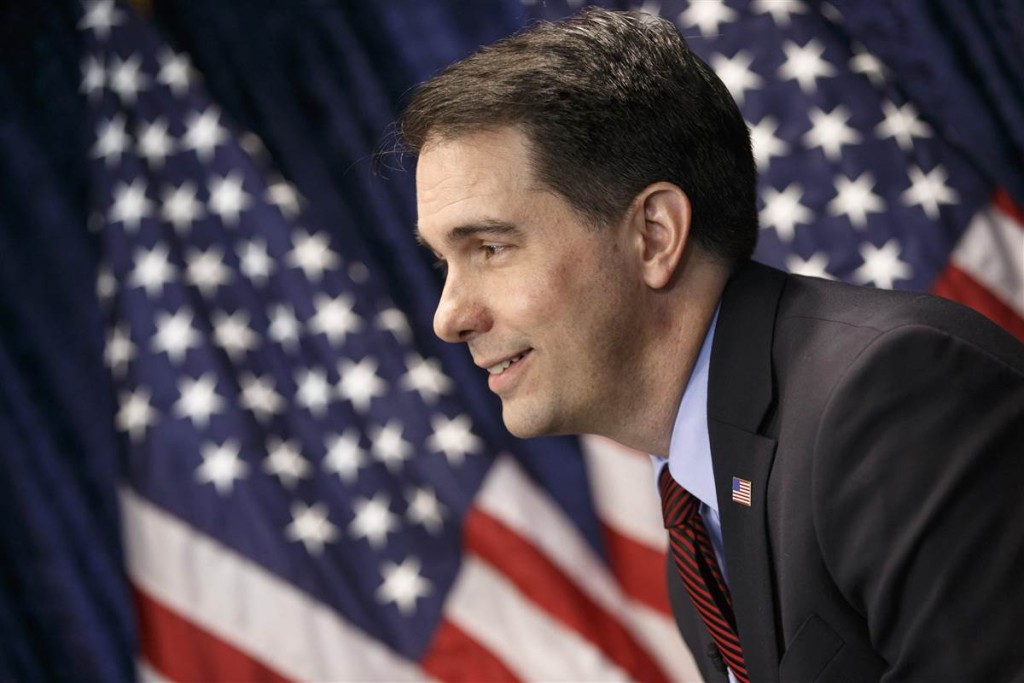
Never have more than 10 candidates taken the stage for a televised Republican presidential debate. Wish the GOP luck in trying to keep it that way. With the party’s first debate set for August, Republicans must decide to either allow what could become a nationally televised circus act, or figure out how to fairly whittle down a field likely to include eight current or former governors, four senators, two accomplished business executives and a renowned neurosurgeon. More than a half-dozen contenders have already begun to lobby party officials for access in a debate season that could be unlike any other. The GOP has an advantage in drawing “one of the most diverse, broad” fields it’s ever had, said Saul Anuzis, a former Republican National Committee member from Michigan. “But what if by the first debate we still have 10 to 15 viable candidates? That’s going to be a zoo.” Part of the problem is basic math. In a 90-minute debate featuring so many candidates, there would be only enough time for opening and closing statements and two, maybe three questions — with no time left over for the interaction between candidates that makes for an actual debate. Thus, a process filled with opportunity as the GOP seeks to highlight its diverse crop of candidates, but also fraught with risk as some of the traditional ways of making the cut could exclude some who have won statewide office, not to mention the only woman and African-American in the field. “This is the political equivalent of breaking an atom open,” said Republican National Committee strategist Sean Spicer. Worried they might be left out, several candidates are encouraging the RNC to consider creative options, including debate “heats.” Brad Todd, an adviser to the super PAC backing Louisiana Gov. Bobby Jindal, is pushing RNC Chairman Reince Priebus to hold two 90-minute debates on consecutive nights featuring different groups of candidates. Rick Santorum, the runner-up in the 2012 Republican primary contest, floated the same idea as he visited with RNC officials in Arizona this week. “I am concerned about potentially a large field and any attempt to try to squeeze that field down to the preferred group,” Santorum said. “If you drew straws to the two different debates, I guarantee you you’d have good people in both debates that would draw audiences.” Others are privately pressing party leaders to allow for the broadest participation possible in the first debate, set for this August in Cleveland. Businessman and TV personality Donald Trump is among those whose advisers have spoken directly with Priebus in recent days. “Selfishly, the networks would put me on because I get great ratings,” said Trump, who has launched a presidential exploratory committee. “We spoke to Reince today and they want me on.” Yet Trump’s place on the debate stage is by no means assured. There is broad agreement that participants must be announced candidates and reach an undetermined threshold in national polling, with final criteria to be approved by the television networks partnering with the party to host 12 debates between August and March. There are currently eight contenders who poll consistently at or above 5 percent: Former Florida Gov. Jeb Bush, Wisconsin Gov. Scott Walker, former Arkansas Gov. Mike Huckabee, Florida Sen. Marco Rubio, Kentucky Sen. Rand Paul, New Jersey Gov. Chris Christie, Texas Sen. Ted Cruz and retired neurosurgeon Ben Carson. While Trump typically polls close to 5 percent when included in surveys, there are several high-profile prospects who do not. Among them: former Pennsylvania Sen. Santorum, former Texas Gov. Rick Perry, Ohio Gov. John Kasich, South Carolina Sen. Lindsey Graham, Louisiana Gov. Bobby Jindal and former technology executive Carly Fiorina. Organizers are also considering factors such as campaign and super PAC fundraising, experience in office, polling in the early voting states and the desire to have as diverse a field on stage as possible. Spicer said Friday the RNC opposes any consideration of race or sex as criteria, but some party officials are particularly focused on elevating Fiorina, the only woman in the Republican field. The overwhelming front-runner on the Democratic side is Hillary Rodham Clinton. “Sex should not be one of the criteria that the committee uses, and I’m quite confident I’ll be on the debate stage,” Fiorina, who is drawing roughly 1 percent in national polls, told reporters this week during the RNC’s spring meeting in Phoenix. Kasich supporters, meanwhile, are incredulous that a two-term governor from a must-win swing state could be excluded. “If they don’t put him in the debate, there’s going to be some explaining to do,” said Ohio GOP chairman Matt Borges. Republished with permission of the Associated Press.
In Ga., Marco Rubio promises ‘transformational change’
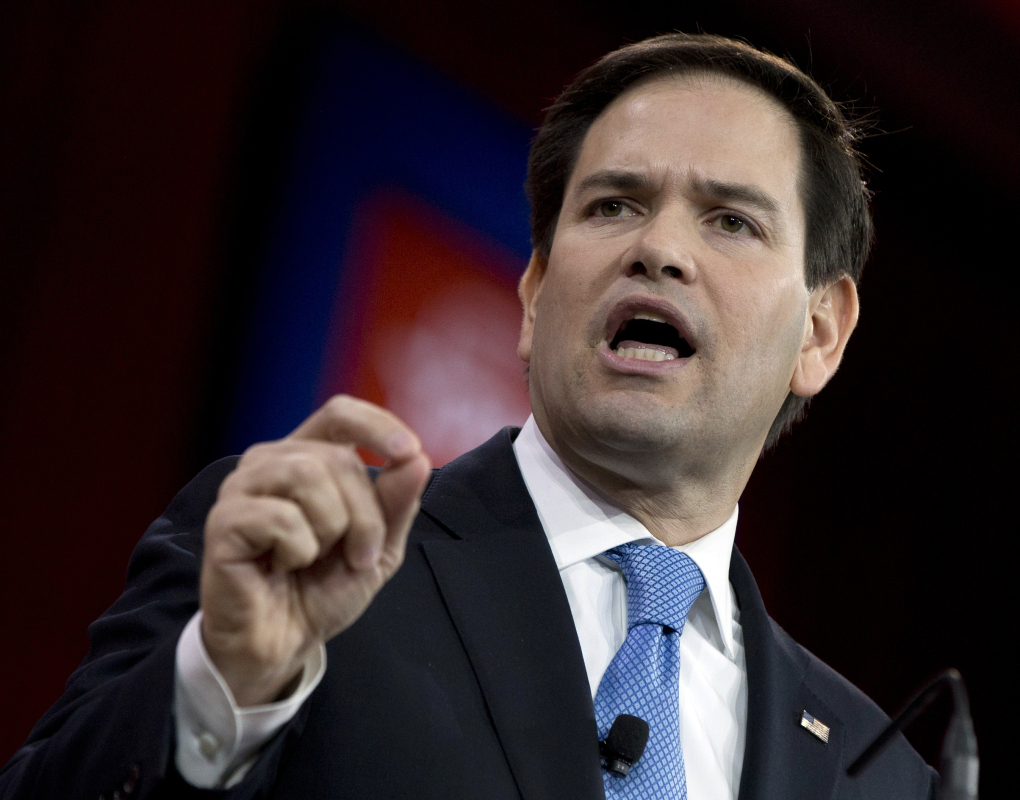
Presidential candidate Marco Rubio didn’t mention Jeb Bush or Hillary Rodham Clinton at the Georgia Republican Convention on Friday, but he said America has too many “outdated” leaders. The Florida senator said “the 20th century is over, and it’s never coming back,” and he promised “transformational” leadership from a new generation. The comments were part of Rubio’s sweeping campaign pitch that paints a dire picture of America today, yet promises a better future. But the theme also helps the 43-year-old senator remind voters that Bush and Clinton have spent decades in public life. Bush, who is 62, is expected to launch his formal campaign later this year. Clinton, who is 67, is the Democratic favorite for 2016. Another declared candidate, Texas Sen. Ted Cruz, will address the GOP later Friday. Republished with permission of the Associated Press.
Martha Roby: Blocking Harmful, Nonsense Regulations
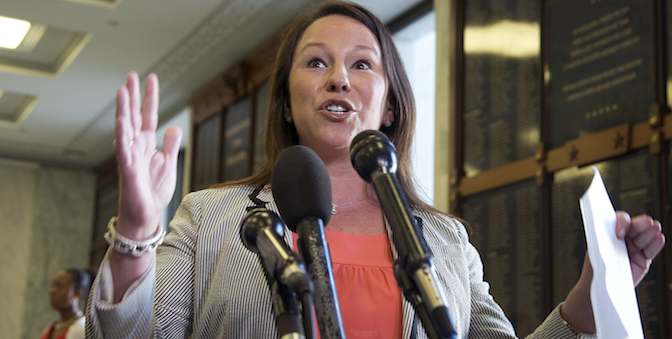
Did you know that federal water regulators have been trying to greatly expand their reach into private lands by seeking to make small ponds, puddles and ditches subject to strict federal regulations? If you’re a farmer or a forester, you probably know exactly what I’m talking about. But, many Americans might not be aware of this federal government scheme to erode property rights and encroach private lands. Since its enactment in the 1970s, the Clean Water Act’s scope of authority to regulate waterways has been limited to “navigable waters,” which are labeled “Waters of the United States.” Smaller, non-navigable, more remote waters have always been the jurisdiction of state and local governments. But now, the Environmental Protection Agency (EPA) and the Army Corps of Engineers have proposed a new rule redefining “Waters of the United States” to include all manner of small areas where water collects, or could collect, such as ditches, puddles and even decorative ponds. Obviously, we all want to ensure rules are followed to keep our waters clean. And, farmers naturally want to maintain a clean environment in order to continue being good stewards of their land. But, this new rule could require many Alabama landowners to obtain a federal permit for everyday farming operations, forcing them to spend thousands to come into compliance with aggressive regulations – all when the waters on or near their land aren’t navigable and the public water supply is not remotely threatened. Not surprisingly, this proposal has been met with strong opposition from Republicans and Democrats alike. This past week, the House passed H.R. 1732, the Regulatory Integrity Protection Act, which blocks the proposed rule from going into effect. The bill instructs the EPA and the Corps to abandon their current proposed rule and start the rule making process over, seeking input from those who would be affected: state and local governments, farmers and private landowners, among others. The Senate is expected to consider similar legislation as well, and the support there is also bi-partisan. This is good news for Alabama farmers, foresters and really property rights in general. I’ve heard from countless individuals in Alabama who are under threat of being aggressively and unnecessarily penalized by federal water regulators under this rule. Trying to expand the definition of navigable waters to include puddles and ditches has never made sense. It reeks of a radical environmental agenda being forced on Americans, and Congress is right to take steps to stop it. ### Martha Roby represents Alabama’s 2nd Congressional District. She is currently serving her third term.
Prison reform, privacy bills awaiting governor

Though the Alabama Legislature has yet to send general fund or education budgets to Gov. Robert Bentley for signature, statewide prison reform and privacy bills are among the pieces of legislation awaiting the governor’s signature. Physicians practicing in Alabama will soon see changes in licensing and fee guidelines under two measures that passed out of the statehouse this week. Senate Bill 125 eases the process of licensing physicians in multiple states and Senate Bill 167 lowers the fees that physicians pay to provide pain management services. Sen. Rodger Smitherman’s Right of Publicity Act went to the Alabama governor this week. Senate Bill 197 establishes the right to exercise commercial control over a person’s likeness and attributes of their personal identity. Last week, the Legislature sent a comprehensive plan to reduce crowding in state prisons to Bentley for signature. The governor has yet to sign Senate Bill 67, which was championed by sponsor Sen. Cam Ward and members of the Prison Reform Task Force. However, according to Rep. Steve Clouse, those reforms would not be funded under the austere budget under consideration by House members.
Alabama delegation gets behind federal National Defense Authorization Act re-approval
The U.S. House of Representatives has passed a 2016 National Defense Authorization Act, funding the Pentagon and related military and intelligence operations through the next fiscal year. The bill was a site for a great deal of activity by Alabama lawmakers, who mostly supported the bill. U.S. Rep. Bradley Byrne, for instance, worked to keep a small fleet of littoral combat ships — in-shore frigates the Navy calls “networked, agile, stealthy surface combatant capable of defeating anti-access and asymmetric threats” — growing in the face of recent cuts. Byrne told Alabama Today he is happy with Friday’s result. “I am very proud of our efforts to secure authorization for three more Littoral Combat Ships,” Byrne said Friday, “My colleagues in Congress are continuing to realize what our Navy leaders have said all along: The LCS is a critical piece of our naval fleet. I will continue to work tirelessly to support our nation’s Navy and the hardworking men and women at the Austal shipyard in Mobile.” Another member of the House Republican caucus from the Yellowhammer state, U.S. Rep. Mike Rogers, also voted “yea” on the measure and largely concurred with Byrne’s findings. “The NDAA is critical in providing for our national defense,” Rogers, a six-term congressman from Alabama’s 3rd District. “I was proud of the provisions included under jurisdiction of the Strategic Forces subcommittee I chair. I was also pleased language was included in the legislation to help protect jobs at facilities funded by the Working Capital Fund, like the Anniston Army Depot.” Rogers also offered an amendment to transfer out-of-date firearms to the federal Civilian Marksmanship Program: “[A]s a gun owner and gun rights supporter, I was thrilled my amendment, which would allow the Army to transfer its surplus vintage firearms to the CMP, was also included. I hope the Senate acts soon on this important piece of legislation.” U.S Rep. Gary Palmer also issued a statement Friday about his support of the measure, which now goes to the Senate for final approval before heading to the desk of President Barack Obama. Specifically he trumpeted his work with U.S. Rep. Mo Brooks, who joined him in supporting the bill. “A strong America is vital to our national security, and to that of our allies. The men and women who wear the uniform deserve to be given the equipment and training they need and the pay and benefits they earn. “I am pleased that the Congress passed an amendment I co-sponsored offered by Rep. Mo Brooks. This amendment stripped a provision that would have allowed illegal immigrants granted amnesty under the president’s unconstitutional executive order to join the military. I do not believe Congress should ratify the Administration’s illegal action, nor do I believe that the NDAA is the appropriate place to legislate concerning illegal immigration.” The Senate is expected to take up the bill soon, though no timeline was immediately available at press time. Amid the key provisions of the bill, according to staff analysis, are the following: Reforms the acquisition strategy to make the process less burdensome while maintaining accountability; Lays the foundation for reforming the military compensation system to help recruit and retain the best; Mandates the implementation of the Pentagon’s planned 20 percent reduction in headquarters budgets and personnel; Eliminates more than 460 mandated reports to free up vital manpower; Creates a Job Training and Post-Service Placement Executive Committee to help move members out of military service and into the workforce; Continues oversight and protection of our troops from sexual assault; Reinforces the mission against the Islamic State of Iraq and the Levant (ISIL); Provides lethal aid to Ukraine in their fight against Russian-backed separatists; Prohibits the closure of Guantanamo Bay; and Authorizes a 2.3 percent pay raise for troops, compared with the President’s proposed 1 percent pay raise. With full support of the Alabama delegation, the bill passed Friday afternoon by a largely party-line 269-151 vote on the House floor.
Alabama Statehouse week in review: May 12-14
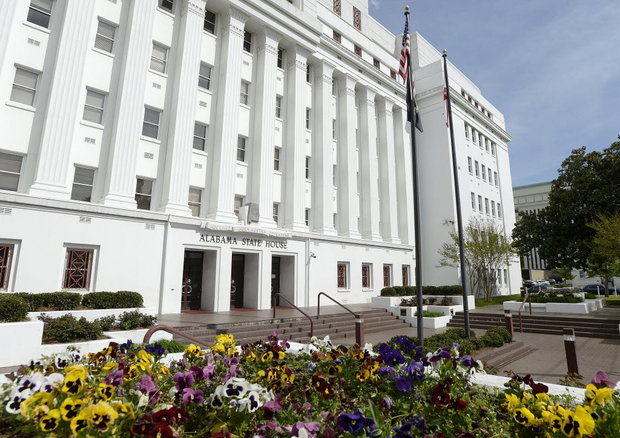
Thursday was Day 22 of the Alabama Legislative Session, which means lawmakers have just eight days left to pass budgets for public education and the general fund. Gov. Robert Bentley told The Huntsville Times this week that “the only constitutional duty that the Legislature has is to pass budgets … All this other stuff is just extra. If they fail at that job, then they’ve had a failed session – even though we’ve passed a lot of good bills.” House Republicans did pass a general fund budget out of the Ways and Means Committee on Thursday. The budget includes cuts to Medicaid, prisons and mental health. The proposal includes no tax increases, since House GOP members successfully pulled those from consideration Tuesday. Ways and Means General Fund Chairman Steve Clouse said in a prepared statement that that the budget package is simply a vehicle to send to the Senate so lawmakers there can send back their own budget proposal. On the heels of Clouse’s statement, Bentley issued his own strong language to the Legislature via reporters: “This budget is unworkable, it’s irresponsible, it really hurts people. The people who depend on the general fund for services – and that really includes everybody in the state of Alabama – will be hurt by this budget.” The governor also said that a Special Session is “certainly more likely.” Meanwhile, the Senate Committee on Tourism and Marketing cleared Sen. Del Marsh’s gambling proposal by a 5-3 vote. Several items not related to budget moved out of the Alabama statehouse this week. Here are a few that we’ve been watching: Funding for the Children First Trust Fund (House Bill 129) was approved by the House Ways and Means Committee by a unanimous voice vote. As money from the landmark tobacco settlement comes to Alabama, legislators appropriate a portion to the Children First Trust Fund to cover juvenile services, mental health and substance abuse programs, and child abuse and neglect. • • • Lawmakers gave a favorable report to House Bill 563 this week, though bill sponsor Rep. Patricia Todd told AL.com that the bill may not get much farther. She and Rep. Howard Sanderford sponsored the legislation to ensure that only licensed veterinarians can make medical or surgical decisions on the treatment of animals. The bill also says spay and neuter clinics would be regulated as veterinary facilities. • • • A bill to give judges, ministers and other officiants the right to refuse to perform marriage ceremonies is inching closer to becoming law, after a favorable report by the Senate Judiciary Committee this week. House Bill 56 passed the House in mid-March after four hours of emotional debate, AL.com reported. Bill sponsor Rep. Jim Hill said he brought the legislation after hearing from judges and ministers concerned about being forced to perform marriage ceremonies for gay couples. • • • The Senate Judiciary Committee also gave a favorable report to House Bill 237, a bill that would give grandparents the right to petition for visitation with their grandchildren. • • • Lawmakers voted down a bill that would impose term limits on the State Board of Education. The Montgomery Advertiser reported that committee members were concerned about the potential loss of institutional knowledge. • • • The Senate Committee on Fiscal Responsibility and Economic Development voted in favor of Senate Bill 452, legislation brought forth by Sen. Bill Holtzclaw to allow brewpubs to sell beer for off-premise (as well as on-premise) consumption. Keep checking ALToday.com for updates.
Mo Brooks leads U.S. House GOP to strip immigration language from defense bill
U.S. House conservatives on Thursday voted down a nonbinding provision aimed at helping young immigrants without permanent legal status enlist in the military, angering some fellow Republicans and handing Democrats a political issue heading into an election year. The vote was 221-202 to remove the measure from Congress’ annual defense policy bill. Some 20 Republicans voted “no” but couldn’t overcome conservatives who threatened to oppose the overall bill if they didn’t get their way. “This Congress should support and represent Americans by voting to stop military service opportunities from being taken from struggling American families in order to give them to illegal aliens,” GOP Rep. Mo Brooks of Alabama, who led the fight, argued on the House floor ahead of the vote. The handful of Republicans on the other side of the issue struggled to round up votes. Their job was made harder because Democrats had already decided to vote against the defense bill for unrelated budgetary issues, giving Brooks and his supporters leverage to bring down the bill if they didn’t prevail. “This is a mistake,” said Rep. Carlos Curbelo, a freshman Republican from Florida. “It sends the wrong message to the country. I assure you that the overwhelming majority of Americans are for allowing young people who were raised in this country, who love this country and want to serve it, to have that opportunity.” Democrats wasted no time in jumping on an issue that could help them mobilize Latino voters heading into a presidential election year. House Democratic leader Nancy Pelosi of California and her top lieutenants held a news conference to denounce Republicans over the issue, and presidential candidate Hillary Rodham Clinton also got in on the action. She issued a prepared statement from her political director, Amanda Renteria, saying: “If these courageous young men and women want to serve, they should be honored and celebrated, not discriminated against.” The debate revived the simmering partisan dispute over executive actions President Barack Obama took this past fall to defer deportations for millions of immigrants in this country illegally, including expanding protections for those, known as Dreamers, who arrived in the United States as young children. Many Republicans argued that supporting the provision included in the defense bill would have validated the actions Obama took, which have been challenged in court and are on hold pending a ruling by the 5th U.S. Circuit Court of Appeals. “The House should not take action to legitimize the president’s unconstitutional overreach,” said House Judiciary Chairman Bob Goodlatte, a Virginia Republican. Other Republicans argued that the $612 billion defense policy bill, which covers a multitude of military issues, was not the place for a debate on immigration. The measure by Democratic Rep. Ruben Gallego of Arizona would have expressed the House’s view that the Pentagon should study whether military enlistment should be opened to Dreamers. It was added to the defense bill during a marathon committee session last month, with the support of six Republicans. But several Republicans asserted Thursday that it shouldn’t have been included in the first place, suggesting that perhaps it only was because the debate occurred so late at night and people were not fully focusing. “It went for 18 hours, late in the process one of our members offered an amendment to insert the immigration issue into this bill, it was unfortunate and it was inappropriate,” said Alabama Rep. Bradley Byrne. Gallego disputed that argument, saying his amendment was offered about 10:30 p.m., which he asserted was not overly late. Republished with permission from The Associated Press.
Bill would open more of Gulf to oil and gas drilling

U.S. Sens. Thad Cochran and Roger Wicker of Mississippi are supporting legislation to expand energy exploration in the Gulf of Mexico. The Republican lawmakers are co-sponsors of a bill that will also provide additional revenue for Mississippi, Louisiana, Alabama and Texas. The legislation, introduced by U.S. Sen. Bill Cassidy, a Louisiana Republican, would amend a 2006 law to open parts of the Outer Continental Shelf for oil and gas exploration. It would redefine President Barack Obama‘s Eastern Gulf of Mexico drilling moratoria to open access to energy resources in areas 50 miles from the Florida coastline. Cochran and Wicker say the legislation also raises the revenue sharing cap to $700 million annually from the current $500 million, allowing the four coastal states greater say in the use of their offshore drilling revenues. “Offshore energy exploration is important to boosting the Gulf Coast’s overall economy,” Wicker said in a news release. “America thrives when our Gulf Coast thrives. This bill would provide precisely what Mississippi needs to prosper — an increase in jobs, revenue, and use of our natural resources.” Cochran said Mississippi’s energy industry is diversified and growing, making it important for job creation and meeting national energy goals. “Our energy policies should be geared toward greater U.S. energy and economic security, and that means responsibly maximizing our own energy resources. This legislation would move us in that direction for the benefit of our nation and Mississippi,” he said. Cochran said a 2014 study by Quest Offshore estimates that developing oil and gas operations in the eastern Gulf of Mexico could, by 2035, produce nearly 1 million barrels of oil equivalent per day and contribute more than $18 billion per year to the U.S. economy. Republican U.S. Sens. David Vitter of Louisiana and John Cornyn of Texas are also co-sponsors of the legislation. Republished with permission from The Associated Press.
Auditor Jim Zeigler: AG Luther Strange has conflict of interest in Baldwin tax case
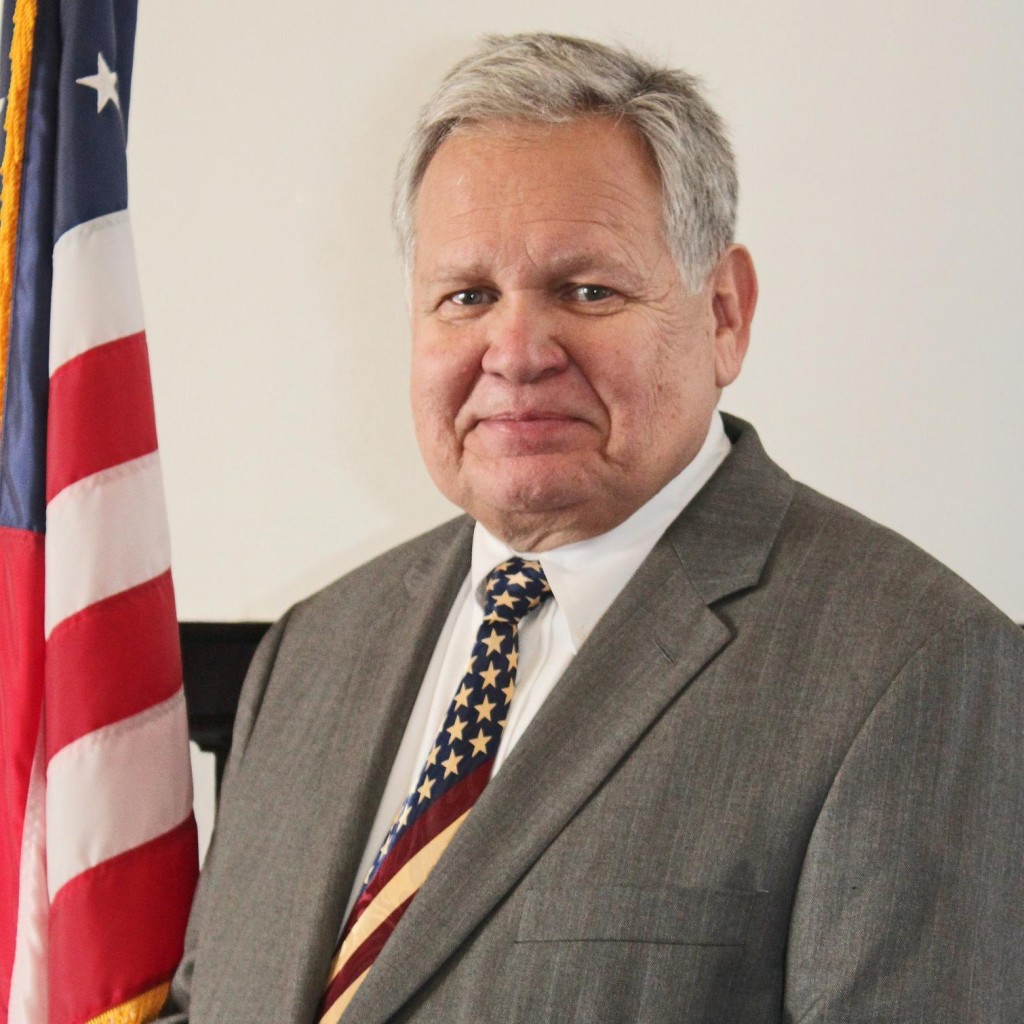
Statewide-elected auditor Jim Zeigler said early Friday that Attorney General Luther Strange cannot adequately rule on the legality of his recently filed challenge to campaigns for public tax dollars funded by taxpayers’ money because Strange carries a conflict of interest in the matter. “Attorney General Strange is also a defendant in this lawsuit,” Zeigler said in a prepared statement. “We will prove that he issued an erroneous AG opinion saying it was legal for the school board to spend taxpayer funds in a campaign for a tax increase. Since it was this strange opinion that caused this issue, it would a conflict to have him or his staff issue another erroneous opinion that taxpayer funds can be used to defend individuals who misspent taxpayer money. “ Baldwin County School Board members sought — but did not receive — voters’ support to increase tax rates in March to pay for new school construction and to create new teaching positions in the fast-growing school district east of Mobile. Zeigler’s lawsuit charges that the campaign was inappropriate under state law. “The Baldwin School Board did not get the message from voters and taxpayers,” Zeigler said. “Taxpayer money is to be used for operations of the school system — not for political campaigning and not to defend lawsuits against individual officials for violating the law.” Zeigler went on to chide Strange for “arrogance” in his alleged cooperation with the Baldwin County effort. “This is the worst political arrogance I have seen,” Zeigler said. “They are sued for illegally spending taxpayer money in an election campaign, so now they want to spend more taxpayer money defending the individuals in the lawsuit. They have doubled-down on misspending taxpayer money for wrong purposes.” Zeigler and two taxpayers of Baldwin County are plaintiffs in the complaint, which names Strange, four members of the Baldwin County Board of Education and Baldwin Superintendent of Education Robbie Owen. No response to the suit has yet been filed by the attorney general or Baldwin officials, nor have dates been set for hearings. The case is to go before Montgomery County Circuit Judge Greg Griffin. On March 31, the referendum in question was put to voters in Baldwin County. Its purpose was to decide three propositions of renewals of existing property taxes and two propositions of proposed new property tax increases for the Baldwin County School Board.
