
Once vilified, BP now getting credit for gulf tourism boom
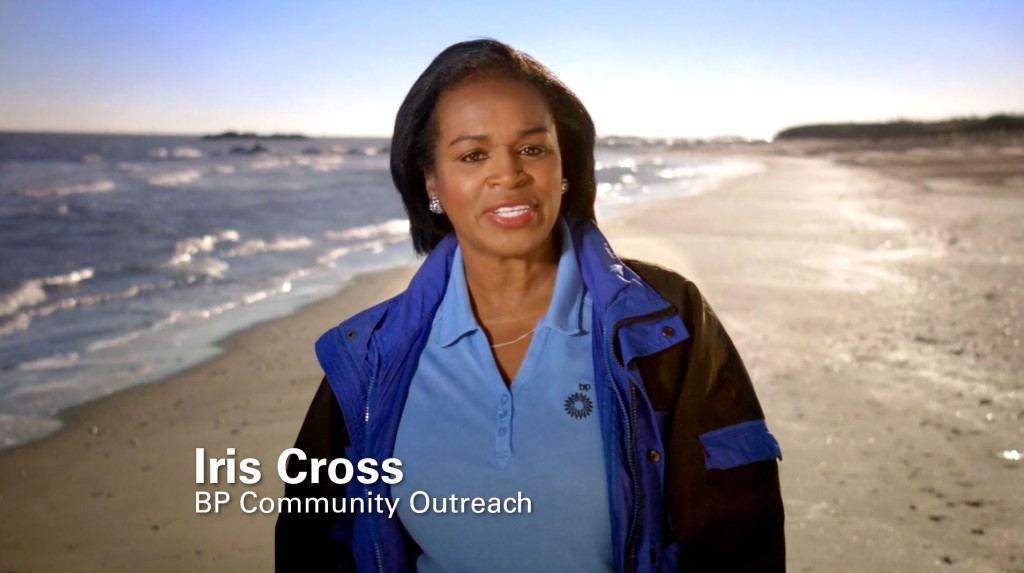
With the Memorial Day holiday here, fallout from the oil spill that left Gulf Coast beaches smeared with gooey tar balls and scared away visitors in 2010 is being credited, oddly, with something no one imagined back then: an increase in tourism in the region. Five years after the BP disaster, the petroleum giant that was vilified during heated town hall meetings for killing a way of life is now being praised by some along the coast for spending more than $230 million to help lure visitors back to an area that some feared would die because of the spill. Questions remain about the long-term environmental effect of the BP disaster, with a report released just last week finding a definite link between the spill and a record die-off of the bottlenose dolphins that tourists love to spot along the northern Gulf Coast. Pockets of oil still blot the sea floor and spots along Louisiana’s coast. Meanwhile, many are still wrangling with BP over spill-related claims. Attorneys for businesses and individuals claiming damages from the spill announced a $211 million settlement last week with Transocean Ltd., owner of the failed Deepwater Horizon drilling rig. Yet, at the same time, parking lots are full outside the same coastal hotels and condominium towers that struggled for business and slashed prices while crude was pouring into the gulf off Louisiana’s coast in 2010. Visitors bob in surf where oil once washed in, and some restaurants have 90-minute waits for dinner on the weekend. Tourist business has doubled in Alabama’s largest beach towns since before the spill, officials say, and Pensacola Beach, Fla., is so clogged with visitors that traffic is a primary problem. Many attribute the change in large part to the millions of dollars that BP spent on tourism grants and advertising that promoted the Gulf Coast nationwide to people who previously didn’t even realize that Alabama and Mississippi had coastlines. “I’ve traveled as recently as the spring to California and there were people there who were saying, ‘Hey, I saw those commercials about Alabama,’” said coastal condominium developer Bill Brett. “I really think those commercials helped.” Brett is an owner of Brett/Robinson Real Estate, where he said business is up about 30 percent since the year before the spill. The company has developed 19 buildings with more than 3,200 condo units on the Alabama coast, including one that was finished with a $37 million settlement from BP after the spill. The tourism surge isn’t happening in a vacuum: Many U.S. attractions have seen big increases during the same period as the economy recovered following the 2008 financial crisis and Americans returned to the road. The theme parks of Orlando, Fla., helped draw a record 62 million visitors to the city last year, and the U.S. Travel Association expects Americans to spend about 5 percent more this Memorial Day than last. But back in 2010, there were questions and fears over whether the tourist economy of the northern Gulf Coast would ever recover from the spill. Residents feared that images of oil-soaked birds and blackened beaches would permanently change travel patterns and leave towns like Gulf Shores, and Destin, Fla., as the forgotten coast. Ted Scarritt, who offers tourist cruises in Orange Beach aboard his 53-foot catamaran “Wild Hearts,” remembers crying and praying while the spill was happening. Scarritt, who also owns a beach service company, purchased the sailboat only months before the spill and had to keep it out of the oil-marred waters that summer. Today all that seems like a bad, distant dream as he watches clear gulf waters slide past the hull during an afternoon of sailing off Alabama’s coast. “We’re just amazingly thankful,” Scarritt said. “I think our area has recovered profoundly. You can look at the water right now, you can look at the beach. We’re fine.” Picking up shells in the surf at Pensacola Beach, Autumn Ventling of Nashville, Tenn., didn’t realize the spill ever occurred; she was just 18 at the time. Today, she said the white-sand beach and emerald-colored water appear beautiful, just like so many other beaches on the Gulf Coast. “I can’t tell anything happened,” said Ventling, 23. Part of that is because of a massive cleanup program BP conducted on beaches after the spill. For months, big machines with metal sifters dug deep to remove remaining mats of tar from the sand, which was then spread back on the seashore. While the cleanup work was going on, BP was also shelling out cash to revive tourism. BP spokesman Jason Ryan said the company provided $179 million in tourism promotion grants to the gulf states of Alabama, Florida, Louisiana and Mississippi, and it aired commercials nationally touting the region as recently as early 2013. The company hasn’t disclosed the cost of the spots, he said. But under an agreement with plaintiff’s attorney who sued over the spill, BP provided another $57 million for private groups and government to promote tourism and seafood on the Gulf Coast. The rebound has been a relief to people like Jeanne Dailey, owner of Newman-Dailey Vacation Rentals in Destin. During the long summer of 2010, Dailey spent many sleepless nights fearing oil would wash ashore and kill the tourism business. The Destin area never got the heavy patches of oil that polluted Alabama beaches, Mississippi coastal islands and the boot of Louisiana, but the perception that the entire coast was coated in oil prompted hundreds of vacationers to cancel travel plans, she said. “Once I made peace with the fact that I might have to declare bankruptcy, things started to get better,” she said. BP’s ad campaign combined with sales incentives combined to lure people back to the area eventually led to a strong rebound, Dailey said. Five years later, her business is thriving and preparing to mark its 30th anniversary. Republished with permission of The Associated Press.
Join Alabama Today in a moment of silence at 3 p.m.

It’s Memorial Day, the day when we honor those who paid the ultimate sacrifice and gave their lives while serving our nation. In addition to honoring their memory I encourage you to remember their loved ones and those who fought beside them. The freedoms we hold dear, God-given but protected by our Constitution, are only as safe as those who are willing to serve and our military and the great cost that many have paid is with their lives so that ours may remain safe. As our families and many families across the nation enjoy an extra day together this weekend, I encourage you to join us at Alabama Today, and the many others across the nation for a moment of silence at 3 p.m. to honor those who gave all. In his Presidential Proclamation – Prayer for Peace President Barak Obama honors our fallen heroes and gives the history of this special day:ƒƒ PRAYER FOR PEACE, MEMORIAL DAY, 2015 – – – – – – – BY THE PRESIDENT OF THE UNITED STATES OF AMERICA A PROCLAMATION On Memorial Day, the United States pauses to honor the fallen heroes who died in service to our Nation. With heavy hearts and a sense of profound gratitude, we mourn these women and men — parents, children, loved ones, comrades-in-arms, friends, and all those known and unknown — who believed so deeply in what our country could be they were willing to give their lives to protect its promise. Our hearts ache in their absence, but their spirit gives us strength to continue their work of securing and renewing the liberties that all Americans cherish and for which these heroes gave their last full measure of devotion. In solemn reflection, we gather — in small towns and big cities, on battlefields, in cemeteries, and at sacred places where blood has been shed for freedom’s cause — throughout our country and around the world to remember the unbroken chain of patriots who won independence, saved our Union, defeated fascism, and protected the Nation we love from emerging threats in a changing world. Today, their legacy is carried forward by a new generation of servicemen and women and all who strive to shape a more perfect America; and their enormous sacrifices continue to make our opportunity possible. We owe all those who sacrifice in our name a tremendous debt, including our Nation’s mothers and fathers who have given their daughters and sons to America, spouses and partners who shoulder the weight of unthinkable loss, and courageous children in whom the legacies of their parents live on. As a Nation, we must uphold our obligations to these Gold Star families. We have pledged to them that they will never walk alone — that their country will be there for them always — and we must work every day to make good on this promise. Our Nation will never forget the valor and distinction of the women and men who defend freedom, justice, and peace. Today, we rededicate ourselves to commitments equal to the caliber of those who have rendered the highest service: to support our troops with the resources they need to do their jobs; to never stop searching for those who have gone missing or are prisoners of war; to ensure all our veterans have access to the care and benefits they have earned and deserve; and to continue our constant work of building a Nation worthy of the heroes we honor today. In honor of all of our fallen service members, the Congress, by a joint resolution approved May 11, 1950, as amended (36 U.S.C. 116), has requested the President issue a proclamation calling on the people of the United States to observe each Memorial Day as a day of prayer for permanent peace and designating a period on that day when the people of the United States might unite in prayer. The Congress, by Public Law 106-579, has also designated 3:00 p.m. local time on that day as a time for all Americans to observe, in their own way, the National Moment of Remembrance. NOW, THEREFORE, I, BARACK OBAMA, President of the United States of America, do hereby proclaim Memorial Day, May 25, 2015, as a day of prayer for permanent peace, and I designate the hour beginning in each locality at 11:00 a.m. of that day as a time during which people may unite in prayer. I also ask all Americans to observe the National Moment of Remembrance beginning at 3:00 p.m. local time on Memorial Day. I request the Governors of the United States and its Territories, and the appropriate officials of all units of government, to direct that the flag be flown at half-staff until noon on this Memorial Day on all buildings, grounds, and naval vessels throughout the United States and in all areas under its jurisdiction and control. I also request the people of the United States to display the flag at half-staff from their homes for the customary forenoon period. IN WITNESS WHEREOF, I have hereunto set my hand this twenty-second day of May, in the year of our Lord two thousand fifteen, and of the Independence of the United States of America the two hundred and thirty-ninth. BARACK OBAMA
“Ugly” potential fallout from Supreme Court health care case

A U.S. Supreme Court ruling due in a few weeks could wipe out health insurance for millions of people covered by President Barack Obama‘s health care law. But it’s Republicans — not White House officials — who have been talking about damage control. A likely reason: Twenty-six of the 34 states that would be most affected by the ruling have Republican governors, and 22 of the 24 GOP Senate seats up in 2016 are in those states. Obama’s law offers subsidized private insurance to people without access to it on the job. In the court case, opponents of the law argue that its literal wording allows the federal government to subsidize coverage only in states that set up their own health insurance markets. Most states have not done so, because of the intense partisanship over “Obamacare” and in some cases because of technical problems. Instead, they rely on the federal HealthCare.gov website. If the court invalidates the subsidies in those states, an estimated 8 million people could lose coverage. The results would be “ugly,” said Sandy Praeger, a former Kansas insurance commissioner. “People who are reasonably healthy would just drop coverage,” she said. “Only the unhealthy would keep buying health care. It would really exacerbate the problem of the cost of health insurance.” Praeger, a Republican who retired this year, called it “a classic death spiral,” using a term for market collapse. Oral arguments on March 4 revealed a divided court. Chief Justice John Roberts and Justice Anthony Kennedy seemingly are key to the outcome, which won’t be known until late June. If the subsidies survive, the Affordable Care Act will look like settled law to all but its most passionate opponents. But if they are overturned, the shock could carry into next year’s elections. Some potential consequences: • • • Bad timing Around the time when the court announces its decision, insurers will be working to finalize premiums and plans for the coming year. Contracts with the government for 2016 health law coverage have to be signed by early fall. If the subsidies are overturned, insurers would have to tear up their projections about markets in more than half the states. Populous states such as Texas, Florida, Ohio, Illinois, New Jersey, Georgia and Pennsylvania would be among those affected. State lawmakers could mitigate the impact by setting up their own insurance markets, or exchanges. But that can’t be done overnight. States might try authorizing an exchange, and then contracting with the federal government to run it. But that sort of end run might prompt lawsuits from opponents of the law. In any case, most state legislatures will be out of session by the summer. During arguments, Justice Samuel Alito raised the possibility that the court might be able to delay the effective date of its decision. Even a delay through the end of this year wouldn’t buy much time. Enrollment for 2016 health law plans is scheduled to start Nov. 1. • • • House of cards The health law was designed as a balancing act. Insurers can’t turn people away because of health problems, but most healthy people are required to contribute to the insurance pool, and the government subsidizes most of the premium for low- to middle-income households. Take away subsidies, and the other two parts become unstable. The law’s requirement to carry insurance, never popular, would probably become the biggest target for repeal. “My guess is there would be overwhelming political support for the elimination of the individual mandate if people can’t afford the premiums,” said former Sen. Tom Daschle, D-S.D., who was an influential Obama adviser on health care. Insurers would demand relief from provisions of the law intended to limit premium increases, or they might drop out of the insurance exchanges. • • • Sticker shock for self-pay consumers Many people still buy individual health care policies directly from an insurance company, bypassing the law’s markets and paying the full cost. They tend to be small-business owners, self-employed professionals and early retirees. But even they would not escape the tumult in states losing subsidies. The health law created one big insurance pool in each state, combining customers who purchase their policies directly with those who buy through the government market. If healthy people exit the insurance exchanges in droves, premiums for those buying directly would go up. Some may be unable to afford the higher cost. “It would set off cascading events,” said Larry Levitt of the nonpartisan Kaiser Family Foundation. “The individual market would empty out as premiums rise significantly.” • • • Republicans to the rescue? Leading congressional Republicans have been walking a fine line, opposing the law in the Supreme Court case while pledging to protect consumers if their side wins. If the subsidies are overturned, Republicans will first try blaming Obama and the Democrats for writing flawed legislation and then trying to paper over problems with regulations. Then they’ll move ahead with a patch to appease angry constituents. A bill introduced by Sen. Ron Johnson, R-Wis., would continue the subsidies for existing customers only on the federal exchange until Sept. 2017. That would open a window for states to act, but it would ultimately leave the problem for the next president and Congress. Senate Majority Leader Mitch McConnell, R-Ky., is a co-sponsor. Johnson’s bill would repeal the requirements for individuals to have insurance and for larger employers to offer coverage to workers. Obama is unlikely to accept any of those changes. “The president is likely to veto whatever we would propose, because we don’t have a willing partner,” said Sen. John Barrasso, R-Wyo., leader of a GOP working group on health care. Republished with permission of The Associated Press.
