
Alabama business roundup: headlines from across the state

Here are some of this week’s top business stories from across the state: AL.com: Blue Bell recall: Sylacauga ice cream plant samples contained listeria Tests from environmental samples collected at Blue Bell Creameries’ Sylacauga plant on April 7 found evidence of listeria, according to documents released by the U.S. Food and Drug Administration. The results came at the same time the Centers for Disease Control announced the end of its investigation into the listeria outbreak associated with Blue Bell’s ice cream, which underwent a product recall in April that has kept the ice cream off store shelves since. According to the CDC, 10 people were infected with several strains of listeria in Arizona, Kansas, Oklahoma and Texas. This does not include a South Florida man who reportedly experienced brain swelling in April, whose family found a tub of Blue Bell in their freezer which tested positive for listeria. That ice cream was manufacturing at Blue Bell’s Sylacauga plant. The reported illnesses stretch back to January 2010. Three of the victims died, all in Kansas. None of the documented cases involved ice cream manufactured in Sylacauga. Blue Bell this week released a statement saying it would “reassess everything” at not only its Sylacauga plant, but other facilities in Oklahoma and Texas. An April FDA inspection found employee procedure issues and equipment problems at the Sylacauga plant. According to Blue Bell, the company is currently reviewing all aspects of operations. “Because listeria is ubiquitous in the environment, the company has adopted a broadly focused remediation plan aimed at confronting any possible sources of contamination,” read a statement released through the company website. The company says it has also provided the FDA with “a detailed list of corrective actions that are underway.” These came in response to FDA inspections at Blue Bell’s plants, like the one conducted in April at Sylacauga. Even though its investigation is complete, the CDC recommends no one should eat any Blue Bell products still in their freezers, even if no one in the household has become ill. The products can have a shelf-life of up to two years, the agency says. “Place the product in a closed plastic bag in a sealed trash can to prevent other people or animals from eating it,” it recommends. Blue Bell CEO and President Paul Kruse said the company is slowly moving toward resuming production, but only after a careful reexamination of procedures in its plants. “Once Blue Bell, the FDA and the applicable state regulators agree we are ready to reintroduce products into commerce, we plan to resume production with a phased-in selection of flavors and sizes, expanding only after our revised programs have demonstrated they are capable of ensuring product safety,” Kruse said. AL.com: Huntsville sign company lands national contract with Cracker Barrel restaurant chain A Huntsville company that designs and manufactures signs recently hit the big leagues when it landed a large contract with Cracker Barrel Restaurant and Old Country Store. Trav-Ad Signs and Electric, which has been working with the Tennessee company for a year, earned certification this month to become a signage maker for the national restaurant chain. A sign developed and made in Huntsville will soon rise at a Cracker Barrel store set to open in July overlooking Highway 82 in Columbus, Miss. It’s a major coup for Trav-Ad, which CEO Roy Cox purchased nearly 40 years ago with only $2,000. Today, the company is serving well-known local customers like Huntsville Hospital, ADTRAN, SAIC, Intergraph, Redstone Federal Credit Union and more. Phillip Chenault, who handles marketing sales for Trav-Ad, said the small business is now one of only four approved Cracker Barrel sign builders in the U.S. “In the sign business, to get a national vendor’s certification opens the door for Trav-Ad Signs to gain other national accounts and moves us into the big league of the sign world,” he said. Cox said he was approached about working with the restaurant six or seven years ago when Trav-Ad was at its former location, but “respectfully and reluctantly” declined because the smaller facility couldn’t handle the request. Cox moved his business to a new, much larger building four years ago on 58 Shields Road. Building the pylon sign for Cracker Barrel’s new restaurant in Mississippi was a 10-week process, Cox said. The order will be delivered to the company for installation early next week. “It’s a good feather in our hat and it gives other potential customers the self-knowing that they’re going to get good quality work from Trav-Ad,” he said. Trav-Ad is also doing work for Bargain Hunt, which will install the Huntsville company’s signage soon at a store in Knoxville, Tenn. Cox’s daughters, Sandi Singletary and Karen Nabors, work with their father at Trav-Ad. Singletary, vice president of Trav-Ad, said her dad has transformed the business from a very small shop that did a lot of work in her home garage to a 25,000-square-foot facility serving 30 employees. “It shows a lot of the hard work that he put into it for 40 years,” she said. “We’ve got big shoes to fill.” Birmingham Business Journal: Walter Energy negotiating bankruptcy reorganization Hoover-based Walter Energy Inc. is reportedly in talks with senior lenders to negotiate a debt-reconstruction plan that could have the company filing bankruptcy before the end of the month. The company is expected to send a revised plan to lenders, including Franklin Resources Inc. and Cyrus Capital Partners, according to a report from Bloomberg. This includes a request for a debtor-in-possession loan that would allow the company to stay in operation while in bankruptcy. Walter has been in reorganization talks for the last two months, as coal prices sit at their lowest since 2009. A spokesperson for Walter Energy in May told the Birmingham Business Journal that up to 370 workers in Alabama could be laid off if the market does not adjust by mid-July. Walter Energy reported a net loss of $80 million in the first quarter, which was down from a $92 million loss a
Martha Roby: Making sense of workplace safety compliance

What if we could help companies comply with workplace safety rules on the front end, rather than impose harmful fines and penalties on the back end? New legislation that I’m proudly co-sponsoring does just that by helping industries voluntarily and proactively come into compliance with workplace safety guidelines. Known as the Voluntary Protection Program, VPP is an Occupational Safety and Health Administration (OSHA) program that has been successful since its creation in 1982. However, it was never authorized into law, making it subject to the whims of the Executive Branch. H.R. 2500 would finally authorize VPP in the law, making it permanent and allowing Congress to oversee and fund it properly through the appropriations process. While OSHA is charged with the important task of enforcing our nation’s workplace safety rules, this federal agency too often takes an aggressive, penalization-first approach when more productive options are available. VPP provides a voluntary, alternative method, with more than 2,200 work sites covering 900,000 employees all focused on proactive safety practices among employees, employers and OSHA. By requiring implementation of comprehensive health and safety protocols, this opt-in program yields fewer injuries and illnesses well below industry averages. What’s more in 2007, a report showed that VPP saved the federal government nearly $300 million, including $59 million by preventing worker injuries. We all want rules to be followed that ensure a safe workplace. But it makes sense to do so by placing more of an emphasis on practical means to protect workers through partnerships instead of penalties. That’s why VPP is a good move for both workers and businesses. I am grateful for the bipartisan efforts of my colleague, Rep. Todd Rokita, a Republican of Indiana, and Rep. Gene Green, a Democrat of Texas, who I have joined to introduce this bill. My goal is helping workers and businesses all across Alabama, and the nation, comply with safety rules in a more positive way. H.R. 2500 has been referred to the House Committee on Education and the Workforce. I will keep you updated as the bill moves through the legislative process. Martha Roby represents Alabama’s 2nd Congressional District. She is in her third term.
Trade Promotion Authority bill passes with Alabama support
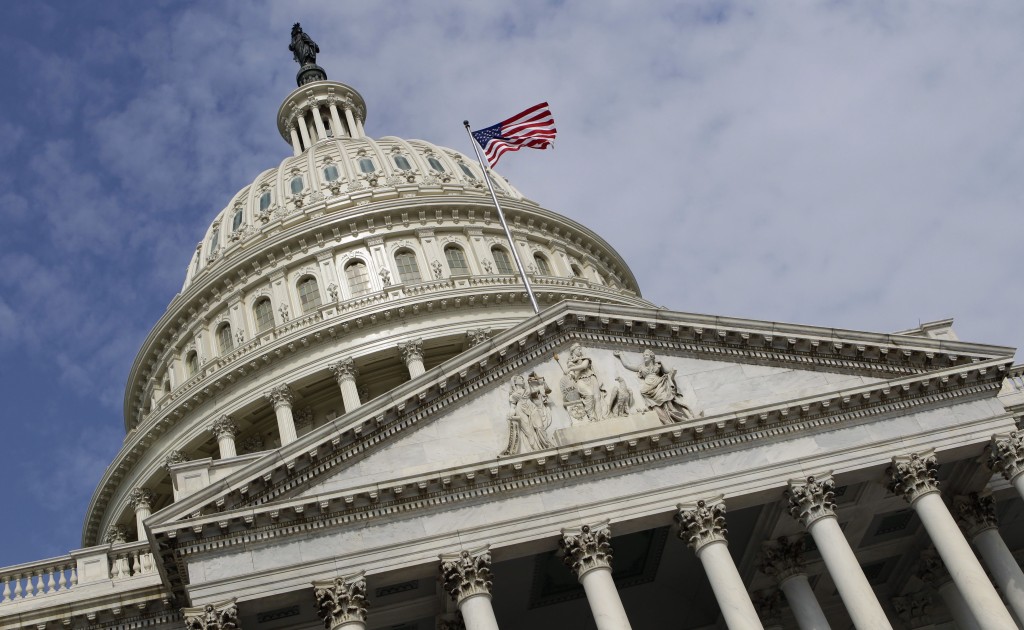
I’ve been in Washington, D.C., all week and the buzz about town has centered around Friday’s vote for the Trade Promotion Authority (TPA). The bill sets the parameters for negotiating future trade agreements. It set up guidelines for how those agreements will be handled, including allowing members to read the text of the deals 60 days before the president is to sign it. It also allows Congress to have approval of trade bills on a straight up-or-down vote. The bill made for some odd bedfellows which ended up with a few staunch conservatives on the same side as President Barack Obama. The uniting factor was the importance of trade and the agreement that more accountability and transparency was needed in the trade agreement process. The final vote count was 219-211. The biggest opponents of the bill included unions and strong Tea Party conservatives (though some broke ranks and supported it including Ted Cruz). Obama lobbied hard for the bill, even making an unscheduled stop at the Annual Congressional Baseball game Thursday evening. The final push seems to have paid off in the final hours: He was able to pull a few undecided democrats like Alabama’s own U.S. Rep. Terri Sewell over to support his position on the bill. Supporters of the bill have stoutly fought what they considered mischaracterizations of what the bill would or wouldn’t actually do. Conservative economist George Will wrote an op-ed published in The Washington Post that ended with a strong message on what passing the bill would do. Will wrote, “Obama has all the friends in Congress he has earned and deserves, so even among Democrats this cohort is vanishingly small. By passing TPA, House Republicans can achieve a fine trifecta, demonstrating their ability to rise above their justifiable resentments, underscoring his dependence on them and on Congress, and illustrating his party’s dependence on factions inimical to economic vitality.” In a news release after the vote, Executive Vice President Brandon Arnold of the National Taxpayers Union said, “International trade is critical to our economic well being, yet it is nearly impossible to enter into new trade pacts without Trade Promotion Authority. The Senate must now pass TPA on its own and send this critical legislation to the President’s desk.” Here’s a quick look at how the members of the Alabama Delegation voted and statements from their office. Representative Bradley Byrne (R – 01): Voted for TPA Representative Martha Roby (R – 02): Voted for TPA Representative Mike Rogers (R – 03): Voted for TPA Representative Robert B. Aderholt (R – 04): Voted against TPA Representative Mo Brooks (R – 05): Voted against TPA Representative Gary Palmer (R – 06): Voted against TPA Representative Terri A. Sewell (D – 07): Voted for TPA Byrne said, “TPA is about boosting the American economy, promoting a strong foreign policy, and restricting an out-of-control president. Every president already has the authority to negotiate trade agreements, but this legislation puts Congress in the driver’s seat and ensures transparency for the American people.” Roby said, “Trade with other countries is good as long as it’s fair. We want Alabama products to be sold in growing international markets and ensure America builds its economic advantage globally. With China’s economic emergence, that’s as important as ever. “But, I don’t want President Obama having unilateral trade authority. I want strict checks and balances from Congress, as well as a multilayered mechanism to shut down bad trade deals. That’s why enacting the Trade Promotion Authority is important. TPA empowers Congress to hold this president accountable for presenting the strongest trade agreements possible, and if he doesn’t, we can strike them altogether.” Rogers said, “Long term, TPA gives Congress oversight and authority in any future deal, and the power to ensure those deals are fair for Alabama’s diverse economy. It will help the United States compete more fairly against China’s ever growing economic influence, and gives Congress final say in whether a trade deal moves forward or not. I disagree with the president often, and this bill keeps President Obama in check.” Sewell said, “I cast my vote today in support of President Obama and American workers. I believe that this president should be given the same authorities that every other president has been given to negotiate trade agreements that benefit American workers, businesses, and our economy. While I share many of the concerns of my friends in labor regarding trade, I am convinced that President Obama is committed to safeguarding our shared values and protecting American jobs. Ultimately, I believe that President Obama will protect the best interests of the American people, and the folks I represent in Alabama’s 7th Congressional District. The bottom line is that President Obama has our back, and we should have his too.”
Bill would recognize 9-mile offshore limit for 3 Gulf states
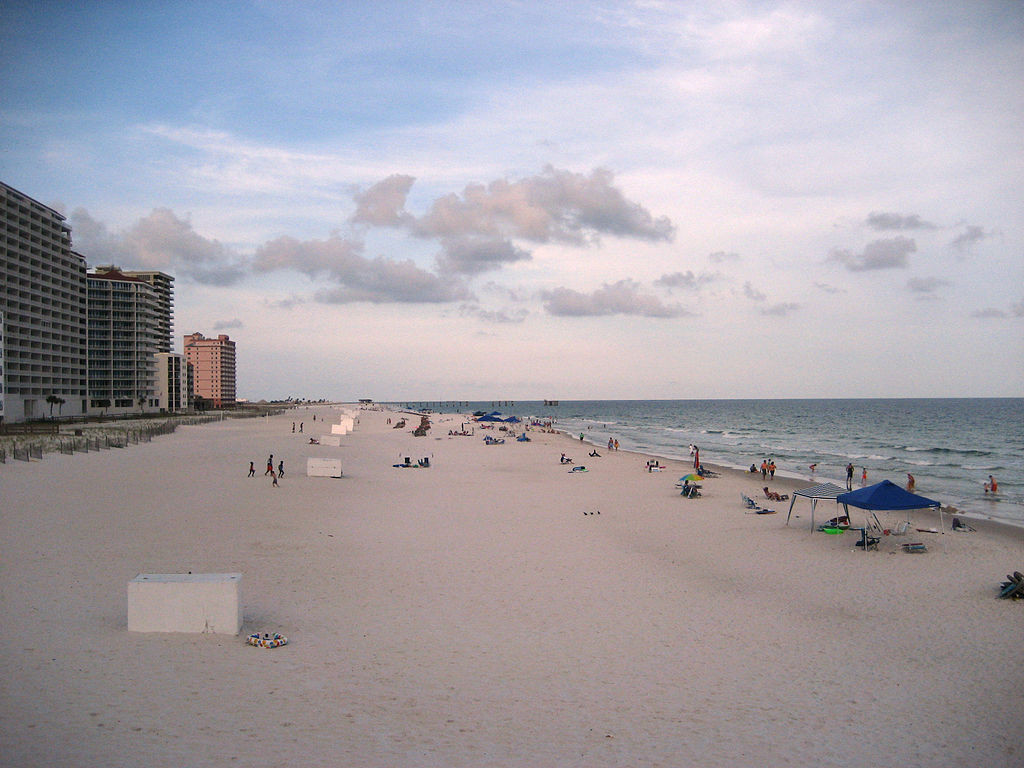
Since July 2013, Mississippi has claimed its state waters extend nine miles south into the Gulf of Mexico, but the federal government refuses to recognize the declaration. Mississippi’s senior U.S. senator is trying to change the government’s mind. The feds have been standing by a 1960 U.S. Supreme Court decision that determined the offshore boundary for Mississippi, Louisiana and Alabama was three miles out. The federal government also has not recognized Louisiana’s 2011 declaration of a nine-mile limit. On Thursday, the Senate Appropriations Committee, headed by Mississippi Republican U.S. Sen. Thad Cochran, wrote the nine-mile limit for all three states in a funding bill for the National Oceanic and Atmospheric Administration (NOAA) and other federal agencies. At stake is the Gulf states’ control of lucrative fishing rights and revenue from oil and gas production in near-offshore waters. “This would give these states greater influence in regulating Gulf state fisheries. Currently, only Texas and Florida enjoy nine-mile limits, and this provision would ensure parity among all Gulf Coast states,” Cochran said in a written statement. The bill now goes to the full Senate for consideration. “I am all for giving the state of Mississippi authority to oversee more of its own coast and allowing those with firsthand knowledge of the region’s needs, namely Mississippians, to have more influence its future,” Cochran said. The issue dates back to 1953, when Congress passed the Submerged Lands Act. The act established a coastal boundary for each state at three miles from the shore. The federal government retained control of water bottoms farther out. The act provided that Congress could vote to extend the boundaries up to 10 miles offshore if a state could prove the existence of a law or constitutional provision that established a boundary beyond three miles before that state joined the Union. In a 1960 lawsuit brought by the federal government, the five Gulf states argued that each qualified for an exception. The U.S. Supreme Court decided Texas and Florida had produced historical documents supporting a 10-mile boundary but it ruled Mississippi, Alabama and Louisiana had not. After 30 more years of litigation, the government, the Supreme Court and the states in 1992 set a legal definition of where each of the three states’ coastline began — and from there the three-mile limit would be determined. The decree did not extend the three-mile limit. Louisiana wildlife officials said the state Legislature gave authority to extend waters in 2011, but only after it was recognized by Congress or approved in litigation. The Mississippi law of 2013 mimics the Louisiana law, but without the reference to Congress. Cochran said the bill recommends funding for an independent assessment of reef fish stocks in the Gulf of Mexico, which will allow for an organization other than NOAA to conduct this research. He said NOAA is directed to count fish on artificial reefs and offshore energy infrastructure. The agency would also be required to incorporate this new, more accurate count into its stock assessments, which could potentially increase the allowable catch of red snapper for private anglers. “These provisions represent a straightforward effort to try to get past some of the contentious policies that have affected fishing in the Gulf,” Cochran said. Republished with permission of The Associated Press.
Huntsville moves closer allowing Uber, Lyft
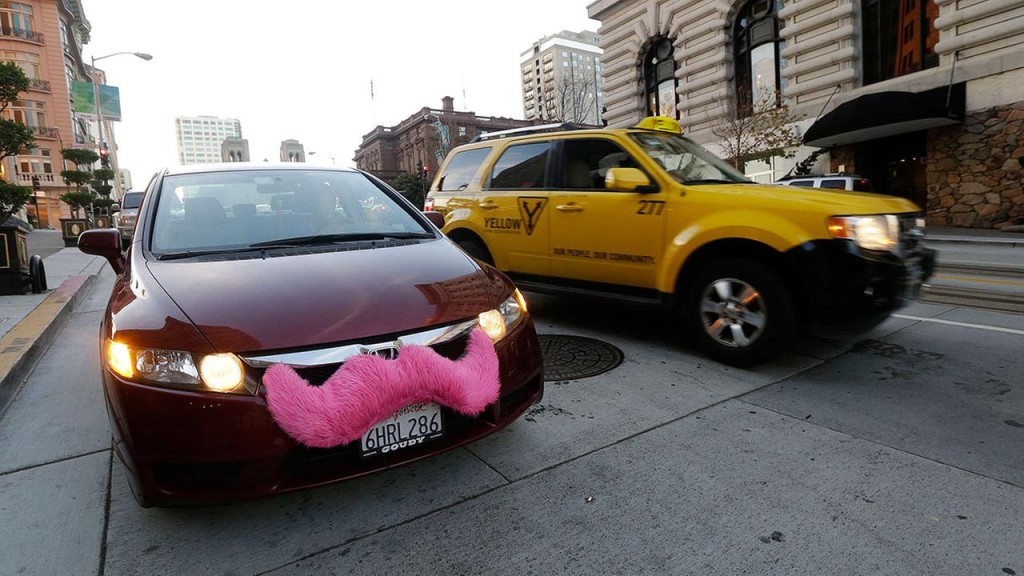
Huntsville is moving closer to allowing companies such as Uber and Lyft to do business in the city after an ordinance to amend a chapter in vehicles for hire was introduced to city council. Multiple news outlets report the ordinance was introduced at a meeting Thursday. The proposed changes to the city’s vehicle for hire ordinance come after Mayor Tommy Battle asked the city’s public transit, legal and police departments to look at regulations transportation network companies face entering the Huntsville market. A spokesman said the proposed changes will make it easier for companies to meet licensing and permitting requirements. That includes a $5,000 per year license instead of a per vehicle license, eliminating the previously required chauffeur’s license and allowing companies to conduct their own background checks and vehicle inspections. Republished with permission of The Associated Press.
Iowa Republicans ending straw poll, tradition born in 1979
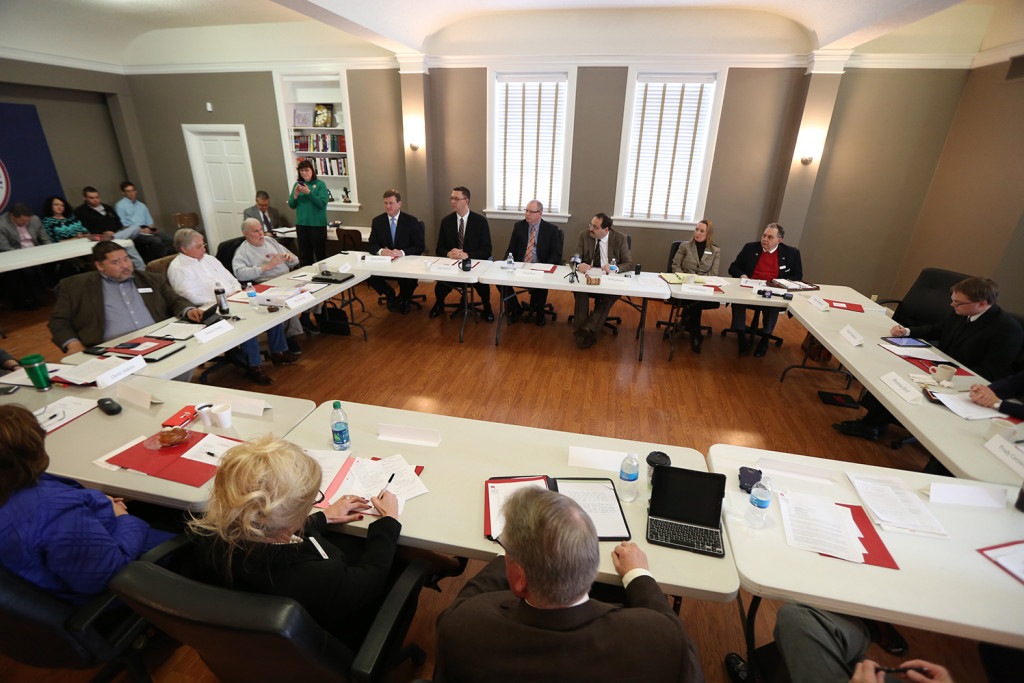
Republican leaders in Iowa have agreed to end the state’s straw poll because of waning interest from presidential hopefuls and questions about its relevancy. Iowa GOP Chairman Jeff Kauffman says state party officials voted during a Friday morning conference call to end the straw poll, which began in 1979 and has been held every summer before a contested presidential caucus. For years, the poll has been considered an early but unreliable test of campaigns’ strength. Critics say it has become a costly sideshow, and many candidates fear the humiliation of a poor showing. Some 2016 GOP hopefuls recently said they would skip the event altogether. Republished with permission of The Associated Press.
