
Bradley Byrne: BP settlement a missed opportunity
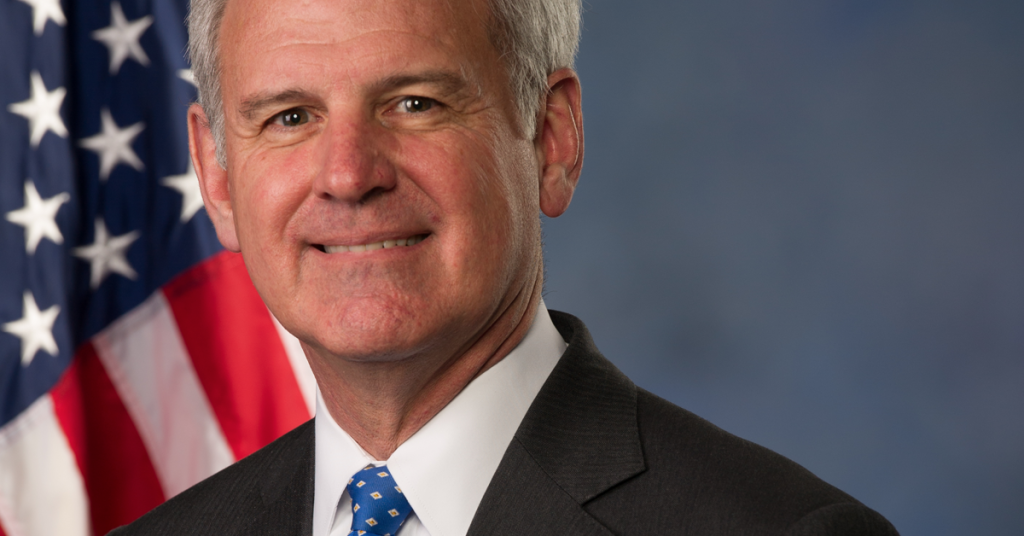
Whether you are from Brewton, Frisco City, or Robertsdale, you probably remember the summer of 2010 and the BP oil spill. The scenes on our Alabama beaches were heartbreaking as oil glistened in the water and tarballs washed ashore. From the waitress at the restaurant in Atmore to the gas station owner in Loxley, families and small businesses from throughout Southwest Alabama were negatively impacted by the lack of tourism. Many parts of our area are still dealing with economic and environmental challenges brought on by the oil spill. That’s why I was cautiously optimistic when I learned the Department of Justice and the five Gulf States had reached a settlement agreement with BP to cover penalties and damages associated with the oil spill. The total settlement was worth $18.7 billion, making it the largest settlement ever between the United States and a single company. Unfortunately, as my staff and I began to look into the details of the settlement, we realized that Alabama’s coastal communities were getting a bad deal. Only around $1.8 billion of the total settlement would be directly spent in Alabama. Even worse, over half of the money is slated to go directly into the state’s General Fund instead of flowing to our coastal areas. Now I understand that the State of Alabama is currently in the midst of a budget crunch, but I do not believe money from a natural disaster on the Gulf Coast should be used to fix a man-made “disaster” in Montgomery. That money should be allocated for projects which meet the needs of Coastal Alabama. Just as bad, too much of the total settlement money is going to be under the control of federal regulators in Washington, like NOAA – the same federal agency that is responsible for our drastically shortened Red Snapper season. I certainly don’t trust NOAA and other agencies from the Obama administration with the settlement money. Here’s why this is so frustrating. In 2012, Congress, led by Gulf Coast congressmen like Alabama’s own Jo Bonner, passed the RESTORE Act. This landmark legislation created a clear framework to ensure that money from any BP settlement would flow directly to communities on the Gulf Coast. The RESTORE Act specifically guaranteed local decision makers would control how the money was spent. The bill created the RESTORE Act Council, including local officials from Baldwin and Mobile counties, which would allocate the funds toward projects of particular need. Sadly, instead of directing money toward the RESTORE Act process, the settlement puts money toward the Natural Resources Damages Assessment (NRDA) program. This program is governed by a board of trustees that includes too much influence from the federal government and not enough input from the people on the Gulf Coast who were actually living this nightmare. I am also very frustrated by the level of secrecy surrounding the settlement. BP, the Justice Department, and the Gulf states all agreed to put the settlement under a confidentiality order, which prevents the details of the settlement from being made public. A document meant to remedy the needs of the public should be available in its entirety for the public to consume and debate. At the end of the day, communities on the Gulf Coast are the ones who were directly hit by the oil spill, and it is a mistake to hand control of the settlement money over to the state and federal governments instead of to our local coastal communities. This settlement was a major opportunity to bring some much needed closure to our area, but sadly it seems like that opportunity was missed. The families and small businesses in Southwest Alabama deserve better. Bradley Byrne is a member of the U.S. Congress representing Alabama’s 1st Congressional District.
Roy Moore to fundamentalists: America ‘under attack’
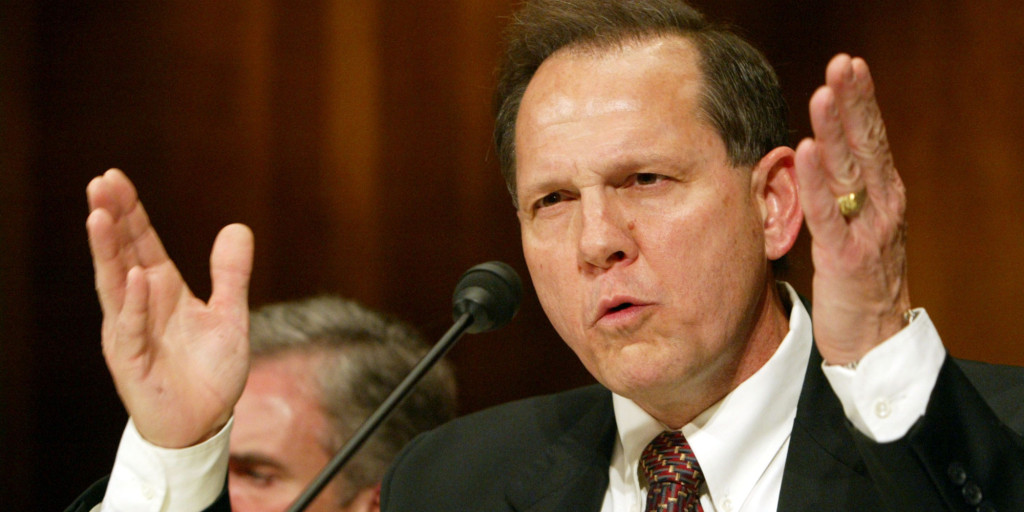
Alabama Chief Justice Roy Moore told a fundamentalist Christian group this weekend that “America is under attack,” and he praised the assembled activists from Operation Save America. “You know, some told me, ‘you know they’re a radical group.’” Moore said in a half-hour address Saturday. “I said yeah. They are radical for God.” Moore’s half-hour address Saturday comes amid his continuing criticism of the U.S. Supreme Court ruling legalizing same-sex marriage in all 50 states. AL.com reported that Operation Save America members are spending several days in Alabama to protest against abortion and homosexuality. According to its website, the Texas-based group believes “our government has been in overt rebellion against the Law of Almighty God since January 22, 1973,” date of the Supreme Court‘s Roe v. Wade decision that women have a constitutional right to terminate a pregnancy. Moore spent much of his time at the podium, according to AL.com, reciting his oft-repeated arguments that the United States was founded as a Judeo-Christian nation and that the country has since veered from God’s will. “I’m sorry but this country was not founded on Muhammad. It was not founded on Buddha. It was not founded on secular humanism. It was founded on God,” Moore said, drawing thunderous applause. At another point, he said, “Indeed, I think the United States Supreme Court has forgotten what this country is about because if they hadn’t they would not be trying to create rights that are not in the Constitution.” Moore has not explicitly called for ignoring the court’s ruling, and nearly all Alabama counties have begun issuing marriage licenses to same-gender couples. Before he took the stage, the group’s leader, Rusty Lee Thomas, prayed for Moore as members of the audience surrounded the chief justice and laid their hands upon in a ritual common among some Christian denominations. Thomas asked God’s protection as Moore fights the “murder” of abortion and the “federal beast” responsible for legalizing same-sex marriage. As Moore took the stage, another man at the gathering blew a ram’s horn. In the Old Testament, the sounding of a ram’s horn or trumpet was used to announce God’s coming or call followers to action. Moore concluded his remarks with a poem he penned himself: “One Nation under God” was their cry and declaration, Upon the law of Nature’s God they built a mighty Nation. For unlike mankind before them who had walked this earthen sod, These men would never question the Sovereignty of God. That all men were “created” was a truth “self-evident,” To secure the rights God gave us was the role of government. And if any form of government became destructive of this end, It was their right, indeed their duty, a new one to begin. So with a firm reliance on Divine Providence for protection, They pledged their sacred honor and sought His wise direction. They lifted up an appeal to God for all the world to see, And vowed their independence forever to be free. I’m glad they’re not here with us to see the mess we’re in, How we’ve given up our righteousness for a life of indulgent sin. For when abortion isn’t murder and sodomy is deemed a right, Then evil is now called good and darkness is now called light. While truth and law were founded on the God of all creation, Man now, through law, denies the truth and calls it “separation.” No longer does man see a need for God when he’s in full control, For the only truth self-evident is in the latest poll. But with man as his own master we fail to count the cost, Our precious freedoms vanish and our liberty is lost. Children are told they can’t pray in school and they teach them evolution, When will they see the fear of God is the only true solution? Our schools have become a battleground while all across the land, Christians shrug their shoulders afraid to take a stand. And from the grave their voices cry, the victory has already been won. Just glorify the Father as did His only Son. And when your work on earth is done, and you’ve traveled where we’ve trod, You’ll leave the land we left to you, One Nation Under God!” Republished with permission of The Associated Press.
A round-up of Sunday editorials from Alabama’s leading newspapers
A round-up of Sunday editorials from Alabama’s leading newspapers: The Anniston Star – The Snake was my leader Football was the surest way to polarize my elementary school classmates. The most stark division among the boys in my class was to bring up the Auburn vs. Alabama rivalry, as was only natural for Alabamians. The second line of gridiron conflict was loyalty to one of two pro football teams. You could be a fan of the Dallas Cowboys, organized, structured, coolly calculating in how the franchise selected players, and led by upstanding figures like coach Tom Landry and quarterback Roger Staubach, the sort of people modern NFL scouts would describe as “high-character performers.” The alternative was to root for the Oakland Raiders, a team that in many ways was the polar opposite of the Cowboys. The Cowboys might have appeared buttoned-down, but the Raiders were like punk rockers who didn’t look the part but, boy, could they rock. The team was full of misfits, talented players whose wild off-the-field antics made them a distraction to less-indulgent teams. The Raiders organization was fine with that so long as the wins mounted. To my fifth-grade eyes, Kenny Stabler, the Raiders’ quarterback, even looked like a pirate. He had long hair, a full beard and a swagger that made no secret of what he intended to do to opponents. As a bonus, the Snake, as he has nicknamed, was a native of Alabama and had played for the Crimson Tide in the 1960s. So, well before Stabler led his team to a Super Bowl title in 1977, I was hooked, destined to pull for the team in silver and black. The Birmingham News – Gay Baptists and black Rebels Alabama’s always been a state of contradictions, and it’s been interesting to see how those have played out over the past several weeks. This week we heard from a few unexpected voices, including a gay Baptists and a few black Rebels. Earlier this week ESPN NFL reporter Adam Schefter published a tweet showing Jason Pierre-Paul’s medical records. By publicly sharing an athlete’s medical records, did Schefter violate journalistic ethics? John Carvalho, associate professor of journalism at Auburn University and a former sports journalist, offers keen insight about the legal and ethical dilemmas at play. Bryan Kessler grew up in the Baptist church. He was also born gay. In a moving essay, Bryan wrestles with the complexities of his soul and his desire to be true to himself while maintaining his faith. It’s a must read. Last week, BP announced a settlement with the five Gulf States seeking damages following the 2010 Deepwater Horizon oil spill. Alabama will receive approximately $2 billion in economic and environmental restoration funds, but the state’s political leaders are divided about whether it’s a good deal for the state. Attorney General Luther Strange argues that it is a good deal and will continue to rejuvenate the state’s coastal environments. Congressman Bradley Byrne, however, says that the state deserves better. He says that too much of the settlement will go to the federal and state government and that “less than $500 million will be under the control of Alabama officials on the Gulf.” Another Alabama congressman responded to a harsh critique about his immigration policy from AL.com’s Kyle Whitmire. Rep. Mo Brooks told Kyle to “bring it on,” and argues that “the damage illegal aliens do to struggling American families is undeniable.” The Decatur Daily – Alabama ranks last on health of its democracy A recent survey on the health of democracy in the 50 states and the District of Columbia ranked Alabama 51st in the nation. The survey, by the Center for Progress American Action Fund, looked at numerous factors. The healthiest democracies, by the group’s standards, were those that provided broad access to voting, equal representation in state government and a limited concentration of influence over the political system. The Center for Progress is a liberal group, but the standards by which it evaluated state democracies are ones the nation has long cherished. On one factor after another, Alabama exhibits a pattern of discouraging people from voting. On accessibility of the ballot, the state allows no voter preregistration for 16- or 17-year-olds. It does not offer online voter registration or portable voter registration. Early voting is not allowed, and its requirement voters show photo identification adds a major hurdle to those without driver’s licenses. The state also scores low on representation in state government. Females, blacks and Hispanics are underrepresented in government. Districts are drawn in such a way as to minimize the influence of black voters, a fact being scrutinized by federal courts. Ex-felons remain disenfranchised even after they served their sentences. Alabama also is one of the worst states in the nation in terms of the influence of money on the political system. There are no contribution limits on individual campaign donations and weak campaign disclosure laws. Legislative data is not easily accessible to the public. It has become almost cliche to marvel at how frequently Alabamians vote against their own interests. We routinely reject tax initiatives that would have minimal impact on the majority, but that would improve schools and thus increase income mobility. We elect representatives who siphon money from the public schools that educate 90 percent of our children, and who fight federal programs that would benefit most Alabamians. We endure a tax system that exacts a far greater percentage of the income of the poor and middle class than it does of the wealthy. Dothan Eagle – Community involvement on Fort Rucker pays off again Four months ago, some 1,600 people turned out for an economic impact summit at Fort Rucker, a gathering designed to help high-level military personnel understand what the installation means to the Wiregrass community from an economic standpoint. The gathering had been arranged for visiting military officials charged with gathering information that would be considered as the Pentagon decided how to determine where deep cuts in the nation’s defense budget would
Can independent Bernie Sanders get on NH Democratic primary ballot?
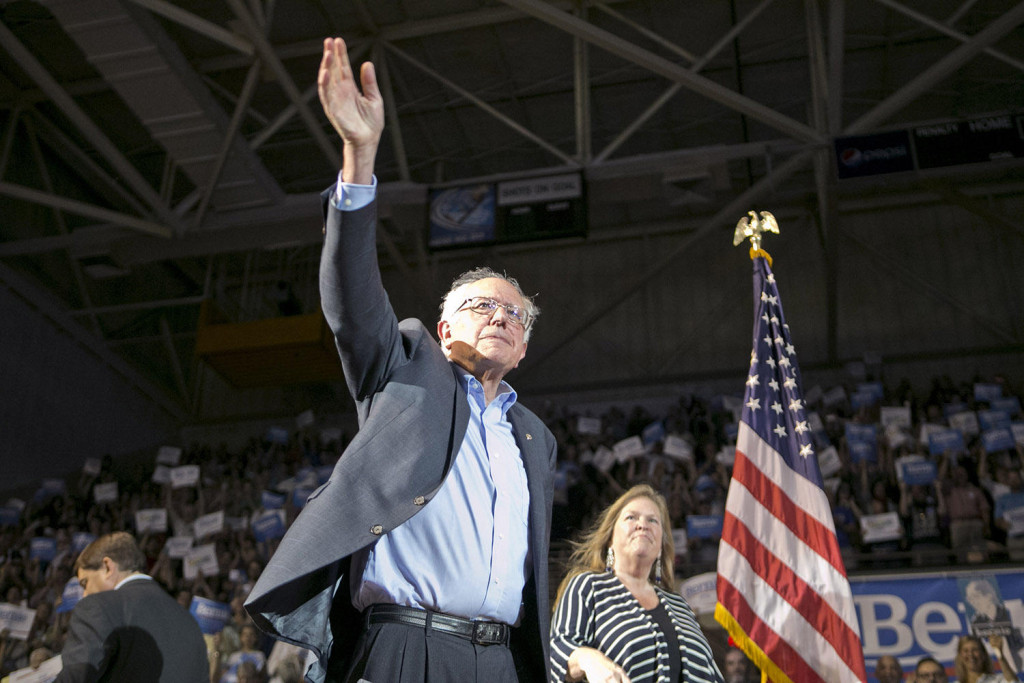
From his run for mayor of Burlington to numerous campaigns for Congress, Vermont Sen. Bernie Sanders has for more than three decades eschewed traditional party labels in his pursuit of political office, winning election after election as an independent. As he seeks the presidency as a Democrat, that unwillingness to be pigeonholed could be a liability in New Hampshire. To get on the ballot in the first-in-the-nation primary state, candidates must fill out paperwork that requires them to identify as a registered member of a political party. “I don’t know if it will be a problem,” New Hampshire Secretary of State Bill Gardner said when asked whether Sanders’ independent status could keep him off the ballot. New Hampshire officials won’t take up a case against Sanders without a complaint, Gardner said. A formal challenge to Sanders’ eligibility would likely make its way to the state’s Ballot Law Commission, the arbiter of such questions. Former Republican U.S. Rep. Charlie Bass raised the issue of Sanders’ eligibility in a recent Washington Post opinion piece. “In short, Sanders is not a Democrat, has not been elected as a Democrat, has never served as a Democrat and cannot plausibly claim, at least in New Hampshire, to be a Democrat,” Bass wrote. Sanders’ campaign isn’t worried. “We think it will work out,” Sanders’ spokesman Michael Briggs told The Associated Press. “The senator has said that he’ll do whatever it takes that he can do to qualify for the ballot.” Although New Hampshire’s form asks candidates to declare their party registration, Vermont is one of a number of states where voters do not register with a party. Candidates, however, must consent to run in a specific party’s primary, said Chris Winters, Vermont’s deputy secretary of state. In Sanders’ 2006 and 2012 elections to the U.S. Senate, he consented to run in the Democratic primary. After getting the most votes in that contest, Sanders then rejected the nomination and ran as an independent in the general election, Winters said. In the past, Sanders often has said he doesn’t see enough daylight between Democrats and Republicans, arguing that both are too aligned with moneyed interests. During an unsuccessful 1986 race for governor as an independent, Sanders said, “It is time to stop the Tweedledee, Tweedledum politics of the Republican and Democratic parties.” It’s not as if his home-state Democrats are pining for a national party standard-bearer: Vermont Democrats including Gov. Peter Shumlin, former Gov. Howard Dean and Sen. Patrick Leahy are all backing former Secretary of State Hillary Rodham Clinton in the 2016 campaign. In Congress, Sanders caucuses with Democrats and is the party’s ranking member on the Senate Budget Committee. State and national Democratic officials don’t think the paperwork question will affect Sanders. “He is a Democratic candidate for president,” said Ray Buckley, chairman of the New Hampshire Democratic Party. He said the state party would immediately go to court to have Sanders’ name placed on the ballot if there is a challenge. So far, other Democrats expected on the ballot are Clinton, former Rhode Island Gov. Lincoln Chafee, former Maryland Gov. Martin O’Malley and former U.S. Sen. Jim Webb of Virginia. Clinton’s campaign says it is prepared for a competitive primary and fully expects Sanders to be on the New Hampshire primary ballot. Gardner, a staunch protector of the state’s primary, said the wording about being registered in a party is included to help ensure integrity in elections. In New Hampshire, a voter must register with a particular party to vote in that party’s primary. “What applies to the voters, applies to the candidates,” he said. But, Gardner said, it’s too early to speculate on Sanders’ political fate. “It’s a whole series of hypotheticals,” he said. Republished with permission of The Associated Press.
