
German auto parts manufacturer to build plant in Auburn
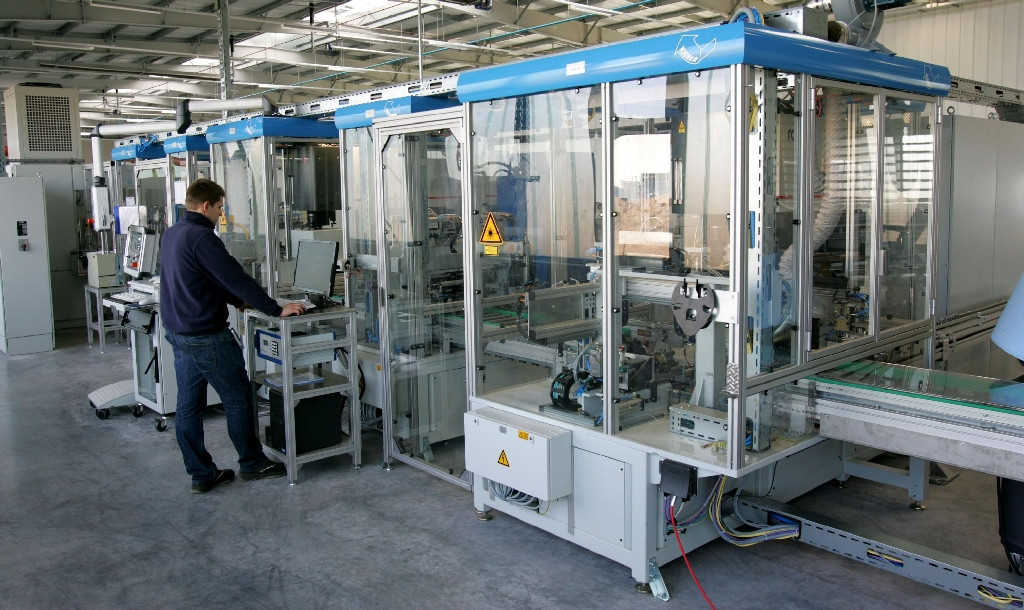
A German auto parts maker is building its first U.S. manufacturing plant in Alabama and production is expected to begin next year, Alabama Department of Commerce officials said Friday. Schmidt Maschinenbau GmbH is planning to build its plant in Auburn, and the facility will produce engine components including balance shafts and gear wheels for Mercedes-Benz and other German automakers, officials said. “Schmidt’s decision to open a manufacturing facility in Alabama is great news because it will result in the creation of 50 well-paying jobs and $17 million in new investment in Auburn,” Gov. Robert Bentley said in a statement. “We are extremely grateful for the support that the project has received from the Governor and his administration. Schmidt is a perfect fit for our diversified, high-tech industrial sector and we’re excited to welcome them to Auburn,” Mayor Bill Ham Jr. said. The company is looking for motivated and skilled employees who will be invited for extensive training in Germany this fall, the company’s President, Herbert Schmidt said. Interested applicants should contact with workforce development section of the City of Auburn’s Department of Economic Development, he said. Republished with permission of the Associated Press.
As Democrats fret over ‘sharing economy,’ GOP moves in
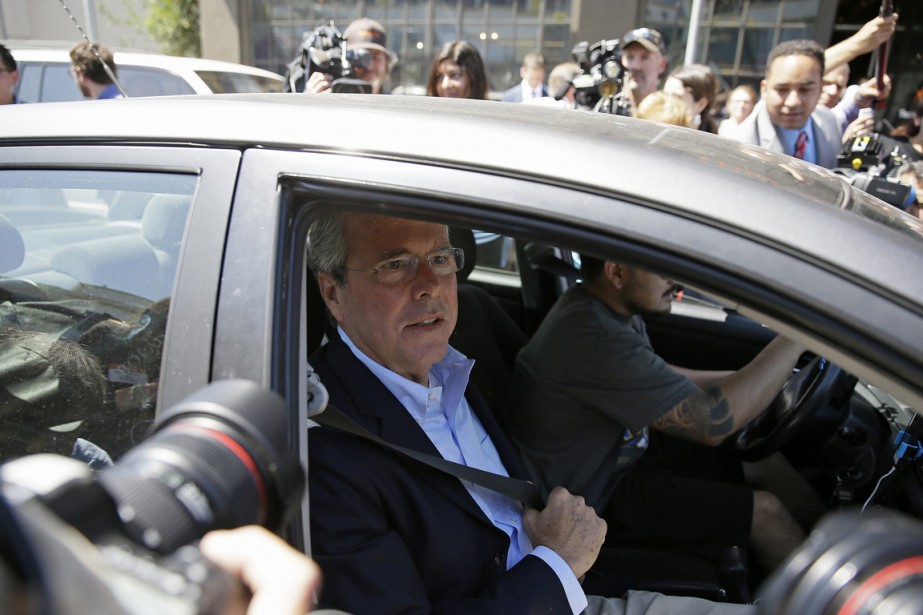
The debate over ride-hailing firm Uber is laying bare divides in the Democratic Party and on the left about how to handle the new “sharing” economy. Republicans are hungry to exploit that ambivalence and make inroads into a wealthy sector of the tech industry. In New York City this past week, liberal Mayor Bill de Blasio tried to limit the number of Uber drivers on the streets, only to be rebuked by the state’s more centrist governor, Andrew Cuomo. The mayor’s administration decided to allow Uber to expand in the city for another year. That followed a pledge by the party’s presidential front-runner, Hillary Rodham Clinton, to “crack down” on companies that classify workers as contractors rather than employees, as critics contend Uber and other companies often do. Clinton did not identify Uber, whose lobbying operation is run by former Obama campaign manager David Plouffe and stocked with Democratic operatives. But her allusion led Jeb Bush, a Republican technophile who says he prefers his Apple watch to apple pie, to ride in an Uber vehicle during a campaign stop in San Francisco days later. For years, Republicans have struggled to gain support in the technology industry, an effort hobbled by in part by their stance on social issues and net neutrality, which is the idea that Internet service providers should not manipulate, slow or block data moving across their networks. But the bright-blue precincts of Silicon Valley have become a regular stop on the GOP circuit. Kentucky Sen. Rand Paul opened a campaign office at a San Francisco tech incubator that hosted a 24-hour “hack-a-thon” last month. Florida Sen. Marco Rubio won the backing of Oracle founder Larry Ellison. He held a fundraiser for the senator, whose new book has a chapter with this title: “Making America Safe for Uber.” “There’s a lot of folks out here who naturally fall into a libertarian place and in the past they were not feeling the love from the GOP,” said Scott Banister, an investor who is raising money for Paul. “Obviously, if the Democratic Party is going to come down on the side of ‘let’s shut down these businesses,’ that’s going to force the issue.” Liberals have increasingly questioned the impact of the industry during a time of scarce jobs and wage stagnation. Former Treasury Secretary Larry Summers has noted that Apple employs a far smaller share of people than companies of its size did in the past. Silicon Valley and the surrounding Bay Area have become a symbol of the income inequality that Democrats bemoan. But it is the recent, explosive growth of Uber and other “sharing economy” companies that have attracted the most concern. HomeJoy recently announced it would shut down in the face of four lawsuits alleging it should treat the people who clean homes on its behalf as employees rather than as independent contractors not entitled to the same workplace protections. “If a technologist wants to disrupt an industry that has middle-class jobs and replace them with insecure, not-as-good jobs, there has to be a conversation about that,” said Heath McGee, president of the liberal think-tank Demos. “Just because there’s an app doesn’t mean it’s anything different. … It’s a question as old as the economy.” Lyft, Uber or the grocery delivery service Instacart and others rely on independent contractors to provide services for a fee: driving, house cleaning, grocery shopping and the like. Uber takes a commission from fees charged to its riders. The drivers, who can work as many or as few hours as they would like, get the rest. Many Uber drivers work part time to supplement their income, while others rely on it entirely. Founded in 2009, it was operating in more than 250 cities and 21 countries by the end of last year. Such innovations have hit core Democratic constituencies. Among them are taxi companies that give generously to urban politicians such as de Blasio, and professors worried about the proliferation of online higher educational courses. But they also benefit another core group: the young, urban people who supported President Barack Obama. Former Obama adviser Dan Pfeiffer warned in a recent that “progressive politicians are making a major error by positioning against the sharing economy.” Banister, the investor helping Paul, said Democrats seem torn on the sharing economy, “not quite sure where the electorate wants them to be.” Republicans, he added, are “able to come back and say, ‘We’re not wishy-washy about this,’” because business, jobs and the economy form “the core of the GOP.” Larry Gerston, political science professor emeritus at San Jose State, said the Uber skirmishes will have limited impact in Silicon Valley, which is far more concerned with federal policy on matters such as patent protection. But Julie Samuels, executive director of Engine, a nonprofit that tries to connect startups with policy debates, said the tone of the debate is worrisome. “When any policymaker starts to ostracize the tech community, they’re ostracizing people who can make things better,” she said. Republished with permission of the Associated Press.
Daniel Sutter: How to Turn a Drought into a Disaster

California is in the midst of a severe, protracted drought that is producing significant costs and conflicts. The unreported story, however, is how our politicized system of water allocation exacerbates these impacts. The costs of politicized water extend across the nation. Californians are using cell phone cameras and social media to report violators of water use restrictions. Actor Tom Selleck, for instance, was accused of stealing water for his avocados. It turned out that Magnum, P.I., was paying for the water he was taking from a fire hydrant. The main conflict in California pits farmers against other users. Water has many uses beyond watering crops and lawns and filling swimming pools. The computers powering the internet generate lots of heat, and Google uses chilled water to cool its servers. Electricity generation requires considerable water, not just for hydroelectric power, but also when using coal and nuclear power: electricity for a 60 watt lightbulb for a year requires 3,000 to 6,000 gallons of water. Ethanol requires four gallons just to refine one gallon, in addition to growing the corn. Our nation’s water problems, including the conflict news stories describe, result in large part from a failure to use property rights, voluntary exchange, and prices to allocate water. California’s drought is Mother Nature’s doing, but the economic costs and political conflict are largely on us. Farmers have water rights, but not full property rights. They can divert water but only to use it for irrigation. Farmers’ rights to use water can be suspended if river levels fall too low, as determined by bureaucrats. Without water for irrigation, farmers’ crops will fail. Farmers cannot trade (sell) water that they could use for irrigation to Tom Selleck for his avocados or Google for their server farms. A bureaucrat decides what happens to the water, and the result is conflict. Competition for water results because resources are scarce. Scarcity means that our wants and desires exceed our ability to produce goods and services. Economists often praise markets and prices for directing scarce resources to their most highly valued uses, which we call efficiency. Although markets cannot eliminate scarcity, they structure interaction to focus on cooperation and minimize conflict. Consider how the allocation of water contrasts with homes. California is home to some of the nation’s priciest communities, including Malibu on the Pacific Ocean. Homes in Malibu are in great demand, but can be bought and sold. Actor Jeff Bridges recently listed his estate for $29 million, to effectively let someone else get to live in Malibu. But Mr. Bridges will probably be happy if his home sells for the list price, in contrast with the farmers who might lose their water and get nothing in exchange. Such politicized allocation is the norm across the U.S. The city of Troy charges for water, but at a price determined by politicians and not markets. And communities employ orders to reduce water use. Troy currently has a voluntary odd-even lawn watering restriction in place. Such restrictions ramp up when drought conditions worsen, eventually becoming bans. A market approach would raise the price and let people decide if they want to pay perhaps $1,500 a month for a green lawn. We use high prices to clear the market for homes in Malibu, where an 800 square foot beachfront house recently sold for $5 million. I was not a bidder. Our system of politicized water allocation has immense costs, which I will discuss further in the future. The potential exists to use voluntary exchange for water. Economists like Terry Anderson of Montana State University and Nobel Prize winner Vernon Smith have described how rights and markets could work for surface and ground water respectively. Indeed, water market innovations designed by Anderson and his colleagues have improved both economic efficiency and environmental protection. Hopefully a weather pattern change will bring California’s current drought to an end soon. But should the drought continue, remember that much of its pain is from politically self-inflicted wounds. Daniel Sutter is the Charles G. Koch Professor of Economics with the Manuel H. Johnson Center for Political Economy at Troy University and host of Econversations on TrojanVision. Respond to him at dsutter@troy.edu and like the Johnson Center on Facebook.
