
Data: Nearly five dozen given a third of all 2016 campaign cash
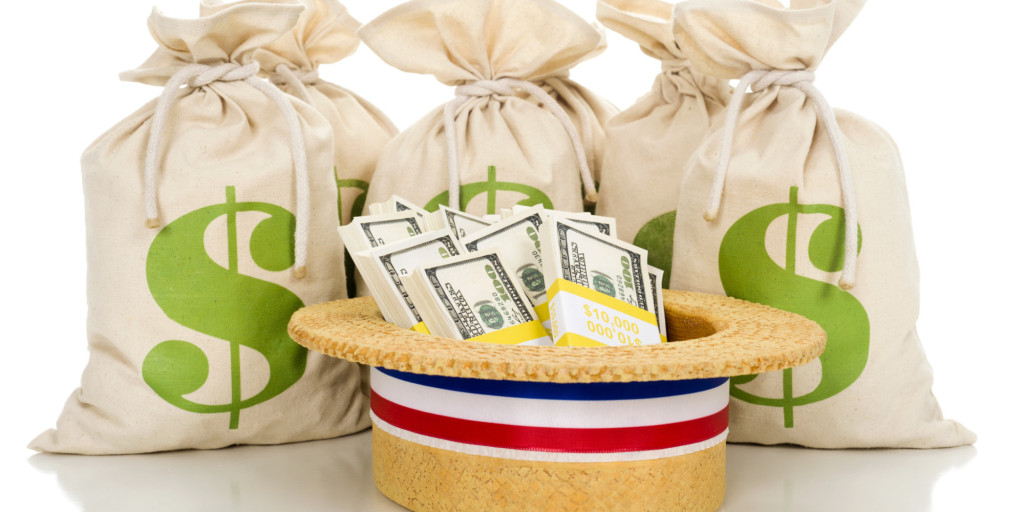
It took Ted Cruz three months to raise $10 million for his campaign for president, a springtime sprint of $1,000-per-plate dinners, hundreds of handshakes and a stream of emails asking supporters to chip in a few bucks. One check, from one donor, topped those results. New York hedge fund magnate Robert Mercer‘s $11 million gift to a group backing the Texas Republican’s White House bid put him atop a tiny group of millionaires and billionaires whose contributions already dwarf those made by the tens of thousands of people who have given to their favorite presidential candidate. An Associated Press analysis of fundraising reports filed with federal regulators through Friday found that nearly 60 donations of a million dollars or more accounted for about a third of the more than $380 million brought in so far for the 2016 presidential election. Donors who gave at least $100,000 account for about half of all donations so far to candidates’ presidential committees and the super PACs that support them. The review covered contributions to outside groups that can accept checks of any size, known as super PACs, and to the formal campaigns, which are limited to accepting no more than $2,700 per donor. The tally includes donations from individuals, corporations and other organizations reflected in data filed with the Federal Election Commission as of Friday, the deadline for super PACs to report for the first six months of the year. That concentration of money from a small group of wealthy donors builds on a trend that began in 2012, the first presidential contest after a series of court rulings and regulatory steps that created the super PAC. They can openly support candidates but may not directly coordinate their actions with their campaigns. “We have never seen an election like this, in which the wealthiest people in America are dominating the financing of the presidential election and as a consequence are creating enormous debts and obligations from the candidates who are receiving this financial support,” said Fred Wertheimer, president of Democracy 21, a Washington-based group that wants to limit money in politics. Others see an upside to the rainmakers. “Big money gives us more competitive elections by helping many more candidates spread their message,” said David Keating, director of the Center for Competitive Politics, which advocates for fewer campaign finance limits. For any number of reasons, these donors are willing to give so generously. Some may have a business that stands to gain from an executive branch that changes how an industry is regulated, while others hope for plum administration assignments, such as a diplomatic post overseas or a cabinet position. Many say their contributions, which the U.S. Supreme Court has recognized as equivalent to free speech, merely reflect their intense belief in a particular candidate – and in the political system in general. “I’d think that the fact that I’m willing to spend money in the public square rather than buying myself a toy would be considered a good thing,” said Scott Banister, a Silicon Valley investor who gave $1.2 million to a super PAC helping Kentucky Sen. Rand Paul in the Republican presidential race. “The voters still, at the end of the day, make the decision,” he said. “You can spend $1 billion trying to tell the voters to vote for a set of ideas they don’t like, and they will still vote against the candidate.” For Florida developer Al Hoffman, financial support of the state’s former governor, Jeb Bush, is personal. A longtime friend and political contributor to the Bush family, he gave $1 million to Bush’s super PAC, contributing to its record-setting haul of $103 million in the first six months of the year. Hoffman was ambassador to Portugal during former President George W. Bush‘s second term. He said he sometimes offered Bush advice during his time as Florida’s governor, but doesn’t expect to influence a Jeb Bush administration. “I’d just like to see one,” he said. While the existence of high-dollar donors is more pronounced on the Republican side, they’re also among those giving to the super PAC backing Democratic front-runner Hillary Rodham Clinton. Seven donors of at least a million dollars accounted for almost half of the total collected by Priorities USA Action. Entertainment mogul Haim Saban and his wife, Cheryl, led with a $2 million gift, and hedge-fund billionaire George Soros, historically one of the Democratic Party’s biggest givers, donated $1 million. But no one has capitalized on the new era of big money like Bush. After announcing plans to explore a presidential run in December, Bush embarked on a nearly seven-day-a-week travel schedule to raise money for his Right to Rise super PAC. Bush navigated limits on how candidates can raise money for super PACs by playing coy about his intentions. Now that he is officially a candidate, he has left Right to Rise in the hands of his trusted strategist and friend, Mike Murphy. He’s not alone in the use of super PACs to fuel a presidential run. New Jersey Gov. Chris Christie and Wisconsin Gov. Scott Walker are too new to the presidential contest, announcing only weeks ago, to have filed any reports about their campaigns’ finances. Yet super PACs that sprang up months ago to support them show their efforts will be financially viable: A group backing Christie raised $11 million, while two supporting Walker brought in $26 million. Such totals put them well ahead of Paul, former technology executive Carly Fiorina, former Arkansas Gov. Mike Huckabee and former Sen. Rick Santorum – who all began their presidential campaigns in the spring. Cruz’s super PACs, meanwhile, didn’t just get the $11 million from Mercer. They also received a $10 million donation from Toby Neugebauer, an energy investor in Texas, while the Texas-based Wilks family pooled together a $15 million gift. Super PACs will spend as campaigns do, investing in polling and data sets, hiring employees in key states and buying pricey television and digital advertising, direct mailings and phone calls to voters.
Why the Washington Post is scared of Matthew Brown on the Board of Education

Earlier this week Valerie Strauss of the Washington Post took to task Governor Robert Bentley‘s appointment of Matthew Brown to the state’s Board of Education. Why is a national columnist worried so much about what happens in Alabama’s schools? Because Brown has realistic expectations of the education system. Strauss points to his opposition to a tax increase, opposition that voters overwhelmingly agreed with him on voting 2-1 against the increase. If you want to read more about the fiscal and logical reasons Brown and voters rejected the tax, visit the website he set up Education Baldwin Now. Strauss doesn’t like that Brown has the audacity to realize throwing money at the system isn’t going to fix it. Brown supports school choice including charter schools (which he emphasizes accountability for) and homeschooling (which he was himself). He openly admits that if a public school isn’t the best available place for his children to get an education he would consider alternatives to make sure they receive the kind of education that all parents should desire for their families. Why on earth would we want that fresh take and that perspective to be represented on a board tasked with education decisions? Wait, wait, I know it’s because he’s not deeply entrenched in the school system. Being jaded by years of being a cog in a machine that abhors change and progress should certainly be a prereq for the Board. Wishing local school boards and the state spendendless amounts of money should be a prereq for the job. Openly stating that you’d put your children in public schools even if they’re not the best choice available, providing the highest quality education and safety should be a prereq. Yes, Matthew Brown certainly can’t be qualified for the Board of Education because his perspective is too unique. He was homeschooled. Oh the travesty. Using that logic no one at the Pentagon who hasn’t been in a war zone should be making decisions on military action. His motivation, a better system that will make public schools the best option for his children is not really that important. His willingness to look at all of the information and all of the options that could make our schools better is just terrible.
Ex-Public Service Commissioner Dunn seeks return to office
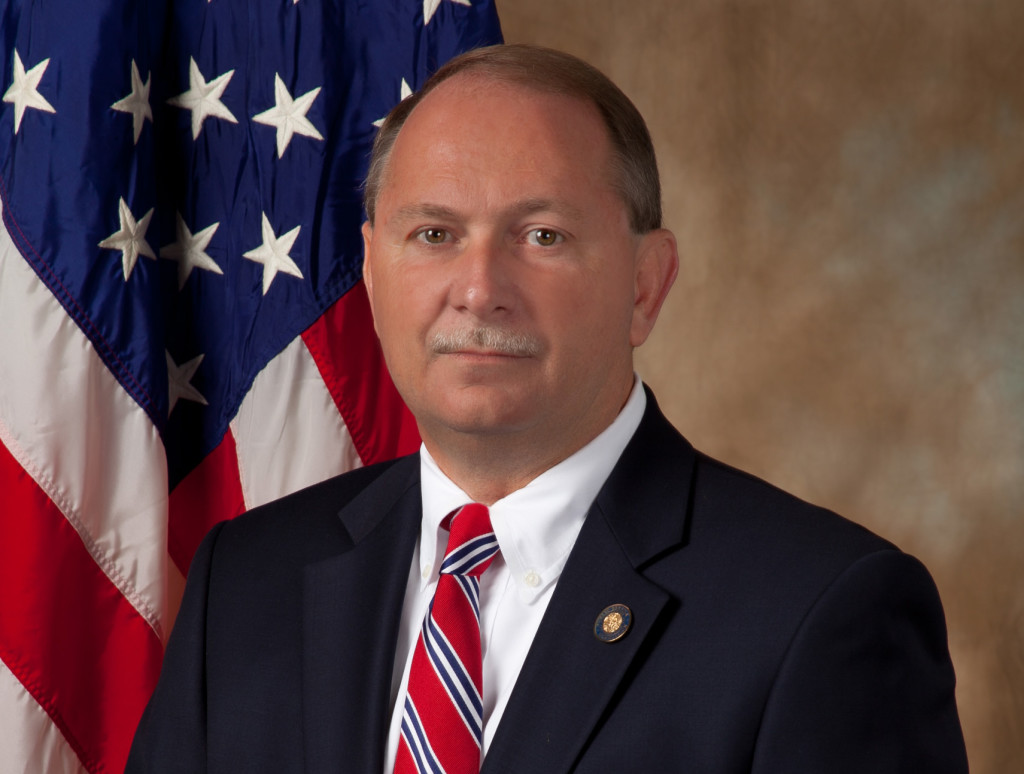
Former Public Service Commissioner Terry Dunn, who drew political pushback after fighting for a review of power rates, said Friday that he is seeking a return to office. Dunn said he will challenge PSC President Twinkle Andress Cavanaugh in the 2016 election. Both Dunn and Cavanaugh are Republicans. Dunn, 56, says the utility regulating board needs more transparency and someone who will look out for consumers. He called Cavanaugh a “spin maiden” in his candidate announcement. “The president now looks out more for the utilities than the customers,” Dunn said. Cavanaugh, through a spokesman, declined to comment on Dunn’s announcement. Dunn was elected to the commission in 2010 and had urged the group to hold periodic formal hearings on the rates charged by Alabama Power and natural gas companies. He said that would ensure power company profit margins and rates were justified. The two other PSC commissioners and all the Republicans who challenged Dunn in the last election disagreed with his position. He lost re-election to former Greene County Commission Chairman Chip Beeker in 2014. The former PSC commissioner said he was subjected to a false information campaign – accused of being a Republican in name only or on the side of environmentalists – after seeking those hearings. “The people now see that all the lies told about me were a ploy to unseat me,” Dunn said in a statement announcing his campaign. He lost re-election to former Greene County Commission Chairman Chip Beeker in 2014. Republished with permission of The Associated Press.
