
Jeb Bush leaves door open for use of torture by government
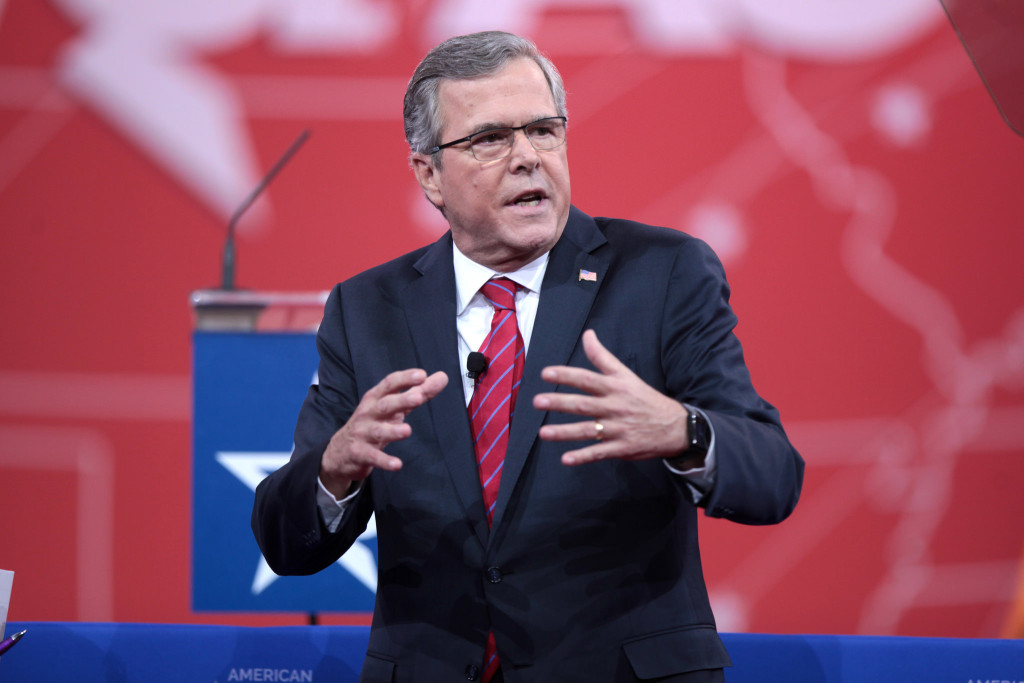
Republican presidential candidate Jeb Bush on Thursday declined to rule out resuming the use of torture under some circumstances by the U.S. government. “I don’t want to make a definitive, blanket kind of statement,” Bush told an audience of Iowa Republicans, when asked whether he would keep in place or repeal President Barack Obama‘s executive order banning so-called enhanced interrogation techniques by the CIA. “This is something that I’m actually struggling with because I’m running for president … and when you are president your words matter,” he said. The former Florida governor said that in general, he believes torture is inappropriate, and that he was glad his brother, former President George W. Bush, largely ended the CIA’s use of the techniques before he left office. The CIA used waterboarding, slapping, nudity, sleep deprivation, humiliation and other methods to coerce al-Qaida detainees – methods the military would be prohibited from using on prisoners of war. A Senate report released last year cited CIA records in concluding that the techniques were more brutal than previously disclosed, that the CIA lied about them, and that they failed to produce unique, life-saving intelligence. The CIA and its defenders take issue with the report. Jeb Bush said he believed that the techniques were effective in producing intelligence, but that “now we’re in a different environment.” He suggested there may be occasions when brutal interrogations were called for to keep the country safe. “That’s why I’m not saying in every condition, under every possible scenario,” Bush said. Bush has been walking a careful path, seeking to disassociate himself from some of the unpopular aspects of his brother’s legacy while praising him. In discussing the Iraq war, for example, Bush, who previously acknowledged that the intelligence didn’t support the decision to invade, on Thursday said he had learned from some of the mistakes made during the occupation, including what he said was a wrong decision to disband the Iraqi military. He said his brother also now believes that was a mistake. Bush blames the rise of the Islamic State group on what he said was Obama’s failure to negotiate an agreement to leave U.S. troops there in 2011. Asked if it was true that there would be no IS absent a U.S. invasion of Iraq, he said there was no way to know. He repeated his call for a more aggressive posture toward the Islamic State group but, like the Obama administration, he opposes sending in regular U.S. ground forces. He does favor putting special operations troops on the battlefield. Bush spoke at a foreign policy forum sponsored by Americans for Peace, Prosperity and Security, a group chaired by Mike Rogers, a former Republican congressman from Michigan who chaired the House Intelligence Committee. Republished with permission of the Associated Press.
Marco Rubio to address Detroit Economic Club next week
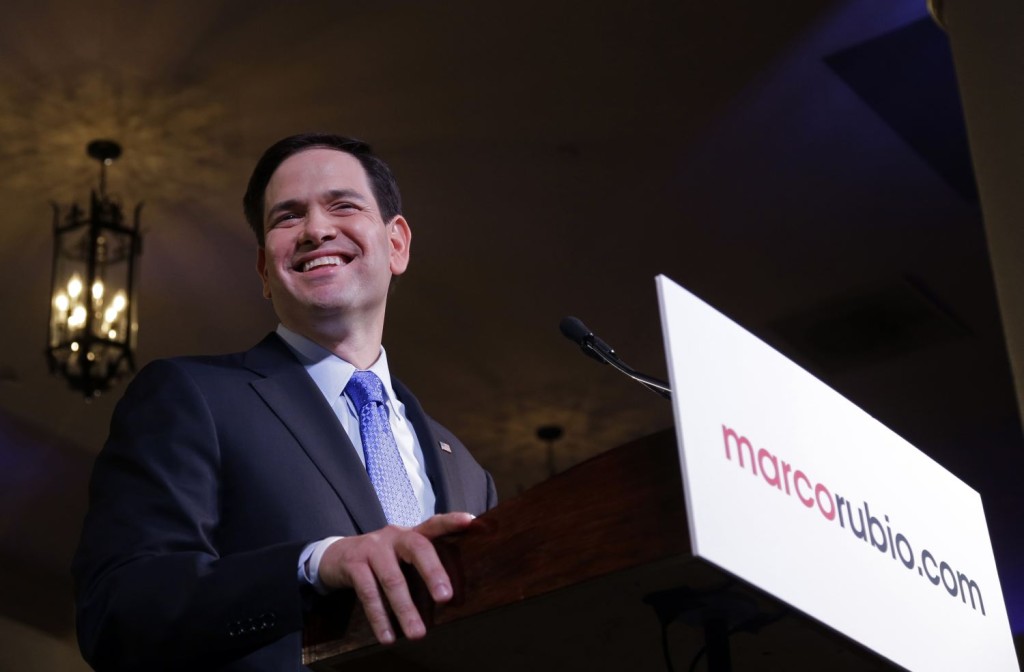
Republican presidential candidate Marco Rubio will address the Detroit Economic Club next week. It’s the Florida senator’s first visit to Michigan since he announced his candidacy. Rubio will speak Aug. 20 at the economic club’s luncheon in a hotel in downtown Detroit. Jeb Bush, John Kasich and Rand Paul have made multiple trips to Michigan this year. Bush and Kasich also addressed the economic club. Seventeen Republicans are running. Michigan’s primary is March 8. Republished with permission of the Associated Press.
Study: Alabama earns a “D” in lobbying transparency
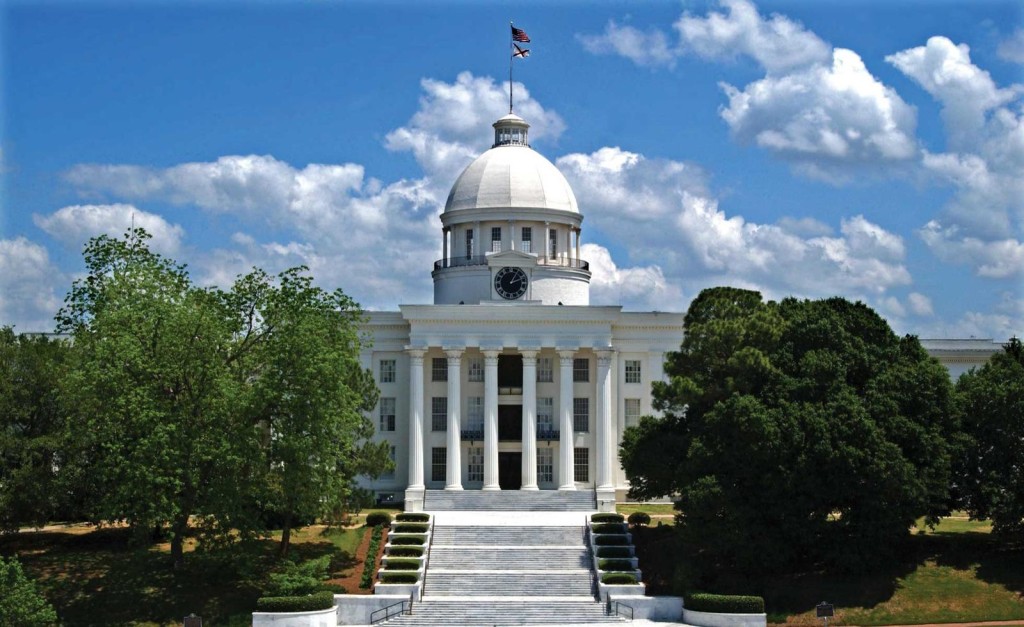
According to a new national survey, Alabama ranks near the bottom of the pack among states when it comes to lobbying transparency and disclosure practices. The Sunlight Foundation, a Washington, D.C.-based public interest watchdog group, gave Alabama a D in a new study. State lobbying ethics laws were scrutinized via five different rubrics — Alabama’s were docked points in two, scored a “0” in one and was appraised positively in just one. The state was dinged in the report for lobbyist compensation and expenditure reporting laws, while the foundation gave the state neutral scores for disclosure of what issues lobbyists actively work on and accessibility of documents via the state’s online “ALISON” system. Alabama was specifically cited three times throughout the report, including negative remarks on thresholds for disclosure (as opposed to all activities being reported) and access to records, and a positive comment about disclosure of conflicts of interest. “Disappointingly, few states force lobbyists to explicitly name the bills, politicians or executive agencies that they are hoping to influence or how they want the legislator to vote,” reads the study. “This winds up being fairly opaque in states like Alabama, where a politician must receive over $500 in a quarter from a lobbyist to be revealed.” “It’s nice to see states actively disclose potential conflicts of interest,” the report goes on. “Alabama … has a similar requirement.” Finally, the Sunlight Foundation uncorked this one regarding the code of Alabama. “Alabama can work to improve the public’s access to lobbying data. Currently, if you are interested in learning about lobbying in the state, you must file a request online for the expenditure reports of specific lobbyist or lobbyists. The request must ask for information exactly as it is provided on the website. After the files are delivered to you, they expire after 72 hours, regardless of whether you have opened them or not.” Alabama was joined in receiving its “gentleman’s D,” as it were, by 11 other states including fellow southern states Tennessee and Arkansas. The Yellowhammer state beat out West Virginia and Florida, which both received failing grades. Massachusetts took top honors.
Daniel Sutter: I prefer studying tornadoes at a distance
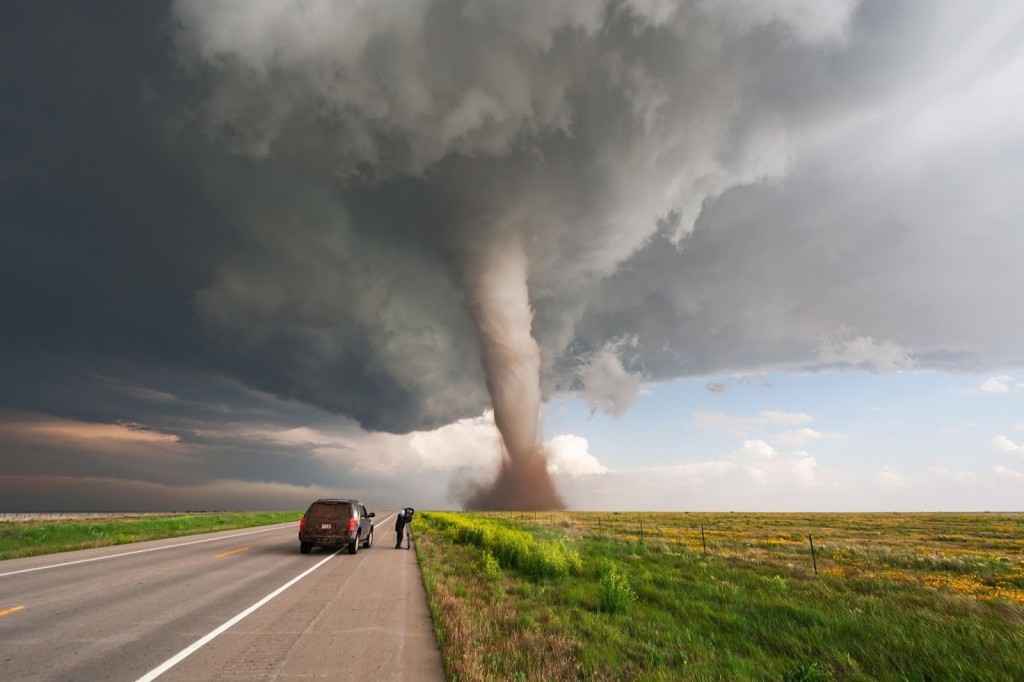
I have conducted research on tornadoes for fifteen years. As an economist, I do not study the storms themselves, but rather the impacts of tornadoes on society. I mainly search for patterns in casualties or damages, which can be done safely away from the tornadoes. I have done some field research, and never wish for the opportunity to do field work in my neighborhood. Last week’s tornado in Troy occurred without warning, meaning that the National Weather Service (NWS) did not issue a warning until after touch down. Is it still possible today for tornadoes to occur without warning? Yes, and nationally about 30 percent of tornadoes are unwarned. NWS forecasters face significant challenges in issuing warnings, which we must recognize to help limit tornado impacts. Tornadoes form out of thunderstorms. If we think of thunderstorms as parents of tornadoes, several types of parents exist. Parent types interact with the technology and tools available to NWS forecasters. Last week’s tornado was a spin up that occurs in the bottom portion of the parent thunderstorm, perhaps the lowest 10,000 feet; thunderstorm clouds can rise to 40,000 feet or higher. In classic tornado conditions, rotation occurs much higher up in the thunderstorm. Doppler weather radars cannot see the lowest part of thunderstorms because of the curvature of the Earth. The phrase “flying under the radar” refers to a plane flying low to avoid detection by radar. Spin up tornadoes fly below the radar too. Many thunderstorms will look to forecasters just like last Thursday’s storm. Warning for every such thunderstorm would likely produce a dozen or more false alarms for every tornado. To appreciate why, summer thunderstorms occur almost daily in Alabama, while summer tornadoes are quite rare. Last week’s tornado was the first in Pike County not associated with a tropical system since 1950. The NWS could prevent unwarned tornadoes by warning for every thunderstorm. Yet this would raise the false alarm ratio dramatically, and already three out of every four tornado warnings are false alarms. My research has documented the cost of false alarms. People and businesses respond to tornado warnings. Walmart, for instance, monitors severe weather and orders stores into lockdown during warnings. Tornado warnings disrupt our lives – shopping, dining, television, homework – quite extensively. My research with Somer Erickson found that over 200 million person hours were spent under warnings nationally each year. The value of time under warnings exceeded other types of tornado impacts, including the property damage or value of deaths or injuries. Increasing false alarms would also prove deadly. We are all remember the story of the boy who cried wolf too often, and so too many false alarms will lead people to ignore warnings. Kevin Simmons and I found in a study of twenty years of tornadoes and warnings that a higher false alarm ratio increases the lethality of tornadoes. Furthermore, Kevin and I showed that aggressively warning to prevent unwarned tornadoes would result in more deaths through false alarms than saved through warnings. Last week’s tornado was rated EF-1 on the Enhanced Fujita Scale, and almost all spin up tornadoes are weak (rated EF-0 or EF-1). Over 75% of all U.S. tornadoes are weak, and yet account for just 5% of fatalities, 9% of injuries, and 10% of property damage. Issuing lots of warnings for potential weak tornadoes may lead people to ignore a warning for a far more dangerous tornado. And the precautions we should take during thunderstorms offer pretty effective protection against unwarned weak tornadoes: stay inside and away from windows. Falling trees represent a danger in thunderstorms and weak tornadoes, so stay out of rooms with big trees outside. It would be nice if the NWS could warn for all tornadoes and never issue a false alarm. But Mother Nature does not allow this. Ignoring tradeoffs leads us to make bad decisions, a familiar theme in this column. The existence of this tornado warning tradeoff is just one of the many ways economists contribute to discussions of severe weather. Daniel Sutter is the Charles G. Koch Professor of Economics with the Manuel H. Johnson Center for Political Economy at Troy University and host of Econversations on TrojanVision.
Fair time in Iowa! A chance to heckle would-be presidents
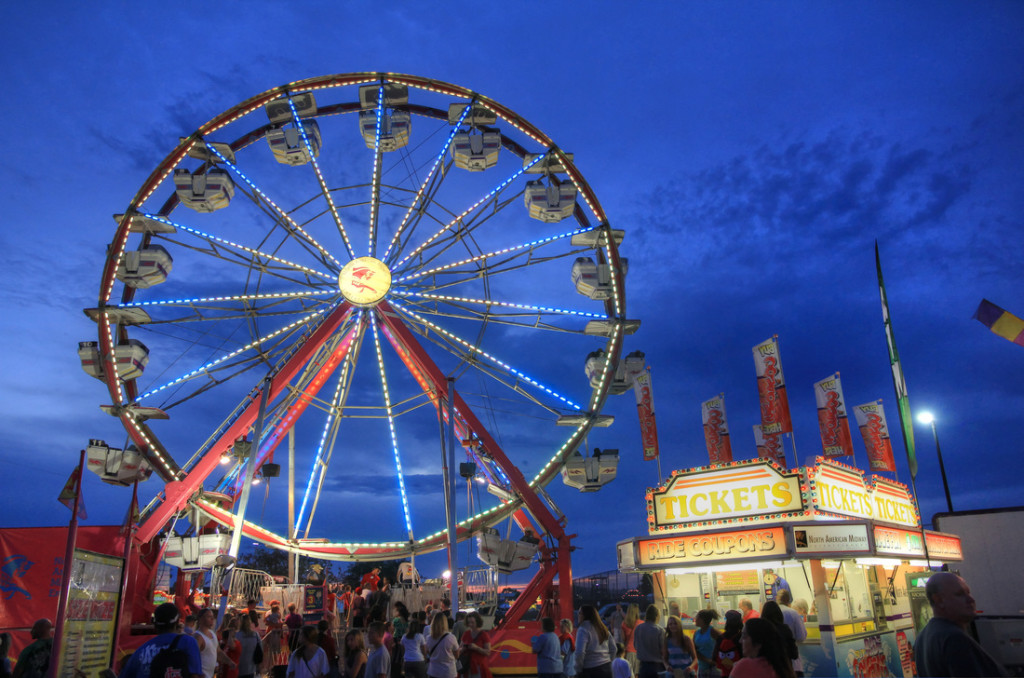
Sampling the pork chop on a stick. Snapping a selfie with the butter cow. Taking questions about foreign policy from hecklers. For those who would be president, a visit to the Iowa State Fair may be the purest distillation of the campaign experience in the state that starts the voting in the race for the White House. The 11-day event starts Thursday, and most of the 2016 hopefuls will pass through, pausing to chomp on deep-fried snack foods, visit with locals out for a day of fun and spend some time on the political soapbox to talk with voters. If all goes well, the fair provides an opportunity for a candidate to have candid interaction with voters and shows off a side of him or her not often seen on TV. People fondly remember Barack Obama‘s ride on the bumper cars with his family in 2007. But in the increasingly stage-managed world of presidential politics, awkward moments and ill-timed soundbites can flow from this unscripted setting. “It’s an important thing for candidates to do,” said Tom Henderson, chairman of the Democratic Party in Iowa’s Polk County. “The pitfall is that in prior years, the real news story has been hecklers, which leads to quotes the candidates have to answer for.” Consider the case of Mitt Romney, who during the last campaign said atop The Des Moines Register‘s soapbox: “Corporations are people, my friend.” The comment dogged Romney, the former private equity executive, for the rest of his campaign. This year, more than a dozen candidates for president are scheduled take their turn on the soapbox, among them Republicans Jeb Bush, Scott Walker and Marco Rubio. Democrats Bernie Sanders and Martin O’Malley will, too. Will Hillary Rodham Clinton? She’s coming to the fair, but hasn’t yet said if she’ll take a turn on the box. Iowa is already a place where even the most cautious-minded and carefully managed political candidate can have unexpected, intimate and sometimes just plain weird moments with the public. At campaign stops in recent months, Bush held hands and prayed with a flower-laden man in a top hat, Walker embraced a sobbing homeless military veteran and Clinton graciously accepted garlic pills from a supporter concerned for her health. The fair only amplifies the Iowa experience. Will Rogers, GOP chairman of Polk County, called it “the Iowa culture crammed into 10 days.” For Republicans, the cancellation of the traditional Iowa Straw Poll makes the fair an even more important destination. The poll had been a mainstay of the GOP presidential primary since 1979, raising money for the state party and culling the field of candidates. It was a weak predictor of candidate success in Iowa’s caucuses, however, and some major candidates skipped it. The Iowa GOP decided in June to drop the poll. “Not all candidates are going to appear natural and comfortable at a state fair. There is an element here of being able to interact with an average person on a hot August day,” said Jeff Kaufmann, chairman of the Republican Party of Iowa. A cheerleader for all things Iowa, Republican Gov. Terry Branstad waxed poetic about the benefit of a good fair appearance, remembering his trip to the event last year with Joni Ernst, then a state senator, now a U.S. senator. “I can tell you, she really connected,” Branstad said. “People were coming up to Joni and hugging her. I think that was a precursor to what happened in the election.” Republished with permission of the Associated Press.
