
Babies or Bureaucrats? An open letter to the Alabama Congressional Delegation

In my lifetime I have watched America go to extraordinary lengths to fight global injustice: homicide, genocide, infanticide and terrorism. The images of that injustice are horrific. The lengths to which men’s minds will take them to inflict anguish on the helpless makes our skin crawl. Often, in response to such evil, we send our brave men and women to topple dictators, snatch up murderers and keep the undefended safe in nations where life is considered cheap. To your credit, many of you have cast votes to stop murder around the globe, but when America’s defenseless need you most, you sit indifferently in the most powerful seats in the world and do NOTHING! YouTube is flooded with pithy video clips and sound bites of some of you telling your constituents how outraged you are at the horrific images of helpless babies being dissected for cash as if separating paper from plastic at a recycling center. In my ears I hear a resounding cadence for “Planned Parenthood must be defunded!” Yet, we see no action. King Solomon said, “Like clouds and wind without rain is a man who boasts of a gift he does not give.” (Pr 25:14 ESV) How many more videos must you see? Please watch this one. WARNING: it graphically makes the point in 60 seconds. How many more unborn babies have to die a ghastly death… 1 million, 10 million, 56 million more before you take action to end the genocide, not in the Balkans, Asia or Africa, but in the tax-payer funded cold, sterile slaughterhouses called Planned Parenthood? You say you can’t defund Planned Parenthood because you fear a government shutdown. This makes no sense! We have seen shutdowns before and they don’t cause federal employees to lose their jobs, instead they are furloughed until the impasse is resolved, but later, refunded for lost time and sent back to work. Sure, it was painful for some, but did not cause permanent difficulty. Unfortunately, the unborn don’t get a furlough, instead they have a permanent “solution” violently forced upon them as they are dissected alive, parceled out and sold for profit. Will any of you coherently argue that saving government bureaucrats from temporary layoffs should come before rescuing live babies? As a mother and Alabama citizen who deeply cares about life, I implore all Congressional members from Alabama to take a stand for life, for justice and for sanity. After all, when we eventually meet our Maker, He will not ask you how many jobs you created or how many workers you kept from being temporarily laid off, He will judge you for what you did to the “least of these.” Becky Gerritson, President, Wetumpka TEA Party (AL) & National Outreach Coordinator for Grassroots for Victory USA.
Donald Trump signs pledge to back GOP’s 2016 presidential nominee
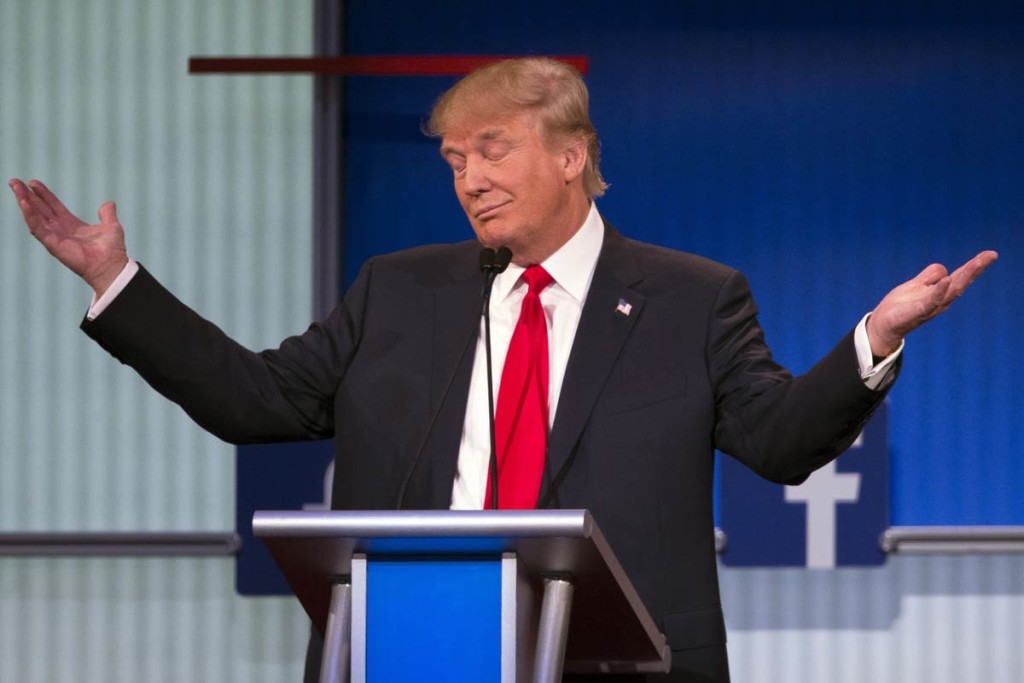
Presidential candidate Donald Trump ruled out the prospect of a third-party White House bid Thursday and vowed to support the Republican Party’s nominee — whoever it may be. The billionaire businessman announced his decision in a raucous news conference at Trump Tower, the gold-hued skyscraper in midtown Manhattan where he launched his surging and front-running campaign for president. “I have signed the pledge,” Trump said, adding that he intends to win the nomination himself and face whoever the Democrats nominate. “So, I will be totally pledging my allegiance to the Republican Party and the conservative principles for which it stands, and we will go out and we will fight hard and we will win,” he said. Trump’s decision comes weeks after he roiled the race for the GOP nomination when, in response to the first question at the opening debate of the 2016 campaign, he refused to promise to back the party’s nominee if he fell short. He was intensely lobbied by Republican National Committee leaders, who have struggled to rein in the unpredictable former reality television star. Trump announced his decision shortly after meeting privately with RNC Chairman Reince Priebus. Kentucky Sen. Rand Paul, who angrily challenged Trump at the debate, took credit for what he termed the billionaire’s “capitulation.” “I spent the last few weeks making sure people knew it was not acceptable to potentially throw the next election to Hillary,” Paul wrote on Twitter, referring to Democratic front-runner Hillary Rodham Clinton. The decision puts an end — for now — to the nervousness felt inside the GOP about the prospect of Trump holding firm and keeping his options open. At the debate, he said that gave him “a lot of leverage.” The pledge is not legally binding. Trump could always change his mind, particularly if GOP establishment leaders take aggressive steps to thwart his candidacy in the coming months. “I see no circumstances under which I would tear up that pledge,” Trump said Thursday. If not for Trump, the need for such a loyalty oath probably would not exist. There were no doubts about the intentions of the GOP’s other major presidential contenders headed into the debate, and they quickly lined up Thursday to sign. “The RNC clearly felt it had to box Trump into a decision,” said Doug Watts, a spokesman for fellow candidate and retired surgeon Ben Carson. “We just sort of shrugged our shoulders, and that’s the end of that.” A third-party bid by Trump could harm the GOP’s efforts to take back the White House after eight years of Democratic President Barack Obama. He leads the Republican field in what are still very early polls. RNC officials had been working with Trump’s campaign to avoid such a scenario. In recent days, Trump hinted the lobbying was beginning to work. “I think a lot of people are going to be very happy,” he said Saturday in Tennessee. The RNC’s pledge asks candidates to promise to “endorse the 2016 Republican presidential nominee regardless of who it is.” Further, it asks them to pledge “that I will not seek to run as an independent or write-in candidate, nor will I seek or accept the nomination for president of any other party.” “It is, more than anything, your word,” former technology executive Carly Fiorina said Thursday on CNN’s “New Day.” ”And I would presume that somebody running for president would like to signal to the American people, and most especially right now to Republican primary voters, that their word can be trusted.” Republished with permission of The Associated Press.
Katherine Robinson: The empty promise of “no new taxes”
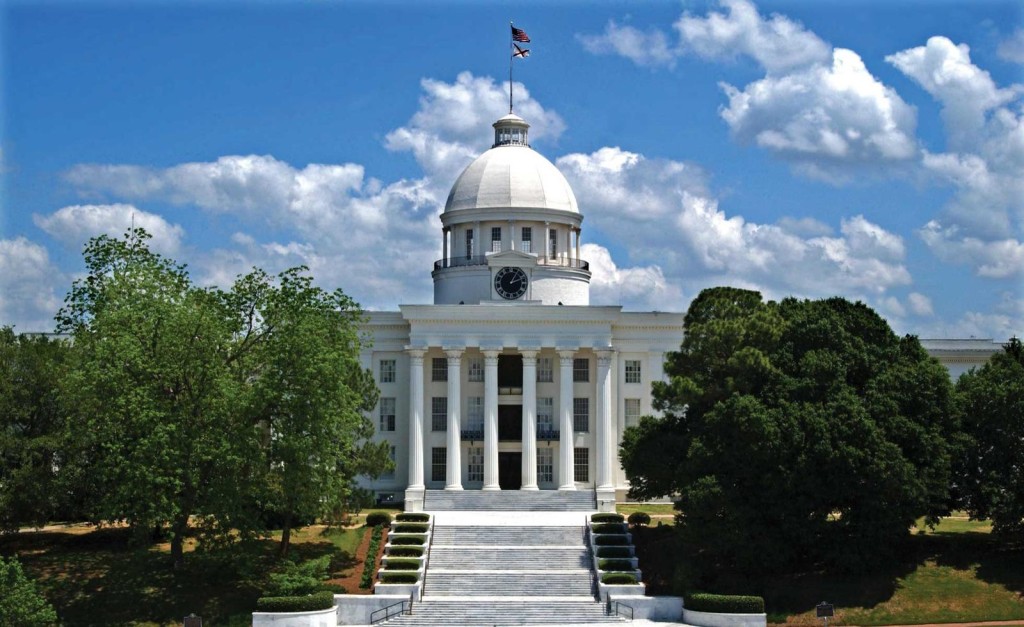
Beginning early in the regular legislative session, Democrats laughingly claimed that Republicans were stealing their agenda, namely on tax increases. Various Republicans from the top down who ran on promises of no new taxes are now exerting substantial energy to convince both their colleagues and the general public that state government cannot function without more of the taxpayers’ money. Is the shortfall itself really causing this one-eighty or is there a deeper, philosophical problem? Perhaps some of those who promised not to raise taxes did so without giving much thought to the principles that underlie this position, resulting in their sudden change of course. A promise of no new taxes is never issued on the campaign trail with the caveat of “unless revenues go down” or “unless we need to increase spending.” A principle-based pledge not to raise taxes is made with the understanding that revenues will fluctuate and that government won’t ever voluntarily spend less. It is based in a belief that government–like any family or business–must live within its means. Tax increases have always been considered a cardinal sin in conservative politics because they require taxpayers to bail out elected officials who either cannot or will not solve problems without more of your money. Without a genuine, policy-based commitment not to raise taxes, politicians are easily persuaded that certain increases aren’t that bad. The “tax them, not me” mentality of outside influences kicks in, leading lawmakers to privately weigh which tax hikes will allow them to keep the most friends. Raising the cigarette and business privilege taxes, and eliminating the FICA deduction, are still on the table seemingly due to a mistaken belief that these are the least politically dangerous–never mind the costs to smokers, small business owners, and half of all tax filers (those who itemize deductions). The “tax them, not me” mentality fails to recognize that tax increases deter reform and restraint; thus, more revenue will continue to be necessary and, next time, it will have to be found in other places. The necessity of efficiency in spending is lost when taxes are raised because, to quote Milton Friedman, “very few people spend other people’s money as carefully as they spend their own.” Maybe voters in five Alabama localities had this in mind when they voted down tax increases this year. Some legislators claim to see no correlation between what’s going on at the local level and what’s being debated in Montgomery. Politicians who miss the message here do so at their own peril. Voters are far more likely to sympathize with the need for more revenue at the lowest tier of government, to benefit specific projects within their own neighborhoods and schools, than at the state or national level. All of the justifications given in the statewide campaign to raise taxes–children losing access to pediatricians, closing state parks, limiting access to drivers’ license offices, and turning the lights off at armories–would only come to fruition if lawmakers refuse to prioritize their spending. These kinds of threats are very familiar, but usually come from the mouths of Democrats. One notable exception is the Republican-led attempt to raise taxes in 2003, else 4,000 teachers would be laid off, 5,000 inmates would be released, and access to jury trials would be limited. That ballot initiative was defeated by 67% of voters. Former U.S. Senator Tom Coburn (R-OK) remarked to an audience last week, “You have to be courageous not to spend money . . . and we don’t have many people who have that courage.” Conservative Republicans in the Alabama Legislature have shown courage as they have stymied tax increases now for six months. They must continue to hold the line and generate support for alternatives like the 78/22 split that would close 75% of the shortfall without raising taxes. Where cuts are still needed, an additional dose of courage will be required for making tough choices on prioritization. The significant achievements made under Republican leadership since 2010 are laudable, but could easily become a distant memory to taxpayers who gave their votes and their trust away for an empty promise of no new taxes. Katherine Robertson is vice president for the Alabama Policy Institute (API), an independent non-partisan, non-profit research and education organization dedicated to the preservation of free markets, limited government and strong families. If you would like to speak with the author, please email katheriner@alabamapolicy.org or call (205) 870-9900.
Robert Bentley details call for second Special Session of 2015
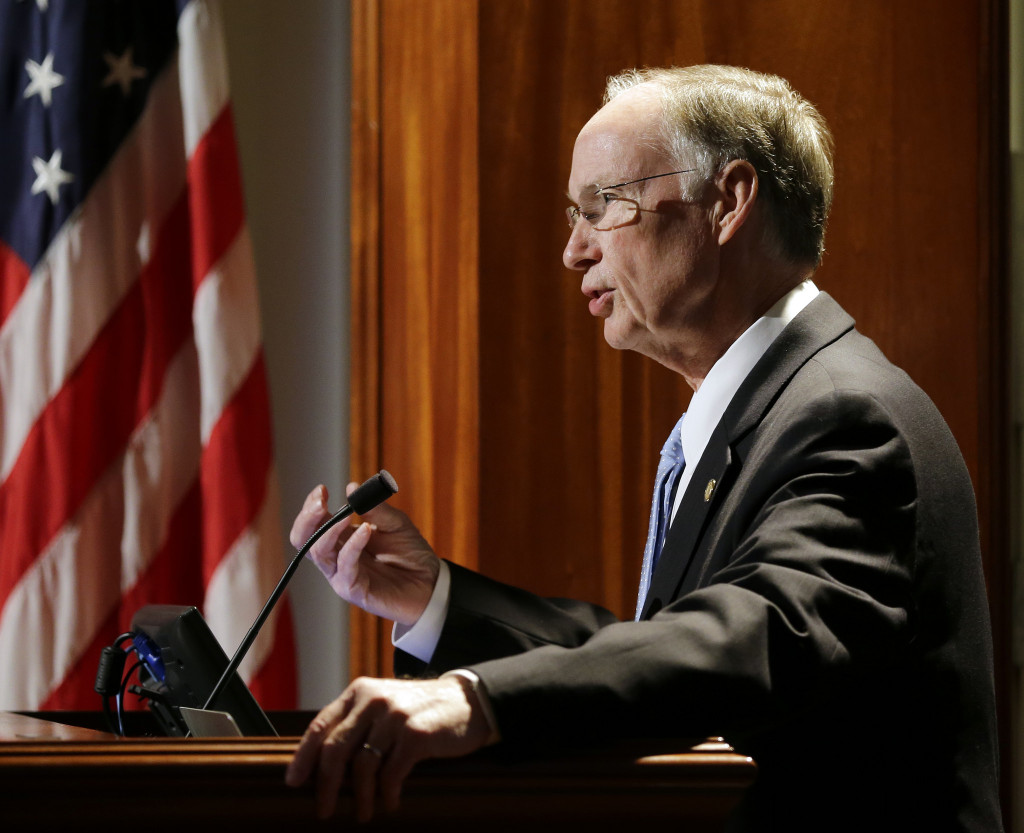
The office of newly beleaguered Gov. Robert Bentley on Thursday afternoon released the details of the call for the upcoming Special Session. Lawmakers will reconvene in Montgomery for the third time this year due to a failure to pass a budget for the next fiscal year. According to a release from the Bentley’s office, the following “reform” measures – i.e. ways of freeing up necessary revenue without raising taxes – are on the table: Transfer use tax revenue from the Education Trust Fund to the General Fund Un-earmark certain state taxes Amend the Education Trust Fund Rolling Reserve Act. Also included in the Session’s “call,” which defines the scope of what can be debated during the session, are the following proposals that would raise revenue in order to account for a looming budget shortfall: Amend the Business Privilege Tax Increase the Cigarette Tax Amend the individual income tax deduction for Federal Insurance Contributions Act (FICA) Any other revenue measures that provide revenue for the General Fund. House Speaker Mike Hubbard responded to the parameters of the call as follows: “We will certainly consider at least some of the bills in Gov. Bentley’s call and various members have their own proposals they will likely bring forward, as well,” said Hubbard in a release. “The House and Senate leadership have worked closely together in good faith, and I’m hopeful that both houses will come together on a common ground solution before the final gavel falls.” The Session is set to convene at 5:00 p.m. on Tuesday, September 8.
State energy regulators approve renewable energy plan

The state Public Service Commission – responsible for regulating the state’s major public-private utility companies – unanimously approved on Tuesday a new plan proposed by energy giant Alabama Power that would add some 500 megawatts of renewable energy to the state’s portfolio over the next six years. It would allow the utility to stagger the new alternative energy’s distribution, prioritizing it for those who have expressed an interest in it without imposing its likely higher costs on those who prefer energy from cheaper, traditional sources like coal and natural gas. An executive for the company said in a release the plan is a win-win for energy consumers of all stripes. “This allows Alabama Power to offer renewables where they make sense for our customers,” said Nick Sellers, VP of Regulatory and Corporate Affairs for the utility. “We are pleased that the Public Service Commission has reviewed and approved this filing. We look forward to working with those customers who have interest in more renewable energy.” Though the proposal was spearheaded by AP, a number of other organizations ranging from industrial to environmental were involved in crafting it: Southern Environmental Law Center, the Southern Alliance for Clean Energy, the Alabama Environmental Council, JobKeepers Alliance, Alabama Industrial Energy Consumers, and the Gulf States Renewable Energy Industries Association were all present for the plan’s introduction, as were representatives of the state’s attorney general. The new plan will allow the utility to either build its own renewable projects or secure agreements to purchase renewable energy from elsewhere. Each project can be no larger than 80 megawatts, and the first project must be under construction within a year. State regulators retain the right to review all new projects and purchase agreements. The move expands upon the utility’s already extant efforts to encourage renewable energy consumption. Alabama Power customers already have the option to buy renewable energy credits, which represent the renewable energy attributes of energy the company is producing or purchasing. Customers can purchase RECs for as little as $1.25 per month. They can purchase as many RECs as they like – enough to match all their energy use, or more.
Terri Sewell visit Alabama troops in Iraq
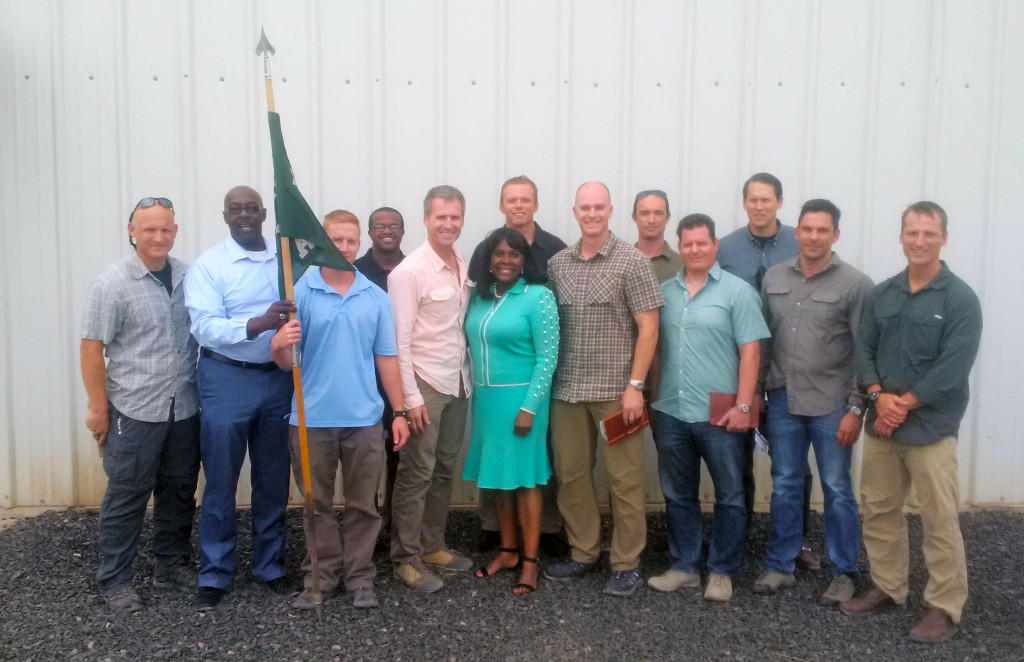
Next week she heads back to Capitol Hill, this week Congresswoman Terri Sewell (AL-07), a second-term member of the House Permanent Select Committee on Intelligence, took time to meet with members of the Alabama National Guard’s 20th Special Forces unit, part of U.S. Special Operations Command that is currently deployed in the Kurdish Region of Northern Iraq, during a four-day trip to the country. There, Sewell received oversight briefings on the current U.S. Department of Defense training mission with Syrian fighters and the Iraqi Army. “Our brave men and women in uniform play an integral role in Iraq, and my visit to Ebril and Baghdad deepened my appreciation for the sacrifices they have made to protect our country,” Sewell said of the men and women she met on her trip. “I was especially honored to meet with members of the Alabama National Guard’s 20th Special Forces division, and to learn more about their vital mission in Iraq. I want to thank these remarkable Alabama National Guardsmen for their exemplary service to our nation during their deployment in Iraq. I am especially proud to acknowledge the critical role that Alabama troops are playing in the fight against global terrorism.” Sewell continued, “As a member of the House Intelligence Committee, one of my most sacred duties is to ensure that every vote I make supports and advances our national security. Freedom is not free, and members of the armed forces deserve special recognition for their service and sacrifice. We in Alabama are doing our part.” Congresswoman Terri Sewell with American leadership in Iraq, including General Mark Odom who is the Combined Joint Operations Center Commander in Northern Iraq.
Daniel Sutter: Who do we care about?

The fall semester is underway and so I will start this week with a question. What common issue is raised by the following local, state, and national policies? Pike County enacts a 4% tax on hotel rooms. Alabama’s $80 million incentive package of tax breaks and assistance induces Polaris to build a new all-terrain vehicle manufacturing plant in Huntsville. The Environmental Protection Agency’s (EPA) Clean Power Plan to reduce greenhouse gas emissions from electricity generation claims billions of dollars of benefits from reduced global warming. Each involves how we should evaluate the effect of government policies on people who do not live in the enacting government’s jurisdiction. Let’s consider how each issue affects nonresidents in more detail. A hotel tax will increase the price of rooms, and so economists would say that customers pay part of the tax. Many customers will be out-of-town visitors, meaning that the tax would be “exported.” Therefore visitors will pay in part for services provided by our local governments in Pike County. The Polaris plant will employ nearly 2,000 people with an estimated payroll of $75 million. The new jobs with good pay and relocation of current company employees will benefit Huntsville. But Polaris was looking at sites in 13 other states, and the benefits to Huntsville would have materialized wherever Polaris built the plant. From a national perspective, Alabama’s incentive package to Polaris merely diverted the plant from some other state. Global warming is a global problem, so greenhouse gas emission reductions by the U.S. (or any country) create benefits around the world. Bangladesh, for example, is a low-lying nation vulnerable to rising sea levels, and would benefit a lot from the reduction of greenhouse gas emissions. The U.S. may realize perhaps as little as 7 percent of the benefits from slowing global warming. Should we consider other nations’ benefits on par with domestic benefits for the Clean Power Plan? The treatment of nonresidents or foreigners involves economic, political and ultimately ethical dimensions. How should we as Alabamians or Americans consider the effect of government actions on “outsiders,” and should our politicians concern themselves exclusively with the well-being of the people they represent? A reasonable case can be made to count all benefits and costs regardless of the political jurisdiction. All lives matter because of our basic humanity, not because of whether someone votes in our elections. If we adopt this view, the international benefits for greenhouse gases should count, and we should dismiss the local gains in the site selection for Polaris’ new plant. A reasonable case can also be made to exclude international benefits. Consider national defense. Many Americans, myself included, would object to a defense policy built around what is good for other nations. Our military should protect our interests, and we have no duty to serve as the world’s policeman, even if this benefits foreigners. If we adopt this view, then the EPA should consider the benefits of its regulations for the people who must abide by and bear the costs. I do not see a good case, however, for why all Americans do not matter. Consequently we must view state and local economic development policies differently. Taxes on hotels and rental cars are “exported” beyond the community, but still paid (primarily) by Americans. Local economic developers view dollars diverted from elsewhere in the nation as a gain for the region or state. Furthermore, pursuit of tax breaks distracts businesses from what actually matters for the economy, namely locating plants where economic costs are lowest. Finally, taking advantage of neighbors through exported taxes fosters enmity among Americans and produces taxation without representation. People across Alabama, America, and the world prosper when we cooperate and trade with one another. Cooperation creates wealth. Discounting the effects of our government acts on outsiders encourages policies that benefit some at the expense of others. Our state and local governments should follow the guidance of the Golden Rule. Daniel Sutter is the Charles G. Koch Professor of Economics with the Manuel H. Johnson Center for Political Economy at Troy University and host of Econversations on TrojanVision.
