
Bernie Sanders gets grumpy, but voters like him that way
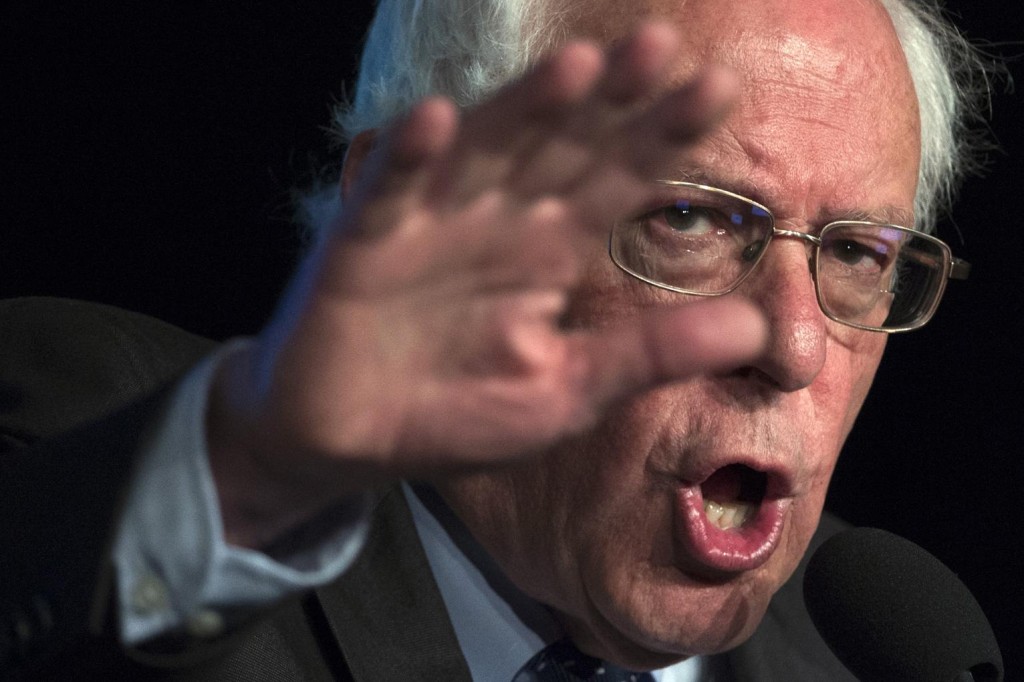
Bernie Sanders doesn’t kiss babies. He promises them a revolution. “This is for you,” the upstart Democratic presidential candidate told 3-month-old Lily Landretti after an event in southeastern Iowa. He meant his insurgent campaign. Lily just kept gurgling. In an age of carefully planned campaigns, the Vermont senator is different. A self-identified grump, Sanders gets angry, rolls up his sleeves and winds up drenched in sweat. Like Donald Trump in the Republican race, Sanders has been drawing big crowds and giving the buttoned-up candidates a run for their money. For his supporters, Sanders’ grouchy persona is one of his charms. They say he feels like a real person, not a slick politician. They believe him when he bellows his unvarnished liberal message, pledging to work for single-payer health care, paid maternity leave and a higher minimum wage. “I wanted to give him a hug,” said Lily’s mom, Jane Landretti, 37, of Madison, Wisconsin. She said he’s like a “very smart thinking grandpa.” Eight years ago, Barack Obama offered a message of hope and change, presenting himself as a leader from a new generation. This time around, Democratic imaginations and hearts are fired up by a white-haired 74-year-old socialist who is riding a populist surge. Although polls through most of the year have found Hillary Rodham Clinton with a strong lead nationally, Sanders has been gaining ground in recent surveys, especially in the key early states of Iowa and New Hampshire. Iowa Democrats who attended Sanders’ events during a recent swing said they just liked his style. “I love a person who is going to stand up and be a straight shooter,” said Lynnea Ellison, 62, of Fairfield, who watched Sanders address crowds in the Grinnell town square. “I think he’s the perfect candidate.” Trudy Magurshak, 66, of Grinnell, agreed that he does not come across as a normal politician who “wants to be your best friend. We want them to be real people.” Chad LaRue, 54, of Ottumwa, waited to see Sanders open an office in his town later that day. He liked that Sanders could be rough around the edges. “I think it makes him real,” he said. “Bernie is the anti-establishment candidate for me.” Asked about his attitude, Sanders joked: “Me, grouchy?” He attributed that trait to frustration with the political class and the focus on personality and rivalries over policy in a presidential campaign, “as if it were a baseball game or a soap opera.” Even so, he’ll lighten up on occasion, as when he joked in New Hampshire on the weekend that as socialist, he’s out to rid the nation of pajamas in different colors and put everyone in flannel ones. He admires democratic socialist societies in Scandanavia, he says, not the North Korean model. Sanders’ standard campaign speech can run close to an hour as he riffs on notes scrawled on paper, no teleprompter. He’s been known to lecture a crowd, as when he grilled graduate students and their professors in the summer about U.S. policy on paid sick leave, then barked: “What are you teaching these guys? Do you know anything?” He pledges to fight income inequality, eliminate student debt, expand Social Security and tackle institutional racism. He concludes with a call to join his “political revolution” and the crowds explode with applause. At times, Sanders brusque persona seems to extend off the podium. Recently in Iowa, he spent only limited time shaking hands or chatting with people after events. His staff said that was mostly because of a tight schedule. Spokesman Michael Briggs said Sanders often does make more time for fans. “We must have taken 10,000 selfies over the last couple of months,” he said. But Sanders is no lingerer. “Very quickly, very quickly,” he said to one man requesting a photograph after an Iowa event in June. For some people, Sanders’ unfiltered attitude is a welcome change from Clinton’s more controlled style. She’s also perceived as more of a political insider, though both have experience in elected office. “Personally, I think she’s become a little too Washington,” said Carmen Grimm, 57, of Amana. Those who could not get close to Sanders in Iowa were not put off. Jeff Poulter, 57, of Middletown, brought his copy of Sanders’ book “The Speech” to an event, seeking an autograph. But Sanders left before he could get close enough to ask. “It’s a mob,” Poulter said. But he said he was glad Sanders spent his time talking about policy on stage instead of shaking hands. “I think I’d rather hear the details.” Republished with permission of the Associated Press.
Wisconsin’s Scott Walker exits ’16 race with harsh words for Donald Trump
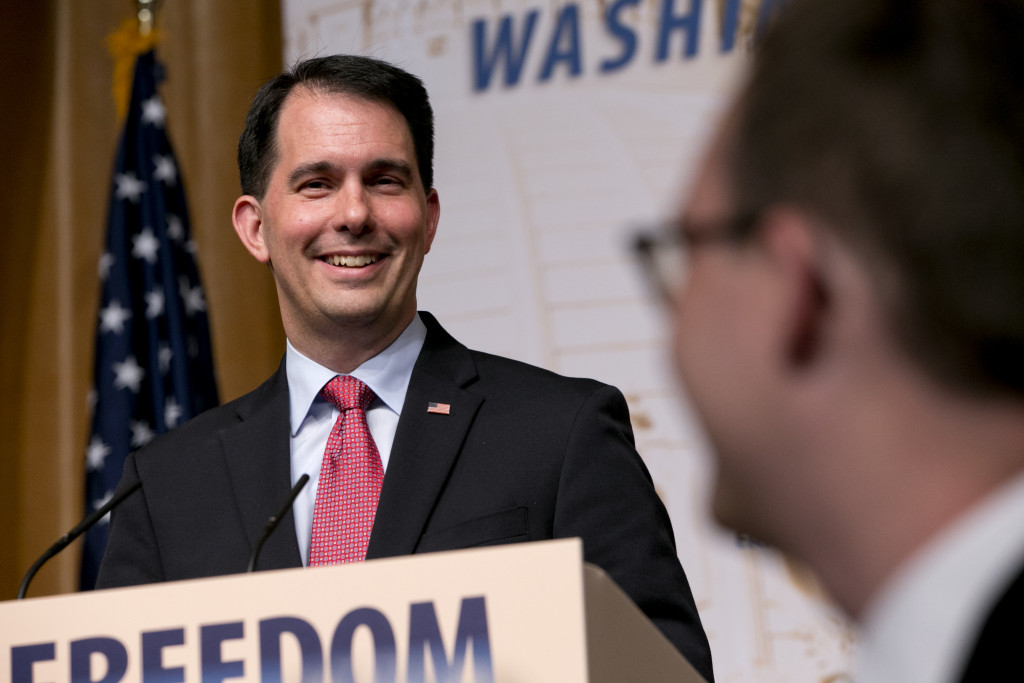
Warning that the Republican presidential race has become too nasty, Scott Walker exited the 2016 campaign on Monday and urged others to quit, too, and “clear the field” so someone can emerge to take down front-runner Donald Trump. The announcement marked a dramatic fall for Walker, who was struggling to generate money and enthusiasm after surging into the race’s top tier earlier in the year. He will return to his job as governor of Wisconsin, where his term runs through 2018. “Today, I believe that I am being called to lead by helping to clear the field in this race so that a positive conservative message can rise to the top,” Walker said in a news conference. “I encourage other Republican presidential candidates to consider doing the same so the voters can focus on a limited number of candidates who can offer a positive conservative alternative to the current front-runner.” Walker said that is “fundamentally important to the future of the party and more importantly to the future of our country.” One of the last Republicans to enter the race, Walker joined former Texas Gov. Rick Perry as one of the first to leave it. He found himself unable to adjust to Trump’s popularity or break out in either of the first two GOP debates. Both candidates warned of the billionaire businessman’s influence on the GOP as they stepped aside, although neither called him out by name. “Sadly, the debate taking place in the Republican party today is not focused on that optimistic view of America,” Walker said. “Instead, it has drifted into personal attacks.” Walker’s sons, Matt and Alex, attended his speech. They each had taken a semester off from college to campaign with him. Anthony Scaramucci, one of Walker’s top fundraisers, expressed hope that other struggling candidates will heed Walker’s call to distill the field. “I think what he did shows real leadership,” Scaramucci said. “He’s sending a signal to the low single-digiters – the new 1 percenters, if you will – that it’s time to go, for the good of the party.” Walker’s departure prompted a good riddance from Richard Trumka, AFL-CIO president, reflecting the hostility between the governor and organized labor. “Scott Walker is still a disgrace,” Trumka said, “just no longer national.” Walker’s fall was in many ways more dramatic than Perry’s. He was thought to be a leader in the big pack for much of the year and built a massive national organization, with paid staff spread across the country, that dwarfed many of his rivals in scale and scope. “I don’t think he made any really big mistakes,” said Iowa state Sen. Mark Costello, who endorsed Walker earlier this year. “But people lost enthusiasm.” Walker, 47, tried to appeal to religious conservatives, tea party conservatives and the more traditional GOP base. He cast himself as an unintimidated conservative fighter who had a record of victories in a state that hasn’t voted Republican for president since 1984. Like Perry, however, Walker found little room for such a message in a race dominated by Trump. Trump tweeted in response to Walker’s decision, “he’s a very nice person and has a great future.” Walker came to the race having won election in Wisconsin three times in four years, and having gained a national following among donors and conservatives by successfully pushing his state to strip union bargaining rights from its public workers. Walker pointed to those Wisconsin wins, in a state that twice voted for Barack Obama as president, as signs that he could advance a conservative agenda as the GOP’s White House nominee. He called himself “aggressively normal” and made a splash in January with a well-received speech before religious conservatives in Iowa. Groups backing Walker went on to raise $26 million, tapping wealthy donors whom Walker had cultivated in his years as governor and during his successful effort to win a recall election in 2012. Walker’s primary super PAC, called Unintimidated, had just begun spending for a major push in Iowa – reflecting the governor’s last-ditch strategy to place all of his chips on that first-to-vote state. The super PAC told federal regulators in a filing Friday that it had spent more than $1.6 million boosting Walker this year, most recently on a $50,000 mailing to Iowa voters. It will now return what it hasn’t spent to its donors. Many of Walker’s troubles were not of Trump’s making. He took days to clarify whether he supported ending birthright citizenship. He initially showed interest in building a wall between the U.S. and Canada, only to laugh it off as ridiculous. He also declared he wasn’t a career politician, despite having held public office for 22 straight years. After his fade in polls, Walker took a more aggressive approach, promising to “wreak havoc” on Washington. He vowed to take on unions as president, just as he did as governor, outlawing them for federal government workers. But the anti-union policy proposal fell flat; announced in the days before the second GOP debate, it wasn’t mentioned at all – by Walker or anyone else – on stage. While only Texas Sen. Ted Cruz and former Florida Gov. Jeb Bush had more super PAC money available to boost their chances in the original 17-person 2016 Republican field, Walker struggled to generate money for his official campaign. He has yet to report fundraising totals to federal regulators, but top fundraisers and donors have said his plummeting poll numbers left them struggling to generate cash. Walker called his senior staff to the governor’s mansion in Madison on Monday to review recent polling, in which he was mired at the bottom, and his campaign’s finances. “I’m disappointed,” said Stanley Hubbard, a billionaire media mogul from Minneapolis who had backed Walker’s campaign. “He’s a good man and would have been a good president.” As word spread of his decision to exit the race, Republican operatives in Iowa working for other campaigns were already making plans to contact state lawmakers who had committed
Hillary Clinton vows to defend Obamacare against GOP opposition
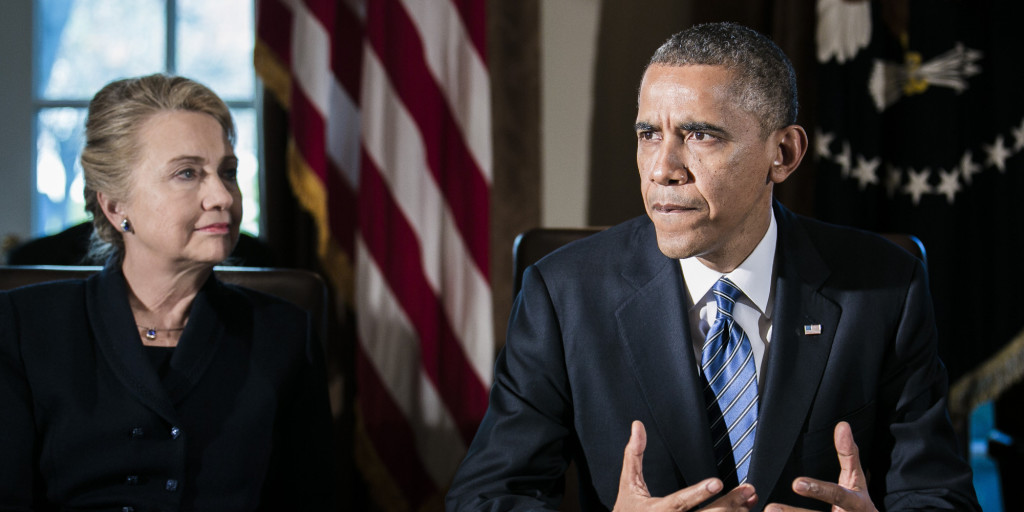
Hillary Rodham Clinton on Monday hailed President Barack Obama‘s health care law for reducing the rate of uninsured Americans and vowed to defend it against Republican opposition if she wins the White House. The Democratic presidential candidate kicked off a series of health care events with an embrace of the law, arguing that Republican resistance to the overhaul has hurt working families seeking coverage. She credited the health care law with decreasing the rate of uninsured Americans to the lowest level in 50 years. “I’m not going to let them tear up that law, kick 16 million people off their health coverage and force the country to start the health care debate all over again,” Clinton said at the Louisiana Leadership Institute. “Not on my watch…” She said that “I want to build on the progress we’ve made.” Clinton’s focus on health care comes as the share of Americans without health insurance has dipped to historically low levels due both to the law’s expansion in coverage and recent economic growth. While the law’s rocky rollout and longstanding GOP opposition caused Obama’s party headaches, Democrats seeking to succeed him are embracing the plan and talking about ways to build upon it. Vermont Sen. Bernie Sanders, Clinton’s chief Democratic rival, has called for a single-payer health care system and introduced legislation that would allow Medicare to use its large purchasing power to negotiate lower drug prices while allowing individuals to import prescription drugs from Canada, where the costs are cheaper. Clinton said she would announce a plan this week to deal with “skyrocketing, out-of-pocket health costs,” particularly drug prices. The plan, which she will discuss in Iowa on Tuesday, would cap how much a person pays out of pocket each month for medications. She took a swipe at Louisiana Gov. Bobby Jindal in his own backyard, saying he had left more than 190,000 people who would have been eligible for Medicaid without coverage because he declined to expand the program. “He put ideology ahead of the well-being of the people and the families in this state,” she said to loud boos aimed at Jindal. Jindal, who has made the repeal of the health care law a centerpiece of his Republican presidential campaign, said in an interview that it was “appropriate that the godmother of Obamacare would be in Louisiana promoting socialized medicine.” “I think that Obamacare is just a step towards more government control, more socialized medicine and I think that’s bad for us,” he said. While campaigning in Arkansas later Monday, Clinton said Jindal’s refusal to expand Medicaid disproportionately harms black Louisiana residents, and she sought to contrast Louisiana’s progress with Arkansas, where she was first lady for about a decade. Her husband, Bill Clinton, was governor of Arkansas from 1979 to 1981 and again from 1983 until his election to the White House in 1992. The Republican-led Arkansas Legislature approved the first-in-the-nation hybrid expansion plan in 2013, and Clinton noted that it’s expanded coverage to 250,000 people. “When I talk about what we should be doing, we should be looking for people to come together like what happened here in Arkansas,” Clinton told more than 1,000 people gathered at Philander Smith College near downtown Little Rock. The state’s Medicaid expansion uses federal money to purchase private insurance for low-income residents. The majority-Republican legislature voted to reauthorize the program another year at the behest of Republican Gov. Asa Hutchinson while a committee looks at the future of the expansion. Republished with permission of the Associated Press.
Scott Walker to drop out of GOP presidential race
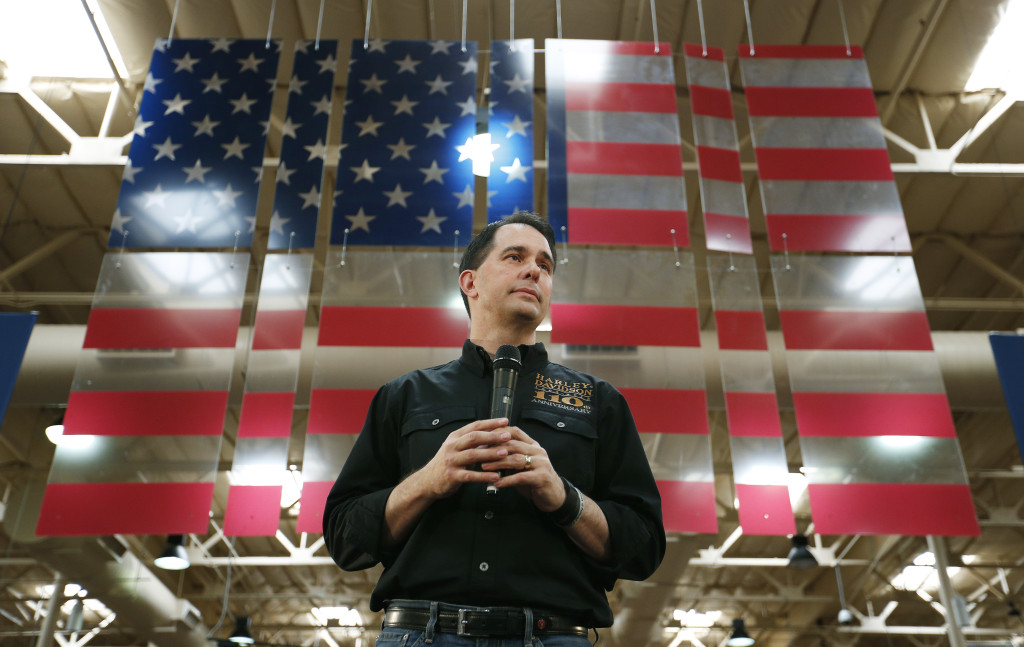
Two people familiar with his decision say Scott Walker is dropping out of the Republican race for president. The Wisconsin governor planned a news conference for Monday evening in Madison, where he was expected to become the second major GOP candidate to quit the race. The people spoke on condition of anonymity because they were not authorized to speak before Walker’s announcement. Walker tried to capitalize on his record taking on unions and got off to a strong start after a well-received speech to Iowa conservatives in January, formally launching his campaign in July. But the 47-year-old Walker fell after a series of stumbles on the campaign trail and forgettable performances in the early GOP debates. Walker joins former Texas Gov. Rick Perry as two early 2016 dropouts. Republished with permission of the Associated Press.
Alabama business roundup: Headlines from across the state

What former U.S. Army fort is getting a facelift? Who’s investing $11.5M in the Black Belt region? Did you say $1.3 BILLION for next-gen SUVs? Alabama trade officials headed to Africa for business opportunities. All this and more inside today’s business roundup of headlines from across the state: Alabama News Center: Mercedes to invest $1.3 billion in Alabama plant for next-gen SUVs Mercedes-Benz plans to invest nearly $1.3 billion in a major expansion at its Alabama assembly plant, creating 300 jobs and preparing the factory to launch production of its next-generation sport utility vehicles. The new investment comes at a time of dramatic growth for Mercedes’ manufacturing hub in Tuscaloosa County. Output at the 3.7 million-square-foot plant is targeted at 300,000 vehicles this year, an increase of 60 percent from the 2013 production level. At the same time, Mercedes has introduced new models to its Alabama production line-up, including the GLE Coupé this year. Gov. Robert Bentley attended a meeting this afternoon of the Tuscaloosa County Industrial Development Authority, where Mercedes officials laid out their plans. “It’s great to be in Tuscaloosa to announce that Mercedes will invest another $1.3 billion and create 300 new jobs in Alabama,” Bentley tweeted. As part of the latest expansion project, Mercedes will add a facility where its most technologically advanced SUVs will be assembled, according to the Economic Development Partnership of Alabama. The new jobs will include high-paying engineering positions. “The significant new investment Mercedes is making to expand its Tuscaloosa County manufacturing facility shows the company’s strong commitment to advancing automotive technology,” said Greg Canfield, secretary of the Alabama Department of Commerce. “Over the past 20 years, Alabama has developed a productive partnership with Mercedes, and the company’s Alabama workforce has proven its capabilities through repeated expansions and model launches. “This is a ‘Made-in-Alabama’ success story with global connections,” Canfield added. ROUNDS OF EXPANSIONS Mercedes, which produced its first Alabama-made vehicle in 1997, has invested a total of more than $4 billion in its sprawling Tuscaloosa County campus, after repeated expansions. The plant’s workforce now numbers around 3,500. Besides the new GLE Coupé, the models made there are the C-Class sedan, the flagship M-Class (renamed the GLE-Class) sport utility, and the GL-Class (renamed the GLS-Class) full-size SUV. In 2014, the Mercedes plant produced 232,000 vehicles, pushing its cumulative production total past 2 million. Mercedes suppliers have also been expanding or establishing new operations in Alabama. In August, parts maker SMP announced plans for a $115 million plant in Tuscaloosa County that will eventually create 650 jobs. Also last month, Kamtek announced a $530 million expansion of its Birmingham manufacturing facility that will add 350 jobs. Alabama News Center: Airbus supplier reveals expansion details for Mobile Aeroplex facility In a move one official called “classic economic development,” MAAS Aviation received tax abatements totaling nearly $2.2 million Wednesday for construction of a proposed $13 million second paint facility at Mobile Aeroplex at Brookley. News of Dublin, Ireland-based MAAS’ plans to expand its footprint in Mobile broke during the second day of the 2015 Paris Air Show in June, but a company representative said the $39 million investment figure disclosed at that time embodied several long-term investment proposals intended to strengthen its position as an integral supplier to aircraft manufacturer Airbus. The proposals would expand MAAS’ U.S. capabilities to target third-party original equipment manufacturers; maintenance, repair and overhaul providers; and potential military clients. “We are a very specialized niche business … We bring world-class standards … and we complement what already exists,” Tim Macdougald, chief financial officer and commercial director of MAAS Aviation Brookley Inc., told members of the Mobile Industrial Development Board. MAAS is nearing completion on a paint facility dedicated to servicing the A320 aircraft assembled at the recently inaugurated Airbus U.S. Manufacturing Facility at Brookley. That paint facility, Macdougald said, will employ 52 within three years and pay average annual salaries of $41,000. That equates to MAAS pumping an estimated $4.4 million into the Mobile economy each year, including nearly $2.2 million in payroll, he said. Those jobs are in addition to the 26 MAAS will have dedicated to the Airbus paint shop. The new twin-bay painting facility – featuring a state-of-the-art vertical airflow system – will be capable of handling aircraft as large as the Boeing 757 but will also target maintenance, repair and operations painting of third-party aircraft with focus on U.S operators of single-aisle aircraft. “Clearly, Airbus gives us an opportunity to expand our footprint here … but Airbus won’t commit to a second shop until the first is at capacity; therefore, we need an external shop,” Macdougald said, noting the byproduct is MAAS’ increased “relevance to third-party work.” MAAS operates two paint shops in Hamburg, Germany (with a third under construction) as well as a facility the Netherlands and has a long-term contract as the exclusive paint service provider to Airbus Americas Inc. Macdougald characterized the 30-year-old company as the “Neiman Marcus of aircraft painting” because of its focus on low-volume, high-quality craftsmanship. Per recently passed “Made in Alabama” jobs incentives legislation, MAAS is qualified to request 20-year abatements for the expansion. Although the Mobile Industrial Development Board is authorized to approve municipal, county and state abatements through an initial 10-year period, its authority to extend the abatements an additional 10 years applies only to the city’s portion of the request. MAAS must secure separate approval for the second 10-years from both Mobile County and the state of Alabama In recommending the project’s approval, Troy Wayman, the Mobile Area Chamber of Commerce vice president of economic development, told the board the MAAS project will generate nearly $16.3 million in collectable tax revenue during the course of the abatement. “When we recruit companies like Airbus, that’s not the end of the process,” Wayman said, calling MAAS a perfect example of the ancillary development the area is beginning to see. “This will only make us more attractive to others companies outside Airbus,” he said. Following the vote, Industrial Development Board Chairman Mike Saxon, vice
U.S. House of Representatives: Sept. 21-25
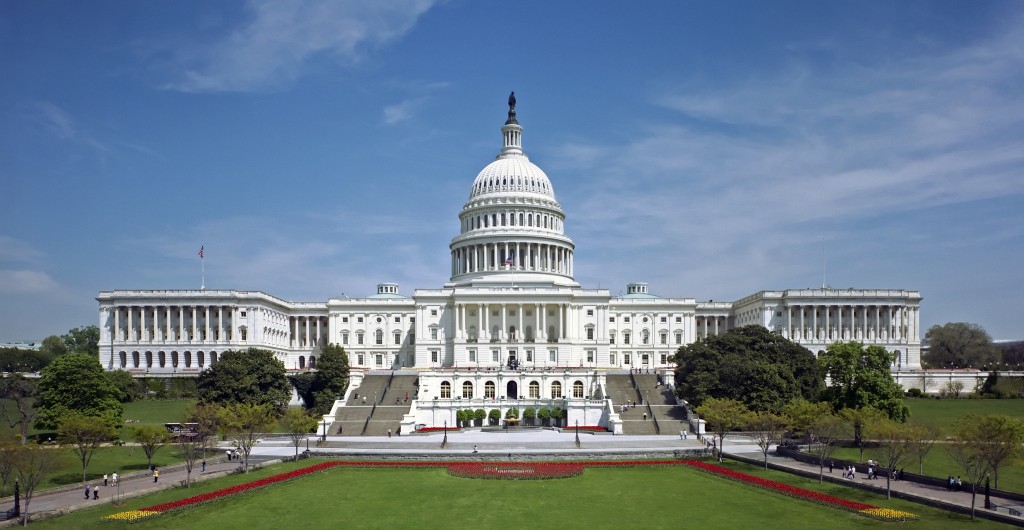
It’s an incredibly short legislative week in the U.S. House of Representatives as the Capitol prepares for the papal visit. The House will remain out of session until Thursday morning when it reconvenes in a joint meeting with the Senate to receive Pope Francis, making him the first pontiff ever to address a joint session of Congress. His highly anticipated speech will be broadcast around the world. For the balance of the week, the House will consider 11 bills under suspension of the rules. Ten of these are bills to name post offices or other federal buildings. A full list of bills can be found here. On the floor this week: H.R. 348: the Responsibility and Professionally Invigorating Development (RAPID) Act. The bill is intended to expedite the environmental review and permitting processes for federally funded projects, by limiting the grounds for civil actions filed against an environmental review or permit approval. There are no House hearings scheduled in Washington this week.
Bradley Byrne: Airbus grand opening signifies new day for southwest Alabama

I have proudly called Southwest Alabama home for my entire life, but I don’t know that I have ever felt as much pride for our area as I did last week while standing on the stage at the grand opening ceremony for the new Airbus Manufacturing Facility in Mobile. It wasn’t an easy road to get to this point, especially when you consider that our part of the state has faced a number of challenges over the last decade. We had to significantly rebuild after Hurricanes Ivan and Katrina. Many local businesses and homeowners took a major hit from the financial collapse of 2008. And I doubt anyone could forget the frustration of losing out on the contract to build aerial refueling tankers for the United States Air Force. Despite these challenges, the people of Southwest Alabama showed our resiliency and never gave up on the dream of bringing a major aviation company to our region. Now that that day has finally come, words cannot adequately describe how transformative this will be for Mobile, the State of Alabama, and the entire Gulf Coast region. For those who weren’t able to watch the grand opening ceremony, it was a superb event. We had over 80 news outlets from all over the world in attendance, and many of the television stations were carrying the ceremony live. Our part of Alabama was truly on the world’s stage in grand fashion. I was really glad to see so many people in the room who helped bring Airbus to our area. I was especially pleased to see Governor Bob Riley and my predecessor, Congressman Jo Bonner, in attendance. They both worked so hard to make that day a reality, and I am glad we were all able to see their perseverance pay off. The ceremony also gave us an opportunity to get a first look at the completed facility, which cost around $600 million to build. Construction has already begun on the first two planes, and as the workforce grows and manufacturing ramps up, this remarkably large facility will be full from wall to wall with some of the most popular aircraft on the planet. My favorite part of the ceremony was being able to meet the men and women who will actually be building the airplanes. It was very appropriate that the employees were the ones seated on the stage, not elected officials or business leaders. The spotlight certainly needed to be on the workforce. I can’t say enough about these workers. They are a shining example of the importance of top notch jobs training programs. Going back to my time as chancellor of Alabama’s two-year college system, we have made really impressive strides in creating jobs training programs that are consistently ranked among the top ten workforce agencies in the United States. Now some of you who aren’t from Mobile County may wonder why Airbus matters to you, so let me explain. The impact from this Airbus facility will be felt all over Southwest Alabama. You will see companies and suppliers locate throughout our region, and you will see people from all across our area actually working for Airbus. I am really impressed by Airbus’s commitment to hiring local workers. Over 60% of the 260 employees currently working for Airbus are from Southwest Alabama. The number of total employees will end up being around 1,200, so there are going to be plenty of opportunities for our local residents. The sky is literally the limit here, and as Airbus expands and grows its Brookley presence, we will grow and expand with them. Aviation excellence has come to the Gulf Coast and as a region we will be forever changed for the better as a result. Bradley Byrne is a member of the U.S. Congress representing Alabama’s 1st Congressional District.
National survey ranks Alabama tax code 33rd most fair
A new report released Monday by online financial services and survey firm WalletHub says Alabama ranks just behind the national average when it comes to the fairness of its state and local taxes. The survey evaluated the taxes levied by all 50 states – broken down by income, excise, sales and “other” taxes – and how they are levied on people of varying income brackets and compared that to the ideal system of taxation, gathered by asking respondents the question, “In thinking about the fairest possible tax system, what percentage of income do you think households at each income level should pay in state and local taxes?” The analysis showed Alabama’s tax code to be about equally as fair as the going rates in the U.S. The state gained high marks for its low sales and excise taxes, which are generally deemed regressive because poor and middle-class taxpayers generally shoulder most of those burdens. Alabama was 40th most reliant on such taxes for state revenue, plus 37th on “other taxes” like licensure and other miscellaneous fees, which experts similarly agree unfairly burden those least able to afford it. On the other hand, Alabama was dinged for its relatively high dependence on property taxes – the survey indicated the Yellowhammer State soaks its homeowners more than all but five other states. Its No. 33 ranking puts the state at slightly more fair than the states of New York, Pennsylvania and southern neighbor Kentucky, which came in at No. 34, and slightly less fair than Rhode Island, South Dakota and Louisiana. Montana took top honors overall according to the report, being docked only for relatively high sales taxes in the state. Oregon, South Carolina, Delaware and Idaho rounded out the top five, though their paths to the top diverged significantly. Delaware and Oregon, for instance, have low or no state income tax whereas Montana and South Carolina’s fairness rating was buoyed by low property taxes. Alabama’s neighbors in Florida ranked No. 45 on the list, pulling up the rear along with Illinois, Arkansas, Hawaii, Georgia and Washington. The non-scientific survey used results from an online poll of 1,050 Americans.
Carly Fiorina’s career as tech CEO is still a matter of debate
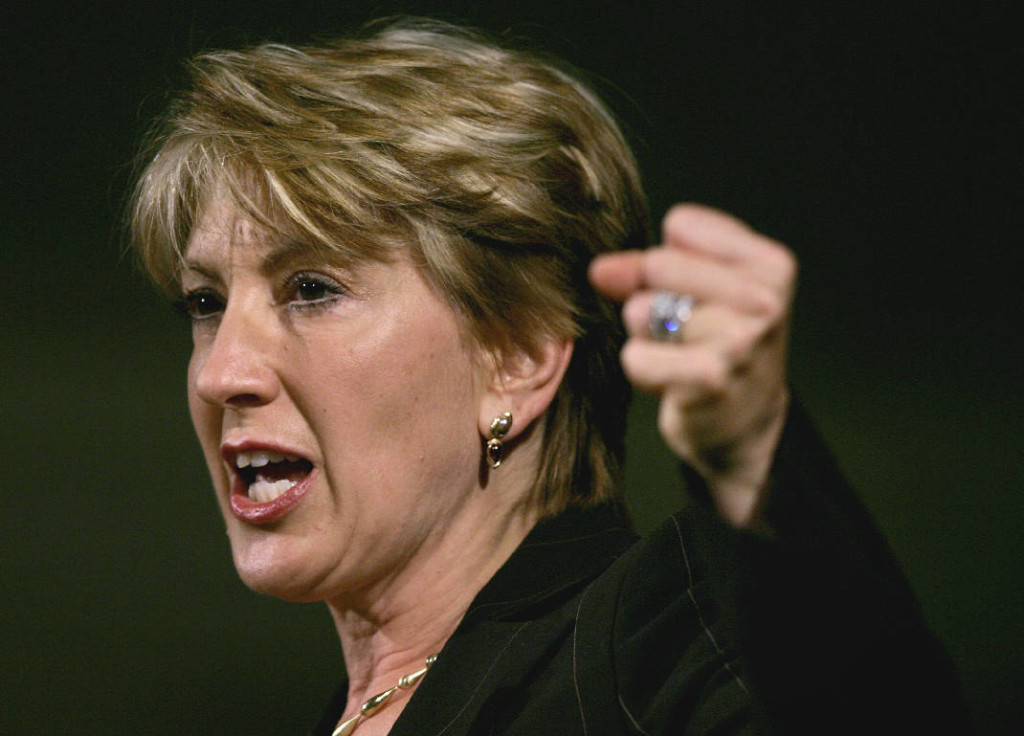
Ten years after GOP presidential candidate Carly Fiorina was unceremoniously fired from her job as chief executive of Hewlett-Packard, her tumultuous business career is still the subject of heated discussion. Even as she enjoys a surge in momentum after last week’s Republican debate, Fiorina is facing more jibes about her tenure at HP. Rival candidate Donald Trump declared her time there “a disaster,” after Fiorina boasted of HP’s growth and the “tough choices” she made as CEO. The truth is, her HP tenure was rocky. “It is pretty hard to find too many people who think she did a great job there,” said journalist Peter Burrows, who wrote “Backfire,” a book about Fiorina’s reign at HP. “Her reputation is definitely tarnished in Silicon Valley.” Yet one outspoken Fiorina supporter is venture capitalist Tom Perkins, who clashed with Fiorina when he was on HP’s board but now says it was a mistake to dump her. “I think she is brilliant and has gotten a lot of unwarranted criticism,” Perkins told The Associated Press. Some issues the 61-year-old Fiorina has encountered in her career: ___ FIORINA AND COMPAQ Fiorina likes to say she “doubled the size” of HP while she was CEO from 1999 to 2005. She’s referring to HP’s annual revenue, which rose above $80 billion after Fiorina pushed through a 2002 deal to buy Texas computer-maker Compaq, which had $40 billion in annual sales before the deal. HP, however, continued to struggle after the massive acquisition. Profit fell from $3.7 billion in 2000 to a net loss of $900 million in 2002. While profit recovered to $3.5 billion in 2004, the company missed some key earnings projections along the way. To be sure, the 2001 dot-com bust hurt many tech companies, including HP. But despite Fiorina’s efforts to cut costs by slashing 30,000 jobs, HP’s stock fell 50 percent, lagging behind rivals IBM and Dell. She was ultimately fired after clashing with directors who pressed her to share authority with subordinates. HP’s performance improved under Fiorina’s successor, Mark Hurd. He cut costs further, using the combined clout of HP and Compaq to negotiate lower prices from suppliers and sell businesses a wide range of tech products. While supporters credit Fiorina with the vision to buy Compaq, critics including former Compaq Chairman Ben Rosen said she lacked the skills to make the deal work. Today, HP is struggling again after a series of management upheavals and a broad decline in the PC industry. It announced plans last week to cut up to 30,000 more jobs as it prepares to split into two companies. ___ FIORINA THE COMMUNICATOR Unlike many tech CEOs, Fiorina had a background in business but not engineering. She earned an undergraduate degree in medieval history and philosophy at Stanford, and later acquired master’s degrees in business and management. Perkins called her “a terrific communicator” who used charisma and persuasion to close major deals for the company. She also appeared in corporate ads and on magazine covers, while hobnobbing with celebrities. “She is an incredible marketer,” Burrows said. “Even back when she was at HP, people there were saying she should seriously think about going into politics.” Even so, Fiorina alienated longtime HP employees, who complained she was imperious and harsh. Part of the problem: HP was famous for innovation, but analysts say it had become slow and unfocused in the years before Fiorina. “The hardest thing for a chief executive to do is to tell someone that they don’t have a job anymore,” Fiorina said this week on “Fox News Sunday.” ”But when you have a big, bloated bureaucracy that costs too much, that is becoming inept — and by the way, that’s what we have in Washington, D.C. — then there are some jobs that have to go away.” Fiorina also antagonized the families of HP’s legendary co-founders. Walter Hewlett, the son of co-founder William Hewlett, waged a bruising, highly publicized proxy battle against the Compaq acquisition. He argued that Fiorina was paying far too much in a deal ultimately valued at $19 billion. In the end, Fiorina got the deal approved. But she ultimately lost the support of HP’s board, which grew impatient with her progress. ___ GENDER MATTERS As both an outsider and a rare woman CEO, Fiorina may have faced extra resistance in the predominantly male culture at HP in that era. “She broke the glass ceiling, and that was not comfortable,” said former HP executive Chuck House, co-author of the book “The HP Phenomenon.” In the presidential campaign, Fiorina has faced Trump’s derisive comments about her looks. And in her 2006 memoir, “Tough Choices,” she recounts incidents from her time as a young executive at AT&T, when others treated her differently or questioned her abilities because of her gender. Fiorina rose from a sales job at AT&T to leading the $3 billion spinoff of Lucent Technologies, where she became a division president. Fiorina’s memoir also describes a meeting at Lucent with mostly male sales executives from a newly acquired company, in which she confronted concerns that her own, women-led team wasn’t tough or street smart. As Fiorina tells it, she stuffed a pair of her husband’s socks into the front of her slacks that morning. After making a “serious, fact-based” presentation, she stood and removed her jacket, revealing the bulge in her slacks while she declared that her team had the tools — she used a different word — to do the job. The room erupted in laughter, she wrote. While a few people thought the gag was crude, Fiorina concluded that “effective communication means speaking in a language people understand. I’d made my point.” Republished with permission of the Associated Press.
Congressional bill moves to end “loophole” in effort to put American citizens ahead of illegal immigrants for in-state college tuition
Two Alabama congressmen joined an effort to prevent illegal aliens from taking advantage of in-state college tuition rates as original cosponsors of newly filed legislation. U.S. Congressman Mo Brooks and Congressman Mike Rogers joined Paul Gosar (R-AZ), a steadfast champion against illegal immigration on his bill. Gosar issued a statement Friday afternoon after introducing the House companion to Louisiana Senator David Vitter‘s (R-LA) legislation that would prevent illegal aliens, not in lawful immigration status, from receiving in-state college tuition benefits. Despite federal policy prohibiting states from awarding post-secondary education benefits to illegal immigrants on the basis of residency, currently, at least 19 states have exploited a loophole in the law by allowing children who were illegally brought to the country by their parents — also called Dreamers — to have access to in-state tuition and grants. States are sidestepping the law by offering alternative criteria — such as graduation from an in-state high school — as the prohibition only applies if the state uses residency as the eligibility requirement. Eight states have taken a step further by allowing undocumented students to qualify for state-based financial aid. “It is unthinkable that some states are circumventing federal law to allow illegal immigrants to receive in-state tuition, while other legal American citizens, playing by the rules, have to pay out-of-state tuition to attend public universities,” Gosar said of the growing problem. “With a stagnant economy, American students are facing enough challenges upon graduating from college and shouldn’t bear more financial burdens as a result of loopholes crafted by attorneys that put illegal aliens not in lawful immigration status ahead of U.S. citizens.” Endorsed by the Federation for American Immigration Reform (FAIR) and NumbersUSA, Gosar’s bill H.R. 3566 and Vitter’s bill S.60, would close the “loophole” in question. The legislation states “an alien who is not lawfully present in the United States shall not be eligible for any postsecondary education benefit unless every citizen and national of the United States is eligible to receive such a benefit (in no less an amount, duration, and scope).” This legislation is an answer to America’s sluggish employment numbers, especially those of millennials. “If you look at the numbers starting in 2009, we’ve been in the longest sustained period of unemployment since the Bureau of Labor Statistics began collecting their data following World War II,” says David Pasch, a spokesman for Generation Opportunity to Newsweek in June. Senator Vitter agrees. “Some of our nation’s highest unemployment rates are among recent college graduates, which is certainly why we should be supporting policies that provide American students with the opportunity to go to college and compete for good jobs,” Vitter said. “American students should always come first, and it’s unfortunate that so many states are blatantly disregarding the spirit of existing immigration law, which could end up putting illegal immigrants ahead of American citizens.”
Presidential Primary Brief: 414 days until Election Day
160 days until AL Presidential Primary 414 days until Election Day Convention Dates: Republican July 18-21 2016, Democratic July 25-28 2016 Weekly Headlines: Clinton, DNC face pressure to add debates Fiorina surges, Trump slips in CNN poll Joe Biden moves closer to joining presidential race Press Clips: Ben Carson: U.S. shouldn’t elect a Muslim president (CNN 9/20/15) Ben Carson says the United States should not elect a Muslim president. “I would not advocate that we put a Muslim in charge of this nation. I absolutely would not agree with that,” the retired neurosurgeon and Republican presidential candidate said Sunday on NBC’s “Meet the Press.” Carson’s comment comes on the heels of GOP front-‐runner Donald Trump taking a question from an campaign rally attendee who said, “We have a problem in this country; it’s called Muslims.” Black Lives Matter movement refuses to endorse any 2016 presidential candidate (The Guardian 9/19/15) The Black Lives Matter network will not give a presidential endorsement and will instead keep up its political activism by confronting candidates about the treatment of African Americans in the US, one of the group’s founders says. In an interview, Alicia Garza discussed the organization’s refusal to settle on a preferred candidate in the 2016 race to succeed President Obama and pledged to press ahead with protests and interruptions during the campaign season. “Sometimes you have to put a wrench in the gears to get people to listen,” said Garza, who spoke at the seventh annual Black Women’s Roundtable Policy Forum last week. Kasich urges Senate to take ‘nuclear option’ on Iran deal (Dayton Daily News 9/20/15) Gov. John Kasich urged Senate republicans to thwart Democratic delaying tactics and clear the way for GOP lawmakers to vote against the Iranian nuclear deal with a simple majority of 51. In an appearance Sunday on CNN’s State of the Union, Kasich said Senate Republicans “ought to say that we are not going to permit this to be blocked because of a filibuster,” referring to a traditional Senate tactic which allows 41 lawmakers to prevent the majority from voting on bills. “There ought to be a vote and there ought to be extreme measures taken in the United States Senate to achieve it,” said Kasich, who is seeking the 2016 Republican presidential nomination. Bernie Sanders NYC fundraiser draws campaign supporters who are ‘Feelin’ the Bern’ (IB Times 9/18/15) Outside of the Town Hall theater on West 43rd Street in Manhattan, a crowd of smiling and optimistic people Friday overflowed into the one-‐way street. Delivery trucks and yellow taxi cabs creeped by, their engines engaged in a shouting match with Bennet Weiss, a man who bore a fleeting resemblance to the Democratic presidential candidate they were all there to support. “We don’t have billions of dollars! All we have are people wearing Bernie pins,” Weiss yelled, a large black umbrella covered in Bernie Sanders campaign pins at his feet, catching drops of sweat from his brows. Jeb Bush’s rush through the revolving door (Politico 9/19/15) Jeb Bush stood before supporters in Tallahassee, the Florida capital over which he presided for eight years, and vowed in his first policy speech as a presidential candidate last June to halt the “revolving door” between Congress and K Street. “We need a president willing to challenge the whole culture in our nation’s capital — and I mean to do it,” Bush vowed at that June event. Sanders’ rhetoric full of money, not his bank account (Politico 9/18/15) In 1981, less than six months after he was elected mayor of Burlington, Vermont, Bernie Sanders was asked about money. “Accumulating money and material possessions aren’t my interests,” the self-‐described socialist told a freelance writer, according to a transcript of the interview filed in Sanders’ papers at the University of Vermont. “Having money is the freedom of not having to worry about paying off debts. I’d like to travel, but I have no great desire to be rich.”
