
‘Lean and mean’ campaigns enable GOP candidates to endure
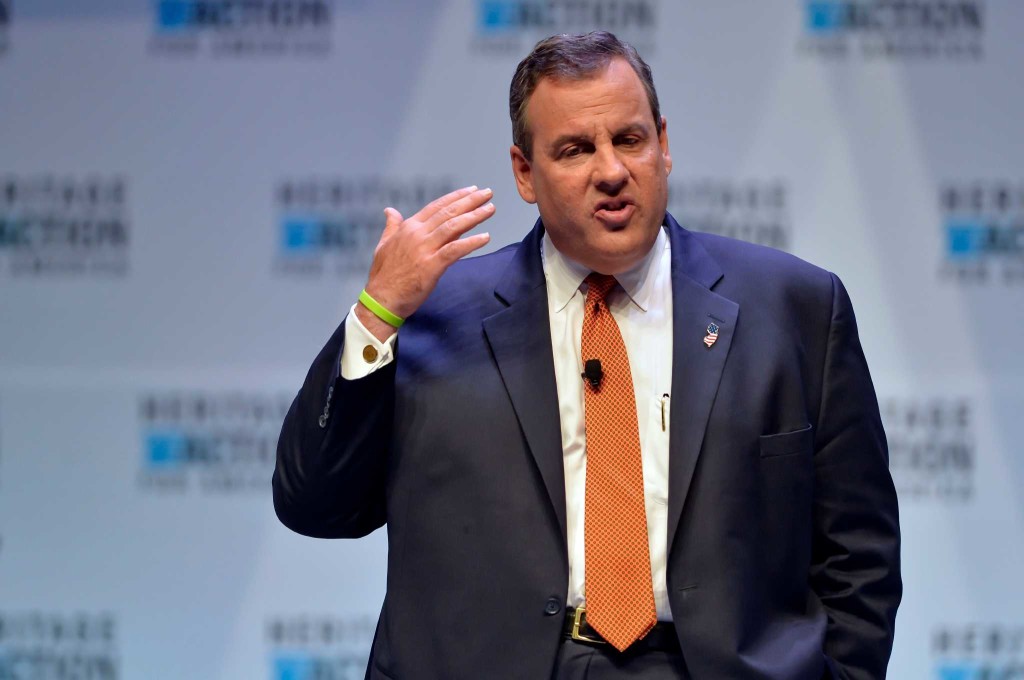
As Scott Walker gave up on his 2016 presidential race this week, he implored other Republicans in the crowded field to follow his lead and drop out – so that one could rise to challenge front-runner Donald Trump. None appears likely to do so anytime soon. Walker stood out in the GOP race with his unsustainable mix of lackluster fundraising and an expensive campaign operation. Few if any of the 15 remaining candidates feel the intense financial pressures that he did, according to a review of fundraising records and interviews with campaign staff. “We certainly don’t have a massive campaign mousetrap that we can’t pay for,” said Curt Anderson, a senior strategist for Louisiana Gov. Bobby Jindal, a presidential hopeful who, as was Walker, is at the bottom of early preference polls. “Maybe other campaigns have gotten a bit out over their skis, but no one quite like he had.” In the 70 days between Walker’s kickoff and his exit from the race, the Wisconsin governor built the kind of campaign operation that more closely resembled that of a party nominee, with nearly 100 employees. Former aides and top donors said Walker’s team crafted a pricey plan to introduce him nationwide, but struggled to raise the millions of dollars needed to pay for the strategy. “People don’t stop running for president because they run out of ideas or they run out of a desire to give speeches,” said Terry Sullivan, Marco Rubio‘s campaign manager, at a panel discussion Monday in Washington. “They stop running because they run out of money.” Walker didn’t even last long enough to file his first formal campaign finance report. The next reports are due in mid-October, and it’s then that Rubio, Jindal and others in the race will have to disclose how their fundraising – and campaign spending – is shaping up. Chris Christie, the governor of New Jersey, was known for expensive tastes while serving as a U.S. attorney and chairman of the Republican Governors Association, preferring chartered planes and luxury hotels for his past politicking. But without an influx of big campaign money and little movement in early polls, his aides say, he’s been thrifty in his three months as a presidential candidate. He generally flies commercial and has traded resorts and high-end meals for Radissons and Mexican food joints. In a fundraising pitch emailed on Wednesday, Matt Mowers, Christie’s New Hampshire director, wrote that $22 lets him invite 50 people to town halls. “Any amount helps,” he wrote. “As we keep this team `lean and mean’ we use this contribution wisely.” While Rubio’s campaign took in about $9.8 million through the end of June, far more than most of the other candidates, his operation is eager to emphasize thriftiness. Sullivan said at a Monday gathering of campaign managers that he personally must approve any expense over $500. He said Rubio almost always flies commercial – even ultra-cheap airlines on occasion. One reason the candidates seem anxious to portray themselves as penny pinchers: Not much money is coming in. The usual summertime fundraising slowdown was exacerbated this year by the dominance of Trump, the billionaire celebrity and real estate mogul who is mostly paying for his own campaign. Many reliable Republican donors are sitting on their wallets until, as Walker advocated, the contest narrows to fewer candidates. And as the departures of Walker and former Texas Gov. Rick Perry show, super PACs and their ability to raise unlimited amounts from wealthy donors can be only so helpful, because those groups are barred from taking directions from the candidate they’re helping. That means super PACs can’t legally pay for the basic expenses of running for president, such as candidate travel and official campaign employees. Most of the underdogs have been eager to portray themselves as scrappy all along. Those who, like Walker, have low-digit support in most recent national surveys have only a handful of employees and are focused on a single state, such as first-to-vote Iowa. That group includes Jindal, South Carolina Sen. Lindsey Graham, former Virginia Gov. Jim Gilmore, former New York Gov. George Pataki and former Pennsylvania Sen. Rick Santorum. “This is the survivor portion of the campaign,” said Matt Beynon, a Santorum spokesman. “You have to build an organization for the resources that you really have, not for the resources you expect or want to have.” Santorum is taking a page from his own playbook. He raised just $920,427 by the time Iowa voters caucused in January 2012. But his strategy of driving himself around in a pickup truck to each of the state’s 99 counties worked: He narrowly won. This time, he raised a little over $650,000 in his first month as a candidate. “Santorum,” Beynon said, “is a master at running underfunded campaigns.” Republished with permission of the Associated Press.
Breaking Keystone silence, Hillary Clinton says she opposes pipeline
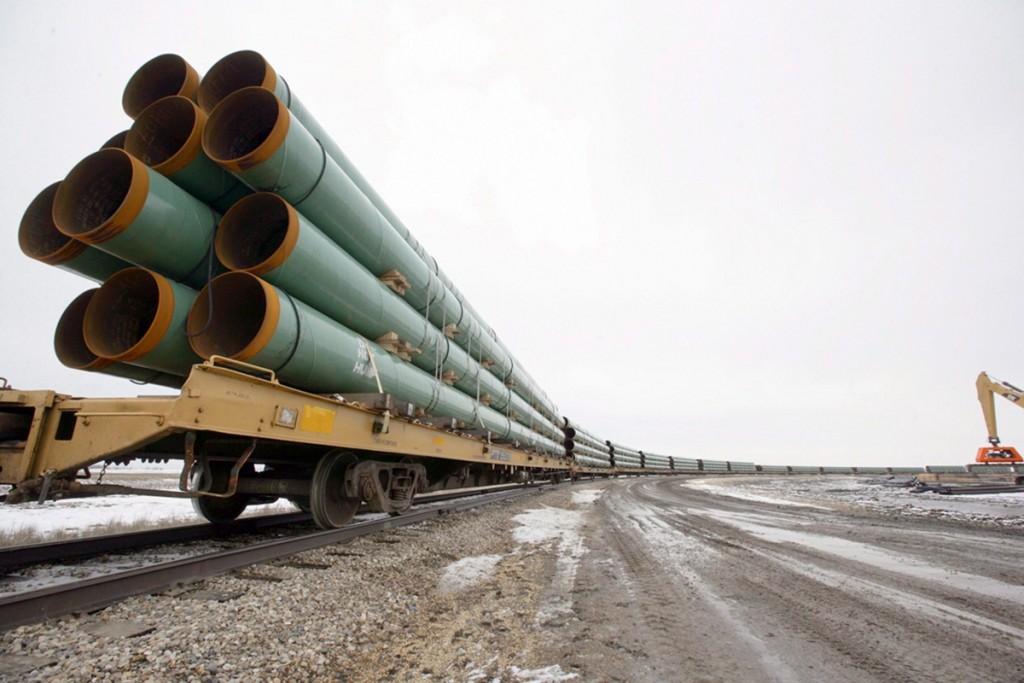
Whether it was by coincidence or not, Hillary Rodham Clinton picked a fortuitous time to announce that she opposes the Keystone XL pipeline. The longstanding criticism of Clinton’s reluctance to say where she stands on allowing the pipeline project to go forward was buried in the headlines by arrival of Pope Francis for his first visit to the United States. The next day, the pope’s call to action on climate change fit with Clinton’s reasons for opposing the pipeline. And it sets her up well for a few days of fundraising later this week in the San Francisco Bay area, where she was likely to face questions about her dithering among donors who are generally supportive of environmental causes. The Democratic presidential candidate said Tuesday that she had concluded the ongoing debate over whether the pipeline should be built had hindered a larger effort to curb global warming. “I think it is imperative that we look at the Keystone pipeline as what I believe it is – a distraction from the important work we have to do to combat climate change,” Clinton said in Des Moines, Iowa. “And unfortunately, from my perspective, one that interferes with our ability to move forward to deal with all the other issues. Therefore I oppose it.” Environmentalists have warned that the extraction and transport of oil risks setting back the fight against man-made climate change. Big business argues that the Canada-to-Gulf of Mexico project would create valuable jobs. On the presidential campaign trail, the debate over the pipeline has turned into a high-stakes fight for support and campaign cash as Clinton battles real and potential challenges. Opposing the pipeline puts her in line with rival Sen. Bernie Sanders, a favorite of the Democratic party’s left wing. Clinton’s opposition also sets out a marker as Vice President Joe Biden considers challenging her for the Democratic presidential nomination. Signs quickly surfaced that Clinton’s announcement was paying off for her. Tom Steyer, a California-based environmentalist and top Democratic donor, quickly credited Clinton for joining with “thousands of Americans calling on President Barack Obama to reject the Keystone XL pipeline in favor of building an American economy powered by clean energy.” On Wednesday morning, the pontiff joined Obama at the White House and made an urgent call to address climate change, warning it “can no longer be left to a future generation.” To be certain, Clinton’s unwillingness to offer a position had irritated liberals and environmentalists, and many winced when she said at a July town meeting in New Hampshire that if it was still undecided “when I become president, I will answer your question.” Clinton had said in 2010 that she was “inclined” to support the pipeline but had avoided taking a position after leaving the State Department in 2013. In recent weeks, Clinton expressed impatience over the Obama administration’s drawn-out deliberations and said last week in New Hampshire she was putting the White House “on notice” that she would soon announce her decision. Her campaign said the White House was briefed on Clinton’s position prior to her comments and she privately made her opposition known in discussions with labor officials in recent weeks. The announcement could set the boundaries for the environmental debate in next year’s presidential election. Republican candidates like former Florida Gov. Jeb Bush said on Twitter that Clinton’s decision proves she “favors environmental extremists over U.S. jobs.” Reince Priebus, the chairman of the Republican National Committee, meanwhile, said Clinton was being “blatantly dishonest” when she said her role at the State Department had prevented her from taking a position and said it was driven by concern about Biden joining the Democratic primary field. Clinton said in a posting on Medium on Wednesday that she would seek to modernize the U.S.’s energy infrastructure and develop new partnerships with Canada and Mexico to fight climate change in North America. She reiterated interest in creating an infrastructure bank to unleash investments in clean energy and said she would strengthen pipeline safety regulations and work to replace the country’s oldest pipes and riskiest train cars. “American energy policy is about more than a single pipeline to transport Canada’s dirtiest fuel across our country. It’s about building our future,” Clinton wrote. Republished with permission of the Associated Press.
Off the air: Donald Trump boycotts Fox News over campaign coverage
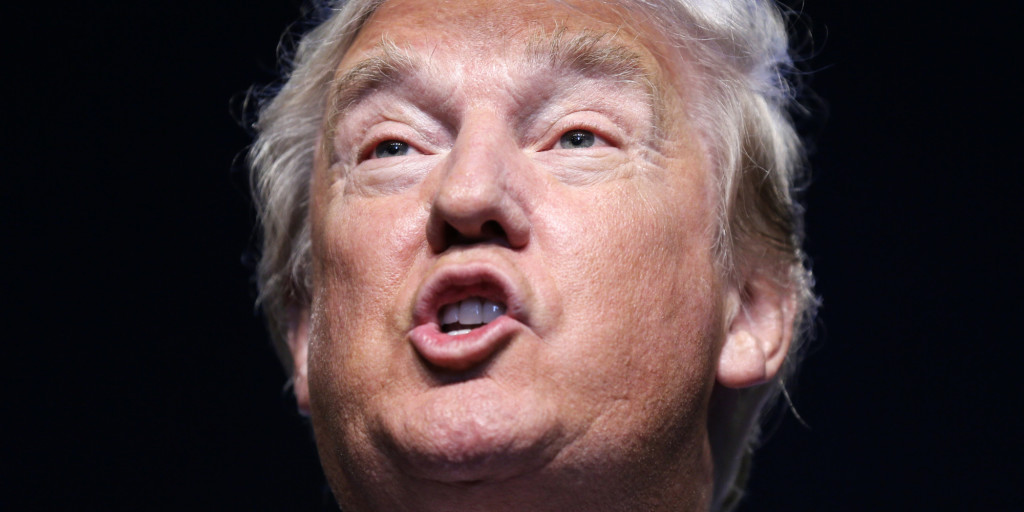
Donald Trump says he’s done appearing on Fox News shows for the “foreseeable future” because he doesn’t like the network’s coverage of his presidential campaign. The billionaire businessman and leading Republican candidate tweets that Fox News has been treating him “very unfairly” and that he’s stop appearing on its shows. Trump has been feuding with the network since first GOP primary debate, when he objected to the moderators’ questions. There was a brief detente. But the feud escalated this week, with Trump tweeting and retweeting complaints about the network and hosts, including Megyn Kelly. Trump has become a constant presence on cable news shows and often phones in to share his thoughts. A Fox spokeswoman did not immediately respond to a request for comment. Republished with permission of the Associated Press.
Jeb Bush chats up Miss Alabama following Donald Trump comments
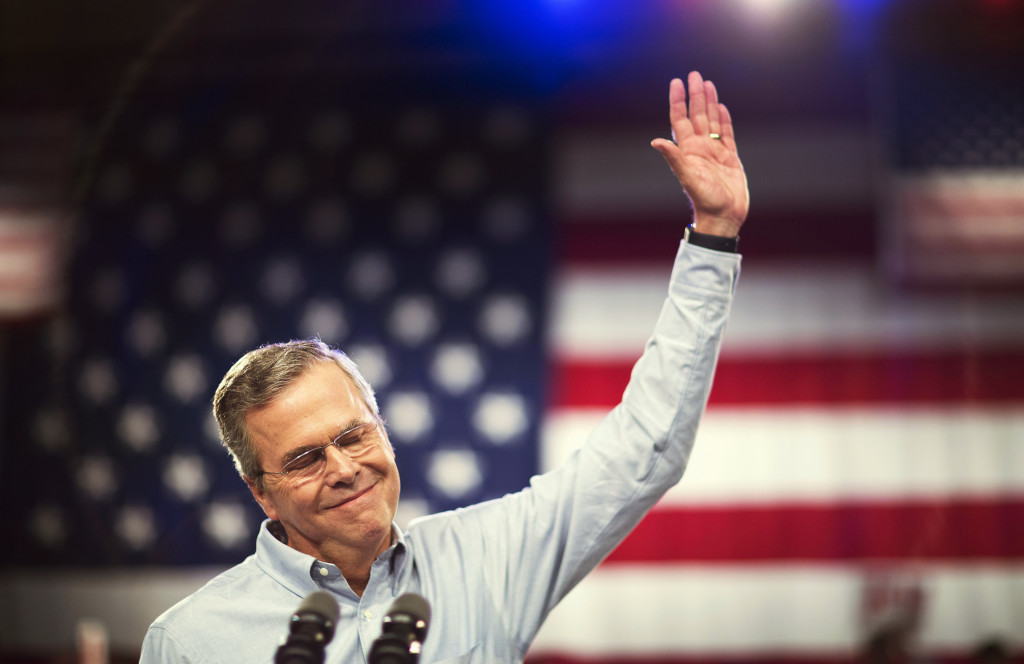
In a 2016 GOP presidential contest featuring celebrity endorsements (or in some cases anti-endorsements) from unlikely quarters, former Jeb Bush‘s new ally might be among the most unusual of all. Recently-crowned Miss Alabama Meg McGuffin – fresh off a strong fourth-place finish in the 2016 Miss America pageant – got a call from Bush over the weekend. According to AL.com Bush phoned up McGuffin to offer his thanks for her warm words towards the former Florida governor. McGuffin made news during the recent national Miss America contest when she expressed concern over the outsize media attention given of late to New York businessman and political newcomer Donald Trump. She singled out Bush as a more suitable candidate, saying last month that Bush is “an incredible candidate.” McGuffin said Trump, merely “an entertainer,” should make Republican primary voters nervous, saying the focus on Trump is unhealthy and harmful to the GOP’s 2016 chances. According to the beauty queen Bush didn’t ask for an endorsement or a contribution, simply calling to express his gratitude to the 22-year-old Auburn grad. “He simply thanked me. Didn’t ask me to join the team, offer an endorsement. Nothing at all,” she said Tuesday. “I didn’t imagine when I was answering that question at Miss America that I’d be getting a phone call from Jeb Bush,” McGuffin said. “It’s pretty cool to get a phone call from a presidential candidate regardless of who it is or what the phone call is about.” Bush reportedly made the call from a college football tailgate at the University of Georgia, an SEC rival of the Auburn Tigers. He suggested the two of them catch a game in Alabama sometime this season. See below for Miss Alabama’s recent social media posts regarding her close encounter with a major presidential contender. Who else is up early this Saturday AM? On today's agenda: NEDA walk, Auburn football, and a chat with my new friend Jeb 😉 — Miss Alabama (@MissAmericaAL) September 19, 2015 It's not everyday you get a phone call from @JebBush! Thanks for the kind messages and phone call Governor! #MissAmerica #racetotheWH — Miss Alabama (@MissAmericaAL) September 19, 2015
