
Alabama’s congressional delegation attends historic joint-session with Pope Francis

Pope Francis made history Thursday morning as he became the first-ever pontiff to address a joint-session of Congress in Washington, D.C. All nine members of Alabama’s congressional delegation were in attendance during the pope’s 50-minute speech as he touched on several controversial themes of his papacy in front of lawmakers — immigration, the refugee crisis, climate change and the death penalty — calling on the deeply divided Congress to come together and renew a “spirit of fraternity and solidarity, cooperating generously for the common good.” “Your own responsibility as members of Congress is to enable this country, by your legislative activity, to grow as a nation,” the pope said. “You are called to defend and preserve the dignity of your fellow citizens in the tireless and demanding pursuit of the common good, for this is the chief aim of all politics.” Members of Congress were permitted to invite guests to the session — one ticket each to sit and watch in the House gallery. Following the joint-session, the pope made a brief appearance on Speaker John Boenher‘s balcony on the West Front of the Capitol where spectators below viewed the 78-year-old leader of the Catholic Church on big-screens as he spoke. In addition to the gallery seats during the joint-session, each member of Congress received one seated ticket for this speech, as well as 200 standing tickets for Senators, and 50 standing tickets for each representative. Here’s who the Alabama delegation invited to today’s historic event and what they had to say about the pope’s speech: U.S. Sen. Jeff Sessions invited Dr. Christopher Puto, the President of Spring Hill College in Mobile, a Jesuit college, as his special guest. Sessions’ office gave all of their lawn tickets away to constituents on a first come, first serve basis. U.S. Rep. Bradley Byrne (AL-01) invited Angel Helmsing, a theology teacher at McGill-Toolen in Mobile and distributed roughly 40 lawn tickets to constituents. Bryne said the following of the pope’s remarks: As one of the most influential moral leaders in the world, it was an honor to welcome Pope Francis to the Capitol for today’s historic address. I was pleased Pope Francis addressed a number of important issues like the need to support pro-life policies and stand up for traditional families. I also share the Pope’s concerns about helping Americans who remain stuck in poverty. I believe the time has come to once again reform our nation’s welfare programs to ensure they are actually helping the Americans who need them the most. I was most impressed by what the Pope had to say about the need for Congress to work together. Far too often in Washington we get caught up in political games, but the Pope inspired all of us to never lose focus on our ultimate responsibility: to improve the lives of our neighbors and fellow Americans. U.S. Rep. Martha Roby (AL-02) tweeted before the pope began speaking: In the House Chamber ready to welcome Pope Francis as he speaks to a joint session of Congress. Watch live https://t.co/qx1QGchrtS #PopeinDC — Rep. Martha Roby (@RepMarthaRoby) September 24, 2015 She later posted on Facebook: As you know, Pope Francis was in Washington this week and spoke to a joint meeting of Congress today. This article gives a good timeline of the events and atmosphere here in DC. Though I’m not Catholic, I have many friends, family members and constituents who are, and I know this visit was very meaningful. It is always great to see America put her best foot forward for such an esteemed guest, and I think that has happened. I won’t reengineer parts of his speech here to advance my political ideology. There’s enough of that already, and it probably misses the point. I do think his humble, respectful tone and message of hope and forgiveness were warmly received by everyone in the chamber. And I’m sure we can all agree that the most impactful part of his speech came in the form of three short words: “God Bless America!” U.S. Rep. Terri Sewell (AL-07) invited a college friend whom she mentored at Princeton and distributed to tickets to all constituents who requested them. Sewell re-tweeted Califorinia Rep. Xavier Becerra of the pope’s address: .@Pontifex‘s moral leadership challenges the world to meet our responsibility to build a better future for the world’s children. #PopeInDC — Xavier Becerra (@RepBecerra) September 24, 2015 Sewell said the following of the pope’s speech: Pope Francis’ address to Congress reminded our nation of its greatness, and challenged us to go even farther in the pursuit of liberty and justice. We must look at our neighbor as our brother, and work to end injustice anywhere it exists. I was pleased to hear His Holiness acknowledge the work of Dr. Martin Luther King, Jr., and recognize the significance of the marches from Selma to Montgomery. As the Pope noted, ‘dreams lead to action, to participation, to commitment.’ I cannot think of a better example than the courage and strength shown by those brave men and women for whom that dream was so real it pushed them to lay down their very lives for equality. That moment was especially poignant for me, as I had the privilege of sitting next to my personal hero and civil rights icon Representative John Lewis. Dr. King’s dream, however, has only been partially fulfilled. The legacies of the past still taint the present, and many Americans still struggle to exercise one of our most fundamental rights as citizens – the right to vote. As our country continues to work towards becoming a more inclusive nation, we cannot overlook the most vulnerable amongst us. Instead, we must work together to ensure that the rights and liberties of every American citizen are never compromised. The Holy See will wrap up his six day visit to the United States with trips to New York City and Philadelphia.
Phil Williams: Perfection versus excellence
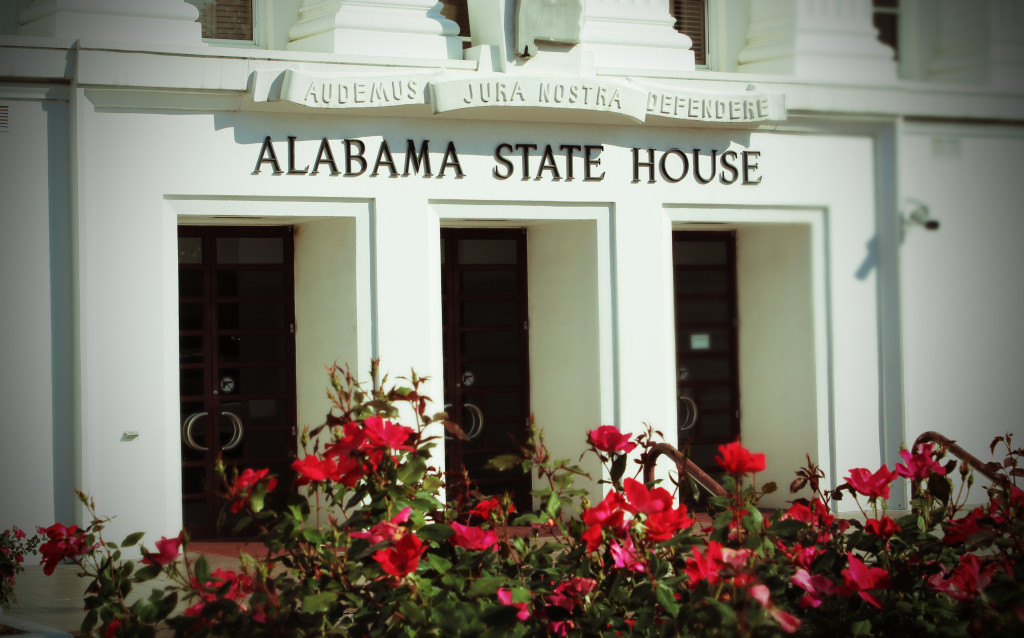
As I write this opinion, I am a few days removed from the final round of Alabama’s budgeting melee. It was a thorough and exhausting process and while I am not entirely satisfied with the result, I recognize that there were some solid victories in the process. It calls to mind a quote I’ve retained for many years from my first boss of my post-college years. My recollection of the quote is that it followed the end of a tough job-related issue. That issue resolved, but leaving me only partially satisfied with the result. In short, it was not my idea of a perfect resolution, to which my boss (a wise woman from whom I learned a great deal) said, “Perfection and excellence are not the same thing”. I pondered her point then, and I have mulled over it many times since. Sometimes, the measure of the result must include a weighing of the process of getting there as a part of the overall evaluation of the outcome. It didn’t always feel like excellence in Montgomery this year. A great deal of rhetoric flew around the halls of the Statehouse over the past ten months. There were times when the budget process was calm and well-ordered, and other times when teeth and hair were flying. Alabama already had a budget surplus but it was earmarked in such a way that there was virtually no flexibility to the budgeting process. The biggest issue was negotiating the revision of the earmarking of funds that we often refer to as “growth revenues”, which are those existing revenue sources that go up when the economy improves. Some years ago those growth revenues were perpetually allocated only to the education budget, leaving the General Fund stagnant. This year $80 million of those funds were appropriated forever to the General Fund, which means that State Troopers, Mental Health, Medicaid, Courts, National Guard, and other important functions of essential government services will now have the benefit of a good economic year. To do this we also ensured a strong measure of backfill to the education budget by passing a number of accountability measures to benefit education funding and unlocked some of the education budget’s reserves to allow more flexibility in education spending. The education budget actually came out ahead by almost 2:1 over the General Fund. In the midst of the process there were constant calls for new taxes. I personally opposed those calls and continually pushed for the debate to center on budgeting reforms. In the end I voted “no” on all tax increases. But I hope that the citizens of Alabama will remember that the initial call for taxes was for over $700 million in new measures that would have impacted the wallet of every adult citizen in the state. In the end over 80% of those measures were rejected by the Republican majority. Those taxes which some of my colleagues did choose to support were amended to shore up Medicaid and will be felt by very few citizens. While some Republicans did vote for a smaller cigarette tax than the Governor wanted, they also firmly rejected an outlandish number of new and harmful taxes. I’m proud to have stood with them in saying “no” to so many new taxes. The end result of two special legislative sessions for the citizens of this state is that the General Fund budget was passed in a manner that maintains the level of services necessary to keep the state functioning. The high point was that a measure of existing perpetual growth revenue was finally transferred to the General Fund for the first time in memory. It was only a portion of what I believe should have been transferred, but it was a victory for our General Fund agencies nonetheless. On top of that, the Republican majority still cut government spending several percentage points overall. The summation is that there was a measure of reform, a rejection of almost all of the taxes called for, un-earmarking of surplus funds, and reduced government spending. It was not perfection, but I believe the process was excellent in its transparency and effort. Phil Williams represents Etowah, Cherokee, DeKalb and St. Clair Counties in the Alabama Senate.
Katherine Robertson: Legislative session postmortem: three themes
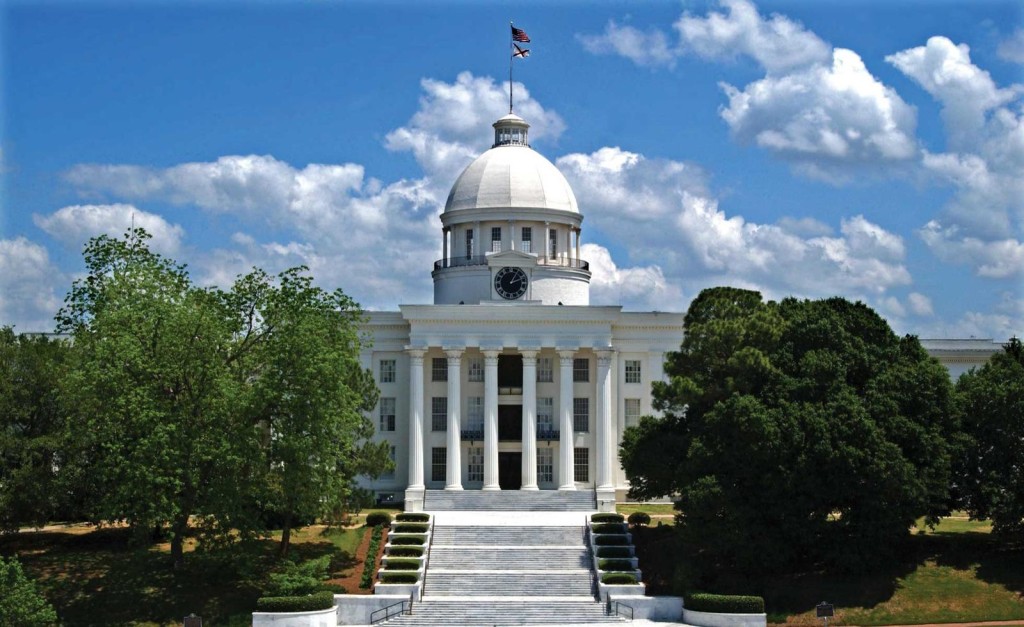
It’s only been a few days since Governor Bentley signed the General Fund budget for fiscal year 2016 into law. We don’t yet know what the fallout, if any, will be from the cuts, taxes, and transfers that were made to make up the revenue shortfall. What we can identify at this juncture are at least three key themes of this nearly seven-month-long debate that shape the way the state spends your money. Bifurcated Brawl Particularly throughout the two special sessions, much ado was made about the Education Trust Fund’s health versus the General Fund’s maladies. Transferring the state’s use tax revenues from the Education Trust Fund to the General Fund, first proposed at the end of the regular session, ended up being a key piece of the final solution–although the exact amount was haggled over until the very last days of the session. The resolve of General Fund agency heads to receive level funding was matched only by the state’s education entities’ tenacious defense. The infighting among the two factions, at times, led many newly elected legislators to question why the state has two budgets in the first place. As the public and private squabbling dragged on, it was hard to miss the irony that Alabama is one of the only states in the Union where members of one budget committee would be pitted against their counterparts in the other. Alabama’s bifurcated, two-sided budget system leads many to adopt a one-sided mentality. Looking at the services our government provides and determining how to fund the growing list of “top priorities” at an appropriate level is the responsibility of all legislators–not just those assigned to the budget committee with the problem. Federal Fixation Federal matching dollars were mentioned countless times during the budget debate. Whether in the context of Medicaid, public health, or education, cuts to these and other programs were forbidden by those who warned that Alabama would lose federal dollars in the process. A recent report comparing states’ dependence on the federal government listed Alabama as the fourth most reliant state on federal funds, behind New Mexico, Kentucky, and Mississippi. In Montgomery, far too often, federal dollars are viewed as free money and provide another alternative to restraint and reform. A vast disconnect exists between the duties owed to state versus federal taxpayers (though they are the same group). The two provider tax increases that passed in the second special session are further evidence of this–a strategic maneuver to get more federal dollars through the door at “no cost” to state taxpayers. The free market American Enterprise Institute has called provider tax funding schemes “a distortionary but legal means by which a state can artificially inflate medical costs to extract additional Medicaid funding from the federal government.” In Montgomery, far too often, federal dollars are viewed as free money This chronic reliance on federal money is problematic, of course, given that Congress has a harder time passing budgets than the Alabama Legislature–and a government that’s $18 trillion in debt is a risky funding source to count on. With all of this uncertainty, Alabama lawmakers would be wise to wean the state off of these dollars, rather than grow this dependency to the detriment of our state sovereignty. Echo Chambers It is widely understood that when lawmakers arrive in Montgomery, they leave their constituents behind and are greeted by a bevy of lobbyists and state-agency representatives working tirelessly and aggressively for or against particular matters. This year, legislators were also subjected to not-so-veiled threats from the governor and, at times, painful arm-twisting by their leadership. All the while, those who wanted to raise taxes claimed that they were not hearing any opposition from their constituents. Those who wanted to slash government said their position had largely been met with silence at home. Still, seemingly exaggerated polling data was cited when convenient to show that “most Alabamians” support this or that. (Apparently, somewhere in the state, Alabamians were begging for their taxes to be raised.) Maybe the theme most important for the general public to understand is that there are people speaking on your behalf that you may or may not agree with. All politicians are susceptible to follow the loudest voice, even when it conflicts with their instincts. If we sit back and let a few voices dominate important statewide debates in the name of “popular opinion,” we should not be surprised to find that the end result is not what we wanted. Montgomery is not Washington, D.C.– legislators are accessible and they expect to hear from you. Now is the time to talk to them about their decision-making over the past seven months and what you hope to see them accomplish over the next three years. Pushing for serious reforms to contain our state spending might be a good place to start, lest the taxman returneth. Katherine Robertson is vice president for the Alabama Policy Institute (API), an independent non-partisan, non-profit research and education organization dedicated to the preservation of free markets, limited government and strong families.
Ronda Walker: Celebrating National Daughters Day

A 1938 radio broadcast by actor Orson Welles had most of the country convinced Martians had invaded planet Earth. How could people be so gullible? How could they hear the broadcast and react with complete hysteria fearing their imminent demise? The key to the success of the hoax was Welles’ use of radio – the primary source of information at that time. The 1930s was the Golden Age of radio, nearly 30 million American households had one and it was usually at the center of the home. The radio was a beloved and trusted source of news and entertainment so Welles use of radio, coupled with his tone and delivery, was all done to make it sound just like an authentic news bulletin. And it worked, people believed what they heard and reacted accordingly. Yesterday my Facebook newsfeed was filled with lovely pictures of parents and their daughters celebrating National Daughters Day. Oh such warm and fuzzy fun on social media! We all love our daughters so why not share pictures of them, lots and lots of pictures of them. That is all fine and good except I can find no evidence that yesterday was, in fact, National Daughter’s Day. After a brief Internet search I did find that August 11, 2014 was National Sons and Daughters Day, but even that source of information seemed suspect. The only sources of information I found about a day to celebrate our children were actually amateur blogs, nothing official. Was yesterday, in fact, National Daughters Day? I don’t know and neither do you, which makes my point exactly. The Internet said it, so it must be true. Yeah, just like Welles and his Martians. Why do so many of us believe everything we read on the Internet? Your friend posted a picture of her daughter with a nice caption so you did the same. If twenty friends are celebrating National Daughters Day then it MUST be National Daughters Day so you jumped on board too. Of course there is absolutely nothing wrong with sharing your love for your daughter on Facebook. But there is everything wrong with believing outright what you read and hear without question or fact-finding. Celebrating daughters on social media is fun and innocuous but what if the misinformation we are so quick to share is hurtful…hurtful to an individual, community, or nation. Remember when we were all so upset at the news of Betty White’s death? Then we were outraged for the little girl who got kicked out of KFC because her injuries from a dog mauling were too gruesome, and then there was that time your best friend’s sister’s boyfriend’s brother’s girlfriend heard from this guy who knows this kid who’s going with the girl who saw Ferris pass out at 31 Flavors last night. I guess it’s pretty serious. When did we as contemporary Americans stop thinking for ourselves? We live in the information age, yet we are as underinformed as ever. Did your parents not teach you the adage don’t believe anything you hear and only half of what you see? That is not to say we should be constant critics or doubters. It means, when we read or hear something we should never accept it as truth from that one single source alone, dig deeper. Some of my greatest lessons in childhood were at the dinner table after church each Sunday. My father and I would critically and respectfully discuss the sermon. Did we believe our preacher to be a liar? Of course not! But we did not base our faith on his words alone; rather we went directly to the primary source of information for confirmation or explanation. Unfortunately, for most Americans, random blogs and errant Internet commentaries have become their primary sources and the misinformation spreads like wildfire. When did we decide to turn over our minds to the wizard of the Internet and to believe hook, line, and sinker the frequent fallacies perpetuated not just online but on the 24/7 television news cycle and radio as well. There is a great conversation that could be inserted at this point about honesty and integrity in media, but my greater point is that we should never rely on one single source of information. Here’s how it works, you are on your computer checking Facebook and you see the tragic news that Betty White has died. Before you share the story on your wall and comment “R.I.P. to my favorite Golden Girl”, take a moment and Google “Betty White” and see if any legitimate news articles pop up detailing the tragic news of her death. See how easy that was? If the subject of the article is more complicated, for example, you read that a Federal government shut down will end all garbage collection in your neighborhood for the next six months. Before you panic and begin digging a landfill in your backyard, you have a few options. First, call your Congressman. Congressional offices are quite adept at debunking fiction. Or call your Mayor’s office or City Council representative and ask them if what you read is actually going to happen. All of these phone numbers are easily accessible online or in your old school phone book. You will quickly learn that there is no direct correlation between a Federal government shut down and local waste management. A good rule of thumb when researching an issue is to delve into at least ten sources with the majority being primary sources. These sources include books, newspapers, online articles, and individuals knowledgeable on the issue. Once you take just a little bit of time and research a few primary and secondary sources and gather as much information as you can then the puzzle pieces fall together and the picture is clear. Be informed. Whether you are talking about National Daughters Day, or the anti-vaccine movement, or Russia bringing back Cold War era mini-subs you need to understand the issue for yourself. We would all do well
Donald Trump says Hillary Clinton is still shrill

Republican presidential candidate Donald Trump on Thursday didn’t back away from calling Democratic challenger Hillary Clinton “shrill,” explaining “that the word shrill doesn’t apply to women exclusively.” He also defended his use of overseas workers at his Mar-a-Lago estate on Palm Beach instead of Floridians. Trump participated by phone on MSNBC’s “Morning Joe” program. The real estate tycoon-turned-reality TV star is still on top of the GOP pack with nearly 33 percent in the Huffington Post national polling average. On Wednesday, Trump called Clinton shrill at a campaign event the day before in the Charleston Convention Center in South Carolina. As The Washington Post noted: Trump is often criticized for the way he describes women, and Clinton was not the only woman he reproved. He said Caroline Kennedy is too nice to be the ambassador to Japan. He described, at length, a “vicious, vicious woman” in her 80s who once sued him during a dispute over an apartment. And he yet again called the career of former technology executive Carly Fiorina, another Republican running for president, “a disaster.” When BBC World News America anchor Katty Kay challenged him on it, Trump said, “I think the word shrill doesn’t apply to women exclusively. I know men that are shrill, and it’s just an expression that I thought of … She’s gotten very loud and very boisterous and that can happen to men too, Katty.” “It’s just, you know, you never hear people say it about men,” Kay said. Trump responded, “I don’t know, there’s something going on with her. There’s really something going on. I think she’s going to make a terrible candidate just as she was a terrible Secretary of State.” He also said he “would call (Kentucky Sen.) Rand Paul shrill. I think he’s shrill. I don’t think that’s a term that applies exclusively to women at all.” Paul is also running for the GOP nomination. MSNBC commentator Mike Barnicle then questioned Trump’s request of visas for foreign labor at Mar-a-Lago, where they’re paid an average of $10-$12 an hour, “rather than hiring workers from Florida.” “Mar-a-Lago is a seasonal job, which is very hard to get people in Florida for seasonal jobs,” he said. “And during the season in Palm Beach, it’s very, very hard to get help. You can’t, you know, we’re talking about Mar-a-Lago, the club is closed for the summer. You know, the expression ‘Rich people don’t like heat.’ “And we close Mar-a-Lago and we open October – like October 1st,” Trump added. “And from that, for about a five month period during what they call the Palm Beach Season, which is a big deal, you can’t get help. So we tend to get help from different places including Europe. And we’ve been doing that – by the way, these are all legal visas.” Trump also slammed Fox News again, saying it ignored his standing in the latest Florida poll. Trump had said the network was treating him “unfairly” and wouldn’t make any more appearances on its news shows. “The Florida poll came out and the headline was that (Marco) Rubio surges past (Jeb) Bush,” he said. “And I said I guess that’s too bad; I guess I’m not in the poll. “Well, I had 31.5 percent,” Trump added. “They were down in the teens. And I said that’s sort of an amazing thing. That’s an amazing headline. It’s Rubio surges past Bush is the headline and I’m the one that’s leading the poll by a lot.”
