
Groups, lawmakers come together to urge court to rule on Clean Power Plan

Tuesday, Lance Brown, the Executive Director of the Partnership for Affordable Clean Energy (PACE) released a video calling for the court to rule on the controversial Clean Power Plan — the Obama administration’s flagship policy for cutting carbon dioxide emissions at power plants. Finalized by the U.S. Environmental Protection Agency in August, the plan aims to cut power plant emissions by 32 percent in 2030 compared to 2012. While the plan sets individual targets for each state, it leaves many of the details for reaching those targets to each state legislature. “The EPA’s so-called Clean Power Plan won’t change global temperatures, but it will change power bills,” said Brown in the video. “That’s why the courts need to rule on this bad policy before we spend billions to comply with it.” Brown’s opinion is echoed by a chorus of other groups and lawmakers in the video. Senator Gerald Allen of Alabama calls the rule “a power grab by the Obama administration that will have zero impact on the global climate.” The plan is “an unprecedented attempt by EPA to set energy policy for the entire country,” said Regional Business Coalition of Greater Atlanta. National Black Chamber of Commerce says the plan will “lead to lost jobs, lower incomes, and higher poverty rates for the 128 million blacks and hispanics living in America.” Seniors advocate 60 Plus calls the rule “absolutely devastating for seniors.” These opinions should come as little surprise to those following the Clean Power Plan. Only hours after the president introduced the final version, attorney generals from 15 states across the country announced that they planned to sue the EPA over the rule, and lawmakers in over 35 states, like Alabama’s own Rep. Martha Roby stand in opposition to plan. Back in August, Roby wrote, “It’s no surprise that the EPA is once again going beyond its authority, pushing for overly burdensome regulations that have the potential to significantly affect our economy, discourage investment and stifle job creation. This agency is one of the most egregious offenders of ‘backdoor legislating’ by frequently attempting to circumvent Congress to set policy.” Roby continued, “Through the appropriations process thus far, we have used the ‘power of the purse’ to prevent the EPA from implementing harmful regulations like the ‘Waters of the U.S.’ rule, which will cost Alabamians greatly. Also included in our Fiscal Year 2016 Interior and Environment Appropriations bill are provisions to prohibit implementation of the Clean Power Plan.” That’s exactly the kind of action Manufacture Alabama‘s Director of External Affairs, Molly Cagle is hoping for. In the video Cagle explained “the EPA’s Clean Power Plan is a step backwards for manufacturers.” “The President and federal lawmakers need to reverse this plan before it’s too late,” Cagle concluded. You can watch the full video here:
Jeb Bush taking his “SEC primary” push to Alabama-LSU game on November 7
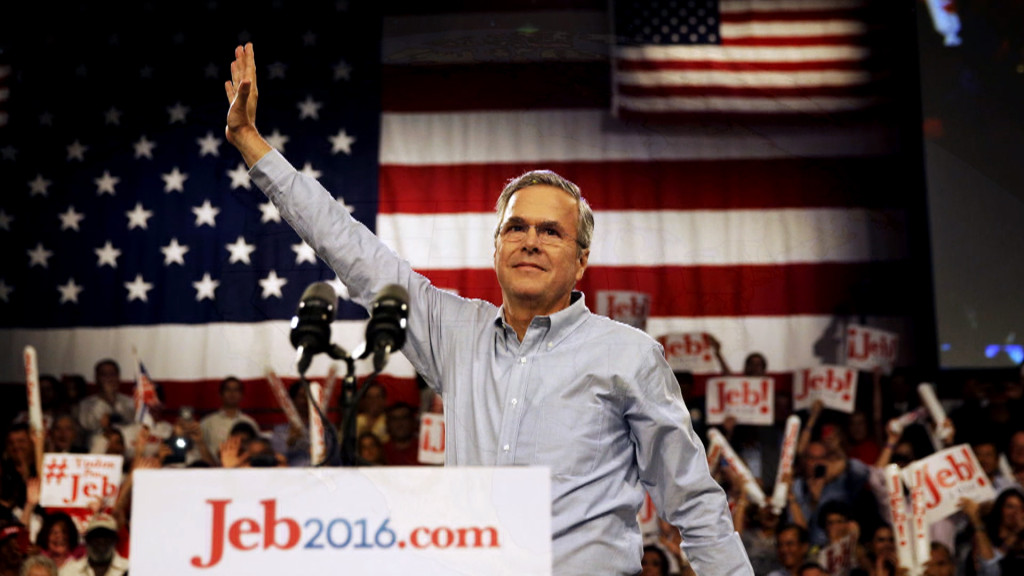
Secretary of State John Merrill on Thursday confirmed in a memo former Florida governor and 2016 GOP presidential candidate Jeb Bush will be on hand November 7th in Tuscaloosa as the Louisiana State University Tigers take on the Crimson Tide of Alabama in a major SEC matchup. “We are excited to have Governor Bush back in our state! Seven of the top ten Republican candidates have made campaign stops in Alabama, which is unprecedented for our state,” said Merrill in a news release. Merrill said the campaign stop is a sign of the effectiveness of Alabama’s recent decision to move up its primary date to join the so-called “SEC primary,” which will see Georgia, Tennessee, Texas, Virginia and possibly North Carolina join Alabama in holding their presidential primary election on March 1. “When this many Presidential candidates are choosing to visit and re-visit Alabama, it is proof the SEC Primary is working,” said Merrill. “The main goal of this effort is to create an environment that forces candidates to appeal to an even larger and more complete constituency than they currently do, and I am proud to see our state receiving the attention it deserves.” Merrill, the state’s chief elections official, disclaimed that the memo was not intended to show preference for Bush – currently running third in Alabama according to recent polling, behind Donald Trump and Ben Carson – but rather to increase awareness of rising political activity throughout the state. Merill also noted in his memo that former U.S. Secretary of State Hillary Clinton will also campaign in Alabama on October 17 at the Alabama Democratic Party‘s semi-annual convention in Birmingham. Notable presidential candidates stopping in the Yellowhammer State along the campaign trail have included Trump, Carson, Sen. Ted Cruz, former Arkansas Gov. Mike Huckabee, Ohio Gov. John Kasich, Sen. Rand Paul, and Wisconsin Gov. Scott Walker on the Republican side, plus Sen. Bernie Sanders on the Democratic ticket.
Court rules against teachers’ lobby in retaliation claim

A federal appeals court has ruled that the Alabama Education Association can’t subpoena the files of GOP politicians to try to prove legislation was motivated by political revenge. The 11th U.S. Circuit Court of Appeals on Wednesday ordered that the subpoenas should be quashed. AEA claimed that Republicans were motivated by political retaliation when they passed a 2010 law that stopped public employee associations from collecting dues by payroll deduction. The law said public payroll deduction can’t be used to support political activity. The appeals court said the law had already been ruled constitutional so AEA has no valid federal claim to justify getting the files. AEA had sought records from former Gov. Bob Riley, Gov. Robert Bentley, House Speaker Mike Hubbard and Senate President Pro Tem Del Marsh. Republished with permission of the Associated Press.
Speaker Mike Hubbard appoints former pol who removed Confederate flags to state board
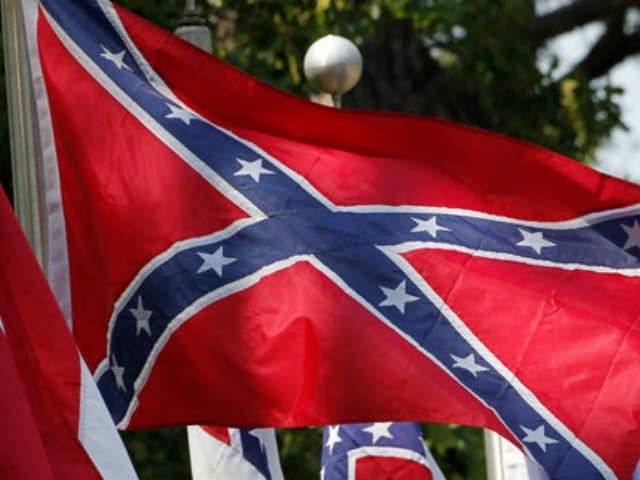
While one could get rich off asking the question “What was he thinking?” about Speaker Mike Hubbard, I have to question why, in the midst of his own criminal trial, Speaker Hubbard would attract unnecessary negative attention to himself by making what can only be considered a questionable appointment. As Alabama Today previously reported, in May former lawmaker Myron Penn decided that it was his right, responsibility even, to walk into a public cemetery and remove small confederate flags that had been planted on the graves of confederate soldiers because he personally deemed them offensive. The story received national attention and though defenders of the confederate flag noted that it is against the law to remove things from gravesides ultimately no charges were filed. Now reasonable people would probably think this is where Penn’s story would end however in a social media post last week State Auditor Jim Ziegler announced that he had been tipped off to Penn’s appointment to the State Personnel Board. Ziegler initially wrote a scathing social media report believing Governor Robert Bentley made the appointment. He later removed his original post when the Governor’s office denied the appointment. Alabama Today was able to confirm that Speaker Mike Hubbard had indeed appointed Penn. As to why he got the appointment Speaker Hubbard’s office said, “Mr. Penn was selected to serve on the State Personnel Board based on his career experience and legislative service, which provided the needed familiarity with state employee issues.” When asked about the flag incident the speakers office replied, “To my knowledge, the State Personnel Board does not make decisions on where the confederate flag is flown so that was not part of the consideration for this position.” Fair point if not for the question about Penn’s judgement. By removing the flags based on his personal beliefs does Penn believe he’s above the law or rules and that his personal beliefs trump that of others? When there were other alternatives available, such as calling the city to report or question the flags, why did Penn feel like instead he should walk into a cemetery and remove items for the graveyards of soldiers? In the bigger picture I believe this is a matter of judgement and today I’m questioning not just Penn’s but also Speaker Hubbard’s.
Hillary Clinton’s strong debate is general election warning for GOP

Hillary Rodham Clinton‘s polished performance in the first Democratic debate did more than send a message to her primary rivals. It was a warning to the chaotic Republican field about her likely strength in a general election. Clinton solidified her shift toward more liberal positions on trade, gun control and immigration, but still stayed largely in step with the battleground state voters she’ll need in November 2016. She also positioned herself as heir to the coalition of women, Hispanics and black voters that propelled Barack Obama to the White House, and she potentially held off a late challenge from Vice President Joe Biden. “I’m a progressive,” she declared before a television audience of more than 15 million people. “But I’m a progressive who likes to get things done.” The Republicans’ raucous first two debates, meanwhile, exposed the party’s deep divisions and the pressure on GOP candidates to appease conservative primary voters. That could again leave the eventual nominee scrambling to recalibrate on issues including immigration and women’s health in order to win over a national electorate that is more racially and ideologically diverse than primary voters. It’s a familiar conundrum for the party, yet one potentially deepened by the rise of Donald Trump and Ben Carson, candidates whose inflammatory comments seem to only boost their standing in the primary. Candidates who are favored by more traditional Republicans, like Jeb Bush and Marco Rubio, risk being associated with the rhetoric of their rivals — or never find a way to overtake them. The GOP contenders scrambled Wednesday to blunt the notion that Clinton has positioned herself as a general election force. Rubio said Clinton was locked in “a race to the left to see who could be the most radically liberal, the most big-government.” And Bush cast Clinton as the beneficiary of a Democratic field that sidestepped confrontations over her private email use, a controversy that has dogged her campaign for months. “In a partisan crowd you could see how that would work out, but I don’t think Mrs. Clinton’s been forthcoming and I think she has created a problem for herself by not being forthcoming,” Bush said Wednesday night while campaigning in New Hampshire. “It is a big deal, and there needs to be some clarity on it.” Added Trump, “I think the Democrats, frankly, I think they are protecting her.” Clinton aides insist the former secretary of state isn’t taking the Democratic nomination for granted. While her strong debate performance may have hardened her standing as the party’s front-runner, she still faces tough competition from Vermont Sen. Bernie Sanders, an independent and self-proclaimed democratic socialist. Yet Clinton left no doubt that she’s setting her sights on the GOP field. “I can take the fight to the Republicans, because we cannot afford a Republican to succeed Barack Obama as president of the United States,” she said. She referenced Republicans a dozen times during the two-hour debate, even putting the party alongside the Iranians and National Rifle Association on a list of enemies she was proud to have made. David Plouffe, an architect of Obama’s two campaigns, wrote on Twitter that Clinton looked like a candidate who could win the general election. “That is a test for GOP,” he added, questioning who in the party can attract voters in Ohio, Colorado, Virginia and other general election battlegrounds. To be sure, Clinton remains a flawed candidate. Her evolving policy positions leave her open to charges that she shifts with the political winds. She’s a Washington insider in an election cycle where voters have shown more interest in outsiders. And she continues to grapple with questions about her email practices at the State Department. Yet Clinton has been handed two gifts on the email issue from her political opponents. She often brings up Republican House Majority Leader Kevin McCarthy‘s boast about the political damage to her campaign caused by the congressional panel that uncovered her email practices, citing it as evidence of partisanship. And the frustration Sanders expressed in the debate with the amount of attention focused on the emails blunted the prospect that she’ll be challenged on the issue from within her own party. Republicans argue that Clinton still has vulnerabilities that would hurt her in the general election, including shifts to the left on major issues — a version of the problem the GOP contenders could face after focusing on the right for their primary. “She is now firmly outside the mainstream of the American electorate as part of her calculating efforts to satisfy the liberal base of her party,” said Kevin Madden, who advised 2012 GOP nominee Mitt Romney‘s campaign. Democratic strategists, however, argue that what were once viewed as liberal policies are increasingly becoming mainstream. Public polling supports that assertion on some issues. On immigration, a CBS News/New York Times poll last month showed 58 percent of Americans said people living in the U.S. illegally should be allowed to stay and apply for citizenship, a position Clinton supports. On the contentious issue of gun control, Americans overwhelmingly support expanding background checks for ownership, a proposal Clinton touted in the debate. A Pew Research Center poll from July showed 85 percent — including 87 percent of respondents in gun-owning households — support broader background checks. Majorities of Americans also support government efforts to combat climate change, and they approve of gay marriage, positions backed by Clinton and other Democratic presidential candidates. Republished with permission of the Associated Press.
Fresh details on ’16 fundraising arrive Thursday

The latest waypoint in the 2016 race for president is Thursday, when the deadline arrives by midnight for candidates to tell federal regulators the details of how much they’ve raised for their campaigns — and how much they’ve spent on them. Many of the major White House hopefuls have already boasted about their recent fundraising efforts, including the two leading contenders for the Democratic presidential nomination: Hillary Rodham Clinton and Bernie Sanders. They each raised more than any of the Republicans who have said what they collected from donors between July 1 and Sept. 30. Among those who have yet to share their totals are former Florida Gov. Jeb Bush and front-runner Donald Trump, the “really rich” real-estate dealmaker whose mild forays into fundraising include selling his trademark “Make America Great Again” hats. “I thought I’d have spent about $20, $25 million dollars up until this point. You know what I’ve spent? Like nothing,” Trump said on Wednesday, crediting media coverage for negating the need to spend on paid ads. Here’s a look at what we know so far about the state of presidential campaign finance in the third quarter, and what we expect to learn when the candidates’ official reports are filed with the Federal Election Commission. ___ CLINTON, SANDERS RAISE ABOUT THE SAME AMOUNT — IN DIFFERENT WAYS Clinton’s campaign said it raised $28 million in the three month ending Sept. 30. That’s less than what she raised in the early months of her campaign, but more than any previous non-incumbent Democratic presidential primary contestant in the third quarter of the year before Election Day. Most of the money came in through dozens of traditional fundraising events, where the price of entry was often the legal maximum donation of $2,700. Sanders brought in about $26 million, but did so largely through small contributions collected online. He continues to show off his fundraising prowess, harvesting about $2 million in new contributions in the hours that followed Tuesday night’s Democratic debate. “We are doing it the old-fashioned way: 650,000 individual contributions,” Sanders said in his closing statement of that appearance, adding: “We are averaging 30 bucks apiece. We would appreciate your help.” ___ CARSON THE EARLY LEADER IN GOP CONTEST Lots of Republican voters sent a message this summer in preference polls that they want an outsider as their nominee. That’s reflected in how they’re giving to the candidates, too. Retired neurosurgeon Ben Carson appears likely to post the best haul of the more than a dozen candidates in the GOP field, with about $20 million. But his campaign also spent heavily, burning through $14 million over the same time period. Carson spent most of that money raising money, according to figures the campaign provided to The Associated Press. Still, Carson had about $11 million in available cash as of Sept. 30. Carson’s closest known competitor is Texas Sen. Ted Cruz, whose campaign raised $12.2 million in the third quarter. Although he has been a senator since 2012, he also is running as an outsider, with a focus on the many times he has broken with Senate Republican leadership over issues such as shutting down the government to defund implementation of the Affordable Care Act. Former technology executive Carly Fiorina, who has never held elected office, raised $6.8 million for her campaign — four times as much as she collected at the start of her campaign. Her boost came after strong debate performances that also led to a rise in some national preference polls. ___ LOWER FIGURES FOR OTHERS IN GOP Others in the Republican race found the summer months a tough slog for fundraising. Kentucky Sen. Rand Paul raised $2.5 million and Florida Sen. Marco Rubio about $6 million. Paul recently devoted time to a separate bid to keep his Senate seat, leading some to question if he’s still in the White House race. “I wouldn’t be doing this dumb-ass livestreaming if I weren’t,” Paul said in a recent Internet video. “So, yes, I still am running for president. So get over it.” Rubio’s campaign argues that it can make its money go the distance because of its extreme frugality. The campaign told top donors that it began October with $11 million socked away. As evidence of its tight ship, Rubio’s campaign manager Terry Sullivan has said he must personally approve all expenses over $500. But Rubio is also getting a boost from a nonprofit group that doesn’t disclose its donors. While the campaign hasn’t purchased any television commercials, the group Conservative Solutions Project has already spent millions of dollars on ads. ___ HOTLY ANTICIPATED REPORTS New Jersey Gov. Chris Christie and Ohio Gov. John Kasich haven’t yet had to disclose any information about their fundraising, because they entered the contest later than the other candidates. That changes on Thursday, when both file their first reports. Christie and his aides have played down expectations about their total. “We’re doing fine,” Christie recently said during a swing through New Hampshire. “I’m proud of what we did in the third quarter fundraising, which is always a really difficult quarter given the summer and everything else.” Also yet to say how much he’s raised is Bush, a fundraising leader for the three-month period that ended June 30. He raised $11.4 million in June during his first two weeks as an official candidate, a faster daily fundraising rate than any other candidate. He and his aides have suggested that they’ve raised more than they did in their first two weeks, but less than Carson’s $20 million. Bush also said he plans to release a list of his top money-raisers on Thursday. Such disclosure isn’t required by law, but many candidates, including Clinton, have done so in the name of transparency. He hasn’t yet said precisely what information he’ll be sharing. ___ WHAT WE WON’T LEARN: THE BIGGEST DONORS Only the official campaigns face a Thursday fundraising reporting deadline. Their super PAC counterparts can wait until January to disclose their newest financial details
