
Andrew A. Yerbey: The cultivation of our children

Christmas is a time for rejoicing and reflection. Both are manifest in one of the last poems written by T. S. Eliot, “The Cultivation of Christmas Trees,” a majestic work that deserves revisiting every Christmastime. “The child wonders at the Christmas Tree,” the speaker of Eliot’s poem observes, recalling “the glittering rapture, the amazement / Of the first-remembered Christmas Tree” and “the surprises, delight in new possessions” found beneath it. The speaker wishes for the child to “continue in the spirit of wonder” — to hold tight to these moments, to the happiness and hope that accompanied them. In so doing, even when the innocence of childhood is inevitably replaced by the travails of adulthood, “the reverence and the gaiety / May not be forgotten” and “the accumulated memories of annual emotion / May be concentrated into a great joy.” Through the remembrance of Christmases past, joy can be kept evergreen. Behind that message, there is a simple but significant truth: Our experiences as children can affect us in profound ways as adults. And so, “The Cultivation of Christmas Trees” provides insight into something outside of Eliot’s aim but of perennial concern to the people of Alabama: the cultivation of our children. Children learn sequentially and cumulatively. A child’s readiness to learn in second grade is dependent on what was learned in first grade; a child’s readiness to learn in third grade is dependent on what was learned in first and second grade; and so on and so forth, onward and upward, from primary school to secondary school to college (consider this datum: 84 percent of Alabama’s high-school graduates in 2015 were unprepared for college-level coursework in English, mathematics, reading, and science, according to the ACT). As the complexity of the curricula increases, so too does the difficulty of catching up. Thus, a child’s future can be threatened by having a single bad teacher, and devastated by having several bad teachers. There can be no doubt that the public-school system of Alabama has myriad excellent teachers. (This conclusion is not conjecture but a matter of personal knowledge for the author, who graduated from a public school in Alabama.) It does those teachers no disservice – indeed, quite the opposite – to admit that our state also has an overabundance of bad teachers. Why quite the opposite? As one teacher was quoted in a survey of educators: “Teachers pay the greatest price for incompetent teachers. Year after year, [other teachers] pick up the slack.” Incompetence can have many causes, some willful and some not, yet the effect is equally pernicious. Both the person who is earnest yet unable to become a good teacher and the person who is indolent and unwilling to become a good teacher deprive children of their future – and should be removed from the classroom. That the quality of a child’s teachers is consequential to the child’s life should be self-evident, but academic research provides us evidence. For example, in a paper published last year in the American Economic Review, one of the most prestigious journals in the field, Raj Chetty of Harvard University, John Friedman of Brown University, and Jonah Rockoff of Columbia University studied the effect of teachers on long-term student outcomes. The authors found that, for students, better teachers mean “substantial economic and social benefits,” which begin in adolescence and continue through adulthood. Students with good teachers are less likely to have children as teenagers, more likely to attend college after high school, and more likely to earn higher salaries as adults. Moreover, replacing the worst 5 percent of teachers with average teachers – nota bene, not good or even great teachers – would increase students’ lifetime income by about $1.4 million per classroom, or $50,000 per child. Another scholar, reviewing the study, concluded: “These figures indicate that eliminating bad teachers may be the quickest way to improve the job prospects of low-income Americans, reduce income inequality, and boost our future economy.” Education should not, of course, be understood merely in terms of economic outcomes or social ideals. The purpose of education is a number of ends, among them to equip young people to be responsible citizens in a democracy and indefatigable seekers of the good. Yet, in the case of all of its ends, bad teachers are bad for education. Years ago, the education establishment in Alabama turned its back on the children of our state. Its focus fixated on protecting the adults – the teachers, collectively and unconditionally – über alles. The result is a public-education system where bad teachers are protected with extraordinary job security and good teachers are frustrated from fulfilling their calling, all at the expense of schoolchildren, especially the most vulnerable schoolchildren. For the people of Alabama, one New Year’s resolution must top the list. Let us resolve, in the year 2016, to stop tolerating the status quo and to start putting children first. Andrew A. Yerbey is Senior Policy Counsel for the Alabama Policy Institute (API). API is a nonpartisan, nonprofit research and education organization dedicated to the preservation of free markets, limited government, and strong families.
Bernie Sanders campaign: DNC is “attempting to undermine” campaign
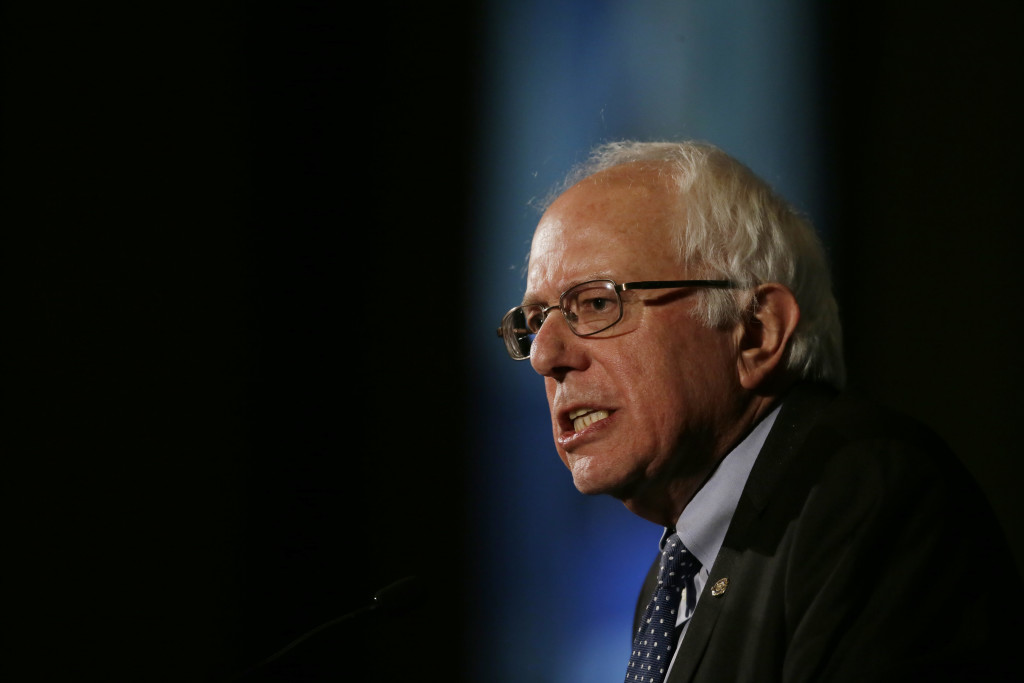
Bernie Sanders‘ presidential campaign angrily accused the Democratic Party of “taking our campaign hostage” on Friday after it was temporarily barred from accessing a trove of information about potential voters as punishment for improperly accessing data compiled by the campaign of rival Hillary Clinton. The reaction of the Democratic National Committee to the data breach, the depth of which was debated by all involved, thrust into the open long-standing suspicions among Sanders and his supporters that the national party is unfairly working to support the candidacy of its front-runner. “Clearly, in this case, they are trying to help the Clinton campaign,” said Sanders campaign manager Jeff Weaver, who threatened to file a lawsuit against the DNC as soon as Friday afternoon, unless the party backs down. DNC Chairwoman Debbie Wasserman Schultz responded that “the Sanders campaign had inappropriately and systematically accessed Clinton campaign data,” rejecting Weaver’s effort to portray the breach as the fault of a software glitch and a small group of rogue staffers. Clinton spokesman Brian Fallon said the campaign was “informed that our proprietary data was breached by Sanders campaign staff in 25 searches by four different accounts and that this data was saved into the Sanders’ campaign account.” “We are asking that the Sanders campaign and the DNC work expeditiously to ensure that our data is not in the Sanders campaign’s account and that the Sanders campaign only have access to their own data,” he added. The back-and-forth on the eve of the party’s final presidential debate of the year underscored Sanders’ attempt to cast himself as an anti-establishment upstart willing to take on Clinton, the unquestioned front-runner for the party’s nomination who is not beloved among some of the party’s most liberal voters. But by firing his top data staffer, and acknowledging that members of his staff looked at information that belonged to the Clinton campaign, Sanders also threatened to undercut his image as an honest broker seeking to foster a “political revolution” to help the nation’s poor and beleaguered middle class. The incident interrupted a period in which Democrats were sailing toward a peaceful primary season, with Clinton comfortably ahead of Sanders nationally in a campaign that harbors little of the discord and discontent roiling the Republican Party. The DNC maintains an extensive database of voter information that it rents to campaigns. The campaigns then update that database with their own information about voters. The data is used to target likely voters and anticipate what issues might motivate them to support a candidate. The information is of particular importance in the first states to votes in the presidential nominating process, where a campaign’s ability to organize its supporters and make sure they cast a ballot can make the difference between winning and losing. Firewalls are put in place to prevent campaigns from looking at data maintained by their rivals. But officials said the vendor that runs the system, NGP VAN, ran a software patch on Wednesday that allowed all users on the system to access data belonging to other campaigns. The breach did not involve any hacking or enable any voting information to enter the public domain, officials said. The Sanders campaign accused NGP VAN of making “serious errors.” Weaver said four members of the Sanders campaign had accessed the information, but only the actions of one, the campaign’s data director, had risen to the level of a firing offense. Weaver argued that the firewall used by the vendor had previously failed and he railed against the party for not taking the steps required to keep the information secure. “While that information was made available to our campaign because of the incompetence of the vendor, it should not have been looked at,” Weaver said. Josh Uretsky, the data director fired from Sanders’ campaign, said his team was merely investigating the security problem and trying to figure out how exposed their own data was by the software patch. “We wanted to document and understand the scope of the problem so we could report it accurately,” he said, in an interview with MSNBC. “We didn’t actually use it for anything valuable and we didn’t take custodianship of it.” While Uretsky took responsibility for the incident, he didn’t believe the DNC would think he violated any rules. “I didn’t believe at the time that I did it that they would believe what I was doing was wrong,” he said in the interview. “I did it with full knowledge that they could see what I was doing.” Wasserman Schultz said the DNC had asked the Sanders campaign for a “full accounting of whether or not this information was used and the way in which it was disposed.” Only then will the party make a decision on restoring Sanders’ access to the database. That decision infuriated Weaver, who said the party had cut Sanders and his team off from “lifeblood of any campaign.” “This is information that we have worked hard to obtain,” he said. “It is our information, not the DNC’s.” News of the data breach was first reported by The Washington Post on Friday. DNC spokesman Luis Miranda said Friday the party had instructed NGP VAN to conduct an analysis of any users who accessed the data and report back its findings. Stu Trevelyan, NGP VAN’s chief executive and president, said in a statement that his firm was “confident at this point that no campaigns have access to or have retained any voter file data of any other clients; with one possible exception, one of the presidential campaigns.” “NGP VAN is providing a thorough report to the DNC on what happened and conducting a review to ensure the integrity of the system,” he said. Republished with permission of the Associated Press.
Alabama unemployment near flat at 6% in November

Alabama’s unemployment rate was 6 percent for the month of November, down from 6.2 and 6.1 percent in recent months but slightly up from a seasonally adjusted 5.9 percent in October, according to new figures from the federal Bureau of Labor Statistics. The office of Gov. Robert Bentley celebrated the news in a release Friday, saying recent employment growth has reached just 25,000 jobs short of prerecession levels. “We are coming closer and closer to hitting that golden wage and salary employment number of 2 million jobs,” Bentley said. “We are less than 25,000 jobs shy of attaining pre-recession employment levels in Alabama. We haven’t seen wage and salary employment at 2 million since June 2008, prior to the recession’s effects in our state. Our economy is strong, and my goal is that every Alabamian who wants a job can obtain one.” The Bentley administration also put a positive spin on the marginal increase over October’s jobless numbers. “The very slight uptick in November’s unemployment rate is due to the fact that more people entered the workforce, perhaps looking for seasonal employment,” said Alabama Labor Department Commissioner Fitzgerald Washington. “Additionally, more people are employed both over the month and over the year, so this small increase is not necessarily bad news.” According to the governor’s office, the Civilian Labor Force (CLF) increased in November to 2,146,294 from 2,141,221 in October and from 2,130,131 in November 2014 (seasonally adjusted). CLF employment also increased to 2,018,189 from 2,014,056 in October and from 1,999,222 in November 2014. Wage and salary employment increased in November by 12,800 to 1,975,700. Monthly gains were seen in the trade, transportation, and utilities sector (+9,100), the education and health services sector (+2,800), and the government sector (+1,800), among others, according to a release. These numbers correspond to the statewide jobs market, though some rural counties continue to lag behind state and national averages. The hardest-hit counties in Alabama? Wilcox County at 13.5 percent, Lowndes County at 10.6 percent, Clarke at 10.5 percent, and Greene at 10.1 percent. Those are the only counties with double-digit jobless rates. Counties with the lowest unemployment rates are Shelby County at 4.0 percent, Lee County at 4.7 percent, and Elmore, Cullman, and St. Clair counties at 4.8 percent.
Alabama delegation votes on $1.1 trillion Omnibus bill
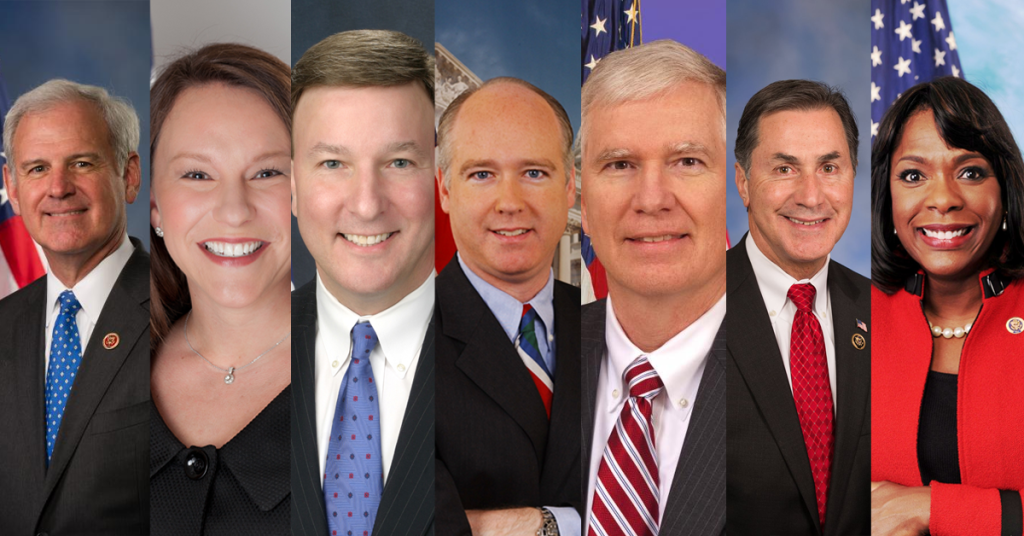
The U.S. House of Representatives approved a $1.1 trillion spending bill by an overwhelming 316-113 vote Friday morning, wrapping up a frenzied month of legislating just in time for the lawmakers to head home for the holidays. The so-called Omnibus bill — a massive year-end spending bill that incorporates legislation from the 12 appropriations subcommittees as well as reforms to the Visa Waiver program and lifting a ban on U.S. oil exports — funds the federal government through September 2016. The bill now heads over to the U.S. Senate where it is expected to clear the chamber later Friday without the support of Alabama Sens. Richard Shelby or Jeff Sessions. Rep. Robert Aderholt (AL-04) was the sole Alabama Republican to vote for the bill. He joined 149 of his GOP peers in supporting the measure, along with 95 Democrats including Alabama’s lone Democrat, Rep. Terri Sewell (AL-07). The remainder of the seven-member delegation — Reps. Bradley Bryne, Martha Roby, Mike Rogers and Gary Palmer — voted against the bill. Here’s what delegation members are saying about their votes: U.S. Rep. Bradley Byrne (AL-01): Our nation is at war, and I could not support a government funding bill that fails to address the reality of the serious security challenges our nation is facing. I was disappointed the bill did not include provisions to block any funding from going to the Syrian refugee resettlement program. For months now, I have been warning about the legitimate problems posed by this program, and this bill fails to prevent the President from bringing Syrian refugees into the United States. Statement from U.S. Rep. Martha Roby‘s (AL-02) Communications Director Todd Stacy: Representative Roby takes her role on the Appropriations Committee seriously. For the last year she fought to craft conservative spending policies that kept faith with our priorities and values. Unfortunately, this Omnibus bill abandoned that work and did not reflect the conservative principles she has fought for, so she voted against it. U.S. Rep. Mike Rogers (AL-03): I am outraged that the bill that passed today did not prohibit funding for President Obama to bring refugees from the Syrian conflict to America. What happened in California demonstrates that Islamic terrorists are ready and willing to use our lax immigration system to enter our country to do us harm. Now, President Obama will be able to carry out his plan to let thousands of refugees from the Syrian conflict into the U.S. I have no confidence that these refugees can be properly vetted by this Administration. President Obama’s plan is dangerous and I will continue to fight against it. U.S. Rep. Robert Aderholt (AL-04): U.S. Rep. Mo Brooks (AL-05) Thursday prior to his Friday vote: Tomorrow, Congress will once again be forced to vote on a hastily thrown together $1.1 trillion omnibus spending bill that is 2,009 pages long, that very few Senators and Congressmen have had the time to read much less fully understand, that no one was allowed to amend on the House floor, and that further undermines America’s solvency. While I am thankful the omnibus bill increases funding for NASA’s Space Launch System and America’s national security, empowers Decatur’s United Launch Alliance to compete for critical defense space payloads, and reduces burdensome regulations on America’s farmers, these and other positive things could and should be done without increasing the risk of a debilitating American insolvency and bankruptcy, without using taxpayer money to empower President Obama to pay illegal aliens to break our laws and come to America, without increasing terrorism risks by paying Syrians to come to America, without forcing American taxpayers to pay for other peoples’ abortions, and without permitting President Obama to quadruple H-2B visas so that more foreign workers can take jobs from and undermine the wages of struggling American families. Rather than instituting a deliberate, long-term budgeting process that provides certainty for job creators and minimizes America’s risk of a debilitating insolvency and bankruptcy, this omnibus bill makes matters decidedly worse. The dramatic expense, compounded by the increased security and terrorism risks forced on American citizens, is unconscionable. That is why I am voting “No” on this misguided legislation. U.S. Rep. Gary Palmer (AL-06): A spending bill should reflect the priorities of our nation. This $1.1 trillion bill does not. It continues to pile debt on our children without sufficient reforms. Furthermore, it fails to include numerous policy priorities that should have been included. Recently, a veto-proof majority of the House passed legislation to strengthen the vetting of Syrian refugees. This reform should have been included in this bill, but was not. This bill also allows funds to continue to flow to Planned Parenthood and does nothing to defund Obama’s unlawful administrative amnesty. The bill does have a few good provisions, like lifting the ban on crude oil exports, which I have long supported. Unfortunately even this significant victory is overcome by the numerous deficiencies. The process to get to this point was no better than the underlying legislation it produced. I hope that going forward, the process will be different. U.S. Rep. Terri Sewell (AL-07): My vote was cast in favor of keeping the government operating and to continue to make critical investments agency programs that benefit all Americans. I also firmly believe that we cannot afford another shutdown and this bill provides the Federal Government with funding through September 30, 2016. The omnibus provides much needed increases for a broad range of education programs including Head Start, Title I grants, aid to HBCUs, the TRIO and GEAR UP programs, and rural education. Providing the resources low-income families need to increase their academic success is one of my highest priorities, and this legislation is a first step in the right direction. This is not a perfect bill, but I am proud that both sides of the aisle were able to work out a compromise that benefits our nation, and helps us continue to grow.
PolitiFact will begin fact-checking posts, and publish rulings, on Medium

Political spin may become a thing of the past on Medium, the blogging platform popular with candidates. PolitiFact, the fact-checking arm of the Tampa Bay Times, will soon start sifting through posts by politicians — and publishing rulings — on Medium, as a way to “bring voters the truth.” Medium, launched in August 2012 by Twitter co-founder Evan Williams, has become increasingly favored in political circles as a place to share content and promote analysis longer than 140 characters. Many White House contenders, including Jeb Bush, Hillary Clinton and Marco Rubio, have started using Medium to deliver messages directly to voters during the 2016 presidential election cycle. Users can customize a Medium news feed with featured tags or by specific keywords, as well as top curated stories. Articles can be bookmarked, shared on Twitter and Facebook, or embedded on a personal blog or website. “Medium seemed to be a machine for generating the kind of passaroundable content that does so well on Twitter,” wrote Alexis Madrigal in The Atlantic magazine in 2013. “You want a smart “second-day” take on the news? Oh, here’s this post on Medium.” With a $140,000 investment from the John S. and James L. Knight Foundation, PolitiFact will begin truth-sorting content and analyzing claims on the platform, and post findings on both the PolitiFact website and Medium.com. “Typically, a candidate says something that ends up broadcast on TV or radio, or published in a print or online publication,” PolitiFact Executive Director Aaron Sharockman said in a prepared statement. “Fact-checkers then analyze that claim and post their findings in a separate print or online space. With Medium, we can do one better.” Sharockman added that the process provides PolitiFact a “new and unique opportunity,” fact-checking politicians and posting a response on the same platform where they make claims. Since the 2008 presidential campaign, PolitiFact has published more than 11,500 fact checks from politicians and newsmakers, in addition to examining television, news and radio pundits through its sister website PunditFact. PolitiFact has also branched off into separate sites operating in 14 states, as well as key primary states of Florida, New Hampshire, Iowa, Wisconsin and Colorado.
Immigration fuels Ted Cruz-Marco Rubio Republican clash
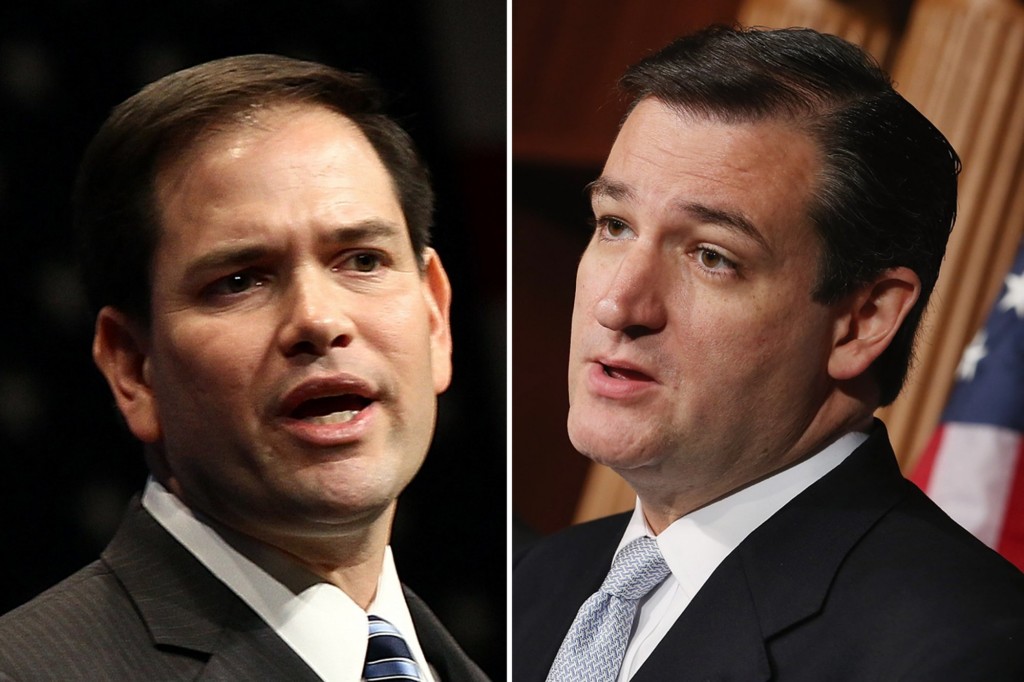
More than any other issue, immigration is driving the rivalry between Marco Rubio and Ted Cruz, presidential rivals focusing on the divisive topic in their closing messages to Republican voters before the sprint to the Iowa caucuses. Cruz, a Texas senator and Tea Party firebrand, sees Rubio’s support for a more forgiving immigration policy as his greatest vulnerability among conservatives who overwhelmingly oppose a pathway to citizenship for immigrants in the country illegally. Rubio, a Florida senator, sees Cruz’s shifting rhetoric on immigration as a prime example of a larger pattern of political pandering. Indeed, among the Republican Party’s two Hispanic presidential hopefuls, few issues offer a clearer contrast in tone, if not policy. Their competing strategies played out in early voting states on Thursday as the freshman senators pushed to separate themselves from the crowded GOP field six weeks before the first primary votes are cast. “He’s going to have a hard time because he’s not told the truth about his position in the past on legalization,” Rubio said of Cruz while campaigning in Iowa. “It’s not an attack. It’s a fact.” “That is utter nonsense,” Cruz said of Rubio’s charge while talking to reporters in Las Vegas. He declined to say what he would do with the estimated 11 million immigrants in the country illegally, but accused Rubio of joining with Democrats to support “amnesty.” Cruz was referencing Rubio’s leading role in a bipartisan group of senators who crafted an immigration reform package in 2013 that aimed to strengthen border security, overhaul legal immigration and allow a pathway to citizenship for millions of immigrants in the country illegally. The Senate approved the bill, but it was blocked by House Republicans and widely attacked by conservatives. Once the bill’s leading salesman, Rubio distanced himself from his own plan as the presidential contest neared, suggesting it was a mistake to push for comprehensive legislation. He’s now calling for a piecemeal approach that begins with border security and offers a pathway to legalization only after the influx of illegal immigration is stopped. In Iowa and elsewhere, Rubio’s support for legalization still lingers in the minds of many conservatives. “I think he might be a little weak there,” said Muscatine resident Jim Simmons, 49, who’s still deciding between Rubio and Cruz. Often playing defense on immigration, the Florida senator shifted to offense this week by going after Cruz’s evolving rhetoric. Rubio, who previously emphasized criticism of Cruz’s national security positions, said his rival’s repeated attacks on immigration left him little choice but to examine the Texan’s record on the issue. “I was attacked by Ted Cruz on the debate stage and I responded by saying I’m puzzled by his attacks on this,” Rubio said, accusing Cruz of using “crafty language.” ”He’s the one that, for example, supports doubling the number of green cards. He’s the one that supports a 500-percent increase in guest workers into the United States, and he’s the one that supported legalization and legalizing people that are in the country illegally.” Cruz insisted that’s not the case during Tuesday’s debate, and did so again Thursday night during a campaign stop in Minnesota. “I oppose amnesty. I oppose citizenship. I oppose legalization for those here illegally. I have always opposed amnesty, citizenship or legalization,” Cruz said. “And I will always oppose amnesty, citizenship or legalization and I encourage Sen. Rubio or any other candidate running to make that same statement, to be clear where they stand.” Cruz has previously supported broadening legal immigration in some cases. And as part of the immigration reform debate in 2013, Cruz introduced an amendment that proposed eventual legal status for millions. His amendment to Senate immigration legislation proposed stripping out the option of citizenship. Instead, he told the Senate in June 2013, his amendment would set up a process so that “those who are here illegally would be eligible for what is called RPI (Registered Provisional Immigrant) status, a legal status, and, indeed, in time would be eligible for legal permanent residency.” While Cruz has defended that course on multiple occasions in the Senate and in interviews, on Thursday he said he was simply calling his opponents’ bluff. “By calling their bluff, we defeated amnesty. We beat it,” Cruz said. For all of the debate over immigration this week, some Republicans – and a majority of all voters – support a pathway to citizenship for immigrants in the country illegally, according to a new AP-GfK poll. The survey found that 4 in 10 conservative Republicans and 3 in 10 Tea Party Republicans favor a path to citizenship. That’s compared with 54 percent of all Americans who support a way for immigrants who are already in the country illegally to become citizens, while 44 percent are opposed. More than 7 in 10 Democrats are in favor. It’s not a debate among the nation’s surging Hispanic population: About three-quarters support a pathway to citizenship. Voters at a Cruz rally in Las Vegas rally on Thursday felt differently. Cruz supporter and Las Vegas resident Bob Jacobsen, 85, linked illegal immigration to terrorism, noting that he and his son bought guns for the first time two days earlier to protect their family from violent extremists. “We have so many illegals,” said Jacobsen, suggesting there has to be a better solution “than us arming ourselves.” Republished with permission of the Associated Press.
Alabama unemployment ticks up to 6 percent right before holidays
Alabama’s unemployment rate is up slightly from a month ago. Labor statistics released Friday show the state’s jobless rate rose one-10th of a percent to 6 percent in November. A statement from Labor Commissioner Fitzgerald Washington says the increase isn’t necessarily bad news because it indicates more people are entering the workforce. The state’s jobless rate is the same as a year ago at 6 percent. But the state unemployment rate is still 1 percentage point above the national rate of 5 percent. Shelby County in metro Birmingham has the state’s lowest unemployment rate at 4 percent. Wilcox County in western Alabama has the highest unemployment at 13.5 percent. Republished with permission of the Associated Press.
