
Alabama delegation responds to Barack Obama’s final State of the Union
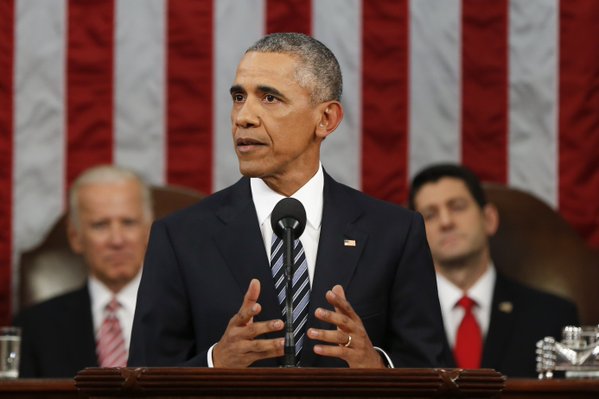
Tuesday night President Barack Obama delivered his final State of the Union address before Congress. Nationally televised, the hour-long speech in the House chamber was short on policy details and focused more on being urging Americans to be more tolerant. “I want to focus on the future,” the president opened his speech. Obama continued, “America has been through big changes before – wars and depression, the influx of immigrants, workers fighting for a fair deal, and movements to expand civil rights. Each time, there have been those who told us to fear the future; who claimed we could slam the brakes on change, promising to restore past glory if we just got some group or idea that was threatening America under control. And each time, we overcame those fears.” Here’s what the Alabama delegation had to say about his final speech: U.S. Sen. Jeff Sessions (R-AL): President Obama’s policy agenda on trade, crime, immigration, spending and debt all have one common feature: they make life harder for working Americans and put the country at needless risk. With wages down, record numbers not working, and crime rising in cities across the U.S., the next person to occupy the oval office will have to chart a dramatically different course. U.S. Sen. Richard Shelby (R-AL): Tonight’s address was another political speech full of empty rhetoric that offered no real solutions to the issues facing American families and businesses each day. While the President used the podium tonight to tout his record, Americans at home know that he is poised to leave behind a legacy of failed policies that have damaged our economy and made America weaker across the globe. The American people deserved to hear from the President tonight about his real, comprehensive plan to defeat ISIS and radical Islamic terrorism. They also deserved to hear that he will not circumvent Congress, unilaterally infringe on law-abiding Americans’ Second Amendment rights, or allow thousands of improperly vetted Syrian refugees into our nation. The American people are sick and tired of this President’s blatant disregard for the Constitution, policies that prioritize what is best for Washington over what is best for America, and speeches to score political points. While I’m pleased that this is his last State of the Union address, the American people would be better off if it were his last day in office. U.S. Rep. Bradley Byrne (AL-01): If you like the direction our country is headed, then you probably enjoyed tonight’s speech. If you don’t think our country is headed in the right direction, then you were probably disappointed. I certainly was. President Obama tried to paint a rosy picture tonight, but the facts simply aren’t on his side. A quick glance around the globe shows our enemies growing stronger and our allies under attack. Right here at home, wages are stagnant, our borders remain unsecured, and veterans still aren’t receiving the care they deserve. Tonight marks the beginning of the post-Obama era, and it is time to start looking past this time of big government toward an America where the government actually works for the people and not the other way around. U.S. Rep. Martha Roby (AL-02) For all President Obama’s lofty rhetoric and aspirational soundbites, tonight’s speech offered little in substance for how to actually address the nation’s problems. I was particularly disappointed that, once again, the president came up short of delivering a bold, decisive, comprehensive strategy to defeat Islamic State terrorists. Instead, we got a lecture on the semantics of war. I did appreciate President Obama admitting how he regretted the deep divisiveness of his presidency. He said he wants to ‘do better,’ and if he’s serious, he can start by engaging with the people’s elected representatives rather than attempting unilateral executive orders every time he doesn’t get his way. Unfortunately I believe we can count on the opposite. That’s why I remain committed to fighting Executive Branch overreaches at every turn, should they occur. Whether it’s an attempt to grant amnesty to illegal immigrants or a power grab by the Environmental Protection Agency or a threat to erode Second Amendment rights, Congress must stand up and fight back against abuses of executive power during this last year of President Obama’s time in office. U.S. Rep. Mike Rogers (AL-03): Tonight’s speech will be more of the same. Over the past seven years, we have seen our country’s economy struggle, watched our national debt grow to astronomical numbers and lost our spot as a defense superpower in this world. We have watched the Federal government grow and become more intrusive in our day to day lives at the expense of our Constitutional rights. I am relieved President Obama’s time in office is coming to an end because no matter how much ‘hope and change’ was promised, our country is weaker and more polarized than ever. U.S. Rep. Robert Aderholt (AL-04): The good news is that this was the President’s final State of the Union address. The bad news is that just like his previous seven addresses to Congress, it was unfortunately filled with the rhetoric, partisanship and divisiveness the American people have rejected. President Obama is probably now worried about his legacy and exactly how he will be remembered. I do not think history will be kind to President Obama. We have seen that Obamacare is an abject failure. There is still no plan for defeating ISIS. The Iranian deal has isolated our allies while emboldening our enemies. And it is not fiction that our economy actually remains stagnant both in terms of growth and take home pay. The focus of my conservative colleagues and I is to spend the next year focused on restoring a confident America and getting back to the basic principles of the Constitution. An America where people are empowered to make their own decisions and go after their own dreams and get government out of the way. U.S. Rep. Mo Brooks (AL-05): No statement available at this time. U.S. Rep. Gary Palmer (AL-06): No statement available at this time. U.S. Rep. Terri Sewell
Alabama native to interview President Obama at White House
Destin Sandlin, Alabama native and founder of the popular YouTube channel “Smarter Every Day,” will interview President Barack Obama at the White House this week as part of a public outreach effort. Sandlin is an engineer at the Redstone Arsenal Army base near Huntsville, in Madison County. On his regular video blog, he discusses scientific, social, and political issues in a breezy, well-informed manner. Obama is participating in the event as part of an “#YouTubeAsksObama” to engage the great many Americans who rely more and more on the Internet as a source of news and information, and will field questions from two other big-name YouTubers as well, namely Ingrid Nilsen and Adande Thorne, better known as “sWooZie.” Sandlin says he will ask the commander in chief scientific, as well as personal questions. He boasts about 3.5 million subscribers, and something similar to that large figure is likely to view his exclusive with Obama. “We have a huge opportunity here,” Sandlin said. “The format is going to be really cool. They created a small version of my office that’s going to be there at the White House so we can just hang out and talk like we always do, except the president’s there.” You can submit a question for Sandlin to ask the President by tweeting at him – @smartereveryday – using the hashtag #YouTubeAsksObama.
Bradley Byrne: The Second Amendment must be protected
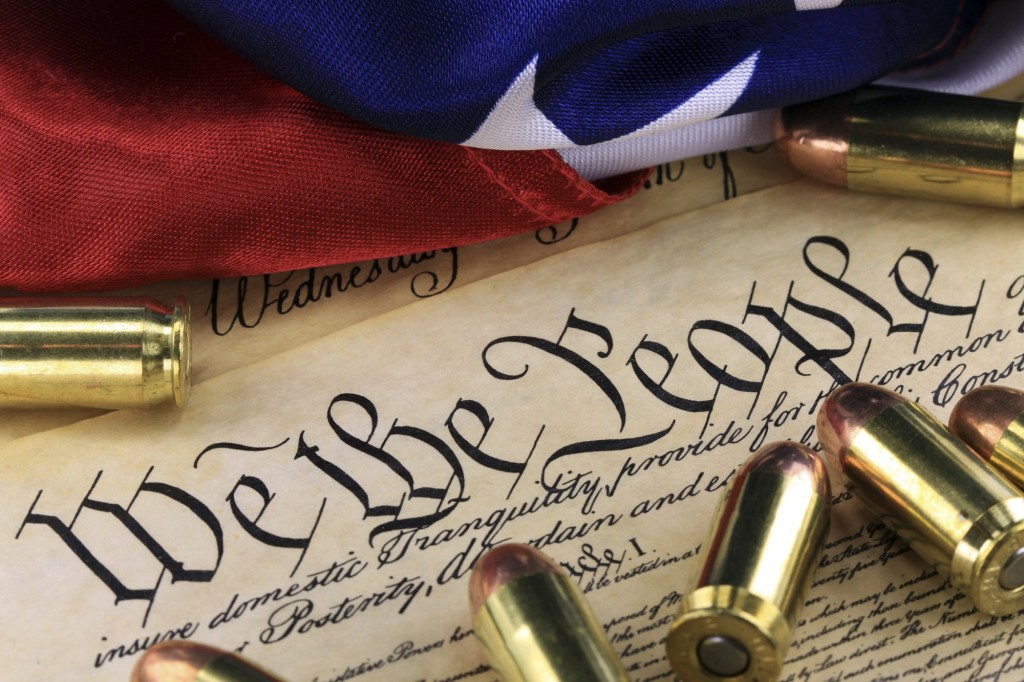
Since I was a young boy, some of the most enjoyable time with my family has been spent hunting. My dad and I didn’t bond on a golf course, instead we bonded in the backwoods of Southwest Alabama. This is the same tradition I have enjoyed with my sons. My family, like most families in Southwest Alabama, have always owned firearms. While we mainly use our weapons for hunting, there is also a basic interest in having firearms to help protect our family. The right to keep and bear arms is a right given to every American in the Second Amendment of the Constitution. I am deeply concerned by any efforts in Washington that would restrict South Alabamians right to own a firearm. For example, last week President Barack Obama announced that he would be taking a series of executive actions aimed at reducing gun violence. In reality, these actions would have little to no impact on reducing violence, but they would infringe on our Second Amendment right to bear arms. Some of the most troubling parts of the president’s actions would make it harder for some Americans to buy and sell guns and would also bypass many of our privacy rights by making it easier for doctors to share medical information with the FBI. These actions fly in face of the Constitution. Instead of pushing for new gun control measures, the president should be working with Congress on realistic solutions that would actually cut down on gun violence, like reforming our mental health system and preventing terrorists from entering our country. Let’s look at the facts. In each of the recent mass shootings, every gun was acquired through a background check. Also, in most of the mass shootings, the gunmen suffered from mental illness. New gun laws wouldn’t have stopped these attacks, but mental health reform very well could have made a difference. That’s why I am a proponent of mental health reform and not gun control. I am a proud co-sponsor of U.S. Rep. Tim Murphy’s bill, the Helping Families in Mental Health Crisis Act. This common-sense legislation would fix our mental health system and ensure that Americans with mental health issues can get the care and services they need. I didn’t hear the president mention Congressman Murphy’s bill or bipartisanship in his speech last week. That makes me wonder if the President really wants to solve gun violence in our country. Instead, I think he is simply looking for another debate that divides our country and panders to far-left political groups. Fighting back against the president’s executive action is also about more than just the Second Amendment. It is also about standing up to an out-of-control president who thinks he can just change the law through unilateral executive actions. That’s simply not how our government works. For seven years now, Congress has rejected the president’s efforts to restrict the Second Amendment right of law-abiding Americans. We have rejected his efforts because they don’t actually solve any problems. Just because we disagree, that doesn’t give the president the authority to go around Congress. He has tried to do this in the past, especially as it relates to immigration law, and federal courts have stopped his executive actions because they violates our Constitution. I expect the same will happen with this latest executive action. One day in the future, I look forward to continuing a proud family tradition by hunting with my new grandson, MacGuire. This tradition will endure because I, and many of my colleagues in Washington, will continue to stand up and defend the Second Amendment. Our efforts will prevail, just as the Second Amendment has prevailed throughout our nation’s history. Bradley Byrne is a member of the U.S. Congress representing Alabama’s 1st Congressional District.
Lawmakers to recommend new measures on distribution, sale of alcoholic beverages

The Alabama Alcohol Beverage Study Commission met Tuesday to approve three recommended measures that will be forwarded to the Alabama House and Senate for discussion. The commission was established to examine Alabama’s laws on the “manufacture, distribution and sale of alcohol beverages” and to study whether or not those laws were “competitive and consistent” with related laws across the country, according to a news release. The following three measures, which address different types of alcohol, were approved by the commission: 1.) Beer Licensed brewers and brew pubs producing less than 60,000 barrels of beer annually will be allowed to directly sell up to 228 ounces, comparable to a case of beer, per consumer each day for off-premise consumption. The law would apply to both draft and package beer. Brewers and brew pubs would be permitted to deliver two kegs of beer for donation to charitable or nonprofit events. The requirement that brew pubs be stationed in historic areas would be abolished. 2.)Wine Alabama wineries would be allowed to establish one ABC-approved, off-site location to sell their product. 3.)Spirits Spirit manufacturers would be allowed to sell up to 750 ml, the equivalent of a “fifth,” per consumer annually for off-premise consumption. Rep. Alan Harper (R-Northport) and Sen. Paul Sanford (R-Huntsville) co-chair the commission and noted that input from the public was used in deciding which recommendations should be presented to the legislature. “We received a tremendous amount of feedback from citizens, industry leaders, and businesses across the state during our public hearings, and we believe these recommendations are the best first step towards improving our alcoholic beverage laws in Alabama,” Harper was quoted as saying in the news release. “We are grateful to everyone who participated in the process.” Further, brewers and industry groups are also celebrating the work of the commission, whose recommendations must still be taken up by the Legislature. Bob Parker, owner of Montgomery’s only brew pub, Railyard Brewing Co., was thrilled with the possibilities. “This gets my beer into your house,” Parker said. “That’s a big deal for me.” Parker noted that the revenue that such a move would generate pales in comparison to the “experience” of being able to go down to your local pub and buy a “growler.” The Alabama Brewers Guild and the Alabama Beer Wholesalers Association are also celebrating the news, noting that such moves will put Alabama on an even keel to compete with surrounding states in the “burgeoning industry of craft beer.”
Bill filed to bring state lottery to Alabama
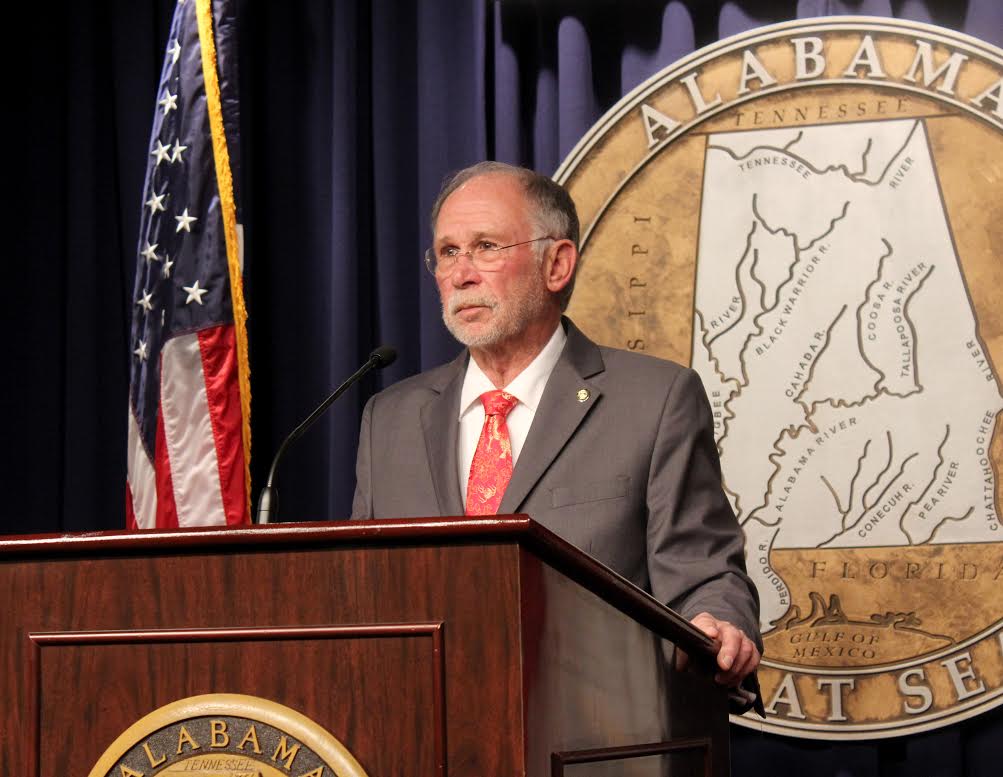
Republican state Sen. Jim McClendon of Springville held a news conference Tuesday morning to discuss legislation that would bring the question of a state lottery before Alabama voters. The legislation was co-sponsored by McClendon and state Rep. Alan Harper, a Republican of Northport, who was unable to attend the news conference. SB 19 was filed Tuesday morning and, according to McClendon, it’s a bill that simply provides state residents with the opportunity to vote on whether to have a state lottery in Alabama. “I came forward with this bill because of my constituents,” McClendon said. “This bill will give them the chance to express themselves.” McClendon noted that, because the bill does nothing more than provide people with the opportunity to vote on a lottery, details are unavailable on how the profits from a lottery would be allocated. McClendon hopes to see his bill passed during the upcoming Legislative Session, which will give voters the opportunity to cast a yay or nay ballot in November. If Alabama voters support the formation of a lottery, McClendon aims to have the details ironed out in the 2017 Legislative Session and predicts a lottery will be in operation by the beginning of 2018. McClendon noted that polling data has been overwhelmingly favorable toward a state lottery, adding that the lowest numbers he has seen are about 70 percent. Further, McClendon claims that the gross income from a state lottery would be between $285 million to 300 million a year. Concerns have been raised that establishing a state lottery would create “back doors” to other types of gambling in the state, but McClendon flatly rejected that assertion. “This bill is a lottery bill and it is nothing else,” McClendon said. “I believe there’s no way, even if somebody takes it to court, they’ll find an opportunity in here to justify gambling by any other entity that might be interested in having gambling in Alabama.” Though McClendon believes the odds of getting the bill passed are good, even while other legislators are rumored to be drafting their own lottery and gambling bills, he knows there will be issues that arise during the session. “There’s always hiccups,” McClendon said. “That is the nature of what we do here in the Alabama Legislature.”
Mayors of state’s largest cities retreat to share ideas, discuss issues
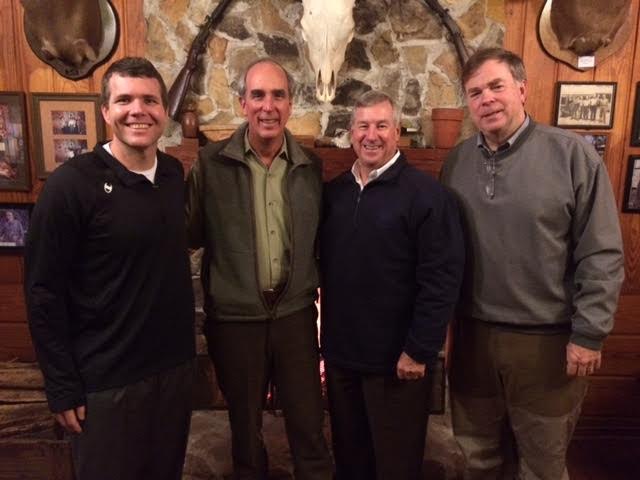
A group of Alabama mayors are enjoying a two-day retreat in Clarke County this week as part of a series of meetings to “share ideas and discuss best practices from their respective administrations,” according to a news release from Montgomery Mayor Todd Strange‘s office. Representing four of Alabama’s five largest cities, the participants include Strange, Huntsville Mayor Tommy Battle, Tuscaloosa Mayor Walt Maddox, and Mobile Mayor Sandy Stimpson, who is hosting the event at his family’s hunting camp. Birmingham Mayor William Bell was unable to attend. The focus has been on “economic development, education and legislative proposals expected to debated” in the upcoming Legislative Session which begins Feb. 2. The mayors have shared their legislative priorities for the upcoming session and discussed plans for an unprecedented visit by the group to the state Capitol next month. “We meet because we are all concerned about the future of Alabama,” Strange said in the news release. “This is an important time for our state. As mayors, we are in a unique position to cut through the rhetoric and bring forward real solutions.” “We come from different places and we all have very different backgrounds, but we’re able to come together on behalf of our constituents,” the release quoted Maddox as saying. “There’s a lot our legislators (can) learn from that example. One thing we all know is that you can’t solve new problems with old solutions.”
Lawmakers begin budget work ahead of Legislative Session
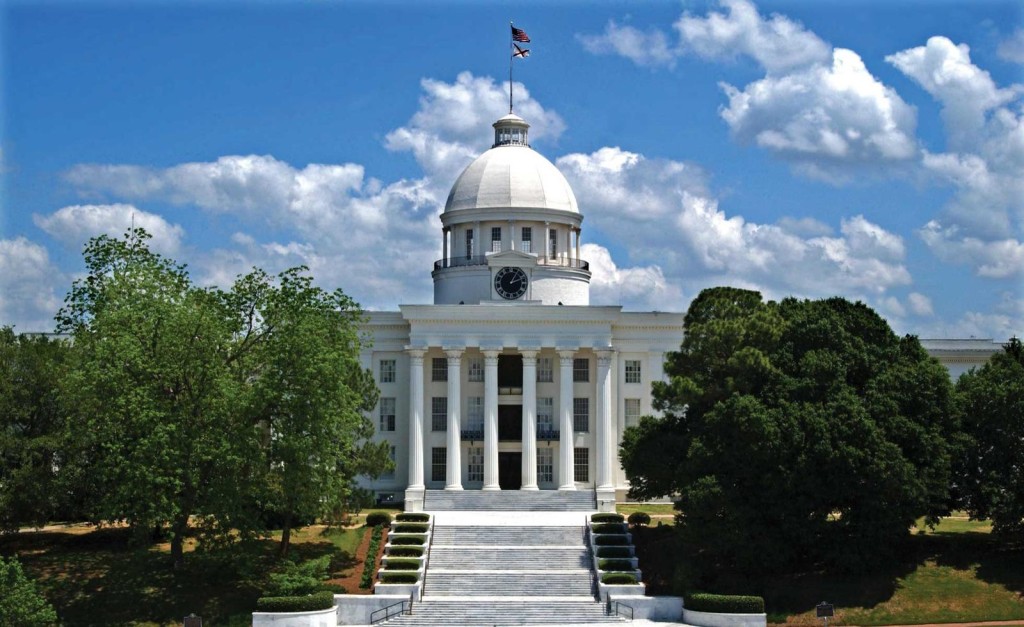
Alabama lawmakers are beginning budget hearings as they face another grim fiscal outlook and the possibility of additional general fund cuts. Lawmakers will question state agency heads about their current spending and needs as they begin work on the general fund budget for next fiscal year. The Department of Corrections and the state court system will give presentations Tuesday. Other state agencies will go before lawmakers later in the week. House General Fund Chairman Steve Clouse said lawmakers will be looking at ways to handle increased needs in Medicaid and prisons, the two biggest expenses in the general fund budget. Republished with permission of the Associated Press.
U.S. Senate hopeful Jonathan McConnell releases first TV ad
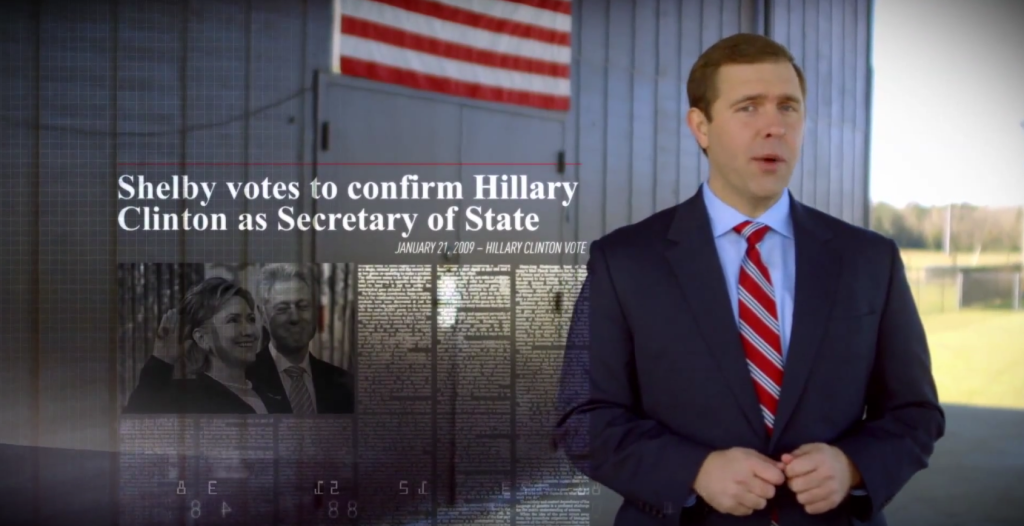
Election 2016 is in full-swing in the Yellowhammer State and U.S. Senate hopeful, Republican Jonathan McConnell released his first TV ad of the season Tuesday morning. The ad, which will air on both broadcast and cable networks statewide, emphasizes what McConnell says are the core differences between himself and his opponent, five-term incumbent U.S. Sen. Richard Shelby. “Washington politicians have failed to lead, leaving significant security risks both domestically and internationally,” McConnell said. “The rise of ISIS, the tragedies in Benghazi, and the spread of radical Islam can be attributed to the failures of career-minded politicians like Richard Shelby.” The commercial hits the airwaves in the wake of a fundraising uptick following two major endorsements from Special Operations Speaks and Citizens United just last week. “After the last 37 years of Shelby’s politics as usual, the people of Alabama are ready to be represented by a principled conservative,” McConnell said. “The culture of politics in Washington has failed us and left America unsafe. .. It’s time to send in a Marine.” Watch the ad below:
John Merrill and the road to the SEC primary
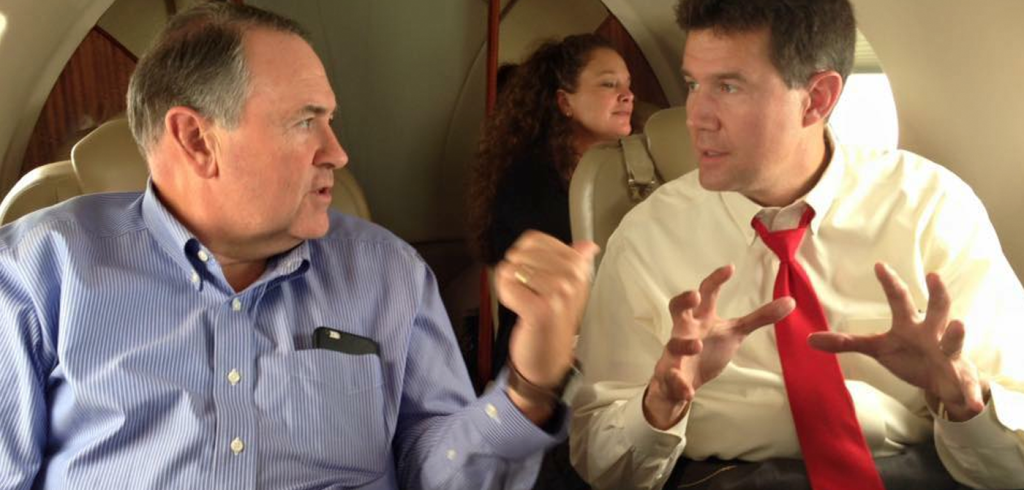
The road to bringing a multitude of presidential candidates to Alabama began in 2014 for Secretary of State John H. Merrill, who championed the idea for the state. In July that year, Merrill received a telephone call from Georgia Secretary of State Brian Kemp. Along with congratulating Merrill on his recent victory in the Secretary of State primary race, Kemp pitched the idea of establishing an SEC Primary: – a primary that would include all of the Southern states associated with college football’s Southeastern Conference. “The purpose for that was so that our voice would be louder and our vote would count more in the selection process than it had previously,” Merrill said. “I really wasn’t overly enthusiastic about it.” In December that year, after winning the Secretary of State position a month before, Merrill was invited by the Pew Charitable Trust to attend a meeting in Santa Monica, California, where he had the opportunity to meet with other Secretaries of State, former and recently elected. There Merrill struck up a conversation with former Iowa Secretary of State Matt Schultz about presidential politics. Merrill recalled Shultz confiding that “unless an Iowan meets a presidential candidate at least eight times we’re not voting for them, because we don’t feel like we’ve had a chance to get to know them.” Merrill noted how rare the opportunity to meet a presidential candidate is for Alabamians and decided it was time to act. “I’m going to put our people in a stronger position than they’ve been before to participate in this process,” Merrill said. From there, Merrill began working together with Kemp and officials in the Alabama Legislature in an effort to move the state’s primary date to March. Legislation was required for such an effort, so Merrill enlisted Democratic Sen. Quinton Ross of Montgomery to sponsor the bill in the Senate and Republican Rep. Ed Henry in Clarksville to sponsor the bill in the House. The bill was passed and signed into law by Gov. Robert Bentley. In August 2015, Merrill attended the Red State Gathering in Atlanta and had the opportunity to meet nine of the top 10 Republican presidential candidates. “I just started selling Alabama,” Merrill said. “We met with all of them and Ted Cruz was the first to take us up on that offer.” Less than two weeks later, Republican presidential candidates John Kasich, Donald Trump, Scott Walker, Dr. Ben Carson and Jeb Bush all held rallies in Alabama. Democratic frontrunner Hillary Clinton would also visit the state, as well as Sen. Marco Rubio and Mike Huckabee. According to Merrill, Trump’s rally in Mobile was the largest in the nation held, to-date, during this election cycle. Further, the ensuing media coverage and influx of tourist dollars was “remarkable” in comparison to the $16,000 spent to host the event. “That’s unparalleled and unprecedented in the history of our state,” Merrill said. Currently, the SEC Primary as envisioned by Merrill and his cohorts includes Alabama, Arkansas, Georgia, Tennessee, Texas, Oklahoma and Virginia, all of which will hold primaries on March 1. In conjunction with the political power it gives to Alabama voters, the move has also provided Alabama legislators with a stronger voice in presidential politics. Governor Bentley formally endorsed Ohio Governor Kasich, Merrill has endorsed former Arkansas Governor Huckabee, U.S. Rep. Mo Brooks endorsed Cruz, a multitude of state legislators have endorsed Trump, and most state Democrats have endorsed former Secretary of State Clinton. “It’s important to me that our people have the chance to meet them,” Merrill said. “That’s what I have been excited about trying to do.”
Marco Rubio shifts immigration focus to national security concerns
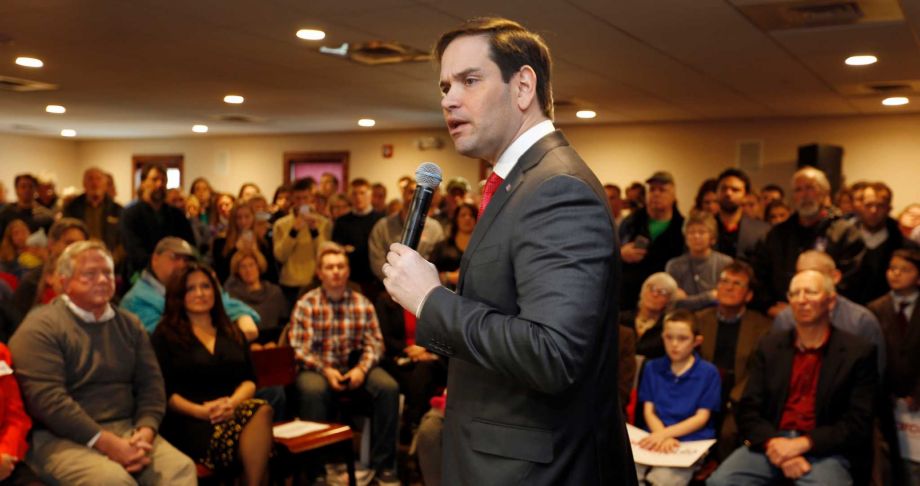
Marco Rubio is increasingly portraying immigration as a national security issue rather than a question of what to do with millions of people in the country illegally, a sign of his evolving stance on a topic that remains one of his liabilities with conservative voters. “The issue is not the same one we had a few years ago,” Rubio told voters recently in New Hampshire. “This issue’s different now; we have radical jihadist groups that are using our immigration system against us.” As he seeks to emerge as a top contender in the GOP’s crowded presidential field, Rubio still finds himself explaining his past support for an immigration overhaul bill that included a path to citizenship. Texas Sen. Ted Cruz, one of his chief rivals, tries to use the bill to brand Rubio as too soft on the issue. And on the campaign trail, Rubio is often asked about immigration, either by skeptical voters or those simply seeking an explanation of where he stands. “He still hasn’t made up with me yet regarding the Gang of Eight,” said David Merritt, a Massachusetts voter who came to see Rubio in Atkinson, New Hampshire. Merritt’s comments refer to the immigration bill Rubio co-authored. “I’m not 100 percent sure that I trust him,” Merritt said. The overhaul bill passed the Senate, with Rubio’s help, but he later backed off the proposal as it began to draw fire from the conservative right. Asked to explain, he says he now favors a one-piece-at-a-time approach. He says the federal government needs to boost border security and modernize the legal immigration system before it deals with the 11 million people here illegally. He says the government must do better at tracking the millions who overstay visas and must make mandatory the e-verify system, an Internet-based program that allows employers to check the eligibility of prospective employees through federal databases. But in recent weeks, Rubio also has shifted the conversation, starting the immigration segment of his stump speech by painting gaps in the U.S.-Mexico border and the existing legal immigration system as a national security threat. And he’s taken to telling voters that the Islamic State group is actively recruiting fighters to send to the United States posing as doctors, students and investors. “Radical jihadist groups, the same people who carried out the attacks in Paris, who inspired the attacks in California, are trying to use our immigration system against us,” Rubio said Thursday to a crowd packed into a Bedford home. “They’ve already gotten someone into this country as a fiancee,” he said, referring to Tashfeen Malif, the wife accused in the California shootings. A Pakistani citizen, she was allowed into the country in 2014 to marry a U.S. citizen. The FBI said after the shooting that Malif and her husband had been radicalized for some time, but the FBI also said recently there’s no evidence of outside actors in coordinating the shooting. Rubio says if the government doesn’t know “100 percent” who someone is or why they are coming into the United States, they won’t be allowed in under his administration. “This has become a national security issue, and when an issue changes, so must your policies,” he said. But Rubio’s stance on immigration was fluid long before the Islamic State was a concern. As Florida’s House speaker in 2008, Rubio came under fire from GOP colleagues for not bringing several bills aimed at discouraging illegal immigration to the House floor for a vote, including bills to increase employer verification requirements and require police to report those suspected of being in the country illegally. He began to shift rightward when he ran for the Senate in 2010 as a tea party favorite, pledging to oppose any legislation that would grant amnesty to the millions here illegally. Pressed about what to do with millions already here illegally, Rubio said then that they would return to their homelands and re-enter once the federal government enforced a legal immigration system “that works.” He also opposed a 2007 comprehensive immigration reform bill authored by Sen. John McCain because it included “amnesty” for millions. Yet the bill he helped craft in 2013 included a path to citizenship. Rubio’s shifting stance isn’t a problem for some voters. Cindy Coutu of Bedford considers immigration a top concern, and she appreciates his focus on the issue from a national security perspective. “Who’s coming in? Who are you? Where are you from? Let’s get a better idea, and then start dealing with who is already here,” she said. “That makes sense.” Republished with permission of the Associated Press.
