
Gerald Allen prefiles 3 controversial, conservative bills
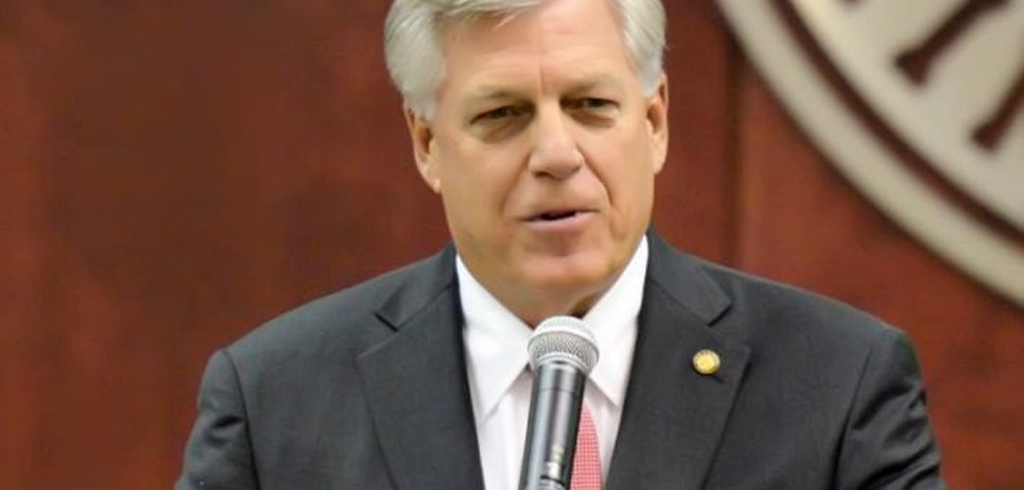
Multiple bills have been pre-filed in the Alabama Senate, but few are likely to raise the ire of state Democrats like those proposed by Sen. Gerald Allen, a Tuscaloosa Republican. The senator has already prefiled three bills before the Legislative session convenes February 2. Among those is the Fetal Heartbeat Act, SB 9, requiring physicians check for a fetal heartbeat before performing an abortion, and makes it a Class C felony to perform an abortion once a heartbeat has been detected. Exceptions to the clause are;: The presence of a “lethal anomaly,” which would result in death within three months of birth or before. The possibility that carrying the unborn child to term would result in the death of the mother or cause “substantial and irreversible impairment of a major bodily function” in the mother. No exceptions are made for cases of rape or incest. Not only will doctors be required to provide “written documentation” of how the heartbeat was monitored, it will require doctors to document in writing the reasons for performing an abortion once a heartbeat is detected. A heartbeat can usually be detected within six to seven weeks of becoming pregnant. Also prefiled is the Alabama Heritage Preservation Act, SB13, which would “prohibit the relocation, removal, alteration, renaming, or other disturbance of certain commemorative statues, monuments, memorials, or plaques which are located on public property.” The bill does call for the exemption of “certain art and artifacts, the Department of Transportation, and local highway departments under certain limited circumstances.” Further, the bill provides “any entity exercising control of public property on which the object of remembrance is located” with the ability to petition the Alabama Legislative Council for a waiver. But, by the bill’s design, acquiring a waiver would require the following steps: A resolution by the entity expressing its intent to alter the monument; Advertisement of the resolution in a local newspaper for eight consecutive weeks at the entity’s expense; Signage providing text of the resolution at the monuments site for eight weeks; Two hearings conducted by the entity to receive public input; A petition in writing from the controlling entity stating the reason for seeking alteration and a summary of public input; and Certification by the Alabama Historical Commission and Legislative Council that all requirements have been met Any entity which is found in violation of this bill would be fined $100,000 to be deposited into the General Fund. Finally, SB14 authorizes “certain persons” to carry a pistol without a license on “property under his or her control, in his or her vehicle, in his or her place of abode, in his or her fixed place of business, and on the property of another or a vehicle owned by another, with consent.” Further, the bill says that “carrying a firearm does not, in and of itself, constitute disorderly conduct.” The bill provides for law enforcement agencies to still be able to lawfully detain or question those thought to be in violation of the law and deny permits to citizens with mental illnesses and makes it illegal for anyone under 18 to possess a pistol on his or her person or in his or her vehicle. Multiple attempts to contact the senator for comment were unsuccessful.
Chris Christie warns voters: Don’t elect a first-term senator
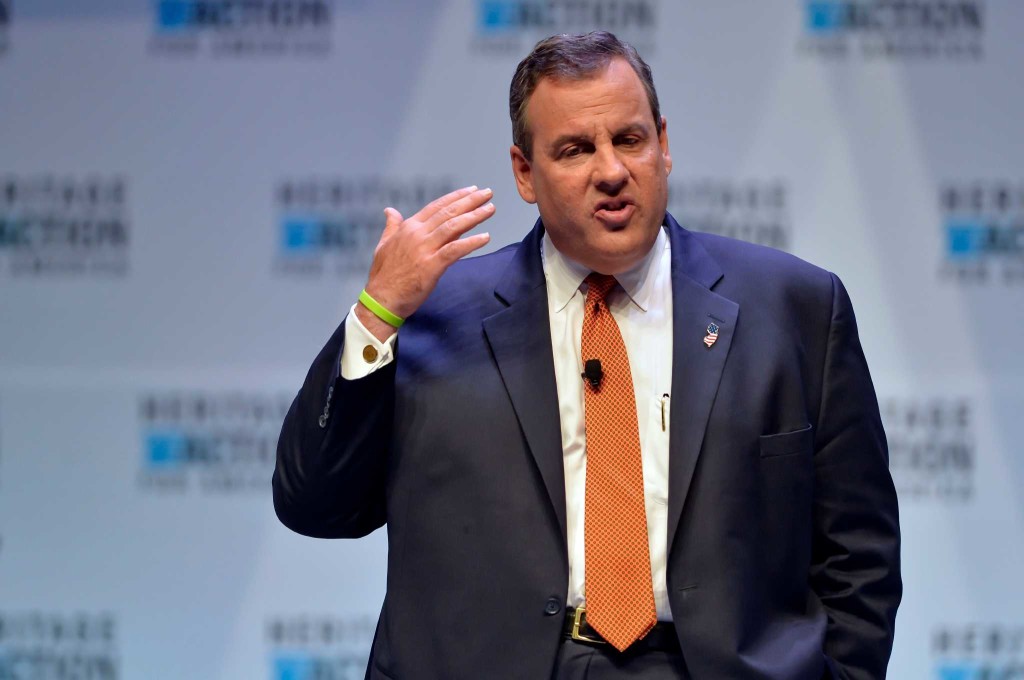
Chris Christie is pressing people in New Hampshire to avoid voting for a first-time senator in the coming presidential primary as he holds out Barack Obama as an example of what can happen when they do. “The U.S. Senate is like school,” he told a packed firehouse Wednesday. “They tell you where to go, what time to show up, what kind of questions you’re going to get.” The New Jersey governor said, “That’s not the way it works when you’re a governor, I can tell you. The issues come at you from every direction at all hours of the day and the night.” Christie’s remarks were a swipe Sens. Marco Rubio and Ted Cruz, two rising contenders for the GOP nomination. He’s competing in particular with Rubio in New Hampshire, the state where Christie has pinned his presidential hopes. Christie’s pitch centers on his executive experience as governor and as a former U.S. attorney. He said voters should have learned a lesson from electing Obama, who was in his first term in the Senate when he ran in 2008 and won the presidency. “When the American people elected (Obama), they knew he had never run anything bigger than a 30-person Senate staff,” Christie said. “We as a country put him in charge of the largest, most complex government the world has ever known, and we wonder why things aren’t working the right way.” Christie has seen his stock rise in New Hampshire as people search for an alternative to Donald Trump, who continues to dominate preference polls in the first primary state, which votes Feb. 9. Christie casts himself as a tested governor who can take on threats from the Islamic State and other terrorist organizations and often questions whether the rest of the candidates possess the experience to make tough decisions. He’ll join six other candidates, Rubio and Cruz among them, on stage Thursday night for the next Republican primary debate. But he told voters to be thinking farther ahead, to when the Republican nominee is on stage debating Hillary Clinton, who he presumes will win the Democratic nomination. If an untested candidate makes it to that stage, Christie said, Clinton will “eat you alive.” “She will pat some people on the head and cut their hearts out,” he said. “Let me guarantee you one thing: She won’t do that to a guy from New Jersey.” Republished with permission of the Associated Press.
Donald Trump draws bevy of Pensacola-area endorsements before rally

Republican presidential front-runner Donald Trump‘s rally in Pensacola not only is expected to draw more than 10,000 participants Wednesday, it brought him six endorsements from area activists including the brother of “Morning Joe” co-host Joe Scarborough, his campaign announced Wednesday. The rally’s warm-up speakers represent endorsements from the likes of businessman George Scarborough; the Rev. Carl Gallups; Second Amendment activist Clover Lawson; and veterans Terry Busbee Sr., Gary O’Neal and Capt. Allen Brady, in addition to Kathryn ‘Kat’ Gates-Skipper the first female Marine in combat operations. She had announced her endorsement previously “It is my great honor to receive endorsements from each of these incredible people,” Trump said in a news release issued by his campaign. “Their support for my message and endorsement of my candidacy for President of the United States means so much to me, and with their help, and the help of so many great people in Florida and all over the country, we will make America great again!” George Scarborough, a Pensacola resident and brother of former congressman and MSNBC “Morning Joe” co-host Joe Scarborough, is the owner of Scarborough Consulting and regional director of The Studer Group. Joe Scarborough has often commented during his show about his brother’s support for Trump. Gallups is an author, radio and television talk show host and senior pastor of Hickory Hammock Baptist Church in Milton. Lawson is a founding partner of Lawson & Palmer LLC. The campaign described as one of the foremost women in the firearms industry, who represents world-class competitive shooters, as well as some of the best manufacturers in tactical gear. Brady served 32 years in the Navy including four years at the Naval Academy, and spent six years as a prisoner of war in Vietnam’s infamous “Hanoi Hilton” prison camp. Busbee served multiple tours in Vietnam before moving into politics. He is leaving the Democratic Party to endorse Trump for president because “he’s the smartest man for the job,” according to the campaign release. Retired Chief Warrant Officer Gary O’Neal was an Army Ranger and president of the Worldwide Army Rangers Association. A biography titled “American Warrior: The True Story of A Legendary Ranger” detailing O’Neal’s extraordinary service was released in 2013.
Daniel Sutter: The complicated case of ignition switches

Does government make better decisions than business? A first trial from the General Motors ignition switch recall begins this week in New York, and the evidence suggests that G.M. never systematically analyzed the ignition defect. This uninformed decision is an unintended consequence of a complicated interaction between Americans’ attitudes toward risk and our legal system. First some background. In February 2014, G.M. began recalling 2.6 million vehicles for a faulty ignition switch. The switch sometimes slipped while cars were in motion, causing stalling, and preventing air bag deployment. Weighted items on a key chain may have contributed to slippage. Economists calculate a cost per life saved to facilitate comparison of different risk reducing actions. We can do so here for ignition switches. G.M. estimated a $100 million cost to fix the defect, and I have seen a published estimate of 124 resulting deaths. Dividing yields a cost per life saved for repairing the defect of $800,000. Does this figure show that G.M. should have fixed the defect? People make many trade-offs involving money and very small risks of death, like choosing to purchase bicycle helmets, smoke detectors, and tornado shelters. Suppose that a bike helmet which cost $50 has a cost per life saved of $5 million. A person who pays $50 for the helmet implicitly values saving a life here at least $5 million, while not purchasing implies a value of less than $5 million. Peoples’ decisions reveal values of saving lives. Numerous studies have found that Americans frequently value life in risky choices at between $5 million to $10 million. The consistency is amazing since I doubt that most people every explicitly make the implied calculations. Consequently many economists consider a value in this range appropriate for cost-benefit analysis of risk measures. The EPA and the Department of Transportation agree, and currently use values of around $9 million. Because the $800,000 cost per life saved is less than $5 million, many Americans would have chosen to pay for an ignition switch repair. Yet G.M. does not do risk analysis as a matter of policy. Thus the Federal government then uses a better decision making process for risk than business. Automakers used to perform risk analysis. In the 1970s, Ford made the Pinto, a compact car that was vulnerable to fires in rear-end collisions due to the location of its gas tank. Ford compared the cost and benefit of a redesign, using the typical wrongful death jury award at the time ($200,000), and determined that the costs outweighed the safety benefits. The analysis proved to be a godsend for plaintiffs’ attorneys in later lawsuits. A California jury in 1981 awarded the plaintiffs in one Pinto crash $125 million in punitive damages (although that amount was significantly reduced after the verdict). G.M. and Chrysler were burned by risk analysis in other cases. Vanderbilt economist Kip Viscusi, a pioneer of risk analysis, found that almost all blockbuster jury awards against automakers were in cases where the company did a risk analysis. G.M. seems to have learned the lesson. Yet automobile designs inevitably trade off cost and safety. Our only choice is whether we make such decisions with deliberation. A lack of deliberation leads to inconsistent and costly choices – we miss opportunities to save lives at low cost, and spend lots of money saving almost no lives. Some people might blame the plaintiff lawyers for these awards, but lawyers simply make arguments. The Americans on the juries make these awards, and so we have ourselves to blame. Jurors in interviews indicate that they find any a risk a manufacturer knows about but does not eliminate as unacceptable. The jurors exhibit a zero risk fallacy, thinking that perfect safety is possible at an affordable price. Americans generally make better decisions than many experts acknowledge, but are prone to certain types of confusions, like the zero risk fallacy. The G.M. ignition switch case illustrates how complicated interactions of decision making mistakes and our institutions produce unintended and costly outcomes. We need to ensure that our legal system does not deter good risk decision making. Daniel Sutter is the Charles G. Koch Professor of Economics with the Manuel H. Johnson Center for Political Economy at Troy University and host of Econversations on TrojanVision.
Jeb Bush sees conservatism at stake in 2016

Jeb Bush says he misjudged the intensity of anger among Republican voters before his White House campaign and believes the country in 2016 is “dramatically different” than in past elections. Yet he insists he’s still a viable candidate, and one who has broadened his mission to include defending conservativism from GOP front-runner Donald Trump. “I just think it’s important to fight this fight,” a reflective Bush said in an interview with The Associated Press. “I don’t know what the consequences politically for me are. But I do think it’s important that the conservative party nominate a conservative, and someone that understands the role of America in the world.” In particular, Bush reaffirmed his commitment to conservative social issues in an AP Conversation, the latest in a series of extended interviews with the candidates to become the nation’s 45th president. The former Florida governor spoke to the AP in Iowa, where he argued the Supreme Court should overturn its landmark Roe v. Wade ruling affirming abortion rights and, as he has for weeks, pummeled Trump incessantly. But as the state’s leadoff Feb. 1 caucuses draw closer, the Republican Party’s summertime front-runner shows few signs of momentum. Bush is favored by just 4 percent of likely caucus-goers in the respected Iowa Poll, published Wednesday by The Des Moines Register and Bloomberg News, down 2 points in the past month and mired in sixth place. To be sure, Bush isn’t giving up. Yet rather than talking about winning in the early voting states, Bush says he’s working to “beat expectations” in the February contests before moving “into March as a candidate that’s viable.” “After that, the fur starts flying pretty quick,” he said. “We’ll be viable.” The son of one president and brother of another, Bush told AP this week he was never comfortable with his place as the early favorite for the GOP nomination. He effectively blocked 2012 GOP nominee Mitt Romney from entering the race, winning over many of Romney’s donors en route to raising more than $100 million last year to support his bid. But that political pedigree and fundraising prowess scared no campaign rivals, least of all Trump, who got into the race the day after Bush in June. Bush told AP he failed to predict Trump’s popularity, reflected in the real estate mogul’s sustained lead among GOP voters in preference polls and the large, raucous crowds he draws to his rallies. “This is dramatically different, because the country is dramatically different, and people are reflecting their anger and angst in a way that is very different than any time that I can recall,” Bush said. “And I’ve been involved in politics for a long while.” Bush continued, “So, in recognition of that, what I want to do is make sure that the conservative cause is advanced. Not just in talk shows and think-tanks and wherever conservatism is talked about in all sorts of different ways, but in governing.” Bush’s vow to champion conservative principles to counter Trump’s rise came hours before President Barack Obama condemned “voices urging us to fall back into tribes, to scapegoat fellow citizens who don’t look like us, or pray like us, or vote like we do, or share the same background,” in his final State of the Union address. That thinly veiled reference to Trump, who has made building a wall on the U.S. southern border and barring Muslims from entering the United States the cornerstones of his campaign, was echoed moments later by South Carolina’s Republican governor, Nikki Haley. In delivering the official Republican response to Obama’s speech, she called on voters to tune out “the siren call of the angriest voices.” It’s a message Bush has carried forward for weeks, predicting a moment when Republican primary voters would start to see Trump as more showman than statesman and begin to favor an experienced leader in uncertain economic times and perilous ones overseas. That hasn’t happened. When asked to describe Bush, the majority of three dozen people taking part in a recent GOP focus group led by Republican pollster Frank Luntz used words such as “weak,” ”irrelevant,” and “loser.” Only a few said “experienced.” At one point, Luntz even apologized to a Bush staff member watching the panel from behind one-way glass. “He’s the wrong guy at the wrong time,” Luntz said. “If this had been four years ago, he’d be president.” As Bush’s campaign and well-funded super PAC search for a spark, he has more recently seized on Trump’s past contributions to Democrats, moderate social positions and public praise of Democratic front-runner Hillary Clinton to show he’s a charlatan whom others are too meek to take on. “The pursuit of that, of protecting the conservative cause, it’s being hijacked by Donald Trump, who’s not a conservative,” Bush said. “And others are cautious about expressing this, because God forbid you get into a Twitter war with a guy who has a lot of free time on his hands, I guess.” Trump’s rise and Bush’s underwhelming showings in the Republican debates raised concern among some Bush donors in the fall. Bush has since poured his energy into policy proposals, especially on confronting the Islamic State group, and redoubling his effort in New Hampshire. Bush says his case to voters is backed by eight years as a “reform-minded” governor in Florida. He served in Tallahassee from 1999 to 2007, and in those years consistently staked out positions aimed at curbing abortion, something he would do again if elected president, he said. “I’d like to see Roe v. Wade overturned,” Bush said. Should the Supreme Court overturn the 1973 decision, Bush said states would be empowered to decide the fate of abortion, “which is the proper place for its regulation.” Bush promised to work with Congress to strip federal money from Planned Parenthood, the nation’s largest abortion provider, promote adoption programs and expand “crisis pregnancy centers,” which Florida began financing when he was governor. “There’s a lot that can be done to protect life
William J. Canary: Public charter schools are valuable to business’ future

We are encouraged by the progress made toward creating public charter schools, schools that promise to be a vital part of the well-educated workforce that will work in and run Alabama businesses well into the middle of this century. Last year, thousands of parents, students, and teachers gathered in Montgomery for School Choice Week to urge the Legislature to give parents a choice. With the Business Council of Alabama’s urging, the Legislature responded and passed the Alabama School Choice and Student Opportunity Act. Alabama is now the 43rd state with a charter school law. Later this month, people from across Alabama again will gather in Montgomery for School Choice Week that is designated Jan. 25-29, to show support for improving the quality of education and expanding access to highly effective schools. The Alabama celebration of School Choice Week will be 11 a.m. Jan. 26 on the south lawn of the Capitol. We encourage participation in this endeavor that is an important part of Alabama’s goal of growing our role as a leader in a global economy. Students are expected to enroll next year in inaugural public charter schools that are now being planned, giving parents a say in where their children attend school without having to move. Public charter schools will be innovative in teaching and managing. Public charter schools will be held accountable and will have safety and health regulations. Students also will take state assessment exams. If parents and their children find public charter school are good learning environments and foster high academic expectations, then the schools will continue to turn out students that their parents envision. Right now if you have money or you can afford to move, you might send your children to private school. The BCA believes that all children deserve a chance for a quality education and that all parents should be given the opportunity to seek it. Charter schools can be an attractive alternative to parents of children who, due to geography, are locked into a situation where they cannot reach their full potential. Public charter schools will be another tool to use as we strive for education excellence and prepare our children for a fulfilling future. In 2014, the Business Education Alliance of Alabama – an organization that joins education and business – called for pursuing the goal of attaining a 90 percent high school graduation rate by the year 2020. Right now our graduation rate is 86 percent and increasing. While that is good news, one-third of our students need remedial courses for college and student proficiency of mastery of content is well below average. The success of Alabama’s business community depends on a public education system that produces graduates with skills required for the 21st century work place. If Alabama is to continue to attract the aerospace, automobile, and rocket manufacturing facilities that have made us the envy of the rest of the nation, and if we are going to foster growth of our biotech, high-tech, and research industries, we must provide our children the education and skills that those jobs demand. At the BCA we are dedicated to doing our part because the future is for all of us. William J. Canary is president and CEO of the Business Council of Alabama.
10 must-read quotes from Barack Obama’s final State of the Union
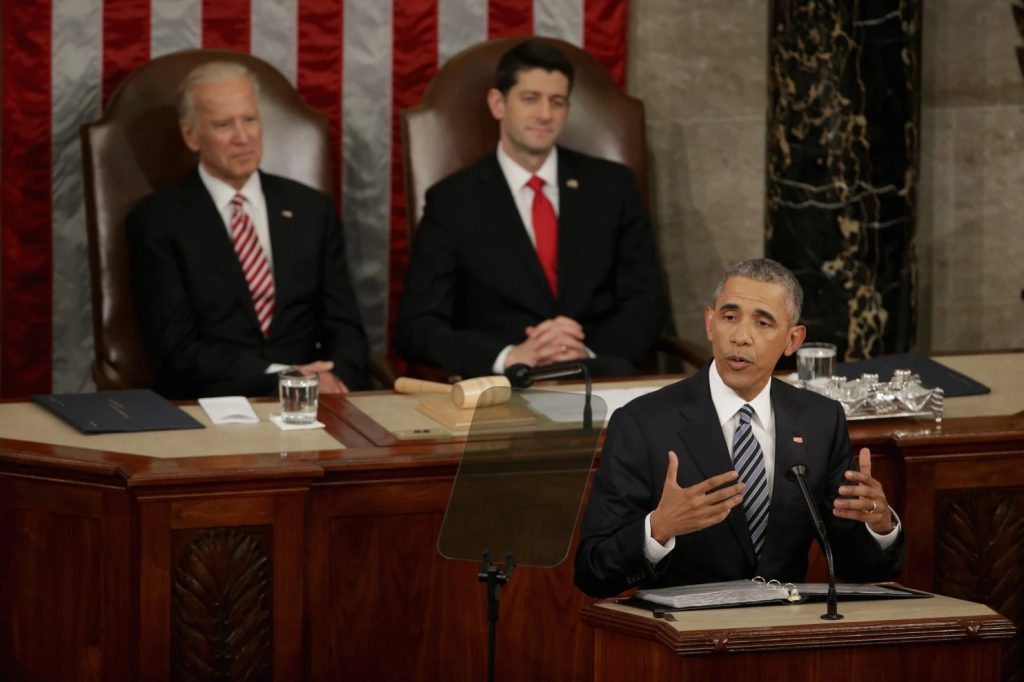
President Barack Obama used his seventh and final State of the Union Tuesday night to address broad programs and topics, rather than discuss specific policy ideas. Below we’ve rounded up 10 of the most significant quotes from the President’s speech. Click here to read the full text. On politics: The future we want — opportunity and security for our families; a rising standard of living; and a sustainable, peaceful planet for our kids — all that is within our reach. But it will only happen if we work together. It will only happen if we can have rational, constructive debates. It will only happen if we fix our politics. On terrorism: “Priority No. 1 is protecting the American people and going after terrorist networks. Both al Qaeda and now ISIL pose a direct threat to our people, because in today’s world, even a handful of terrorists who place no value on human life, including their own, can do a lot of damage.” On American strength: When you come after Americans, we go after you. It may take time, but we have long memories, and our reach has no limit. On voting: So, my fellow Americans, whatever you may believe, whether you prefer one party or no party, our collective future depends on your willingness to uphold your obligations as a citizen. To vote. To speak out. To stand up for others, especially the weak, especially the vulnerable, knowing that each of us is only here because somebody, somewhere, stood up for us. On climate change: We’ve got to accelerate the transition away from dirty energy. Rather than subsidize the past, we should invest in the future — especially in communities that rely on fossil fuels. That’s why I’m going to push to change the way we manage our oil and coal resources, so that they better reflect the costs they impose on taxpayers and our planet. On the economy: Let me start with the economy, and a basic fact: the United States of America, right now, has the strongest, most durable economy in the world … anyone claiming that America’s economy is in decline is peddling fiction. On America’s military: The United States of America is the most powerful nation on Earth. Period. It’s not even close. We spend more on our military than the next eight nations combined. Our troops are the finest fighting force in the history of the world. No nation dares to attack us or our allies because they know that’s the path to ruin. … when it comes to every important international issue, people of the world do not look to Beijing or Moscow to lead: They call us. On American entrepreneurship: That spirit of discovery is in our DNA. We’re Thomas Edison and the Wright Brothers and George Washington Carver. We’re Grace Hopper and Katherine Johnson and Sally Ride. We’re every immigrant and entrepreneur from Boston to Austin to Silicon Valley racing to shape a better world. And over the past seven years, we’ve nurtured that spirit. On bipartisanship: Mr. Speaker, I appreciate the constructive approach you and the other leaders took at the end of last year to pass a budget and make tax cuts permanent for working families. So I hope we can work together this year on bipartisan priorities like criminal justice reform, and helping people who are battling prescription drug abuse. We just might surprise the cynics again. On diversity: We need to reject any politics that targets people because of race or religion. This isn’t a matter of political correctness. It’s a matter of understanding what makes us strong. The world respects us not just for our arsenal; it respects us for our diversity and our openness and the way we respect every faith.
Nikki Haley says she’s willing to discuss possible VP run
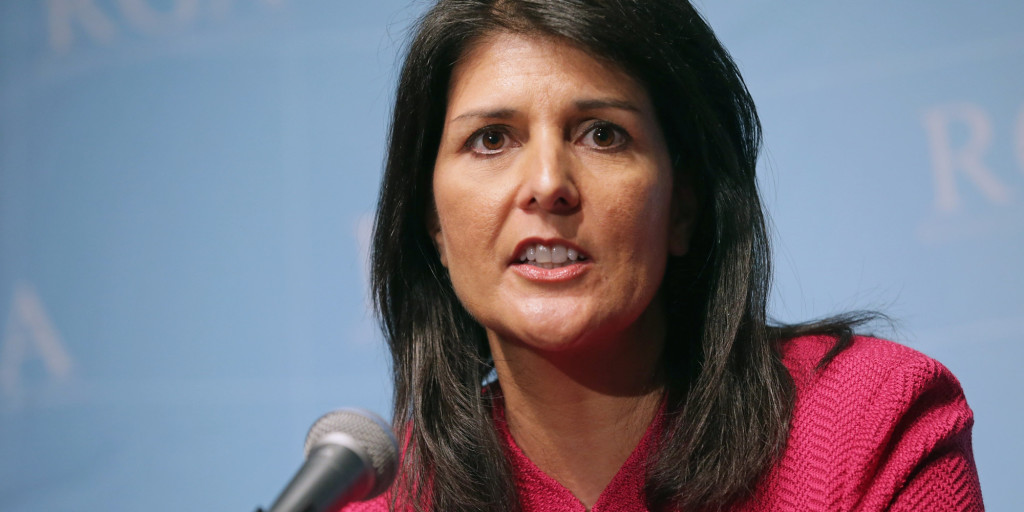
South Carolina Gov. Nikki Haley says she’s open to being the running mate to the Republican nominee for president. Speaking on NBC’s “Today” Wednesday, Haley said she’s willing to have a conversation about running as vice president once a nominee is selected. “If a candidate wanted to sit down and talk, I would sit down and talk,” she said. “It’s a big decision, it’s a family decision. But absolutely, I would sit down and talk.” She also said that in her rebuttal to the State of the Union late Tuesday, she was taking aim at Donald Trump, as well as other members of the party and in the media, when she called on Americans to resist “the siren call of the angriest voices.” Republished with permission of the Associated Press.
Mike Ball to introduce new bill aimed at decriminalizing marijuana medicinal oil
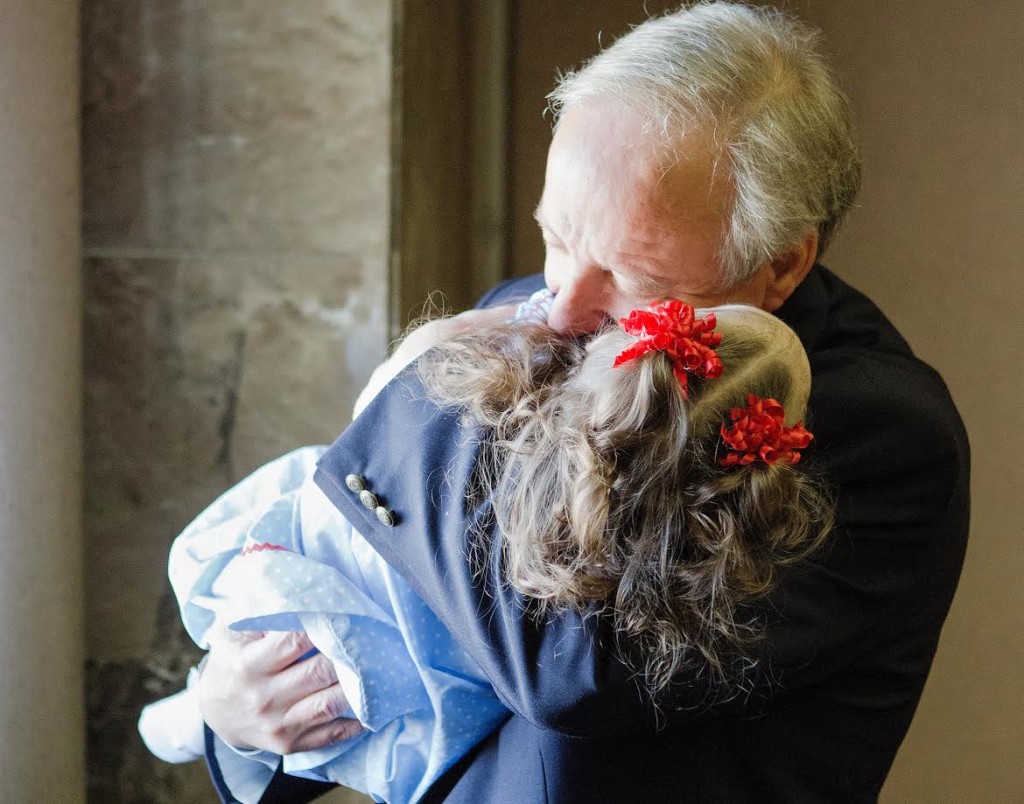
A new bill aimed at decriminalizing the possession of CBD oil will likely come up for discussion during the upcoming legislative session, according to the bill’s sponsor, GOP state Rep. Mike Ball of Huntsville). A previous bill, “Carly’s Law,” gave the University of Alabama – Birmingham the opportunity to research the use of CBD oil, a medicinal oil derived from marijuana but containing little of the “high-inducing” chemical THC, and eventually led to chemical trials for children and adults suffering from myriad ailments. However, after the U.S. Food and Drug Administration narrowed the margins for who could have access to the medicine, many of the state’s most needy were denied access to the program. Specifically Leni Young and her family, who fled to Oregon last year where access to the oil is more readily available. “They’re refugees,” Ball said. Leni’s parents fought tirelessly for “Carly’s Law,” only to see their daughter, who suffers from intractable complex epilepsy and a rare form of cerebral palsy, left out of the trials and following dispersion of medication. Since moving to Oregon and using “high CBD cannabis oil” regularly, Leni has gone from hundreds of seizures a day to one every four to six weeks and has had her cocktail of medication reduced by 20 percent with no adverse side effects. Further, Leni is using her hands for the first time, engaging with her family more thoroughly and able to sit on her own with minimal assistance. Thus, Ball will introduce “Leni’s Law” during the upcoming session. “This is a spiritual issue, not a political issue” Ball said. “It’s time to take this step.” To ensure that his bill is on legal footing, Ball had the bill drafted by the Alabama Law Institute and is planning to have it examined by district attorneys. Ball noted that the issue is complex – federal law has created a climate where doctors are afraid to prescribe the drug and desperate families are afraid to be in possession of it. For that reason, Ball believes a resolution should be drafted to petition the federal government to change its stance on marijuana policy, specifically as it pertains to the use and dispersion of CBD oil, and the Alabama legislature should eradicate fears of prosecution for potential patients. “These people are not criminals,” Ball said. “It’s just common sense. Leni is the catalyst for me, but there are lots of other families who need this medication and we have got to do something to help them.”
Here’s the full text of President Obama’s final State of the Union address
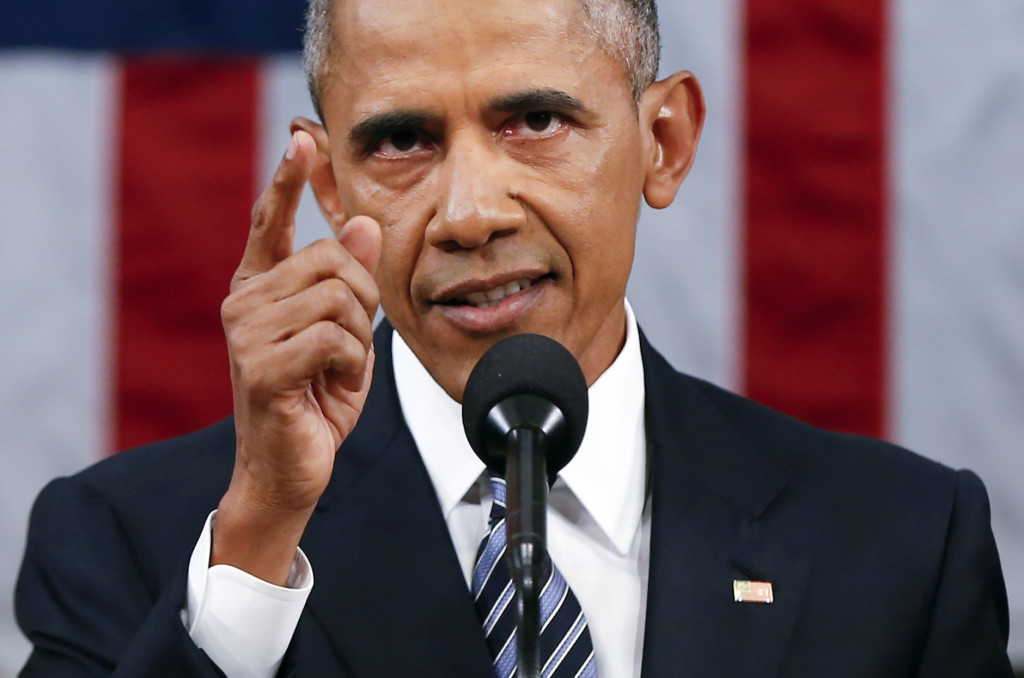
U.S. President Barack Obama delivered his final State of the Union address Tuesday night. Here’s the full text, from the White House: Mr. Speaker, Mr. Vice President, Members of Congress, my fellow Americans. Tonight marks the eighth year I’ve come here to report on the State of the Union. And for this final one, I’m going to try to make it shorter. I know some of you are antsy to get back to Iowa. I also understand that because it’s an election season, expectations for what we’ll achieve this year are low. Still, Mr. Speaker, I appreciate the constructive approach you and the other leaders took at the end of last year to pass a budget and make tax cuts permanent for working families. So I hope we can work together this year on bipartisan priorities like criminal justice reform, and helping people who are battling prescription drug abuse. We just might surprise the cynics again. But tonight, I want to go easy on the traditional list of proposals for the year ahead. Don’t worry, I’ve got plenty, from helping students learn to write computer code to personalizing medical treatments for patients. And I’ll keep pushing for progress on the work that still needs doing. Fixing a broken immigration system. Protecting our kids from gun violence. Equal pay for equal work, paid leave, raising the minimum wage. All these things still matter to hardworking families; they are still the right thing to do; and I will not let up until they get done. But for my final address to this chamber, I don’t want to talk just about the next year. I want to focus on the next five years, ten years, and beyond. We live in a time of extraordinary change — change that’s reshaping the way we live, the way we work, our planet and our place in the world. It’s change that promises amazing medical breakthroughs, but also economic disruptions that strain working families. It promises education for girls in the most remote villages, but also connects terrorists plotting an ocean away. It’s change that can broaden opportunity, or widen inequality. And whether we like it or not, the pace of this change will only accelerate. America has been through big changes before — wars and depression, the influx of immigrants, workers fighting for a fair deal, and movements to expand civil rights. Each time, there have been those who told us to fear the future; who claimed we could slam the brakes on change, promising to restore past glory if we just got some group or idea that was threatening America under control. And each time, we overcame those fears. We did not, in the words of Lincoln, adhere to the “dogmas of the quiet past.” Instead we thought anew, and acted anew. We made change work for us, always extending America’s promise outward, to the next frontier, to more and more people. And because we did — because we saw opportunity where others saw only peril — we emerged stronger and better than before. What was true then can be true now. Our unique strengths as a nation — our optimism and work ethic, our spirit of discovery and innovation, our diversity and commitment to the rule of law — these things give us everything we need to ensure prosperity and security for generations to come. In fact, it’s that spirit that made the progress of these past seven years possible. It’s how we recovered from the worst economic crisis in generations. It’s how we reformed our health care system, and reinvented our energy sector; how we delivered more care and benefits to our troops and veterans, and how we secured the freedom in every state to marry the person we love. But such progress is not inevitable. It is the result of choices we make together. And we face such choices right now. Will we respond to the changes of our time with fear, turning inward as a nation, and turning against each other as a people? Or will we face the future with confidence in who we are, what we stand for, and the incredible things we can do together? So let’s talk about the future, and four big questions that we as a country have to answer — regardless of who the next President is, or who controls the next Congress. First, how do we give everyone a fair shot at opportunity and security in this new economy? Second, how do we make technology work for us, and not against us — especially when it comes to solving urgent challenges like climate change? Third, how do we keep America safe and lead the world without becoming its policeman? And finally, how can we make our politics reflect what’s best in us, and not what’s worst? Let me start with the economy, and a basic fact: the United States of America, right now, has the strongest, most durable economy in the world. We’re in the middle of the longest streak of private-sector job creation in history. More than 14 million new jobs; the strongest two years of job growth since the ’90s; an unemployment rate cut in half. Our auto industry just had its best year ever. Manufacturing has created nearly 900,000 new jobs in the past six years. And we’ve done all this while cutting our deficits by almost three-quarters. Anyone claiming that America’s economy is in decline is peddling fiction. What is true — and the reason that a lot of Americans feel anxious — is that the economy has been changing in profound ways, changes that started long before the Great Recession hit and haven’t let up. Today, technology doesn’t just replace jobs on the assembly line, but any job where work can be automated. Companies in a global economy can locate anywhere, and face tougher competition. As a result, workers have less leverage for a raise. Companies have less loyalty to their communities. And more and more wealth and income is concentrated at the very top. All these trends have squeezed workers, even when they have jobs; even when the
State of Alabama joins lawsuit defending religious liberty from federal assault
Alabama Attorney General Luther Strange announced yesterday that the state has joined with 19 other states in filing a “friend of the court brief” to support the right of religious non-profits to “follow their religious beliefs,” according to a press release. The document was filed in response to the contraception mandate in the Affordable Care Act, also know as “Obamacare.” “Americans’ ability to exercise their religious beliefs – a fundamental right enshrined in the Constitution – is unfortunately under assault from a federal government determined to sacrifice our rights to further its political goals,” Strange said in the press release. “By compelling religious nonprofit groups to provide contraceptive coverage, the president’s Affordable Care Act, also known as Obamacare, forces them to institute practices that are at odds with their deeply-held religious beliefs.” Alabama, Arizona, Arkansas, Colorado, Florida, Georgia, Idaho, Kansas, Michigan, Montana, Nebraska, Nevada, Ohio, Oklahoma, South Carolina, South Dakota, Texas, Utah, West Virginia and Wisconsin filed the amicus brief in the Zubik v. Burwell case on Monday. The Zubik v. Burwell case asserted that the contraception mandate violates the Religious Freedom Restoration Act (RFRA) and called for exceptions to the mandate to be made for religious organizations. This is not the first time that Alabama has signed on to an amicus bill of this type, the state has previously fought the contraception mandate in the Little Sisters of the Poor Home for the Aged v. Burwell, East Texas Baptist University v. Burwell and Eternal Word Television Network (EWTN) v. Burwell cases. A federal court ruled against EWTN, an Alabama-based Catholic television network, in June 2014, but Alabama appealed the ruling to the U.S. 11th Circuit Court of Appeals and EWTN was granted a stay from federal fines due to ignoring the mandate while the case is under review. Michelle Johnson, Director of Communications for EWTN, noted that being Catholic is not a requirement for employment with the company.
Ted Cruz escalates attacks on Donald Trump over values, foreign policy
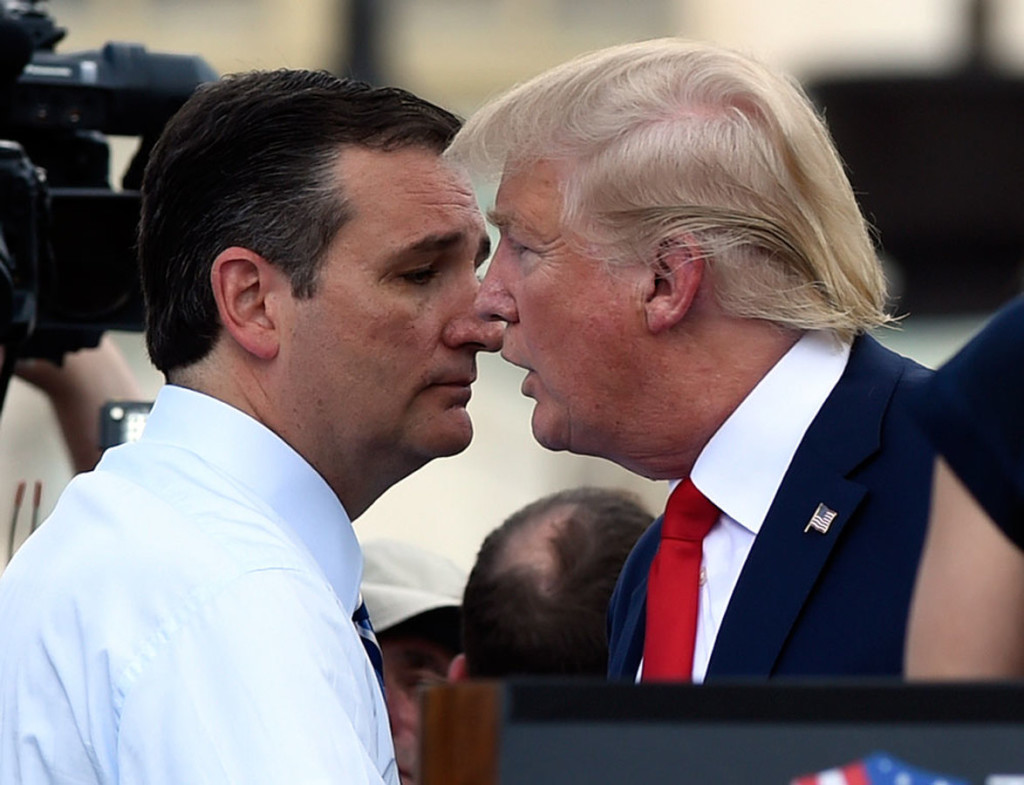
Republican presidential candidate Ted Cruz ramped up his attacks against GOP rival Donald Trump on Tuesday, accusing the billionaire businessman of having “New York values” and questioning his foreign policy credentials. It was the latest round in an escalating rivalry between the two outsider candidates, who are locked in a virtual tie in polls in the early-voting state of Iowa. Cruz’s sharper rhetoric shows that the detente between the two has ended as they fight to win over voters less than a month before the state’s kick-off caucuses. The attacks began early in the day as Cruz hit back against Trump’s questions about his eligibility to run because he was born in Canada. Cruz, who insists that the issue of his qualification has long been settled, responded by suggesting that Trump is the favored candidate of Democratic candidate Hillary Clinton‘s supporters. “It’s more than a little strange to see Donald Trump is relying on as authoritative a liberal left-wing judicial activist Harvard law professor who is a huge Hillary supporter,” said Cruz in Hudson, New Hampshire, referring to his former law school professor Laurence Tribe, who has said the issue remains debated. “It starts to make you think, gosh, why are Hillary’s strongest supporters backing Donald Trump? The past couple of elections we saw the Democrats thrilled that they got the nominee they wanted to run against in the general election,” Cruz said. “The Hillary folks are very eager to support Donald Trump.” Speaking to radio host Howie Carr, Cruz continued the attacks, subtlety raising questions about Trump’s values. “Donald comes from New York and he embodies New York values,” Cruz said, adding that “The Donald seems to be a little bit rattled” over his position in the polls. The final shot came when radio host Hugh Hewitt asked Cruz about the nuclear triad. During the last GOP debate, Trump had appeared stumped by a question on the topic. “Well, I do think the most important determination that the voters are making is who is prepared to be commander in chief, who has the knowledge, who has the experience, who has the judgment and clarity of vision and strength and resolve to keep this country safe. And it is certainly relevant to voters. Does a potential commander in chief know what the nuclear triad is, much less is he or she prepared and able to strengthen it and keep this country safe?” he said. “And it’s certainly relevant, does a commander in chief understand who our enemy is, radical Islamic terrorism, understand how to defeat it not just based on what’s said on Sunday shows on TV, but actually understanding the nature of the threat and what is required to defeat it?” he asked, making a veiled reference to a comment Trump had made early on about learning about foreign policy from cable shows. Trump, meanwhile, hit back at a rally in Cedar Falls on Tuesday night, again raising questions about Cruz’s ability to run. “He’s got a problem,” Trump told an audience packed into a gym of the University of Northern Iowa, repeating his case that the issue will hang over Cruz’s head if he wins the nomination. “I’m doing it for the party, and I’m doing it for the Ted,” Trump later said. He also accused Cruz of being in the pocket of his donors and hit him on his opposition to ethanol subsidies, an issue in corn-producing Iowa. “By the way, Ted is totally against ethanol, please remember that. And I’m for ethanol,” he said. “I think it’s fantastic.” Trump’s event hit many of his usual points, but it took an unusual turn when he quoted the lyrics to an Al Wilson song called “The Snake” as an allegory to describe the U.S. being too trusting by taking in Syrian refugees who may want to do the country harm. In the song, a “tender-hearted woman” nurses a “poor half-frozen snake” back to health – only to be bitten. “‘I saved you,’ cried that woman. ‘And you’ve bit me even, why? You know your bite is poisonous and now I’m going to die.’” “‘Oh shut up, silly woman,’ said the reptile with a grin. You knew damn well I was a snake before you took me in.’” Republished with permission of the Associated Press.
