
State Senate Republicans identify jobs, education and families among top priorities
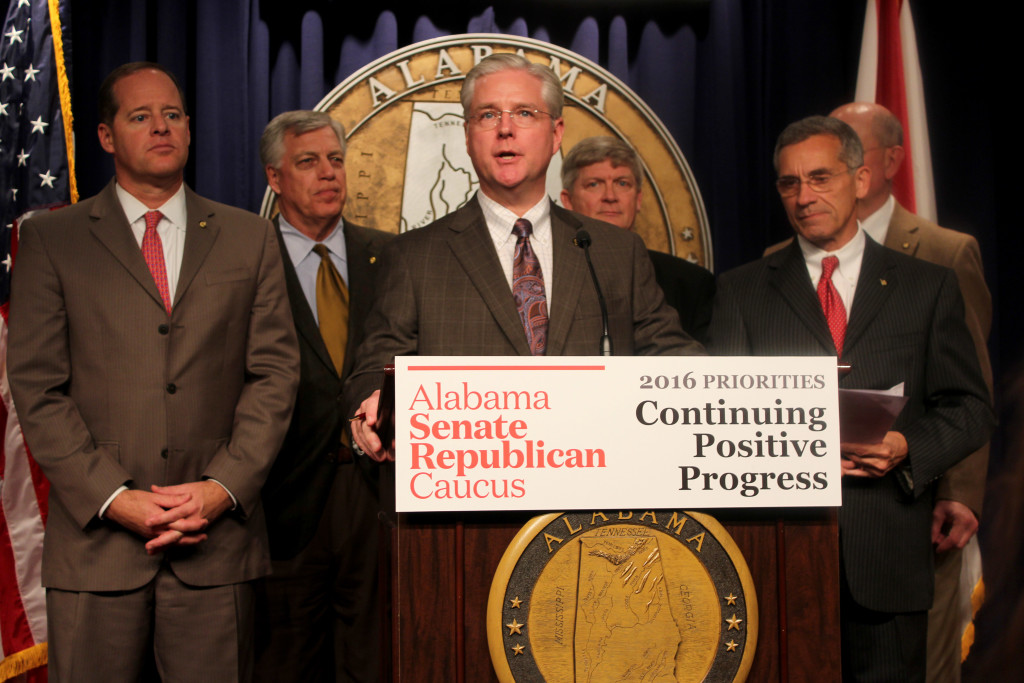
Senate Republicans announced their agenda for this year’s legislative session, calling it “Continuing Positive Progress,” during a brief news conference Tuesday. Senate Majority Leader Greg Reed (R-Jasper) and Senate President Pro-Tem Del Marsh (R-Anniston) were on hand with others from the Senate Republican Caucus to discuss the group’s priorities for this year, which include spurring economic growth, protecting children and families and encouraging education excellence. “While addressing our primary goal of passing balanced, responsible budgets, Senate Republicans will also tackle our legislative priorities,” Reed said in a news release. “The people of Alabama elected us to focus on jobs, education, and families – and we’re doing just that.” In an effort to “spur economic growth,” Republicans plan to create “more flexibility to craft responsible, pay-as-you-go incentive packages” to create more jobs in the state. Further, Republicans plan to provide economic incentives to have companies use Alabama’s ports to ship products to the state – such products are often shipped to other ports and then brought into Alabama – which “will generate exponentially more tax revenue and jobs.” In its effort to “protect children and families,” Senate Republicans plan to pass both child abuse bills brought up in this morning’s judiciary hearing in an effort to protect Alabama’s “most vulnerable victims of abuse.” Republicans also plan to equip K-12 teachers with the tools needed to curb the rate of youth suicide in the state, which they say is a significant problem in the state. In its efforts to “encourage education excellence,” the Republican Caucus will support a pay raise for Alabama’s teachers, per Gov. Robert Bentley‘s proposal, and “incentivize accountability, specialized hiring and retention” by finding ways to rid the sate of ineffective educators and reward those who go above and beyond. During the press conference, Marsh commented on his RAISE Act, which has received a lot of negative attention from educators claiming it links teacher raises to test scores and student achievement. Marsh said the act does not link the two, it simply creates a five-year tenure track that can be reversed if teachers prove ineffective in preparing students. “We’re doing things I think are very positive,” Marsh said. “At the end of the day, we all want our children to do better.” Asked whether a proposal by Bentley to move Education Trust Fund dollars into the General Fund would gain traction in the Legislature, Reed said he didn’t know whether “there is a significant appetite” for such a move. In reference to a question on whether the repeal of Common Core curriculum standards would make it to the floor this year, Marsh said he is “not convinced those votes are there,” adding that it should be up to the state school board to make that decision.
Daniel Sutter: The space shuttle and the stock market

Last week marked the 30th anniversary of the explosion of the Space Shuttle Challenger, a shared national tragedy, which unfolded on live television. The tragedy reminded us of the dangers of space travel, which had been obscured by NASA’s great safety record. The Challenger disaster also produced a stock market reaction, which illustrates the remarkable role of markets in our economy. It turns out that the New York Stock Exchange (NYSE) quickly and accurately identified the responsible party. The Challenger explosion occurred at 11:39 a.m. ET on Jan. 28, 1986, just 73 seconds after launch from Cape Canaveral. The NYSE was open as events unfolded. As economists Michael Maloney and Harold Mulherin explain in an event study, four major space shuttle contractors stood as potentially responsible parties, in addition to NASA. The contractors were Rockwell International, makers of the shuttle and its engines, Lockheed, with ground support management, Martin Marietta, makers of the external fuel tank, and Morton Thiokol, who made the solid fuel booster. President Reagan appointed a distinguished panel to investigate the disaster’s cause. William Rogers, a former U.S. Secretary of State, chaired a panel including astronaut Neil Armstrong, test pilot Chuck Yeager, and physicist Richard Feynman. The Rogers Commission placed blame on a failure of the O-ring seal of the booster rocket in the subfreezing temperatures on the morning of the launch. The report provides an independent source of truth against which to compare the stock market response. Morton Thiokol manufactured the O-ring. What happened on the stock exchange? As we might expect, all four contractors’ stock prices fell immediately. After 20 minutes, Martin Marietta was down 3 percent, Lockheed was down 5 percent, and Rockwell was down 6 percent. But trading of Morton Thiokol stock had been halted because of excessive sell orders. By day’s end, Thiokol was down 12 percent, while the other contractors had regained much of their losses. The stock market engaged in social learning that day. No one investor possessed all of the information needed to demonstrate Thiokol’s responsibility, and economists Maloney and Mulherin found no evidence of insider trading during the event. And yet the stock market put the pieces together before the close of business January 28. Social learning occurs in markets due to the nature of knowledge in economics. The information relevant for the economy, or running a profitable business, is all about details, which vary from place to place and over time, as economist Friedrich Hayek first recognized. Information of this type is dispersed across the economy, and not the type of knowledge uncovered by economists. We possess the bits of information that determine whether investments, say in electric cars or the new Publix grocery store in Troy, will be profitable. Markets are amazingly efficient at assembling economic information, and putting it in a form to guide decisions by entrepreneurs and investors. The stock market assembles information by providing people an opportunity to profit from what they know. The price of each stock each day provides a lightning summary assessment of the company’s prospects. Anyone with information suggesting that a company is either over- or under-valued can speculate, and will make money if they are right. A person’s speculation adds their information into the mix. The Challenger case further demonstrates how markets help ensure the quality of goods and services. The average quality of a firm’s products is usually hard to observe, but sometimes a highly visible event will signal a problem with product quality or safety. A swift, strong stock market reaction typically ensues. Economists have documented stock price declines after product recalls, airline crashes, and even the fabrication of news stories. People often fear that cost cutting by businesses will compromise product quality and safety. But the linking of stock prices to quality provides even greedy CEOs a reason to care about quality. If cost cutting produces a product recall, crash, or other epic fail, the company’s stock price will tumble. The CEO will then have to answer to the board of directors, stock holders, and stock analysts, and may even lose his job. • • • Daniel Sutter is the Charles G. Koch Professor of Economics with the Manuel H. Johnson Center for Political Economy at Troy University and host of Econversations on TrojanVision. Respond to him at dsutter@troy.edu.
Personnel note: Gary Palmer’s Communications Director Cliff Smith leaves Hill
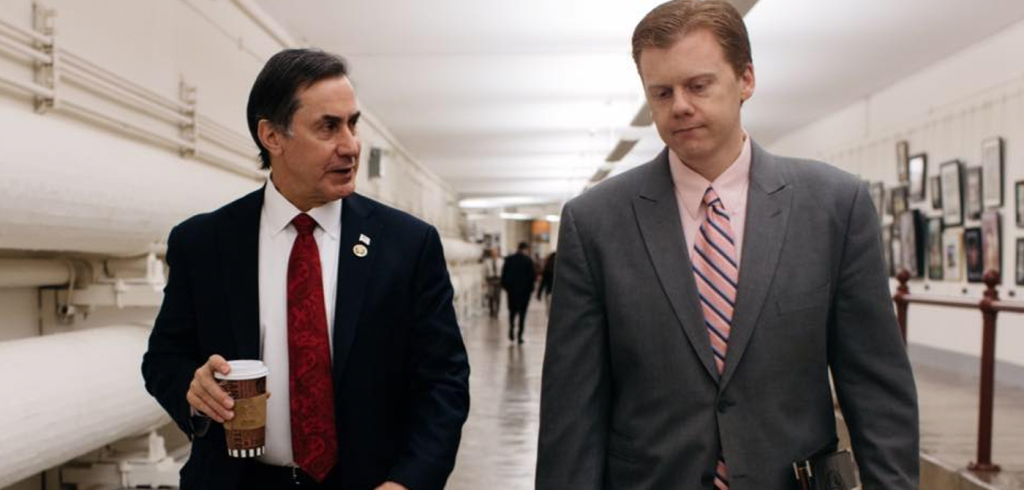
Monday, U.S. Rep. Gary Palmer‘s (AL-06) Communications Director Cliff Smith left Capitol Hill to take a new position as the Washington Project Director of the Middle East Forum. Prior to joining Palmer’s team, Smith was a law clerk on two Senate committees and a legislative correspondent in the House of Representatives for U.S. Rep. Paul Gosar (AZ-04). Smith, a 2002 graduate of Washington State University, has a master’s in public policy from Pepperdine University and a law degree from The Catholic University of America. “It was an honor to have the opportunity to work for Rep. Palmer, a man I respect and believe will continue to do great work for Alabama and the nation,” Smith told Alabama Today. “I am excited to join the Middle East Forum. I have always had a deep and abiding interest in foreign affairs, particularly the Middle East, and I am a former student of Dr. Pipes, president of the Middle East Forum. I am excited for where this venture will take me and I look forward to building more relationships in Washington DC in service of a smart and effective foreign policy toward the Middle East.” In a release, Smith’s former professor and President of the Middle East Forum, Daniel Pipes said, “Clifford Smith brings solid knowledge of Washington and of the Middle East to the Forum. We look to him to build on our existing issues in the U.S. capital and then expand on them.” The Middle East Forum, a Philadelphia-based think tank, is dedicated to defining American interests in the Middle East and protecting America from Islamist threats. It achieves its goals through intellectual, activist, and philanthropic efforts.
On heels of major endorsements, Bradley Byrne releases first TV ad of 2016
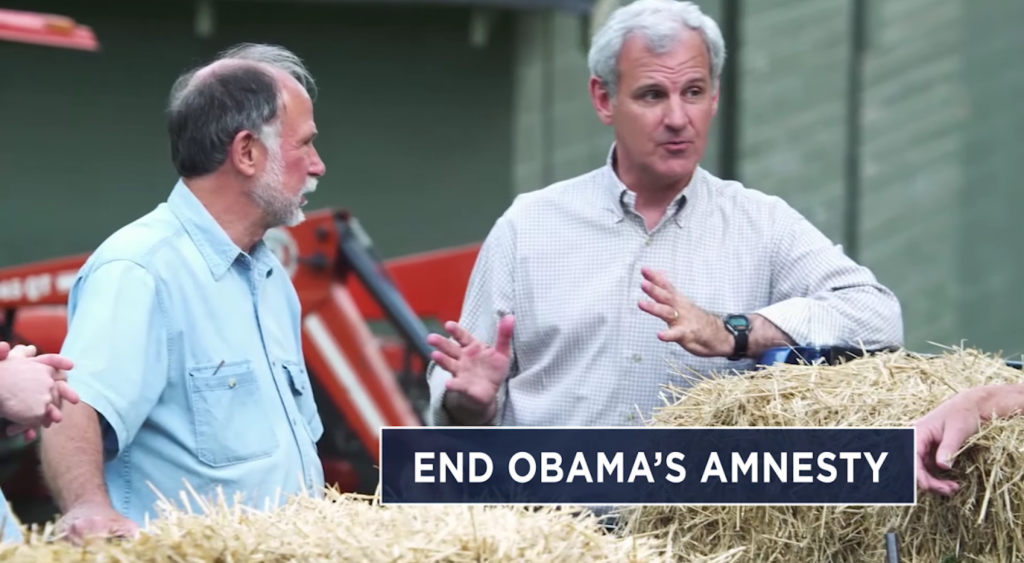
On the heels of two major endorsements from the National Rifle Association (NRA) and National Right to Life, U.S. Rep. Bradley Bryne (AL-01) released his first TV ad of the 2016 cycle his campaign said Wednesday. The 30-second spot, called “Our Values,” says: One hundred percent pro-life. One hundred percent pro-gun. Alabama’s most conservative Member of Congress. Bradley Byrne. He stood up to President Obama to keep America safe from terrorism. To end Obama’s Amnesty, to keep ISIS refugees from moving here. To rebuild our military and support the troops. The National Review said Byrne proves a conservative can rack up legislative wins, and quickly. Bradley Byrne: the real Alabama conservative. BYRNE: I’m Bradley Byrne and I approve this Message. The ad will begin on cable and make its way to broadcast next week. Byrne’s campaign has $600,000 more cash on hand than his primary challenger Dean Young, whom according to Federal Election Commission filings has only reported donations from six individuals of which only two are 1st District residents. “Bradley has broad support across Southwest Alabama, and he is excited to get out the message about his consistent conservative record,” said a member of the Byrne campaign. “Our team has been impressed by the support Bradley has received and our polling numbers are strong, but we aren’t leaving anything to chance.” You can watch the entire ad here:
Personnel note: Terri Sewell’s Communications Director Deshundra Jefferson is moving on
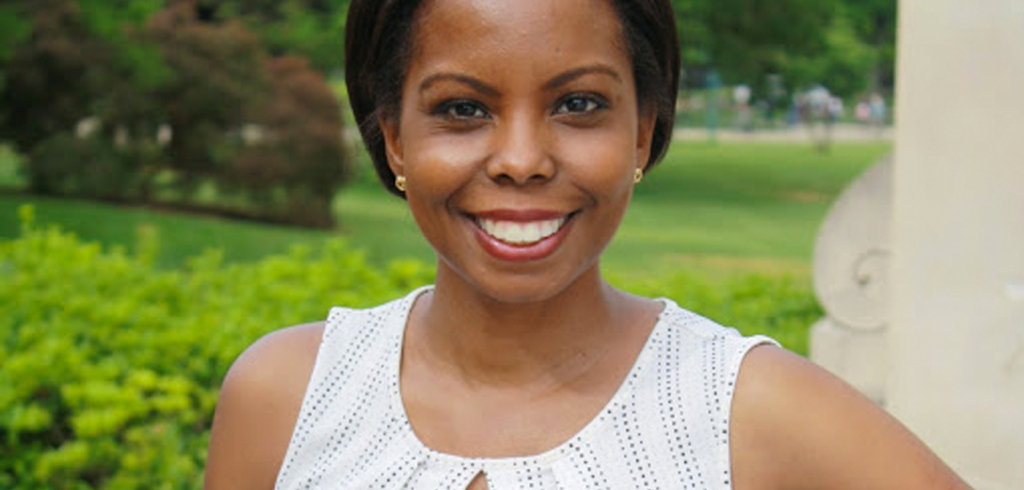
Wednesday, U.S. Rep. Terri Sewell‘s (AL-07) Communications Director Deshundra Jefferson said she’s leaving the office. Prior to joining Sewell’s team, Jefferson served as Press Secretary for Rep. Eliot Engel (NY-16). Jefferson say where she’s going next. In an email sent to colleagues, Jefferson wrote: Working on Capitol Hill has been a dream in many ways, and after two years I have decided to move on. I am excited about many of the new opportunities that have come my way, and will be reaching out to many of you in the near future.
Jim Zeigler lays out his objections in State of the State rebuttal
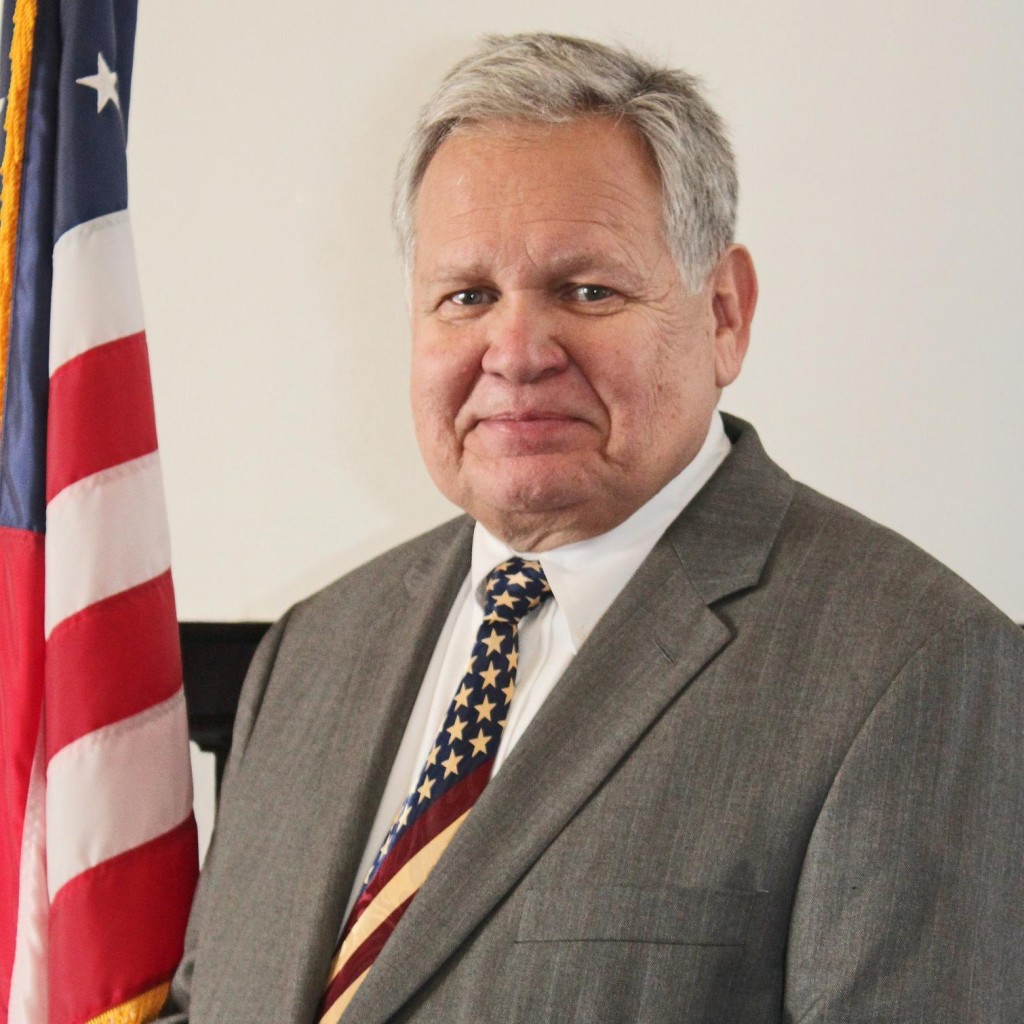
The following was delivered in full by State Auditor Jim Zeigler in response to Gov. Robert Bentley’s 2016 State of the State address. See our coverage of the speech here. The State of the State is a mess. This could not have been made more clear as Governor Bentley once again betrayed Alabama taxpayers with plans for bigger government and increased spending as a solution to our problems. This embrace of Democrat principles comes in the wake of a tumultuous 2015 in which Gov. Bentley disappointed Alabamians with flip-flopping and repeated betrayal of our values and his campaign promises. This stew needs to be stirred. As the Governor said: “The urgency, the challenge is now.” The legislature has received budget requests that are out of balance. They are about $225 million in the hole on day one. The Governor decided not to present any plans for solving that shortfall. The good news is that he did not propose any tax increases. The bad news is that he did not present any plans for saving money in state government by eliminating: Waste, mismanagement, duplication, and low-priority spending. And he did not present any plans for promoting: New efficiencies, cost-savings, and better ways to get things done for less money. We have an admission by the Governor that there is a huge imbalance in budget requests over revenues. We have the Governor’s decision not to do anything about it. What we saw was a complete abandonment of budgetary duties by the Governor. He has abdicated his leadership. One of the problems in the Bentley administration is that the Governor and his advisers believe a budget shortfall can be solved only in two ways – by raising taxes on the citizens of Alabama or by cutting services to the citizens. As a result of this misconception, we saw six state parks closed by the Bentley administration. We saw a bungling attempt to close drivers’ license offices in 31 counties. And we saw the State Auditor’s office cut by about 25%, much more than any other agency was cut. I suggest a third alternative – not raising taxes on the public and not cutting services to the public – but a better option I call THINKING OUTSIDE THE TAX. THINKING OUTSIDE THE TAX is delivering needed state services at a lower cost. A substantially lower cost. This cannot be done with the same old approaches that got us into this deficit situation. It will take entirely new approaches. Thinking outside the tax. One example is the state Medicaid budget. It is one of the largest and fastest-growing parts of Alabama’s general fund budget. With the growth of our elderly population, the Medicaid budget by itself has the potential to bankrupt state government. Unless we think outside the tax. I have an option for consideration of the legislature and the Medicaid agency. I call it the LIVE AT HOME PLAN. Right now, it costs the Medicaid agency around $6,000 a month to pay for a Medicaid patient in a nursing home. And for the rest of the seniors’ life no matter how long they live. Granny would prefer not to go to the nursing home. She and her family would rather she live and die in the comfort of her own home. Unfortunately, Alabama Medicaid pays for only a small number of patients on home care. The irony is that home care can cost Medicaid less than half of what the nursing home costs. Around $3,000 a month or less, rather than $6,000. A few baby steps have already been taken toward Medicaid home care. This has been enough to show that home care works. It is cheaper – half price or less. And the seniors and family are happier with Granny living at home. What we are suggesting is not an unrealistic, novel program but an aggressive stepping up of Medicaid home care that has already been proven to work. Nursing homes and their important lobby should not be opposed to the Live at Home Plan for two reasons. One, many nursing homes are at capacity and have waiting lists. As the number of seniors increases, the waiting lists will become longer. The Live at Home Plan can help solve this problem of growing waiting lists. Second, a small but growing number of nursing homes are diversifying and adding home care services in addition to the residential nursing care, a logical extension. The legislature should look at an automatic or expedited certificate of need approval for nursing homes wanting to add Medicaid home care. This provision could help win support of the important nursing home lobby. The Live at Home Plan would save Alabama Medicaid tens of millions of dollars a year, starting immediately. THINKING OUTSIDE THE TAX. A second large and growing area of expense is state prisons. The Governor proposed a bond issue for prisons, which would of course have to be repaid by obligating Alabama taxpayers over 20 years. Studies have concentrated primarily on how to solve the prison crowding problem in order to avoid a potential federal court takeover. What the studies largely did not do was THINKING OUTSIDE THE TAX. Alabama taxpayers provide more money each year for a prisoner than for a school student. And more money for a convict that for active-duty military. Alabama taxpayers do not want to pay more for inmates than for students and military. We badly need a return to old, time-honored approaches to corrections. Approaches that cost far less than providing the present prison facilities. THINKING OUTSIDE THE TAX. We will ask the legislature to consider a far cheaper way to safely reduce our prison population than simply building more facilities at taxpayer expense. So-called experts have had years to come with solutions to Alabama’s prison crowding problem. They have not done so, at a risk of federal court intervention. When those failed experts hear of this novel approach, which is actually an adaptation of an old-fashioned, time-honored approach, they will scoff and make fun. Don’t listen to these business-as-usual failures. Consider the common sense approach I have named “VOLUNTARY RELOCATION.” Here is how it could work, with emphasis on WORK: Qualifying inmates who have served a certain amount of time would be allowed to VOLUNTEER for voluntary relocation. As a condition of early release, they would agree to go at least
Donald Trump calls for Iowa election do-over
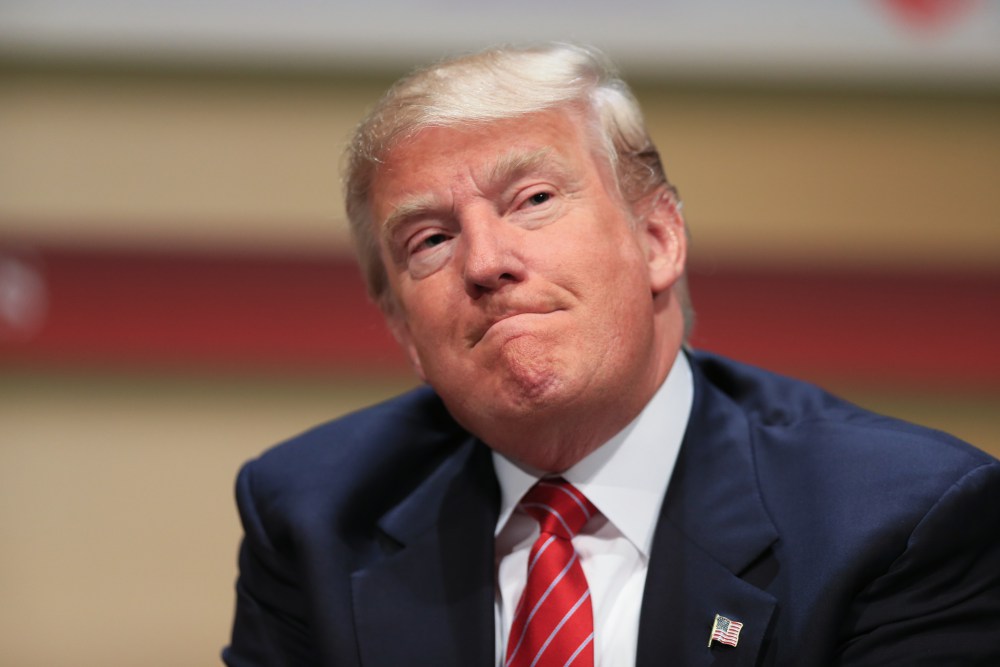
Republican presidential candidate Donald Trump is accusing rival Ted Cruz of stealing the Iowa caucuses and is demanding a do-over. On his official Twitter account Wednesday, Trump said: “Based on the fraud committed by Senator Ted Cruz during the Iowa Caucus, either a new election should take place or Cruz results nullified.” He based his claim of fraud largely on developments that had been known for days and had not stopped him from congratulating Cruz on his victory Monday night. The Cruz campaign had no immediate response. Trump tweeted earlier: “Ted Cruz didn’t win Iowa, he stole it. That is why all of the polls were so wrong and why he got far more votes than anticipated.” The inflammatory accusation marked a reversal for Trump, who on Monday night delivered a concession speech thanking Iowans for his second-place finish and congratulating Cruz. On Tuesday night in New Hampshire, he told reporters he was “very happy with what happened in Iowa.” But by Wednesday, Trump was laying out a list of accusations. He said Cruz had told Iowans that “Trump was strongly in favor of ObamaCare and ‘choice’ – a total lie!” Trump says he would repeal President Obama’s health care law if he’s elected. He used to support abortion rights, but changed. He pointed to a mailer sent by the Cruz campaign that was headlined “voting violation” and resembled an official notice. The mailer showed recipients their history of voting or not in past caucuses, along with the turnout record of their neighbors, and drew complaints from Iowa’s secretary of state. And Trump called out Cruz backers for circulating a false rumor Monday night that Ben Carson was dropping out of the race as caucusing was underway. “Many people voted for Cruz over Carson because of this Cruz fraud,” Trump wrote, suggesting the efforts may have given Cruz a winning edge. Iowa Rep. Steve King, a national co-chairman of Cruz’s campaign, wrote on Twitter Monday evening: “Looks like (Carson) is out. … Skipping NH & SC is the equivalent of suspending. Too bad this information won’t get to all caucus goers.” Carson has called the comments “dirty tricks.” Cruz spokesman Rick Tyler told CNN on Wednesday that Cruz apologized personally to Carson for the mistake. He said the Cruz team “as a campaign” never alleged Carson was dropping out. “It may be that some of the surrogates or some of our caucus precinct captains … went too far,” Tyler told CNN. If so, he added, “that was in error, that was wrong.” Trump’s Twitter reaction to his Iowa showing strayed significantly from his public comments on several morning TV shows Wednesday and at a rally on Tuesday night. Asked about Cruz at a press conference before the rally, Trump said Cruz had insulted Carson and Iowans but would not say whether he thought the Texas senator had run a dirty campaign. “I don’t know, I can’t tell you yet,” he said. But Trump campaign manager Corey Lewandowski was pointed on the matter Wednesday. “What Senator Cruz did to Ben Carson was a disgrace and an insult to Doctor Carson and the process,” he said. “What Senator Cruz did to the voters of Iowa was also a disgrace in regard to their phony voter violation form. Additionally, they misrepresented Mr. Trump and unfortunately this happens all the time with crooked politicians.” Asked whether the campaign planned to file a formal complaint, he said: “Wait and see.” Officials from the Iowa Republican Party did not respond immediately to questions about their process for handling complaints like Trump’s. Republished with permission of the Associated Press.
Rick Santorum putting his presidential campaign schedule on hold
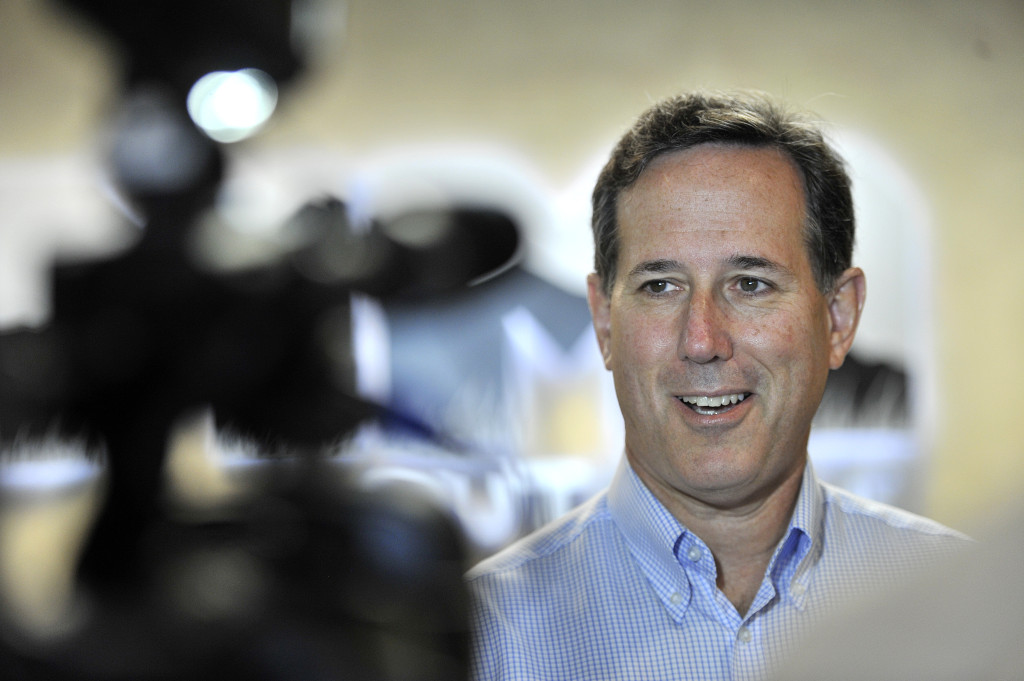
Republican presidential candidate Rick Santorum’s campaign schedule is on hold, according to the director of his South Carolina campaign. Jon Parker says the former Pennsylvania senator planned a lengthy tour of South Carolina beginning this week ahead of the Feb. 20 primary that follows New Hampshire. Parker could not confirm whether Santorum is considering abandoning his bid altogether after finishing 11th out of 12 candidates in the Iowa caucus, saying only, “I’m hopeful to get the tour cranked back up soon.” According to CNN, Santorum will announce his withdrawal from the campaign tonight. In 2012, Santorum won Iowa in 2012 and finished third in South Carolina. Republished with permission of the Associated Press.
In conservative rebuttal, Jim Zeigler urges Bentley admin to “think outside the tax”
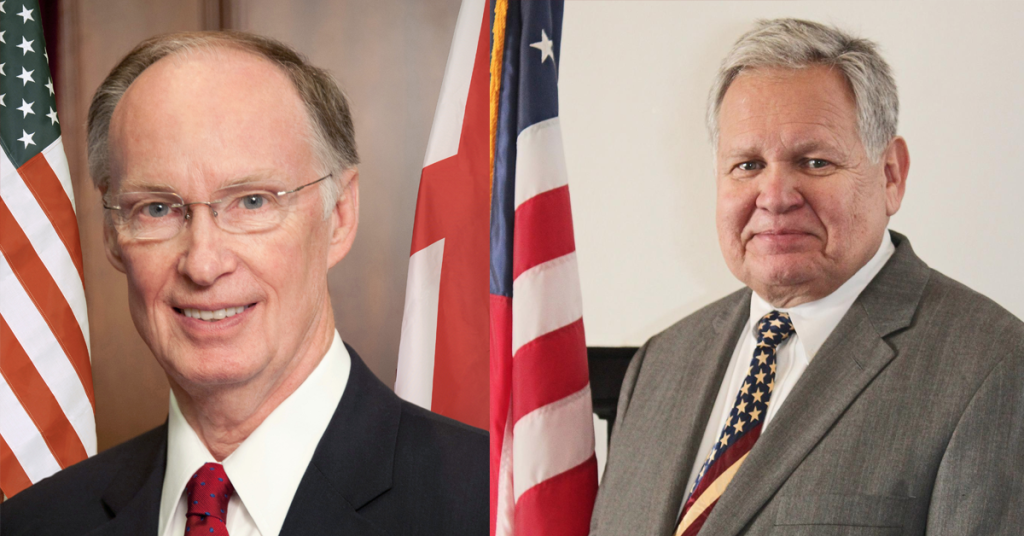
As promised, State Auditor Jim Zeigler delivered an unusual extra rebuttal to the annual State of the State address, delivered by Gov. Robert Bentley to the Legislature Wednesday morning. Zeigler got straight to his point with a cutting introduction “The State of the State is a mess,” said Zeigler. “This could not have been made more clear as Governor Bentley once again betrayed Alabama taxpayers with plans for bigger government and increased spending as a solution to our problems. “This embrace of Democrat principles comes in the wake of a tumultuous 2015 in which Gov. Bentley disappointed Alabamians with flip-flopping and repeated betrayal of our values and his campaign promises,” he intoned. Zeigler faintly praised the governor for not proffering any tax increases, but he also said he failed to put forward ideas for “new efficiencies, cost-savings, and better ways to get things done for less money,” ideas Zeigler prides himself on as Alabama’s “Waste Cutter.” Surviving the $225 million budget deficit currently projected without increasing revenues will require a strategy Zeigler calls “thinking outside the tax.” Zeigler enumerated several tactics for implementing his mantra including reducing Medicaid payments by allowing seniors to receive treatment in their homes, reduce prison populations by allowing offenders to work instead of serving prison time, and change funding formulas to allow state parks to fund their own operation. Zeigler agreed with Bentley on opposing the acceptance of Syrian refugees, but hammered away at usual disagreements involving official history, college tuition, and a general attitude about the size and scope of government. “The Legislature has before it a bill to enable the Governor to appoint a ‘Taxpayer’s Advocate.’ We are 100 percent against having the Governor make this appointment,” Zeigler said at one point in the speech. “To have Governor Bentley appoint a Taxpayer’s Advocate is like having the fox guard the henhouse.” Zeigler continued in a hard-right vein calling for an end to abortion and gun control, before ending on a painful note for the administration, the failure of its payroll software which allowed thousands of payments to vendors to fall into arrears. “The State of the State is a mess,” Zeigler concluded. “The taxpayers ask the legislature to exercise their constitutional checks and balances with the strongest steps to right the ship of state.” See the full text of Zeigler’s speech here.
Budget calls for un-earmarking education funds to square General Fund
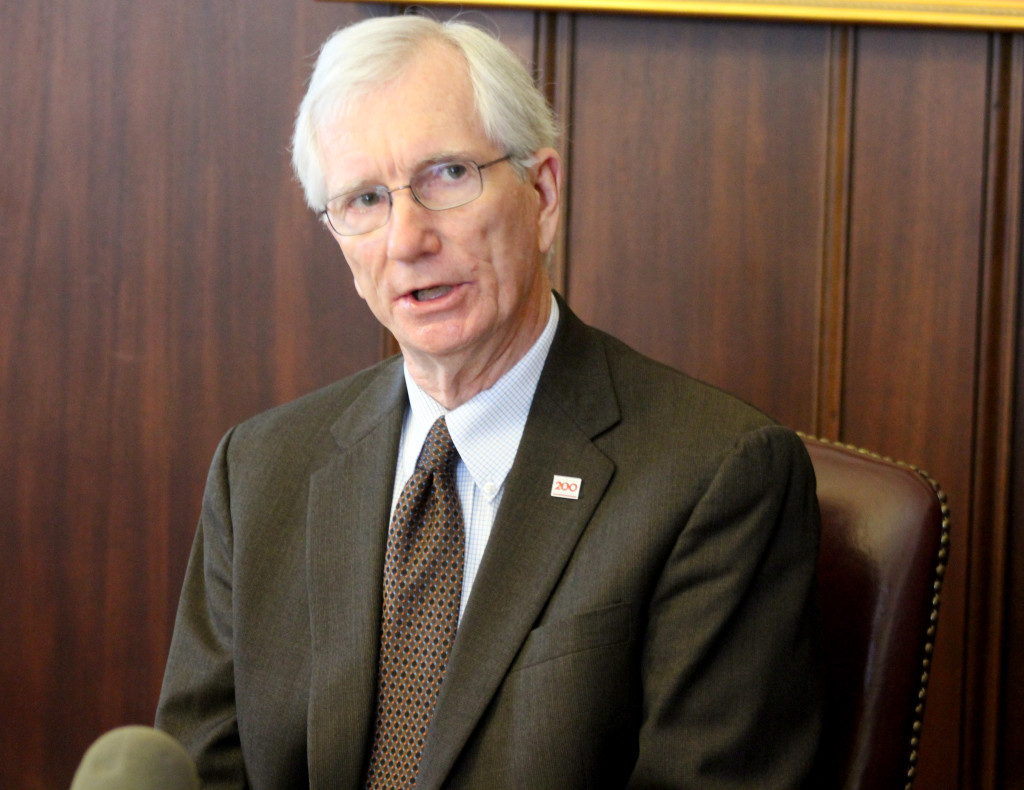
Alabama Finance Director Bill Newton held a newss conference Tuesday to break down proposals from Gov. Robert Bentley concerning this year’s General Fund and Education Trust Fund (ETF) budgets. The governor proposed un-earmarking $181 million from the ETF, $150 million from use taxes and $31 million from insurance premium taxes, in an effort to square the General Fund. This year’s General Fund budget will total $1.93 billion, up from last year’s $1.85 billion budget, and provide a $100 million increase to Medicaid, a $70 million increase to the Department of Corrections, a $10 million increase to the Alabama Department of Public Health and a $5 million increase for the Department of Human Resources. The budget also calls for a 2.5 percent decrease in funding for the legislative branch, district attorneys, the finance department and the forensic science department, as well as a 5 percent decrease for agriculture and industry, military and the Department of Youth Services. The proposal also includes a 2 percent cost of living raise for education and state employees, with level funding for state employees’ healthcare at $825 monthly for each employee. Newton also addressed Bentley’s plan to close all of Alabama’s prisons and open four new facilities, saying the “significant savings” from eliminating the inefficient facilities would pay for the cost of construction, which is slated to be completed within three years. This year’s ETF will have an appropriation of $6.31 billion, up from last year’s $5.95 billion, of which the $181 million moved to the General Fund will be made up from the Budget Stabilization Fund, one of the state’s two savings accounts. K12 programs in the state will see an increase to $3.99 billion from last year’s $3.84 billion and an increase for universities from $1 billion last year to $1.08 billion this year. A new line item includes $40 million to fund the governor’s proposal to provide broadband internet to rural parts of the state. Additionally, an increase of more than $5 million will be allocated for textbooks, providing about $60 per student.
Indicted House Speaker Mike Hubbard asks for dismissal of ethics charges
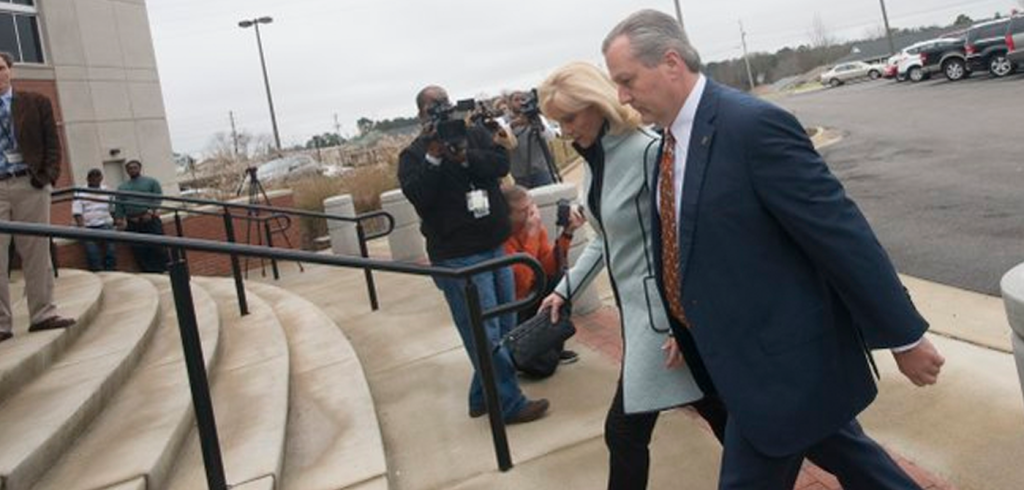
Indicted House Speaker Mike Hubbard on Tuesday asked a judge to dismiss ethics charges against him after a campaign consultant said a state prosecutor gave him information about the investigation and he used those details to try to damage Hubbard politically. Hubbard’s defense made the accusation in a motion filed Tuesday night. Political consultant Baron Coleman said in an accompanying affidavit that he had between 50 and 100 conversations with prosecutor Matt Hart about the investigation and grand jury. Coleman said he used information from Hart to start a “whisper campaign” about the ongoing investigation while he worked for Hubbard’s primary election opponent in the 2014 election. He said that included the identities of people testifying before the grand jury and assurances that the investigation would result in Hubbard’s indictment. The surprise filing came shortly after a judge struck a blow to Hubbard’s defense by refusing to dismiss the ethics case against the powerful Republican from Auburn. Hubbard lawyer Lance Bell wrote in the motion that the affidavit shows evidence of “gross misconduct” in the case. Coleman, who is an attorney, in a statement said he came forward after being approached by law enforcement and speaking with a lawyer about his ethical obligations as a member of the Alabama State Bar to disclose what happened. “I draw no conclusions about what, if anything, that happened in this case may be unlawful or unethical. Rather, I merely distilled into an affidavit some information for the judge to review and consider,” Coleman wrote. Mike Lewis, communications director for the attorney general’s office, said he could not comment on the filing because of a judge’s recently issued gag order prohibiting communication with the media. The filing was a surprise because Coleman and Hubbard had been on the opposite side of campaigns and political issues. Lee County Circuit Judge Jacob Walker on Tuesday refused to dismiss the case against Hubbard, rejecting Hubbard’s claims that the state ethics law was unconstitutional and that he was being subjected to a selective prosecution. Hubbard faces 23 felony ethics charges accusing him of using his position as speaker, and past position as GOP party chairman, to benefit his clients and businesses by lobbying the governor’s office, taking legislative action and soliciting clients and investments from major political players. Hubbard has maintained his innocence and argued that the transactions were legal. Hubbard, in seeking to dismiss the case, had argued that he had a free speech right to lobby and speak out for his clients. “Certainly, the First Amendment doesn’t protect such a conflict of interest,” Walker wrote in the order. Walker also rejected Hubbard’s claims that he was not subject to the state’s ethics law as a political party chairman, a position that is not elected, or paid, by taxpayers. Hubbard is scheduled to go to trial March 28, but the trial could be delayed if the defense appeals those rulings. Republished with permission of the Associated Press.
Obamacare primary cause for Blue Cross of Alabama’s predicted $135 million 2015 loss
Blue Cross and Blue Shield of Alabama is expecting to lose more than $135 million in 2015, thanks in large part to Obamacare. According to a statement obtained by AL.com from BCBS-AL spokeswoman Koko Mackin, “Beginning in 2014, the ACA eliminated health underwriting and waiting periods for pre-existing conditions allowing individuals to buy healthcare coverage regardless of their health condition. Company data indicates that many of our new individual ACA customers have used an extensive amount of medical services, which is causing total claims paid and their related operating expenses to exceed premiums.” Year-end final figures for 2015 will not be announced until the beginning of March. But the insurance company has already tallied losses through the end of October, totaling $109 million. Because of its enormous losses, BCBS-AL raised statewide rates by an average of 28 percent for the 2016 Obamacare policies now being sold. According to the statement, they have also eliminated platinum and some gold-level plans, as well as slightly shrunk its workforce. It remains to be seen how effective these measures will be in side-stepping future losses. About 11 million Americans, including nearly 200,000 from Alabama, get health insurance through the exchanges created by the Affordable Care Act.
