
George W. (finally) to campaign for Jeb Bush
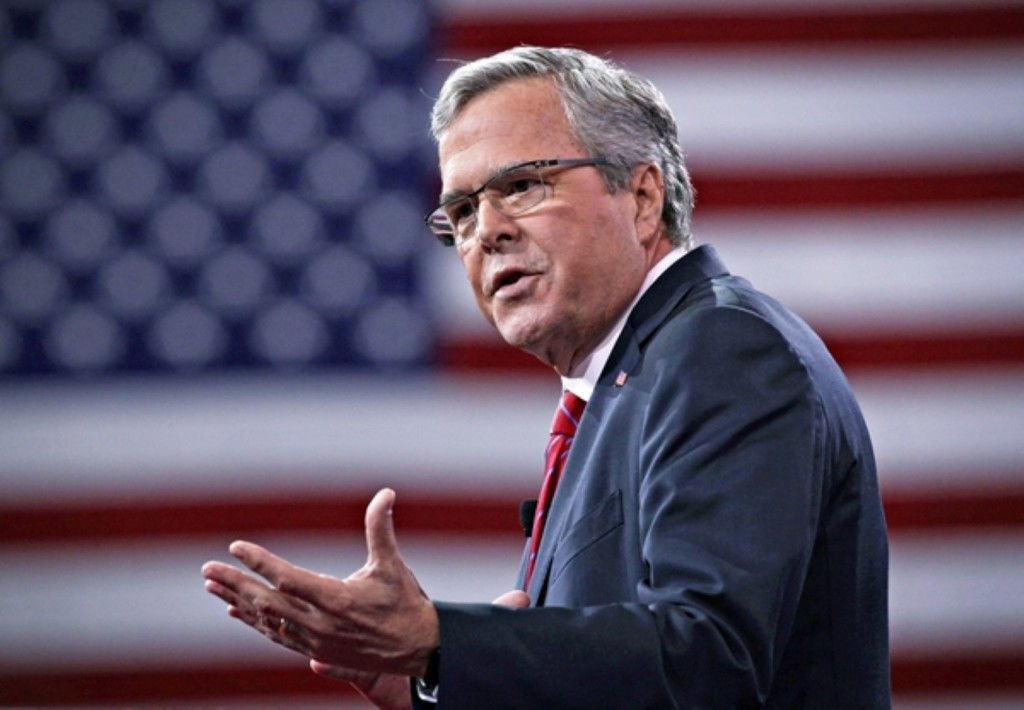
Jeb Bush’s South Carolina director says the presidential candidate may finally appear on the campaign trail alongside his brother, former President George W. Bush. Brett Doster says “George W. Bush is the most popular Republican alive” and that the GOP in South Carolina is “eager” for the visit. South Carolina holds a Feb. 20 primary, 11 days after New Hampshire. Jeb Bush has a large organization in the state, which gave his father and brother hard-fought primary victories on their paths to the 1988 and 2000 nominations, respectively. Doster says plans are not final, but notes that George W. Bush is popular among a cross-section of important South Carolina GOP groups, from evangelical Christians to the military community and large veterans presence. Republished with permission of the Associated Press.
Ted Cruz has raised $3 million since winning Iowa caucuses
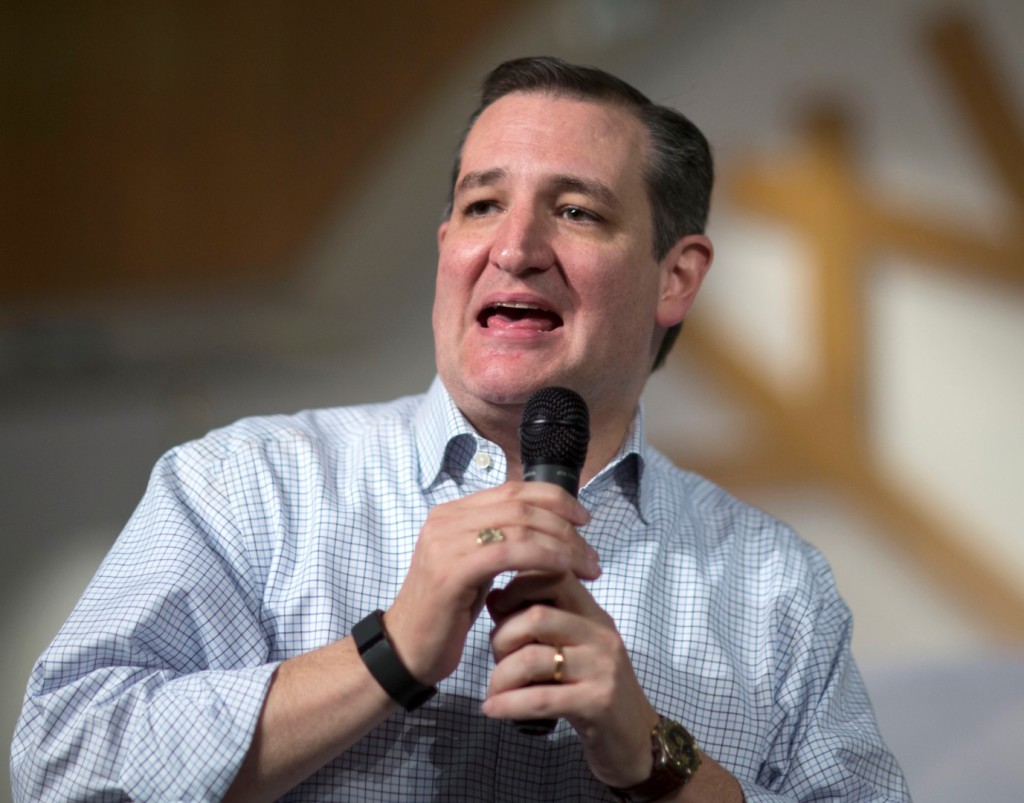
Republican Ted Cruz’s presidential campaign has raised $3 million since winning the Iowa caucuses on Feb. 1. That’s according to Cruz campaign manager Jeff Roe, who tweeted out the new fundraising numbers on Thursday. Roe says the Cruz campaign has raised $10 million overall since the beginning of the year. That includes 182,000 individual contributions averaging $55 each. Cruz was enjoying a big fundraising advantage over his Republican rivals even before the new numbers were released. His campaign closed the year with almost $18.7 million in the bank. That was roughly as much as Marco Rubio, Jeb Bush, John Kasich and Chris Christie combined. Republished with permission of the Associated Press.
Ben Carson downsizing his campaign staff

Republican presidential candidate Ben Carson is downsizing his campaign staff amid following his fourth-place finish in the Iowa caucuses, a spokesman confirms. Larry Ross gave no details on how many staffers are being laid off or how many will remain, but said the personnel cuts “were made to wisely and prudently position the campaign for the coming months.” Carson last month accepted the resignation of his finance chairman, Dean Parker, who had been criticized for his spending on salaries and consultants. Carson’s campaign paid about two dozen staffers during the last three months of 2015, newly released campaign finance records show. Those salaries totaled about $250,000, among the lower end of what campaigns had spent on payroll in recent months. Republished with permission of the Associated Press.
Student government presidents write open letter to state lawmakers
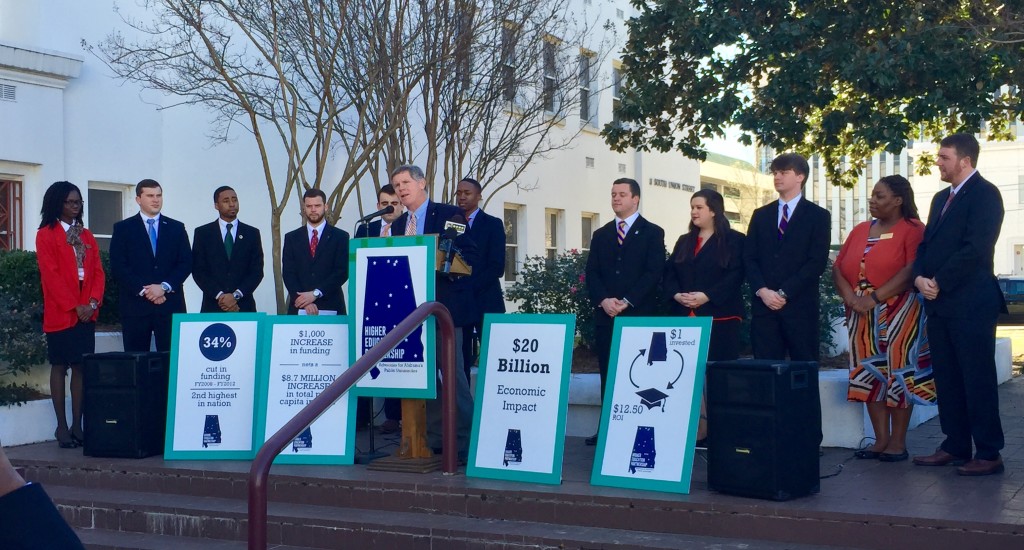
Student Government Association (SGA) presidents from universities across the state joined in writing an open letter to lawmakers this week in an effort to emphasize the importance of higher education. According to a newss release, SGA presidents collaborate through the University Student Presidents Council, organized under the Alabama Higher Education Partnership (AHEP), to advocate for the state’s public universities. Leaders held a joint news conference on Thursday to discuss the letter, which urges state legislators to take into account recent findings by the University of Alabama Education Policy Center study. The study notes that Alabama’s public universities have endured a 34 percent decrease in funding since 2008, the second-deepest cuts in the country, and adds that “for every $1,000 increase in state higher education funding there is a reciprocal $8.7 million increase in total per capita income.” “My peers from around the state have come together today to stand in solidarity with one another, because we understand the tremendous impact our public universities have on the well being of Alabamians,” University of Alabama SGA President Elliot Spillers said in the release. “Because over 85 percent of the Education Trust Fund’s revenue comes from income and sales tax, we know that increasing income-earnings potential for Alabamians is one of the key ways we can increase investment opportunities for all of education: Pre-K through PhD,” Auburn University SGA President Walker Byrd said. Gordon Stone, executive director for AHEP, noted that a letter coming from the elected officials of Alabama’s 14 public universities sends a strong message as leaders descend on Montgomery for the legislative session. “They are elected by their peers,” Stone said. “For them to be able to speak from that perspective is an important voice.” Stone noted that this is only the organization’s first attempt at raising awareness on the importance of higher education this year, noting that Higher Education Day, which is scheduled for Feb. 25, is one of the group’s biggest advocacy efforts. “It’s not a one-shot attempt on our part,” Stone said. “We will continue to do this over the course of this year.” Stone noted that, while funding is integral, the key message his organization and the SGA presidents are trying to get out is that either by “direct or close indirect” connections, higher education impacts every facet of life in the state, from healthcare to infrastructure. “We want to make sure the legislators keep in mind that public universities are integral to success,” Stone said. “We hope they’ll recall and put some value to what we’re showing them today, which is the value of our public universities. It’s not about specific legislation at this point as much as it is helping everybody involved in public policy to understand the importance of public education.”
Alabama joins amicus brief supporting tighter standards for abortion clinics
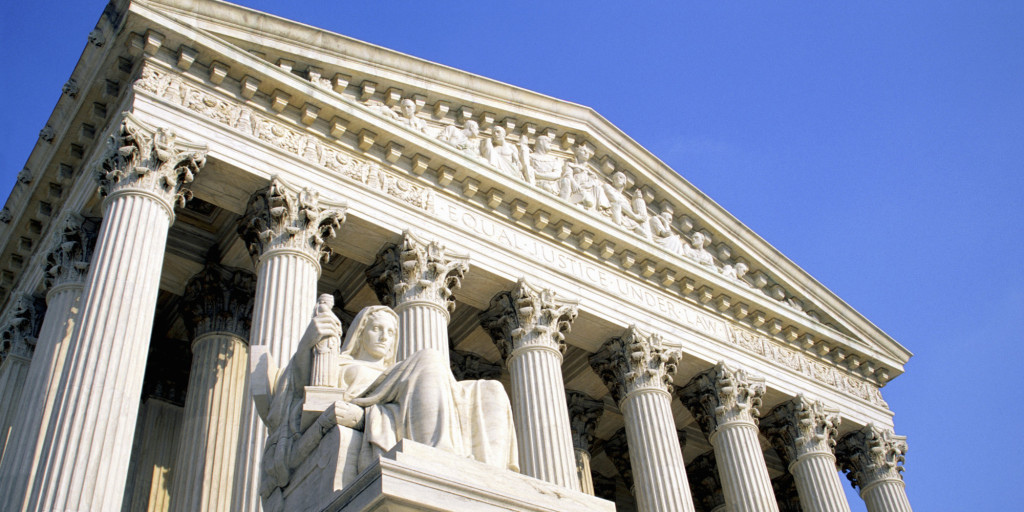
Attorney General Luther Strange has signed on to a federal amicus brief on behalf of Alabama that seeks to bolster the legal case for requiring doctors at abortion clinics to have admitting privileges to a hospital in order to perform pregnancy terminations. Alabama becomes to 24th U.S. state to stand with Texas officials in “Whole Woman’s Health v Cole,” a case challenging the state’s law requiring doctors to meet the higher emergency standards. Alabama’s own law to that effect was previously struck down by U.S. District Judge Myron Thompson, ruling it unduly restricts a woman’s constitutionally guaranteed access to the procedure. Alabama is bolstered by recent decisions in favor of Texas’ right to mandate admission privileges, and many conservative attorneys general hope the trend will allow their own state laws to remain on the books. The states are pleading their case in an amicus or “friend of the court” brief, filed to provide information to the justices of the U.S. Supreme Court they hope will inform their opinion in the case. “There is no justification for affording preferred treatment to abortion rights by unleashing on each State the unwieldy inquiry of whether clinic regulations permit adequate access to abortions,” the state’s maintain in their brief hoping to sway the court. “The Court has always recognized the States’ interest in regulating health and safety – for all patients, including women seeking abortions. It has identified as obvious areas for state oversight, the regulation of doctors and their staff, of medical facilities, and of emergency plans,” it reads. The other states joining with Texas and now Alabama are Arizona, Arkansas, Florida, Georgia, Idaho, Indiana, Kansas, Louisiana, Michigan, Mississippi, Montana, Nebraska, Nevada, North Dakota, Ohio, Oklahoma, South Carolina, South Dakota, Tennessee, Utah, West Virginia, and Wyoming.
Email insights: Jonathan McConnell campaign says new survey shows Richard Shelby in danger
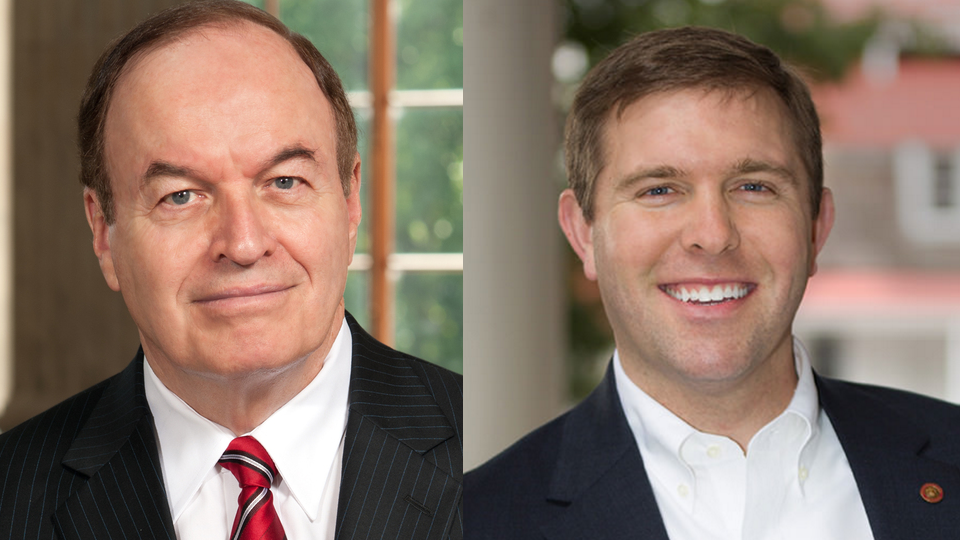
Senate-hopeful, 33-year-old Marine veteran Jonathan McConnell‘s Senate campaign sent an email Thursday saying longtime incumbent Richard Shelby is likely headed to a runoff. That is, based off a recent survey the campaign conducted Jan. 29 to 30, 2016 among 1,299 likely Republican primary voters. According to the email, the campaign has made three main takeaways based on the survey’s findings: Richard Shelby has spent millions to lose ground; Shelby’s support is collapsing while McConnell’s is growing; and Richard Shelby will not break 50 percent on March 1 and cannot avoid a runoff. Here’s the full text of the email: To: Interested Parties From: James Harris, General Consultant Date: February 4, 2016 Last week, our campaign conducted its most recent survey of the campaign for Alabama’s Senate seat. What we have found is incredible – Senator Shelby has begun to lose serious ground in the battle for the US Senate seat, despite spending $3 million so far on broadcast and cable television – more than any incumbent Senator so far this cycle. Senator Shelby now sits just barely above the threshold to avoid a runoff, and he is moving in the wrong direction. Based on this survey, we have come to 3 key conclusions about this race: (1) Richard Shelby has spent millions to lose ground; (2) Shelby’s support is collapsing while McConnell’s is growing; and (3) Richard Shelby will not break 50% on March 1 and cannot avoid a runoff. RICHARD SHELBY HAS SPENT $3 MILLION ON ADS – AND LOST 9 POINTS. Richard Shelby is vulnerable, and he knows it. Hence why, as the Cook Political Report noted, he has spent more money on ads than any candidate so far this cycle. Shelby’s ballot share has plummeted nine points after just 3 weeks of McConnell advertising. Now, he stands at 55% on the ballot – barely enough to avoid a runoff, with 4 weeks left until Primary Day. All this, DESPITE the fact that he has spent more than $3 million on television advertising in an attempt to improve his position. BALLOT 14-Oct 16-Dec 30-Jan SHELBY 53% 64% 55% Someone else 22% 15% 29% Undecided 26% 21% 16% On the other hand, McConnell is increasing his ballot share dramatically. Since December, he has gained 10 points on the ballot test, while Shelby has lost 9 points. McConnell is clearly the strongest candidate against Shelby in the race and the only candidate positioned to advance to the April 12 runoff election. BALLOT 16-Dec 30-Jan Shelby 64% 55% McConnell 15% 25% McGill 3% 2% Martin 2% 1% Bowman 1% 1% Undecided 21% 16% SHELBY’S IMAGE AND SUPPORT HAVE ALREADY BEGUN TO COLLAPSE WHILE MCCONNELL’S IS GROWING. As we noted two weeks ago in our last survey, Shelby’s numbers are soft and easily susceptible to collapse once voters learn about his true record. And in just two weeks, we’ve started to see that collapse in full motion: SHELBY IMAGE 14-Oct 16-Dec 30-Jan FAVORABLE 61% 62% 56% UNFAVORABLE 17% 19% 27% NO OPINION 22% 18% 17% McConnell’s image, however, is growing rapidly. After just $250,000 in paid media, McConnell has more than quintupled his favorability ratings and is now better than 2-1, with almost half of Alabama Republicans having an opinion of him. MCCONNELL IMAGE 16-Dec 30-Jan FAVORABLE 5% 28% UNFAVORABLE 12% 12% NO OPINION 83% 60% CONCLUSION: SHELBY WILL BE FORCED TO A RUNOFF – WHERE ALL BETS ARE OFF Shelby is now in a precarious position. After spending more than $3 million on television advertising, Shelby has lost 9 points of ballot share. He is now just 5 points above the threshold for a runoff, and heading in the wrong direction. Historically, these races develop within the last 10 days, as we’ve seen in countless GOP primaries before. McConnell is currently the number 2 candidate against Shelby, earning 22% of ballot share, nearly double the last survey. He is incredibly well positioned to force Shelby to a runoff on March 1st and emerge as the lone Shelby alternative in the April 12 run-off election. Survey conducted January 29 through January 30, 2016. 1,299 likely Republican Primary voters participated in the survey. Survey results weighted to reflect expected turnout demographics for the 2016 Republican Primary Election. Margin of Error is +/-2.7%. Totals do not always equal 100% due to rounding. McConnell will face Shelby in the Republican Primary on March 1.
Pro-Islamic organization calls for meeting with Gov. Robert Bentley after “insensitive” comments
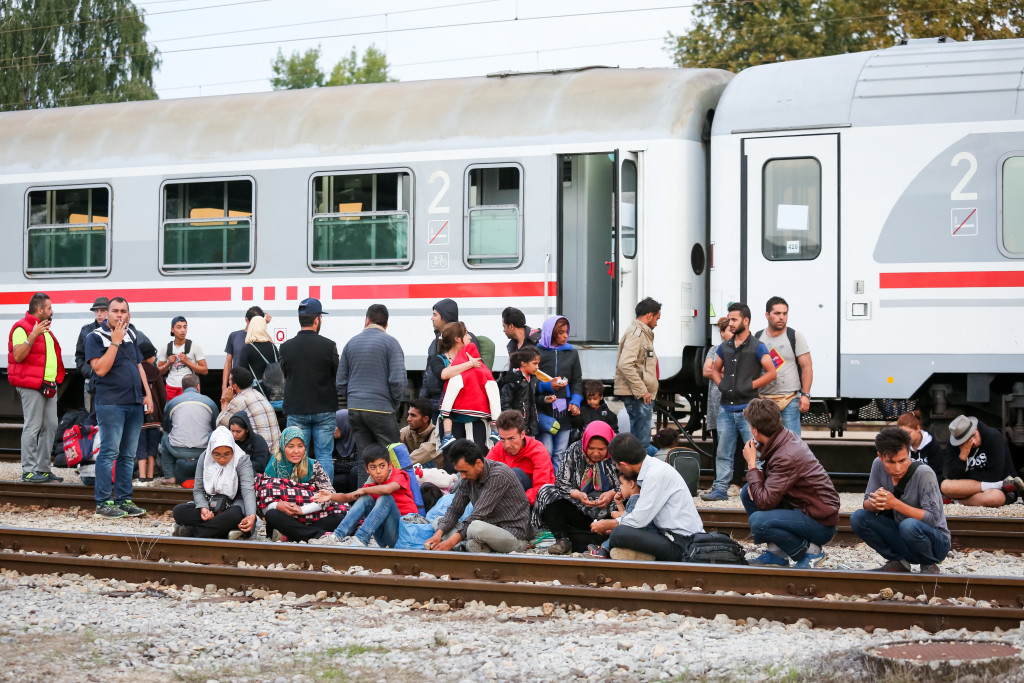
The Alabama Chapter of Council on American-Islamic Relations (CAIR-Alabama) Thursday called for a meeting between Gov. Robert Bentley and representatives of Alabama’s Muslim community to discuss the governor’s remarks they said were “inflammatory” and “insensitive” in his Tuesday night State of the State address. During his speech, Bentley discussed the failure of the federal government to follow the law in consulting with states on the refugee resettlement program — an issue he’s been fighting for months. “The outdated program – which predates any recent acts of radical terrorism – allows refugees from the most radical nations to enter countries including the U.S. with little known about them,” Bentley said during his address. “Among those refugees are those who would commit the most violent, deadly and extreme acts of terrorism. When 130 people were slaughtered, in Paris at the hands of radical Islamic terrorists, among those killers was a refugee from a terrorist nation.” Khaula Hadeed, CAIR-Alabama’s executive director, said the governor’s statements marginalize an entire community. “Governor Bentley’s labeling of an entire Muslim-majority nation as ‘terrorist’ effectively equates Islam with terror and promotes prejudice,” said Hadeed in a news release. “The use of inflammatory language that marginalizes an entire community reduces one of the worst humanitarian disasters in recent human history to the status of a political football. We find such terminology insensitive and inappropriate. “Alabama has a large Muslim population, including a thriving Syrian-American community making substantial contributions to improving the lives of the people of our state. Using stereotypical terms that paint a diverse multicultural, multiethnic, multiracial Muslim community with such a broad brush is derogatory and dehumanizing.” CAIR is America’s largest Muslim civil liberties and advocacy organization. Its mission is to enhance the understanding of Islam, encourage dialogue, protect civil liberties, empower American Muslims, and build coalitions that promote justice and mutual understanding.
Latest bills to hit Alabama Legislature address Common Core, alcohol and tax breaks
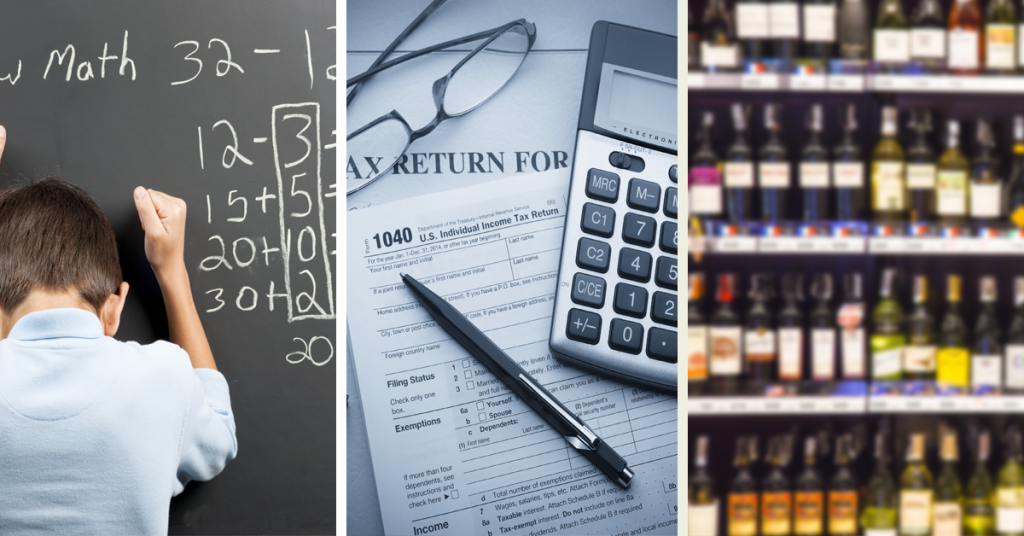
With the 2016 legislative session under way, a slew of bills have been filed and are making the rounds through various committees of the Alabama Legislature. Several of those bills are aimed at tackling House and Senate Republicans’ recently announced legislative agendas, including bills to add Alabama’s status as a “Right to Work” state to the state’s Constitution (HB37), a bill declaring the sell of fetal tissue illegal (HB45), tax credits for state ports (HB34) and small businesses (HB36) and a bill aimed at providing broadband Internet to rural areas of the state (HB41). Rep. Alan Boothe (R-Troy) has filed HB46, which will allow Alabama distilleries to sell up to 750 milliliters, commonly referred to as a “fifth,” to customers for off-premise consumption annually. The bill comes after the Alabama Alcohol Beverage Study Commission made several recommendations a few weeks ago to put the state on an even keel with other states. Rep. Bill Poole (R-Tuscaloosa) has offered a bill, HB47, that would allow for warrantless arrests of people found trespassing on school property in “certain conditions.” Current law states that officers may arrest citizens without a warrant in multiple cases, including if the officer has “reasonable cause to believe” a felony or misdemeanor has been committed. This bill simply adds trespassing on educational premises to that clause. In the Senate, Sen. Rusty Glover (R-Mobile) has filed a bill, SB60, which will repeal Common Core curriculum standards in the state and revert back to Math and English courses used before the adoption of the new standards. Further, the bill would restrict the Alabama Department of Education from “adopting or implementing” any national standards or “requiring the use of any assessments” associated with a national program. Contrary to the call in Glover’s bill, Senate Pro Tem Del Marsh (R-Anniston) stated during Wednesday’s agenda announcement that curriculum decisions should be left up to the state school board and, should the repeal get through committee, there is likely not enough votes to pass it. The legislature will reconvene Tuesday at 9 a.m. when those bills which have made it through committee, including two child abuse sentencing bills addressed in the Senate Judiciary Committee Wednesday, will inch closer to seeing their day on the floor.
Marco Rubio looks to NH to peg himself as a Republican for all
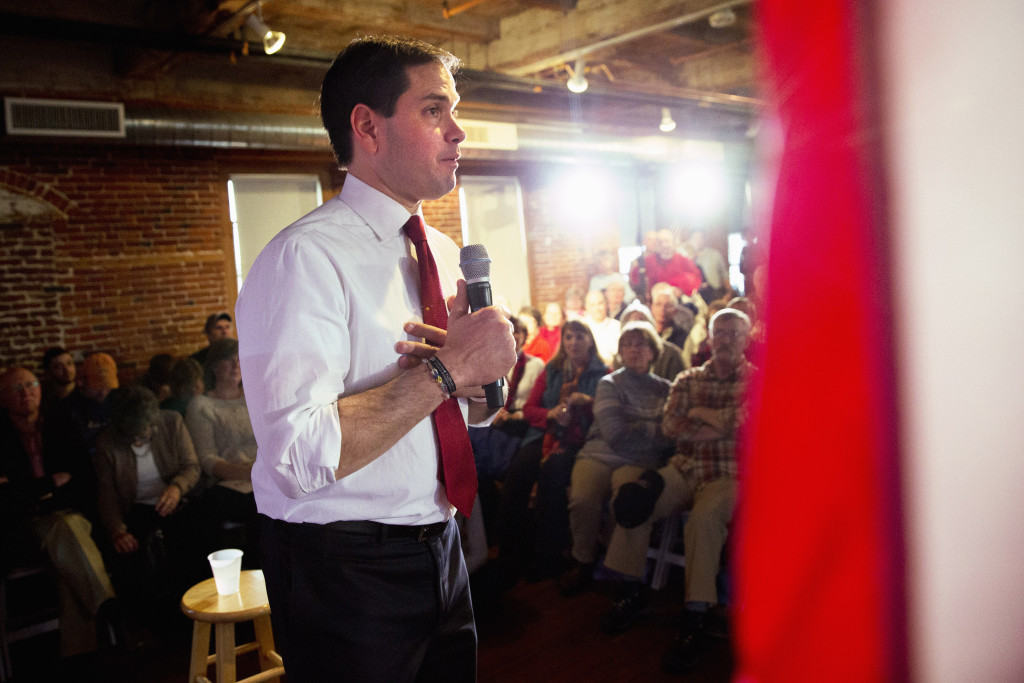
Republican presidential candidate Marco Rubio is using every bit of momentum his campaign received from the Iowa caucuses to show New Hampshire voters that he – not his competition – is the Republican for all Americans. Rubio describes caucus winner Ted Cruz as chronically “calculating” and points to the failure of others to pull in higher numbers as testament to their inability to lead. He calls New Jersey Gov. Chris Christie a sore loser after Christie accused him of being the “boy in the bubble” who won’t take questions. Rubio’s attacks on his opponents come with one glaring exception: billionaire Donald Trump, who edged him for a second-place finish in Monday’s caucuses. Rubio has reasoned that Trump has unveiled insufficient policy, and therefore, hasn’t given him reason enough to criticize him, even though they disagree on several fundamental issues. Instead, Rubio appears to be biding his time, quietly courting his rivals’ potential voters. By doing so, he’s pursuing a course of consolidation. “He needs to coalesce the vote before he can challenge Trump,” said Republican pollster Greg Strimple, who is unaligned with any of the campaigns. He said he has been impressed with what he calls the Rubio team’s “message and strategic discipline.” Rubio captured headlines with his strong third-place finish in the leadoff contest Monday, finishing behind Cruz – the heavy favorite among Iowa’s disproportionately influential evangelical conservatives – and less than a percentage point behind Trump, who had seesawed with Cruz between first and second place in most preference polls in Iowa. If Rubio tops Cruz in New Hampshire’s primary on Tuesday and finishes ahead of candidates such as former Florida Gov. Jeb Bush and New Jersey Gov. Chris Christie, he will have more evidence to support a point he’s been hammering for weeks: He is the candidate to unite the party. “When I am our nominee I can bring this party together,” Rubio told more than 300 people at a campaign event Wednesday in Bow, New Hampshire. “We cannot win if we are divided against each other.” While Republican voters in Iowa skew more toward the evangelical conservative, the New Hampshire Republican primary often draws independents and more fiscally conservative voters. Rubio’s campaign is hoping he can show support in two states with very different electorates as evidence of a campaign with longevity and fortitude. With his wife and four children in tow, Rubio maintained a dizzying schedule in New Hampshire this week, squeezing every drop of energy out of his better-than-expected finish in Iowa. By Tuesday, a sleep-deprived Rubio kicked off the day in New Hampshire doing 15 television and radio interviews to local stations. Rubio’s bus was rolling up to the lakes region north of Concord on Wednesday on a schedule of a dozen public appearances between Tuesday and Saturday’s last pre-primary debate at St. Anselm’s college in Manchester. While Rubio was criticizing various rival candidates at times during the interviews, Trump’s name never came up. When asked about it, he said Trump has laid out few plans, and that he had no public policy quarrel with Trump. “So when the time comes and it’s appropriate, we’ll do so,” he said. Still, Trump differs sharply from Rubio on immigration policy by supporting the deportation of all people in the U.S. illegally. Rubio supports deporting “criminal aliens” but is open to a process by which people in the country illegally may stay after immigration security is addressed. On Tuesday, a woman asked Rubio his opinion of Trump’s public mockery of a New York Times reporter who is disabled. “I think we all, obviously, not just disagree with it, but find it distasteful,” Rubio answered quietly. “I think he’s been called out for that repeatedly and I think people see it for what it is.” It’s part of a pattern of careful treatment of Trump by Rubio. By contrast, former Florida Gov. Jeb Bush released a full-page newspaper ad attacking Trump and was airing a two-minute campaign ad in New Hampshire featuring clips of Trump’s on-air insults. Republished with permission of the Associated Press.
Hillary Clinton, Bernie Sanders spar over who’s more liberal
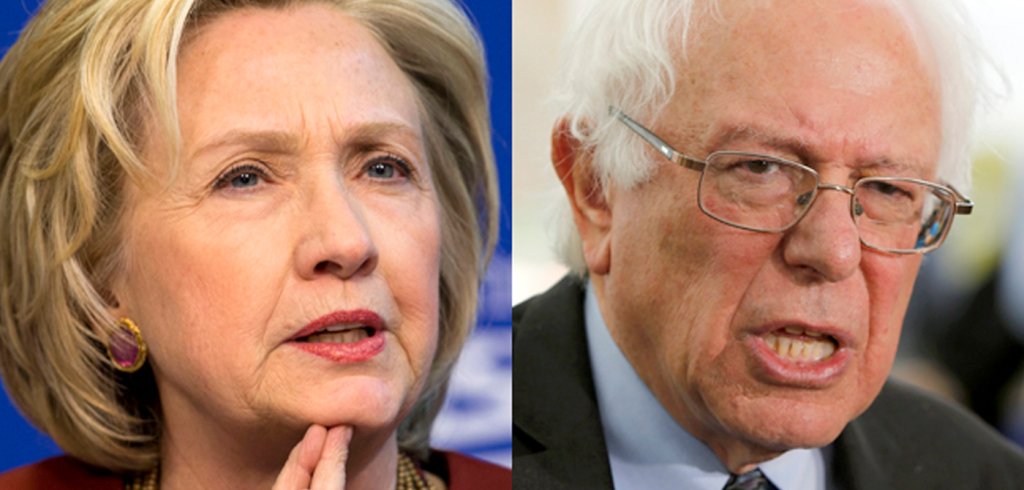
Vermont Sen. Bernie Sanders opened up a new line of attack in the Democratic presidential primary on Wednesday, putting Hillary Clinton on the defensive over her liberal credentials just days after she eked a slim victory in the Iowa caucuses. Sanders, who has a sizable lead in the upcoming New Hampshire primary, rattled off a list of issues where Clinton isn’t in sync with the liberal wing of the party, including trade, Wall Street regulation, climate change, campaign finance and the 2002 authorization of the war in Iraq. “I do not know any progressive who has a super PAC and takes $15 million from Wall Street,” Sanders said, during a candidate forum sponsored by CNN. “That’s just not progressive.” Clinton moved quickly to defend her record, saying that under Sanders’ criteria President Barack Obama, Vice President Joe Biden and even the deceased Minnesota Sen. Paul Wellstone, a champion of liberal causes, would not be considered progressive. “I know where I stand,” said Clinton. “But I don’t think it helps for the senator to be making those kinds of comparisons because clearly we all share the same hopes and aspirations for our country.” She also pushed back on charges by Sanders and his allies that she cannot be trusted to regulate Wall Street because of the millions in speaking fees she made from the industry before announcing her presidential bid. An Associated Press analysis of public disclosure forms and records released by her campaign found that Clinton made $9 million from appearances sponsored by banks, insurance companies, hedge funds, private equity firms and real estate businesses. Clinton said she was still deciding whether to run for president when she accepted the appearances “I don’t know,” she said, when asked why she was paid such a high speaking fee. “That is what they offered.” The back-and-forth on progressive credentials was the latest example of tensions between Clinton and Sanders as the race nears the Feb. 9 New Hampshire primary. The Democratic rivals are expected to appear at a debate on Thursday night and both camps have quarreled over the timing and locations of three debates planned for later this spring. Clinton has questioned Sanders’ commitment to gun control and whether his proposal to create a universal health care system might endanger Obama’s signature health care law. Sanders, meanwhile, casts Clinton as an establishment figure and an inconsistent champion of liberal causes such as the environment, trade and campaign finance reform. Speaking at a town hall meeting in Derry, New Hampshire earlier in the day, the former secretary of state called Sanders attacks on her ideology a “low blow,” before listing a series of liberal accomplishments that she described as progressive, including her work on expanding access to children’s health insurance, advocating for women and gay people and pushing for gun control measures. “We’ve been fighting the progressive fight and getting results for people for years,” Clinton said. “I hope we keep it on the issues. Because if it’s about our records, hey, I’m going to win by a landslide.” But Clinton’s team clearly sees an opening in Sanders’ comment. On Twitter, Clinton’s top spokeswoman Jennifer Palmieri compared it to the moment in 2008 when President Barack Obama said during a debate that Clinton was “likable enough,” which prompted criticism from Clinton supporters. The attack came from a comment Clinton made at a campaign event in September, when she was describing tax cuts passed under former President George W. Bush and noted that she’s occasionally been called a moderate. “I plead guilty,” she told the crowd in Columbus, Ohio. Sanders cited her words in a Wednesday evening news conference in Concord, before noting that she has done some “progressive things” like advocating for children. “This is not a low blow. There’s nothing wrong with people who are moderates. Some of my best friends are moderates,” he said. “All I was doing was repeating what she actually said.” Sanders’ razor-thin loss in the Iowa caucuses Monday, and his formidable lead in New Hampshire polls, have heightened the possibility that the two remaining Democrats will be involved in a protracted fight for the nomination. “We are in this until the convention,” Sanders told reporters on Tuesday. He said the narrow Iowa outcome showed his campaign’s ability to take on Clinton’s vast political network and address doubts among voters about his electability. Clinton acknowledged that she yet to win over broad swaths of the party, particularly younger voters. In Iowa, Sanders won 84 percent of voters under age 30 and 58 percent of those aged 30-44 according to entrance polls. “I respect the fact that I have work to do,” said Clinton. “They don’t have to be for me, I will be for them.” Republished with permission of the Associated Press.
