
Heated discussion and racial accusations fly over bill to change Taxpayer Advocate position
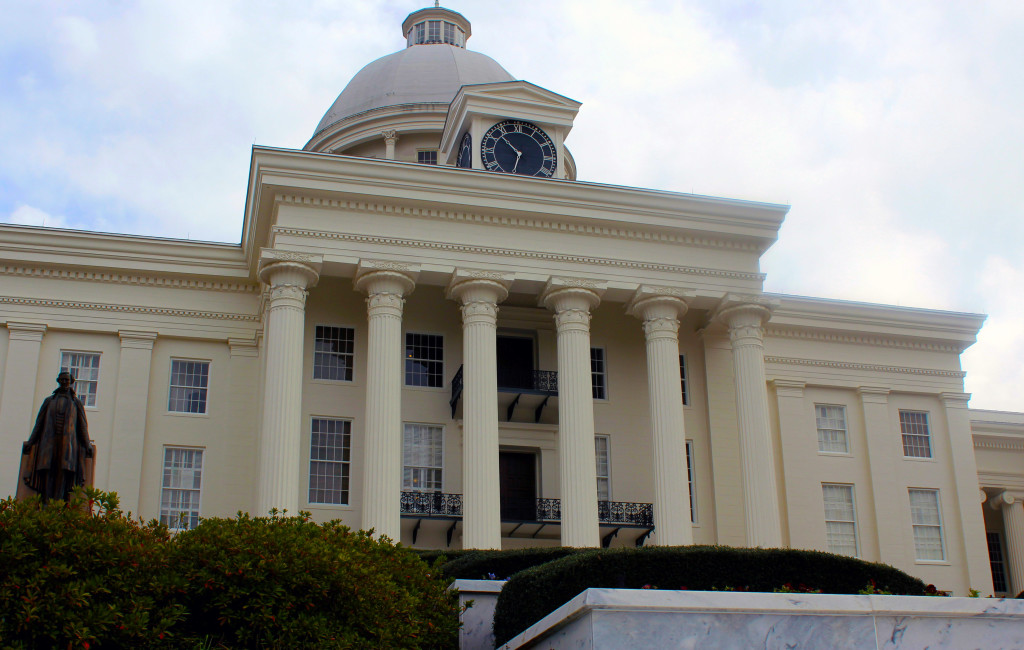
The first item up for discussion in the Alabama House of Representatives today was HB38, a bill from Rep. Mark Tuggle (R-Alexander City). The bill gives the power of selecting a Taxpayer Advocate to the governor, the candidates of which will be vetted by a newly created Selection Committee, removing said powers from the Revenue Commissioner. Immediately, the House Black Caucus began voicing concerns over the bill concerning the added cost, as well as the possibility for corruption, in that those involved could seek favors for friend looking for ways around paying taxes. Rumors had abounded that the caucus was filibustering motion on the bill due to a racial issue, specifically the fact that the current Taxpayer Advocate, Brenda Russ, is black, but that sentiment wasn’t clarified until Rep. Alvin Holmes (D-Montgomery) approached the microphone. Holmes began his statements by asking if Tuggle knew the race of the current advocate, to which Tuggle replied he did not. “Man, you know she’s black,” Holmes said. “That’s why you brought forth this bill, so you could get rid of her. You introduced it to get rid of the black lady.” “This bill is not about her,” Tuggle said. “It’s about race,” Holmes responded. Holmes went on to allege that the new system would allow the committee to select “five white names” to bring before the governor for selection. Rep. Juandalynn Givan (D.Birmingham) and Rep. John Knight (D-Montgomery) also brought forth concerns regarding the bill, Givan again reinforcing the perceived racial undertones to the proposed legislation, as well as the lack of need for a change in the Revenue Department. Knight petitioned Tuggle to delay a vote on the bill in order to craft a more agreeable piece of legislation, noting that there was limited time to look over the bill, but Tuggle declined. “It’s a bad bill,” Knight added. “It’s just as political as anything I’ve ever seen. I don’t see how a political appointee, that serves at the pleasure of the governor, can give any solace to taxpayers.” A vote for final passage on the bill was called for and the legislation passed, 70 to 33.
Donald Trump wins New Hampshire after Iowa disappointment

Donald Trump nailed down a solid first electoral win in New Hampshire’s presidential primary Tuesday, demonstrating his unorthodox campaign can translate large crowds at rambunctious rallies into the votes that determine delegates. His Republican rivals pinned their hopes on a strong second-place finish, looking to break from the pack and ensure the survival of their campaigns. Stung by his second-place showing in Iowa last week, Trump had been determined to make New Hampshire his proving ground for a campaign that has defied convention wisdom from the start. Early exit polls showed he drew support from voters looking for an outsider and from those who made up their minds a while ago. Count car salesman Val Goldenberg as one of those Trump voters. At a Nashua polling place, Goldenberg said he voted for the billionaire because he likes the business mogul’s “non-politician” credentials. “I think America really needs a good shake-up,” Goldenberg said. Eighty-four-year-old Mary O’Malley of Manchester picked Trump because “he’s not part of the establishment. He’s going to get things done and he’s not going to put up with any baloney.” For the rest of the Republican field, Tuesday’s results will shed light on which of the more establishment-friendly candidates advance to later contests, including Florida Sen. Marco Rubio, former Florida Gov. Jeb Bush, Ohio Gov. John Kasich and Gov. Chris Christie of New Jersey. Rubio had arrived in New Hampshire with a burst of momentum following his better-than-expected third-place finish in Iowa last week, but a shaky debate performance Saturday sparked criticism from his rivals that the 44-year old freshman senator lacks the experience to lead the nation. Texas Sen. Ted Cruz, coming off a strong victory in Iowa, has not polled as well in New Hampshire — his rivals seeing that as an opportunity to try to cap his momentum in the second nomination contest. A strong performance in New Hampshire was critical for Kasich, who all but skipped Iowa’s caucuses to continue grinding out town halls in New Hampshire. During a visit to a Concord polling place Tuesday, the Ohio governor said a Kasich win with a positive message could open up a “new chapter” in American politics. His voters included Miranda Yeaton, a mother of two young daughters in Concord who said Trump scared her and that she liked Kasich’s record as governor. “If he can do it for Ohio he can probably do it for the rest of America,” she said. Republican voters were very negative about how things are going in Washington these days, according to early results from an exit poll conducted by Edison Research for the Associated Press and the television networks. Nearly half of Republicans said they were dissatisfied and 4 in 10 were angry. Trump did best with voters who were angry; dissatisfied voters were somewhat less likely to break for Trump. The exit polls also showed Republicans were much more negative about their politicians than Democrats were about theirs. Nearly half of Republicans said they feel betrayed by politicians from the Republican Party. In contrast, less than 20 percent of Democrats said they felt betrayed by Democratic politicians. The New Hampshire stakes were high: Bush, Kasich and Christie, in particular, have bet their White House aspirations on New Hampshire, hoping a strong showing here will lead to an influx of new donor money and attention as the election moves south. Republished with permission of the Associated Press.
Alabama Senate committee discusses several bills, 2 headed to public hearings
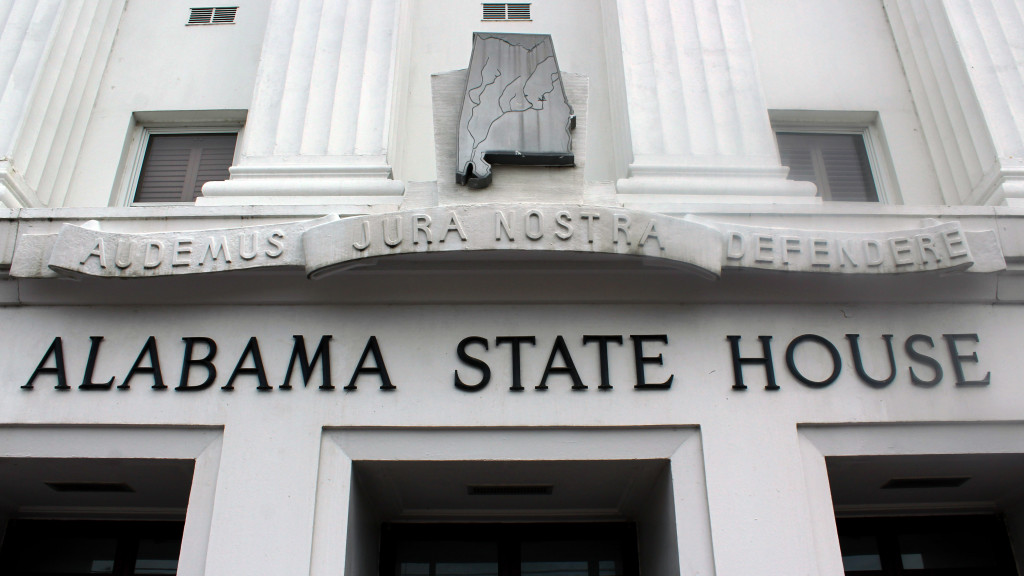
The Alabama Senate Committee on Governmental Affairs held a meeting Tuesday where a variety of bills were discussed, including two designated for public hearings. Sen. Gerald Dial (R-Auburn) brought forth SB80 for discussion, a bill that vets candidates before being added to regulatory boards, which was given a unanimously favorable report. Sen. Phil Williams (R-Rainbow City) garnered a favorable report for SB135, which prohibits the institution of additional fees in regard to the purchase of weapons, ammunition or the relevant permits. A bill by Sen. Vivian Figures (R-Mobile), SB133, which alters the composition of the Historical Commission to include an appointee from the Alabama Black Heritage Council, also gained a favorable report after an amendment was added to include an appointee from a North Alabama university. Additional bills also gained a favorable report from the commission, including SB54, which extends the terms of Trails Commission board members, SB141, which allows state employees to stay on-board with their respective departments in order to train replacements, and SB73, which increases the allowance for registrars. The increase in allowance would cost the state $390,000 this year and $1.6 million thereafter. The main action of today’s agenda centered around two bills, one from Sen. Lee Pittman (R-Birmingham) and another from Sen. Gerald Allen (R-Tuscaloosa). Pittman’s bill, SB119, would reduce Alabama’s Legislature to one chamber, saving the state an estimated $8 million or more. Pittman noted that Nebraska has been a unicameral Legislature since the 1930s and that such a move would add transparency to the process and ensure that more can be accomplished. Objections to Pittman’s legislation were numerous. Legislators voiced concerns over the perceived lack of checks and balances, the lack of adequate debate and discussion and apprehension over eliminating the structure established by the Founding Fathers. Pittman’s bill was meant to have public input, but no one was in attendance to provide such input. A vote on the bill was delayed. Allen’s bill would establish the Alabama Heritage Preservation Act which would, at its core, outlaw the removal of historical monuments. It would also put in place a strenuous appeals process for entities looking to remove such monuments. Mike Williams, a member of the Sons of Confederate Veterans, spoke first in favor of Allen’s legislation. “Don’t disgrace my grandfathers by allowing political correctness to come into this state,” Williams said. “It starts and it snowballs. We don’t want to offend anybody but we can’t erase history as it is.” Kevin Mount, who noted he was representing himself, referenced an unconfirmed speech from a black Confederate soldier who spoke before the Mississippi Legislature in 1890 to support legislation to honor Confederate veterans. “Today this is about Confederate history and we all know that because that’s what under assault right now,” Mount said. “But that’s not where it’s going to stop.” “Confederate history should not be a black-white issues. People from outside of this state have turned it into a black-white issue.” The Rev. Rayford Mack, with the NAACP, spoke last and started by condemning Mound for his comments and noted that cities and counties should be able to make decisions regarding the monuments in their cities and the desires of those cities’ constituents. Voting on Allen’s bill was delayed so public input could be finished on Tuesday.
Supreme Court deals blow to Obama, blocks his climate change plan

The Supreme Court has agreed to halt enforcement of President Barack Obama‘s sweeping plan to address climate change until after legal challenges are resolved. The surprising move on Tuesday is a blow to the administration and a victory for the coalition of 27 mostly Republican-led states and industry opponents that call the regulations “an unprecedented power grab.” By temporarily freezing the rule the high court’s order signals that opponents have made a strong argument against the plan. A federal appeals court last month refused to put it on hold. The plan aims to stave off the worst predicted impacts of climate change by reducing carbon dioxide emissions at existing power plants by about one-third by 2030. Appellate arguments are set to begin June 2. Republished with permission of the Associated Press.
Lawmakers approve small-business tax break for new jobs

After hearty debate on an earlier bill, state House members Tuesday launched into discussion concerning HB36, a bill brought forth by Rep. Kyle South (R-Fayette) to provide small business with fewer than 75 employees with a $1,500 tax break for every employee they hire who makes $40,000 a year or more. The bill would fund the tax credit, estimated at over $400,000, by taking money from the Education Trust Fund. Rep. Patricia Todd (D-Jefferson) was the first to speak on the matter. “You know how I feel about tax credits,” Todd said. “I don’t like them.” Todd noted that she will oppose the bill because it gives more tax breaks to businesses while ignoring some of the states more pressing issues, like balancing the budget and decreasing poverty in the state. Rep. Craig Ford (R-Baldwin) noted that he appreciated the bill, but could not support a bill which cuts taxes this year after raising taxes last year. After a brief round of amendments and technical questioning, the bill passed by a margin of 88 to 12 and the House adjourned for the day.
Linda Cunningham: Martin Shkreli’s mom ought be snatching him bald
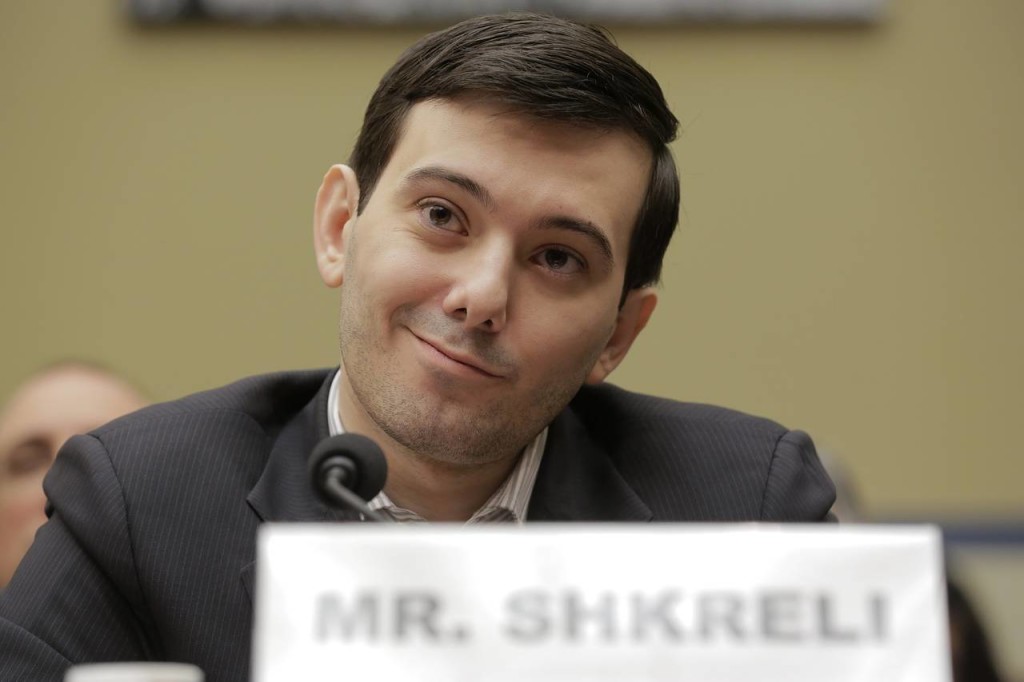
Pity Martin Shkreli’s mother. Don’t you know she just wants to snatch that boy bald? You know Shkreli, right? The 33-year-old brat-turned-hedge-fund-fraudster who bought a cheap generic drug and raised its price to the stratosphere and then rolled his eyes at a congressional committee this past week? Yeah, that one. And, if you’ve somehow missed him and the hand-washing compulsion that follows, Matthew Herper at Forbes has a bang-up profile from back in September. Or you can watch the arrogant smirking and eye-rolling here. Oh, heck, just Google or Twitter him yourself. There’s plenty out there. Back to mom. There must be a mom (and dad) around somewhere because, well, because there’s a Martin born on April 1, 1983. So, unless Martin is one giant April Fool’s joke, there are parental units somewhere, though I could find no references to them in an hour of online searching. Martin’s mom has to be beside herself right now. We mothers are supposed to love our kids, be there for them and generally be the ones who say things like “he was such a sweet boy. I can’t imagine his being so rude.” Uh, yeah, rude. That would be the word. Martin Shkreli is rude, crude and socially unacceptable, as my dear old dad used to say about some of my college neighbors. And I’m betting it’s all mom’s fault because, of course, it always is. A Facebook friend — also a mother of two about Shkreli’s age — posted this Friday morning: “O.K. I’ve had it with bad behavior and want to form a ‘Mom Squad’ to perform attitude adjustments for those who obviously weren’t raised properly. “First on my list: Pharma Bro. Had I been at yesterday’s Congressional hearing, I would have leaned behind Martin Shkreli and wiped that smirk off his face and made him apologize for his snarky behavior. Go ahead and plead the Fifth, Martin. Just do it with some dignity and respect. Who’s in on this crusade? Who needs a visit from the ‘Mom Squad’?” Seconds, and I mean, seconds, later a dozen moms (and one dad) shouted, “I’m in.” Moms know that smarmy, self-centered, eye-rolling smirk and we have to sit on our hands to keep from slapping it off. Bless his little heart, that Martin needs a mom to be all over him, slapping like white on rice, because he’s gotten way too big for his britches. He sure has way more money than sense, doncha think? Yeah, I think. And, I’m also thinking, wherever she is, it’s not mom’s fault. Or, at least, she’s going to get a pass from me, poor thing. Martin Shkreli’s one more in a lineup of self-made, arrogant, me-first pseudo-celebrities with more money than brains and more media addiction than compassion. These are men (and the occasional woman) with holes in their souls. There’s a bunch of them out there; at least half a dozen are running for U.S. president. And every one of them — except Jeb Bush, whose mama really would snatch him bald if he did such things — needs a visit from the Mom Squad. • • • Linda Grist Cunningham is editor and proprietor of KeyWestWatch Media LLC, a digital management solutions company, specializing in small businesses. She’s got a son around Shkreli’s age and he’d not dare roll his eyes in a congressional hearing.
Redding Pitt, one-time head of state’s Democratic Party, dies
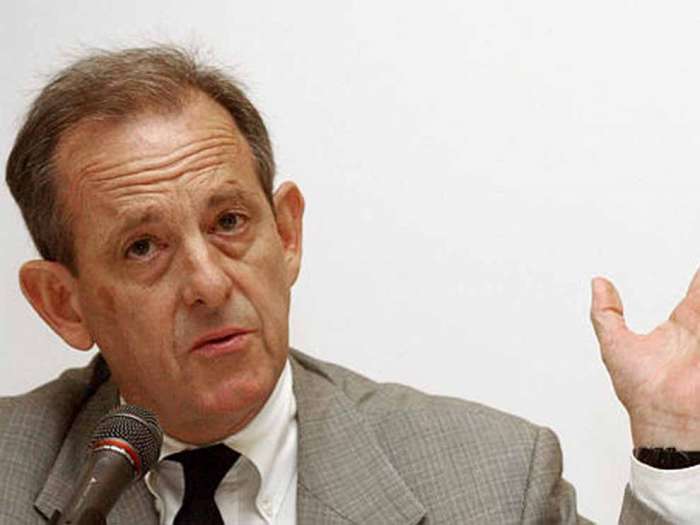
A one-time chairman of Alabama’s Democratic Party who also was chief federal prosecutor in Montgomery has died. Law partner Ken Riley says Redding Pitt died Sunday. He was 71. The cause of death wasn’t immediately released Monday. Pitt was a Decatur native who was chairman of the state Democratic Party from 2001 to 2005 after working as U.S. attorney in Montgomery for seven years beginning in 1994. President Bill Clinton appointed him to the federal position. A former Army captain in Vietnam, Pitt received a Bronze Star for service in the infantry and intelligence divisions. Party chairwoman Nancy Worley says Pitt was currently a vice chairman of the state organization. Pitt has been with the Birmingham-based law firm of Farris, Riley and Pitt since 2001. Republished with permission of the Associated Press.
Alabama Republicans quickly dismiss Barack Obama’s 2017 budget proposal

President Barack Obama sent his final budget proposal for 2017 to Capitol Hill on Tuesday, offering a $4 trillion spending blueprint to lawmakers that calls for billions of dollars to be committed to clean energy, education and Medicaid, and would be paid for it by raising taxes on big banks and the wealthy. Unsurprisingly, Alabama Republicans do not support the plan. Here’s what Alabama’s lawmakers are saying about the new budget proposal: U.S. Sen. Richard Shelby: President Obama’s wildly irresponsible budget plan further cements his legacy of liberal priorities: higher taxes, more borrowing, and wasteful spending. The American people deserve better than a President who continually offers unsustainable proposals to expand our bloated federal government while ignoring our massive $19 trillion of debt. The only positive news coming from this budget blueprint is that it is President Obama’s last. I have consistently advocated for a constitutional amendment that would require the federal government to do what Americans and their families do every day – balance a budget. Our priorities should be to cut wasteful government spending, reform our nation’s complex tax code, and get Washington out of the way so that the private sector can succeed. U.S. Rep. Bradley Byrne (AL-01): President Obama and Secretary of Defense Ash Carter just don’t get it. At a time when our nation is facing a range of threats from every corner of the globe, they are proposing to ignore the advice of Navy leaders and cut the LCS program. The Navy has made crystal clear they support and need 52 Littoral Combat Ships in order to fulfill their mission. Since my first day in Congress, I have been working with my colleagues on the Armed Services Committee and throughout the House to build support for this important program. That’s why I’m confident Congress will reject this flawed proposal from a lame-duck President and a lame-duck Secretary of Defense. U.S. Rep. Gary Palmer (AL-06): Increasing spending, while the Congressional Budget Office projects a shortfall in revenues, is not a path to fiscal responsibility, but that’s exactly what President Obama is proposing. His priorities do not represent the priorities of the American people. Whether it is the government or an individual, it is irresponsible to continue spending more than you earn. A responsible budget would balance without gimmicks, would cut spending, and would not raise taxes on the hard working American people. President Obama’s proposal fails in every category. A summary Obama’s budget request may be found here.
Federal officials OK multimillion-dollar waiver to state’s Medicaid program

The Alabama Medicaid Agency’s regional care organization plan was approved for a federal waiver by the federal Centers for Medicare and Medicaid Services (CMS), Gov. Robert Bentley confirmed Tuesday. The waiver will give Regional Care Organizations (RCOs) up to $328 million in federal money over a three-year period to help the state’s RCOs start and pay for projects that could boost access to medical care, improve quality and reduce costs. “Together with the Alabama Legislature, we have made significant progress in the way the Alabama Medicaid Agency operates, making it more effective and efficient,” said Bentley. “I appreciate the Centers for Medicare and Medicaid Services for approving Alabama’s plan to use regional care organizations and the National Governors Association for its help during the process.” Bentley said the state could qualify for up to an additional $420 million in federal money over a five-year period, bringing the total to more than $748 million to help start and improve its RCO program. “Alabama took bold steps towards improving healthcare in our state with our plan for regional care organizations and today’s announcement proves our efforts are paying off,” Alabama House Speaker Mike Hubbard (R-Auburn) said. “This investment could lead to a more streamlined and localized system, produce better outcomes, and save millions of taxpayer dollars in the long-term.” Senate President Pro Tempore Del Marsh (R-Anniston) agrees. “The Federal government has determined that Alabama has been innovative with our plan to transition to regional care organizations,” Marsh said. “Over time it will save the taxpayers millions of dollars and will serve as a potential modal for states as an alternative to expanding Medicaid.” Governor Bentley established the Alabama Medicaid Advisory Commission in October of 2012 to evaluate the financial stability of the Alabama Medicaid Agency. In 2013 the Alabama Legislature passed legislation based on the Commission’s work and implemented a managed care structure. In total, RCOs have been put in place in five state regions and are designed to provide care to around 650,000 Alabamians on full Medicaid. “This is a significant step in our efforts to transform the delivery of services to Medicaid patients,” Bentley continued. “I will work closely with members of the Alabama Legislature in the 2016 Regular Session to ensure the Medicaid RCO model is adequately funded so we can continue our efforts in Medicaid transformation.” The five-year agreement with CMS begins April 1.
Marco Rubio supporters get physical with a protestor in New Hampshire
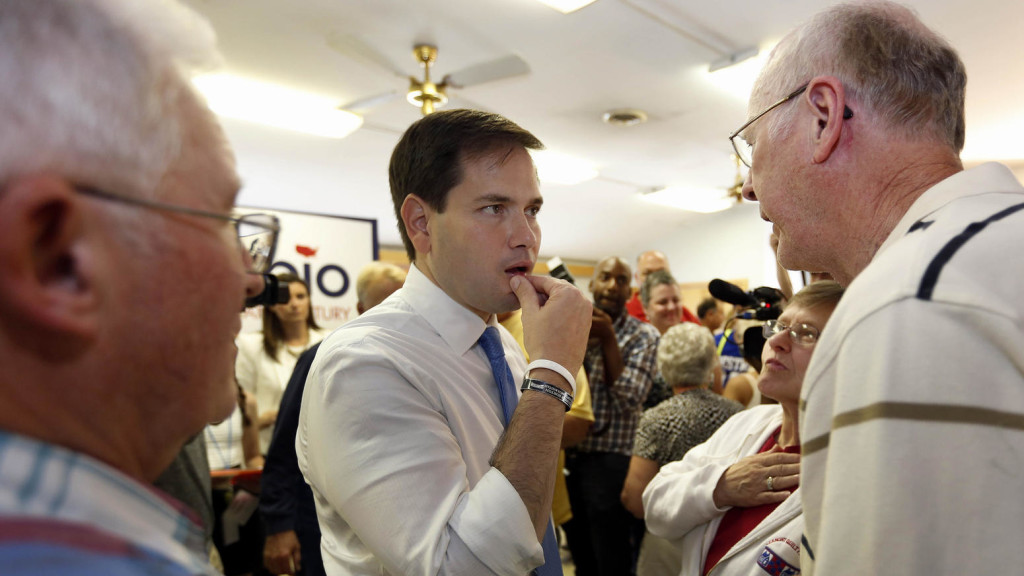
Marco Rubio supporters appeared to get physical with a protester dressed as a robot in New Hampshire on Tuesday. In a video circulated by Americans United for Change, a progressive organization, Rubio supporters in New Hampshire appeared to get physical with a person in a robot costume. The person was holding a sign that said “#RobotRubio” and can be heard saying “why do you have your hands on me.” Rubio supporters appeared to block the protester with signs, pushing the person back from a large group of supporters.
Martha Roby: Standing up for agriculture

I consider it an honor to serve a district in which agriculture is the largest employer, accounting for more than 93,000 jobs and an $11 billion economic impact. It’s why, during my time on the House Agriculture Committee, I was proud to help craft a new Farm Bill that delivers more modern, conservative and sustainable policy for our farmers. It’s why, now, as a Member of the Appropriations Committee, I have remained diligent in making sure the promises we made in the Farm Bill are kept. We faced a challenge late last year when the crop insurance program was gutted in the budget. This is the risk management system we promised farmers to help transition away from the old system of direct payments from the government. Cutting it was unfair, which was a chief reason why I voted against the budget and helped rally support among my colleagues to help restore the crop insurance program before the end of the year. I’m glad we worked it out in the end, but it represented a serious disconnect. You see, not everyone I work with in Congress represents a district with such a significant agricultural footprint. I frequently remind my colleagues that when it comes to farm policy, we aren’t just affecting the farmer who puts the seed in the ground. We are affecting the ones who sell the seed, who build the equipment to cultivate and harvest the crop, and those who help process the goods to their final products. That farming dollar turns over many times, and there is an entire agriculture supply chain that is affected by farm policies set by Congress. When Washington politicians mess around with farm policy, they are messing around with the livelihoods of the people I represent. On Friday I attended the Wiregrass Cotton Expo in Dothan. These are difficult times for the cotton industry in Alabama, as the global market has driven prices down and poor weather conditions have devastated many planters in our state. I’m working with fellow Members of Congress to get the U.S. Department of Agriculture to allow cottonseed to be designated as an oil seed under the Farm Bill and therefore qualify cotton crops for the Price Loss Coverage program. The USDA declined this initial request, as Secretary Tom Vilsack told us he lacks the authority to designate cottonseed that way. That’s obviously disappointing. But, you know what I find interesting? When they really want to, the Obama Administration can find the executive authority to justify almost anything. Whether it is immigration or gun control or carve outs in the health care law or the EPA regulating puddles and ditches on your land, this Administration clearly doesn’t feel bound by legal or constitutional constraints. But, when it comes to a real crisis in agriculture that affects us, suddenly the Secretary of Agriculture claims he doesn’t have the authority. I don’t know what the solution will ultimately be, but we will keep working to find one. My farmers know I have their back and I always will as long as I’m in Congress. — Martha Roby represents Alabama’s 2nd Congressional District. She lives in Montgomery, Alabama with her husband, Riley and their two children.
Bernie Sanders, John Kasich win 1st votes in tiny NH community
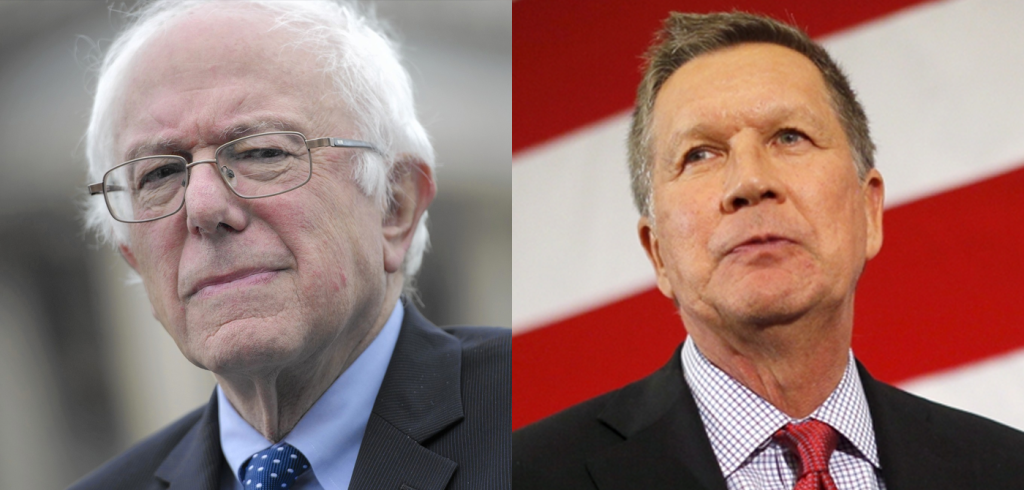
Bernie Sanders and John Kasich picked up the most votes as the first ballots of the first-in-the-nation primary were cast early Tuesday. Sanders won over all four Democratic voters in the tiny town of Dixville, while Kasich sneaked past Donald Trump, 3-2, among Republicans. Under New Hampshire state law, communities with fewer than 100 voters can get permission to open their polls at midnight and close them as soon as all registered voters have cast their ballots. While that happened in three locations, Dixville traditionally gets most of the spotlight due to its media-friendly setup at the Balsams Grand Resort Hotel. Located about 20 miles from the Canadian border, Dixville exists as a town only for voting purposes. Almost all of its nine voters are employees of the hotel, which closed in 2011 but is currently undergoing a major overhaul under new owners. Former owner Neil Tillotson started the midnight voting tradition in 1960, likely at the suggestion of a news photographer looking for an advantage in getting his pictures out to newspapers ahead of his rivals. For many years, voters cast their ballots in individual booths in the hotel’s posh ballot room. Because of the renovations, the nine current residents voted in another building on the property, the Hale House. In 2012, there was a tie for first place on the Republican side, with Mitt Romney and Jon Huntsman getting two votes apiece. All three Democrats voted for Obama. Hart’s Location, about 80 miles south of Dixville, first hosted midnight voting in 1948 but gave it up after the 1964 election when residents grew weary of the late hours and media frenzy every four years. Energized with new blood, town residents revived the tradition in 1996, and this year, the town has 41 registered voters. Millsfield is also making a comeback this year, though it’s unclear just when the town last voted at midnight or when its tradition started. According to a 1952 article in Time magazine, eight residents voted at midnight during the general election that year. This year, there are 22 registered voters. Republished with permission of the Associated Press.
