
Jumbled GOP field hopes for survival in South Carolina
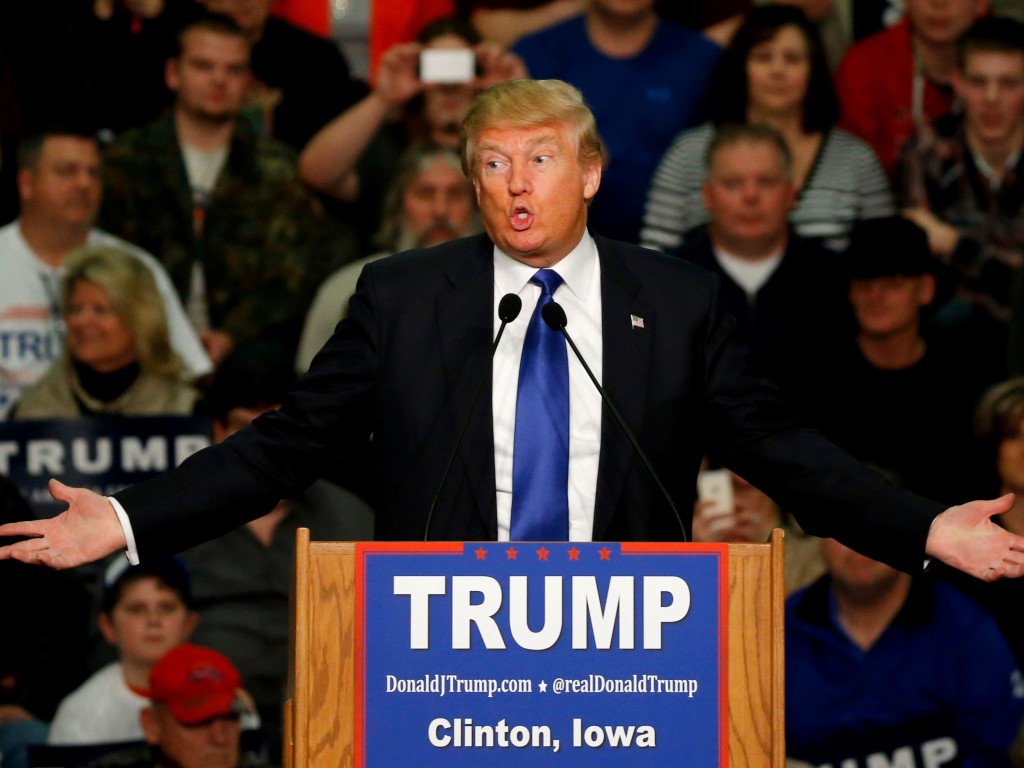
Hoping for survival in the South, a muddled field of Republican presidential contenders descended Wednesday on South Carolina, no closer to clarity about who can stand between Donald Trump and their party’s nomination. Not me, Carly Fiorina announced, dropping out of the campaign. A Chris Christie spokeswoman said his race was over, too. But a sizeable field remained. To the dismay of party leaders, all signs point to a drawn-out battle for delegates following Trump’s resounding victory in New Hampshire. Florida Sen. Marco Rubio, under immense pressure to prove himself after a devastating fifth-place finish, was looking for a fight that could last for months or even spill into the first contested GOP national convention since 1976. “We very easily could be looking at May — or the convention,” Rubio campaign manager Terry Sullivan told The Associated Press. If Trump had Republicans on edge, Democrats were feeling no less queasy. Rejected in New Hampshire, Hillary Clinton sought redemption in Nevada, where a more diverse group of voters awaited her and Bernie Sanders. Sanders, a Vermont senator and self-proclaimed democratic socialist, raised $5 million-plus in less than a day after his New Hampshire triumph. The contributions came mostly in small-dollar amounts, his campaign said, illustrating the resources he’ll have to fight Clinton to a bitter end. Both Clinton and Sanders — the first Jew to win a presidential primary — worked to undercut each other among African-Americans and Hispanics with less than two weeks until the Democratic contests in Nevada and South Carolina. Sanders met for breakfast in Harlem with the Rev. Al Sharpton, a civil rights activist. Clinton, meanwhile, announced plans to campaign with the mother of Sandra Bland, whose death while in police custody became a symbol of racial tensions. And Clinton’s campaign deployed South Carolina state Rep. Todd Rutherford to vouch for her support for minorities. “Secretary Clinton has been involved in South Carolina for the last 40 years,” Rutherford said. “Bernie Sanders has talked about these issues for the last 40 days.” Texas Sen. Ted Cruz, the conservative firebrand and victor in the leadoff Iowa caucuses, returned to the center of the fracas after largely sitting out New Hampshire. He drew contrasts with Trump as he told a crowd of 500 in Myrtle Beach that Texans and South Carolinians are more alike than not. “We love God, we’re gun owners, military veterans and we’re fed up with what’s happening in Washington,” Cruz said. Almost all the Republicans have spent months building complex campaigns and blanketing airwaves in South Carolina, which heralds the start of the GOP campaign’s foray into the South. After that primary on Feb. 20, seven Southern states including Georgia and Virginia will anchor the Super Tuesday primaries on March 1, with oodles of delegates at stake. The state, with its array of conservative GOP voters, will test Trump and the others in new ways. Having courted social conservatives in Iowa and moderates in New Hampshire, the candidates face an electorate infused with evangelical, pro-business and military-minded flavors. Rubio’s campaign has looked forward to the state. Yet his path grew far trickier after a fifth-place New Hampshire letdown, which terminated talk of Republican leaders quickly uniting behind him as the strongest alternative to “outsiders” Trump and Cruz. His campaign’s suggestion that the race could veer a contested convention seemed to signal to mainstream Republicans that the party would be ill-served by allowing the Trump phenomenon to last much longer. GOP officials have already had early discussions about such a July scenario, which could be triggered if no candidate secures a majority of delegates by convention time. For Gov. John Kasich, whose second-place showing was New Hampshire’s primary stunner, the task was to convert newfound interest into support in a state ideologically distant from his native Ohio. With a minimal South Carolina operation compared to his rivals, Kasich must work quickly. Seeking votes at a local business in Charleston, Kasich worked to burnish his reputation as a results-oriented leader. “If you don’t go to the gym, you get flabby,” Kasich said. “And if the country doesn’t solve its problems, it gets flabby.” Heading into the final two-week sprint, Trump was leading in South Carolina among all demographic groups, an NBC/Marist/Wall Street Journal poll showed, with Cruz and Rubio a distant second and third. Already, more than $32 million has been spent on TV ads here, according to CMAG/Kantar Media data — much of it by Right to Rise, the PAC backing former Florida Gov. Jeb Bush. Though he placed fourth on Tuesday, Bush was hoping that Rubio’s slump would forestall his own ouster from the race. After a rally in Bluffton, he said voters in New Hampshire “pushed the pause button” on anointing any candidate — and turned to his brother, George W. Bush, for help. His campaign debuted a new ad featuring the former president, who plans to campaign in the Palmetto State. Republished with permission of the Associated Press.
Despite public outcry, House committee green lights liquor sales, lottery vote

In an overfilled room, the House Committee on Economic Development and Tourism met Wednesday to discuss two alcohol-related bills, one of which was carried over until next week’s meeting, and a bill that would put the issue of a state lottery up for a vote. HB83, a bill that would allow wineries to obtain permits to operate an additional “on-site tasting room,” was held so lawmakers could clear up unspecified issues with the legislation. Next on the agenda was HB46, a bill brought forth by Rep. Alan Boothe (R-Troy) to allow Alabama distilleries to sell one fifth of liquor to an individual customer each day. The bill had originally stated that only one fifth could be sold per year, but Rep. Alan Harper (R-Northport) added an amendment to change “year” to “day.” The amendment was approved and the committee began hearing feedback from the public. Joe Godfrey, executive director of the Alabama Citizen’s Action Program (ALCAP), spoke first in opposition to the bill. “You’re dealing here with an addictive and mind-altering drug,” Godfrey said. “Alcohol destroys lives, it destroys families. Every time we expand alcohol sales, you’re increasing the number of people who use alcohol, you’re increasing the amount that they drink.” Next to speak was John Sharp, owner of John Emerald Distilling Co. in Opelika, who was in support of the measure. “This bill, obviously, would help us compete with the large out-of-state distilleries,” Sharp said, noting the vast array of spirits being shipped in from Tennessee, Kentucky and elsewhere. “We’re not going to affect the amount of alcohol actually consumed in Alabama.” The committee voted and gave the bill a favorable report. The next item on the commission’s agenda was Harper’s lottery bill, HB13, the senate version of which did not reach a vote in this morning’s committee hearing. The bill only requests that residents be allowed to vote on whether or not a lottery should be allowed in Alabama, where the proceeds would go will be decided by the full Legislature at a later date. “Our vote today is on our citizen’s right to vote on a constitutional amendment,” Harper said. “It’s important that we hear the opinions of our citizens. You can never go wrong in doing that.” Harper also assured those in attendance that he and others had worked alongside the Alabama Law Institute to ensure the legislation left no room for casino-style gambling in the state. The opposition to Harper’s bill was widespread during the following public hearing, started first by Godfrey, who condemned the bill for preying on low-income families and claimed it “makes the government a bookie.” Rep. Rich Wingo (R-Tuscaloosa) also spoke out against the bill, saying that the creation of a lottery would only cost the state more in Medicaid costs “because instead of buying glasses for Junior, Medicaid will do it.” Rep. Arnold Mooney (R-Birmingham) spoke out against the bill. “I believe as a federalist, we were elected to come here and make decisions,” Mooney said. “Money spent on a lottery is money pulled from small business. We can’t grow our economy in that manner.” In all, nine people spoke out against the bill with only one person in support of it, Mac McArthur of the Alabama State Employees Association. “I don’t know how you could possibly draft a cleaner bill to get the issue before the people,” McArthur said. The committee began taking a vote when Rep. Ritchie Whorton (R-Scottsboro) asked for a role call vote. Because the vote had already begun, the committee continued and gave the bill a favorable report.
Email insights: Rick Burgess weighs in on an Alabama Lottery

Last week the Alabama Legislature began its 2016 legislative session and once again lawmakers in Montgomery are scrambling for creative fixes to the state’s ongoing budget shortfall. A solution brought up repeatedly? A state lottery to help generate revenue. Nearly 17 years after then-Gov. Don Siegelman‘s lottery for education was narrowly rejected by voters, lawmakers are calling for a lottery referendum in hopes of getting a lottery initiative on the ballots this November. Which is why Wednesday, the Alabama Policy Institute (API) — a non-partisan, non-profit research and education organization dedicated to influencing public policy in the interest of the preservation of free markets — released their first installment in a video series featuring Alabamians speaking out against gambling. The first video features Rick Burgess, the bestselling author and cohost of the nationally syndicated “Rick and Bubba Show.” Check out the full email from API and their first video: The Alabama Policy Institute is proud to announce the release of the first installment of a video series featuring Alabamians speaking out against gambling. Gambling is perennially proposed as an easy and benign “fix” for the Alabama budget. It is nothing of the sort, however, whether in the form of casino gaming or a state-run lottery. Rick Burgess, the bestselling author and cohost of the nationally syndicated “Rick and Bubba Show,” is featured in this first installment. Burgess explains why a state-run lottery is a “lazy plan” for legislators to take up. Future installments have already been filmed and will appear in the weeks ahead.
Attorney General reviews reports of gun law violations by cities
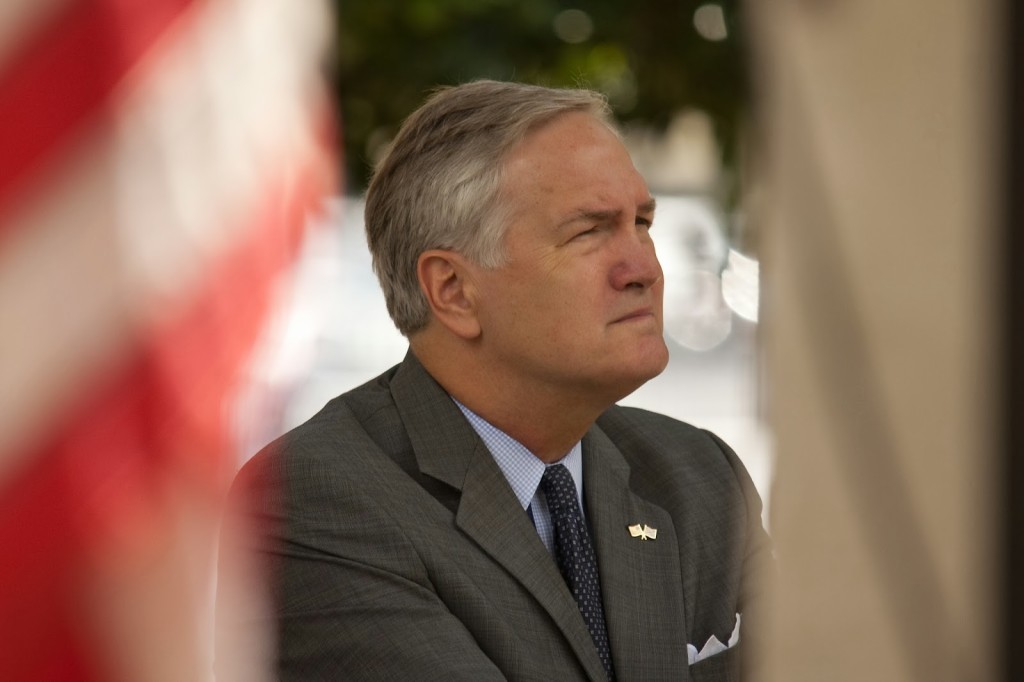
Alabama Attorney General Luther Strange announced the results of three investigations into alleged violations of state gun laws by three municipalities on Wednesday. Strange found city-owned facilities in Daleville, Vestavia Hills and Decatur illegally banned the possession of firearms, contrary to a state statute governing the carrying of guns in public places. The attorney general’s office received a complaint that the city of Vestavia prohibited firearms at half a dozen public parks and recreational sites. Strange met with the city attorney and advised them to remove signs in front of the facilities that advised residents they could not possess a firearm there. After the removal and assurances residents’ rights to carry would not be abridged, no further action was deemed necessary by Strange. Similar steps were taken at the Daleville Cultural and Convention Center and a Decatur Utilities office. In each case, complaints were brought by private residents under a state law enforcement process which triggers a review from the attorney general.
Carly Fiorina ends 2016 Republican bid for President
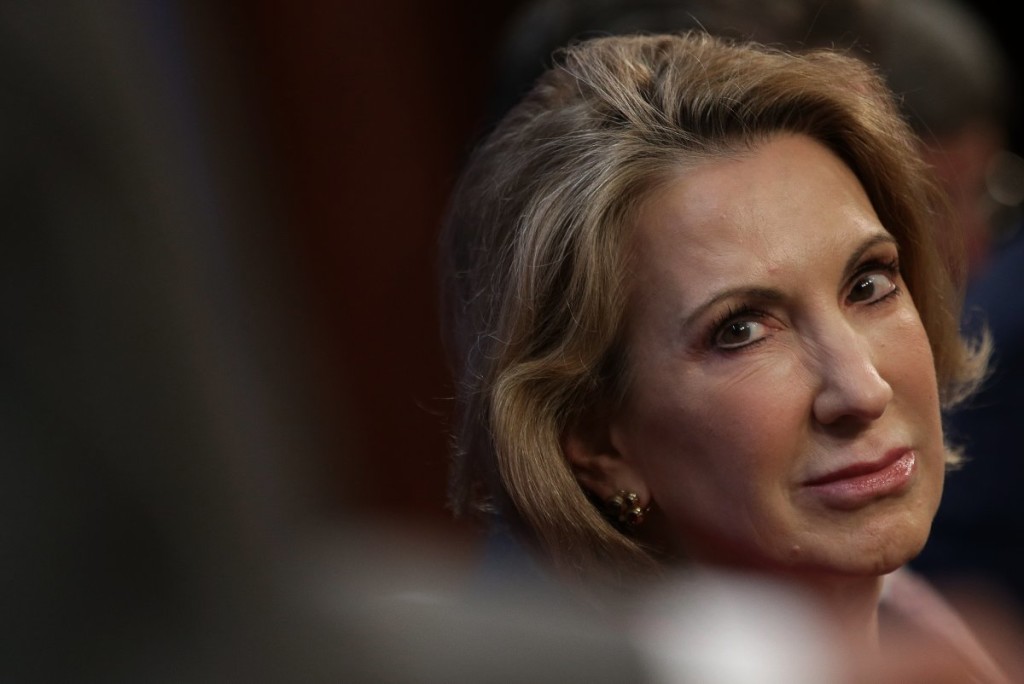
Former technology executive Carly Fiorina exited the 2016 Republican presidential race Wednesday, after winning praise for her debate prowess but struggling to build a winning coalition in a crowded GOP field. “While I suspend my candidacy today, I will continue to travel this country and fight for those Americans who refuse to settle for the way things are and a status quo that no longer works for them,” Fiorina wrote in a Facebook statement. “I will continue to serve in order to restore citizen government to this great nation so that together we may fulfill our potential,” the statement said. Fiorina, 61, entered the tumultuous Republican primary in April. She promoted herself as an outsider with business experience and argued that as the lone woman in the GOP field she was best positioned to oppose likely Democratic nominee Hillary Clinton. After a standout performance in the first undercard debate, Fiorina rose to the mainstage and soared in the polls in the fall. But her momentum quickly stalled and by the end of the year she had dropped back down. Fiorina won applause from women on both sides of the aisle in the second Republican debate in September when she was asked to respond to Donald Trump‘s comments criticizing her face. “I think women all over this country heard very clearly what Mr. Trump said,” Fiorina said calmly. Trump sought to smooth things over, saying “I think she’s got a beautiful face and I think she’s a beautiful woman.” Fiorina’s first major foray in to politics was in 2010, when she ran for Senate in California and lost to incumbent Sen. Barbara Boxer by 10 points. Throughout her presidential bid, Fiorina emphasized her meteoric rise in the business world. A Stanford University graduate, she started her career as a secretary, earned an MBA and worked her way up at AT&T to become a senior executive at the telecom giant. But she was also dogged by questions about her record at Hewlett-Packard, where she was hired as CEO in 1999. She was fired six years later, after leading a major merger with Compaq and laying off 30,000 workers. Republished with permission of the Associated Press.
Chris Christie pulls plug on 2016 White House campaign
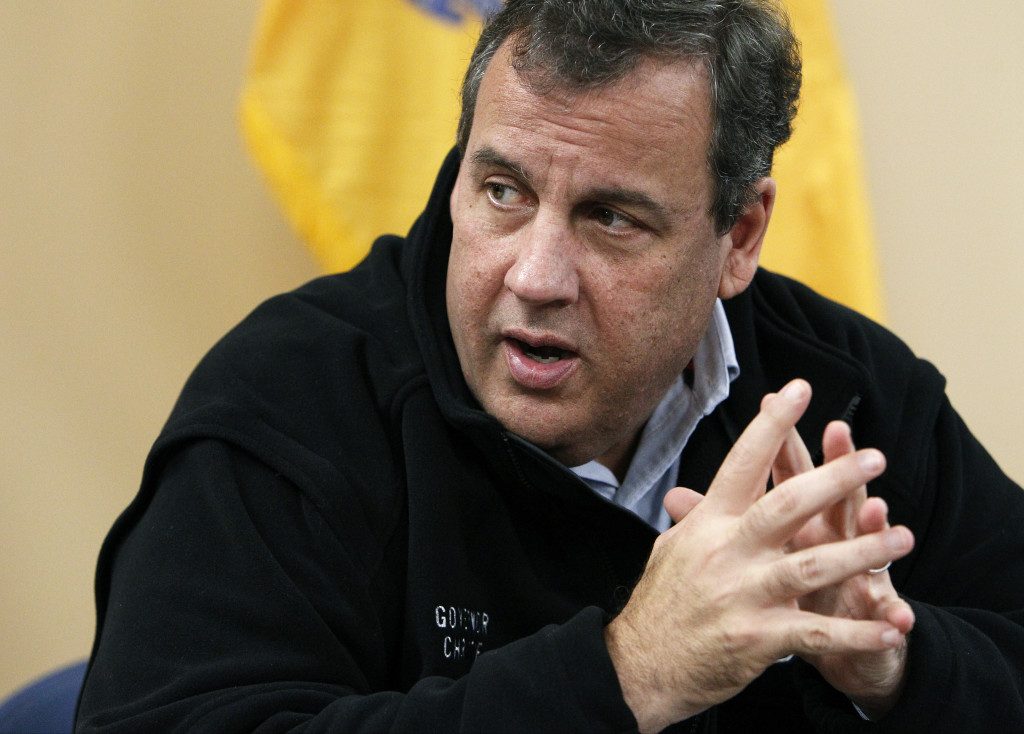
New Jersey Gov. Chris Christie dropped out of the Republican nomination for president on Wednesday, a day after his disappointing sixth-place finish in New Hampshire’s primary. Campaign spokeswoman Samantha Smith said Christie told staff at his campaign headquarters in Morristown, New Jersey, late Wednesday afternoon, and was calling donors and other supporters. Christie on Tuesday night told supporters he was heading home to New Jersey to “take a deep breath,” await the final tally of results from New Hampshire, and decide what to do next. He said he was leaving New Hampshire “without an ounce of regret,” but spoke of his campaign in the past tense at one point and canceled a Wednesday event in next-to-vote South Carolina. Christie dropped out of the race the same day that Carly Fiorina announced on social media that she, too, was calling it quits. The former chief executive of Hewlett-Packard won just 4 percent of the vote in New Hampshire. Christie had 7 percent. Christie had been banking on a strong finish in New Hampshire and spent more than 70 days campaigning in the state, holding well-received town halls and meet-and-greets. Tuesday’s result, though, appeared to be the final blow for a candidate whose campaign saw glimmers of hope at times, but had trouble from the get-go raising money and building support in a crowded Republican field dominated by another brash East Coaster, businessman Donald Trump. While Trump posed a challenge to the entire Republican field, his dominance seemed especially damaging to Christie, who had branded himself the “telling it like it is” candidate. When he returns home to finish his second term as governor, Christie will face a slew of unsolved problems and rock-bottom approval ratings from residents who, polls show, feel he neglected New Jersey to pursue his national ambitions. Christie racked up a long list of notable endorsements from state legislative leaders in New Hampshire. At the end of 2015, he appeared to be breaking into the top tier after a video of him discussing a friend’s struggle with drug addiction went viral. The terrorist attacks in Paris and San Bernardino, in particular, played to Christie’s advantage, allowing him to talk about his previous job as a U.S. attorney and play up his law-and-order credentials. And a commanding performance during the final GOP debate before the New Hampshire primary earned him strong reviews. But with a field filled with numerous other options, including current and former governors and senators, Christie never consolidated support, despite being praised by both fans and rivals as one of the Republican Party’s best communicators. Christie may have missed a better chance at the White House four years ago, when some of his party’s most powerful statesmen and donors begged him to run in 2012. But Christie declined, saying that he didn’t feel ready. Christie’s aggressive political team worked to rack up endorsements and wide victory margins in his re-election bid for governor as a springboard for 2016. At the same time, his aides took their game of doling out political favors and punishments too far, leading to one of the most dumbfounding political scandals in recent memory. Aides purposely created traffic jams in the town of Fort Lee to punish the mayor, who chose not to endorse Christie’s re-election. While Christie first laughed off the suggestion that his team had anything to do with the plot, the denials quickly unraveled following the release of emails, including one from a top aide that read, “Time for some traffic problems in Fort Lee.” Three people have been indicted in the scheme, including a former high school classmate of the governor who has pleaded guilty and is working with federal prosecutors. Other Republicans who have left the race include South Carolina Sen. Lindsey Graham, former Arkansas Gov. Mike Huckabee, Louisiana Gov. Bobby Jindal, Wisconsin Gov. Scott Walker, and former Texas Gov. Rick Perry. Republished with permission of the Associated Press.
State House rally brings sheaf of issues, including call to end death penalty
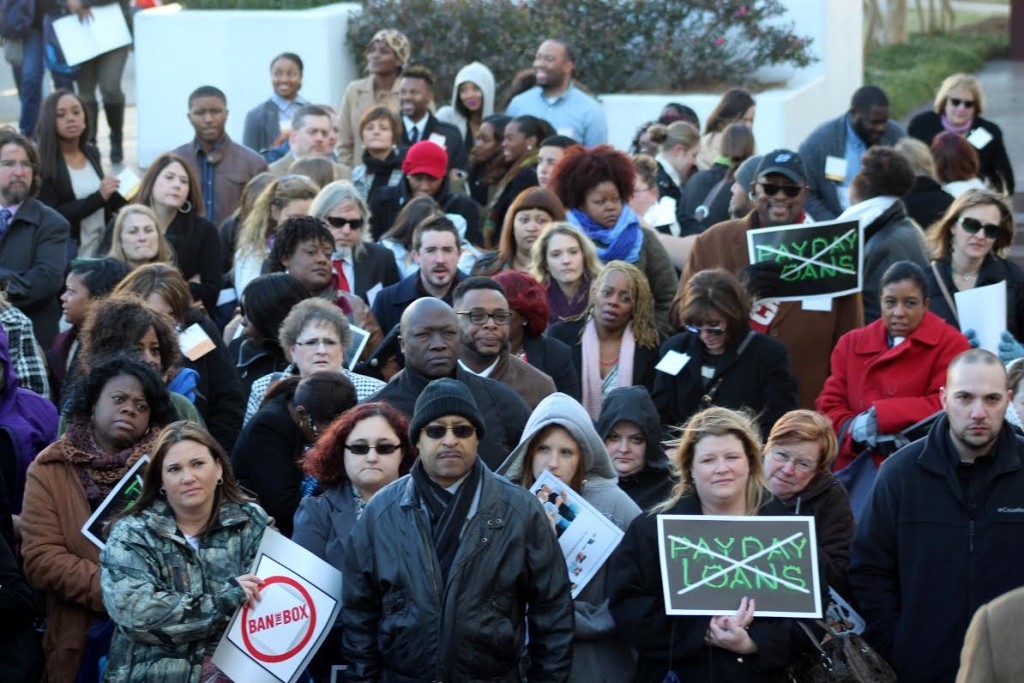
In the freezing cold Wednesday morning, the National Association of Social Workers (NASW) gathered outside of the Alabama State House, along with representatives from a variety of organizations, to rally supporters to contact lawmakers on a myriad of issues. Martha Shearer of Alabama Arise was first to address the over-sized crowd to discuss the initiative known as “Ban the Box,” a campaign to encourage employers to remove the criminal record check box from their applications. Shearer noted that many people are thousands of dollars in debt and unable to find work because of a previous run-in with the law. Esther Brown, from Project Hope to Abolish the Death Penalty (PHADP), was next to address the audience. She noted that there is no way to reform the death penalty because it is “intrinsically” and “morally” wrong. Brown referred to the death penalty as “state murder” and contended that the death penalty offers no solace to relatives of a murder victim. The claim carried more weight since Brown is herself a relative of a murder victim. “Healing has to come from within,” Brown said. “We have no right to kill anyone.” John Pickens, executive director for the Alabama Appleseed Center for Law and Justice, addressed the crowd next on current problems with payday and title loans, which he said prey on low-income and working families,” and voting rights. Pickens took particular exception to an Alabama database that lists “50 to 70” crimes as including “moral turpitude,” which bars ex-felons from the right to vote. He pushed for lowering the number of crimes that permanently bar a person from voting and condemned the “cumbersome process” former inmates have to go through to reinstate their voting rights. Heather Allman of Troy University also addressed the crowd on the importance of stopping youth tobacco use. Allman called for removing advertisements from convenience stores, which often lure in young customers, as well as a ban on smoking in public places.
Education Committee stalls on Common Core repeal, OKs another graduation requirement

The Senate Education and Youth Affairs Committee met Wednesday morning to discuss three bills. The first item up for discussion was a bill from Sen. Shay Shelnutt (R-Trussville), SB61, which provides all professional educators’ organizations equal access to employees of the public school district. The bill garnered a favorable report quickly, with the only opposition coming from Sen. Quinton Ross (D-Montgomery), a former educator. The committee quickly moved on to SB89, a bill brought forth by Sen. Arthur Orr (R-Decatur) to mandate a civics test as part of the state’s graduation requirements. The test is modeled after the national test given to immigrants looking to become citizens of the United States. Orr added an amendment to the bill, which was approved, to make the test only 50 questions, as opposed to the 100 on the national test. Sen. Dick Brewbaker (R-Montgomery), who serves as chair of the committee, confirmed that the test would be required for all public school students but would not be mandated to private school students. Private schools could decide whether or not to require students to take the test. Sen. Hank Sanders (D-Selma) was the first to voice opposition to the bill. “I’m concerned about this bill for several reasons,” Sanders said. “There’s a reason to give this test to naturalized citizens, there is no need to give this test to people who are already citizens.” Sanders also noted concern over an additional mandate being levied on schools and teachers, the abundance of which is already making teaching a “burden” rather than a “joyful vocation,” as well the risk of lowering Alabama’s graduation rate because of an additional requirement for graduation. Ross also chimed in with opposition, noting his disdain for an additional mandate on students and adding that he would like to see a requirement to teach the ins and outs of voting, as well as a requirement that all high school students register to vote. “This is going to be a simple test,” Orr replied. “It’s fundamental that our students understand and realize the history of our country.” Ross again voiced concern over the fear that an additional exam would force educators to “teach the test,” as well as concerns that the new civics test would not include black history. Orr replied that the test would comply with current curriculum standards and individual school districts would be able to customize the test to their standards. Sen. Vivian Figures (D-Mobile) was last to voice opposition to the bill, noting that there should be a requirement that all Alabama legislators pass the test before students are forced to take it, a feat she believes would not be readily accomplished. A vote was called for and the bill received a favorable report by a six to three margin. The most exciting element up for discussion Wednesday, SB60, was thwarted due to the absence of the bill’s sponsor, Sen. Rusty Glover (R-Mobile). The bill would eliminate Common Core curriculum standards in the state and revert back to the curriculum used before the institution of the new standards. Senate Pro Tem Del Marsh (R-Anniston) added an amendment to the bill, which he had discussed with Glover previously, that would allow individual school districts to choose whether or not to abolish Common Core. The amendment was adopted and Marsh noted that he has always “been in support of the rigorous standards of our schools.” No vote was taken and the bill will be carried over to a later education committee hearing.
New Hampshire Takeaways: Donald Trump proves he’s a winner
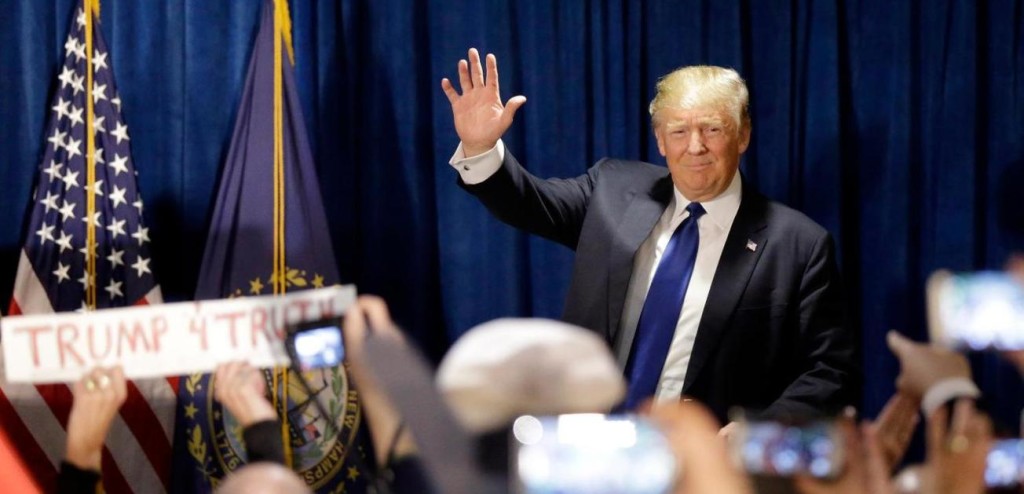
New Hampshire voters have made their picks: Republican Donald Trump and Democrat Bernie Sanders. They are choices with implications for next-to-vote South Carolina, Nevada and beyond in the 2016 race for president. Here are some takeaways from the results in the first primary state: — TRUMP PROVES HE’S A WINNER He needed a strong victory. Trump got one Tuesday in New Hampshire. The longtime Republican front-runner proved he can do more than just top preference polls by posting a dominant victory in the nation’s first primary state. And with it, he could become difficult to stop as the nomination battle moves forward. The brash billionaire was already far ahead of the fractured GOP field in polls of next-to-vote South Carolina before Tuesday’s win, and it should be expected that he’ll get a boost of momentum coming out of New Hampshire. Also to be expected: the GOP establishment’s worries about Trump will deepen. Those Republican leaders who fear Trump is unelectable in a general election – and there are many – publicly suggest they have until mid-March to coalesce behind a viable alternative. But the continued strength of Texas Sen. Ted Cruz, along with Marco Rubio‘s lackluster performance in New Hampshire, suggest that most of the Republican field will be locked in a messy muddle for weeks to come. And as they fight among themselves for second and third place, Trump may get a relative free pass to grow stronger. — RUBIO’S TOUGH NIGHT Hounded by Chris Christie in the final debate before Tuesday’s primary for what the New Jersey governor argued is his thin record of accomplishment, Rubio repeated a line from his standard stump speech four times. And for the next two days, Rubio defended doing so – even as the whiff of momentum he had carried forward from a strong third-place finish in Iowa’s caucuses was evaporating. The Florida senator finally fessed up after voters delivered their verdict in Tuesday’s primary. “I want you to understand something. Our disappointment tonight is not on you. It’s on me. It is on me. I did not do well on Saturday night,” Rubio said. “Listen to this: That will never happen again. That will never happen again.” The question for Rubio is how long the damage will last. He moves on to South Carolina no longer ready to emerge as the prospective alternative to Trump and Cruz. Instead, he’s back among the pack of GOP hopefuls looking to break out. — CLINTON’S VULNERABILITIES Sanders’ blowout victory over Hillary Clinton exposed significant weaknesses in the former secretary of state’s White House bid. Sanders won an overwhelming majority of young voters, a significant part of the coalition that twice helped elect Barack Obama. And Sanders and Clinton were evenly divided among women, a major setback for a candidate who aims to become the nation’s first female president. Clinton campaign manager Robby Mook wrote in a memo that her campaign is well-positioned among black and Latino voters who are prominent in Nevada, South Carolina and the March contests. But the resounding loss in New Hampshire, which Clinton won in 2008 and where her husband revived his flagging campaign in 1992, creates the potential for the party’s diverse electorate to give Sanders a second look. — WHAT VOTERS CARE ABOUT Among Democrats, voters said they valued honesty over other qualities in a candidate – including experience, caring about people like them and electability. That loomed large for Sanders. Less than half of Democratic primary voters in New Hampshire said Clinton is honest and trustworthy. Asked which of the two Democratic candidates had those qualities, half said only Sanders had them – and more than 9 in 10 of those people voted for him. About 4 in 10 said both of the Democrats were honest and trustworthy, but very few said only Clinton has those traits. Seven in 10 self-identified independents voting in the Democratic primary supported Sanders, while self-identified Democrats were evenly split between the two candidates. On the Republican side, voters who wanted an outsider made a big difference for Trump. Half said they want the next president to be outside the political establishment – 6 in 10 of them voted for Trump. Among those saying they want a candidate who “tells it like it is” over other qualities, two-thirds voted for the real estate mogul and former reality TV star. — CAMPAIGN CASH Money is about to get tight for several candidates who just unloaded much of their campaign coffers in New Hampshire, a state where it costs a lot to broadcast TV ads. And some of the biggest Republican donors who’d been hoping for a clear signal from voters as to which of several candidates would be the strongest competitor to Trump and Cruz will have to keep waiting. That means fortunes aren’t likely to dramatically rise for any of those would-be alternatives: Rubio, John Kasich and Jeb Bush. Kasich, the second-place finisher in New Hampshire, began the year with just $2.5 million, about one-third as much as Bush and a quarter of Rubio’s available cash. Kasich senior adviser Tom Rath said Tuesday he expects an infusion of donations based on the New Hampshire results. “We have a lot of people who have been promising money if we perform,” Rath said. “Tonight, we performed.” As for Rubio and Bush, both campaigns were working hard to portray to donors their middle-of-the-pack finishes as a “win” of sorts. Yet both ended up well behind Trump and Kasich and were in a battle for third place with Cruz. The results leave little incentive for prospective donors looking for someone to take on Trump and Cruz to act now. Republished with permission of the Associated Press.
NARAL Pro-Choice America ad slams Marco Rubio on abortion rights
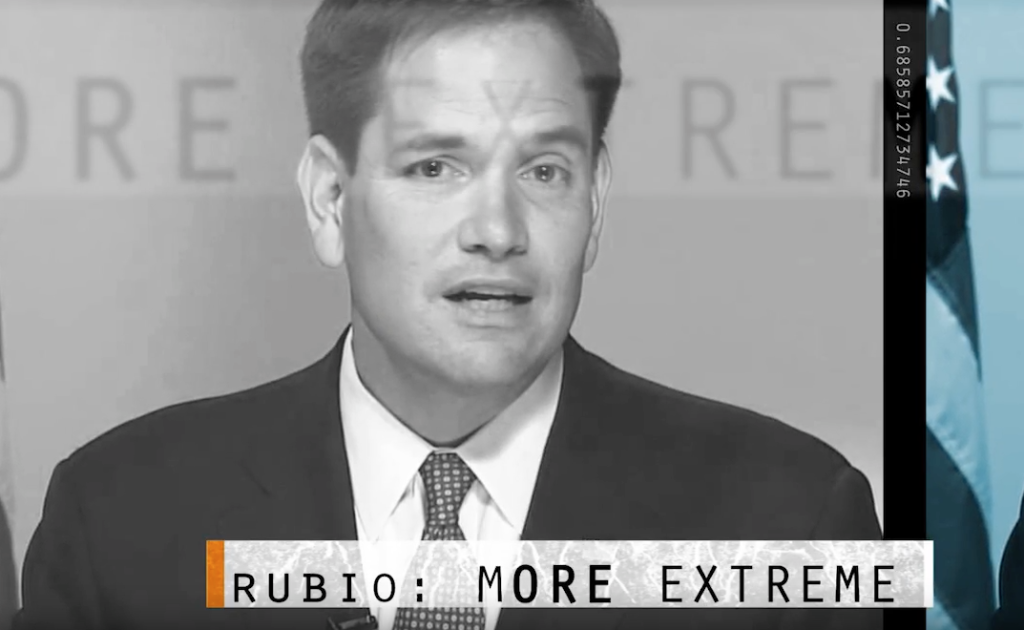
A new 30-second television ad from NARAL Pro-Choice America blasts Marco Rubio for what the abortion rights group calls his “extreme and out-of-touch stance on abortion.” “While Senator Rubio’s legislative record may be thin, his priorities are crystal clear,” said Joel Foster, national political director of NARAL Pro-Choice America. “He’d deny abortion to all Americans, even those who are survivors of rape and incest. While Rubio may try to portray himself as some sort of new generation of Republican, his position on abortion is from the dark ages and is far more extreme than even many of his Republican colleagues. Rubio has made his priorities clear. But the facts are clear, seven in 10 Americans believe abortion should be legal and Marco Rubio’s priorities are not America’s priorities.” The Florida senator has startled some political observers for his stance against any and all abortions, including for survivors of rape and incest. On ABC’s “This Week with George Stephanopolous” on Sunday, Rubio reiterated that position. “I believe that all human life is worthy of the protection of our laws, that’s what I deeply and personally believe, and I’m not going to change my position on something that is so deep in me in order to win an election,” he told the ABC host. “So what do you say to that mom, when you look her in the eye,” Stephanopoulos asked him. “It’s a terrible situation,” Rubio replied. “I mean, a crisis pregnancy especially as a result of something as horrifying as that, I’m not telling you it’s easy. I’m not here saying it’s an easy choice, it is a horrifying thing what you’ve just described. It’s heartbreaking. It is unimaginable quite frankly.” At times during this campaign, Rubio has slightly tweaked his stance on the issue. In an interview last fall with the Associated Press, Rubio said he unequivocally backs abortion exceptions when the life of the mother is in danger. He said he also would back legislation with allowances for cases of rape and incest — even though he personally doesn’t support those exceptions. An August Quinnipiac University poll showed that 78 percent of registered voters said abortion should be legal in cases of rape or incest, and 85 percent said it should be legal to save the life of the mother. The same poll showed 65 percent of registered voters said they could support a presidential candidate that holds a different position than they do on abortion. The ad is scheduled to run on national cable networks this week. Watch below:
Alabama business roundup: Headlines from across state – 2/10/16 edition

Who’s paying $17k to OSHA after a worker accident? What household name is accelerating store closings across the state? How much do inmates cost the state? All of this and more in today’s Alabama Business Roundup: AL.com: Plant agrees to pay $17K to OSHA after Decatur worker dies in accident A Decatur plant has agreed to pay $17,290 after it was cited for four serious safety violations months after one of its workers was killed on the job. The Occupational Safety and Health Administration issued citations with a proposed penalty of $24,200 to Independence Tube, which employed 49-year-old Gary “Tim” Timothy Cooper. Cooper was killed at work Oct. 28 when a 6,000-pound steel coil fell on and crushed him. OSHA spokesman Michael D’Aquino said the agreement reached Tuesday with Independence Tube will not change the classification of the violations. “The hazards cited have all been abated, such as revising the procedure for banding coils, providing fall protection, developing procedures to de-energize machinery (for changing the overarm), and installing guards on all horizontal shafts as well as sprocket wheels and chains,” he said. D’Aquino said a serious violation exists when the workplace hazard could cause an accident or illness that would most likely result in death or serious physical harm. Independence Tube President Rick Werner did not immediately respond to a request for comment. At the time of Cooper’s death, the Morgan County Coroner’s Office categorized the incident as an “industrial accident” with no foul play suspected. Birmingham Business Journal: Alabama AG announces home mortgage abuse settlement with HSBC Alabama Attorney General Luther Strange announced Friday a $470 million joint state-federal settlement with mortgage lender and servicer HSBC to address mortgage origination, servicing, and foreclosure abuses. The settlement provides direct payments to Alabama borrowers for past foreclosure abuses, loan modifications and other relief for borrowers in need of assistance, rigorous mortgage servicing standards, and grants oversight authority to an independent monitor. The settlement includes Alabama and 49 other states, the District of Columbia, t he U.S. Department of Justice, the U.S. Department of Housing and Urban Development and the Consumer Financial Protection Bureau. HSBC to substantially change how it services mortgage loans, handles foreclosures, and ensures the accuracy of information provided in federal bankruptcy court. The terms will prevent past foreclosure abuses, such as robo-signing, improper documentation and lost paperwork. “This agreement provides much-needed relief to eligible Alabama borrowers, and puts a stop to many of the bad practices that have harmed consumers,” Strange said. “Through tough servicing standards, this agreement compels HSBC to abide by more fair procedures.” The agreement’s mortgage servicing terms largely mirrors the 2012 National Mortgage Settlement (NMS) reached in February of 2012 between the federal government, 49 state attorneys general, including Alabama, and the five largest national mortgage servicers. That agreement provided consumers nationwide with more than $50 billion in direct relief, created new servicing standards, and implemented independent oversight. Approximately 1,094 eligible Alabama borrowers whose loans were serviced by HSBC and who lost their home to foreclosure from January 1, 2008, through December 31, 2012, and encountered servicing abuse will be eligible for a payment from the national $59.3 million fund for payments to borrowers. The borrower payment amount will depend on how many borrowers file claims. Eligible borrowers will be contacted by a settlement administrator about how to qualify for payments. The settlement’s consumer protections and standards include Making foreclosure a last resort by first requiring HSBC to evaluate homeowners for other loss mitigation option Restricting foreclosure while the homeowner is being considered for a loan modification Procedures and timelines for reviewing loan modification application Giving homeowners the right to appeal denial Requiring a single point of contact for borrowers seeking information about their loans and maintaining adequate staff to handle calls. AL.com: Sears accelerating store closures, including 3 Kmarts in Alabama Sears Holdings Corp. announced today it will accelerate the closing of unprofitable stores this year after fourth-quarter sales were down 7.1 percent. The company, which also owns Kmart, said the holiday season was challenging as a result of “historically warm weather and intense competition pressuring margins and driving comparable store sales declines, particularly in our apparel and related softlines businesses.” Sears expects total revenues of $7.3 billion and $25.1 billion for the fourth quarter and full-year of 2015, respectively. “Based on this performance, we are taking further actions to accelerate our transformation, which is focused on our Shop Your Way membership program and our Integrated Retail offerings,” Sears Holdings said in an earnings release. Fifty stores, including Kmarts in Florence, Prattville and Dothan, will close as the company looks to reduce ongoing expenses, adjust its asset base and transform its business model. Sears Holdings spokesman Howard Riefs said the Dothan and Florence stores will shut down in mid-March, followed by the Prattville site in mid-April. Liquidation sales are underway now as nearly 200 workers look for jobs within the company or elsewhere. As stores close, Sears will evaluate its cost structure, including optimizing store-level marketing expenditures and overall staffing levels. “We will be taking action to reduce our fixed costs, and to improve our inventory management and gross margin realization,” Sears said. The company, which has reduced its net debt by about $1 billion, will target at least $300 million of other asset sales during the first half of fiscal 2016. Click here for the full earnings report. Kmart closed its only Huntsville store last year on 1401 Memorial Parkway, less than a year after the Sears in Decatur shut down. The company also shuttered the Sears and its auto store at Bel Air Mall in Mobile in 2015. When the stores in Florence, Prattville and Dothan close this spring, there will be 14 Kmarts left in Alabama. Birmingham Business Journal: Inmate Inc.: The costs of corrections in Alabama During Tuesday’s State of the State Address, Gov. Robert Bentley said Alabama would implement a complete transformation of the state’s prison system. This will be accomplished by permanently closing the doors to outdated facilities where maintenance costs
Jeb Bush attacks John Kasich on Medicaid expansion as the campaign moves to South Carolina
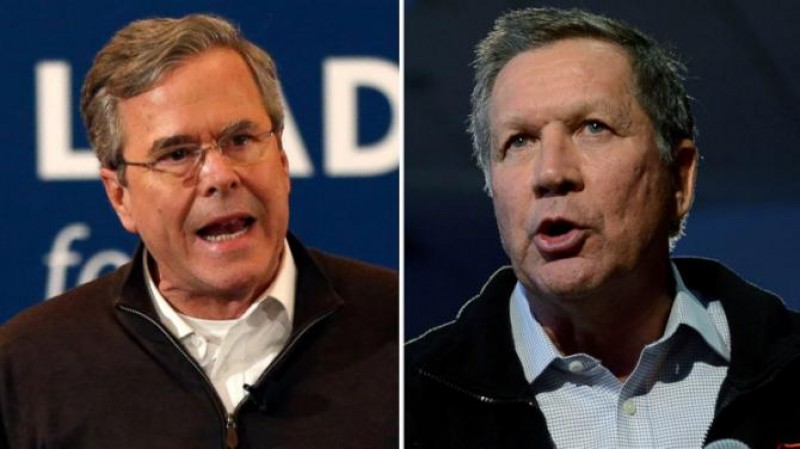
New Hampshire was said to be the crucible for the three governors running for the centrist/establishment lane of the GOP presidential contest. The winner of that competition was John Kasich, the Ohio Governor who came in second place behind Donald Trump. Jeb Bush came in fourth, ahead of Marco Rubio and Chris Christie, whose future in the race now looks dubious. On MSNBC’s Morning Joe on Wednesday, Bush began laying out the case why he should be the conservative choice over Kasich. “A conservative needs to win the conservative party’s nomination, and I’m the most conservative governor and most conservative candidate with a proven record in the field right now, and that’s my case,” he said. On Monday, Right to Rise, Bush’s Super PAC, began airing an ad in New Hampshire critical of Kasich’s record and past statements. However, the enmity goes both ways. ABC News reported on Tuesday that Kasich supporters making phone calls on behalf of their candidate were instructed in their scripts to criticize Bush. On Morning Joe, Bush explicitly criticized Kasich on what is undoubtedly an issue that could hurt him with Republicans – his decision to expand Medicaid, allowing more Ohio citizens to sign on to the Affordable Care Act. “John’s a good man, he’s served as governor in the state of Ohio, he’s done a good job,” Bush said. “But his record is not nearly as good as mine. And the one telling thing that he did, apart from not really focusing on rebuilding the military, is that when he had a chance, he expanded Obamacare through Medicaid.” “He’ll have to explain that down here,” Bush added. “People want (the ACA) repealed. They don’t want it expanded.” Bush mentioned how Rick Scott was one of some Republican governors who resisted Medicaid expansion; an issue considered anathema by the GOP establishment since it is part of the Affordable Care Act. The issue has divided Republicans, and Arizona’s Jan Brewer and Pennsylvania’s Tom Corbett were two other governors who opted for expansion. Bush refused to say how he’ll do in the South Carolina Primary, which takes place on February 20. He did say that Kasich doesn’t seem to have much of an effort on the ground in the Palmetto State, saying that it appears the Ohio Governor “had a one-state strategy.” “My intention is to do well here, ” Bush said. “To build on the success we had and to continue to make the case that we need a proven leader in Washington D.C. to fix the mess, not just to talk about how bad things are but to actually allow people to rise up again, because people are struggling in this country.”
