
Robert Aderholt-backed bill would allow drug testing for food stamps
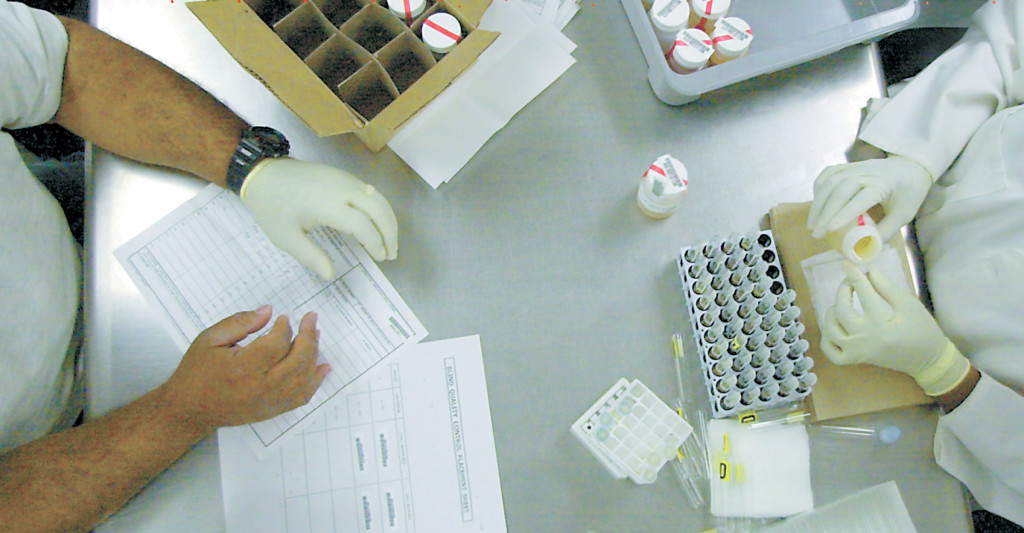
A key House Republican is renewing a GOP push to allow drug tests for low-income food stamp recipients, a move to help states like Wisconsin, where Gov. Scott Walker has sued the federal government to permit screening. Alabama Rep. Robert Aderholt unveiled the measure on Thursday as Republicans look to find savings in the program. Aderholt says that states could choose whether they wanted to allow drug testing, so the legislation wouldn’t be a mandate. He says it’s common sense to create drug programs for those who need help. “This is a compassionate way to try and help these people who have issues, instead of turning the head,” said Aderholt, chairman of the House subcommittee that oversees spending for the Agriculture Department, which administers the food stamp program. The bill is designed to aid states like Wisconsin, where former GOP presidential candidate Walker has sought to require food stamp recipients to undergo drug screening. Walker’s administration filed suit against the Agriculture Department, which has said federal law bars the practice. The government says states cannot impose new standards of eligibility under the law, and Agriculture Secretary Tom Vilsack has said drug testing recipients is intrusive and ineffective. The legislation would find savings – and cut benefits for some recipients – by making it harder for people to become automatically eligible for food stamps if they already participate in a federal heating assistance program. Aderholt’s office says the estimated savings are around $1.2 billion, with about half of that awarded to states for drug treatment programs. The food stamp program, now called the Supplemental Nutrition Assistance Program, or SNAP, served more than 46 million Americans and cost $74 billion last year. That’s twice the program’s 2008 cost. Though he has not weighed in on Aderholt’s legislation, House Speaker Paul Ryan, R-Wis., has long said he wants to overhaul the food stamp program, along with other federal assistance for the poor. He has in the past proposed budgets that would convert federal food stamp dollars into block grants for the states, a move that would cut spending for the program. Aderholt says he hopes his legislation is a first step in a larger GOP effort to overhaul the food stamp program. In 2013, House Republican leaders tried unsuccessfully to cut the program by 5 percent annually by passing broad new work requirements as part of a massive farm bill. The bill also included drug testing for recipients. House leaders held up the bill for more than a year, insisting that money for farm programs be paired with significant cuts to food stamps. Democrats balked, and the final bill included a much smaller cut and no allowances for drug testing. That effort was before Republicans won the Senate in 2014. Since then, House Agriculture Chairman Mike Conaway of Texas has led what he calls a comprehensive, multiyear review of the program to see what’s working. He said last year that “either huge reforms or small reforms” could come from that process. Aderholt did not rule out adding his legislation to this year’s agriculture spending bill, which he writes. But he said he will try and move it through Conaway’s committee first. Republished with permission of the Associated Press.
Ted Cruz app data collection helps campaign read minds of voters
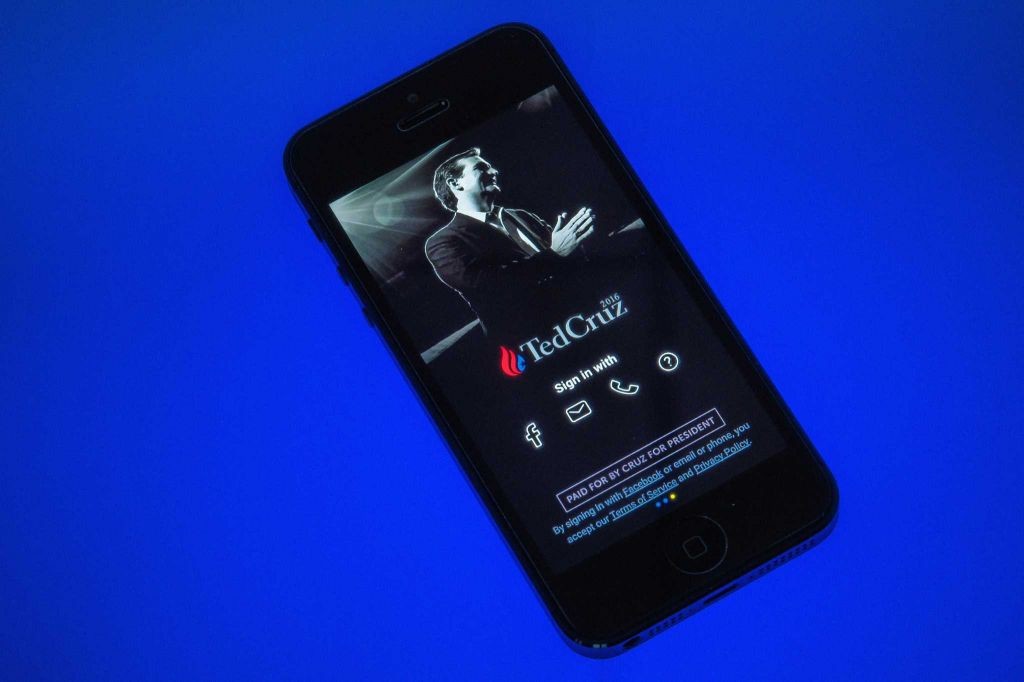
Protecting the privacy of law-abiding citizens from the government is a pillar of Ted Cruz‘s Republican presidential candidacy, but his campaign is testing the limits of siphoning personal data from supporters. That information and more is then fed into a vast database containing details about nearly every adult in the United States to build psychological profiles that target individual voters with uncanny accuracy. Cruz’s sophisticated analytics operation was heralded as key to his victory in Iowa earlier this month — the first proof, his campaign said, that the system has the potential to power him to the nomination. After finishing a distant third in New Hampshire, Cruz is looking to boost the turnout of likely supporters in South Carolina and in Southern states with primaries on March 1, where voters are more evangelical and conservative. The son of mathematicians and data processing programmers, Cruz is keenly and personally interested in the work. “Analytics gives the campaign a roadmap for everything we do,” said Chris Wilson, data and digital director. “He has an acute understanding of our work and continually pushes me on it.” Data-mining to help candidates win elections has been increasing among both Republicans and Democrats. Mobile apps by other presidential campaigns also collect some information about users. But The Associated Press found the Cruz campaign’s app — downloaded to more than 61,000 devices so far — goes furthest to glean personal data. The Cruz app prompts supporters to register using their Facebook logins, giving the campaign access to personal information such as name, age range, gender, location and photograph, plus lists of friends and relatives. Those without a Facebook account must either provide an email address or phone number to use the app. By contrast, the app offered by GOP candidate Ben Carson‘s campaign asks supporters to surrender the same information as Cruz from their Facebook accounts, but also gives an option to use it without providing any personal information. Carson’s app separately asks users to let the campaign track their movements and asks them to voluntarily supply their birthdate and gender — including options for “male,” ”female” and “other.” Ohio Gov. John Kasich‘s campaign app doesn’t request personal information from supporters, but it repeatedly nags users to let the campaign track their movements until they answer yes. Democratic Sen. Bernie Sanders‘ app, “Field the Bern,” requires supporters to sign in using their Facebook account or an email address, and it also repeatedly asks to let the campaign track their movements until they answer yes. The Cruz app separately urges users to let it download their phone contacts, giving the campaign a trove of phone numbers and personal email addresses. The campaign says that by using its app, “You hereby give your express consent to access your contact list,” but Wilson said the campaign will not do this to anyone who declines to allow it when the app requests permission. Cruz’s app also transmits to the campaign each user’s physical location whenever the app is active, unless a user declines to allow it. The campaign said it does this “so that we can connect you to other Cruz Crew users based on your particular geographic location.” The campaign tells users it can share all the personal information it collects with its consultants or other organizations, groups, causes, campaigns or political organizations with similar viewpoints or goals. It also shares the material with analytics companies. Cruz’s campaign combines the information with data from a group called Cambridge Analytica, which has been involved in his efforts since fall 2014. A Cambridge investor, Robert Mercer, has given more money than anyone else to outside groups supporting Cruz. Sanders’ campaign said it shares personal information from supporters with its consultants and vendors but not analytics companies. Cambridge has a massive 10 terabyte database — enough to fill more than 2,100 DVDs — that contains as many as 5,000 biographical details about the 240 million Americans of voting age. Cambridge considers its methodology highly secretive, but it may include such details as household income, employment status, credit history, party affiliation, church membership and spending habits. Cambridge uses powerful computers and proprietary algorithms to predict Americans’ personality traits. The Cruz campaign paid Cambridge $3.8 million in 2015, accounting for more than 8 percent of all its spending. Two outside groups supporting Cruz, including one directly funded by $11 million from Mercer, paid the firm $682,000 since December. Cambridge has five employees at Cruz headquarters in Houston and 70 others split between New York City and the Washington suburbs. The power of Cruz’s data-driven systems was on display in Iowa. The GOP candidates held similar positions on issues such as abortion and gun control. Cambridge helped differentiate Cruz by identifying automated red light cameras as an issue of importance to Iowa residents upset with government intrusion. Potential voters living near the red light cameras were sent direct messages saying Cruz was against their use. “Everything in this campaign is data-driven. I’ve never seen anything like it,” said Jerry Sickles, a paid field representative in Hooksett, New Hampshire, who uses the Cruz Crew app. “We just know exactly who our voters are, and we will make sure they get out to vote.” Cruz, the junior senator from Texas, has been outspoken about protecting Americans’ personal information from the government, including the National Security Agency. “Instead of a government that seizes your emails and your cell phones, imagine a federal government that protected the privacy rights of every American,” he said when announcing his campaign. Cruz campaign officials say it’s different for the government versus a campaign to collect data. Sickle said Cruz is building on the use of big data pioneered by the successful Democratic campaigns of Barack Obama in 2008 and 2012. “It’s not like we’re giving it to the NSA,” Sickle said. A campaign spokeswoman, Alice Stewart, added: “Why wouldn’t we want to use every tool available to us to win?” The scope of Cruz’s system is formidable. Cambridge’s database combines government and
Hillary Clinton aims to reset campaign with focus on black voters

After an overwhelming loss in New Hampshire, Hillary Clinton is staking a campaign comeback on her ability to woo black and Latino voters, placing outreach to those communities at the center of her strategy to retool her 2016 bid. The 22-point loss to rival Bernie Sanders in this week’s primary heightened concerns among Democrats that Clinton’s message is failing to win over both women and young voters — two key parts of the coalition that twice elected Barack Obama to the White House. The New Hampshire defeat, along with Clinton’s razor-thin win in the leadoff Iowa caucuses, raised the stakes for Clinton to rally minority voters — another pillar of the Obama coalition — in the contests coming up in Nevada and South Carolina. As the contest fans out across the country, Clinton’s campaign is casting her as a stalwart advocate for racial justice, tracing back to her days working for the Children’s Defense Fund in the 1970s. She will tie her future even closer to Obama, a deeply beloved figure among black Americans. Clinton also plans to intensify her focus on issues of importance to minority voters, such as immigration, civil rights and gun control, dispatching African-American supporters to make her case and launching a flurry of attacks to undermine any credibility Sanders may be building within the black community. Focus-group surveys conducted by Clinton’s campaign with undecided black voters in Charleston found that the former secretary of state has retained a high degree of trust with African-Americans, even as her numbers on trust and honesty have declined overall, according to Clinton aides. While the voters were open to Sanders and liked his economic message, their views shifted after hearing about his plans to replace the Affordable Care Act with a single-payer health care system and his past opposition to gun control measures, the aides said. “One candidate voted to give immunity to the gun manufacturers and opposed the Brady bill. … I can’t get past that,” said Rep. Cedric Richmond, D-La., on Thursday as the Congressional Black Caucus’ political action committee endorsed Clinton. While Clinton still holds a big lead among party insiders known as superdelegates, who can support the candidate of their choice, the first two contests made clear that Sanders has undermined her once dominant position as the nomination favorite. Her aides believe the next two contests and the primaries that follow in March, where minority voters make up a larger slice of the electorate than in overwhelmingly white Iowa and New Hampshire, could essentially decide the race. She already has a head start with black voters. An NBC News/Wall Street Journal/Marist Poll in late January showed African-American voters said they preferred Clinton to Sanders, 74 percent to 17 percent Since New Hampshire, Clinton has launched a full-scale press, unveiling endorsements from top African-American leaders. At the CBC event on Thursday, Georgia Rep. John Lewis, a civil rights icon, said he would travel to South Carolina this weekend to campaign for her. Clinton’s team will also be rolling out the support of 119 black legislators in the March voting states. And she’ll be endorsed by faith leaders in Flint, Michigan, adding to the 28 ministers and 50 black mayors who’ve already expressed support. Meanwhile, Clinton supporters are targeting Sanders’ record on issues like racial equality and criminal justice, even playing down his early support for the civil rights movement as a college student who joined the 1963 March on Washington. “Thousands of people walked on Washington. What are the real policy issues or legislation that he has presented?” said Dr. Hazel Dukes, president of the NAACP’s New York State Conference. On Friday, Clinton will head to rural Bamberg County, South Carolina, a poor, majority-black area, to hold a town hall on racial and economic disparities. She’s holding a Monday campaign event in Riviera Beach, Florida, a majority African-American city, before meeting with civil rights leaders on Tuesday and holding a campaign event with the mother of Sandra Bland, the Chicago-area woman whose death in a Texas jail cell has become a rallying cry for criminal justice reform. Former President Bill Clinton is being dispatched to Memphis, Atlanta and Florence, South Carolina, and the Clintons’ daughter, Chelsea, is heading to Flint, where the crisis over water has become a symbol of racial and economic inequality. Sanders’ campaign plans to promote his personal story, arguing that his early work as a college civil rights activist and his message of economic equality will help diversify his support. On Wednesday, he held a heavily publicized breakfast with civil rights activist Al Sharpton in Harlem, and Ta-Nehisi Coates, an influential writer on racial issues, said he would vote for Sanders. But his team also acknowledges that his constituency may be far stronger in states with less diverse Democratic electorates, like Oklahoma, Minnesota, and Massachusetts — all states where they launched new ads on Wednesday. “Bernie Sanders has an incredibly powerful story to tell,” said adviser Tad Devine. “His fight for equality and civil rights, his fight against inequality and economic injustice is very, very powerful. It’s going to resonate with the African-American community.” Republished with permission of the Associated Press.
State Senate approves bill prohibiting additional fees, hurdles for gun buyers

The Alabama Senate Thursday approved a bill from Sen. Phil Williams (R-Rainbow City), SB135, which will prohibit local governments from applying additional fees and “regulatory hurdles” to gun permits and purchases. Such tactics are often used to make purchasing a weapon or obtaining a permit more difficult. In his explanation of the bill, Williams noted that other cities have required prospective gun owners to submit essays, pay additional fees or possess a high school diploma. Williams specifically noted Seattle, which passed a $25 per gun tax and a 2- to 5-cent tax on every round of ammunition. “My legislation is designed to protect Alabama’s citizens from rogue action at the county and municipal level to push a liberal, anti-gun agenda by imposing local fees and obstacles,” Williams said in a news release. The legislation now moves to the House of Representatives, where it will likely be taken up next week. Senators also passed a slew of Sunshine Law bills today and confirmed a number of people to positions throughout the state, including Cliff Walker to the Pardons and Parole Board, Frank Ellis and Charles Price to the State Ethics Commission and several people to the Jacksonville State Univeristy and University of North Alabama Boards of Trustees. The Senate will reconvene Tuesday at 2 p.m.
House passes resolution to commend Ken Stabler’s Pro Football HOF induction

Alabama’s House of Representatives passed HJR42, a resolution brought forth by Rep. Randy Davis (R-Daphne) to posthumously commend Ken Stabler for his recent induction into the Pro Football Hall of Fame. Nicknamed “The Snake,” Stabler played quarterback for the University of Alabama Crimson Tide from 1965 to 1967, winning one National Championship and solidifying his place in Alabama football history with the legendary “Run in the Mud.” Stabler went on to play in the National Football League (NFL) from 1970 to 1984. During that time, Stabler played for the Oakland Raiders, the Houston Oilers and the New Orleans Saints where he racked up 194 touchdowns, 2,270 completions and a 75.3 quarterback ranking. After retiring from the NFL, Stabler worked as a commentator for CBS and then alongside Eli Gold calling Alabama football games over the airwaves. Stabler died of colon cancer in July 2015 at the age of 69. He was inducted into the Hall of Fame this year alongside famed Green Bay Packers quarterback Brett Favre and others.
Ava’s Law passes Senate, provides stiffer penalties for child abusers

On Tuesday, the Alabama Senate passed “Ava’s Law,” a bill brought forth by Sen. Tom Whatley (R-Auburn) which strengthens penalties for aggravated child abuse. The bill makes it possible to charge offenders with murder if aggravated child abuse leads to the death of a child. Currently, perpetrators of aggravated child abuse, which leads to the unintentional death of a child, can only be prosecuted on manslaughter charges, the punishment for which is 20 years in prison. This legislation will allow prosecutors to seek stiffer charges for offenders. The bill is named for Ava Zapata, a 4-year-old Lee County girl who died in May 2012 as a result of the abuse levied upon her by her mother’s boyfriend. “This closes a loophole in the law and gives our district attorneys the authority they need to fully prosecute people who abuse children so violently a child dies,” Whatley said in a news release. “If an innocent person is unintentionally killed during the course of a robbery, that death can be prosecuted as murder. Under Ava’s Law, child abuse that leads to a death could also be prosecuted as a murder.” “Ava’s Law bridges the gap between capital murder and manslaughter,” said Assistant District Attorney for Lee County Jessica Ventiere, who was involved in the trial of Ava’s murderer and testified before earlier committees hearing the bill. “It offers an option stronger than manslaughter when the evidence shows an intent to abuse but not necessarily the specific intent to kill, which is required to prove capital murder. Aggravated child abuse is a cruel and intentional act that deserves to be set apart from the recklessness of manslaughter. This law will establish a penalty appropriate for the crime.” The legislation will now go before the House of Representatives where it will likely be taken up next week.
House members clash over 2 Republican-sponsored bills
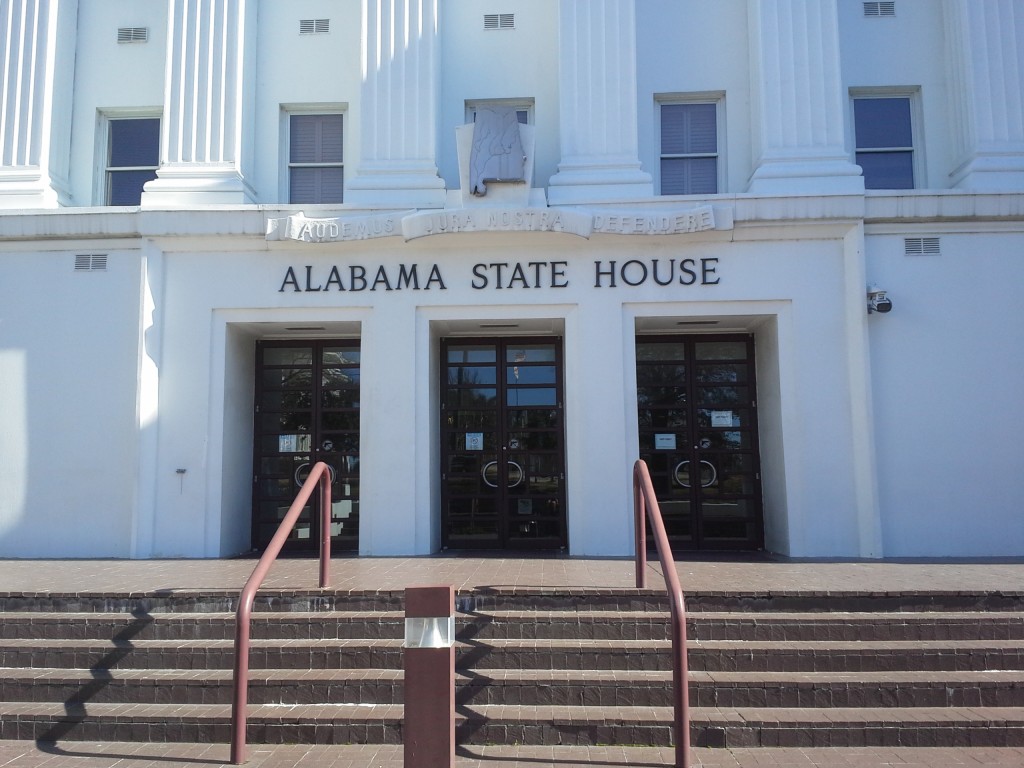
House Democrats started today’s session by fighting vehemently against a bill brought forth by Rep. Arnold Mooney (R-Birmingham), HB37, which would add Alabama’s status as a “Right-to-Work” to the state constitution. The bill would further prohibit employers from requiring membership in a union or dismissing employees for their status as a union or non-union member. Though a handful of House Republicans spoke in favor of the bill, noting that Alabama’s status as a “Right-to-Work” state has attracted large businesses like Polaris and Mercedes, the vast majority of comment on the bill came from House Democrats in opposition to the bill. Members of the party took turns at the podium, stalling a vote on the bill for more than two hours. “I know y’all call it ‘right to work,’ but it’s really ‘right to fire,’” Rep. John Rogers (D-Birmingham) said. Several other opponents noted that Alabama is already a “Right-to-Work” state by statute and wondered why there was a need for the bill. Mooney clarified that having Alabama’s “Right-to-Work” status codified in the constitution would encourage more businesses to locate to Alabama. Rep. Patricia Todd (D-Birmingham) also voiced opposition to the bill over the fact that Alabama’s constitution is already among the longest in the world, saying that while other states can carry a pocket-sized version of their constitution Alabamians would “need a cart to carry our constitution around.” Rep. John Knight (D-Montgomery) concurred, adding that there are many issues that are more deserving of codification in the state constitution. Knight offered an amendment to the bill guiding new businesses to give preferential hiring treatment to veterans. “This will send a strong message to veterans across this state that we support them,” Knight said before the amendment was approved, 67 to 28. According to statistics from the Bureau of Labor Statistics, the three states with the lowest unemployment rates in the nation, North Dakota, Nebraska and South Dakota, are “Right-to-Work” states. Contrarily, the states with the highest unemployment rates in the nation, New Mexico, the District of Columbia and Alaska, are not. After a bit more discussion, Mooney’s bill was defeated by a margin of 60 to 24. Next the House took up HB45 from Rep. April Weaver (R-Shelby), which outlaws the sell of fetal tissue and provides parents with the right to respectfully dispose of a deceased child’s remains. Again only a few comments were made in support of the bill with the majority of comment coming from opposing Democrats, especially those who linked the legislation to the recently debunked Planned Parenthood sting videos. “I’m not going to argue the merits for or against abortion,” Todd said. “But I am going to point out the hypocrisy of this bill. It seems like (Republicans) only care about those nine months when they’re in the womb.” Todd added that the House should take up measures to ensure that children aren’t forced to live in poverty or go without basic needs. Though debate on the bill had not yet completed, the House adjourned until 1 p.m. Tuesday.
Beware of tax-season scam artists

Jan. 19 marked the start of tax season, a time only looked forward to by big spending politicians, bureaucrats and fraudsters. With Tax Day less than three months away, folks across the country are scrambling to get their financial houses in order as they prepare to file with the IRS. Complicating an already stressful process is the increased threat of tax fraud, as a growing number of scammers and sophisticated hackers are hard at work trying to steal from unsuspecting tax filers. There have been 736,000 reports of fraudulent incidents of scammers calling taxpayers falsely claiming to be from the IRS. The phone scams started by targeting seniors and immigrants but have now expanded to targeting everyone in all 50 states. These phone scams have cost victims more than $23 million since 2013. Now scammers are posing as tax-filing services as well. Just this week, it was reported that scammers are sending emails, falsely appearing to be from TurboTax, that aim to steal personal information. If you receive such an email, delete it and don’t reply or forward it. Although some of the most common scam tactics use direct contact like phone and email, there are growing concerns over the use of technology and a lack of online security for taxpayers. Tax fraud from online tax programs is becoming a bigger and bigger problem. There are literally millions of online accounts that criminals can use to prey on legitimate taxpayers, stealing their identity and pocketing their hard-earned money. Everyone is at risk, especially seniors. In 2013 alone, swindlers succeeded in stealing $5.8 billion in fraudulent refunds on 1 million returns. When filing online, beware of services that do not have security measures to protect your identity. Whistle-blowers from Intuit/TurboTax have spoken out about the lack of security measures for online filers. In 2015, two former TurboTax employees came forward acknowledging that they had “found literally millions of accounts that were 100 percent used only for fraud,” and that TurboTax management “forbade” them from flagging or turning off the fraudulent accounts and refused to implement suggested security measures to stop the rampant fraud. Although tax scams don’t discriminate, unfortunately America’s seniors are among the most vulnerable for falling victim to fraud — having their identity stolen or personal security compromised during tax filing season. On behalf of 60 Plus, I encourage seniors and their loved ones to be on the lookout for unscrupulous individuals and companies who would put them and their personal information at risk.
House Committee approves bill prohibiting cities from setting minimum wage

The House Committee on State Government met Thursday to discuss a bill from Rep. David Faulkner (R-Birmingham), HB174, also called the “Uniform Wage and Right-to-Work Act,” which will establish Alabama as a “Right-to-Work” state, prohibit local governments from establishing minimum leave, wages or other benefits for employees and would give the legislature authority to establish “uniform employment policies and regulations of collective bargaining under federal labor laws.” Faulkner noted that the bill has taken on unexpected importance due to Birmingham’s recent moves to increase its minimum wage to $8 an hour, with an eye for eventually increasing it to $10.10 per hour. “We all want jobs in this state,” Faulkner said. “We want this to be a business-friendly state climate. This bill does not set, it does not lower, it does not establish a minim wage. It says let’s maintain what we’ve always had in Alabama.” After Faulkner’s statements, a public hearing began with Michael Frank, member of the Brotherhood of Locomotive Engineers and Trainmen and the Teamsters Rail Conference. “I’ve tried to read this bill,” Frank said, condemning the short notice given on the public hearing for the bill. “It doesn’t make any sense to me. Business-friendly is great, but what are we trying to create here? Citizens haven’t had a chance to respond to this. Business has, obviously they crafted this bill.” Chris Stewart spoke in favor of the bill, noting that a minimum wage hike would stifle hiring and, in doing so, would disproportionately affect people with intellectual disabilities who would be forced to get back on an ID waiver, therefore taking money from the general fund. Ricky Kornegan, a retired coal miner and mayor of Woodstock, spoke in opposition of the bill on the grounds that the state government should not oversee the decisions of city governments, noting widespread opposition to the federal government’s interference in state government. Otis McGuire, a representative from Piggly Wiggly, who has seen the effect of Birmingham’s wage hike in stores in the area, spoke in favor of the bill. “With this type of move, it would negatively impact us,” McGuire said of Birmingham’s wage increase. “It’s not a real complicated issue to us, but it comes down to that thin, thin profit margin.” Next to speak in opposition of the bill was Joe Keffer, a member of grassroots organization “Montgomery Needs A Raise $10.10,” which advocated for the minimum wage increase in Birmingham. “What they’re doing is speaking for the businesses, for the wealthy, for the big corporations,” Keffer said. “It puts people in poverty.” Last to speak in support of the bill was Bill Canary of the Business Council of Alabama, who said the bill was an issue in support of small businesses. “Today the minimum wage has become a political wage issue of the worst type,” Canary said. “The best weapon in the war on poverty is jobs.” After the public hearing concluded, Rep. John Rogers (D-Birmingham) and Rep. Darrio Melton (D-Selma) offered opposition to the bill. “I’m a business man and I talk business and I’m a successful business man and I don’t pay a paltry salary,” Rogers said. “It’s a polarizing bill. Y’all know we’re going to be fighting this bill.” “Big business is making money, the people working these jobs are not making money,” Melton said. “It’s about how we treat our brothers and sisters.” A roll call vote was taken and the bill received a favorable report along party lines. If the bill passes the full Legislature, Birmingham’s minimum wage hike will revert back to the federal minimum wage.
How seniors can prevent rising online scams, identity theft during 2016 tax season

As April 15 quickly approaches and Americans start to file tax returns, a large number of people will be in for a shock. And it’s not a bigger-than-expected refund. Many will learn their taxes have already been filed – by someone else using their identity. Identity theft and tax fraud are on the rise in 2016, with an increasing number of fraudulent tax filings to the Internal Revenue Service through such popular online programs as TurboTax, H&R Block, and eFile. Con artists use information such as Social Security numbers to file taxes and get a job falsely – resulting in the IRS having inaccurate taxpayer income data. One such case was a 29-year-old Okeechobee woman who filed a report in January with the local Sheriff’s office after discovering a tax return was previously submitted in her name, giving the thieves a refund of $1,500. According to the IRS, there were nearly 736,000 reports of fraudulent contacts since 2013, a majority of those by scammers posing as IRS agents. Phone rip-offs have cost taxpayers more than $23 million, the agency says. With more taxpayers turning to the Internet to file taxes quickly and easily, the problem of identity theft is far from a minor nuisance. The IRS estimates it prevented $24.2 billion in identity theft in 2013; a report by the U.S. Government Accountability Office shows the IRS still paid $5.8 billion in fraudulent refunds, up from $3.6 billion the year before. Seniors and immigrants are particularly vulnerable to identity theft, IRS officials say. Usually, the scam begins with a call to victims asking for Social Security numbers. “Callers claim to be employees of the IRS, but are not,” the IRS website advises. “These con artists can sound convincing when they call. They use fake names and bogus IRS identification badge numbers. They may know a lot about their targets, and they usually alter the caller ID to make it look like the IRS is calling.” In a recent Context Florida op-ed, Apryl Marie Fogel of the 60 Plus Association, a nonpartisan senior advocacy group, warns that the use of technology and a lack of online security will only increase the problem. “There are literally millions of online accounts that criminals can use to prey on legitimate taxpayers, stealing their identity and pocketing their hard-earned money,” she writes. “Everyone is at risk, especially seniors.” As an example, Fogel points to the 2015 instance of two former TurboTax employees who acknowledged the existence of accounts that “were 100 percent used only for fraud.” The pair accused TurboTax management of “forbidding” either flagging or turning off the fake accounts while refusing to implement security measures to stop widespread fraud. In Florida, Attorney Gen. Pam Bondi’s office released a checklist to help safeguard taxpayers from fraud and identity theft: File tax returns early; Research tax preparers thoroughly before providing personal information; When filing electronically, Use a secure Internet connection. Do not use unsecured, publicly available Wi-Fi hot spots; Mail tax returns directly from the post office, not from home; Many taxpayers are eligible for an Identity Protection PIN from the IRS. Should someone enrolled in the IRS IP PIN program and file a return with an incorrect PIN, the IRS will reject or delay the return until submitted with the correct PIN and the taxpayer’s identity is confirmed. To obtain an IRS IP PIN IRS.gov; The IRS will never initiate contact by email, phone, text or social media. If the IRS needs information, it will first contact by mail; and If a Social Security number has been compromised, contact the IRS ID Theft Protection Specialized Unit at (800) 908-4490. Also, the 60 Plus Association issued a news alert/fact sheet with tips, precautions and things to keep in mind to avoid being scammed, which includes information about the IRS services available for seniors and others with low incomes. 60 Plus also provides an online resource with more information geared toward older adults: www.60Plus.org/StopIRSScams.
Mike Rogers: EPA oversteps, harms East Alabama jobs

As most of you across East Alabama know, I have always been a critic of big government. I think the bigger the Federal government gets, the more it intrudes in the daily lives of Americans. A perfect example of this is the Environmental Protection Agency (EPA). I believe the EPA has greatly over stepped its authority. States should be allowed to handle most of their own regulations just like the Alabama Department of Environmental Management (ADEM) does for our state. The EPA also consistently oversteps its boundaries with silly rules like Waters of the United States (WOTUS) known as “Clean Water Rule: Definition of ‘Waters of the United State.’” This rule actually gives the EPA control of bodies of water as small as puddles. Yes, it’s just as ridiculous as it sounds. It hurts East Alabama farmers and just doesn’t make sense. In mid-January, I joined my colleagues in the House of Representatives to support and pass S.J. Res. 22, a joint resolution with the Senate to disapprove of this rule. Because of rules like the Clean Water Rule and many other issues, I joined 25 of my colleagues and cosponsored H.Res. 417, a resolution calling on Gina McCarthy, Administrator of the EPA, to step down. This week in the House Agriculture Committee, a hearing was held titled, “To consider the impacts of the EPA’s actions on the rural economy.” This hearing examined the EPA’s excessive regulatory decisions. Our farmers are America’s original conservationists, and they care more about our natural resources than most. However, the EPA continues to impose costly and burdensome regulations on them, forcing many out of business. The EPA’s overreach is unacceptable, and I will continue to push back and fight against their harmful agenda every chance I get. • • • Mike Rogers represents Alabama’s 3rd Congressional District. He is in his third term.
Hillary Clinton struggles to win over younger women
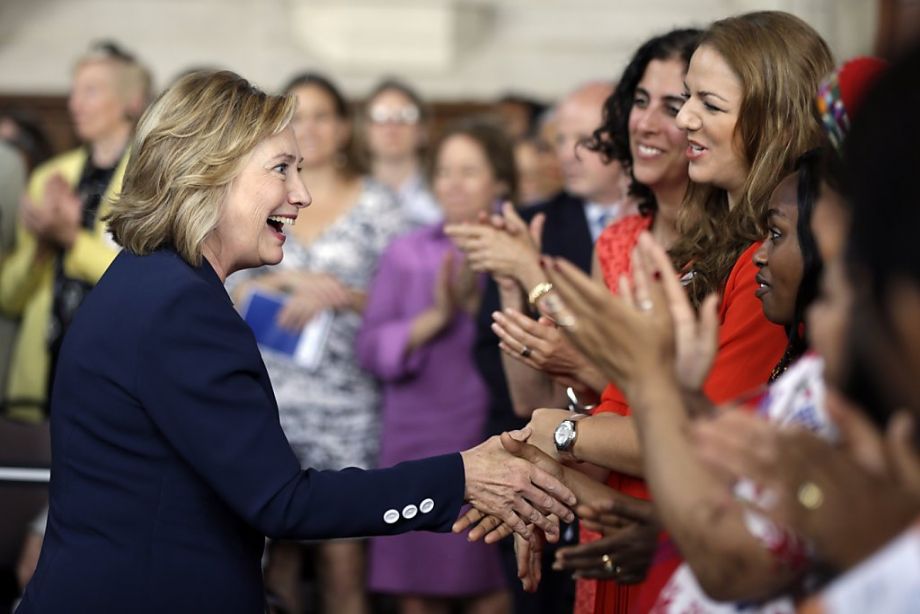
For young women, political revolution is currently trumping the idea of a Madame President. In New Hampshire, women under the age of 45 overwhelmingly backed Bernie Sanders over Hillary Clinton, exit polls showed. It’s a problem for the former secretary of state as she tries to build the coalition of voters needed to win the Democratic nomination, and she knows it, saying of young voters as she conceded New Hampshire to Sanders that, “even if they are not supporting me now, I support them.” The numbers are staggering, and not just because Clinton – widely expected to be the first woman to win the presidential nomination of a major political party – lost New Hampshire women to a 74-year-old grandfather. Sanders won the votes of 7 out of every 10 women under the age of 45, and nearly 80 percent of women under the age of 30. “I think for young women, they clearly identify as feminists, they say they’re feminists, but I think the notion of having a woman president … it doesn’t drive them in the same way, as women who are in the traditional second wave of feminism,” said Debbie Walsh, director for the Center for American Women and Politics at Rutgers University. Indeed, young women in New Hampshire said they were more inspired by the Vermont senator’s ambitious policy proposals, including a government-run health care system for all and free public college tuition. Clinton’s more pragmatic ideas and complicated public history are a tough sell. “We always have another chance to have another woman president, but do we have another chance to have someone as genuine as Bernie Sanders is?” asked Nicole McGillicuddy, 26, a server at a Concord restaurant, who believes there will a female president in her lifetime. Clinton and Sanders will meet for the next debate of the Democratic race on Thursday in Milwaukee, when Clinton’s outreach to younger women is sure to continue. Compared with her 2008 bid, which focused more on experience and her readiness for the White House, Clinton has embraced her gender this time, touting her potential to be the first female president and stressing economic issues popular with women, including equal pay and family leave. She has promoted endorsements from women’s organizations, campaigned with female elected officials and sought to impress younger women with surrogates such pop star Katy Perry and actress Lena Dunham. But the message has not resonated, much to the frustration of the Clinton campaign. Angst over Sanders’ appeal erupted recently, when former Secretary of State Madeleine Albright said there was “a special place in hell” for women who don’t help women and renowned feminist Gloria Steinem said that Sanders’ female supporters were doing it to meet boys. Those comments were roundly criticized, prompting an apology from Steinem. “I can’t see voting for someone just because she’s a woman. That’s a bad message. It does not resonate. It’s lame,” said Barbara Considine, 58, of western Massachusetts. “It backfires. In fact, it’s suggesting we’re not supposed to think about what the issues are or anything else.” Clinton is expected to fare better in the upcoming early contests than she did in Iowa, where she barely eked out a win in the caucuses, and lost in New Hampshire. A recent national poll from Quinnipiac University showed Clinton winning women voters 48-38 against Sanders. Stephanie Schriock, the president of Emily’s List, which supports Democratic women who back abortion rights as they run for Congress and governors, and who has been campaigning for Clinton in the early states, argued that the idea Clinton was losing women was “overblown.” “We look at the national numbers and she’s doing well, including on millennial women. We’ve seen really good energy across the county from women of all ages,” Schriock said. Clinton has struggled to clearly define her message against Sanders’ insurgent effort, however – and his intense focus on breaking up big financial institutions and expanding social programs has captured liberal voters, especially young people. There are some similarities to 2008, when polling showed that President Barack Obama did better than Clinton with younger women. But the generational divide among young women over Clinton’s candidacy appears more entrenched than it was at this point in 2008. That year, the youngest female primary voters in New Hampshire – those under age 30 – were slightly more likely to support Obama than Clinton, 45 percent to 37 percent, while this year 79 percent of them voted for Sanders. Women between 30 and 44 in 2008 were slightly more likely to support Clinton than Obama, while this year most of them supported Sanders. “In 2008, I liked her a lot more back then. I think she was more of a genuine individual. Now she’s had eight years to become enmeshed in the machine,” said Lucy Fitzpatrick, 60, of Epping, New Hampshire, who is backing Sanders, as are her 20-year-old twin daughters. “I’d love to see a woman in the office one day, but I can’t, in good conscience, vote for her.” Republished with permission of the Associated Press.
