
Judge rules Alabama death penalty mechanism unconstitutional
An Alabama judge threw out the state’s system for imposing the death penalty the same day Florida lawmakers passed a bill to revamp a similar sentencing mechanism. Jefferson County Circuit Judge Tracie Todd sided Thursday with defense attorneys who had cited a recent U.S. Supreme Court decision that Florida’s law was unconstitutional. Juries recommend sentences in Alabama and Florida death penalty cases, but judges have the final decision. The Florida Legislature on Thursday passed a bill that would overhaul that state’s law. Prosecutors argued Alabama’s law was different in key aspects, but Todd disagreed. Todd’s decision bars prosecutors from seeking the death penalty against four men charged in three slayings. Alabama Attorney General Luther Strange says his office is reviewing Todd’s order and expects to file an appeal. Republished with permission of the Associated Press.
Viewer’s Guide: GOP debate about Donald Trump vs. everyone else

And then there were four. Ben Carson‘s departure from the GOP presidential race means the quartet of remaining Republicans on the debate stage Thursday night get more time for attacks as Donald Trump treads a path to the GOP nomination and his three rivals try to trip him up. Cheered on by many Republican leaders, Ted Cruz, Marco Rubio and John Kasich are racing the primary clock to March 15, likely their last chance to stop Trump in a series of winner-take-all contests. Some things to watch Thursday night as the candidates meet at 9 p.m. EST for the Fox News Channel debate in Detroit: HE WHO WAS NOT NAMED Love him or loathe him, Trump has taught the poohbahs of the Republican Party what a power grab really is — and he’s done it by winning over large swaths of the GOP’s own core supporters far from Washington. His wobbling over whether to disavow the support of former Ku Klux Klan leader David Duke finally gave the Republican leaders of Congress a way to go after the billionaire publicly — without uttering Trump’s name. Trump responded by saying House Speaker Paul Ryan would have to get along with a President Trump or pay some sort of “big price.” On the eve of the debate, Ryan’s office confirmed that Trump’s campaign had contacted the speaker’s staff in a first sign of outreach. Notably, Trump has started talking about unifying the GOP. Look for Trump to be asked about the existential rift in the party and how he expects to govern. ___ RUBIO, RUDE? TRUMP, TOO? The Florida senator who once insisted on staying above the scuffling has leapt right into it, emulating Trump’s schoolyard-taunting style. At campaign events in the past week, Rubio made sometimes crude jokes about everything from Trump’s tan to the size of his hands — he even suggested that the billionaire wet his pants at the last debate. Look for whether a newly confident Rubio, emboldened by his first primary win in Minnesota Tuesday, keeps it up or takes a more statesmanlike approach. And what to expect from Trump? “I can’t act overly presidential because I’m going to have people attacking from every side. A very good man, Ben Carson’s not there anymore, so now we’re going to have more time for the fighting,” he said. “When people are hitting you from different angles, from all different angles, unfortunately you have to hit back. I would have a very, very presidential demeanor when I win, but until such time, you have to hit back,” he told NBC on Thursday. ___ CRUZ’S STAND Thanks to Rubio’s win Tuesday, Cruz can no longer say he’s the only Republican who has shown he can beat Trump. But he won three states on Super Tuesday — Alaska, Oklahoma and his home state of Texas. And the delegate math shows that Cruz is emerging as the candidate who might stop Trump. Look for some confidence from Cruz, because on Super Tuesday alone he came close to Trump. For the night, Trump won at least 237 delegates and Cruz won at least 209. Rubio was a distant third with at least 94. Even Sen. Lindsey Graham, who a week earlier joked at a dinner about killing Cruz, acknowledged on CBS that the Texas senator might be the party’s best hope to beat Trump. ___ KASICH, STILL The debate setting is likely most helpful to Ohio Gov. John Kasich, who is looking for a strong showing in Michigan in the state’s March 8 contest, to survive. __ FOX AND TRUMP, FRENEMIES Trump has uttered barely a peep about the fact that Fox News Channel is hosting the debate, and that his sometime-nemesis Megyn Kelly, is one of the moderators. This is a marked change from the upheaval that led to Trump boycotting Fox’s debate just before the leadoff Iowa caucuses. Trump had demanded that Kelly be removed; Fox refused and Trump headed a few miles away to host his own event. He later said that could have been one of the reasons he lost Iowa to Cruz. Trump has not tweeted about Kelly in weeks. In an interview with the Associated Press this week, Kelly said she thinks Trump has more confidence now. “He knows he can handle me. He can handle any interviewer,” she said. ___ TRUMP UNIVERSITY How good is a degree from Trump University? “Worthless” — as are his promises — according to former GOP presidential nominee Mitt Romney. Romney will brand the billionaire businessman as “a phony, a fraud” in a Salt Lake City speech on Thursday, as party of a push by GOP establishment figures to paint the billionaire as unfit to represent the party. Trump should have a few things to say about it. He already started slugging on Thursday morning, saying that Romney “begged” him for his endorsement four years ago, and called him a “failed candidate.” ___ REMEMBER BEN CARSON? Kelly said he wouldn’t have gotten much attention even if he had stuck around for the debate. Fox will concentrate its questions on Trump, Cruz and Marco Rubio — making for potentially awkward moments for Kasich. Republished with permission of the Associated Press.
Chris Christie on Donald Trump appearance: ‘I wasn’t being held hostage’

Anyone worried that Republican Gov. Chris Christie was being held hostage by Donald Trump as he stood, seemingly shell-shocked, behind the GOP presidential front-runner on Super Tuesday can rest easy. “No, I wasn’t being held hostage. No, I wasn’t sitting up there thinking, ‘Oh, my God, what have I done?’” Christie said Thursday back home in New Jersey. “I don’t know what I was supposed to be doing. All these armchair psychiatrists should give it a break.” He said his face was stoic because he was listening as Trump spoke. In “I stood where they asked me to stand. What do I care? Do you think I really care? … I really don’t,” he said. “Next week there will be an Internet freakout about something else.” InChristie also said he won’t heed calls from a handful of newspapers to resign and will continue helping Trump’s campaign. His defense of endorsing the billionaire developer came as two former Republican presidential nominees — including Mitt Romney on Thursday — and 70 national security experts warned that Trump was unfit to be commander in chief. Christie said he doesn’t agree with Trump on everything, though he wasn’t specific. He said he’s told Trump when he disagreed with him and has tried to change his mind. “That’s what a good endorser does,” Christie said. He spoke Thursday at a nearly two-hour news conference in Trenton that was part campaign debriefing, part attempt to refocus on priorities in the state. But he opened the floor up to questions, and reporters had a lot of them. Christie, who ended his own Republican presidential campaign last month, said he will continue helping Trump’s campaign but doesn’t have any more appearances scheduled. Christie added that his 30th wedding anniversary is next week, but he is otherwise focused on state priorities, including a budget due in June. Seven New Jersey newspapers have called on Christie to resign. The Star-Ledger, which endorsed Christie in his 2013 re-election campaign, said in an editorial Thursday that he has since made it clear that governing the state is a “distant second priority” that comes behind his personal ambition. Six newspapers published by Gannett also called for his resignation. Christie said he isn’t surprised by the newspapers’ stance because they haven’t supported him in the past. He said they’re merely trying to find a way to stay relevant as their readerships decline. “The only way to do that is to set themselves on fire,” Christie said. Christie, who spent 261 days out of the state in 2015, also chided the media for counting time he spent either in Philadelphia or New York as somehow not related to state business. “The way you count days is absurd,” he said. He said the Trump campaign financed his recent trips, but state taxpayers, as they always do, will be on the hook for the New Jersey State Police detail that is required to travel with him. Defending his endorsement, Christie said he believes Trump would make the best president out of the remaining candidates and has the best chance to defeat Democrat Hillary Clinton in the general election. He said he and Trump have been friends for 14 years. Christie noted that despite jokes from online commenters, he wasn’t forced into giving any coerced statements on Trump’s behalf. “This is part of the hysteria of the people who opposed my Trump endorsement,” Christie said. Christie said he plans to finish out the nearly two years left in his term and then go into the private sector. He did shoot down one question Thursday. When a reporter asked if he would resign if he were Trump’s pick for vice president, he replied, “Next!” Republished with permission of the Associated Press.
Bill would require driver’s license offices open 2 days weekly
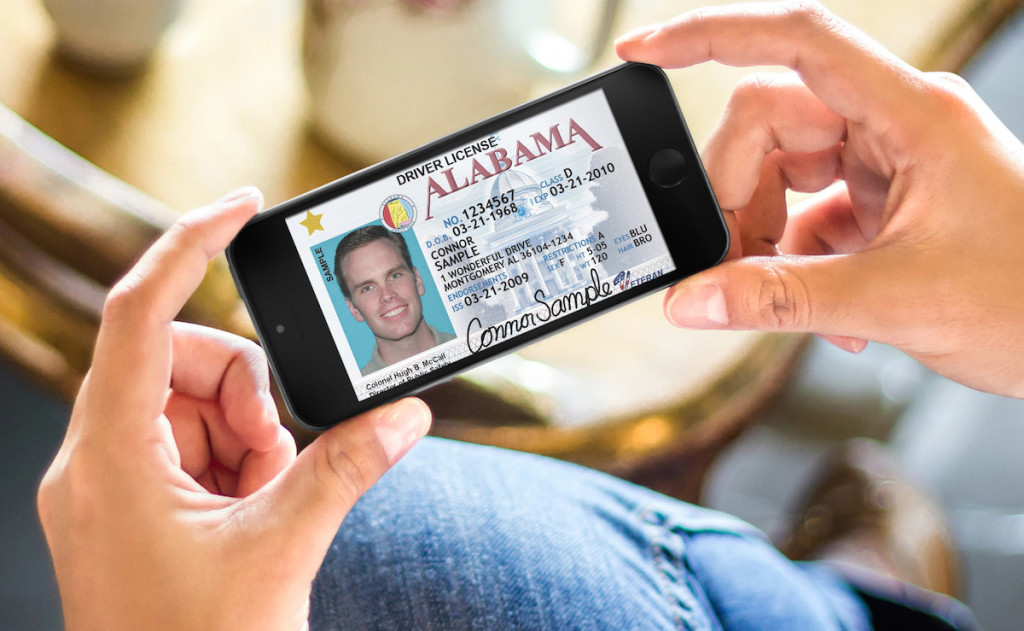
Lawmakers in Alabama are considering a bill that would require the Alabama Law Enforcement Agency (ALEA) to open driver’s license offices at least two days a week in every county. More than 30 offices were closed last year by budget cuts, though most were reopened after public outcry. Concern was raised that the closings would limit people’s access to identification required for voting, as well as the ability to attain driver’s license. SB172 from Sen. Hank Sanders (D-Selma) garnered a unanimous favorable report from members of the Senate Committee on General Fund Finance and Taxation, despite some noting that the bill needed revisions. Sanders’ legislation is slated to go before the Senate soon. ALEA estimates that the cost of opening the offices for additional days will cost $1.35 million annually. In January, ALEA Secretary Spencer Collier told legislators in budget hearings that his department needed an additional $23 million in funding to remain operational. ALEA did not respond to multiple requests for comment on the impact of the legislation.
House OKs bill to fund wireless networks in schools

The Alabama House of Representatives voted unanimously Thursday to approve a bill to provide $12 million in funding to help schools in rural parts of the state gain access to broadband Internet service. HB41, also referred to as the Wired Act, by Rep. Donnie Chesteen (R-Geneva), seeks to tackle a difficult problem that has left many schools behind in regard to technology. In the past, the federal government has assisted schools in purchasing computers through the E-rate program, funded through fees levied on telecommunications companies. To gain access to that money, schools have to match the funds through local dollars. Because of that, many of Alabama’s poorest schools have been unable to come up with the required matches. Currently, about 91 Alabama schools are set to miss out if they are unable to meet a deadline later this month. Chesteen’s bill pulls money from a state education technology fund in order to assist schools in matching E-rate funding. The legislation is built upon an earlier bill from Sen. Gerald Dial (R-Lineville), which failed to pass both houses when its effort to acquire a $100 million bond to fund “pen enabled tablets and mobile computers” was thought to become quickly obsolete. Chesteen’s bill also takes on another of the House GOP’s agenda items, which was to see better technology installed in rural parts of the state. However, the legislation is separate from the proposals from Gov. Robert Bentley and a Senate bill from Sen. Tom Whatley (R-Auburn), which would decrease regulations on telecommunication service providers to enhance access to broadband service in rural parts of the state. With its passage in the House, Chesteen’s bill is set to go before the Senate next week.
Senate passes slew of bills with nearly empty chamber
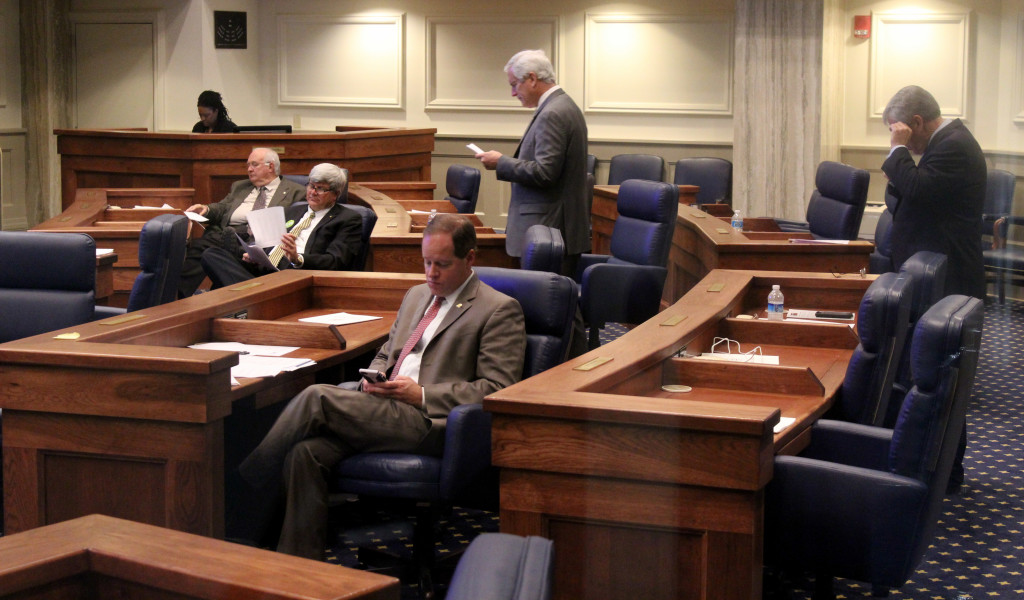
During Thursday’s legislative session, a variety of bills were passed on the Senate floor with at one point, only 13 lawmakers attending. The number of senators slowly dwindled throughout the session until a most were absent. Among the bills passed with a nearly empty chamber were SB95 from Sen. Dick Brewbaker (R-Montgomery), which allows foster children to visit friends without the permission of the foster agency; SB131 from Sen. Paul Sanford (R-Huntsville), which provides a tax break for the money people pay into their Health Savings Accounts; SB103 from Sen. Tom Whatley (R-Auburn), which would increase the cost of waterfowl stamps; and SB215 from Sen.Jimmy Holley (R-Elba), which allows for “automated civil enforcement” of school bus violations and at least five others. The only bill that faced real conversation was SB148 from Sen. Jim McClendon (R-Springville), which would require all passengers in a car to wear a seat belt. Currently, everyone under 15 years of age is required to buckle a safety belt in the back seat of a car. McClendon’s bill would require everyone to do so. Sen. Trip Pittman (R-Montrose) opposed the measure on the grounds that it is an overreach to require all car riders to fasten a safety belt, which McClendon asserts would save lives. Sen. Vivian Figures (D-Mobile), who noted her support for wearing seat belts, contested the requirement that drivers be charged with the folly of their passengers. The Senate carried McClendon’s bill over and adjourned shortly thereafter.
Terri Sewell to host congressional forum on current state of U.S. voting rights
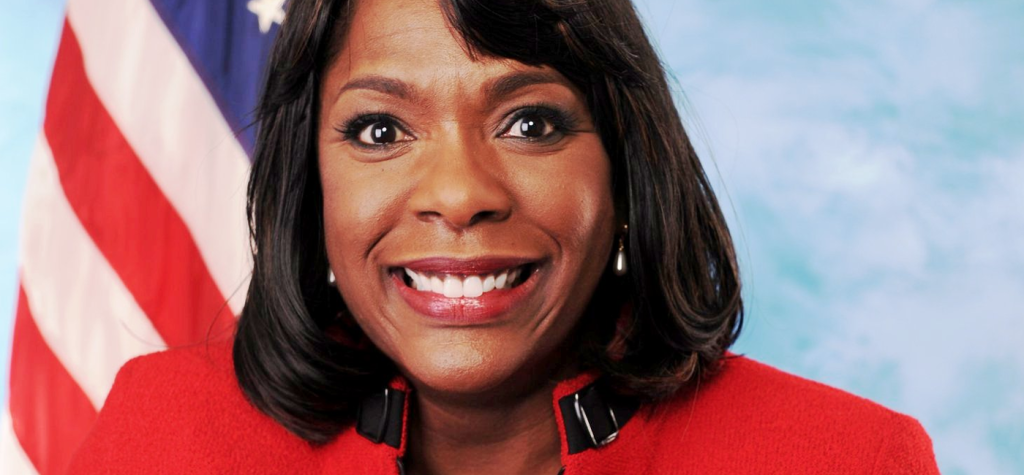
In an effort to to raise awareness about the importance of protecting voting rights and to urge Congress to support legislation to restore the Voting Rights Act of 1965, Rep. Terri Sewell (AL-07) will host “Restore the Vote: A Congressional Forum on the Current State of Voting Rights in America” on Saturday. Joined by 11 of her House colleagues — Rep. Sheila Jackson Lee (TX-18), Rep. Hank Jonson (GA-04), Rep. Stacy Plaskett (VI), Rep. Barbara Lee (CA-13), Rep. Karen Bass (CA-37), Rep. Marc Veasey (TX-33), Rep. John Lewis (GA-05), Rep. Jim Clyburn (SC-06), Rep. John Conyers (MI-13), Rep. G.K. Butterfield (NC-01) — Sewell will hear directly from voters about their concerns and modern-day challenges to voting. According to Sewell’s office, issues that will be discussed include the effects of the Shelby decision, current barriers to the ballot box and the need for Congress to act to protect the right to vote for all Americans The event will take place at the Birmingham City Council Chambers at City Hall from 1 to 3 p.m.
Senate to consider bill providing broadband service to rural areas

Sen. Tom Whatley (R-Auburn) has introduced legislation in the Senate that would remove coverage area restrictions for public providers of municipal telecommunication services and allow those providers more leeway in providing broadband service to rural areas of Alabama. Providers are already supplying these areas with cable and phone service, but Whatley’s bill would open up avenues for providing high-speed internet service. Republicans and Gov. Robert Bentley have made it a priority to provide Alabama’s rural areas with high-speed Internet service, a move they believe will make great strides in lowering the unemployment rate and, thereby, the state’s poverty rate. Currently, only 44 percent of Alabamians outside of major cities have access to broadband Internet service, according to the Federal Communications Commission. “My legislation will improve Internet access by creating new providers, which will directly correlate to increased economic development,” Whatley said in a statement on the Senate Republicans’ website. “Locking our municipal telecom providers into arcane coverage areas is a shortsighted approach to protect growth-limiting monopolies.” To be sure, rural Alabamians face significant hurdles in having access to top-notch Internet service – only 66 percent of Alabamians have access to broadband Internet service and only a small portion of them have access to service provided through fiber-optics, a method more efficient and faster in delivering broadband service. Whatley noted in his statement that Google has recently announced plans to “partner” with Huntsville, but that partnership does little good for Alabama’s smaller cities. The senator’s legislation, SB56, would make great strides in providing Internet service to rural Alabama and create a climate of competition which will benefit consumers. “Over 1.6 million Alabamians lack access to high-speed Internet: that number must be reduced, and quickly, if our state is going to compete and thrive in the 21st century,” Whatley said.
State Senate passes monuments bill despite Dem outrage
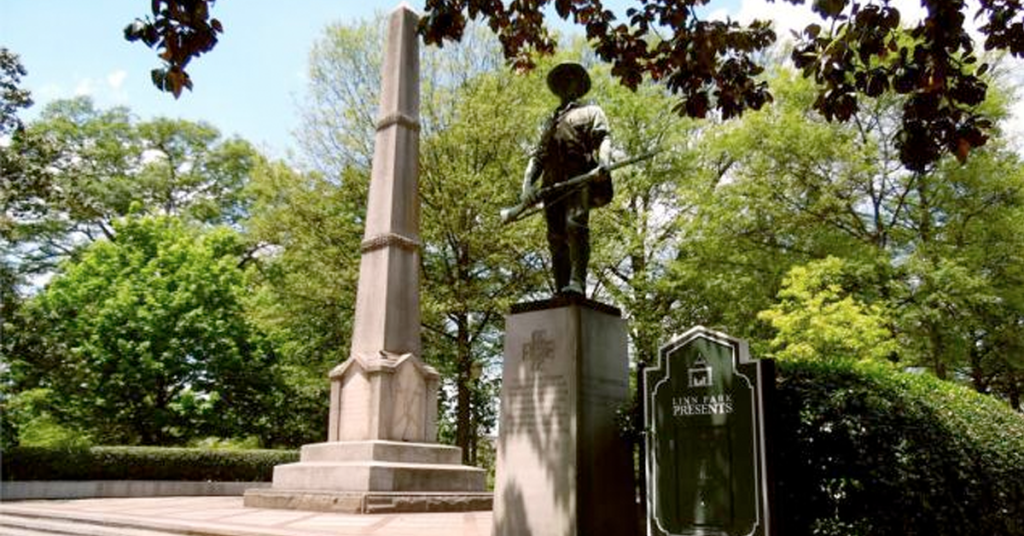
The first item on Senate’s agenda Wednesday was the hotly contested bill from Sen. Gerald Allen known as the Alabama Heritage Preservation Act, which prohibits the removal of historical monuments and lays out the process by which municipalities can petition for waivers to remove such monuments. The item came up for discussion during Tuesday’s session, but debate was cut off after Pro Tem Del Marsh (R-Anniston) acknowledged that nothing would be accomplished due to a Democratic filibuster on the item. Marsh motioned for adjournment and the body commenced with discussion again as the session got underway Thursday morning. As Allen was recapping Tuesday’s activities, a cloture motion was made to cease discussion of the issue at 10:10 a.m. Immediately, Democrats began railing against the legislation and the motion for cloture. “Yet again, we’re about to let ‘Big Brother’ go in and tell municipalities what they can do,” said Sen. Bobby Singleton (D-Greensboro). “Remember, you are a party of less government and I can’t believe a cloture motion has been made on something such as this.” Sen. Hank Sanders (D-Selma) chimed in as well, noting that allowing Confederate monuments on public property gives the impression that all people should subscribe to the ideals held by those being memorialized. “This is about the legacy of slavery in many ways,” Sanders said. “The monuments they’re trying to protect are generally of people who supported slavery in one way or another. You know, slavery has long arms – it reaching all the way from the 17th, 18th and 19th centuries into the present.” “There was a time in this country where African-Americans were really just kind of abused like these bills abuse people,” said Sen. Rodger Smitherman (D-Birmingham). “We’re opening ourselves up for some very embarrassing exposure to the nation. I don’t want our state to get that kind of black eye.” By the time the three Democrats had finished speaking, time had expired for discussion on the bill. The bill passed by a vote of 22-9 down party lines.
Schools find presidential campaign talk conflicts with no-bullies message
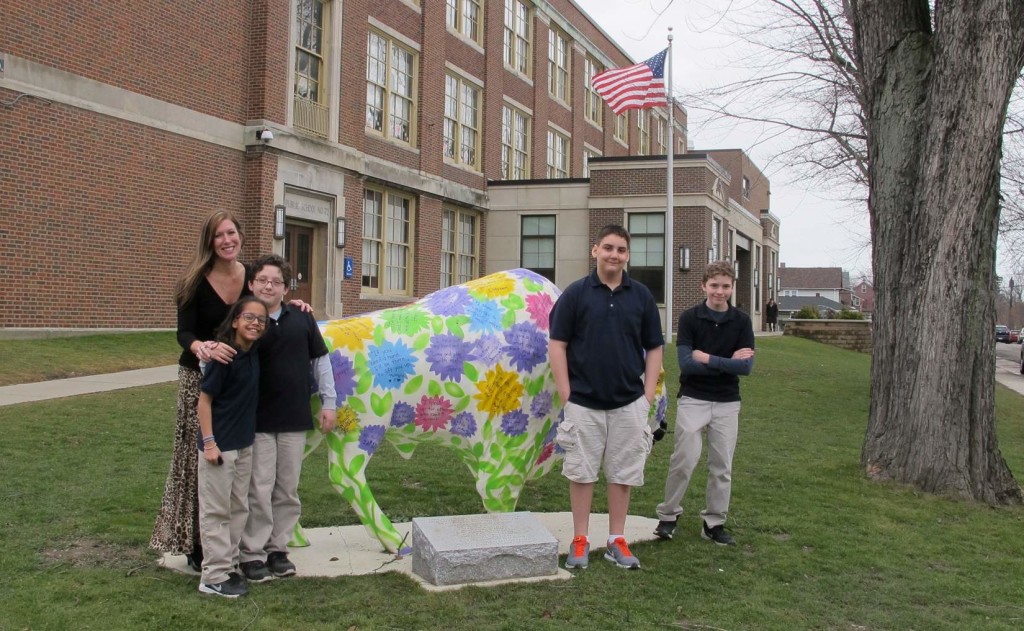
Ryan Lysek rose to become vice president of his fifth-grade class at Lorraine Academy in Buffalo, New York, after the sitting veep got bounced for saying things that went against the school’s anti-bullying rules. So the 10-year-old is a little puzzled that candidates running to lead the entire country can get away with name-calling and foul language. The nasty personal tweets and sound bites of the 2016 Republican presidential campaign are reverberating in classrooms, running counter to the anti-bullying policies that have emerged in recent years amid several high-profile suicides. For teacher David Arenstam’s high school class in Saco, Maine, the campaign has been one long civics lesson: “Can you really ban a whole group of people from coming into the country?” the students will ask, or “What’s the KKK, and do they still really exist?” But mostly, Arenstam said, when it comes to Republican Donald Trump, students “can’t believe nobody calls him on the carpet the way that they would be called on the carpet if they said those things.” There’s Donald Trump calling Ted Cruz a “loser” and a “liar” and singling out Muslims and Mexicans for criticism. And there’s Marco Rubio mocking Trump’s “worst spray tan in America” and calling him a “con artist.” Cruz says nearly every day on the campaign trail, “I don’t respond to insults” and he has been careful not to engage when Trump and others call him names. But during the Jan. 28 Republican debate which Trump didn’t attend, it was Cruz who made some quasi-insults he said Trump would have lobbed: “Let me say I’m a maniac and everyone on this stage is stupid, fat and ugly,” Cruz said, snickering that he was getting “the Donald Trump portion out of the way.” In the battle for the Democratic presidential nomination, Hillary Clinton and Bernie Sanders have focused more on policy than on each other. The Republican race is a different story. “If students are following this election – and they should be – we have a lot of re-educating to do,” Buffalo school administrator Will Keresztes said. Much of the rhetoric would violate not only the district’s code of conduct, he said, but the state’s Dignity for all Students Act. The conflict landed on Sioux City, Iowa, Superintendent Paul Gausman’s doorstep after Trump decided to hold a campaign rally in a school building. The move sparked a protest from some students – who cited their own anti-bullying rules in trying to stop it. “He makes people at his events think that saying the kinds of things he does to other people is OK. It’s not OK,” protest organizer Ismael Valadez of neighboring South Sioux City, Nebraska, said at the time. In the end, it was the idea of free speech, the right to assemble and policies against discriminating based on something someone said or did that prevailed, Gausman said this week. “I was very proud of our students for the way they engaged in the political process in a respectful manner, and I think they made their point,” said the superintendent, whose district was featured in the 2012 documentary “Bully.” This is not the first campaign to get ugly, but educators, parents and students say this one is particularly challenging because often the biggest applause lines and headline-grabbers fly in the face of appeals for students be respectful and kind. Pickerington, Ohio, school counselor Kris Owen said students should be reminded that potential colleges and employers won’t find a Twitter feed full of insults as amusing as some have found the candidates’. She suggested using the comments as conversation starters. “Say, ‘Listen, how would you feel if someone was saying these things about you? How could this person approach it differently or why don’t you all develop your own campaigns using positive tools instead of the negativity?”’ said Owen, who was recognized at the White House last month as a School Counselor of the Year finalist. Candidates “need to think of what’s important, the issues, not whether one gets a spray tan. It’s just ridiculous,” Ryan Lysek’s mother, Cindy Lysek, said. Ryan’s teacher at Lorraine Academy worries about the future of the bullying prevention efforts promoted by President Barack Obama in recent years, which included a 2011 White House anti-bullying summit and a 2010 YouTube video for the “It Gets Better” project aimed at bullied gay youth. “Now we have these people that want to be president that are completely turning it around and sending this horrible message to all of America that I’m a bully and that’s how I want to get into the presidency,” said Kelly Gasior, who organizes an anti-bullying 5K at the school each year. “What are they going to do with the bullying problem that’s going in schools?” During a debate before the fifth-grade class elections, the moderator asked candidates to say nice things about a rival’s ideas. Olivia Mashtaire, another of Gasior’s students, praised a classmate’s call to clean up the courtyard. The 10-year-old was elected president. “I didn’t have any rude comments in my head,” she said. “I liked everybody’s ideas.” Republished with permission of the Associated Press.
Deny him nomination, Donald Trump warns GOP will lose his voters
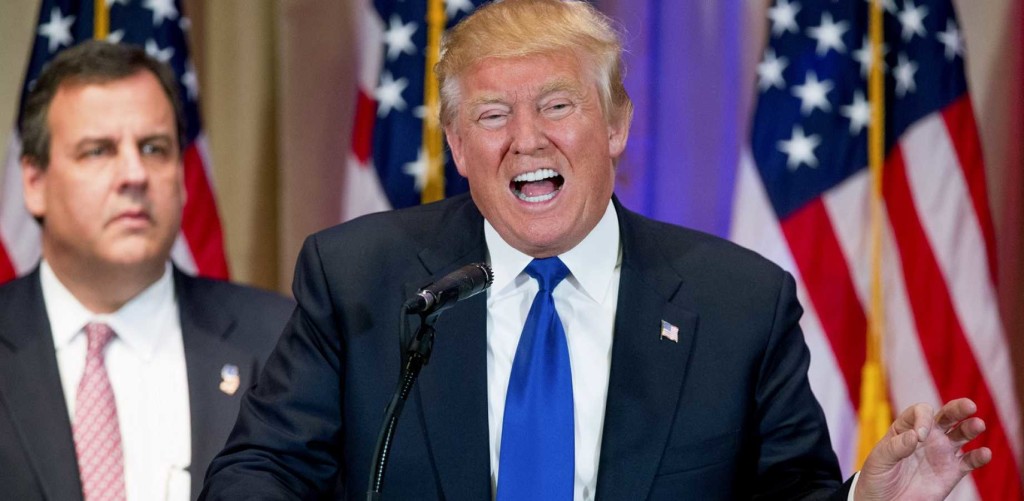
With super PACS running multiple ads slamming him and Mitt Romney poised to denounce him, the Republican establishment is going full out to stop Donald Trump before he clinches the GOP presidential nomination. Neither Ted Cruz nor Marco Rubio appear able to stop his momentum, but 35 states have yet to weigh in on the contest. “I am not being treated properly,” Trump complained on MSNBC’s “Morning Joe” on Thursday. “I brought in millions and millions of people to the Republican Party, and they’re going to throw those people away. And I — I’ll be honest Joe, whether I ran as an independent or not, those people will never go out and vote.” Trump was referring to the record turnout that has been happening in the early GOP primaries and caucuses, on a par with the participation of Democratic voters in the historic Barack Obama-Hilary Clinton contest in 2008. Trump appeared frustrated that the media haven’t acknowledged an aspect of his candidacy. “Obama did a great job then, and this is an even bigger number. The number of people going into the Republican Party is an even bigger number as the number that went in — in the past — went in for Obama and to the Democrats,” Trump said. “So this is a huge story, and it’s really the big story. Now, they focus on Romney, who’s, you know, just trying to stay relevant, but the biggest story out there by the people that really understand it is the fact that the Republican Party is gaining millions and millions of people, and you saw that with South Carolina, you saw that with Nevada.” Excerpts from Romney’s speech in Salt Lake City were distributed by news outlets early Thursday. The 2012 GOP presidential contender is expected to call Trump “a phony and a fraud” whose promises are “as phony as a degree from Trump University.” Trump dismissed the comments in advance as the rantings of a loser: “He was a catastrophe. And I watched this happen, and I wasn’t happy about it, and neither was anybody else. We backed him, and I helped him and raised money for him, and I did everything, but he didn’t do the job, he didn’t have the capability to do the job. And he certainly hasn’t gotten any better. As far as other things are concerned, we are — you probably see what’s happening, I mean, the biggest story in all of politics isn’t so much what’s going on with Mitt Romney, it the fact that the Republicans are gaining millions and millions of people because of me.”
Presidential mock election to give Alabama students opportunity to vote, learn
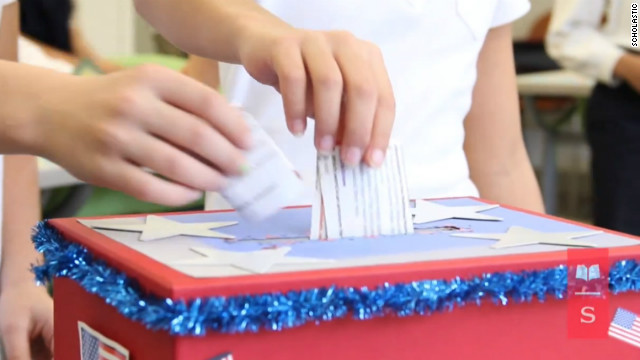
The Secretary of State’s office, in collaboration with the Alabama State Department of Education (ALSDE), the American Village and the Alabama Independent Schools Association (AISA), will host an “Alabama Votes” Student Mock Election October 25. The program is open to Alabama students in fourth through twelfth grades. “One of the most fundamental rights we as Americans are afforded is our right to vote,” Secretary of State John Merrill said in a press release. “Our students in the state of Alabama have the opportunity to be a powerful voice in the electoral process, and we must do everything we can to educate them on the importance of their right to vote.” The event gives students an early opportunity to become familiar with the electoral process and will generate awareness among Alabama’s student population. Ballots will be distributed to all of Alabama’s 1,500 schools, as well as various home school networks, via the ALSDE and AISA, the data from which will then be forwarded to the central office and on to the Secretary of State’s Office. “The ‘Alabama Votes’ Mock Election is a great way to generate interest and spur excitement among Alabama’s student population about civic responsibility, democratic principles, and the upcoming presidential election,” said ALSDE Superintendent Tommy Bice. “This opportunity gives students a platform to discuss their individual viewpoints on everything from social and domestic issues to foreign policy and economics. The Mock Election will focus squarely on getting young people engaged in the voting process as they simulate voting for a real-life presidential candidate.” The American Village will host a Student Mock election Convention July 12 through 14 for students in ninth through twelfth grade in any of Alabama’s public, private, parochial or home schools. The last day to register for the event is April 22 and can be done from the American Village website.
