
Only Donald Trump can decide to curb aggressive campaign language
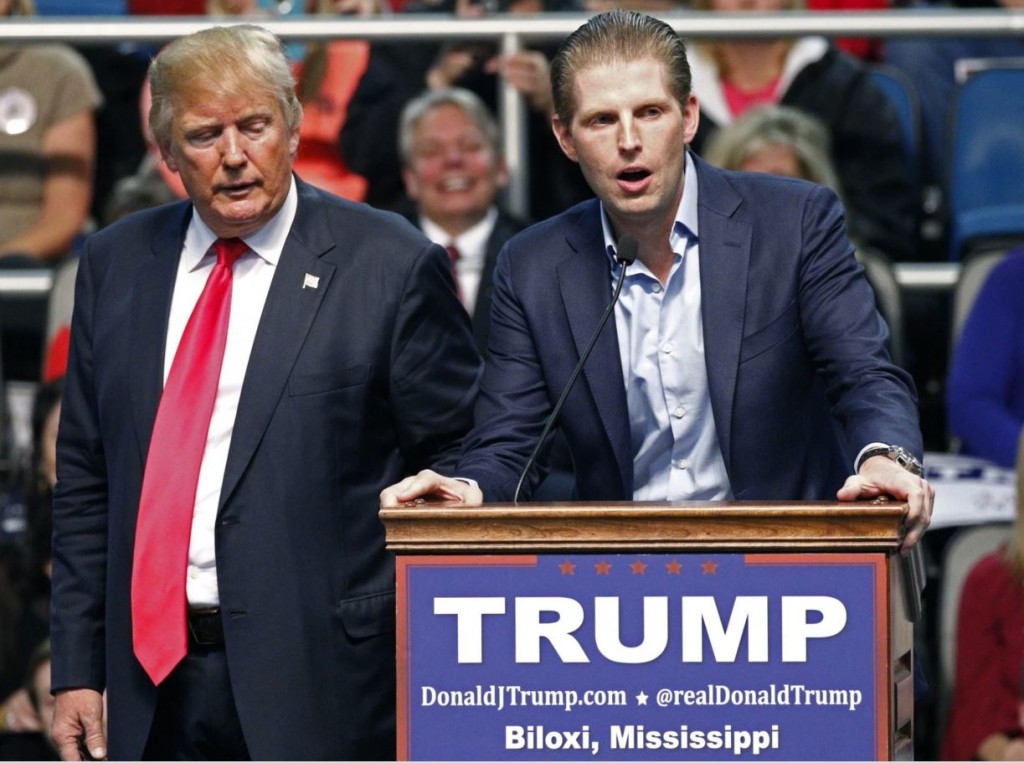
The security ring protecting Donald Trump includes Secret Service agents, his own private bodyguards, local police, sometimes even the Transportation Security Administration. But even that show of force has not halted disturbing episodes of violence. The only person who can stop Trump from egging on the brawling crowds is Trump himself. His Secret Service detail is limited to keeping Trump safe and the venues where he speaks secure. Local law enforcement officers are there to keep the peace, along with private security hired either by the venues or Trump. “The Secret Service is not the word-police,” said Jon Adler, president of the Federal Law Enforcement Officers Association Foundation, a union that represents Secret Service agents. Trump denies that he contributes to the violence at events around the country, even though on Tuesday night he predicted “riots” and “a tremendous problem” if Republican leaders try to maneuver the nomination away from him. He has said at a rally he wished he could punch a protester in the face and longed for the days when someone who interrupted a rally would be “carried out on a stretcher.” “Our concern is overt acts of threats to our protected” officials, Secret Service Director Joseph Clancy told Congress on Tuesday. “People have the right to voice their opinions, and it’s for the host committee to decide whether or not that’s disruptive to that event.” Agents with the campaign detail only advise campaign staff or a candidate about security concerns, Clancy said. The campaign, he said, generally decides whether a protester should be removed — something Trump usually does by saying, “Get’m outta here.” Clancy declined to discuss specific security plans for large rallies. “There’s a lot of give-and-take with all these events,” Clancy said. “And there’s no question, some of these events create more challenges for us.” In fact, New York police and the FBI are investigating a threatening letter sent Thursday to Trump’s adult son Eric. Trump asked for Secret Service protection in October as his popularity swelled, along with the crowds at his rallies. His federally funded security detail was put in place in early November. The Secret Service has declined to say how many agents have been assigned to protect Trump, citing security concerns. Such protection is routinely afforded to candidates for president and vice president 120 days before an election. But past candidates, including President Barack Obama, have received protection far earlier. Democratic front-runner Hillary Clinton gets Secret Service protection as a former first lady, and Vermont Sen. Bernie Sanders was approved for a protective detail earlier this year. Even before federal security protection, private security surrounded Trump during campaign events. Through the end of January, his campaign reported paying about $170,000 for security, according to Federal Election Commission filings. That includes at least $55,000 to security firms and local police departments since Trump asked for Secret Service protection. The campaign doesn’t include the nearly $78,000 paid to Trump’s personal security chief, Keith Schiller. The majority of that money the campaign reports as “pre-paid payroll.” At the University of Illinois at Chicago, where Trump cancelled a rally because of security concerns, a phalanx of uniformed local police, suit-clad officers and private security watched entry lines wrapped around the building and made periodic rounds throughout the venue as it filled with thousands of people. Uniformed airport security screeners staffed metal detectors and inspected bags as people passed through. A handful of uniformed Secret Service officers and dozens of other police and security officers were also stationed outside and throughout the arena. The audience, following instructions from an unidentified speaker on the public address system, routinely pointed out protesters to security officers and cheered their removal. At least one man, dressed in combat boots, camouflage pants and a matching Trump hat, appeared to scout the audience on his own and take pictures with his cellphone. He appeared to share the photos with a security official dressed in a suit and to point to various groups in the audience. Still, scuffles broke out around the arena after the rally was canceled. Arnette Heintze, a retired senior Secret Service agent who now runs the corporate security firm Hillard Heintze, said he doesn’t recall seeing such scenes in past campaigns that he had worked since the early 1980s. He said there’s surely a more tactful approach Trump could take than shouting to the crowd and security “get them out.” “It is entirely out the purview of the Secret Service to speak with the candidate about anything they are going to say or do at an event,” Adler said. “They are not confidants. They are not speech writers.” Republished with permission of the Associated Press.
Presidential TV ad roundup: 3/18/16 edition

As Donald Trump inches closer to securing the Republican presidential nomination, advertising money aimed at sidelining him has skyrocketed 900 percent since his first primary victory in New Hampshire — totaling more than $63 million — according to an ABC News analysis of CMAG/Kantar Media data. Nevertheless Trump remains largely unscathed, seemingly impervious to the onslaught of TV ads attacking him. And while campaign spending isn’t correlating to the same results it used to, it hasn’t stopped candidates, their Super PACs and third party groups from spending a mind-blowing $323 million spend in presidential TV ads thus far this election cycle. Here are the ads the candidates released this past week: Ted Cruz Title: Grant Published: March 17, 2016 Tone: Somber Title: Lee Published: March 17, 2016 Tone: Matter of fact Title: Born Free Published: March 4, 2016 Tone: Informative John Kasich Title: Rise Published: March 8, 2016 Tone: Friendly Title: Bringing America Back Published: March 11, 2016 Tone: Encouraging Donald Trump Title: John Kasich – All Talk No Action Politician Published: March 11, 2016 Tone: Condemnatory Hillary Clinton Title: Real life Published: March 10, 2016 Tone: Passionate Title:Mothers of the movement Published: March 11, 2016 Tone: Mournful
House committee advances proposed gas tax increase to fund road, bridge construction
A proposed gasoline tax increase to pay for road and bridge construction cleared its first hurdle in the Alabama Legislature on Thursday. The House Transportation, Utilities and Infrastructure Committee approved the bill, sending it to the full House of Representatives for a vote that could come in early April. The proposal would raise the gasoline tax by 6 cents per gallon, a figure that the bill’s sponsor, Rep. Mac McCutcheon, said would bring Alabama’s fuel tax in line with neighboring states. The tax would then be adjusted every four years to equal the average tax in Alabama’s four border states. McCutcheon, R-Capshaw, said there is a critical need for infrastructure improvements in the state. “We cannot continue in our state to allow the infrastructure to deplete because we are afraid to address this issue, as tough as it is,” McCutcheon said. McCutcheon said the state hasn’t raised gas taxes in more than 25 years, while the cost of road and bridge construction has increased. The adjustments every four years would assure there is some “growth” in the tax, although lawmakers could reject the increase by passing a joint resolution, he said. The tax would end in 2027, unless lawmakers vote to renew it. The committee-passed bill also would place an annual fee on vehicles that run solely on alternative fuels, $100 for each private passenger and $150 for commercial vehicles. The committee approved an amendment to the original bill that exempted hybrids from the annual fee. The proposed gas tax increase comes as many lawmakers say there’s no appetite among legislators for tax increases. McCutcheon said it was an investment in Alabama’s future. Rep. Will Ainsworth, R-Guntersville, cast the only no vote against the bill in committee “I’m just not in favor of the hardworking people in Alabama having to pay any more in taxes,” Ainsworth said after the committee. “I think there is a legitimate argument that there needs to be something done to obviously fix the infrastructure in the state. My position is there are other things we could do in reforming government to come up with the funding,” Ainsworth said. A slightly different gas tax bill was introduced in last year’s special session but never got a floor vote. “Tying it to the southeast average has really helped us in terms of members looking at it and understanding that we are not asking for something outlandish,” said Sonny Brasfield, executive director, Association of County Commissions of Alabama. While the bill moved quickly out of committee Thursday, proponents said they do not expect a floor vote until after lawmakers return from their spring break, now scheduled for March 28. Republished with permission of the Associated Press.
Ben Pollara: A Democrat’s unsolicited advice for the GOP that created Donald Trump
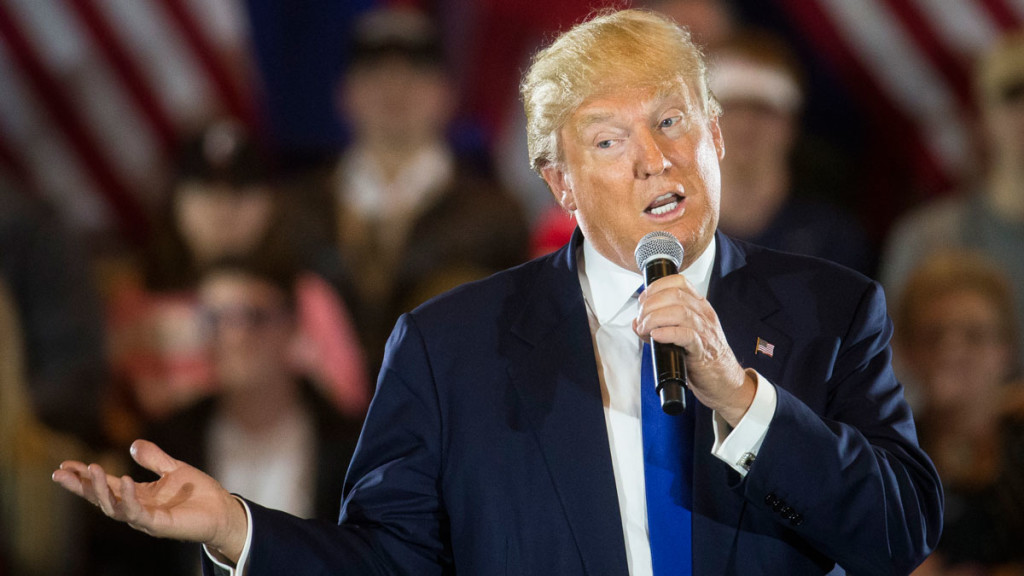
What is more appealing for Democrats like me? Donald Trump as the Republican nominee, or a fractured convention that produces a nominee who received no Republican primary votes, like Paul Ryan? Honestly, both sound pretty good and likely to culminate in a Hillary Clinton presidency. But it’s not up to Democrats like me, and the questions Republicans should be asking themselves have more serious consequences for both their party and our system of governance. Beyond my partisanship, I hold a core belief in the essential function of the two-party system and the imperfect, yet better than the alternatives, manner in which it maintains the values of our republican democracy. Assuming Trump enters Cleveland with a plurality but not majority of delegates, to deny him the nomination would shatter the Republican Party for a decade to come, and with it the two-party system that balances the most extreme tendencies of American political ideology. The media reacted with shock at Trump’s assertion that a brokered convention that denied him the nomination would lead to rioting. Trump has said many outrageous things, many of them without basis in fact. This was not one of them. Just as Vietnam and Civil Rights nearly tore apart the Democratic Party in 1968, denying Trump the nomination through Byzantine delegate rules would succeed in doing the same to the Grand Old Party. The party of Lincoln must come to terms with the reality that it now holds that moniker by historical fact only. The Republican Party has, by virtue of a political strategy to build a winning national coalition post-New Deal, become the party of Richard Nixon, Ronald Reagan, and yes, Donald Trump. To survive, Republicans must face down that which they have wrought through two generations of “dog whistle” racism and us-vs-them fearmongering that, until recently, served the cynical corporatists and political elites in the party quite well. The Southern Strategy and the rise of fundamentalist religious extremism paved the way for the K Street Project and 20 of 28 years of Republican White House occupancy; the Tea Party and Birtherism gave rise to the Koch-era and hegemony of the legislative branch in D.C. and most state capitols. But the craven decisions that led to these triumphs are causing the Republican Party to collapse under the weight of its own base. What fueled government shutdowns over previously benign issues like raising the debt ceiling and funding Planned Parenthood (and the ultimate ouster of John Boehner as Speaker of the House) is precisely what is fueling Donald Trump’s success. It is willful ignorance and intellectual dishonesty of the first degree for Republicans to bemoan the “Make American Great Again” movement and its accompanying rhetoric of angry xenophobia without owning responsibility for creating the environment that spawned it. You reap what you sow. Give Trump the nomination he has earned; you fostered the environment that incubated him. Let Trump fail spectacularly in November. Then look in the mirror and begin to rebuild the Republican Party in the image of Abraham Lincoln, rather than David Duke and his ilk. The alternative is a splintering of the very foundation of our political system and a generation of Democratic hegemony, which may have pundits in the not distant future bemoaning that “Barack Obama wouldn’t have been able to win a single state’s primary in today’s Democratic Party. He was basically a Republican.” Republicans should ask themselves, what is scarier? Four more years of a Democrat in the White House, or a future where that statement is true? • • • Ben Pollara is a political consultant and a founding partner of LSN Partners, a Miami Beach-based government and public affairs firm. He runs United for Care, the Florida medical marijuana campaign and is a self-described “hyper-partisan” Democrat.
Judge grants delay for ethics trial of indicted House Speaker Mike Hubbard
A judge is delaying the ethics trial of Alabama House Speaker Mike Hubbard for two weeks until mid-April. Lee County Circuit Judge Jacob Walker ruled Thursday that he will push back the trial until April 11 after the defense appeals some of his pre-trial decisions to the Alabama Supreme Court. Hubbard was scheduled to go to trial March 28 on felony charges of using his office for personal financial gain. Defense attorney Bill Baxley argued that additional delays might be needed. Baxley says Hubbard’s current legal team has only been on the case for a few months and may need more time to prepare. The judge agreed to only a brief delay. Walker told lawyers to be ready with questions for potential jurors on March 28. Republished with permission of the Associated Press.
Yeas and Nays – How the Alabama delegation voted this week: 3/18/16
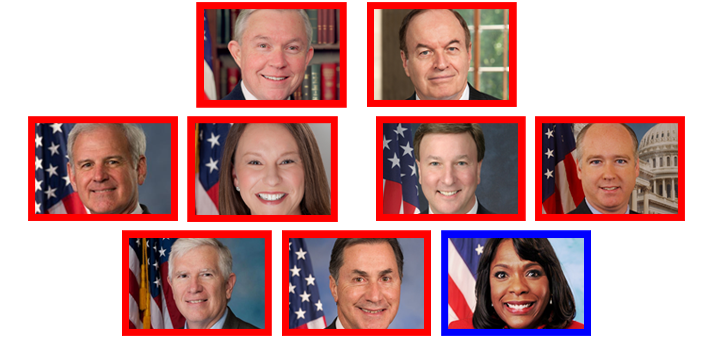
Here’s a look at how the Alabama delegation voted on major issues in the U.S. House of Representatives and the U.S. Senate this week: House votes H. Con. Res. 121, which condemns the Syrian government for war crimes against its civilian population. Pass House 392-3. Yea: Rep. Bradley Byrne (AL-01); Rep. Martha Roby (AL-02); Rep. Mike Rogers (AL-03); Rep. Robert Aderholt (AL-04); Rep. Mo Brooks (AL-05); Rep. Gary Palmer (AL-06); Rep. Terri Sewell (AL-07) H. Con. Res. 75, which expresses the sense of Congress that Islamic State atrocities against religious and ethnic minorities constitute war crimes, crimes against humanity, and genocide. Passed House 393-0-40. Yea: Rep. Bradley Byrne (AL-01); Rep. Martha Roby (AL-02); Rep. Mike Rogers (AL-03); Rep. Robert Aderholt (AL-04); Rep. Mo Brooks (AL-05); Rep. Gary Palmer (AL-06); Rep. Terri Sewell (AL-07) H.R. 3797: the Satisfying Energy Needs and Saving the Environment Act (SENSE) Act. The bill establishes separate standards under which electricity-generating power plants that primarily use waste coal as a fuel source could comply with EPA’s Cross-State Air Pollution Rule and the Mercury and Air Toxics Standards (MATS) Rule, by blocking reductions in emissions allowances for sulfur dioxide for purposes of the cross-state rule and by setting an alternative standard for sulfur dioxide under the MATS rule. Passed House 231-183. Yea: Rep. Bradley Byrne (AL-01); Rep. Martha Roby (AL-02); Rep. Mike Rogers (AL-03); Rep. Robert Aderholt (AL-04); Rep. Mo Brooks (AL-05); Rep. Gary Palmer (AL-06) Nay: Rep. Terri Sewell (AL-07) H.R. 4596: the Small Business Broadband Deployment Act. The bipartisan bill exempts, for five years after enactment, small-business broadband Internet service providers that have 250,000 or fewer subscribers from the enhanced disclosure requirements of the Federal Communications Commission’s (FCC) 2015 net neutrality rule. Passed House 411-0-22. Yea: Rep. Bradley Byrne (AL-01); Rep. Martha Roby (AL-02); Rep. Mike Rogers (AL-03); Rep. Robert Aderholt (AL-04); Rep. Mo Brooks (AL-05); Rep. Gary Palmer (AL-06); Rep. Terri Sewell (AL-07) A resolution authorizing Amicus Curiae in United States v. Texas. The measure authorizes the House of Representatives to file a friend of the court brief (an amicus curiae) against the administration’s position in United States, et al. v. Texas, et al., the Supreme Court case involving the president’s executive actions on immigration. Passed House 234-186. Yea: Rep. Bradley Byrne (AL-01); Rep. Martha Roby (AL-02); Rep. Mike Rogers (AL-03); Rep. Robert Aderholt (AL-04); Rep. Mo Brooks (AL-05); Rep. Gary Palmer (AL-06) Nay: Rep. Terri Sewell (AL-07) Senate votes On the Nomination: Confirmation John B. King to be Secretary of Education. Passed the Senate 49-40-11. Nay: Sen. Richard Shelby Not Voting: Sen. Jeff Sessions
