
U.S. Supreme Court refuses to hear case challenging Alabama death penalty
In a victory for supporters of the state’s capital punishment regime, the U.S. Supreme Court on Monday refused to take up the case of a convicted murderer who sought to challenge Alabama’s death penalty law. The high court refused to issue a petition for certiorari in the case of , essentially denying the case has the proper legal standing to be heard. The move is an especially significant win for advocates of Alabama’s death penalty because it has recently received jurisprudential scrutiny related to a case in Florida, which State Attorney General Luther Strange welcomed the move by justices in a statement Monday afternoon. “The Supreme Court’s decision to deny this petition establishes, yet again, that Alabama capital sentencing system is constitutional,” said Strange, a Republican who supports capital punishment. “As I have previously explained, the Court’s decision about Florida law in Hurst has no bearing on the constitutionality of Alabama’s materially different capital sentencing system.” “It is time for criminal defense lawyers to stop making specious arguments and for public officials to recognize that Alabama’s capital sentencing is constitutional under current U.S. Supreme Court precedent,” added Strange. Shanklin was convicted of capital murder and the lesser charge of attempted murder, which a jury ruled he committed during a violent armed robbery in 2009 in Cordova. A jury in Walker County Circuit Court recommended that Shanklin be sentenced to life without parole. But the judge – using the provision at issue in the Florida and Alabama cases – circumvented the jury’s decision and sentenced Shanklin to death because of his long criminal history and the aggravated nature of his crime.
This week in the U.S. House of Representatives, Senate: Mar. 21 – Mar. 25, 2016
On Monday and Tuesday, the U.S. House of Representatives is in session and will consider several bills under Suspension of the Rules. A full list of bills can be found here. Also up for consideration this week: H.R. 2745: the Standard Merger and Acquisition Reviews Through Equal Rules (SMARTER) Act. This bill seeks to harmonize the standards that the FTC and the Justice Department must meet before seeking a preliminary injunction against a proposed transaction. It also requires the FTC to resolve such cases through the federal courts rather than through administrative action. Alabama cosponsor(s): None Background: The Justice Department’s Antitrust Division and the Federal Trade Commission (FTC), share responsibility for government enforcement of federal antitrust laws. The Clayton Act prohibits mergers and acquisitions that would “substantially lessen competition” or “tend to create a monopoly.” Each of the antitrust enforcement agencies is notified in advance of a proposed transaction, such as a merger and acquisition, and given a period of time to review the effects of the transaction. Only one agency takes responsibility for the review of a proposed transaction, which is determined by historical precedent. However, both agencies apply different standards when invoking injunctions and the processes used to block a proposed transaction. On Thursday and Friday, the House is not in session. Highlights of what is happening in House Committees this week: Budget Season: Budget season continues with the House Science, Space and Technology Committee and House Armed Services Committee holding related hearings. The House Appropriations committee also continues its FY17 hearing slate, a full list of those hearings can be found here. International Finance: On Tuesday, the House Financial Services Committee will hold a hearing titled “The State of the International Financial System” featuring testimony from Treasury Secretary Jacob Lew. More information here. Heroin/Opioid Abuse: On Tuesday, the House Oversight and Government Reform Committee will hold a hearing titled “America’s Heroin and Opioid Abuse Epidemic.” More information here. Judiciary Markup: On Tuesday, the House Judiciary Committee will hold a markup of H.R.4771, the Help Efficient, Accessible, Low-cost, Timely Healthcare (HEALTH) Act of 2016 and H.R.4676, the Preventing Crimes Against Veterans Act of 2016. More information here. Women Fighting for Peace: On Tuesday, the House Foreign Affairs Committee will hold a hearing on “Women Fighting for Peace: Lessons for Today’s Conflicts.” More information here. Homeland Security Markup: On Wednesday, the House Homeland Security Committee will hold a markup of H.R.4482, the Southwest Border Security Threat Assessment Act of 2016, H.R.4509, the State and High-Risk Urban Area Working Group Act, H.R.4549, the Treating Small Airports with Fairness Act of 2016, H.R.4698, the Securing Aviation from Foreign Entry Points and Guarding Airports Through Enhanced Security Act of 2016, H.R.4780, the Department of Homeland Security Strategy for International Programs Act, the “DHS Stop Asset and Vehicle Excess Act”, and the “Combating Terrorist Recruitment Act of 2016.” More information here. GITMO: On Wednesday, the House Foreign Affairs Committee will hold a hearing titled “The Administration’s Plan to Close the Guantanamo Bay Detention Facility: At What Foreign Policy and National Security Cost?” More information here. Small Business Markup: On Wednesday, the House Small Business Committee will hold a markup of H.R.4783, the Commercializing on Small Business Innovation Act of 2016, and H.R.207, the Small Business Development Centers Improvement Act of 2015. More information here. Senate Schedule The Senate is in recess and will reconvene on Monday April 4.
Bradley Byrne: Working to stop Christian persecution

We are in the midst of Holy Week, a time filled with both highs and lows as we follow Jesus’s path from crucifixion to resurrection. In the Christian faith, this is our most sacred occasion. It also serves as an opportunity to spend time with family and loved ones. Sadly, for too many people around the world, Holy Week is a dangerous time. This is especially true for Christians in the Middle East who suffer extreme persecution. In fact, groups like the Islamic State of Iraq and Syria (ISIS) search for and kill Christians simply because of their religious beliefs. This is especially heartbreaking because the Middle East was the birthplace of Christianity. In the very place where Jesus once walked, Christians are being attacked, raped, and murdered while religious buildings and artifacts are being destroyed. The numbers in Iraq paint a clear and disheartening picture of the plight of Christians in the Middle East. In 2003, there were 1.5 million Christians in Iraq; that number is now down to 275,000. Mosul, a city in northern Iraq, used to be home to a thriving Christian community, but the city is now under the control of ISIS and their radical Islamic rule. A debate recently broke out in Washington over whether ISIS is committing genocide by killing Christians and other religious minorities. Genocide is defined as the deliberate killing of a large group of people, especially those of a particular ethnic group or nation. To me, it is obvious that ISIS is committing genocide by systematically killing Christians. Last year, Congress passed legislation that set a deadline of March 17, 2016 for the U.S. State Department to officially declare that ISIS is committing genocide. Months went by without any action by the State Department. Many of my colleagues and I grew restless watching the State Department and Secretary of State John Kerry drag their feet. Groups across the country, like the Knights of Columbus and In Defense of Christians, called on the State Department to act. The House of Representatives got tired of waiting, and last Monday we passed a resolution expressing the sense of Congress that ISIS is committing genocide against Christians. This resolution passed by an overwhelming, bipartisan vote of 393 to 0. The vote sent a strong message to the State Department that they needed to act. Finally, on Thursday, Secretary of State John Kerry declared that ISIS is committing genocide against Christians and other religious minorities in the Middle East. Our pressure paid off! This declaration is about more than just a word. In fact, the declaration of genocide is incredibly rare and it has serious implications. The designation will help build international support for combating ISIS and their brutal tactics. It will also help bring more resources to help Christians in the region, as well as those who are fleeing violence. Of course, the declaration alone will not be enough. We must continue working to defeat ISIS and stand up for human rights of Christians and other religious minorities in the region. Most importantly, we should not and cannot become discouraged or angry. Instead, as Christians, we should stand strong in our faith and continue promoting religious freedom and tolerance. Let’s not forget the Christian faith is based on love and tolerance, even of those with whom you may not agree. As is written in John 13:34, “A new command I give you: Love one another. As I have loved you, so you must love one another.” So, this Easter, may we all say a prayer for Christians and religious minorities in the Middle East and pray that love and tolerance take hold in the region. • • • Bradley Byrne is a member of U.S. Congress representing Alabama’s 1st Congressional District.
Terri Sewell introduces bill to designate Birmingham’s Historic Civil Rights District as national park

U.S. Rep. Terri Sewell (AL-07) Monday introduced a bill that would designate Birmingham’s Civil Rights District as a new National Historic Park. The Civil Rights District, designated by the city in 1992, covers a six-block area of downtown Birmingham where several significant events in the American Civil Rights Movement of the 1950s and 1960s took place. “I am proud to introduce this important, bipartisan legislation that incorporates Birmingham’s Historic Civil Rights sites into the National Park Service System,” Sewell stated. “With this designation, historic preservation efforts will be enhanced for these historic sites, greater economic revitalization will occur, and it will forever cement the pivotal role Birmingham played in the Civil Rights Movement.” Ranging from Sixth to Second Avenue North, and from 15th to 19th Street in the heart of downtown Birmingham, the district includes the Birmingham Civil Rights Institute, Kelly Ingram Park, 16th Street Baptist Church, Alabama Jazz Hall of Fame and the Fourth Avenue Business District. Sewell said, “The Historic Civil Rights District in Birmingham holds many stories of the journey from what was regarded as one of the most segregated cities in the South to what Birmingham is today. The National Park designation will be a real tourism boost for Birmingham and will mean greater economic development for Alabama. The Birmingham Civil Rights District will include the 16th Street Baptist Church, Kelley Ingram Park, A.G. Gaston Motel and other historic landmarks.”
Jim Zeigler calls Cabinet re-org bill “power grab” by governor
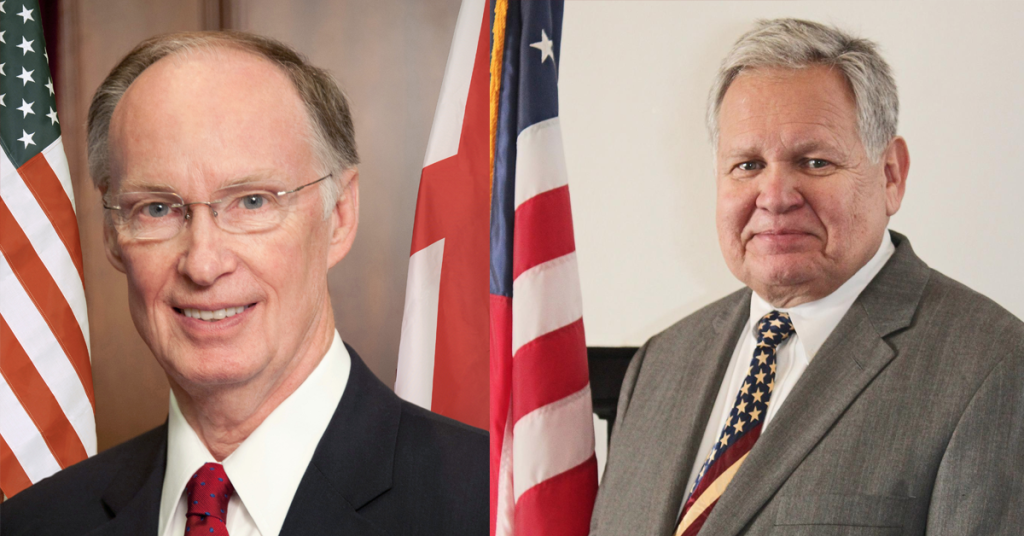
The elected status of the Alabama State Auditor is threatened by a plan now circulating in Montgomery, and current auditor Jim Zeigler does not take kindly to it. The bill — HB 432 by Rep. Paul Beckman, a Pratville Republican and sometimes ally of Gov. Robert Bentley — would alter the offices of State Auditor and Agriculture Commissioner, making them appointed by the governor’s office rather than elected statewide as state law currently provides. Zeigler, a Republican, has been a harsh critic of the Bentley administration in his tenure as State Auditor since taking office in 2015. He contends the move is retribution for his criticism on issues like taxes, state parks, and a move to spend some $1.5 million on renovating the abandoned governor’s residence in Gulf Shores for what Zeigler has characterized as personal reasons. Zeigler said the inclusion of the Ag Commissioner as part of the Cabinet shakeup is simply window dressing, “a strategy to make it look like they are not targeting me.” “I believe that I am the main target of this legislation,” said Zeigler of the proposal, taken up for the first time last week by the Constitution, Campaign and Elections Committee. He added that the move was bad policy because it would remove the independent oversight his office – a unique, ombudsman-like position – by making the office subject to the governor’s approval. “Having the Governor appoint the State Auditor would be the fox guarding the hen house,” Zeigler said. Zeigler also issued an appeal to supporters via Facebook and a news release, asking opponents of the bill to seek out members of the CCE committee and voice their concerns. “Simply ask the Committee member to vote ‘No’ on HB432, and keep the State Auditor an elected office that represents the people of Alabama instead of the interests of the Governor,” Zeigler urged over the weekend.
Alabama legislative preview: March 21 – March 25, 2016
The Alabama House of Representatives will convene at 1 p.m. Tuesday, and the Senate an hour later, as state lawmakers gather for the 17th day of the regular session. This week, the Senate will take up SB89 from Sen. Arthur Orr (R-Decatur), which would require Alabama public school students to pass a civics test as a requirement for graduation. Orr’s legislation has been on the agenda for a while, but has likely been stalled due to a focus on more contentious issues. The body is also slated to take up SB148 from Sen. Jim McClendon (R-Springville), which would require all vehicle passengers to wear a safety belt, and SB114 from Sen. Paul Sanford (R-Huntsville), which would regulate fantasy contests and “exempt fantasy contests from certain criminal penalties associated with gambling activity.” The bill would increase spending by the Attorney General’s office, which would be responsible for overseeing such activities, by $1 million in the first year. Also on the Senate’s agenda this week are SB14 from Sen. Gerald Allen (R-Tuscaloosa), which would allow citizens to carry a firearm in their vehicle without a permit, and SB205 from Sanford, which would bar the Alabama Department of Human Resources from renewing health center licenses for an “abortion clinic or reproductive health center” within 2,000 feet of a school. In the House, lawmakers will take up HB46 from Rep. Alan Boothe (R-Troy), which would allow Alabama spirit makers to sell fifths for off-premise consumption. The body is also slated to debate HB13 from Rep. Alan Harper (R-Northport), which would allow citizens to vote on whether or not to allow a lottery in the state – the legislation provides no details on how proceeds from such an operation would be used, which is likely why it hasn’t been discussed thus far. HB218 from Rep. Dickie Drake (R-Leeds) is also on the agenda and would require that all elementary school students be instructed in cursive writing before the end of their third grade year. HB244 from Rep. Connie Rowe (R-Jasper) will also be taken up this week – the bill prohibits law enforcement from requiring victims of a sexual offense to take a polygraph examination. Committee hearings get underway Tuesday, though the vast majority take place on Wednesday, beginning with the Senate Judiciary Committee, which will take up SB237 from Sen. Quinton Ross (D-Montgomery). Ross’s legislation would make it unlawful for employers to request information regarding arrests and convictions on employment applications. The committee will also take up Sanford’s SB115, the Senate version of “Leni’s Law” from Rep. Mike Ball (R-Madison), which would decriminalize possession of the marijuana-based medicine cannibidiol. The Senate Committee on Constitution, Ethics and Elections will debate SB360 from Sen. Tom Whatley (R-Auburn), which would require voters to register as a Democrat or Republican before voting in a primary. Voters who do not will not be allowed to vote on party candidates, only on ballot measures and nonpartisan issues. The House Committee on Agriculture and Forestry will take up HB393 from Rep. Ken Johnson (R-Moulton), which would allow for the growing of industrial hemp in the state for use in a variety of products. The House Committee on Mobile County Legislation will mull over HB248 from Rep. Napoleon Bracy (D-Mobile), which would establish a $10.10 minimum wage in Mobile County. At the close of business this week, legislators will adjourn for spring break.
Jac VerSteeg: Political fratricide model fails Marco Rubio
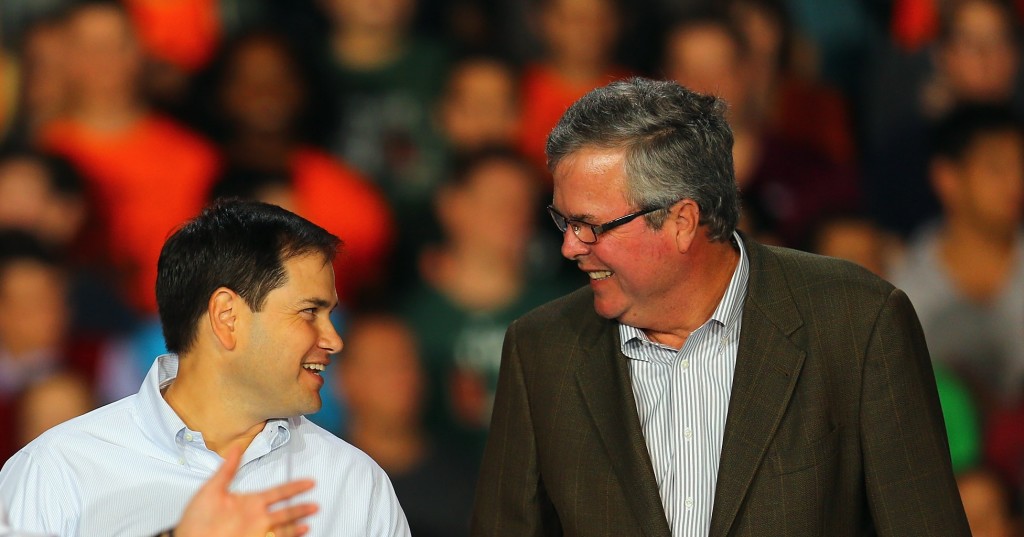
Marco Rubio was convinced the Fratricide Model of politics was his ticket to the top. Now, after one brilliant win and one spectacular loss, the Florida senator claims to have renounced the model. He will not, he says, run for governor in 2018. Florida Agriculture Commissioner Adam Putnam need not fear a Rubio challenge. We won’t have Marco Rubio to kick around anymore? Political fratricide worked for Rubio in 2010 when he broke in line to oppose and defeat Gov. Charlie Crist for a U.S. Senate seat. He was helped along by that year’s Tea Party revolt and the fact that newly Independent Crist and Democrat Kendrick Meek split the no-to-Rubio vote. Just as angry as the 2010 Tea Party faithful but with a new idol, Florida GOP primary voters this month delivered the final blow to Rubio’s second attempt at exploiting the Fratricide Model. They gave Donald Trump a victory in every county except Rubio’s Miami-Dade refuge. What effect did Rubio’s fratricidal challenge to his mentor (and his better) Jeb Bush have on the contest? What if Rubio had shown respect, bided his time and supported Bush? No way to know, but Florida might have been the firewall for Bush and the anti-Trumpers that it so dismally failed to be for Rubio. I do not think that every intra-party challenge can be characterized as an example of the Fratricide Model. It’s appropriate for rivals in the same party to let voters decide between them. But when one of the challengers has not earned the right to vie for an office and, further, damages the party or the office he seeks, that is political fratricide. And that is what Rubio has done. He knocked off Crist – once a Republican rising star – and proceeded to disdain the Senate seat he won. As a result, the seat easily could go to a Democrat this November. Then, of course, Rubio challenged Jeb. After helping to undermine the clear choice of the GOP establishment, Rubio proceeded to run a horrible campaign. The overall effect boosted Trump’s prospects and hurt the Republican Party. What will Rubio do next? He claimed, upon returning to work in the Senate – if someone so often a no-show can be said to “return to work” – that, in addition to eschewing a gubernatorial bid, he would not be anybody’s veep. You never know what to make of a politician’s claim that he won’t seek this or that office. How many times did now-House Speaker Paul Ryan claim that he would not accept the post? (By the way, Ryan also insists he won’t allow himself to be nominated at a fractured GOP convention this summer. Right.) For Rubio, who has been assailed for overweening ambition, what better strategy than to affect a new humility and express no ambition whatsoever for political office? Is it really believable that if, by some miracle, he emerges as a vice presidential candidate – perhaps for Ryan at a brokered convention – Rubio would turn down the chance? It is more believable that Rubio does not plan to run for governor in 2018. Not because he doesn’t lust after political office, but because he was so badly burned this year by the Fratricide Model. Even Rubio should be able to see that he is less qualified and less deserving than the premier GOP candidate for the job, Putnam. Putnam served in the Florida Legislature and then went on to serve in Congress for 10 years. Unlike Rubio, Putnam actually performed his job diligently and rose to be the third-highest ranking Republican in the U.S. House. Then, rather than stay in a secure seat in federal office, Putnam chose to return to state politics and has been elected and re-elected as Ag commissioner. It is worth emphasizing that Putnam’s chosen trajectory brought him voluntarily back to Florida. Rubio’s chosen path was to attempt to move into the White House. Only a failure to reach that goal could bring him the “consolation prize” of a gubernatorial campaign. And even if he were elected governor, he would just treat it as a stepping stone back onto the national stage. Could Rubio beat Putnam? Considering his drubbing on the Ides of March, the likely answer is no. His decision not to run for governor easily could be a case of sour grapes rather than an example of his newfound humility. Since Rubio decided to give up his Senate seat, it is hard to see any political path that puts him back on that stage. His best option? Hope that anybody but Trump wins and that Rubio could find a spot in a Ted Cruz or John Kasich administration and bide his time. But does anyone think that if Rubio saw a chance to return to political prominence he would hesitate to seize it even if it meant running over one of his Republican brethren? Oh, brother. *** Jac Wilder VerSteeg is a columnist for The South Florida Sun Sentinel, former deputy editorial page editor for The Palm Beach Post and former editor of Context Florida.
Darryl Paulson: The rise and fall of Marco Rubio
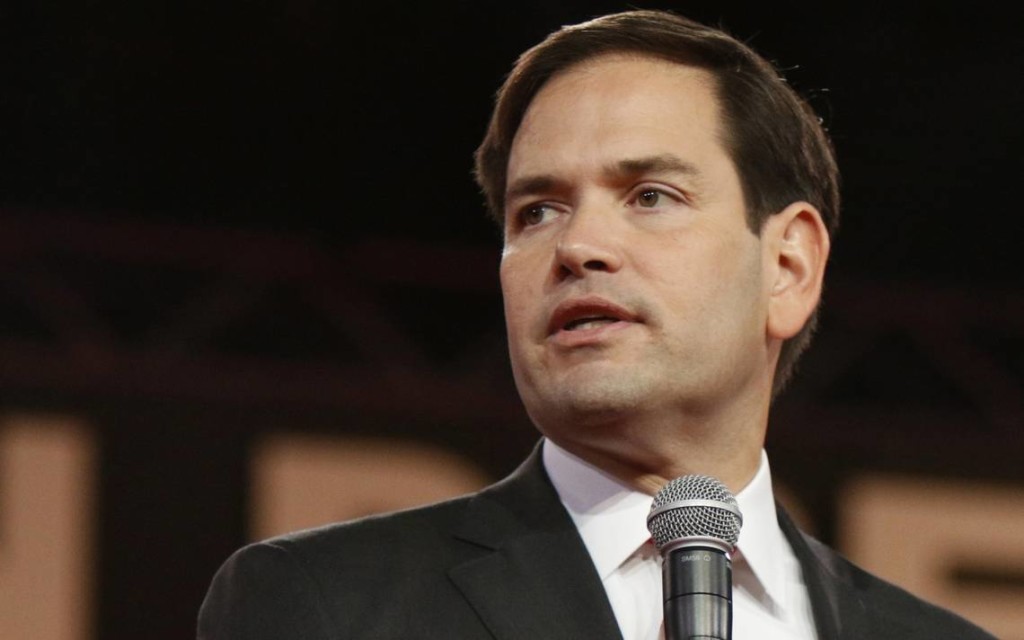
Marco Rubio has had a meteoric political career. From winning a seat on the West Miami City Council in the 1990s, to winning a special election by 64 votes to earn a seat in the Florida House, to his stunning victory over Republican Gov. Charlie Crist in the 2010 U.S. Senate race, Rubio’s political career has been impressive. When Rubio challenged the popular Crist for the Republican nomination to the U.S. Senate, most pundits said he didn’t have a chance. Crist had the support of the Republican establishment in Florida and also the support of the Republican Senatorial Campaign Committee. Rubio started the race trailing Crist by anywhere between 30 to 45 percent. Rubio, playing the role of the biblical David to perfection, defeated the Goliath Crist. In what I consider the most astounding election in modern Florida history, Rubio chased Crist from the Republican Party and forced him to run as an independent candidate. On Election Day, Rubio won 49 percent of the vote to 30 percent for Crist and only 20 percent for Democrat Kendrick Meek. The giant had been slain, and Rubio would soon be branded by Time magazine as “the Republican savior.” After losing the 2012 presidential election, the Republican Party created a “Growth and Opportunity Program” to analyze the results and develop a path forward. Essentially, the committee recommended that the party had to broaden its appeal to women and minorities, especially Hispanics, if they hoped to win the White House. They could no longer win with just white, male voters. Many Republicans viewed Rubio as the future face of the party. Young, articulate, conservative and Hispanic, he was the ideal candidate. In April 2015, Rubio announced his campaign for the presidency. He was one of 17 Republican candidates and was consider one of the front-runners. Rubio turned out to be one of the great political underachievers in modern politics. He won only three of the 32 primaries and caucuses, winning Minnesota, Puerto Rico and the District of Columbia. Tea Party voters who carried him into the U.S. Senate in 2010 deserted him in the presidential campaign. “America is in the middle of a real political storm, a real tsunami, and we should have seen this coming,” Rubio said in his concession speech. Donald Trump destroyed Rubio in his home state where Rubio had never lost an election. Trump got 45.7 percent of the vote; Rubio got only 27 percent. Trump won 66 of Florida’s 67 counties. The only county Rubio won was his home county of Miami-Dade. All of Florida’s 99 delegates were awarded to Trump. Not only did Rubio get trounced, but Trump also laid to rest the myth that he could not win in a closed primary state. It was the Republican voters of Florida who said yes to Trump and no to Rubio. What went wrong for Rubio? Among the many explanations is Rubio’s role as a member of “the gang of 8” who pushed for immigration reform and a pathway for citizenship for illegal aliens. There is some truth to this, but among Florida’s primary voters, only 12 percent mentioned immigration as a major factor in their vote. Others cited Rubio’s devastating performance in the New Hampshire debate where Chris Christie accused Rubio of being a robotic, scripted candidate who merely repeated his 25-second talking points. Rubio repeated the same talking point three times during the debate. He finished in fifth place in New Hampshire. Rubio’s campaign was widely criticized for its reliance on a media-focused approach. As his campaign manager, Terry Sullivan, told the New York Times: “More people in Iowa see Marco on ‘Fox and Friends’ than see Marco when he is in Iowa.” However, numerous studies demonstrate that a solid ground game can produce a voter boost of up to 10 percent on Election Day and a good telephone effort can add another 4 percent. Finally, many believe Rubio delivered the wrong message at the wrong time. He alluded to this in his concession speech when he said, “this may not have been the year for a hopeful and optimistic message.” Republican voters wanted someone to channel their anger into reforming politics and solving problems. March 15 was the Ides of March. To paraphrase Marc Antony, “I come to bury Marco, not to praise him.” *** Darryl Paulson, Emeritus Professor of Government, USF St. Petersburg.
