
John Mica defends use of campaign fund to pay for hundreds of meals
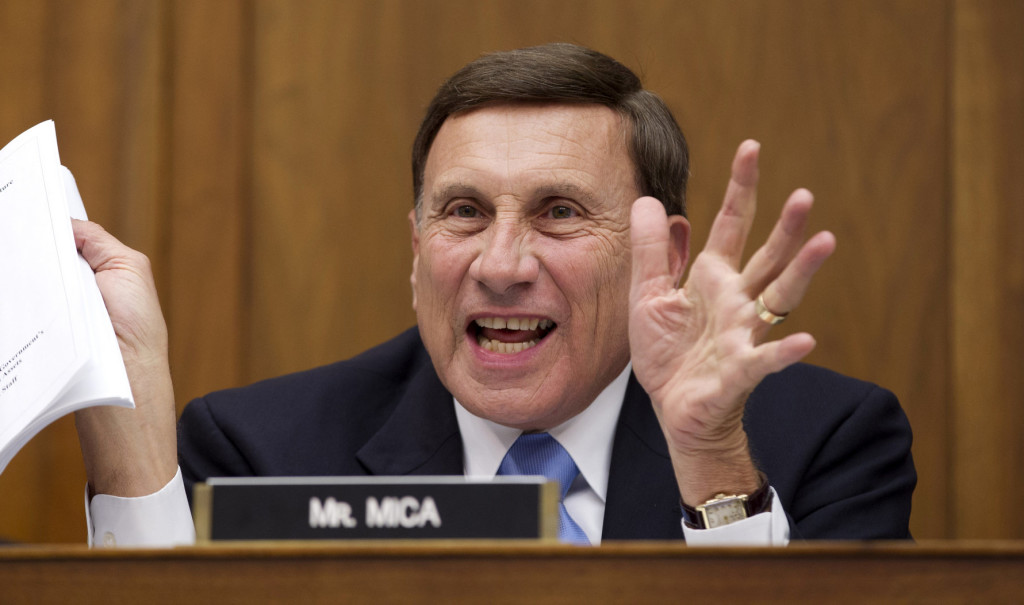
U.S. Rep. John Mica likes taking constituents out to lunch (or breakfast, dinner or coffee). And he loves having his re-election campaign pay for it. The latter preference has Mica, a 12-term Republican from Winter Park, explaining why his re-election campaigns are paying for scores of “meals with constituents” tallying tens of thousands of dollars a year in food and drink, when other members of Congress rarely, if ever, do so. The campaign picks up the check for Mica taking people to lunch in Washington, back home in Winter Park, and also in places far from either Florida’s Congressional District 7 or Mica’s office, such as restaurants in New York, Scottsdale, Ariz., and the Carolinas. In recent days, Democrats have been pushing opposition research highlighting these meal expenses, seeking to expose a chink in Mica’s re-election armor. News blogs in both Washington and Central Florida, including the influential TheHill.com, have picked up on the issue, exploring concerns raised by Democrats that Mica might be using his campaign fund as an unlimited resource for holding meal meetings with anyone, or no one, or how he could justify “constituent meals” in places like Arizona or New York. In an interview with FloridaPolitics.com, Mica not only refuted any allegations of wrongdoing, he argued that he handles such meals “more responsibly” than other members of Congress. Most members take such meals, but most typically use tax money, from official office expense accounts, rather than campaign money. Every meal involves meetings with constituents — residents or businesses from his district, Mica insisted. And every meal paid for by his campaign, he added, is one fewer meal paid for by taxpayers. “I think for 20 years we have not put constituent expenses on the tab of the taxpayer,” Mica said. Lately, he’s been doing it a lot. A FloridaPolitics.com review of Mica’s campaign expenses, as posted with the Federal Election Commission, finds he had such meals on 208 different occasions during the 2013-’14 election cycle, a campaign during which Mica didn’t even have a serious opponent. Mica’s re-election campaign spent $71,174 on those meals. In August 2014, Mica got 72 percent of the vote in a primary with three opponents. And in November 2014, he got 64 percent in the general election against two opponents including Democratic nominee Wes Newman, who quit campaigning and moved out of Florida in August. His meal numbers in that election were unusually high, even by Mica campaign standards. In the previous three election cycles — which Mica also won in landslides — he averaged about 100 such meals, totaling about $30,000, per campaign. Jermaine House, a spokesman for the Democratic Congressional Campaign Committee, accused Mica of using the campaign fund as a slush fund for meals with anyone, anytime. Mica’s 2014 election cycle meals included some high-ticket events, including a $1,475 charge one night at Buca Di Beppo in Maitland and a $1,448 dinner at Fleming’s in Winter Park. He met people for meals five times at the Winter Park Racquet Club, which is on his street, charging the campaign $2,359, and went to the 310 Park South Restaurant in Winter Park 10 times, charging $1,551. On the other hand, Mica also went to Panera Bread in Winter Park 10 times, for just $65 in charges. Most of the time, Mica said he has numerous guests, leading to high costs. Often, he said, the events are reciprocations for events others have held for him. “We usually try to hold those back in the district,” Mica said. “Every one of those is with somebody. I do so [on] many of those. Look at this. This is a three-day week,” he said of the current week. He then noted he had already hosted — and charged to his campaign — four meal-with-constituent meetings, including one with University of Central Florida students and their families, who had come to Washington for the American Israel Public Affairs Committee conference. Another was for Orange County Mayor Teresa Jacobs and others who testified before his committee about heroin. The 2014 meal in New York involved a time when Mica and Central Florida traffic planners were all in New York for a conference; he took them out to lunch, his campaign said. Multiple meals in South and North Carolina were organized around Mica’s family summer home. The Arizona meal involved a Delta Chi convention, which included Mica and other Central Floridians. For 2016, Mica again faces no major opponents, though Democrats have been recruiting hard, because with the most recent redistricting, CD 7 is now pretty close to evenly balanced between Democrats and Republicans. In 2015, he charged 58 meals, totaling $12,600. Mica’s extensive use of campaign money for constituent meal meetings is highly unusual. FloridaPolitics.com checked the 2013-14 campaign expenses of 17 other members of Congress from Florida; none had expensed even one constituent meal using campaign finances. On the other hand, it is not unusual for other members of Congress to charge such meals to their office expenses. Annual totals of $10,000 and up are commonplace. Last year, Mica said, he spent $73 on constituent meals from his office fund.“It’s such a unique case. I’ve never run into this before,” said “It’s such a unique case. I’ve never run into this before,” said Joshua Stewart, spokesman for the Sunlight Foundation, a nonprofit group that monitors campaign finance and Congressional spending. Under the law, Stewart said, a member of Congress could opt to put the meals on either the office account or the campaign account, but almost all put it on the office account, reflecting such meetings as official business, rather than re-election business. “This is not an ideal way for a member of Congress to be conducting communications with constituents,” Stewart noted. Why not? Campaigns keep detailed records of every meal with constituents, Mica replied, and show everyone who was there, and why they got together. The Central Floridians who come to his out-of-town constituent meals are not all ordinary voters. Among the names of attendees provided to FloridaPolitics were lobbyists and Republican fundraisers such as Rusty Roberts, Jim Huckeba, Leila Nodarse and the late Fred Leonhardt. Mica suggested those
Committees OK bills to allow Alabama casinos to operate bingo machines

Committees approved two bills Wednesday aimed at gambling halls VictoryLand and GreeneTrack to resume operations without interference from state law enforcement. The Senate Committee on Tourism and Marketing approved SB320 from Sen. William Beasley (D-Clayton), which would allow VictoryLand in Macon County to operate the same bingo machines being used by the Poarch Creek Indians at casinos in Wetumpka, Atmore and Montgomery. Beasley’s bill would codify the legality of the machines and allow the now-closed casino to resume normal operations. He said the bill would stand to reinforce the current amendment allowing bingo in the county and help to recoup the more than 2,000 jobs lost when the gambling hall was closed down. The bill was approved with little discussion. The House Committee on Economic Development and Tourism approved HB419 from Rep. Artis McCampbell (D-Livingston), does essentially the same thing as Beasley’s: It codifies the legality of bingo on electronic devices used by Native American casinos and establishes a gaming commission to oversee the operations. However, McCampbell’s legislation is a constitutional amendment, which means that, if it is passed by the legislature, the voters of Greene County would have the final say in whether or not is in enacted. Beasley’s bill will have to go before the governor if it is able to clear the legislature. Gov. Robert Bentley said last year that he has no further plans to go after gambling operations in the state. Further, Attorney General Luther Strange, who had previously taken the lead in unraveling many state gaming operations, has demonstrated an unwillingness to attack such operations recently. The two bills aim to ensure that the gambling halls are safe from prosecution once Bentley’s time has expired. After gaining favorable reports, both bills are slated to go before their respective houses when the legislative session resumes April 5.
Here’s what would happen should Robert Bentley be impeached
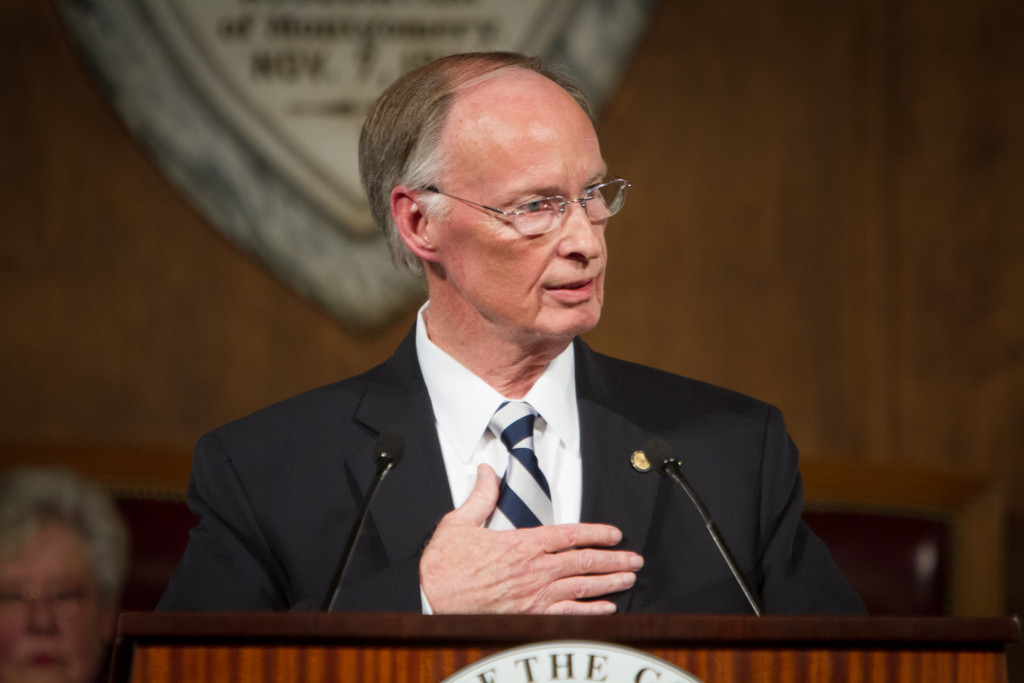
The impeachment process is seldom used in Alabama politics. Reserving its use for only the most egregious of moral or legal transgressions, the power of impeachment is protected from being diluted to a political tool. But with Alabama Gov. Robert Bentley‘s recent admission of impropriety and insistence he will not step down, lawmakers may soon consider using their constitutional tool of impeachment to oust the second-term Republican. How would it go down? The Alabama Constitution lays out the reasons justifying an officer of the state’s impeachment in Section 173: The governor … may be removed from office for willful neglect of duty, corruption in office, incompetency, or intemperance in the use of intoxicating liquors or narcotics to such an extent, in view of the dignity of the office and importance of its duties, as unfits the officer for the discharge of such duties, or for any offense involving moral turpitude while in office, or committed under color thereof, or connected therewith, by the senate sitting as a court of impeachment, under oath or affirmation, on articles or charges preferred by the house of representatives. Most of those calling for the governor’s resignation or impeachment are doing so on the grounds of the section’s “moral turpitude” clause. Although moral turpitude has no distinct legal definition in Alabama, it is generally defined as “conduct that is considered contrary to community standards of justice, honesty or good morals.” Should legislative leadership decide to proceed with the process, a majority of the members of the Alabama House of Representatives would have to approve articles of impeachment. They would be delivered to the lieutenant governor in the Alabama Senate. The impeachment proceedings would take place in the Alabama Senate, to be presided over by the Chief Justice of the Alabama Supreme Court: in this case, Roy Moore. Legislative leadership, however, has yet to comment on whether or not it will consider such action. Who would be governor? Section 127 of the Alabama Constitution clearly lays out a line of succession should the governor be removed from office: Lieutenant Governor Kay Ivey Senate President Pro Tem Del Marsh Speaker of the House Mike Hubbard Attorney General Luther Strange State Auditor Jim Zeigler Secretary of State John Merrill State Treasurer Young Boozer Has it ever happened before? In Alabama’s nearly 200-year history, a governor has never been impeached. Gov. Guy Hunt, the first Republican governor in Alabama since Reconstruction, resigned his office upon being convicted of felonious ethics law violations in 1996, but was not impeached. Where does the legislature go from here? The Alabama Legislature left early for spring break Wednesday, and will resume the second half of the regular session April 5. During the intervening week and a half legislative leadership will likely consider whether or not to pull the trigger on such an unprecedented action. During an already tumultuous legislative session, with Speaker Hubbard facing charges of ethics violations himself, it remains to be seen what long-term consequences of the governor’s actions will be.
Alabama legislative week in review: March 21 – March 25, 2016
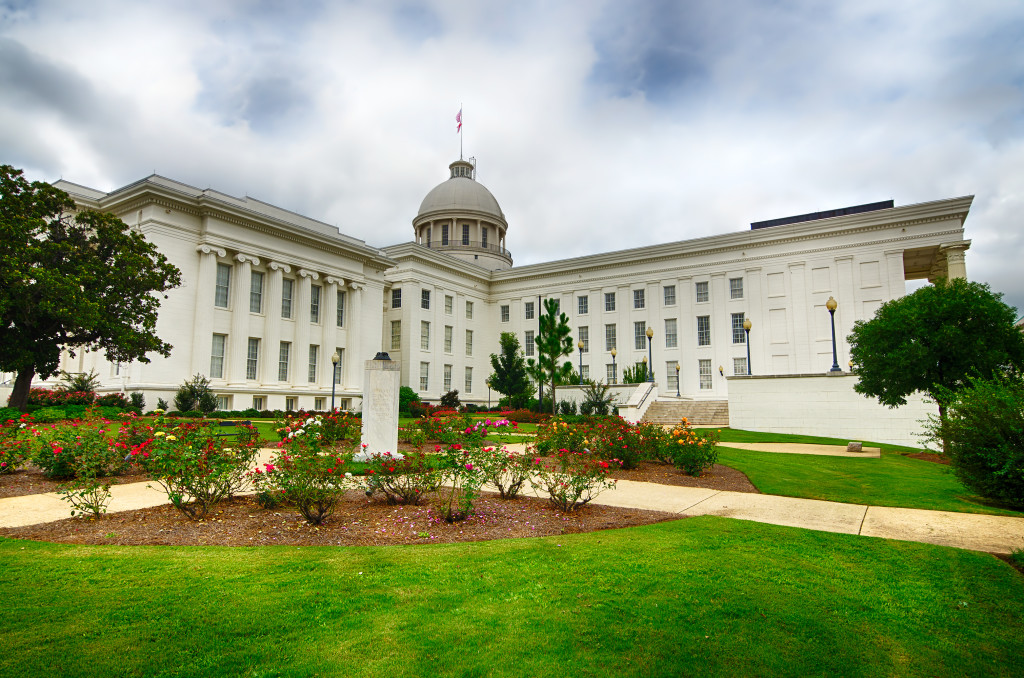
Legislators briefly passed through Montgomery this week with an eye toward their spring break, which began Thursday and won’t have them back in the statehouse until April 5. Despite only two legislative action days this week, both bodies took up high-profile legislation. Tuesday, the 17th day of the legislative session, got under way with the Alabama House of Representatives clearing the long-contested bill to provide a path to visitation rights for grandparents. HB334 from Rep. Mike Jones (R-Andalusia) passed with an affirmative vote from 97 lawmakers, though debate came over the fact that the bill may circumvent the will of fit parents to make decisions regarding the welfare of their children. Over in the Senate, lawmakers passed SB260 from Sen. Clay Scofield (R-Guntersville). The bill would bar the state from taking money from the state’s park system to prop up the General Fund. The practice is a legitimate concern, as lawmakers have taken $15 million from state park coffers over the past five years to deposit into the General Fund. The Senate also cleared HB34 from Rep. Mac McCutcheon (R-Capshaw). The bill, which was carried by Sen. Greg Reed (R-Jasper), provides tax breaks for state ports in an effort to remain competitive among states with similar incentives. Supporters say the move will attract large businesses and bring jobs to the state. The Senate continued on its roll Wednesday with the passage of SB205 from Sen. Paul Sanford (R-Huntsville), which would prohibit the location of abortion clinics within 2,000 feet of a school and bar the Alabama Department of Public Health from reissuing licenses to any clinic in violation of the new law. The Senate also approved a General Fund budget, which lacks sufficient funding for Medicaid, despite a veto threat from Gov. Robert Bentley. The Senate’s session came to a halt when it stalled a vote on Bentley’s landmark prison transformation bill. In committee hearings this week, the Mobile delegation declined a bill along party lines that would allow county residents to vote on whether or not to raise the local minimum wage to $10.10 an hour. A house committee approved a bill that will put to a vote the notion that a person is a person from the time of fertilization, effectively outlawing abortion in the state. A Senate committee took up a bill that would decriminalize possession of the epilepsy-relieving drug cannabidiol (CBD), but did not vote on the measure. It will likely come up for discussion again when legislators return from spring break April 5.
Bill to build new prisons stalls in Alabama Senate
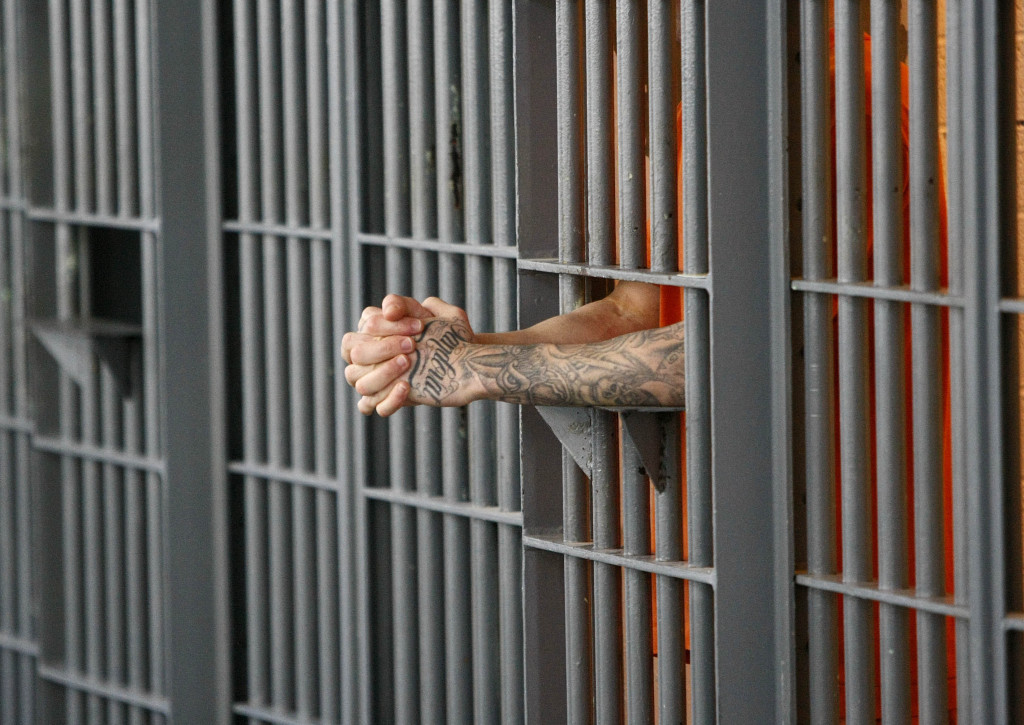
The Alabama Senate briefly discussed the Alabama Prison Transformation Initiative Act Wednesday, but ultimately shied away from taking a vote on the issue before adjourning for spring break. Senate Pro Tem Del Marsh (R-Anniston) ended debate on the subject after Senate Democrats voiced concerns over the measure. SB287 from Sen. Trip Pittman (R-Daphne) is the legislative arm of the ambitious call from Gov. Robert Bentley to systematically overhaul Alabama’s overcrowded prison system. The bill calls for the demolition of all but two of Alabama’s 16 prisons and requests $800 million in bonds to pay for the construction of four new facilities. The plan raised the ire of state contractors, engineer and architects in earlier committee hearings because of the bill’s call for a design/build method, which opponents say will end up excluding many state builders. Further concern was raised over the use of a 1-mill tax to back the bond issue. The tax currently goes to help fund the Alabama Department of Veterans Affairs and the Alabama Department of Human Resources. Democrats voiced concern over the bill because it raises prison capacity but does nothing to reduce the number of state prisoners. However, a prison reform bill passed last year, which is only beginning to show results, would reduce Alabama’s prison population. The new bill championed by Bentley would increase capacity by about 3,000 beds and is said to pay for itself through savings seen in transportation, overtime pay and other areas. The bill will likely return to the floor once senators return from spring break April 5.
Katherine Robertson: A sad state of affairs
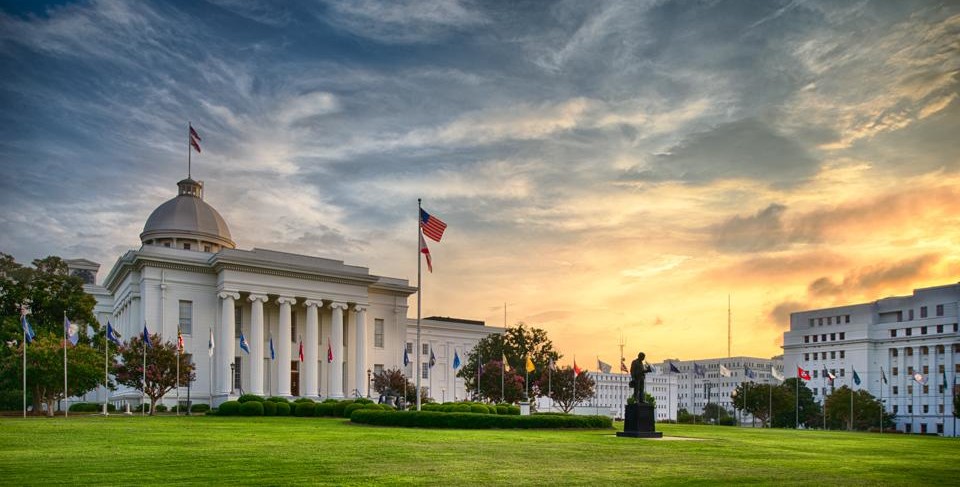
Alabama is, once again, making national news for all the wrong reasons. In the modern political era, our state has seen two governors face criminal convictions, one of whom remains in prison. Now, our governor has been caught on tape confirming year-long rumors that he was unfaithful to his wife of fifty years. One headline read, “Alabama’s ‘family values’ governor mired in sex scandal.” The Office of the Governor of Alabama has become a laughingstock to the rest of the country. As yesterday’s events unfolded, I was struck with acute disappointment. But that disappointment gave way to anger when I read the statement released by the governor’s alleged mistress yesterday evening. She said: “There is no way that man [former law enforcement chief Spencer Collier] would have said what he did . . . about another man. He only said what he said about my professional abilities because I am a woman. His comments were clear, demonstrated gender bias.” She concludes, “Unfortunately, there are still some people who are set on hindering the ability of women to work in the political arena.” As a woman working in the political arena, I found myself speechless. Gender bias is defined by the Cambridge English Dictionary as the “unfair difference in the way women and men are treated” and by the Oxford Dictionary as “an inclination of prejudice against one gender.” Gender bias has been blamed–with varying degrees of veracity–for Hillary Clinton‘s “shrillness,” the wage gap between men and women, and the reason why there are so few female CEOs. Is there gender bias in Montgomery? In some cases, but Mrs. Mason cannot claim it. Where true bias exists, people are treated in a certain way (usually negative) due to some preconceived notion about them, whether based on their age, appearance, or ethnicity–not based in reason. Knowing the evidence that was now available to the public, Mrs. Mason did not deny anything, but in a desperate diversion, tried to claim that her gender was to blame for her present predicament. Her statements are a disservice to women in politics, especially in Alabama politics where women face undeniable challenges. Currently, only 15% of Alabama’s state-level elected officials are women. Though the environment for women in the State House has come a long way, it can be a seedy place, and it remains, in some quarters, a ‘good ol’ boys’ club.’ The affair culture requires professional women to carefully navigate their friendliness, their feminism, their tone, and, of course, their appearance. By making a false claim of gender bias in a world where gender bias does exist, Mrs. Mason has diluted this reality. In his statements, Spencer Collier described the unprecedented influence that Mrs. Mason wielded over the governor. He never once said that she was unqualified for her senior-level role, nor did he question her professional abilities. Sadly, whatever went on between Mrs. Mason and the governor has made her professional abilities all but irrelevant. It will be impossible for the public to know what amount of her success should be attributed to her intellect versus her amorous relationship with the governor. A stereotype that still exists–that women can shortcut their way to the top–has been reinforced, a further setback to other women of influence in Montgomery. The state’s political science programs are filled with young women, as are our law schools. My alma mater, the University of Alabama School of Law, boasts a 54% female enrollment. Anytime I’m invited to speak to these groups, I tell them how badly Alabama needs more bright young women involved in state-level politics. But what kind of experience can they expect, should they take my advice? What message has this episode sent to the dozens of adorable middle-school girls who line the halls to page for their hometown representative or the college-aged female interns shadowing lawmakers? We should be setting the bar high for these young women, reminding them that with strong character, hard work, and professionalism anything is possible. Above all, we should demonstrate the willingness to take responsibility for our actions. The statement released yesterday will not be soon forgotten by women who have actually struggled with inequitable treatment in their professions. Rather than expressing remorse, which the public would likely sympathize with, Mrs. Mason chose to cry wolf and play the gender card. As a result, whatever gender bias previously existed in Montgomery has just been dialed up a notch. • • • Katherine Green Robertson is Vice President for the Alabama Policy Institute (API). API is an independent, nonprofit research and educational organization dedicated to the preservation of free markets, limited government, and strong families.
Daniel Sutter: Do Americans really not want my job?

Our economy benefits when immigrants do jobs Americans do not want to do. I recently discussed grapefruit picking, as an example of manual labor jobs. Today I’ll consider another job that Americans do not want, my job as an economics professor. Economics professors are an example of Ph.D.’s in science, engineering and math, collectively referred to as STEM fields. (Add technology to the prior list to get the acronym.) This case adds a complication relative to grapefruit, because some Americans currently have Ph.D.’s in STEM fields, while almost no Americans pick grapefruit. I think that I have a great job, so I’m surprised that few Americans want my gig. But the statistics show otherwise. In 2014, U. S. citizens (and permanent residents) earned 39% of economics doctorates awarded by U.S. universities. Americans earned less than 30% of doctorates in computer engineering and electrical engineering, and less than 40% in fields like chemistry, finance, computer science, and statistics. The composition of the work force reflects Americans’ disinterest, as almost 40% of workers with Ph.D.’s in STEM fields are foreign born. Our nation benefits enormously from “importing” bright men and women for graduate study in economics and then employing them as professors. To see this, imagine what would happen if only Americans could work as Ph.D. economists in the U.S. First, we would need to get a lot more Americans to enroll in economics Ph.D. programs. This would not be easy, as I can attest from years of encouraging economics majors to consider graduate school. Many students find the prospect of another four (or more!) years of study beyond completion of a bachelor’s degree daunting. Economics majors have one of the highest average starting salaries, so our students can already make good money. And graduate school, especially the first year, is much more demanding than undergraduate studies. Substantially higher salaries for economics professors would increase the number of Americans getting Ph.D.’s. If economics professors made $500,000 a year, this would probably attract enough American students to fill all of the current Ph.D economist jobs. But if you think college is expensive now, imagine what tuition would be if economics (and STEM field) professors all made $500,000 annually. Salaries would not rise this much, because universities, businesses and governments would hire fewer economists as salaries rose. Not hiring as many Ph.D. economists would have other consequences, like larger class sizes and businesses doing without a high level of analysis. Perhaps the market would balance at salaries of $300,000 per year. The cost of employing only Americans with STEM Ph.D.’s would extend well beyond the university. University of California – Davis economist Giovanni Peri estimates that foreign-born scientists and engineers working in the U.S. contributed 10 to 20 percent of our economy’s productivity growth between 1990 and 2010. Professor Peri estimates that GDP is 4% higher than it would be without the contributions of foreign-born scientists and engineers. We do not have to miss out on this productivity, or run up the cost of college, because qualified doctoral degree holders are willing to work for the salaries currently paid. And beyond their economic contributions, they add to the diversity and character of communities across our nation, including Troy. Let’s now consider the complication, namely that some Americans are economics professors or Ph.D. scientists. Allowing foreign-born economics professors certainly makes me worse off. My salary would be substantially higher if we excluded immigrants. That would be a nice raise for me! The $300,000 figure mentioned above might be wishful thinking, but the general point holds: Americans with specialized training or skills will make less when we allow comparably qualified individuals to immigrate. Preventing foreign-born Ph.D.’s from working in the U.S. would cost our economy enormously, and curtail the life choices of these immigrants. Ph.D. holders already earn salaries well above the national average, so the case for harming the economy to help the already well-off is weak. Besides, I already think I have the best job in the world! • • • Daniel Sutter is the Charles G. Koch Professor of Economics with the Manuel H. Johnson Center for Political Economy at Troy University and host of Econversations on TrojanVision.
Jim Belyeu: “The mother only contributes the egg and the incubator”

The House Health Committee met Wednesday to take up HB300 from Rep. Ed Henry (R-Decatur). The bill proposes a constitutional amendment that would “include all humans from the moment of fertilization” in the legal definition of “persons.” If the bill clears both Alabama houses of government, and goes on to be approved by Alabama voters, it will effectively outlaw abortions in Alabama. Similar amendments have failed in other states and, if approved, would likely be overturned by the U.S. Supreme Court. During the meeting, Henry claimed that “science makes it clear” that life begins at fertilization. People on both sides of the issue spoke during the hearing, though Brock Boone of the American Civil Liberties Union of Alabama was the only one to speak against the legislation. Boone noted that the legislation makes no exception for victims of rape and incest or mothers who might die as a result of giving birth. Further, he remarked that the bill would effectively outlaw many forms of contraception and put mothers suffering from a miscarriage under legal scrutiny. Boone also noted that if proponents of the legislation truly cared about children they would pass legislation to ensure that children born as a result of the ban were provided proper care for their children. Jim Belyeu, an Alabaster obstetrician, agreed with Henry’s claim that life begins at the moment of fertilization and a mother and fetus are separate from one another. “”The mother only contributes the egg and the incubator,” Belyeu said. “The mother provides only nutrition and protection.” A representative from Personhood Alabama also spoke in favor of the legislation, saying that the law would put the rights of unborn children on an even keel with the rights of the mother. Lawmakers did not take a vote on the bill and will likely take it up again after spring break.
GOP ads give Democrats anti-Donald Trump playbook
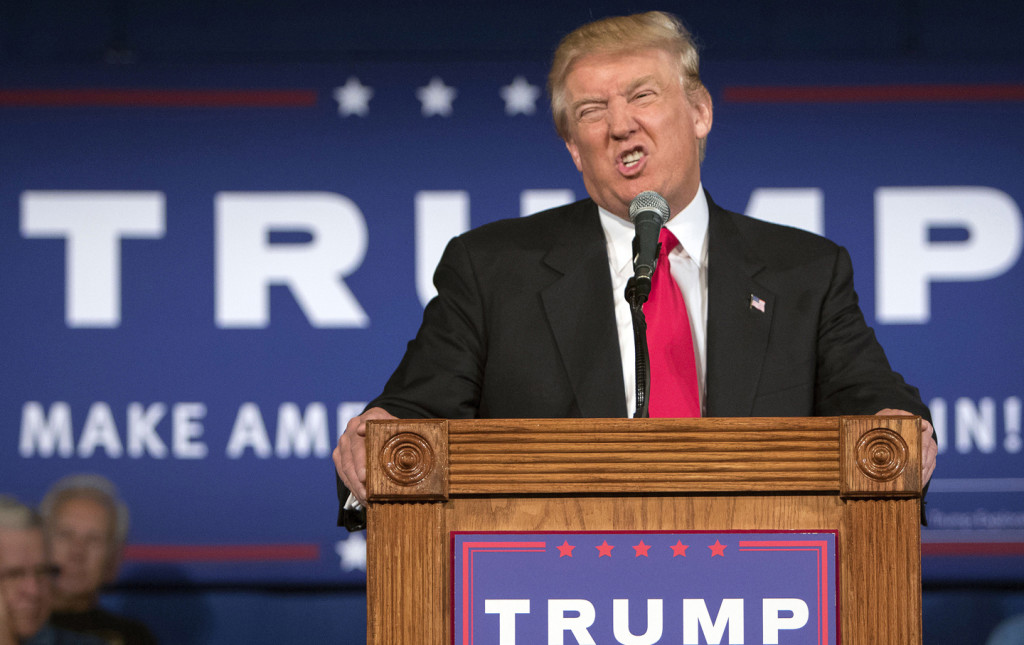
“Bimbo. Dog. Fat pig,” disgusted women say, looking straight into the camera. Another explains, “Real quotes from Donald Trump, about women.” Flip the channel. “I know words. I have the best words,” Trump says. That commercial proceeds with a 30-second, bleeped-out tour of his coarsest comments. Both ads – and dozens more that portray Trump as a selfish, deceptive buffoon – are sponsored by fellow Republicans trying to derail the political outsider from capturing their party’s presidential nomination. But these ads are also providing Democrats with attacks that could be recycled verbatim for the general election and slapped with the tagline, “Hillary Clinton approves this message.” An Associated Press review of political ads tracked by Kantar Media’s Campaign Media Analysis Group found 68 different anti-Trump commercials have been shown some 40,000 times across the country on broadcast television. About one of every 10 presidential ads shown over the past year has taken a shot at Trump, a rate that has picked up this month as polls suggest the billionaire’s already low favorability ratings with the general public are deflating. And Democrats say they’re closely monitoring the Republican hit-pieces. “It’s interesting to watch Republican super PACs as a kind of test run for the kinds of things we would do,” said David Brock, who steers several outside efforts to help Clinton. Justin Barasky, spokesman for Priorities USA, the best-financed of the pro-Clinton groups, said Republicans are “saving us money by beating him up. It’s certainly not unhelpful.” Priorities is reserving $70 million in commercial time for the general election starting late summer, and Barasky said the group anticipates it will begin spending against Trump even sooner. For his part, Trump has said the attack ads aren’t working, pointing to his decisive victory in Florida in the face of a multimillion-dollar effort there to tear him down. Responding to the ad featuring his comments on women, Trump told CNN this week that “half of that was show business.” Trump’s Republican attackers argue their efforts are worth it – even if they ultimately weaken the GOP nominee. “I don’t see the ads as the risk; he is the risk,” said Tim Miller, a spokesman for Our Principles, which has spent more than $16 million this year on TV, radio and digital ads, including the spot featuring women reading Trump comments. “That’s the point we’re trying to make. Don’t nominate someone this vulnerable to attacks from the Democratic Party.” Our Principles embraces its role as potential spoiler: One online advertisement begins by warning viewers that what they are about to see would be repeated by Democrats if Trump is the GOP nominee. A similar scenario played out four years ago with Mitt Romney. At the start of the 2012 GOP primaries, more voters had a favorable than unfavorable view of Romney. During the primaries, though, the super PAC backing Newt Gingrich portrayed him as an unfeeling businessman. By the time Romney earned the nomination in April, his numbers had flipped, with more voters viewing him negatively than positively. Over the summer, Priorities USA built on the Gingrich group’s volleys to attack Romney in the general election. Events could unfold similarly for Trump. Ratings of Trump among the general public have been consistently negative, but recent surveys have suggested those views have grown stronger since the contentious primaries began. An NBC News-Wall Street Journal poll conducted in March found a slight increase in negative ratings of Trump among registered voters since their previous survey in February, from 59 percent to 64 percent, with “very negative” ratings going from 49 percent to 54 percent. Trump is also facing a heavier onslaught of attacks from his own party than Clinton, the Democratic front-runner. The AP found just one in 33 ads dings Clinton, most coming from Republican groups. Her primary opponent, Vermont Sen. Bernie Sanders, never mentions her by name, but his ads take oblique jabs at her for accepting Wall Street money. March has also seen a proliferation of anti-Trump advertising, according to AP’s analysis of more than 250 political advertisements on broadcast TV and national cable over the past year. Ads were classified as opposing Trump or Clinton based on whether they attacked either candidate by name or by displaying his or her photo. Conservative Solutions PAC, which backed Florida Sen. Marco Rubio, painted Trump as clownish and condescending. One ad from the group plays a clip of Trump saying, “I love the poorly educated.” Our Principles also uses Trump’s words against him. One new commercial spins through news clips of violence at his rallies, and it plays a clip of the front-runner saying to a protester, “I’d like to punch him in the face.” Republished with permission of the Associated Press.
Senate passes General Fund budget with $85 million Medicaid shortfall

The Alabama Senate approved a $1.8 billion General Fund budget Wednesday that will provide level-funding to most state agencies, despite a threat from Gov. Robert Bentley that he would veto any budget that did not adequately fund Medicaid. The budget passed by the Senate leaves Alabama’s Medicaid program about $85 million short of the money it had requested. The point of contention for Alabama lawmakers was Bentley’s plan to pull $181 million from education to fund the increase in Medicaid allocations. Senate Pro Tem Del Marsh has said repeatedly throughout the session that there is no appetite among lawmakers to pull from the education budget or to raise taxes any further. The House passed the budget last week and House Speaker Mike Hubbard (R-Auburn) echoed much of Marsh’s sentiments. Hubbard said that the requested increase to Medicaid’s coffers would come at the expense of other state agencies. A failure to provide Medicaid with adequate funding would obliterate the state’s earlier announced plans to institute a Regional Care Operation (RCO) programs. With the RCO plan in jeopardy, many state lawmakers have backed out of their previous promises to see the program come to life. “Alabama took bold steps towards improving healthcare in our state with our plan for regional care organizations and today’s announcement proves our efforts are paying off,” Hubbard said when the plan was announced. “This investment could lead to a more streamlined and localized system, produce better outcomes, and save millions of taxpayer dollars in the long-term.” “The Federal government has determined that Alabama has been innovative with our plan to transition to regional care organizations,” Marsh said at the time. “Over time it will save the taxpayers millions of dollars and will serve as a potential model for states as an alternative to expanding Medicaid.” Despite Bentley’s repeated threats to veto the budget, Alabama Republicans who favor the bill would easily be able to override such a move by the governor.
Senate committee hears arguments over decriminalization of cannabis oil
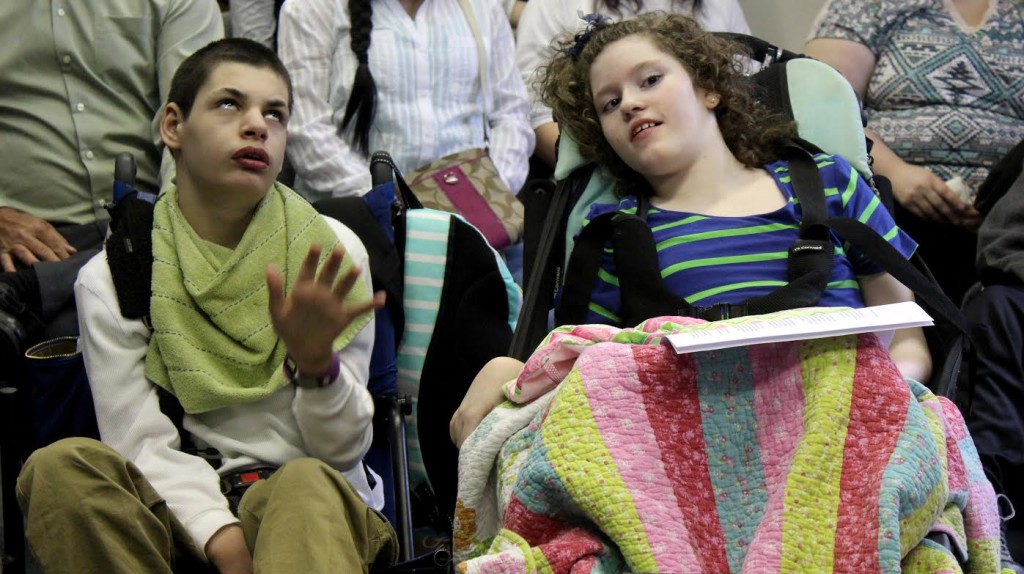
The Senate Judiciary Committee met Wednesday in a room filled to the brim with desperate families and ailing children. The contingent was on hand to hear the committee discuss SB115 from Sen. Paul Sanford (R-Huntsville), which would decriminalize possession of the seizure-reducing drug cannabidiol (CBD). The bill is the Senate version of HB61 from Rep. Mike Ball. Ball brought forth the legislation, also known as “Leni’s Law,” after the previously passed “Carly’s Law” left many needy children out of the CBD studies. Ball’s legislation is named for Leni Young, a 4-year-old Alabama girl whose family was forced to move to Oregon to gain access to the medicine after she was excluded from the CBD study. According to Amy Young, Leni’s mother, access to the marijuana-derived medication has allowed Leni to improve by leaps and bounds. The little girl is now verbal and able to sit on her own, two things she was not able to do before moving across the country. Ten minutes after the meeting was set to begin, the contingent was told to move to the seventh floor. Sanford introduced the legislation, referencing Leni and the failures of “Carly’s Law” to include more families. “Basically, an Alabama family has turned into refugees,” Sanford said. “I believe government is basically standing in the way right now.” Sanford said the new law would provided families with an “affirmative defense” against prosecution for possession of the medicinal oil. “These parents are not criminals,” Sanford said. “They’re trying to help their children.” Despite a public hearing being scheduled and there being no plans for a vote on the bill, Sen. Bobby Singleton (D-Greensboro) immediately called for a vote on the legislation. “We’re talking about the lives of children,” Singleton said, noting his disdain for opponents of the measure. “I think we need to go and vote on this bill and get it out of committee and give these children what they need.” Committee chairman Sen. Cam Ward (R-Alabaster) noted Singleton’s suggestion, but added that each side has a right to plead its case. One of the opponents was Dr. Roxanne Travelute, president of the Jefferson County Medical Society. Travelute contended that the bill’s allowance of CBD oil containing as much as 3-percent THC, the psychoactive chemical in marijuana, would cause addiction and neurological disorders, as well as widespread use for illnesses the drug was not designed to treat. Another opponent was Dr. Shannon Murphy, speaking on behalf of the American Academy of Pediatrics (AAP), who opposed the bill on the basis that CBD oil attained by parents may not be safe for patients. “We all sympathize greatly with these families,” Murphy said. “But as physicians, our Hippocratic Oath requires that we first do no harm.” Dr. Gina Dawson spoke in favor of the bill, saying that many of the claims made by opponents are patently false. Dawson noted that the AAP opposes legalization but has said exceptions should be made for “compassionate use.” She cited drugabuse.gov, which says that abuse of CBD oil is almost nonexistent, and remarked that the Epilepsy Foundation has called for legislation providing access to CBD oil to be passed. Dawson also noted that CBD oil is expensive and has no street value. Parents would willingly be on the hook for the cost of the medicine, but drug dealers would not be interested in a high-cost, low-potency drug for sale on the black market. Another proponent, Joe Church, noted that the ingredients in Tylenol or Ibuprofen are more dangerous than CBD oil, as are the mind-numbing drugs these children must take every day. He also alleged that much of the opposition to Leni’s Law comes from GW Pharmaceuticals, which has $1.1 billion invested in its stranglehold over the manufacturing of the oil. The committee is scheduled to take the legislation up again after spring break.
NRA urges Alabamians to call legislators in support of gun bills

Two bills currently under consideration by the Alabama Legislature are receiving special attention from the National Rifle Association’s political action arm, the NRA Institute for Legislative Action (NRA-ILA). The pro-gun group is urging its Alabama members to contact their state representatives and senators in support of the bills over the next week and a half during the legislature’s spring break. The first of the bills, SB 14 sponsored by Sen. Gerald Allen, would allow Alabamians without certain criminal records to carry pistols, “without a license on property under his or 14 her control, in his or her vehicle, in his or her 15 place of abode, in his or her fixed place of 16 business, and on the property of another or a 17 vehicle owned by another, with consent.” While Alabama is a so-called “Open Carry” state, meaning citizens over the age of 18 may legally carry a holstered firearm unconcealed without a permit, under current law a gun is considered concealed as soon as an open carrier steps into his or her vehicle, requiring a permit issued by their county’s sheriff. The NRA-ILA and other proponents of the bill argue current law constitutes an undue burden on the Second Amendment rights of Alabamians. The most vocal opponents of the bill thus far have been from the sheriffs themselves, who argue that allowing those without permits to carry weapons in their vehicles would put their deputies in danger. “The only thing we’re saying is every time we turn around an officer is being killed just because he’s wearing a badge,” said Alabama Sheriffs Association executive director Bobby Timmons during a recent Senate Judiciary Committee hearing. “What is a life worth?” The bill was eventually OK’d by the committee on a 6-3 vote. The second bill, SB 304 sponsored by powerful Rules Committee chairman Sen. Jabo Wagonner, would allow Alabamians to obtain their concealed carry permit in any county in the state. Currently, although the sheriffs of each of Alabama’s 67 counties are required to remit permits to any law-abiding citizen who applies, the fees charged by their offices can vary widely. “A CWL (concealed weapons license) issued in Jefferson County ($7.50 a year) confers the exact same right across the state as a CWL issued in Baldwin County ($25.00 a year),” argued the NRA-ILA in a recent action alert. “Yet, over a 5-year period those rights cost approximately $85.00 more in Baldwin County. The permittee receives no additional benefit for this more expensive permit. As a result, the counties that charge excessive fees are simply generating revenue from a small group of law-abiding residents.” SB 304 sailed through its hearing in the committee for Governmental Affairs, earning a unanimous vote for favorable report. While the two bills may appear a sure thing, with their up swell of support from one of the nation’s most powerful political outfits and sponsorships from some of the Alabama Senate’s most senior members, similar bills have been handily defeated after outrage from the Sheriffs Association and other law enforcement groups. The legislature will reconvene on April 5.
