
Bradley Byrne latest to join chorus decrying new pro-union labor rule
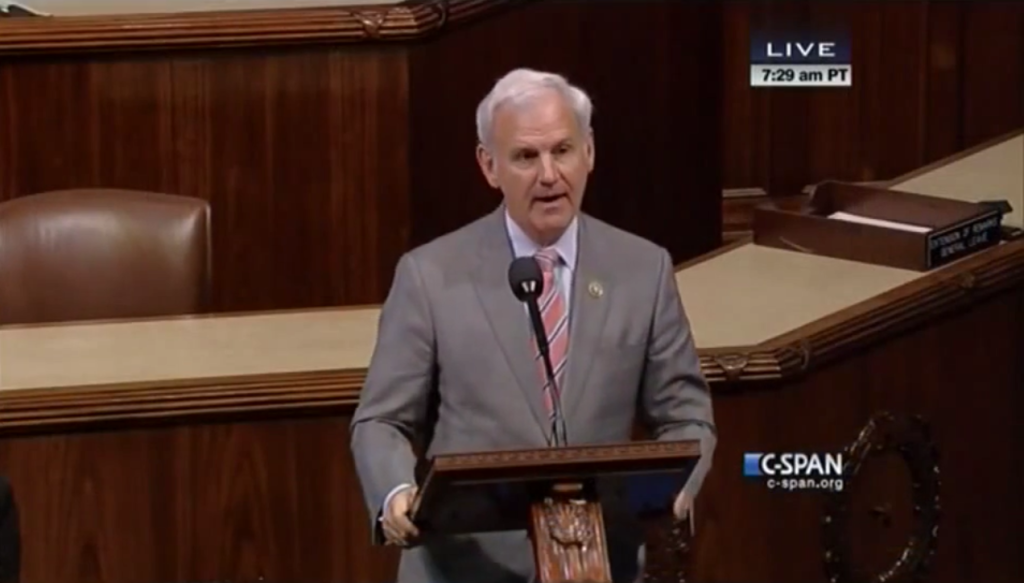
Alabama Congressman Bradley Byrne (R-AL01) reaffirmed Friday afternoon his adamant opposition to a new rule from the U.S. Labor Department, the Persuader Advice Exemption Rule, by introducing a measure to block the regulation. The Congressional Review Act of 1996 established “fast-track” procedures by which Congress can block many of the rules and regulations issued by federal agencies and their bureaucracies by passing and enacting a joint resolution of disapproval. H.J.Res. 87, Byrne’s joint resolution condemning the labor rule, is extraordinarily simple. The two page document simply says “Providing for congressional disapproval under chapter 8 of title 5, United States Code, of the final rule of the Department of Labor relating to ‘Interpretation of the ‘Advice’ Exemption in Section 203(c) of the Labor-Management Reporting and Disclosure Act’. Resolved by the Senate and House of Representatives of the United States of America in Congress assembled, That Congress disapproves the rule submitted by the Department of Labor relating to ‘‘Interpretation of the ‘Advice’ Exemption in Section 203(c) of the Labor-Management Reporting and Disclosure Act’’ (81 Fed. Reg. 15923 (March 24, 2016)), and such rule shall have no force or effect.” The rule, which is being called a “radical reinterpretation” of existing rules, would require greater disclosure of the communication between employers and outside counsel regarding union and worker organization activities. “I am proud to introduce legislation to protect hardworking Americans and employers from a rule that would restrict privacy, upend the attorney-client relationship, and limit employee access to information during an organizing campaign,” said Byrne in a press release Friday afternoon. “Worst of all, no one would be hurt more by the persuader rule than small- to medium-sized businesses. The rule is ultimately just another attempt by the Obama administration to upset decades of legal precedent and put the interests of Big Labor bosses over what is best for American workers. Congress must act to stop this flawed rule from moving forward,” continued Byrne. Earlier this week Attorney General Luther Strange added Alabama to the list of states opposing the rule, filing an amicus brief in an Arkansas Federal Court. While Byrne, Strange, and officials in the states fighting the rule say it’s an undue intrusion into what should be considered client-attorney privilege, according to Secretary of Labor Thomas Perez, “The final rule … is designed to ensure workers have the information they need to make informed decisions about exercising critical workplace rights such as whether to form a union or join a union.”
Alabama legislative wrap-up: April 11–15, 2016
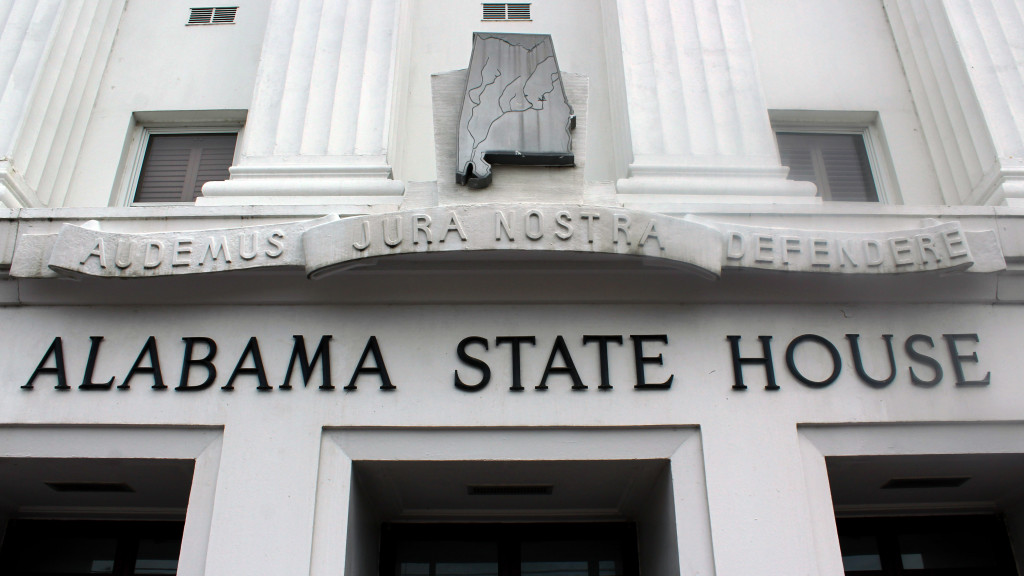
Here’s your quick look at some of the major votes the Alabama House of Representatives and the Alabama Senate took this week: On Tuesday the Alabama Senate overwhelmingly passed SB 347, a bill legalizing the research and regulation of industrial hemp—the non-intoxicating version of the cannabis plant. A similar, but not identical, bill passed the Alabama House earlier in the day. To be sent to the governor’s desk the bill must make it through the conferencing process. On Wednesday a proposal to add an amendment to the state constitution that would keep GreeneTrack’s bingo casino operational narrowly failed. The amendment, sponsored by Sen. Bobby Singleton, a Greensboro Democrat, was shot down four votes shy of the necessary 21. The Alabama Senate passed Wednesday evening the Education Trust Fund budget, funding education in the state, as well as the first pay raise for teachers in several years. In the largest education budget from the state since 2008’s financial crash which sent the state’s budgets careening, the $6.3 billion expenditure funds everything from K-12 public classrooms to the implementation of new educational technology. The Alabama legislature nearly unanimously passed a new funding formula for the state’s roads and bridges Wednesday evening, in what legislators and outside groups are celebrating as a return to greater local control of transportation funds. The bill, SB 180, establishes the Alabama Transportation Safety Fund, which will receive revenues designated for “maintenance, improvement, replacement, and construction of state, county, and municipal roads and bridges within the state.”
Stan Stabler: Responding to “erroneous allegations and absolute lies”
In 2016, State Troopers have investigated 8,947 traffic crashes with 3,742 injuries. One hundred fifty-nine people have lost their lives in Trooper-investigated traffic crashes this year – and 74 of those 159 people were not using their seat belts. Our Internet Crimes Against Children Unit has worked 22 cases, executed 16 search warrants and arrested 8 child predators. The SBI Narcotics Unit has investigated 77 cases and seized 73,294 grams of illegal drugs with a street value of $1,536,112. SBI Major Crimes has completed 190 assist reports, arrested 19 suspects, and opened 38 cases. Our Fusion Center has issued four alerts for missing children and seven alerts for missing seniors, while assisting state and local law enforcement agencies with 496 requests for information. Yet the headlines, articles and blogs are littered with erroneous allegations and absolute lies from disgruntled former agency head Spencer Collier. As a seasoned law enforcement officer with 30 years’ experience, I find it disheartening that Collier, a former public servant, chooses to fabricate the facts and belittle those who put their lives on the line every day to serve others. It has been said many times over the past year, the core function of state government is public safety. As Secretary, I assure you, the Alabama Law Enforcement Agency is committed to providing public safety to the citizens of Alabama. Since mid-February, morale has greatly improved at our agency – State Troopers, Agents and civilian employees work hard every day to ensure our mission is fulfilled. I have had an opportunity to personally meet the majority of our staff – employees who have integrity and are dedicated to the agency’s mission and are not letting the constant allegations from the former leader distract them. These sensationalized lies from Collier – and other unnamed sources – all occurred during the timeframe of his tenure as Secretary and under his direct supervision. I encourage members of the media and political bloggers to fact-check future allegations regarding ALEA, its employees or me. Although we cannot comment on ongoing investigations or operational details of dignitary protection missions, we will be more than happy to provide factual information. As for Collier’s accusations, I want to correct the following about me: No ongoing investigations were closed. As is customary in a law enforcement agency, once investigators have exhausted the leads and completed their investigation, the file is turned over to the proper prosecutorial authority. Transfer of two executive staff members were made prior to Collier’s departure. Agents who were commuting to Montgomery were returned to their home base and no longer required to commute several days throughout the week. Effective Feb. 29, two non-merit positions and two part-time retired state employee positions were eliminated and will remain vacant, representing a savings of more than $250,000 annually . They were: An Assistant Homeland Security Director who served as an Executive Secretary/Assistant (As is common with change in management, I am using the administrative assistant I had in my previous role as Chief of Protective Services.) An Assistant Homeland Security Director who was assigned to the Fusion Center as “Special Projects” A part-time sworn retired state employee who functioned as a facilitator during the transition process A part-time sworn retired state employee who served as one of Collier’s drivers Although I worked on the Governor’s detail in August 2014, I did not serve as detail leader until November 2014. I was appointed Chief of Protective Services in June 2015. Prior to that appointment, I did not communicate directly with Collier. ALEA is a para-military organization, and I reported and communicated through my chain of command. My priority as ALEA’s Secretary remains the same – to carry out the mission of the agency and ensure our law enforcement officers and support staff honorably provide service, protection and safety for all of our citizens. Guest op-ed by Alabama’s Secretary of Law Enforcement Stan Stabler.
Martha Roby: VA funding bill seeks progress on payments

This week the House Appropriations Committee marked up and approved the Military Construction and Veterans Affairs Appropriations Bill, advancing the annual legislation funding veterans services and military installations for consideration by the full House. While funding is the primary purpose, appropriations bills also offer an opportunity to effect needed policy changes. In this case, my colleagues and I on the Appropriations Committee sought to bring to light and repair some of the problems with the Department of Veterans Affairs‘ (VA) unwieldy Choice Program. With the VA reform and accountability law enacted in late 2014, Congress set up and funded the Choice Program to allow veterans who live far away from VA facilities or experience especially long waits to access health care from outside providers. However, implementation of Choice has been anything but smooth. I hear from veterans all the time who have tried to take advantage of this new option, only to face more delays, red tape and runaround. There are many reasons for the troubles with Choice, but funding should not be one of them. In fact, the $73.5 billion this appropriations bill directs toward the VA is the Department’s highest level of discretionary funding ever. Despite historic funding levels, the VA has had trouble following through on reimbursements to outside health providers. This problem has existed in Central Alabama for some time. As you may know, I am working to build a Veterans Community Health Network in Alabama in which community hospitals and other health providers will partner with the VA to deliver care for veterans in remote areas or those who need specialty care. I believe this hybrid system is the future of veterans care and can be a model for other areas. One of the primary hurdles we have faced is the complicated and tiresome reimbursement process. Hospitals, clinics and other health providers in Alabama want to be a part of the solution to improving veterans’ access to healthcare. However, they can’t be expected to do it for free. No veteran should be denied access to care because the VA hasn’t paid its bills. That’s why I worked to include language in the Committee Report calling attention to the problem and directing the VA to (1) comply with federal “prompt pay” requirements, and (2) account to Congress all the outstanding reimbursements owed to outside providers. My goal here is to prompt VA officials to settle outstanding debts and fix the reimbursement process so that providers can have full confidence in partnering with the VA. In Alabama, communication between the VA and local providers has definitely improved, which is a good first step. My office will continue to work through these issues on the local level so that our Veterans Community Health Network can be a success. As we do, I intend to use my influence in Congress to demand the VA pay its debts. • • • Martha Roby represents Alabama’s 2nd Congressional District. She lives in Montgomery, Alabama with her husband, Riley and their two children.
Presidential TV ad roundup: 4/5/16 edition

As the presidential field has winnowed to five candidates, campaigns from both sides of the aisle have honed their targets primarily on one candidate: Donald Trump. According to data provided by Kantar Media/CMAG, more than half of the record spending on negative advertising during the 2016 presidential primary has been directed at the GOP-front runner. With more than $132 million spent on negative ads by candidates and their Super PACs, nearly $70 million has gone to commercials attacking Trump, Here are the ads the candidates released this past week: Ted Cruz Title: Simple flat tax Published: April 14, 2016 Tone: Informative Title: Great Published: April 15, 2016 Tone: Insulting John Kasich Title: Values Published: April 7, 2016 Tone: Condemnatory Title: One choice Published: April 8, 2016 Tone: Critical Title: Two paths, America has a choice Published: April 13, 2016 Tone: Encouraging Donald Trump No new videos posted. Hillary Clinton Title: Norma Published: April 7, 2016 Tone: Appreciative Title: Every corner Published: April 7, 2016 Tone: Proud Title: Stronger together Published: April 11, 2016 Tone: Critical Title: Came through Published: April 15, 2016 Tone: Hopeful Bernie Sanders Title: Dear New York, Please Make The Right Choice On April 19th Published: April 13, 2016 Tone: Condemnatory https://www.youtube.com/watch?v=hwYcstt2D5U
Alabama unemployment rate remains unchanged in March

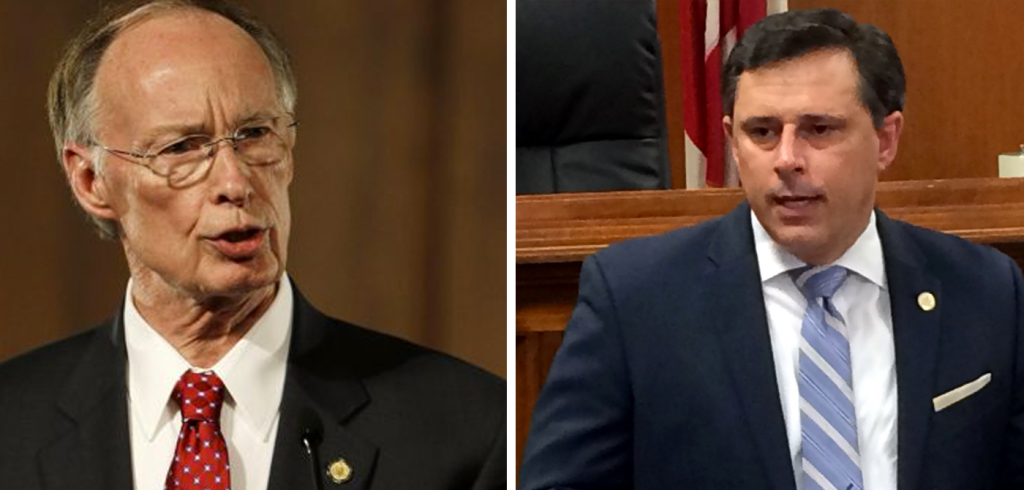
The Alabama unemployment rate held steady in March Governor Robert Bentley‘s office announced Friday. Job figures released Friday show the state’s seasonally adjusted unemployment rate of 6.2 percent remained unchanged from February. “Alabama’s unemployment rate continues to hold steady, all the while showing labor force and employment growth,” Governor Bentley said. “The growth is very encouraging, as we continue to see higher numbers of people working than we have in nearly eight years. Employers are hiring in Alabama, and we have a workforce ready for a job. Our efforts will continue to put Alabamians back to work.” The Civilian Labor Force, which represents those persons 16 and older who are working or actively seeking work increased to 2,176,457 in March. The last time the number of people working was equal to or above 2,042,177 was in August 2008. Despite the improvement, the state’s unemployment rate remains above the national rate of 5 percent. “The number of jobs our economy is currently supporting is extremely encouraging – we’re less than 8,000 jobs away from meeting economists’ predictions for job growth in 2016, and we’re only three months into the year!” Alabama Department of Labor Commissioner Fitzgerald Washington said. Of Alabama’s 67 counties, 64 counties experienced an unemployment rate decrease in March. The three counties that saw no change in the unemployment rates are: Lee, Macon. and Tuscaloosa counties. Counties with the lowest unemployment rates are: Shelby County at 4.6 percent, Elmore County at 5.2 percent, and Cherokee County at 5.3 percent. Major Alabama cities with the lowest unemployment rates are: Vestavia Hills at 3.9 percent, Homewood and Hoover at 4.4 percent, and Alabaster at 4.6 percent. Check out the unemployment data by county here.
Debate Takeaways: Hillary Clinton, Bernie Sanders show their fighting side
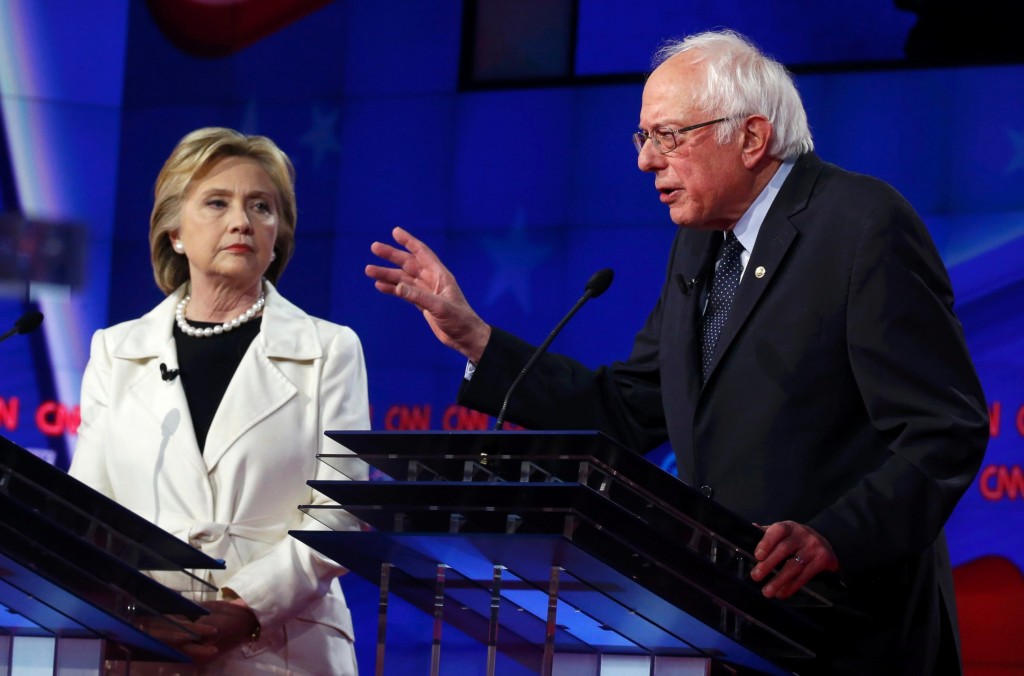
Hillary Clinton and Bernie Sanders let loose with a series of combative accusations on Wall Street, the minimum wage and guns in a rough-and-tumble debate Thursday at the Brooklyn Navy Yard. The contentious, fast-paced back-and-forth between the two Democratic presidential candidates was proof of how much is at stake entering Tuesday’s New York primary. For Sanders, a loss in New York would narrow his already difficult path to the nomination. For Clinton, anything less than victory in the state she represented in the Senate would be an embarrassment and would make nervous Democrats even more anxious. Here are the top takeaways from Thursday’s debate: — TOUGH TONE Clinton and Sanders did little to hide their annoyance with each other. Sanders was often caustic as he questioned Clinton’s credibility on super PACs, the Iraq War and Wall Street. “My goodness! They must have been really crushed by this,” Sanders said in a mocking manner about Clinton’s response to financial executives after the 2008 financial crisis. Clinton suggested Sanders didn’t have the judgment to be both president and commander in chief and implied he had cut a deal with the National Rifle Association to get elected to Congress in 1990. “He kept his word to the NRA,” she said. Both talked over each other at times, their voices rising. At one point, CNN moderator Wolf Blitzer said if they continued “screaming at each other,” no one would be able to hear either of them. — WALL STREET Sanders hoped to use the debate just miles from Wall Street to portray his opponent as insufficiently tough on corporate greed. When Sanders played the Wall Street card, Clinton tried to turn it around as an attack on President Barack Obama – among the party’s most popular figures. Clinton said Obama and the groups that supported his candidacy received “tens of millions of dollars” from the financial industry, but he still steered the Dodd-Frank financial overhaul through Congress. “This is a phony attack,” she said. Sanders pointed to the Wall Street-backed donations filling the coffers of a pro-Clinton super PAC. And he dismissed Clinton’s contention that she had told Wall Street firms to reform their ways before the financial crisis in 2008. “They must have been very, very upset by what you did,” he said sarcastically. — MINIMUM WAGE Sanders tried to paint Clinton as a johnny-come-lately on hourly wages, expressing surprise when he thought Clinton said she was supportive of a $15 an hour federal minimum wage. Clinton has supported the “Fight for $15” push by labor unions, but backed a more incremental approach in a Senate bill that calls for an increase in the federal minimum wage to $12 an hour. Cities and states, Clinton argues, should be free to go further. But Sanders said he was surprised to hear that Clinton might support the $15 threshold, telling the audience, “I think the secretary has confused a lot of people.” Clinton said she was being consistent and in the eight previous encounters, “I have said the exact same thing.” — SANDERS’ TAKE ON MIDDLE EAST PEACE In standing by his past criticism of Israel, Sanders delivered some straight talk that might cost him some voters in New York – but highlighted Clinton’s rigid orthodoxy on the issue of Middle East peace. Sanders wasn’t fazed when asked whether he believes Israel has acted disproportionately in responding to attacks from Hamas. He said the devastation to schools, hospitals and infrastructure in Gaza has not matched the threat. “That does not make me anti-Israel,” Sanders said. Clinton stuck to the pro-Israel hard line. In war, leaders must take “appropriate precautions,” she said – but Israelis “did not seek this kind of attack, they do not invite rockets raining down on their towns and villages.” Sanders, she said, was again describing a problem without proposing a solution. Sanders came back by accusing Clinton of evading the question. “We are going to have to say that Netanyahu is not right all the time,” he said, referring to Israeli Prime Minister Benjamin Netanyahu. “Long-term, there will never be peace in that region unless the United States plays a role – an even-handed role.” — TRANSCRIPTS OR TAX RETURNS? Clinton was pressed again to release the transcripts of her paid private speeches to Wall Street executives after she departed the State Department in 2013. The ex-secretary of state again demurred, saying Republican candidates should also be forced to comply. But this time she pointed out that Sanders hadn’t released his recent tax returns, which she said was a basic standard for any presidential hopeful. Sanders announced that he would release his 2014 tax return on Friday and he would release others in due time. The senator said his wife, Jane Sanders, handled the family’s taxes but offered this excuse: “We’ve been a little bit busy lately.” Republished with permission of the Associated Press.
Robert Bentley took Jon Barganier to Vegas, attended Celine Dion concert
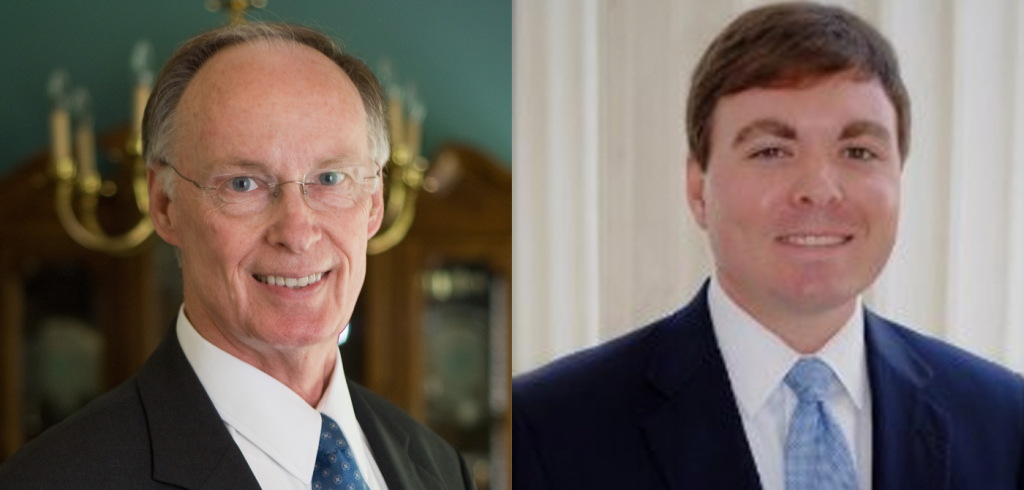
Friday mornings are generally quiet at my house but this morning over my coffee I was greeted by a breaking news alert from AL.Com. The headline practically shouted “Smoking gun.” John Archibald had written, “Gov. Robert Bentley, Rebekah Mason flew to Vegas, attended Celine Dion show.” Wow! I clicked the article, much like I’d assume most people did, anticipating this would be news that broke the case wide open. Only a few sentences in, I realized I was duped by yet another clickbait headline where the substance of the story was a yawn-fest. This particular trip in question wasn’t simply a holiday getaway between Mason and Bentley, rather it was a trip to attend the Republican Governors Association Annual Conference. Mason wasn’t the only person to accompany the governor — two other staffers joined as well. The headline could have read, “Gov. Robert Bentley, Jon Barganier flew to Vegas, attended Celine Dion show.” Elected officials traveling with staff to conferences is not news. Now it would possibly be news if during the trip the two had a hot date to the concert, but the governor sprang for tickets for all the accompanying staff. I’m going out on a limb here, but if the governor and Mason wanted privacy and a romantic evening they probably wouldn’t have brought along Communications Director Jennifer Ardis and Deputy Chief of Staff for Policy Jon Barganier. The story itself is more of the same, with former Alabama Law Enforcement Agency chief Spencer Collier delivering another riveting set of accusations that Bentley tried to shake his security detail, an accusation that the governors office denied in a statement released after the story “broke.” There’s been credible and even wowing news related to the Mason/Bentley relationship, but this particular piece along with others recently seem to be a “which publication can garner the most clicks” contest based on an otherwise personal situation. Frankly, I don’t know if the public needs any more evidence of an inappropriate relationship than what is out already there, but we certainly don’t need to make something out of nothing for the sake of web traffic. I’ve worked for a number of elected officials, most recently a member of Congress who was a dentist. While attending a dental conference in Nashville several years ago myself, my infant daughter and two other staffers went to a concert at the Ryman with the Congressman. It would be laughable to make that conference and concert into something more. Likewise, it’s laughable to make the Vegas and Celine concert into something more. As I said before, beyond the lingering questions and the need for the appropriate authorities to conduct their independent investigations to determine whether or not any laws were broken, I’m not sure how much more information the public needs to know. Regardless of the relationship she had with the governor, clearly Mason did work within the administration, was a trusted adviser, and would be included on this and other trips. Duh.
Email insights: RNC fights back against Donald Trump, ‘campaigns have to know’ rules
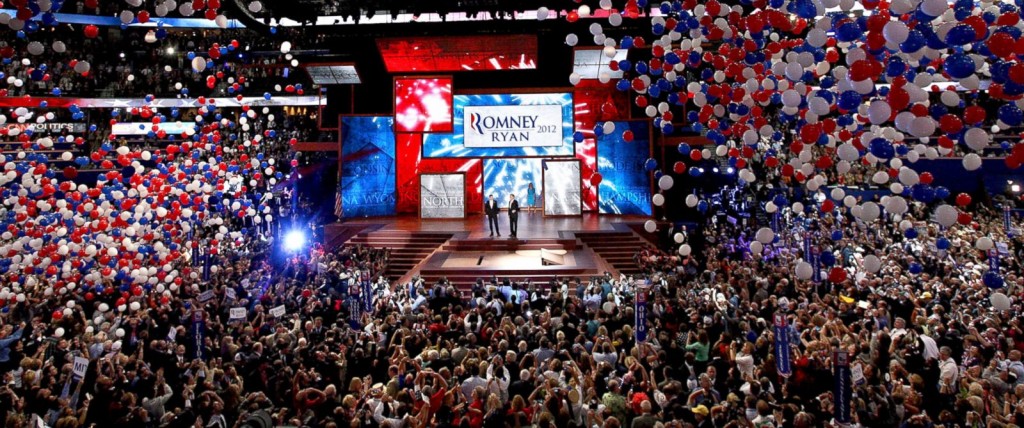
The Republican National Committee (RNC) is fighting back against claims from GOP front-runner Donald Trump that the party establishment is trying to take the nomination away from him. Sean Spicer, Chief Strategist and Communications Director of the RNC, sent an email to all interested parties Friday noting that all 50 states, five territories and the District of Columbia submitted their rules for selecting delegates by last Oct. 1. And that the party circulated that information to every campaign and briefing the media on Oct. 2. “As a party, we believe in the freedom of the states to make decisions about how they will select delegates to the National Convention. And for decades, this grassroots-driven, democratic process has been transparent and effective,” Spicer wrote in the email. “This cycle is no different.” “It ultimately falls on the campaigns to be up to speed on these delegate rules. Campaigns have to know when absentee ballots are due, how long early voting lasts in certain states, or the deadlines for voter registration; the delegate rules are no different,” Spicer continued. Read the full email below: On October 1 of last year, 50 states, 5 territories, and the District of Columbia submitted finalized plans for how delegates would be chosen for the Republican National Convention. These plans were promptly circulated to all of the campaigns and the RNC held a briefing with over 100 members of the media in attendance laying out these plans the next day on October 2. As a party, we believe in the freedom of the states to make decisions about how they will select delegates to the National Convention. And for decades, this grassroots-driven, democratic process has been transparent and effective. This cycle is no different. The rules surrounding the delegate selection have been clearly laid out in every state and territory and while each state is different, each process is easy to understand for those willing to learn it. It ultimately falls on the campaigns to be up to speed on these delegate rules. Campaigns have to know when absentee ballots are due, how long early voting lasts in certain states, or the deadlines for voter registration; the delegate rules are no different. Whether delegates are awarded through a primary, caucus, or convention, this process is democracy in action and driven by grassroots voters across the country. The RNC is transparent about the rules and works with campaigns on a consistent basis to address any questions surrounding the process. As we head into the final contests in April, here is a rundown of those elections and how their delegates will be selected: WYOMING (29 DELEGATES) Delegates in Wyoming are elected at the grassroots level at the Wyoming State Party Convention. Campaigns can organize supporters to run as delegates and those candidates can be bound if they declare for a candidate. NEW YORK (95 DELEGATES) On April 19, New York Republicans will go to the polls with 95 delegates at stake. Delegates are awarded by congressional district and on an at-large basis. If a candidate receives over 50 percent of the vote in a congressional district they win all three of the at-large delegates in that district. Only those candidates who receive more than 20 percent of the vote are eligible to receive delegates. The delegates bound by the primary vote will then be elected by their peers at grassroots congressional district meetings. The 11 at-large delegates to the National Convention are voted on by the Republican State Committee at their meeting on May 18. APRIL 26th STATES (172 DELEGATES) CONNECTICUT (28 DELEGATES) Delegates are submitted as slates by the candidates and are awarded on an at-large and congressional district basis. At-large delegates are awarded proportionately for all candidates who receive over 20 percent of the vote with all at-large delegates awarded to a candidate if they break 50 percent. The plurality winner of the congressional district vote wins all three delegates from the district. Both the at-large and congressional are elected at the State Committee Meeting on April 26. DELAWARE (16 DELEGATES) Delegates are awarded on a winner-take-all basis and are voted on as a slate at the state convention on April 29. MARYLAND (38 DELEGATES) Three delegates for each candidate are elected directly on the ballot in each congressional district and at-large delegates are voted on individually at the State Central Committee meeting on May 14. Congressional district delegates are winner-take-all by district vote, at-large delegates are winner-take-all by statewide vote. PENNSYLVANIA (71 DELEGATES) Pennsylvania elects three delegates from each congressional district on the primary ballot and the State Committee elects 14 at-large delegates at their meeting on May 21. Congressional district delegates are submitted by campaigns, though are technically unbound. At-large delegates are winner-take-all based on the statewide vote. RHODE ISLAND (19 DELEGATES) Delegates are elected directly on the ballot in the primary election. Delegates are awarded proportionately on an at-large and congressional district basis with a 10 percent threshold. For more information and facts about the convention, conventionfacts.gop addresses frequently asked questions about delegates, the rules, and how the process works.
