
Pediatricians say state Medicaid cuts will reduce kids’ health care access

The state’s leading association of practicing pediatric doctors warned looming cuts to state Medicaid program could hurt Alabama’s children big time on Tuesday. The Alabama Chapter of the American Academy of Pediatrics held a conference call with reporters, warning them planned a planned reduction in the amount of money allocated to Medicaid will lead to a downward spiral in levels of care and quality. “Regardless of where you live in the state, the expected cuts to Alabama’s Medicaid program will significantly impact care to all children,” said Cathy Wood, MD, a pediatrician at Partners in Pediatrics Clinic in Montgomery and the president of the group. “Alabama’s children need homes for their medical care. Cutting Medicaid will disrupt a very fragile healthcare system in our state and we fear will ultimately crush it,” said Wood. Lawmakers in the Alabama Senate approved a budget which included $85 million fewer dollars for Medicaid-funded care than the state Medicaid Agency said it requires to keep care at the same – already underwhelming – status quo levels. Gov. Robert Bentley – who once went out on a political limb to support expanding Medicaid under the Affordable Care Act – now seems to have backed down to pressure, saying he would direct the agency to make cuts to sustain the program according to the new budget figures rather than seek greater funding. 500,000 children are enrolled in Medicaid, meaning nearly a huge share of the most vulnerable populations in America are relying on the outcome of the budget battle. The pediatricians said Tuesday that if the current budget were enacted, close to half would stop taking Medicaid for a portion of their patients, such as new patients, or patients from a certain geographic are, while about half would have to lay off staff. Additionally, the doctors’ group reported, more than one-third would stop taking Medicaid altogether, while one-sixth said they would retire or move out of state, depending on where they were in their careers.
The ballad of Jeff Sessions and Donald Trump
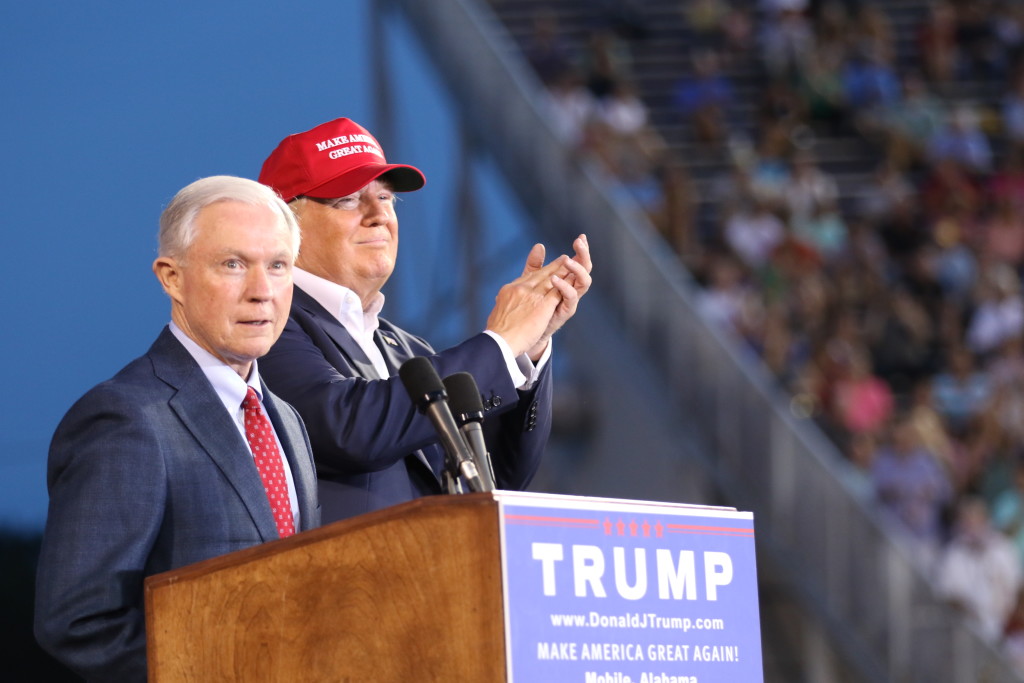
U.S. Sen. Jeff Sessions and Donald Trump go way back. How, exactly? The United Nations of course, writes Elise Viebeck of the Washington Post. As Viebeck explains, a $1.2 billion proposed renovation of the U.N.’s New York City headquarters brought the two men together in opposition. Trump, whose Trump World Tower is across the street from the building, sharply criticized the move saying the organization was “a mess,” and that the 10-figures project was “unnecessary.” Sessions — no fan of the U.N. either — heard about Trump’s views and looked him up: [T]he Alabama Republican and former Sen. Tom Coburn (R-Okla.) invited him to come to Washington to talk about building renovation and air his criticism of the U.N. project at a Senate subcommittee hearing. The result was the best congressional testimony Sessions says he had ever heard. Even now, as Trump’s sole Senate endorser and the heart of his presence in Washington, Sessions loves telling the story. That’s partly because he likes to do his Trump impression. “Y’all are gettin’ taken to the cleaners!” Sessions said while mimicking Trump in a recent interview, his accent drifting somewhere between Queens and the Alabama Gulf Coast. “There is no way it should cost that much! … If you give it to me, I’ll save you a billion dollars!” The relationship persists, writes Viebeck, and culminated in Sessions’ endorsement of Trump despite Texas Sen. Ted Cruz‘s aggressive wooing of Sessions. Their rapport has also come to have a personal basis, political affinities aside: Eleven years have passed since that hearing, and sitting in his office on Capitol Hill, Sessions can’t suppress his natural affection for Trump. So perhaps it’s no surprise that the ultra-conservative southerner has become Trump’s main man in Washington as the leading presidential campaign careens toward the Republican convention. “I think he can win, and I believe he will,” Sessions said. “He will need to continue to flesh out the details of his policies. But his instinctive response to Americans’ current situation has been pretty darn good.” Sessions described why he thinks Trump appeals to a large swath of voters that are seemingly his opposite — neither rich nor well-educated — and why his ostentatious lifestyle and private jet don’t put off supporters. “I do think it’s one of the charms he has. It’s more of a blue-collar attitude, but he is so proud of that plane!” Sessions said. “He doesn’t try to be cool, like, ‘I’m a rich person.’ He says, ‘Let me show you this, let me show you that!’ He takes you around and he wants to show you his towers.” Could Sessions even be a VP pick for Trump, who has said he wants a consummate insider to help balance his outsider, populist-driven style? Don’t count it out, writes Viebeck: A Trump-Sessions ticket would permanently link the political odd couple, with their collision of North and South, brash and mild, business and politics. But the two are already joined by their controversial drive to pull the GOP — and through it, the country — toward nativism on immigration, trade and foreign policy. “Sessions and Trump are united in the conviction that public policy in the United States should be tailored toward the interests of American citizens,” said Stephen Miller, a longtime Sessions aide who departed for Trump’s campaign in January. “That should be a non-controversial thought, but it is not in our politics today.”
Jim Zeigler will testify against bill to grant Governor power to appoint key Cabinet posts
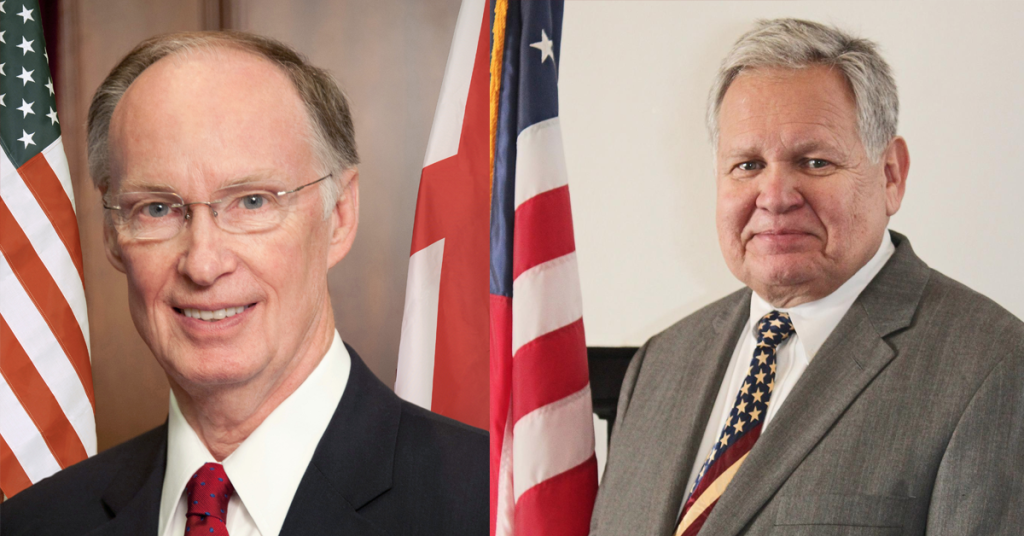
State Auditor Jim Zeigler says his office is under attack by the administration of Gov. Robert Bentley, and Zeigler intends to fight back in the Capitol. Bentley and some allies in the Legislature want lawmakers want to pass a bill granting the Governor authority to appoint two key positions on the 7-member Cabinet: Commissioner of Agriculture and Industries, and you guessed it, State Auditor. Currently the positions are elected statewide by voters. The bill — HB 432, sponsored by Rep. Paul Beckman, a Republican from Prattville — would authorize a proposed amendment the Alabama constitution to change that. The legislation will be heard Wednesday, April 20 in the House Constitution, Campaigns, and Elections Committee. Beckman serves as Vice Chair of the panel. Zeigler will testify in person against the bill when the meeting convenes at 9 a.m. Zeigler, an outspoken critic of the Bentley administration, called the bill a “power grab” by the governor after Beckman introduced the bill in March. He says moreover the inclusion of the Ag Commissioner as part of the Cabinet shakeup is simply window dressing, “a strategy to make it look like they are not targeting me.” “I believe that I am the main target of this legislation,” said Zeigler of the proposal. Zeigler has also criticized the merits of the bill, which he says would eliminate a value check against executive power in state government. “Having the Governor appoint the State Auditor would be the fox guarding the hen house,” Zeigler said.
Ben Pollara: Donald Trump, Bernie Sanders and fuzzy math

I am not a big fan of sports metaphors or former Defense Secretary Donald Rumsfeld, but both can be used to demonstrate the inanity and intellectual dishonesty driving the cries of unfairness coming out of the campaigns of Donald Trump and Bernie Sanders. Both are pushing similar messages about their respective parties’ nominating and delegate allocation processes, and those messages are either dishonest or demonstrate ignorance of said processes. Or both, I suppose. So to use the sports metaphor, what would be the public response to a losing basketball team complaining that certain shots are worth three points, while others are worth only one or two? That is essentially what the Sanders and Trump camps are saying about the “unfairness” they perceive in the delegate acquisition game. And it’s a game they both signed up for, ostensibly with some, if not intricate, knowledge of the rules. Well, sorry gentlemen. To quote Rummy, “you go to war with the army you have, not the army you want.” As a Democrat, I should apologize for lumping Sanders in with The Donald. I’m sorry, Bern. Actually, Trump’s case is in some ways more rational than Sanders’. Trump is likely to enter the Republican convention with a clear plurality of his party’s delegates, but perhaps not the majority required to secure the nomination on the first ballot. He will likewise enter the convention with a substantial lead in actual votes. Sanders is virtually certain to have neither. I recently wrote for FloridaPolitics.com inveighing upon the Republican Party to respect Trump’s advantages going into Cleveland and give him the nomination. My case was a political one, and I still believe it. However, the party’s rules are quite clear and have been so since well before Trump entered the primary. The Sanders case is considerably more head-scratching. Yes, he has won a near-sweep of the most recent round of primary and caucus states, but so what? According to an analysis by fivethirtyeight.com from April 8, he has won only 42 percent of Democrats’ raw votes, nearly 2 million fewer primary votes than Hillary Clinton. Yet, his supporters continue to decry the “undemocratic” process by which their party chooses its nominee. Oh, and speaking of undemocratic, Sanders has received roughly 46 percent of pledged delegates, 4 percent higher than his actual share of the vote. But the Bern Bros aren’t bitching about “earned” delegates, where Clinton is dominating. The gripes are about “super delegates,” who Clinton dominates even more thoroughly. I happen to “feel the Bern” here and believe that media outlets should stop including “super delegates” in their delegate counts. When you remove those “Super Delegates,” you remove the illusory notion that Clinton’s lead is built on the backs of party insiders versus the reality of the lead she has earned through actual votes. It’s a lead that looks much smaller, but is in reality essentially insurmountable. Clinton’s earned delegate lead has been consistently north of 200. In 2008, with a popular vote count that Clinton arguably won by a narrow margin, Barack Obama’s earned delegate margin never exceeded much more than 100. I understand the need to occasionally litigate issues in public opinion that you simply cannot win on the facts and the law, but both of these instances seem particularly ripe with hypocrisy and sour grapes. Trump, on the one hand, has benefited significantly from the complex delegate-allocation scheme that he has decried of late. His substantial lead is built largely on “winner take all” states such as Florida and others that have allocated proportionately in such a way that he has captured all or nearly all of a state’s delegates while receiving only a plurality of the raw vote. On the other hand, Sanders has cried foul on the undemocratic nature of the “superdelegate” system, while he has dominated the arguably undemocratic caucus system — the exceptions, of course, being Iowa and Nevada. In Nevada, however, despite losing the state to Clinton by five points, it appears possible that Sanders may ultimately get more delegates because of his dominance in the state party’s multi-step delegate nomination and allocation process. Huh. I understand that facts and logic don’t dictate the rules of political engagement. To quote the rapper El-P, “I might have been born yesterday, sir; but I’ve been up all night.” I’m fond of saying that hypocrisy and hyperbole are the salt and pepper of the kitchen of political campaigning. All that having been said, Trump and Sanders are still full of crap when it comes to their delegate-related complaints. You go to war with the army you have, not the army you want. *** Ben Pollara is a political consultant and a founding partner of LSN Partners, a Miami Beach-based government and public affairs firm. He runs United for Care, the Florida medical marijuana campaign and is a self-described “hyper-partisan” Democrat.
Former top cop files suit against Robert Bentley, Rebekah Mason
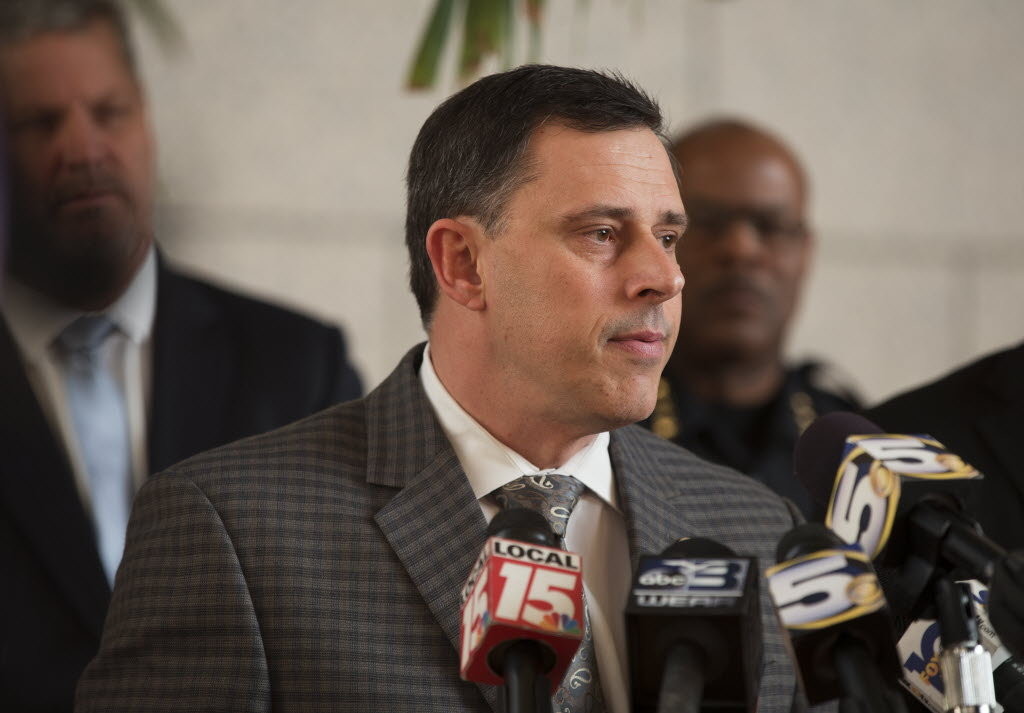
Alabama Gov. Robert Bentley‘s former law enforcement secretary sued his former boss Tuesday, claiming he was wrongly fired. Spencer Collier, who the day after his firing accused Bentley of having an affair with an adviser, says in the lawsuit filed in Montgomery that Bentley and the adviser, Rebekah Mason, made misleading statements to the media to try to discredit him. “Their lies have hurt me financially, have severely damaged my reputation and they have made it their mission to permanently end my career in law enforcement,” Collier said in a statement. Jennifer Ardis, a spokeswoman for Bentley, said the governor’s office had not seen the lawsuit and did not have an immediate comment. Bentley has previously said Collier was fired after an internal review found a misuse of funds at the state law enforcement agency. A text message to Mason and a call to Mason’s attorney were not immediately returned. The lawsuit is the latest twist in a sordid political tale that has engulfed the 73-year-old governor in controversy. It has been punctuated by back-and-forth salvos between Bentley and Collier, who were once close friends when they served together in the Alabama House. Collier’s lawsuit accuses the governor of firing him because the two disagreed over a request to file an affidavit saying investigators found no evidence of misconduct by prosecutors in the ethics case against House Speaker Mike Hubbard. Collier said he wanted to file the affidavit, but the governor didn’t want him to. He says Bentley asked him to lie to prosecutors and that he was unwilling to do that because it would be illegal. The governor is expected to be a prosecution witness at Hubbard’s ethics trial next month. Among the charges Hubbard faces is using his public office to benefit his clients by lobbying the governor’s office. “The governor did not tell anyone including Spencer Collier not to comply with the law – just the opposite. The governor wanted everyone treated correctly and in accordance with the proper law enforcement procedures,” the governor’s spokeswoman has said in a previous statement. A day after being fired, Collier accused Bentley of having an affair with Mason. The governor later admitted making inappropriate remarks to Mason, who has since resigned, but said he did not have a “physical affair.” However, racy recordings have surfaced of Bentley making sexually charged remarks, referencing kissing and touching, to someone with the same first name. The governor’s new law enforcement secretary, Stan Stabler, said last week that it was Collier who sent a state helicopter in 2014 to fly Bentley’s forgotten wallet from his hometown in Tuscaloosa to his beach house at Fort Morgan. Collier said he never approved the flight. Bentley said he did ask state security to retrieve his wallet, but he did not know they were going to use a helicopter to do it. Republished with permission of the Associated Press.
Alabama House committee to consider bill to end state-issued marriage licenses
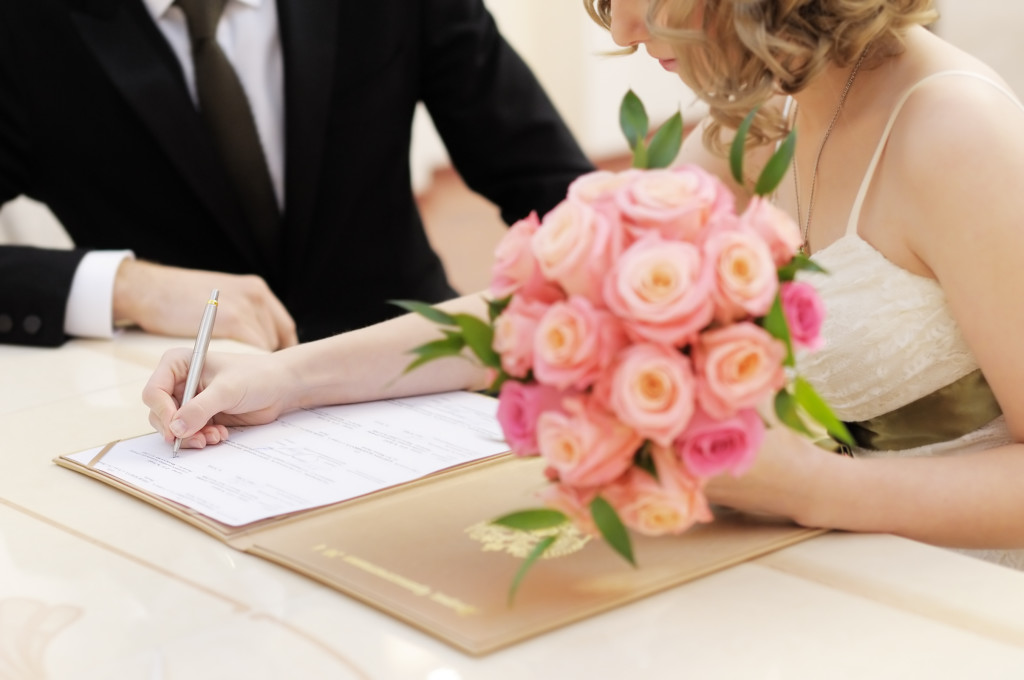
In the wake of the U.S. Supreme Court decision legalizing gay marriage, Alabama lawmakers are considering legislation to take the state out of the marriage process. The House Judiciary Committee is scheduled to consider a bill by Sen. Greg Albritton (R-Range) on Wednesday that would do just that. The bill, which passed the Senate 23-3 last month, does away with state-issued marriage licenses. Instead, couples would bring in a signed marriage contract and file it with their county probate office. The contract would include an affidavit declaring they are not related by blood or adoption, are not already married, are legally competent, and are of legal age to marry else have parental consent. Civil or religious ceremonies would have no legal effect upon the validity of the marriage. The state would only recognize the legal contract signed by the two parties entering into the marriage. Albritton introduced a similar bill in 2015 that also passed the state Senate, but died in the House. ‘“When you invite the state into those matters of personal or religious import, it creates difficulties,” Albritton told the Associated Press in 2015. “Go back long, long ago in a galaxy far, far away. Early twentieth century, if you go back and look and try to find marriage licenses for your grandparents or great grandparents, you won’t find it. What you will find instead is where people have come in and recorded when a marriage has occurred.”
Alabama city named 8th best in America to start a small business

Launching a business can be an exciting yet daunting proposition. City size matters when choosing a launching pad for a startup. And as many veteran entrepreneurs — and failed startups — understand well, bigger is not always better. Depending on an entrepreneur’s type of business and personal preferences, a city with a smaller population can be a better option, and one in which their new business can thrive. Such is certainly the case with Dothan, Ala., which ranks as the 8th best city in American to launch a small business, according to a new analysis of 2016’s Best & Worst Small Cities to Start a Business by the personal finance website WalletHub. To identify the most business-friendly small markets in which to launch a new venture, WalletHub compared 1,268 small-sized cities across 15 key metrics, including “average growth in number of small businesses” and “prevalence of investors” to “office-space affordability” and “corporate taxes.” Here’s how Dothan ranks across all areas analyzed: Length of Average Work Week: 461 Average Revenue per Business: 171 Average Growth of Business Revenues: 635 Industry Variety: 438 Financing Accessibility: N/A Prevalence of Investors: 265 Employee Availability: 308 Higher-Education Assets: 51 Workforce Educational Attainment: 777 Office-Space Affordability: 1 Median Annual Income: 326 Corporate Taxes: 500 Cost of Living: 107 Overall Score: 44.63 Of course, Dothan doesn’t come up number one in every category — but being the nation’s best city for office space affordability helped secure Dothan’s 8th place ranking. A big advantage of starting a business in a small city is that you can more easily learn about and access the resources that are available to you from private and public sources,” said Chuck Sacco, Assistant Dean of Strategic Initiatives in the Charles D. Close School of Entrepreneurship and expert who weighed-in on the study. “In a small city, it will be easier to et to know the best service providers such as lawyers, your banker may likely be someone you know, and you can more easily create a name for yourself (and hopefully get some good local press).” Additional Alabama cities that were ranked in the top 500 are: 133. Tuscaloosa 247. Florence 263. Auburn 280. Bessemer 367. Homewood 427. Decatur 436. Hoover 500. Opelika Here’s a look at how cities across America ranked: Source: WalletHub
Bradley Byrne fights efforts to cut shipbuilding program with Alabama ties

Congressman Bradley Byrne joined 45 other members of Congress in fighting back against an effort by the Obama administration to cut the Littoral Combat Ship (LCS) program, which has a significant presence in South Alabama through Austal USA. Austal, which recently won an award for large Alabama manufacturer of the year, employs more than 4,000 to build and deliver twenty ships to the U.S. Navy, with four more currently in production. Last year Defense Secretary Ashton Carter sent a memo to the U.S. Navy ordering the branch to decrease its LCS and frigate buy by 12 ships. According to a budget request submitted in February, the U.S. Navy complied with the request, cutting purchases of LCS from 52 to 40 vessels over the next five years. “The LCS program is critical to the future of the Navy, and I am pleased to have so many of my colleagues join me in fighting back against these proposed cuts,” said Byrne in a press release Tuesday. “The LCS program has been studied time and time again, and each time it becomes even more clear that we need 52 of these ships in order to properly defend our nation and keep sea lanes around the world open for commerce. I will continue working every day to protect the LCS program and the men and women who serve in the U.S. Navy.” The letter was signed by a wide range of lawmakers, including all seven of Alabama’s congressional delegation as well as congressmen and women from 19 states, including 32 Republicans and 14 Democrats. Sent to the leadership of the House Armed Services Committee, the letter urges the committee to reject the administration’s request. “This budget proposal comes from a President and Secretary of Defense who have less than a year remaining in office,” the letter states. “It defies logic to make significant changes to a program that was thoroughly studied and evaluated less than two years ago.” The House Armed Services Committee will begin consideration of the 2017 National Defense Authorization Act (NDAA) this week.
Alabama legislative preview: April 19 – April 22, 2016
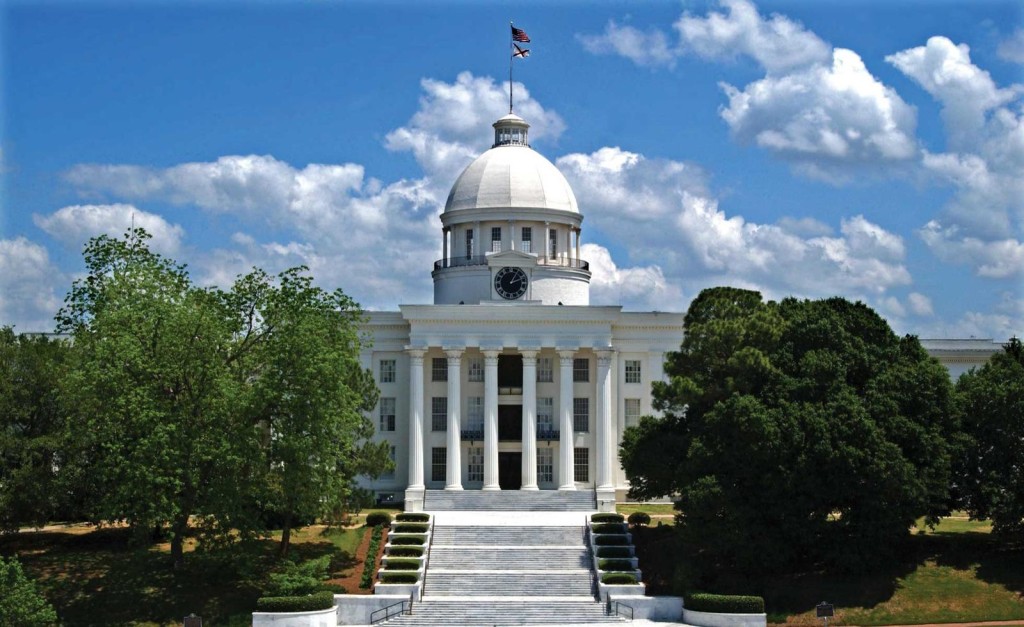
As the clock begins to wind down on the Alabama Legislature’s 2016 Regular Session, the heat will begin to build under legislators and special interests looking to pass their legislative priorities in the remaining eight working days available to lawmakers. Here’s your weekly sneak peek at some of the most important legislation that will be considered in the Alabama House and Senate. House — Convenes Tuesday at 1:30PM Education Trust Fund: Both houses of the Alabama Legislature have passed their own versions of the year’s education budget, but the differences send the legislation to a conference committee before final passage can be decided. Among the most controversial sections of the Senate-passed bill is the inclusion of an amendment that would only allow teachers who obtain higher degrees to earn raises if their advanced degree is in an “area of need.” The Senate bill also includes the first pay raise for teachers since 2008. On Wednesday the House Ways and Means Committee will consider SB287 authorizing the Alabama Corrections Institution Finance Authority to issue up to $800 million in bonds to construct and renovated the state’s overcrowded prisons. Senate — Convenes Tuesday at 2:00PM SB186 “The Voting Rights Restoration Act” would amend the process under which convicted felons can have their ability to vote restored, expediting the process, as well as requiring state and county prisons, jails, and correctional facilities to post information about how felons can apply. Sponsored by Sen. Linda Coleman-Madison (D-Birmingham) SB78 Increases the number of years qualifying rural physicians can receive a $5,000 income tax credit from 5 to 10 years, and adds dentists practicing in rural areas to those eligible for it. Sen. Gerald Dial (R-Lineville) SB304 Would allow Alabama Sheriffs to issue and renew the concealed weapons permits of any eligible Alabamian, regardless of county. Currently Sheriffs may only issue permits to those who reside in their county. Sponsored by Sen. Jabo Wagonner (R-Vestavia Hills) SB360 Would close Alabama’s primaries, requiring people to register with their party of choice at least 14 days before the primary vote is held. Such a measure has been particularly popular in a year where first-time and crossover voters have arguably decided primary elections in several states. Sponsored by Sen. Tom Whatley (R-Opelika) SB372 Creates a new provision in Alabama’s controversial “chemical endangerment of a child” law, allowing the consumption of controlled substances under the “good faith” supervision of a physician. The chemical endangerment law came under fire last fall after a searing investigation by AL.com and ProPublica. Sponsored by Sen. Clyde Chambliss (R-Montgomery) The House and Senate general fund budget committees have scheduled a joint meeting Wednesday to discuss the Medicaid shortfall.
