
Donald Trump – Ted Cruz feud shifts to luxury seaside resort in Florida
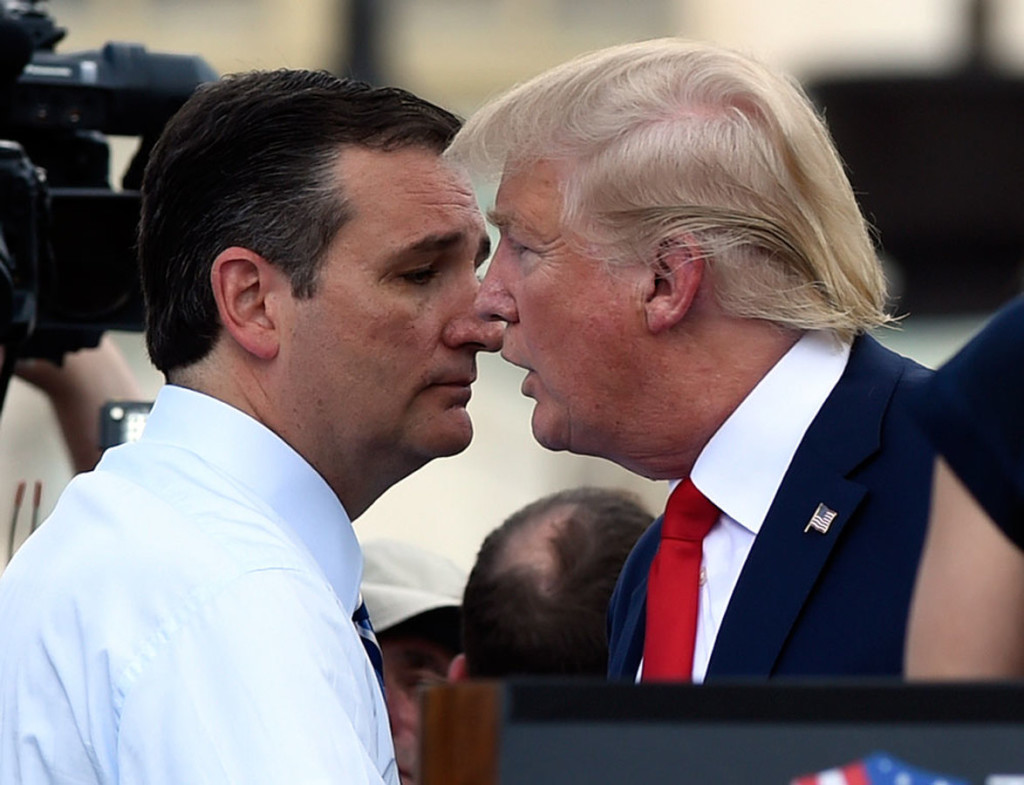
The messy fight for the Republican presidential nomination is shifting to a luxury seaside resort in south Florida as Donald Trump and chief rival Ted Cruz quietly court party leaders ahead of another set of high-stakes delegate contests. Cruz conceded publicly for the first time that he doesn’t have enough support to claim the nomination before the party’s summertime national convention, but he also vowed Wednesday to block Trump from collecting the necessary delegates as well. The Texas conservative predicted a contested convention that many party loyalists fear could trigger an all-out Republican civil war. “What’s clear today is that we are headed to a contested convention,” Cruz told reporters in between private meetings with Republican National Committee members gathered at the Diplomat Resort & Spa for the first day of their three-day annual spring meeting. Campaigning in Indiana, Trump railed against his party’s leadership, even as his senior lieutenants courted GOP officials behind closed doors in Florida. “It’s a rigged, crooked system that’s designed so that the bosses can pick whoever they want and that people like me can’t run and can’t defend you against foreign nonsense,” Trump charged at the Indiana State Fairgrounds. Roughly at the same time, Trump’s newly hired political director, Rick Wiley, was hosting a series of private meetings at the Florida resort with party officials from states set to vote in the coming weeks. The veteran political operative, who previously worked for the RNC, is tasked with helping Trump play catch-up in the complicated state-by-state nomination process. Trump’s top aides were set to deliver a private briefing to RNC members Thursday afternoon outlining his path to victory. Both Trump and the Democratic front-runner, Hillary Clinton, were pushing ahead toward Northeast primaries on an increasingly direct path to party nominations after trouncing their challengers Tuesday in New York. Clinton, now 81 percent of the way toward clinching the Democratic nomination that eluded her eight years ago, can lose every remaining contest and still prevail. Advisers to rival Bernie Sanders offered no signs of the Vermont senator giving up before the Democrats’ Philadelphia convention. Trump is increasingly optimistic about his chances in five states set to vote on Tuesday: Rhode Island, Connecticut, Pennsylvania, Delaware and Maryland. He is now the only Republican candidate who can possibly collect the 1,237 delegate majority needed to claim the nomination before the party’s July convention. Cruz and Ohio Gov. John Kasich have been mathematically eliminated, yet both contend they can win the nomination at the convention. Despite getting shut out of the delegate race in New York, Cruz is aggressively courting delegates across the nation who could hold great sway at the convention. Kaisch and Cruz set their sights on Pennsylvania and Indiana respectively, looking to capitalize on any remaining delegates up for grabs, even as polls show Trump dominating in some of the biggest remaining races. Trump, meanwhile, joined his wife and adult children on NBC’s “Today” Thursday for a town hall that discussed family and politics. Trump weighed in on the decision to put Harriet Tubman on the face of the $20, replacing Andrew Jackson, a move he described as “pure political correctness.” He said Tubman is “fantastic,” but Jackson has “been on the bill for many, many years” and “really represented somebody that really was very important to this country.” Trump also said transgender people should be able to use whichever bathroom they choose, responding to North Carolina’s so-called “bathroom law” which directs transgender people to use the bathroom that matches the gender on their birth certificates. “There have been very few complaints the way it is. People go, they use the bathroom that they feel is appropriate. There has been so little trouble,” he said. The side-by-side GOP efforts at this late stage – with Trump amassing primary victories while Cruz digs for the support of delegates who could settle the nomination – are unprecedented in recent presidential campaigns and add to the deeply uncertain nature of the race. While the primary campaign is a focus of the RNC meeting, party leaders are painfully aware that any changes in the nomination process could fuel Trump’s charges of an unfair system. Party chairman Reince Priebus has discouraged any rule changes this week. Priebus believes the convention rules should be left to the separate rules committee elected at the convention, made up of delegates being elected to seats across the country, said RNC senior strategist Sean Spicer. “The chairman’s view is that the rules of the convention should be set by the delegates, by the grassroots Republican voters,” Spicer said. Republished with permission of the Associated Press.
Donald Trump voices opposition to transgender bathroom law

Republican presidential candidate Donald Trump said Thursday that transgender people should be able to use whichever bathroom they choose, voicing opposition to part of a far-reaching North Carolina law that critics says is discriminatory. Speaking at a town hall event on NBC’s “Today” Thursday, Trump was asked about North Carolina’s so-called “bathroom law,” which, among other things, requires transgender people to use bathrooms corresponding to the gender on their birth certificate in state government buildings as well as public schools and universities. Trump said the law had caused unnecessary strife for the state, which he said had paid “a big price” economically. “There have been very few complaints the way it is. People go, they use the bathroom that they feel is appropriate,” said Trump. “There has been so little trouble.” Trump’s main rival, Texas Sen. Ted Cruz, immediately fired back, saying that Trump is giving in to “political correctness.” “Grown adult men, strangers, should not be alone in a bathroom with little girls,” Cruz said, calling his view “basic common sense.” After the law was signed in late March, Deutsche Bank halted plans to add 250 North Carolina jobs, while PayPal reversed a decision to open a 400-employee operation center in Charlotte. Local tourism boards have also said they’ve lost millions of dollars thanks to cancelled conventions and business meetings. The comments came as Trump drew closer to clinching the Republican nomination with a big win in his home state of New York earlier this week. If he becomes his party’s nominee, Trump is likely to face pressure to moderate some of his stances to appeal to independents and women in the general election. Trump said at the town hall that he didn’t know if any transgender people work for his organization, but said that some “probably” did. Asked about Caitlyn Jenner, an Olympic gold medal winner then-known as Bruce Jenner, walking into Trump Tower using the bathroom, he said would be fine with her using any bathroom she chooses. Still, Trump said he’s opposed to efforts to create new, transgender bathrooms alongside single gendered ones, calling that push “discriminatory in a certain way” and “unbelievably expensive for businesses and the country.” Republished with permission of the Associated Press.
Bill passed to keep abortion clinics 2,000 feet from Alabama schools
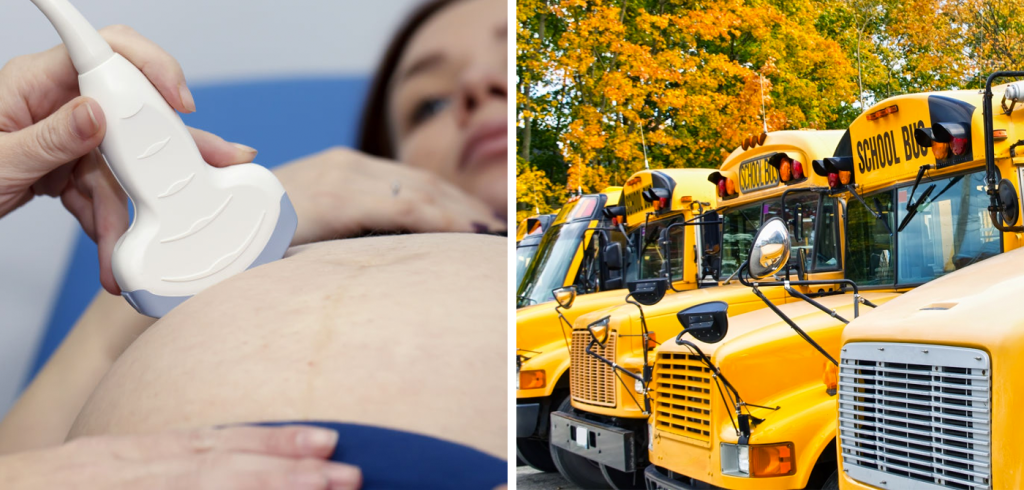
An Alabama House committee has passed a bill to keep abortion clinics at least 2,000 feet away from public schools. The House Health Committee voted Wednesday in favor of HB 301 sponsored by Rep. Ed Henry, a Decatur Republican. The bill directs the Alabama Department of Public Health not to reissue licenses for any clinic within 2,000 feet of a school. The bill passed the state Senate in March by a vote of 27-6, and will now move to the full House for a vote. “If we currently protect a physical buffer between students and liquor stores, it is common sense that we would protect them from attending school near an abortion clinic,” Sen. Paul Sanford of Huntsville said upon the Senate’s passage of the bill. “This will not mandate any abortion clinic to shut down, but I have no problem if it forces a clinic or two to move away from our kids.” If signed into law, the bill would force two abortion clinics in the state to close, including one in Huntsville stationed across the street from Edward H. White Middle School, which was forced to move to its current location near a public school after the state mandated new facility requirements in 2013. The American Civil Liberties Union (ACLU) of Alabama has vowed to challenge the restrictions in court if it clears the House, which would be the fourth lawsuit in the last three years challenging abortion restrictions in Alabama. “We all agree that protecting our children is a top priority. But this law isn’t about protecting Alabama’s children,” stated Susan Watson, Executive Director of the ACLU of Alabama in March when the bill passed the state Senate. “It’s about making a sure a woman who has decided to have an abortion can’t get one.” “And make no mistake about it: If the legislature passes this bill, the ACLU will challenge this law in court,” Watson stated. If the bill is signed into law, Alabama will become one of the first states in the nation to have a school proximity provision for abortion clinics.
Hillary Clinton on track to capture Democratic nomination

Hillary Clinton can lose every remaining primary in the coming weeks and still clinch the nomination. With Clinton’s double-digit win in New York and more than two dozen new superdelegates joining her camp, rival Bernie Sanders now faces a far steeper path. Before New York’s contest, Sanders needed to win 68 percent of remaining delegates and uncommitted superdelegates to catch Clinton. Now to capture the nomination, Sanders must win 73 percent. That means that Clinton can lose all remaining contests and still win. The campaign shifts to primaries Tuesday in Pennsylvania, Maryland, Connecticut, Rhode Island and Delaware. “He will be out of real estate on Tuesday night even if these states are all close, even if he wins a couple, even if we win three,” said Clinton senior strategist Joel Benenson. “He’s got to win them big, he’s got to win them by landslide and I don’t see that happening.” If Clinton does as well as expected in next week’s primaries, she’s on track to clinch the nomination with help from superdelegates, the party insiders who can back either candidate, on June 7. Based on primaries and caucuses alone, the latest AP delegate count, including New York, shows that Clinton leads by 1,428 to 1,151. Including superdelegates, the race stands at 1,930 to 1,189, for Clinton. She needs just 27 percent of the remaining delegates and uncommitted superdelegates to reach the magic number, 2,383. Clinton is moving quickly to cast herself as the all-but-certain nominee. “The race for the Democratic nomination is in the home stretch, and victory is in sight,” she told supporters at her victory party in Manhattan on Tuesday night. Clinton added 33 new endorsements from superdelegates over the past month, according to a new Associated Press survey, expanding her already overwhelming support, despite Sanders’ recent string of victories in Wisconsin and the West. Sanders picked up just seven such endorsements. Democratic allies of the Clinton campaign say there are dozens more who back her. Some say privately that they don’t want to make their support public because they fear aggressive online attacks from certain Sanders backers, who’ve harassed some superdelegates with threatening calls and emails. The Sanders campaign contends that if he can close the gap with Clinton among delegates chosen in primaries and caucuses, the superdelegates will flock to his side to avoid overturning the will of the party’s voters. While superdelegates are free to switch their vote, Sanders would need to flip dozens to catch up to her. Looking at just superdelegates, Clinton has 502, while Sanders has 38. So far, none has switched to Sanders and there’s little indication many would defect. “She’s the person I think who can continue to lead this country in the right direction,” said Democratic National Committee member Valarie McCall, of Cleveland, now for Clinton. “I don’t know how much more qualified one can be.” Both campaigns had cast the New York primary as one that would either put Clinton on a clear path to the nomination or bolster Sanders after a string of primary wins. Sanders aides are now saying they will re-examine the campaign’s position in the race after delegate-rich primaries in five northeastern states Tuesday. “Next week is a big week,” said senior adviser Tad Devine. “We’ll see how we do there and then we’ll be able to sit back and assess where we are.” Still, few in the Democratic Party expect Sanders to exit the race formally before the final contests in June. He continues to attract tens of thousands to rallies – addressing more than 28,000 in Brooklyn two days before the primary. And he continues to raise millions of dollars, giving him fodder for a persistent fight. In New York, Sanders spent $6.5 million on television ads compared with $4.2 million for Clinton according to CMAG’s Kantar Media. The ad onslaught has come with a more negative tone going after her character – the issue Republicans want to put front and center in the fall election – and that has frustrated Clinton and her team. The longer the race goes on, the more her negative ratings have risen. Fifty-six percent of people surveyed had a negative view of her, an all-time high, according to an NBC/Wall Street Journal poll earlier this week. Robby Mook, Clinton’s campaign manager, said Sanders must decide whether he wants to continue to “make casualties” of the likely nominee and the Democratic Party. But the success of Sanders, a decades-long independent, also underscores her weaknesses with critical segments of the Democratic coalition. She’s struggled with younger voters and liberal activists, whose enthusiasm will be necessary to fuel her general election bid. While she stopped short of declaring victory on Tuesday night, Clinton has increasingly sprinkled her remarks with pleas for party unity. “To all the people who supported Senator Sanders, I believe there is much more that unites us than divides us,” she told the cheering crowd. Republished with permission of the Associated Press.
