
Alabama among 6 states accounting for nearly half the drop in coal use by U.S. power sector
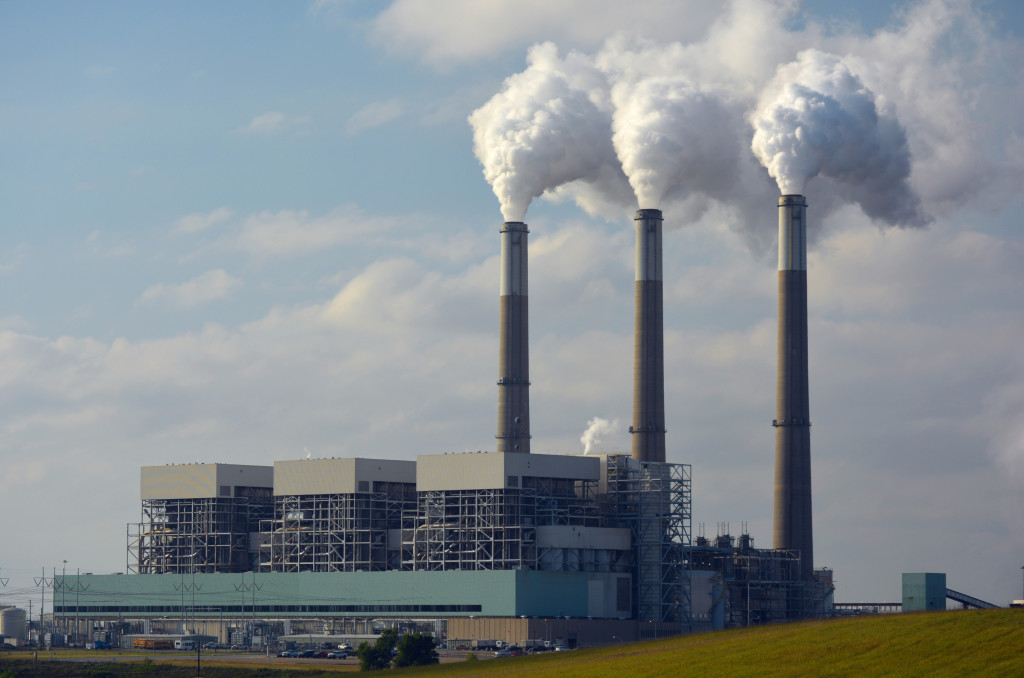
Steam coal consumption for U.S. power generation fell 29% from its peak of 1,045 million short tons (MMst) in 2007, to an estimated 739 MMst in 2015, the Energy Information Administration reports. Consumption fell in nearly every state, including Alabama over that period. “In the U.S., 97% of all steam coal is used to generate electricity,” according to EIA. “With little or no growth in electricity sales in most states between 2007 and 2015, coal use for electricity generation is closely related to coal’s share of total generation.” In the Southeast, coal consumption in Georgia, North Carolina, and Alabama in 2015 was half the level it was in 2007. Electric power plants in these states not only reduced their coal consumption, but they also increased their natural gas consumption. States with the largest declines were concentrated in the Midwest and Southeast, with six states — Alabama, Georgia, Indiana, North Carolina, Ohio, and Pennsylvania — in these regions accounting for nearly half of the national decline.
Clay Scofield: Protecting the future of Alabama State Parks
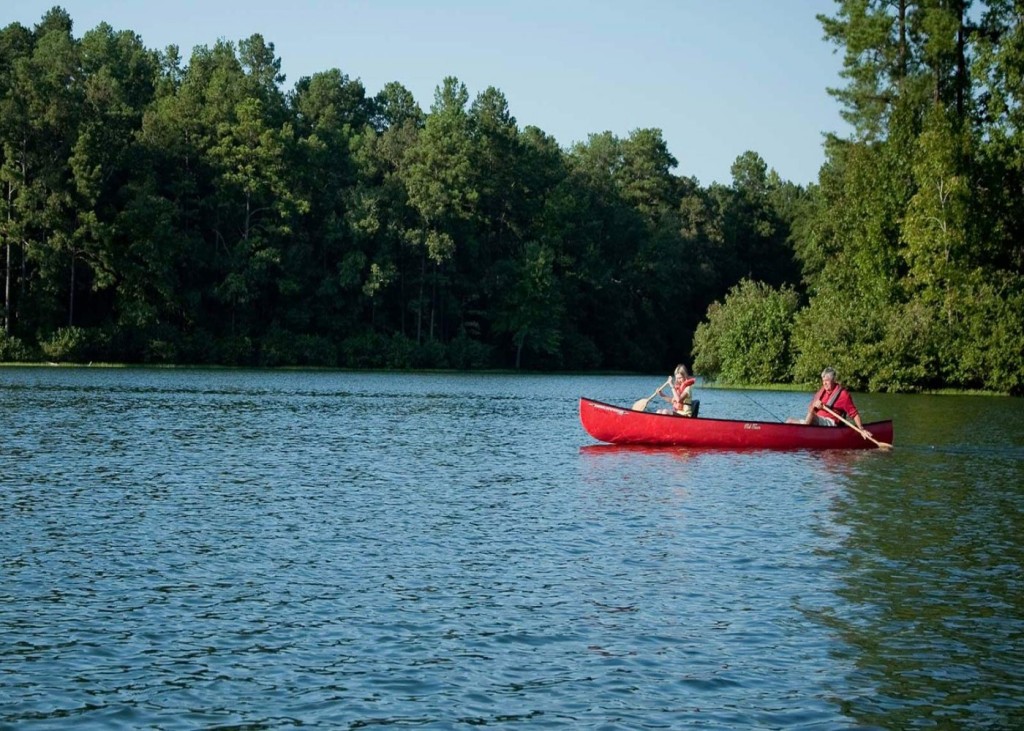
Nearly 80 years ago, the Civilian Conservation Corps began construction of Alabama’s state parks system. Since the first stone buildings of Cheaha State Park opened to guests in 1939, Alabama’s State Parks have been providing memorable outdoor retreats and dozens of recreational options to guests. Alabama’s Legislature made history last week and took a major step toward ensuring our State Parks stay available to the people of Alabama for decades to come. Last Wednesday, the Alabama House of Representatives passed a bill that I was proud to sponsor — SB260 — to add a constitutional amendment to prohibit transferring funds from the Alabama State Parks System’s budget to the state’s General Fund. Now that the constitutional amendment has passed both the House and Senate by supermajorities, the people of Alabama will get an opportunity to vote on the future of their state parks system on the general election ballot in November. The need for this constitutional amendment came after the Legislature took steps to fill holes in the General Fund budget by transferring $15 million from the state parks since 2012. Luckily, a vast majority of legislators joined me in working to end this practice and to allow the state parks’ money to stay within our beautiful parks system. I’m proud of the support this constitutional amendment received from our lawmakers, and now I hope the citizens of Alabama will join us to ensure our parks’ funding is permanently protected. Our parks are God-given natural resources that belong to the people of Alabama, and I know the people of Alabama care deeply about these beautiful spaces. Over the last year and a half, I, and many other lawmakers, have received literally hundreds of phone calls imploring the State Legislature to ensure these parks remain available to the people and receive proper funding. I’ve been joined by a few other passionate lawmakers who are also eager to see our state parks system protected and fully funded. This constitutional amendment is only one of three bills moving through Alabama’s Legislature aimed at helping to protect our state parks system. This constitutional amendment is to protect the parks’ funding, but does not create new revenues streams for the parks. Sen. Gerald Dial has sponsored two bills that would create new streams of revenues for the parks. SB 163 allows citizens renewing their car tags the option of a specialty tag supporting Alabama State Parks; this special parks tag would be $50. SB79 would give citizens a similar option of a specialty tag when renewing their boat registration. The fees from these specialty tags would go directly to the Alabama State Parks System. Alabama’s state parks have a wide range of natural features, from the rich mountains in north Alabama, to incredible natural caves, lakes and streams teeming with wildlife, to pristine Gulf Coast beaches. The parks have something for everyone, whether it is enjoying a breathtaking view from a lodge restaurant, roughing it in the woods on a primitive camping trip, soaking up the sun in a canoe, or speeding through the trails on a mountain bike. The parks have continually attracted millions of people year after year, and half of all visitors to Alabama’s state parks are from out of state. As a result, Alabama’s state parks bring the people of Alabama much more than beautiful landscapes and countless recreational options. The parks provide a significant economic benefit to the state, $375 million annually. Local businesses, outfitters, hotels, restaurants and convenience stores all benefit from the hundreds of thousands of park-goers each year. Our parks are the pride of these local communities, and I hope you’ll join the fight to help ensure our parks remain fully funded and available for future generations. I encourage all Alabamians to vote in favor of this important amendment on Nov. 8. If you’re interested in getting involved with the fight to permanently fund Alabama’s State Parks, please visit ALParksPartners.com and get involved with Alabama State Parks Partners Coalition, a nonprofit organization fighting to raise awareness and support for our state parks. • • • Clay Scofield is a state senator from Guntersville, Alabama. He represents the 9th district. He represents Blount, DeKalb, Madison and Marshall counties.
Gary Palmer dismayed by Senate Dems, calls out Iran’s nuclear deal violation

Senate Democrats on Wednesday unexpectedly blocked the chamber from considering the first major spending bill of the year for energy and water programs in effort to prevent a vote on a Republican amendment that would ultimately create friction in the wake of President Barack Obama’s nuclear deal with Iran. The amendment, sponsored by Arkansas Republican Senator Tom Cotton would ban U.S. from spending $8.6 million tax dollars from being used to buy heavy water from Iran in the future. Senate Democrats filibustered the spending bill Wednesday and sustained the filibuster in a second vote Thursday, objecting to what they called a “poison pill”added at the last minute to an otherwise bipartisan $37.5 billion funding bill for the Department of Energy and other agencies Dismayed at the Democrats’ actions, House Republican Gary Palmer (AL-07) spoke out, “Before the ink was dry on the nuclear deal, Iran was already violating it by conducting ballistic missile tests. Instead of holding Iran accountable, this Administration has decided to aid and abet Iran by helping to finance the effort. “Spending tax dollars to subsidize Iran’s efforts to further de-stabilize the region and pursue a nuclear weapon is irresponsible. America has more than one location that produces heavy water. The Obama Administration and Senate Democrats should be held accountable for these irresponsible actions.”
Judge denies Mike Hubbard’s ethics trial delay request; jury selection begins May 16
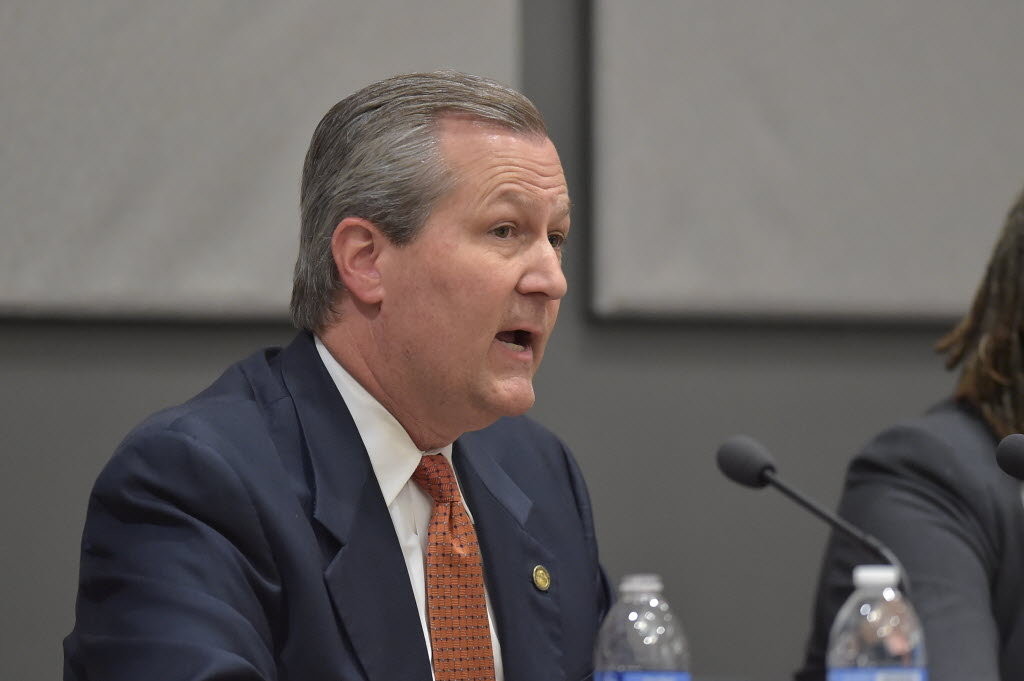
Lee County Circuit Judge Jacob Walker denied another request from House Speaker Mike Hubbard‘s legal team to delay his ethics trial. Hubbard’s lawyers had told the judge they needed more time to sort through what they claimed were truckloads of documents to prepare for the trial. Walker said the attorneys should be prepared to go to trial as scheduled, with jury selection beginning the week of May 16 and opening arguments commencing the week after that. Hubbard currently faces 23 felony charges of using his office for personal gain. He has been accused of using his position as Speaker of the House, and formerly as chairman of the Alabama Republican Party, to solicit jobs and investments in businesses with which he was involved. Further, Hubbard is accused of lobbying members of the executive branch for consulting clients and aiding in the inclusion of General Fund language to benefit a client. Hubbard has maintained his innocence and was reelected despite the felony allegations.
Alabama House passes 11th-hour Medicaid funding patch in BP settlement compromise
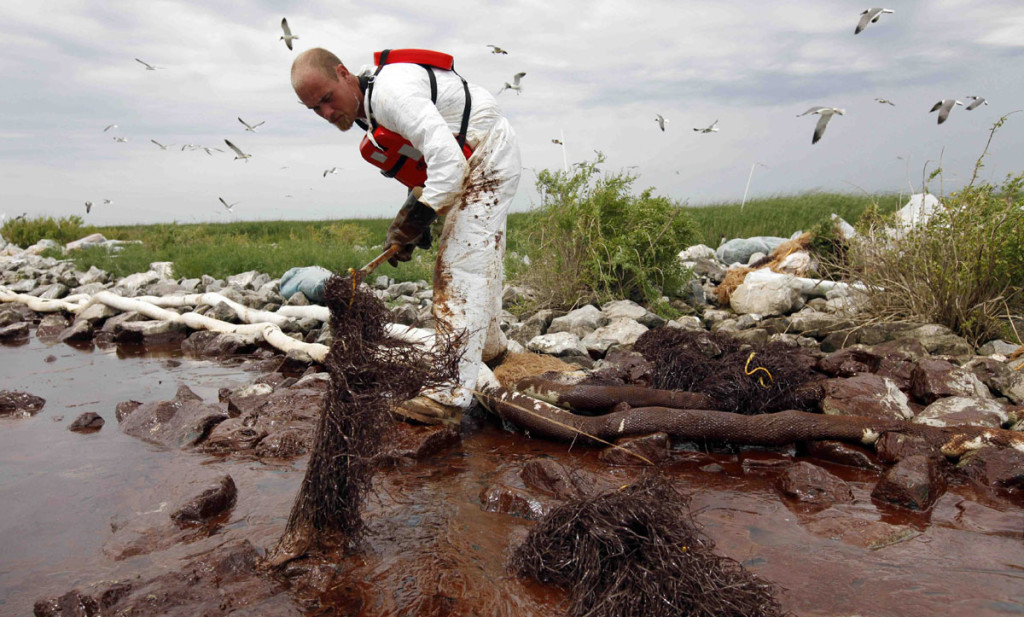
A deal providing $70 million in additional funding from the BP settlement to Medicaid was struck Thursday night in the Alabama House, providing a one-time patch to the ailing health care program on the last possible day to come to a compromise during the 2016 Regular Session. Passing the House 82-12, the band-aid measure will come from the more than $1 billion in settlement funds from the 2010 Deepwater Horizon BP oil spill. The settlement isn’t paid in a lump sum, but is spread out over the next 17 years. But the Medicaid patch is not the only part of the grand compromise. Under the agreement, a $600 million bond would be taken out against the promise of the settlement, and used to pay back $448 million in debt obligations and $191 million in infrastructure funding to Mobile and Baldwin Counties, in addition to the funds going to Medicaid. The $70 million Medicaid money is still $15 short of what the agency requested, and has detractors on both sides of the issue. Ed Henry, Republican of Hartselle and other legislators and interested parties are concerned this amounts to kicking the can down the road once again. “What I do hate is the idea of spending one-time money on Medicaid,” said Henry. The Senate left their record open to receive messages from the House, ensuring the compromise can be taken up by the upper body in the last two days of the Regular Session. Both the House and Senate are adjourned until Tuesday. They are expected to reconvene Tuesday, and conclude the year’s session Wednesday.
Congressional GOP beginning to accept Donald Trump as nominee
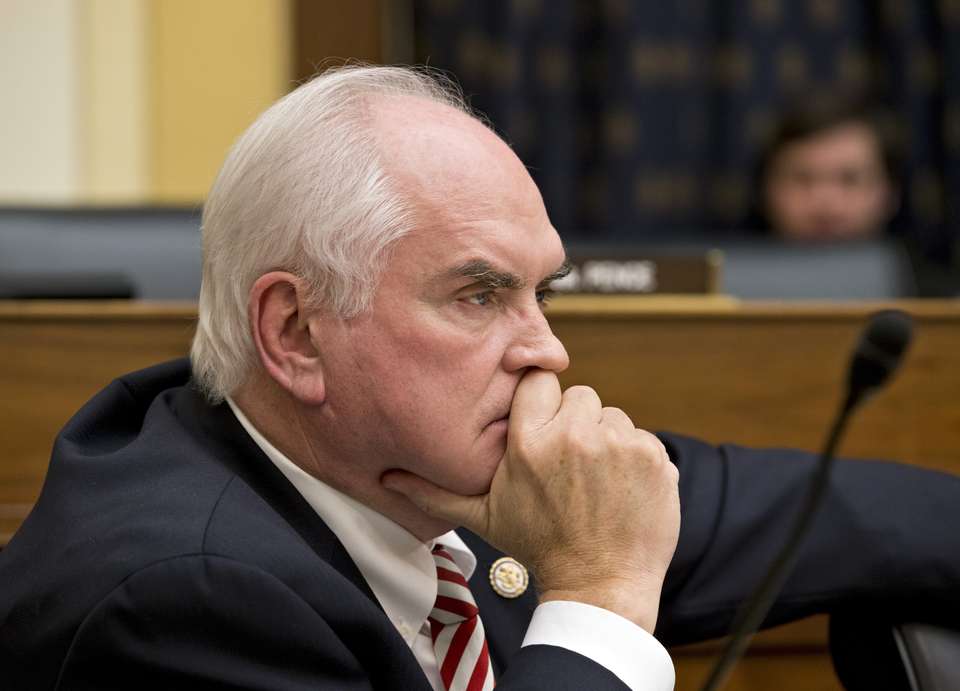
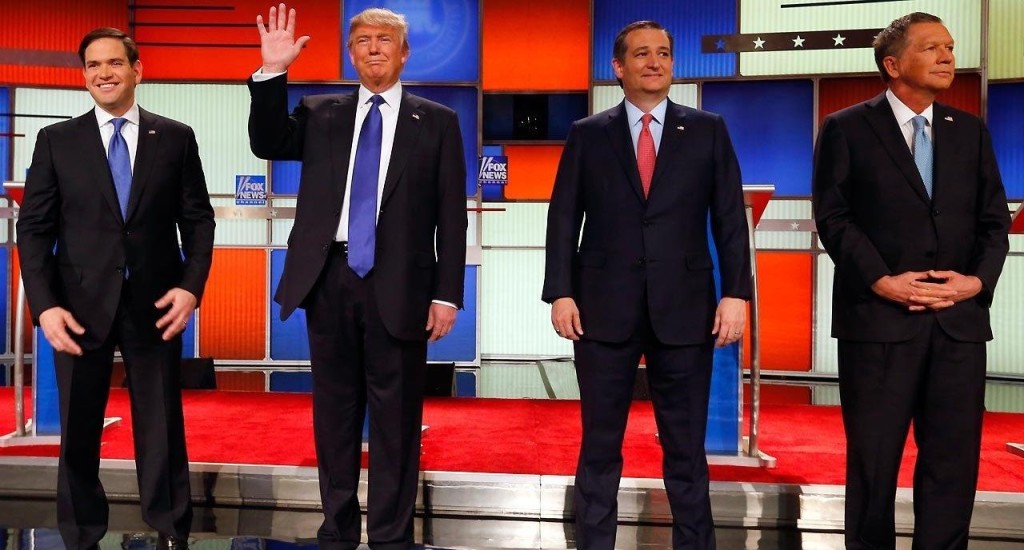
Congressional Republicans are beginning to accept, and even embrace, an outcome that was once unthinkable: Donald Trump as the GOP presidential nominee. In the wake of the businessman’s commanding wins in five Eastern states this week, a growing number of lawmakers say that Trump is taking on an air of inevitability. Some argue they should get behind him now instead of trying to stand in his way, as some establishment Republicans are still attempting to do by backing various “Never Trump” efforts. For some lawmakers, supporting Trump is seen as their only hope of stopping the Democrats’ likely candidate, Hillary Clinton, in November and ensuring a Democratic president doesn’t fill Supreme Court vacancies. “I don’t understand. I mean, it’s not ‘Never Trump.’ It’s ‘Never Hillary.’ Never, never, never, Hillary. Come on. Wake up and smell the coffee,” said Rep. Mike Kelly of Pennsylvania, who earlier this week cast his ballot for Trump, along with all members of his large family and 57 percent of Republican primary voters in his state. “I’ve never seen a party attack one of its own candidates with this aggressiveness,” Kelly said of GOP establishment figures who oppose Trump, blaming it on an elitist Washington attitude out of touch with voters. Sen. Orrin Hatch of Utah, a respected senior member of the Senate, previously endorsed Jeb Bush and then Sen. Marco Rubio and said he doesn’t intend to endorse Trump. But Hatch said Thursday of Trump: “It looks to me like he’s going to win and if he does I’m going to do everything in my power to help him.” Some leading Republicans have forecast that a Trump candidacy could spell electoral disaster, help Democrats win back control of the Senate and even cost Republicans seats in the House. They point to Trump’s disparaging comments about women and minorities that have contributed to high unfavorability ratings. Hatch, along with others, disagreed. “I think he could be great if he’ll get serious about being president, and I think he will,” Hatch said. “When he gets hit with reality that this is the toughest job in the world, he’s a clever, smart guy who I think will want to be remembered for doing good things, so I have a feeling he can make that transition.” To be sure, not all are on board, and some lawmakers cringe at the thought of vulnerable Senate Republicans and candidates getting linked to Trump’s controversial stances or attempting to distance themselves from them. “He’s looking more inevitable, yeah. I’ve been wrong all along,” said GOP Sen. Jeff Flake of Arizona, an outspoken Trump critic. “My feeling about Donald Trump is, I don’t think that that’s our best foot forward at all. And I can’t imagine being forced to take some of those positions that he’s taken. A ban on Muslims, build a wall and make the Mexicans pay for it, you name it.” It remains uncertain whether Trump will amass the 1,237 delegates needed to clinch the nomination ahead of the Republican convention in Cleveland in July. If he does not, Texas Sen. Ted Cruz hopes to make a play to win the nomination as balloting progresses. Ohio Gov. John Kasich also remains in the race. On Capitol Hill, Cruz remains an unpopular figure, having disparaged party leaders and led the charge to force a 16-day partial government shutdown in 2013 in a futile attempt to cut off money for President Barack Obama‘s health care law. Former House Speaker John Boehner, who resigned last fall under conservative pressure, lashed out at Cruz in comments published Thursday in Stanford University’s student newspaper, calling him “Lucifer in the flesh” and saying: “I get along with almost everyone, but I have never worked with a more miserable son of a bitch in my life.” Perhaps partly because of Cruz’s unpopularity, it’s getting easier to find leading lawmakers speaking publicly in favor of Trump. On Thursday, Trump picked up endorsements from House committee chairmen: Bill Shuster of Pennsylvania, who chairs the Transportation Committee, and Jeff Miller of Florida, who chairs Veterans Affairs. Sen. Bob Corker, R-Tenn., who heads the Foreign Relations Committee, spoke on the phone with Trump on Thursday and later told reporters they had a good and substantive conversation, though he has no plans to endorse him. On Trump’s foreign policy speech, Corker said: “Let’s face it, the foreign policy establishment in Washington hasn’t been exactly brilliant in their assessments of things, and I do like the fact that he’s challenging that status quo, I really do. … I think his campaign, like anybody who hadn’t been in the public arena before, is evolving.” Rep. Tom Rooney of Florida was a leading Rubio backer, but said now “it’s time to move on.” “The people have spoken. The Republican primary electorate has spoken so he deserves the opportunity to be our nominee,” Rooney said. “If he screws it up as the nominee and hurts the down-ballot ticket, then he screws it up. But right now the people want him to be the nominee.” Republished with permission of the Associated Press.
Poll: Americans have an unfavorable view of the GOP
The Republican Party may have an image problem. According to a report by the Pew Research Center, 62 percent of Americans have an unfavorable view of the Republican Party. That’s up since October, when 58 percent of people said they had an unfavorable view of the GOP. The survey found 33 percent of the public has a favorable impression of the Republican Party. When it comes to the Democratic Party, 50 percent of adults said they had an unfavorable opinion of the party; while 45 percent of adults said they had a favorable opinion. The national survey of 2,008 adults found Democrats had a far more favorable impression of their party than Republicans. The study found 88 percent of Democrats viewed their party favorably, while 68 percent of Republicans had a favorable opinion of their party. When it comes to independents, 28 percent have a favorable opinion of the GOP. Of those independents who consider themselves Republican-leaning, 50 percent have a negative view of the party. The survey, conducted April 12 through April 19, found that 37 percent of independents had a favorable impression of the Democratic Party; while 63 percent of Democratic-leaning independents had a favorable view of the Democratic Party. “Overall, a quarter of the public now expresses unfavorable opinions of both political parties,” the report said. “This is driven in part by the growing share of Republicans and Republican leaners who view the GOP negatively, and by the overwhelming shares in both parties who view the opposing party unfavorably.” According to the report, the negative ratings in both parties are “higher today than in previous presidential election years.” Seven percent of adults had unfavorable opinions of both parties in 2000; while 18 percent of adults viewed the parties unfavorably in 2012.
Dog missing for 10 years found in Alabama, reunited with joyful owner
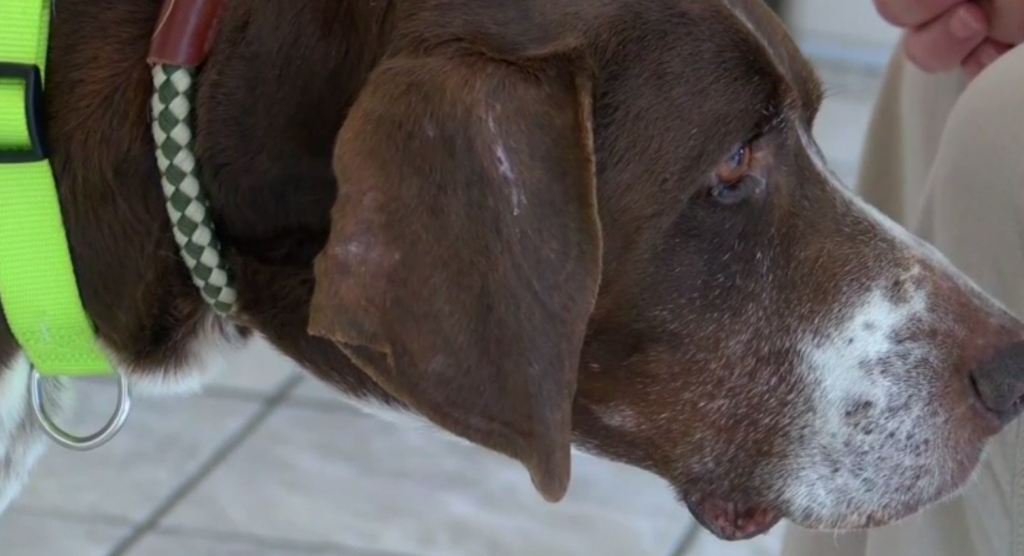
Tracy Dove assumed the worst after her 1-year-old dog named Charlie disappeared in 2006. Days without the animal turned into years, and Dove figured the brown-and-white pointer was dead. Then, last week, Dove’s phone rang: Charlie had been found alive near the south Alabama town of Brewton. A veterinary clinic tracked her down using a microchip that Dove had implanted in the dog when it was young. “I was shocked, overwhelmed. I cried,” Dove said in an interview Thursday. “It’s amazing.” No one knows where the dog has been for the last decade, but Charlie has a gray muzzle now and a cancerous tumor in his chest. Charlie will undergo surgery at a veterinary clinic in Mobile as soon as next week, and Dove plans to bring him home as soon as possible afterward. “It will be a lengthy road for him, but he’ll be home,” said Dove, who lives near Birmingham in Corner and works as a dental assistant. Dove was living in Cullman with her then 8-year-old son when Charlie disappeared a decade ago. Charlie is a German shorthaired pointer, a breed favored by hunters, and Dove believes someone stole him from an enclosure outside the house. “It’s an expensive hunting dog. We just kept him as a pet,” said Dove. “He was a spoiled rotten pet.” After Charlie disappeared, Dove kept updating her contact information in an online database used to match animal owners with pets that are implanted with microchips for identification, but she never thought she’d see the dog again. Charlie’s road back began when a neighbor told animal rescuer Renee Jones about a dog that was lying on the steps of a church near Brewton, about 250 miles from the dog’s last known home. Volunteers took the dog to Spring Hill Animal Clinic in Mobile, where a worker found the microchip. “We often get dogs with microchips, but often the information hasn’t been updated and the phone numbers don’t work,” said Jones, director of Souls on Board Rescue Ride, a nonprofit organization. “When the number worked, it was pretty wild.” Dove didn’t know what to think when the call came. “I was shocked and at first I thought ‘This has got to be a scam’ because it’s been 10 years,” she said. “They sent me a picture and I talked with them, and it’s my Charlie.” Donations from an online fundraiser will cover the cost of the dog’s surgery, and Dove plans to be there when it’s done. “He’s too weak and sick to make the trip home, so I am going to stay down there with him until he’s well enough to come home,” she said. “And then he’ll be my dog again.” Republished with the permission of The Associated Press
Donald Trump rally brawl leads to 20 arrests in California
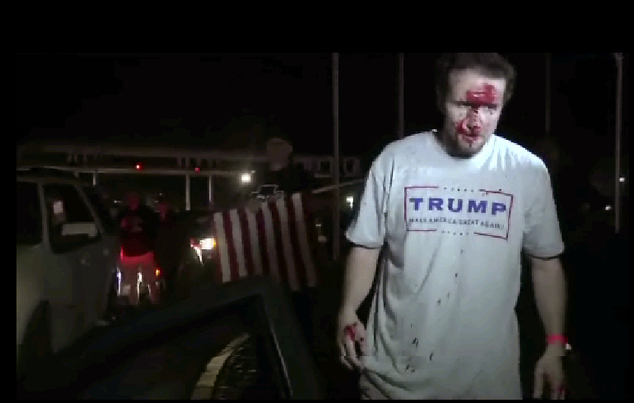
Raucous protesters and supporters of Donald Trump took to the streets in California leading to some 20 arrests as the Republican presidential contender brought his campaign to conservative Orange County after sweeping the Northeast GOP primaries. Dozens of protesters were mostly peaceful Thursday as Trump gave his speech inside the Pacific Amphitheatre. After the event, however, the demonstration grew rowdy late in the evening and spilled into the streets. Approximately 20 people were arrested by Costa Mesa police, according to a tweet from the Orange County Sheriff’s Department. One Trump supporter had his face bloodied in a scuffle as he tried to drive out of the arena. One man jumped on a police car, leaving its front and rear windows smashed and the top dented in and other protests sprayed graffiti on a police car and the venue’s marquee. Dozens of cars — including those of Trump supporters trying to leave — were stuck in the street as several hundred demonstrators blocked the road, waved Mexican flags and posed for selfies. Police in riot gear and on horseback pushed the crowd back and away from the venue. There were no significant injuries and police did not use any force. The crowd began dispersing about three hours after the speech ended. Earlier in the evening, a half-dozen anti-Trump protesters taunted those waiting to get into the venue. Trump supporters surrounded one man who waved a Mexican flag and shouted “Build that wall! Build that wall!” — a reference to Trump’s call to create a barrier between the United States and Mexico to stop illegal border crossings. At one point, seven women wearing no shirts and Bernie Sanders stickers over their breasts entered the square outside the amphitheater. They said they were protesting Trump’s lack of engagement on issues of gender equality and women’s rights. “I feel like he wants to make America great again, but certainly not for women, for the LBGTQ community or for the lower class,” said one of the women, Tiernan Hebron. “He has, like, done nothing to help with gender equality or women’s rights or reproductive rights or anything.” Trump has drawn large crowds across the country as he has campaigned for the White House and some of his events have been marred by incidents both inside and outside these venues. Earlier this week, a Trump rally in nearby Anaheim, California, turned contentious when his supporters and protesters clashed, leaving several people struck by pepper spray. Trump was not present. Trump has drawn large crowds to most of his campaign events, and Thursday was no exception. The Pacific Amphitheatre was filled to its capacity of about 18,000, and many hundreds more were turned away. Ly Kou, 47, of Ontario, said she likes Trump because he has vowed to put the country first. “It’s obvious that America loves Trump,” said Kou, who is from Laos, as she pointed at the waiting throng. “This thing about him being racist? Look around the crowd.” Trump was traveling from the rally site to the state’s Republican convention in Burlington in the San Francisco Bay Area. Republished with permission of The Associated Press.
23 Alabama legislators sign Robert Bentley articles of impeachment
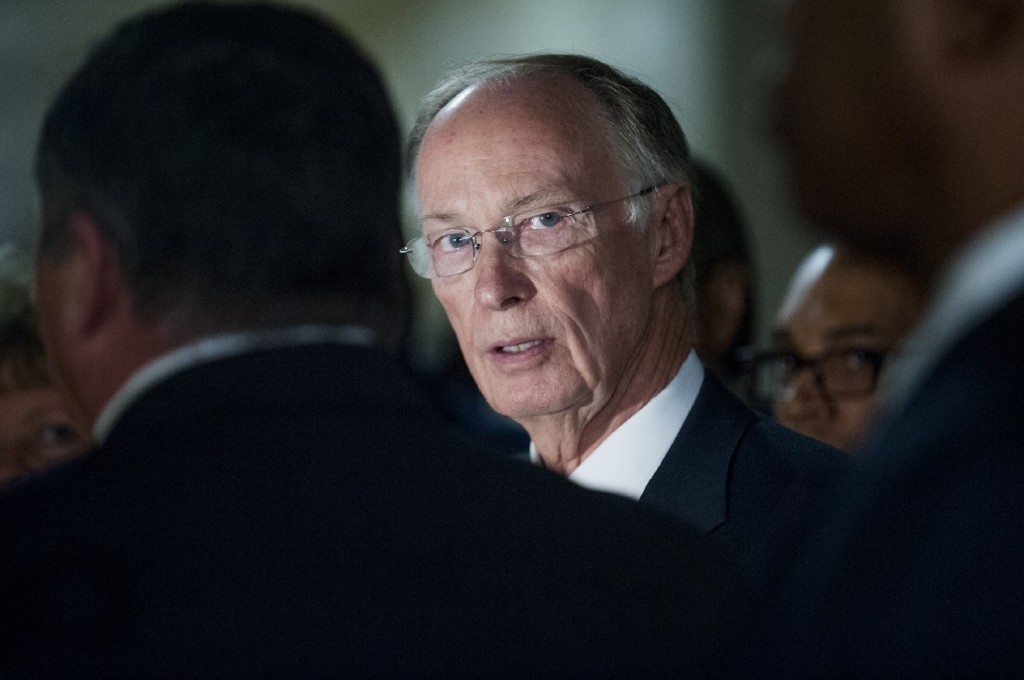
Twenty-three members of the Alabama House of Representatives have signed a resolution authored by Republican from Hartselle Ed Henry calling for the impeachment of Governor Robert Bentley in light of an alleged affair and the possibility of improper use of taxpayer funds. The resolution’s signatures slightly exceeded the 21 needed to file the resolution, according to a separate resolution sponsored and passed by Rep. Matt Fridy, Republican of Montevallo Tuesday which established the procedures for impeachment. An impeachment clause exists in the Alabama Constitution, but has never been used on a constitutional officer. Under the procedure resolution, 63 members of the 105-member house will have to vote to begin the Senate-led trial. The Resolution has been referred to the House Judiciary Committee for further action. While the majority of the impeachment resolution’s signees are Republicans who have previously called for the Governor’s resignation, it took a few Democrats signing on to meet the new procedure’s requirements. The following representatives signed the resolution calling for the governor’s impeachment. Ed Henry (Sponsor) Will Ainsworth (Republican of Guntersville) Mike Ball (Republican of Madison) Mack Butler (Republican of Gadsden) Danny Crawford (Republican of Athens) Allen Farley (Republican of Pleasant Grove) Craig Ford (Democrat of Gadsden) Tommy Hanes (Republican of Bryant) Mike Holmes (Republican of Wetumpka) Reed Ingram (Republican of Montgomery) Arnold Mooney (Republican of Birmingham) Barry Moore (Republican of Elba) Johnny Mack Morrow (Democrat of Red Bay) Becky Nordgren (Republican of Gadsden) Jim Patterson (Republican of Meridianville) David Sessions (Republican of Grand Bay) David Standridge (Republican of Oneonta) Patricia Todd (Democrat of Birmingham) Isaac Whorton (Republican of Valley) Ritchie Whorton (Republican of Owens Cross Roads) Margie Wilcox (Republican of Mobile) Jack W. Williams (Republican of Georgetown) Phil Williams (Republican of Harvest) Below is the entire text of the articles of impeachment. ARTICLES OF IMPEACHMENT AGAINST GOVERNOR BENTLEY. WHEREAS, in 2010, Governor Bentley was elected the 53rd Governor of the State of Alabama and was reelected to a second term in 2014; and WHEREAS, Section 173 of the Constitution of Alabama of 1901 provides that the Governor and other constitutional officers of this state may be impeached upon the adoption of articles of impeachment by this body and upon trial by the Senate, acting as a court of impeachment; and WHEREAS, two formal complaints have been filed with the Alabama Ethics Commission to determine whether Governor Bentley violated state ethics laws by misusing state property; and WHEREAS, in recognition of the gravity of the adoption of these articles of impeachment and upon findings that Governor Bentley has violated the public trust, this body concludes Governor Bentley should be impeached for cause; now therefore, BE IT RESOLVED BY THE HOUSE OF REPRESENTATIVES OF THE LEGISLATURE OF ALABAMA, That Governor Bentley is impeached for cause and that the following articles of impeachment, based upon the findings in this resolution, be transmitted to the Senate for trial as provided in Section 173 of the Constitution of Alabama of 1901: ARTICLE I. Willful Neglect of Duty. Credible evidence exists to create probable cause to believe that, in his conduct while Governor of the State of Alabama, he willfully neglected his duty as Governor by failing to faithfully execute the laws of this state and by refusing to perform his constitutional and statutory duties. ARTICLE II. Corruption in Office. Credible evidence exists to create probable cause to believe that, in his conduct while Governor of the State of Alabama, he unlawfully misused state property, misappropriated state resources, and consistently acted in violation of law to promote his own personal agenda.
