
Jeff Sessions: Paul Ryan made ‘big mistake’ not backing Donald Trump
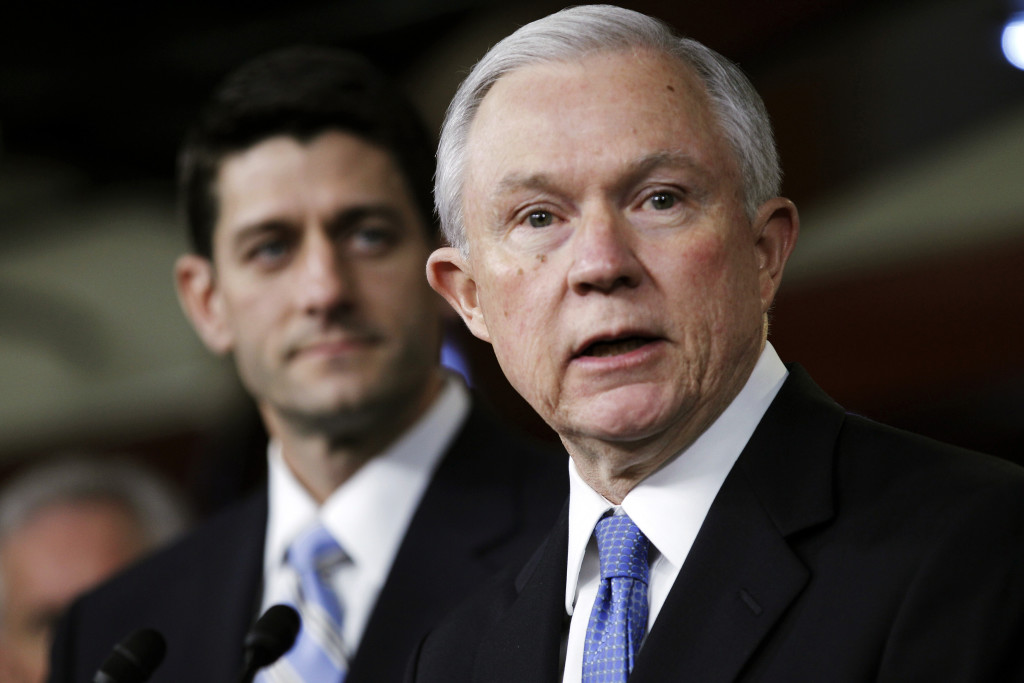
Republican Senator Jeff Sessions (R-AL) took to the airwaves Thursday night to weigh-in on House Speaker Paul Ryan‘s (R-WI) refusal to back presumptive GOP presidential nominee Donald Trump. During a TV interview on Fox Business Network’s “Lou Dobbs Tonight,” Alabama’s junior senator, who was the first sitting U.S. Senator to endorse Trump, said there are some members of the establishment that are having “difficulty dealing with [Trump’s] big victory so far.” Ryan said Thursday he will not yet back Trump’s presidential bid, despite the fact that he is the party’s presumptive nominee. Dobbs weighed-in saying it was “shocking” to hear Ryan’s claim he was “not ready” to support Trump. “I think this was a big mistake. I really do. And I’m really surprised, frankly, since he’d indicated he’d support whoever the nominee was,” responded Sessions. Sessions said someone in Ryan’s position of influence needs to set the tone for all Republican lawmakers. “Well, the Speaker of the House is a big leader, and an important figure in the Republican Party,” said Sessions. “He calls on house members every day to stand with him in unity and needs to set a good example for Republicans. Sessions went on to explain that Trump’s message has resonated with the American people, which is why he’s gotten more votes than any other Republican primary candidate in history. “Well, he has certainly appealed to the American people,” Sessions continued. “And I think certain Republican leaders and establishment figures need to ask themselves how it is with the process not even over, he’s gotten more votes than any other Republican primary candidate in history, who is talking directly to the American people — their concerns about trade, about immigration, about a foreign policy that was restrained. All of those are conservative values, Lou. It’s conservative to want a lawful system of immigration that serves the national interest. It’s conservative to favor a trade policy that defends American manufacturing and workers’ jobs and wages, and to have a foreign policy that’s restrained. “Trump has been strong and clear. He’s had the courage to take on the establishment. Some of them are having difficulty dealing with his big victories so far.” Watch the interview below:
No mending in sight for fractured GOP

Donald Trump grudgingly agreed Friday to meet with House Speaker Paul Ryan to work out their differences in the midst of an extraordinary display of Republican vs. Republican strife. But he said he had “no idea” if they would patch things up and it didn’t really matter that much when compared to all the votes he’d won in this year’s primary elections. “The thing that matters most are the millions of people that have come out to vote for me and give me a landslide victory in almost every state,” Trump said moments after Ryan, the nation’s highest-ranking Republican officeholder, announced their planned meeting. Ryan said that the meeting would occur next Thursday and that Trump also would meet with other House GOP leaders. Discussions will center on “the kind of Republican principles and ideas that can win the support of the American people this November,” Ryan said. The unlikely back-and-forth came a day after Ryan injected new uncertainty into the turbulent presidential contest by refusing, for now, to endorse Trump. Aides said that, far from seeking to helm an anti-Trump movement, Ryan hopes to exert a positive influence for the general election campaign after a nominating contest that has alienated women, minorities and other voter groups. Yet Trump’s reaction Friday made it unclear what impact Ryan could have on the bombastic billionaire. “With millions of people coming into the party, obviously I’m saying the right thing,” Trump said on Fox News Channel. “I mean, he talks about unity, but what is this?” So next week’s meeting could prove the beginning of a healing process in the GOP or another outlandish episode in an election season full of them. “This is not entertainment. This is not a reality show,” President Barack Obama said Friday when asked about Trump’s ascension. Yet just days after Trump essentially clinched the GOP presidential nomination with a win in Indiana’s primary, Ryan’s surprise decision to withhold his support dashed any hopes that the party could turn immediately from the brutal infighting of the primaries toward the November election. Ryan wasn’t alone. Two unsuccessful White House candidates, former Florida Gov. Jeb Bush and Sen. Lindsey Graham of South Carolina, issued statements saying they couldn’t support Trump, with Graham saying he is not “a reliable Republican conservative.” Trump responded to Graham by mocking his poor showing in the presidential race and declaring: “Like the voters who rejected him, so will I!” As the reality of those divisions sank in Friday, some Republicans were not shy about expressing their displeasure with Ryan. The telegenic Wisconsin Republican served as his party’s vice presidential nominee in 2012, was drafted to the high-profile role of House speaker last fall and is seen as having designs on the 2020 presidential nomination himself. “Yesterday’s statement emboldens others to be equally publicly difficult. And that runs the risk of creating a Goldwater kind of moment where the party really does split,” former House Speaker Newt Gingrich told The Associated Press, referring to the 1964 Republican presidential nominee whose candidacy divided the GOP and was followed by a big Democratic victory. “I don’t necessarily know that that’s his role, to be a sticking point for the Republican nominee,” said Rep. Duncan Hunter of California, one of a growing number of Trump supporters in the House. Added Rep. Lou Barletta of Pennsylvania: “The voters of our party have spoken loud and clear, and it’s their voice that matters.” Trump has criticized Ryan in the past and renewed his attacks Friday by arguing that Ryan and presidential candidate Mitt Romney, “lost a race that should have been won” in 2012. Trump and Ryan also have disagreements on policy, from immigration to Social Security to trade. In his latest surprising breach of orthodoxy on Friday Trump questioned whether the U.S. government would make good on its commitment to fully honor Treasury notes, suggesting he might try to get a better deal. It all comes at a moment when Trump needs to be reaching out to the women, minorities and others who will be crucial for him to triumph in November over Hillary Clinton, the likely Democratic nominee. Trump made what he appeared to believe was an overture in that direction Thursday by tweeting a photo of himself eating a taco bowl in celebration of Cinco de Mayo and declaring his love for Hispanics. The gesture landed with a thud, and many Latino leaders reacted negatively, although Trump insisted Friday that “People loved it.” Underscoring the split in the party, Ryan’s defenders Friday came from the ranks of the establishment. “This is what leadership is,” said former Republican National Committee chief of staff Mike Shields, who now heads a super PAC dedicated to helping House Republicans. He added that Ryan’s move gives vulnerable Republicans badly needed cover as they contemplate Trump’s impact on their elections this fall. Ryan himself said in his initial comments on CNN that he hopes to be able to come around to supporting Trump. He’s just not there yet. “You have to unify all wings of the Republican Party in a conservative movement,” he said. “And we’ve got a ways to go from here to there.” Republished with permission of the Associated Press.
Jeb Bush: ‘I will not vote for Donald Trump or Hillary Clinton

Jeb Bush will not vote for Donald Trump in November. Nor will he cast a ballot for Hillary Clinton. In a lengthy Facebook post Friday, the former Florida governor congratulated Trump “on securing his place as the Republican Party’s presumptive nominee.” However, Bush said the New York Republican would not receive his support — or vote — in the general election. “The American Presidency is an office that goes beyond just politics. It requires of its occupant great fortitude and humility and the temperament and strong character to deal with the unexpected challenges that will inevitably impact our nation in the next four years,” said Bush in his statement. “Donald Trump has not demonstrated that temperament or strength of character. He has not displayed a respect for the Constitution. And, he is not a consistent conservative. These are all reasons why I cannot support his candidacy.” Bush was one of more than a dozen Republicans vying for their party’s nomination in 2016. Bush’s campaign failed to take off, and he suspended his campaign after the South Carolina primary. In his statement Friday, Bush said there is no doubt Trump “successfully tapped into the deep sense of anger and frustration so many Americans around the country rightfully feel today.” He said the anger felt by the electorate is the result of people being fearful of the future and frustrated by the failure of those in Washington, D.C., “to make anything better.” “American voters have made it clear that Washington is broken, but I’m not optimistic that either of the leading candidates for President will put us on a better course,” he said. As for Clinton, Bush said she “has proven to be an untrustworthy liberal politician who, if elected, would present a third term of the disastrous foreign and economic policy agenda of Barack Obama.” “In November, I will not vote for Donald Trump or Hillary Clinton, but I will support principled conservatives at the state and federal levels, just as I have done my entire life,” he said. “For Republicans, there is no greater priority than ensuring we keep control of both chambers of Congress. I look forward to working hard for great conservatives in the Senate and House in the coming months.”
Martha Roby: Next generation of military leaders
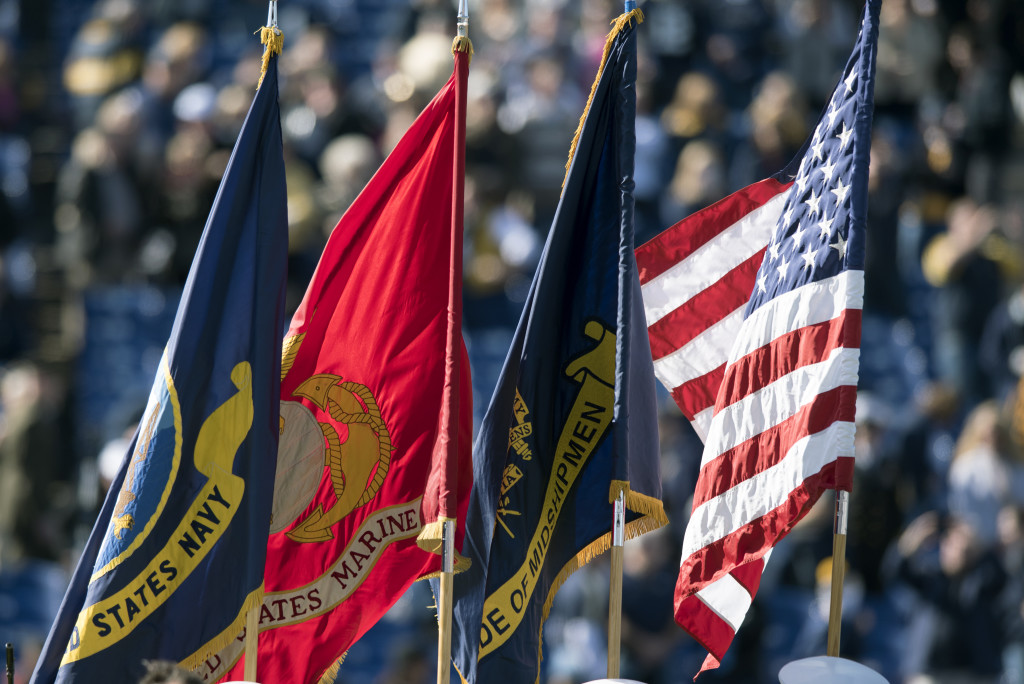
Each year I have the honor of nominating young men and women for an appointment to our nation’s military academies. The 2016 appointments have now been finalized, and I’m pleased to announce those who have received these prestigious selections. Our service academies are some of the most distinguished institutions in the world. Appointments are highly sought after and require high academic, character and leadership standards. Those appointed must commit to serve in the military for a minimum of five years upon graduation. My office conducts a rigorous process by which applicants from throughout Alabama’s 2nd Congressional District are reviewed and interviewed by an independent panel of service academy alumni, who recommend the nominations. Once a nominee has been officially appointed, I have the privilege of calling to personally inform them of the good news. It is a special privilege to be the first to thank these exceptional students for their willingness to serve their country and to wish them the best on their exciting endeavors. Listed below are students who were nominated through my office and have received appointments to U.S. military academies for 2016. I join their families, teachers and friends in congratulating them on such a special honor. Jaemin Francis Ashley: U.S. Military Academy (West Point). Jaemin, son of Eunhee and Thomas Ashley, is from Montgomery and attends Loveless Academic Magnet Program (LAMP). Elizabeth Sullivan Brakefield: U.S. Air Force Academy. Elizabeth, daughter of Jill and Lacy Brakefield, is from Dothan and attends the University of Alabama. Joshua Devon Dye: U.S. Military Academy (West Point). Joshua, son of Gary and Gwen Dye, is from Midland City and attends Northview High School. Nicholas Burke Forti: U.S. Naval Academy. Nicholas, son of John and Brenda Forti, is from Daleville and attends Phillips Academy in Andover, Massachusetts. Justice Cheylynn May: U.S. Naval Academy. Justice, daughter of Boyd and Brandy May, is from Enterprise, a graduate of Enterprise High School and currently attends the Naval Academy Preparatory School. Cory James Philpott: U.S. Air Force Academy. Cory, son of Karen Sue and Luke Francis Philpott, is from Andalusia and attends Straughn High School. William Watson Thomas: U.S. Military Academy (West Point) and the U.S. Merchant Marine Academy. William, son of Peyton and Jane Thomas, is from Midland City and attends Riverside Military Academy in Gainesville, Georgia. William Patrick Vincent: U.S. Naval Academy. William, son of Vincent and Leigh Vincent, is from Dothan and attends Houston Academy. Han David Zhang: U.S. Air Force Academy. Han, son of Ti and Cari Zhang, is from Dothan and attends Northview High School. Congratulations to each of these students on this significant achievement. If you or someone you know is interested in seeking a nomination to a service academy, please visit my website at www.Roby.House.gov to learn more. The deadline for submitting a 2017 application is Friday, November 4. ••• Martha Roby represents Alabama’s 2nd Congressional District. She lives in Montgomery, Alabama with her husband, Riley and their two children.
Darryl Paulson: Donald Trump the demagogue: Have you no sense of decency?

(First of three parts) With Donald Trump‘s victory in Indiana and the withdrawal of his last two opponents, he is assured a first ballot victory at the July convention in Cleveland. The good news is that there will be no riots as Trump threatened with a deadlocked convention. The bad news is that Donald Trump is the Republican presidential nominee. Lincoln must be spinning in his grave. On June 9, 1954, Joseph Welch was testifying before the Army/McCarthy Hearings in Washington. Welch was chief counsel for the U.S. Army while that branch of the service was under investigation for communist activities before Sen. Joe McCarthy‘s Senate Permanent Subcommittee on Investigations. During the hearings, McCarthy attacked Fred Fisher, an attorney in Welch’s law firm. While a student at Harvard, Fisher had joined the Lawyers Guild, identified by the FBI as a communist-front organization. Fisher had notified Welch of his “youthful indiscretion,” and did not participate in the hearings. Nevertheless, McCarthy persisted in his attacks. Welch asked McCarthy not to “assassinate this lad further, Senator.” McCarthy continued his assault on Fisher. Welch interrupted and berated McCarthy. “You’ve done enough. Have you no sense of decency, sir, at long last? Have you left no sense of decency?” Welch’s confrontation with McCarthy attracted national attention. It was the beginning of the end for McCarthy and McCarthyism. Within three years, McCarthyism was dead and so was the senator. Has Trumpism now replaced McCarthyism? Right before the Indiana primary, Trump went on Fox and Friends and attacked Rafael Cruz, the father of Ted Cruz. Trump accused the elder Cruz of being involved with Lee Harvey Oswald in the assassination of President John F. Kennedy. Trump told Fox viewers that “this was reported and nobody talks about it.” Who reported the story? The National Enquirer, long known for its exposés on Hollywood starlets and their Martian babies. David Peeker, the CEO of the Enquirer, is a Friend of Trump and has endorsed his candidacy. The Enquirer previously ran a story accusing Cruz of having affairs with five women. McCarthy and Trump both destroy lives based on little or no evidence and a lot of lies. As long as their goal is advanced, it matters not what happens to the wrongly accused. New York Times columnist David Brooks has called Trump the “most dishonest person to run for high office in our lifetime.” Trump is “oblivious to accuracy.” In a position that demands the highest level of maturity, we are left with a childish man lacking a moral compass. Here are a baker’s dozen of reasons why Trump is unqualified to be president: Trump has called for “a total and complete shutdown of Muslims entering the U.S.” Forget that means 1.2 billion individuals and that it violates both U.S. and international law. Trump accuses Mexican illegals as “bringing drugs. They’re bringing crime. They’re rapists.” Trump wants to deport all 11 million illegals, but offers no plan on how to do it. Trump’s proposal to eliminate ISIS is very simple, and I mean that in the worse way possible. Trump says he would “bomb the shit out of them.” Now, that’s a plan. Carly Fiorina has an “ugly face! Would anyone vote for that?” Megyn Kelly asks a tough question of Trump and he accuses her of being unbalanced due to her period. Trump accuses Ben Carson of being “pathological” and, thus, unfit to be president. He stretches Carson’s youthful temper tantrums by comparing it to child molesters. Child molesters are “pathological” and “you don’t cure a child molester.” Trump attacks John McCain as not being a war hero because his plane was shot down over North Vietnam. “I like people who weren’t captured.” When asked to renounce the endorsement of longtime Klansman David Duke, Trump responded that he doesn’t know anything about Duke. Strange. In 2000, Trump wrote an opinion piece for The New York Times saying he was leaving the Republican Party because of its ties to Duke. Trump frequently asks participants at his rallies to raise their right arm and pledge allegiance to him. The salute reminded many of salutes to Adolf Hitler when he controlled Germany. Der Spiegel, a German magazine, called Trump “the world’s most dangerous man,” and the leader of a “hate-filled movement.” Trump encourages torture against terrorists and the killing of families of terrorists. Both would violate U.S. and international law. At his rallies, Trump spoke of wanting “to punch protesters in the face.” After a Black Lives Matter protester was assaulted, Trump said, “Maybe he should have been roughed up.” Trump’s language seeks to divide Americans rather than unite them. Trump talks about “you” and “we” needing to attack the dangerous “them.” His opponents are branded as “stupid,” “weak,” or “losers.” Trump often attacks people and then denies doing so. He said he would never “call Megyn Kelly a bimbo because that would be politically incorrect.” He called her a bimbo and then said he would never do it. Trump consistently distorts the truth, changes positions and lies. PolitiFact called Trump’s collection of misstatements the “lie of the year.” It found that 76 percent of the 77 Trump statements were False, Mostly False or Pants on Fire. Trump is the first and only presidential candidate to defend the size of his penis in a debate. I wish reason would be sufficient to sway individuals from supporting Trump, but I know that reason seldom succeeds. Like in most mass movements, Trump’s supporters will deny that Trump ever said or did the things he has done. They will rally to his defense. Trump is not fit to be president. The sooner Americans realize this, the sooner we can end this national nightmare that is Donald Trump. Part II on Monday: Democracy and Demagogues will examine why demagogues so frequently emerge in democracies. *** Darryl Paulson is Emeritus Professor of Government at USF St. Petersburg.
Linda Cunningham: Ignore politics for a few months, enjoy the summer

What a blessed relief. Presidential political junkies are down to Donald Trump and Hillary Clinton, down to the Cinderella finalists and we can take the summer off. OK, I know Bernie Sanders is still hoofing the “I want to live in the White House” shuffle, but he’s not going to be at the top of the donkey ticket come November, so I’m not counting him. I know. If you’re not wanting President Trump, you’re gonna half to vote for that woman. You’re mad. Get over it. Now, back to the giddy deliciousness of not having to look at Ted Cruz’s smarmy, Eddie Munster face – made worse for the past week with Carly Fiorina’s baleful eyes counting every sweating pore of the man’s face at news conferences. Back to not having to explain why John Kasich could never be the candidate-of-choice for right-leaning Democrats and moderate Republicans, despite the national media pundits contorting themselves to the contrary. Let Ohio have him back. Oh, blessed relief. We know the red and blue names on the presidential ballot. While there will be angst and hand wringing all summer, the likelihood of substantive political developments is minimal. Crass though it be, unless one or both of these candidates is abducted by aliens (the real kind, not the immigration variety), it’s going to be The Donald and Hil in November. Trump’s already creating the to-do list for his first presidential 100 days. He’ll ramp up the charm, he says, warn corporate execs not to send jobs overseas, design the wall between us and Mexico, appoint an Antonin Scalia-style Supreme Court justice and repeal the Affordable Care Act. I assume he’ll take a breath on day 101. Clinton’s likely got her own first 100 days list, but she’s got to be a bit more coy than Trump since Sanders is still in her rear view mirror. It’s a safe bet that her list resembles Trump’s only in the “ramp up the charm” item. So, if we know the candidates and we’re pretty sure of their platforms, what the heck’s going to keep us junkies fixed for the next six months? Who’s voting for whom? That’ll be the hot weather speculation and we’ll be at it right up to the last poll closing, when the question will shift to “who voted for whom?” Hillary voters made up their minds in 2008. They’ve been awaiting validation for 10 years. Donald voters joined the chorus this year, but as soon as they donned that red ball cap, there was not a chance they’d vote any other way. That leaves millions of registered voters with squirm-worthy choices. Consider the Democrats who’ve hung their stars on Sanders and can’t imagine not feeling the Bern. Are they willing to “just vote blue, no matter who”? Heck, there are still Elizabeth Warren Democrats wishing she were on the ticket. There are all those “anyone but Trump” Republicans, who with the departures of Kasich and Ted Cruz, are left with no one but Trump. Can they hold their noses and vote for Clinton? And, then there are the undecided voters. Political junkies cannot imagine there are undecided voters left, not after the tsunami of multi-platform media. But they’re wrong. While one would have to have been living under the clichéd rock to be unable to identify Hillary Clinton and Donald Trump, “real people” are not the least bit like we junkies. They turned down – or tuned out – the incessant political rhetoric months ago. They know they’ll need to make a decision by November, but these voters won’t tune back in until sometime in late September. They’ll pay little attention to the shifting headlines that will shape the summer’s news coverage. But by September, when Labor Day is past, school’s back in session and the weather up north is turning cool, then they’ll pay attention. The undecided voters will choose the Trump and the Clinton who are in the headlines in late September. Not before then. In the meantime, the undecided voters are going to enjoy summer. Perhaps we should, too. *** Linda Grist Cunningham is editor and proprietor of KeyWestWatch Media, a digital solutions company for small businesses. She made up her mind back in 2008 and expects to enjoy her summer.
Pew Research: Republicans, Democrats have starkly different foreign affairs priorities

A new comprehensive study on American views on foreign affairs finds to no surprise that Republicans are from Mars and Democrats from Venus, but also finds Republican presidential candidate Donald Trump‘s supporters more isolationist than anyone. The survey, released Thursday by the Pew Research Center, finds that Democrats consider the nation’s biggest global fears to be climate change, ISIS, cyberattacks and disease pandemics, and few lose much sleep over threats to the United States from Syrian refugees, China or Russia. Republicans, on the other hand, worry about just about every global menace except climate change, and their biggest concerns are ISIS, cyberattacks, Syrian refugees, and global economic instability. The same survey breaks out foreign affairs issues by candidate supporter, and finds Trump’s supporters far less likely than other candidates’ to want to see the United States intervene militarily or economically in other countries. Trump supporters are most likely to want to see the United States spend more on the war on terror and more on the U.S. military, while also saying America is already too involved overseas. Trump supporters mainly want to see America provide foreign aide. Overall, the survey found a relatively broad isolationist viewpoint. “The public views America’s role in the world with considerable apprehension and concern. In fact, most Americans say it would be better if the U.S. just dealt with its own problems and let other countries deal with their own problems as best they can,” Pew reports in its survey, “Public Uncertain, Divided Over America’s Place in the World,” posted Thursday. Among the lengthy report’s findings: Overall, 45 percent of Americans think military spending should stay about as it is, while 35 percent believe that it should be increased and 24 percent think it should be decreased. There is a dramatic split by party, however; 61 percent of Republicans think military spending needs to be increased, compared with 31 percent of independents and 20 percent of Democrats. Overall, 57 percent of Americans think the U.S. should deal with its own problems for now, and 37 percent believe that it should help other countries with their problems. Similarly, 41 percent of Americans think the country is doing too much to support other countries, 28 percent think the current programs are just about right, and 27 percent think they’re not enough. 65 percent of Trump supporters believe U.S. foreign aid is a bad thing, while 55 percent of Democrat Hillary Clinton supporters think it’s a good thing. Supporters of Democrat Bernie Sanders and now ex-candidates Republicans U.S. Sen. Ted Cruz and Ohio Gov. John Kasich are all pretty evenly split on the question. Overall, 54 percent of Americans think the United States is the world’s leading economic power; followed by 34 percent who believe it is China; 6 percent, Japan; and 2 percent the European Union. Overall, 72 percent of Americans think the United States is the world’s leading military power; followed by 12 percent who believe it is China, 10 percent, Russia; and 2 percent the European Union. 91 percent of Republicans think that ISIS and similar groups are a major threat to U.S. security, while 76 percent of both Democrats and independents think that. 77 percent of Democrats believe climate change is a major threat to U.S. security, compared with 52 percent of independents and 26 percent of Republicans. 77 percent of Trump supporters sympathize with Israel and 10 percent with Palestinians. For Clinton supporters the split is 47 to 27 percent; For Sanders supporters it’s 33 to 39 percent. Trump and Clinton supporters generally agree on the balance between homeland protection measures and civil liberties, while Sanders supporters disagree: 66 percent of Trump’s supporters think the country’s anti-terrorism policies have not gone far enough, and 20 percent think too far, threatening civil liberties. For Clinton’s supporters the split is 51 to 35 percent, while for Sanders’ its 33 to 51 percent. 54 percent of Trump’s supporters think the U.S. does too much to try to solve the world’s problems. For Clinton’s supporters, it’s 34 percent and for Sanders’, 42 percent. Overall, 41 percent of Americans think so. Overall, 49 percent of Americans think that U.S. involvement in the global economy is a bad thing, and 44 percent a good thing. The opposition was more pronounced among Republicans, older people and people with limited educations. People ages 18 to 29, college graduates and liberals were the only groups that mostly thought involvement in the global economy is a good thing. Landslide majorities of Trump’s supporters oppose the U.S. importing more goods, increasing investment in developing countries and increasing foreign aid. Strong majorities, sometimes over 60 percent, of both Clinton’s and Sanders supporters support those policies. 85 percent of Trump’s supporters think the Syrian/Iraqi refugee crisis is a significant threat to America, while only 40 percent of Clinton’s supporters think so, and only 34 percent of Sanders’. Strong majorities of every party and candidate constituency support the current U.S. military campaign against ISIS, ranging from 56 percent of Sanders’ supporters to 66 percent of Trump’s supporters. But almost no group majority believes that the anti-ISIS campaign is actually going well, except for Clinton’s supporters (57 percent.) The biggest difference by party is on the question of whether overwhelming use of military force against global terrorism is a good thing or bad thing. Republicans think it is the best way to defeat terrorism, by 70 percent to 24 percent. Democrats think it would only inspire more worldwide hatred of the U.S., leading to more terrorism, by 65 percent to 31 percent. Independents were pretty split, leaning slightly toward worrying about fostering worldwide hatred (49 percent to 45 percent.) Most of the analysis in the Pew report is based on telephone interviews conducted April 12-19 among a national sample of 2,008 adults, 18 years of age or older, living in all 50 U.S. states and the District of Columbia (505 respondents were interviewed on a landline telephone, and 1,503 were interviewed on a cellphone, including 914 who had no landline telephone). Some
Democratic advertising blitz awaits Donald Trump
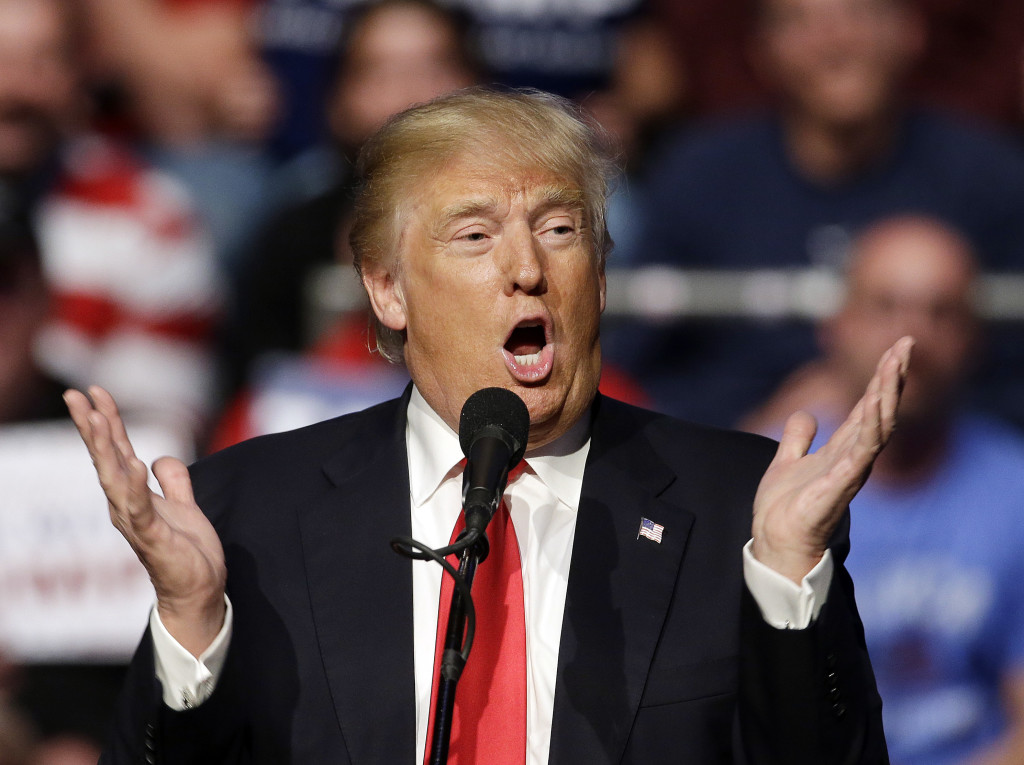
Long before Donald Trump swatted away his Republican presidential rivals, his likely Democratic opponent and her allies began laying traps for him. Priorities USA, the lead super PAC backing Hillary Clinton, has already reserved $91 million in television advertising that will start next month and continue through Election Day. In addition, Clinton’s campaign and Priorities USA have both debuted online videos that cast Trump in a negative light — a preview of what voters will see on TV over the next six months. So far, Priorities USA is the only group on either side that has rolled out such an ambitious advertising plan geared toward the general election. The group’s leaders say they’re trying to avoid what they see as the core mistake made by Trump’s Republican rivals — not pushing hard enough against him until it was too late. “There’s a reason that we have a head start,” said Justin Barasky, a Priorities USA spokesman, “and it’s that we’ve taken Donald Trump seriously all along, unlike the Republicans.” The group’s ad strategy will test what has been a hallmark of Trump’s GOP primary rise: his ability to withstand — even thrive in the face of — tens of millions of dollars in attack ads. An Associated Press review of Priorities USA’s TV buys, collected by Kantar Media’s Campaign Media Analysis Group, reveals a formidable 22-week advertising blitz through what the group considers key battleground states: Colorado, Florida, Iowa, Nevada, New Hampshire, Ohio and Virginia. In those states, Priorities USA will start ads in major metropolitan areas, then broaden its outreach to smaller cities as the November election approaches. The group will also start ads on satellite TV in September. According to the CMAG data, Priorities USA plans to spend about $4 million a week through most of June. The group then slows spending through July, taking off the weeks of the Republican and Democratic conventions, when widespread television coverage essentially provides free media time for the candidates. Priorities USA returns to the airwaves in August and begins unloading $60 million in ads between September and Election Day. The week of the election, Priorities USA plans to spend about $8 million in the seven battleground states. The heaviest concentration is in Florida, where the group has reserved $23 million in time, mostly in Orlando and in Tampa. The group also plans to spend about $19.5 million in the traditional presidential bellwether state of Ohio. More than half is for Cleveland, Akron and Columbus. There’s no substantive GOP counterweight to the pro-Clinton effort — partly because Trump has repeatedly trashed big donors and called the outside groups that can raise unlimited money from them “corrupt.” As the presumptive GOP nominee, Trump is now beginning his outreach to donors. But even if he fully embraces outside help, he’s far behind: One super PAC backing him, Great America, was almost $700,000 in debt at the end of March. Another group that was a major player in the 2012 race, American Crossroads, is still “evaluating what our specific role will be,” said spokesman Ian Prior. Television ads are only one part of Priorities USA’s strategy. It is putting at least $35 million into online advertising between June and Election Day, Barasky said. Those ads will largely aim to drive up turnout among core Democratic groups: African-Americans, Hispanics, women and younger voters, Barasky said. Trump is already getting a taste of what some these ads will say. On Thursday, Priorities USA overlaid audio of Trump talking about “unifying” the Republican Party with images of violence that has erupted inside and outside of his massive rallies. “I think we’re going to win in November,” Trump says at the end. “NOPE,” reads text on the screen. “Vote for Hillary Clinton.” That follows an online video the Clinton campaign put out Wednesday that features clips of prominent Republicans, including his former rivals, bashing Trump in every possible way. “He needs therapy,” says former Florida Gov. Jeb Bush at the end of the spot. Republished with permission of the Associated Press.
Insurers laud passage of state ridesharing insurance bill
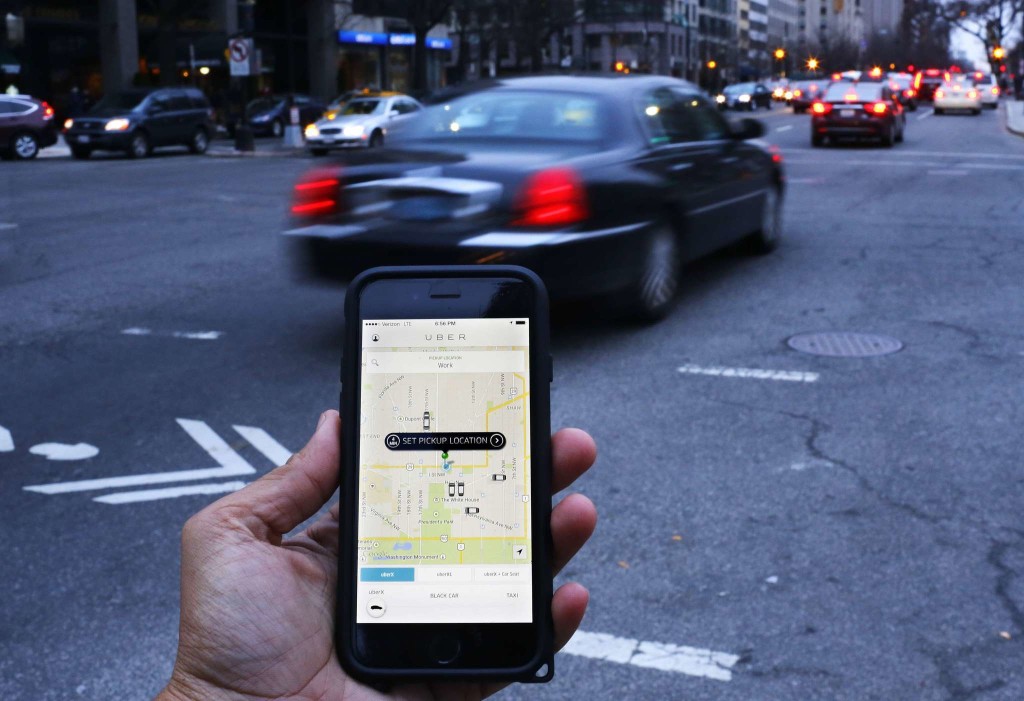
One of the nation’s largest insurance interests took a moment Thursday to applaud Montgomery lawmakers for their work on so-called “ridesharing.” The state Legislature passed a bill this week that Property Casualty Insurers Association of America state government manager says will “close the insurance gap” for customers when they use popular ride-hailing apps like Uber and Lyft. The legislation, SB 262 sponsored by Sen. Shay Shelnutt and Rep. David Faulkner, would require such services — called Transportation Network Companies or TNCs under state law — to insure their drivers when they are engaged in ridesharing, whether they have a passenger at the time or not. “Over the past several months, transportation network companies (TNCs) such as Uber have experienced tremendous growth in Alabama as they operate in several cities across the state including Birmingham, Mobile and Montgomery,” said PCCI’s Logan McFaddin. “However, SB 262 was needed to strike the right balance in protecting the public, closing the insurance coverage gaps and allowing for an increase in entrepreneurial activity. This bill ensures that the TNC driver who picks you up and drives you across town is properly insured, so that you and the public are not at risk if an accident were to occur.” “PCI commends Senator Shelnutt and Representative Faulkner for their great work and attention to this issue. SB 262 requires rideshare drivers to have the necessary insurance coverage from the time they log in to the app to the time they log out, which is a critical component to effectively protecting consumers and drivers,” concluded McFaddin. The bill provides insurance on each TNC driver’s call for up to $1 million for death, bodily injury, and property damage. Should Gov. Robert Bentley sign the bill which now awaits his signature, the bill will go into effect on the first day of the third month following its approval.
TVA board votes to sell Bellefonte, Ala. nuclear plant to highest bidder
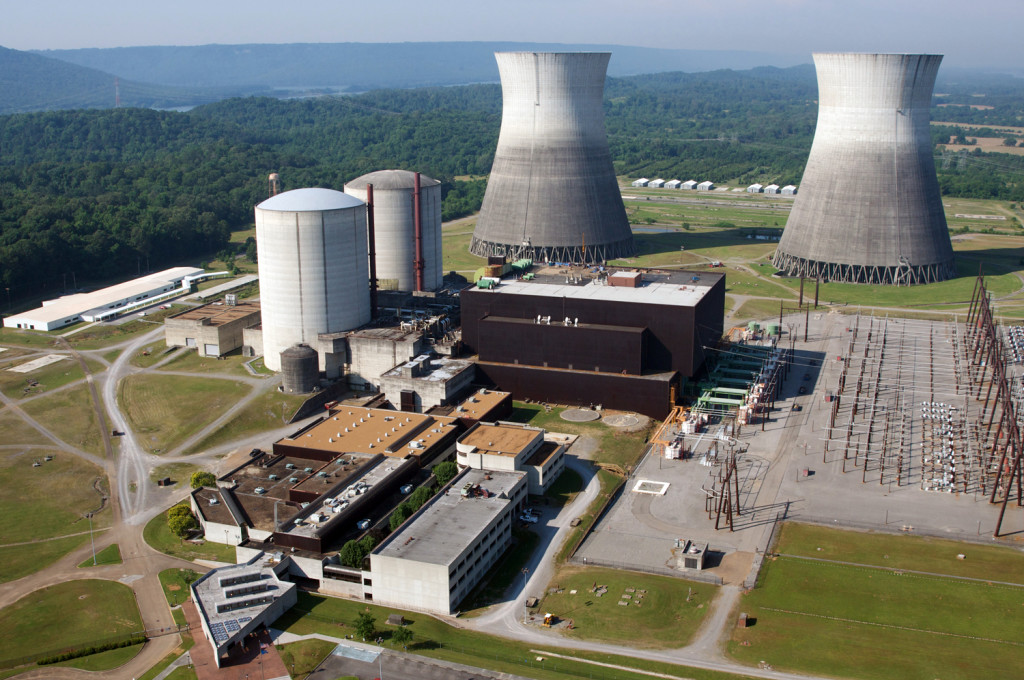
The nation’s largest public utility is selling a never-completed nuclear plant that has cost more than $4 billion dollars over the past four decades. The Tennessee Valley Authority board voted Tuesday at a meeting in Buchanan to declare the Bellefonte nuclear plant near Hollywood, Alabama, surplus. The site includes two partially finished nuclear reactors, railroad spurs and a helicopter pad. TVA President and CEO Bill Johnson says the 1,600 acre site will be sold at auction to the highest bidder. It has been appraised at $36 million. The decision to sell is the latest blow to the nuclear power industry, which seemed poised for resurgence a decade ago but has been stymied by cheap natural gas, high construction costs and relatively flat demand for power. Republished with permission of the Associated Press.
John Merrill teams with state Legislature, judges to ensure voter readiness in November
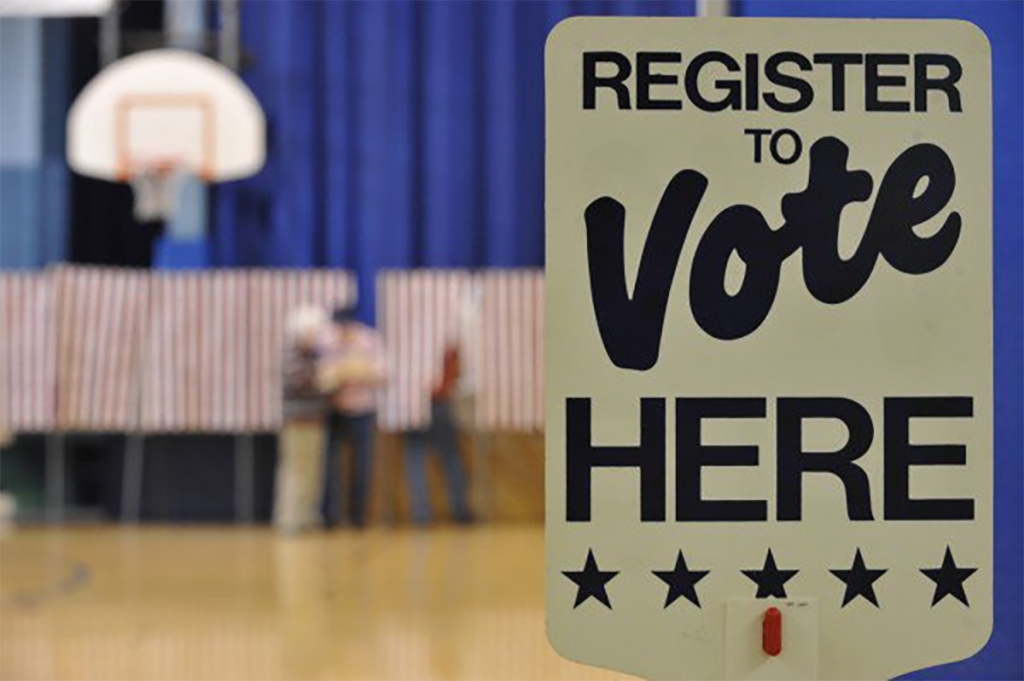
With the November General Election just six months away, Alabama Secretary of State John H. Merrill is doubling down on his efforts to ensure eligible Alabama citizens are able to vote. His latest action — asking the members of the state Legislature, as well as all state Probate Judges to provide three separate and specific days of the week, times, and venues in their respective areas where Merrill’s office may hold a drive for voter registration and photo I.D issuance. The Alabama Secretary of State’s next registration events will be held in: Coosa County May 9, 2016 from 10 a.m. – 12 p.m. West Coosa Senior Center 47 Coosa County Road 70 Sylacauga, AL 35151 Baldwin County May 11, 2016 from 9 a.m. – 11 a.m. Elsanor Community Center 23741 US Highway 90 Robertsdale, AL 36567 Baldwin County May 11, 2016 from 1 p.m. – 3 p.m. Lillian Community Club 34148 Widell Avenue Lillian, AL 36549 Baldwin County May 12, 2016 from 9 a.m. – 11 a.m. Harry Roberts Community House 300 East 16th Avenue Gulf Shores, AL 36542 Since June 3, 2014, to participate in an election, a citizen must be registered to vote and present a valid form of photo ID. Forms of photo ID accepted at the polls are any of the following valid documents: driver’s license; Alabama photo voter ID card; state issued ID (any state); federal issued ID; US passport; employee ID from Federal Government, State of Alabama, County, Municipality, Board, or other entity of this state; student or employee ID from a public or private college or university in the State of Alabama (including postgraduate technical or professional schools); Military ID; or Tribal ID. To receive a free Alabama photo voter ID card, a citizen must be a registered voter and must not have one of the valid forms of photo ID listed above. Examples of non-photo ID documents that can be used in applying for a free Alabama photo voter ID card include a birth certificate, marriage record, Social Security Administration document, hospital or nursing home record, Medicare or Medicaid document, or an official school record or transcript. For information on the site schedule as well as free Alabama voter identification cards, visit www.alabamavoterid.com or call 1-800-274-VOTE.
