
Phil Williams: Push for transgender bathrooms could jeopardize right to privacy
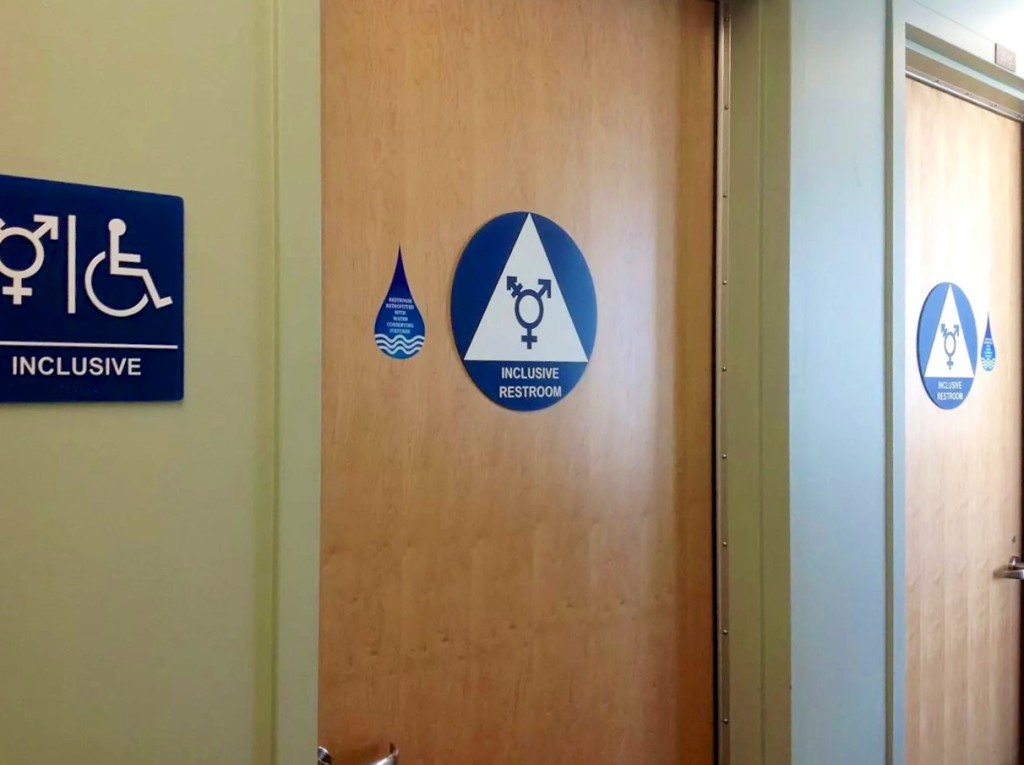
Do not sacrifice the rule for the exception Across our nation there is a deafening debate about the “rights” of those who claim a gender preference or identity other than the one with which they were born. Make no mistake: it is a debate that is happening even here in the very conservative state of Alabama. As I write this, a big-box retailer with multiple outlets in this state has decided to make all of their multi-stall restrooms unisex, with a complete disregard for long-standing law, tradition, and biology. More egregiously, this decision was made with no concern for the privacy and security concerns of their customers. In essence, Target has thrown out the rule in favor of the exception. In North Carolina, the city of Charlotte passed an ordinance requiring public restrooms to allow persons to use bathrooms according to their own gender self-identification. So if a man identified as a woman, the city of Charlotte would force a restaurant owner to allow the man identifying as a woman to use the ladies’ restroom. Sensibly, the North Carolina legislature passed a law requiring people to use the bathroom that corresponds to the gender on their birth certificate, thus overriding the city of Charlotte’s dangerous ordinance. That law is being litigated even now and Alabama must be ready by the next legislative session to deal with the outcome. Today, after careful research and review, I have filed a bill to deal with this issue in Alabama. I admire the stand made by the North Carolina legislature. But I chose to come at the problem from a different angle in the event that North Carolina’s law does not prevail in court. It is important that the instigators of social change be confronted with the customs and laws of the various locales they are dealing with. In Alabama, the courts have long held that the citizens of this state have a right to privacy and a right to feel secure; and that these rights extend not just to the physical, but also to the mental and emotional wellbeing of the individual. The right to privacy of an individual in a place in which they would ordinarily and reasonably expect to be secluded, even where that secluded place is public in nature, has been upheld by the state and federal courts in Alabama for years. By implication this principle would have to extend to restroom, bathroom and changing facilities. The argument that a self-professed “gender identity” affords access to a facility over the deep concerns of other members of the public is a violation of that right to privacy. Even the liberal Supreme Court Justice Ruth Bader Ginsberg has stated that the notion that a ban on sex discrimination requires unisex restrooms in public places is “emphatically not so.” So let’s be clear. If the priests of political correctness are going to call for the sacrifice of the privacy and security of the vast majority of the citizenry then there is going to be a fight. If my bill passes, which I believe that it will, the law of this state will reaffirm that privacy and security are inherently and naturally given to the public in this state. If North Carolina’s law is struck down then my legislation will become a backstop to say that if any person or entity provides public restrooms, bathrooms, or changing facilities then they will do so in one of three ways: a single user facility; facilities separated by the physical gender of the users; or, if facilities are provided in a unisex/transgender manner, an attendant for each facility must be onsite to address any concerns or questions of the general public. Failure to do so would result in civil penalties and provide a private right of action in court for those individuals who have been harmed or aggrieved. There will be push back on this. Liberals do not agree with anyone having a say in their debate. But my legislation is designed to provide security to the public at large, and this bill could just as easily protect a transgender user of a public facility from being harmed as well. The bottom line is that we have a right to privacy in place now; and liberals should not for a second think that Alabamians will simply stand by and allow the exceptions to throw out the rule. ••• Phil Williams represents Etowah, Cherokee, Dekalb and St. Clair counties in the Alabama Senate. You may reach Senator Williams by phone at (334) 242-7857 or by e-mail at phil@williamsstatesenate.com. Follow him on Twitter for the latest legislative updates: @SenPhilWilliams.
Luther Strange seeks to dismiss assault charge against police officer
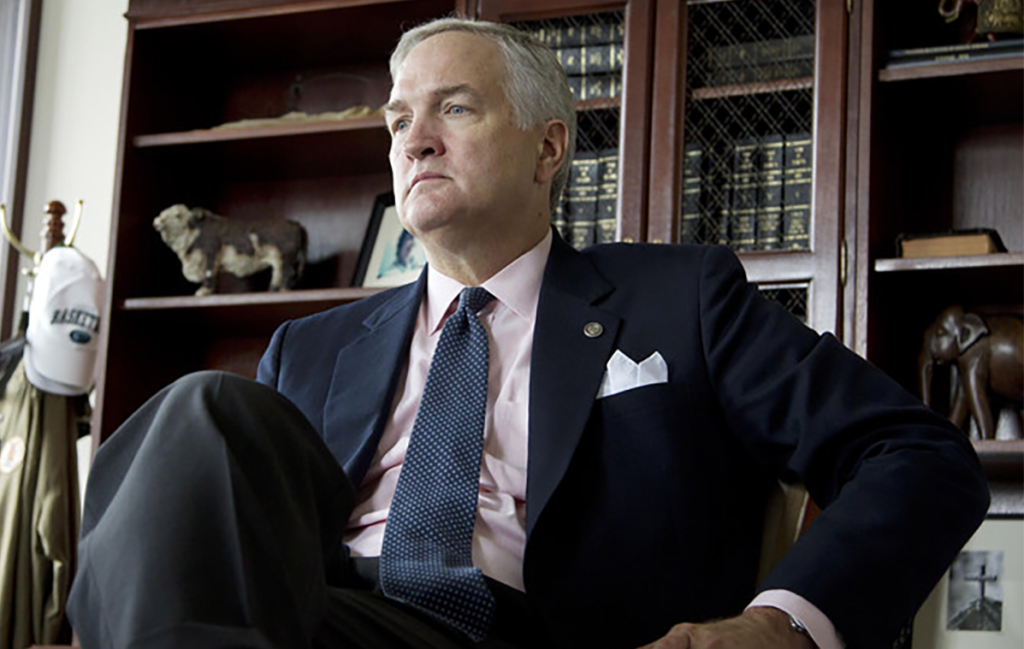
Prosecutors are looking to drop state charges against a north Alabama police officer accused of assaulting an Indian man during a suspicious person investigation. Alabama Attorney General Luther Strange filed a motion Thursday to dismiss the case against Eric Parker in Limestone County Circuit Court. Parker was recorded slamming 58-year-old Sureshbhai Patel to the ground in February 2015. Patel was out for a walk when he was approached by police. Parker has said Patel resisted him. Patel has said through an interpreter that he doesn’t speak English and didn’t understand Parker’s orders. Two federal civil rights trials against Parker ended in hung juries before he was acquitted. Strange said in a statement that there isn’t sufficient evidence for the state to prove its case beyond a reasonable doubt. Republished with permission of the Associated Press.
Alabama governor signs pro-life bills into law

Alabama Governor Robert Bentley signed two pro-life bills into law Thursday, one of which could wind up closing multiple abortion clinics in the state. The first, sponsored by Republican Senator Paul Sanford, bans abortion clinics from within 2,000 feet of any K-8 public school. “It’s a real milestone not only in Alabama but across the country because, to our knowledge, this is the first time this approach has been used,” said Reverend James Henderson, an Alabama pro-life activist. “And now that it’s successful in Alabama, we believe it will be a template or pattern for other states in the future to follow with the strong prospect of it holding up in federal court.” Henderson believes proponents of the ban have a good chance of fighting off challenges to the law in court. He added that groups like the ACLU, who promised to fight the measure, will be “exposed” for “what they are as far as their pattern of standing against basic morality and Christian values.” The second bill signed by the governor, with little fanfare, is the “Unborn Child Protection from Dismemberment Abortion Act,” sponsored by Rainbow City Republicans Sen. Phil Williams and Rep. Mack Butler. The new law prohibits dilation and evacuation “D&E” abortions, which account for approximately 95 percent of all abortions in the second trimester. The new law allows exceptions only in the event of a “serious health risk to the mother.” “Dismemberment abortions are a heinous practice, and I am glad the Alabama Senate has taken this step to promote and protect a culture of life by outlawing these procedures,” Williams said following the bill’s passage in the Senate. “The abortion of unborn children through violent dismemberment is something all right-thinking Americans should condemn.” “Eagle Forum of Alabama is proud to stand with the women who have been harmed physically and emotionally by dismemberment abortions and the children whose lives are destroyed by this practice,” Eagle Forum of Alabama Executive Director Deborah Love told Alabama Today. “We are proud to stand for fundamental human rights. All of the world’s major religions, as well as a secular ethic informed by science or humanism, reject inflicting harm on innocent human beings. Respecting fundamental human rights is foundational to being human. It is what unites all human beings.” Alabama is the fifth state to ban dismemberment abortion, joining Kansas, Oklahoma, West Virginia, and Mississippi.
Survey: Robert Bentley’s approval ratings steady at 46 percent; 45 percent disapprove
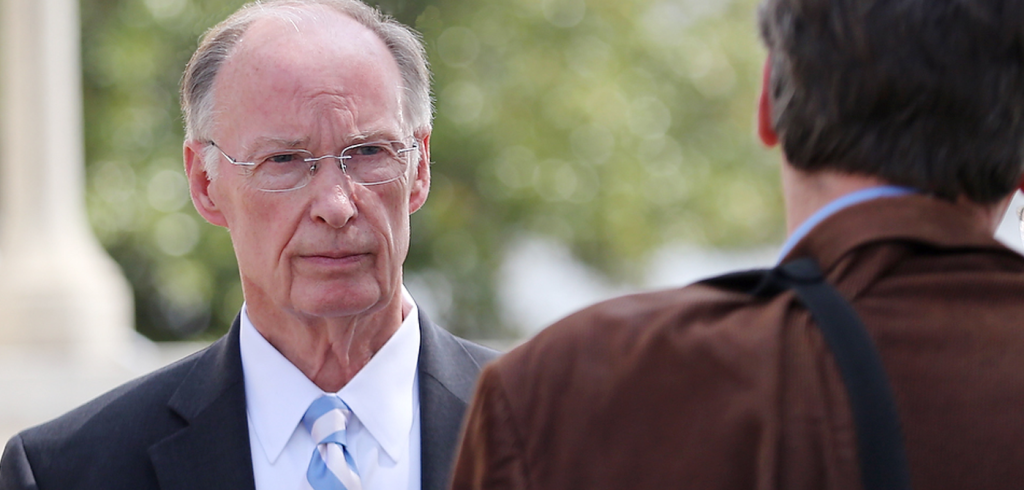
Embattled Gov. Robert Bentley may be political dead meat according to his most ardent foes in Montgomery, but a new poll out Thursday shows voters are split on the issue. Bentley’s approval rating, 46 percent, actually slightly surpassed his disapproval rating. 45 percent of Alabama voters, meanwhile, said they disapprove of the governor. The firm responsible for the new data, Morning Consult, speculated one reason voters’ opinions lagged behind conventional statehouse wisdom was that the allegations were that Bentley made “inappropriate” remarks to a former staffer and adviser only emerged recently. “In Bentley’s case, news about his possible impeachment is recent, which may explain why he has yet to be affected,” read a release from the group. News of the Bentley administration scandal broke in early April. Despite lumbering through an ongoing political scandal that has rocked Montgomery and let several high-ranking officials wondering aloud about impeachment proceedings, Bentley’s approval ratings are actually higher than several of his gubernatorial counterparts. Kansas Gov. Sam Brownback topped the list of opinion losers in the survey, with some 65 percent of respondents saying they disapprove of the governor. Critics of the Republican governor say his experiment in fiscal conservatism — including slashing taxes and social spending — have tanked the state’s economy. Number two on the list was Connecticut Democrat Gov. Dan Malloy, who has suffered due to discontent with his handling of the state budget and a weak state economy. 64 percent disapproved of his performance. Republican Michigan Gov. Rick Snyder rounded out the top three, the only other governor who topped a 60 percent disapproval rating, amid the infamous Flint, MI water crisis which has seen a national furor over deal poisoning in the city’s drinking water supply.
Ronda M. Walker: Ethics in leadership
“Neither the wisest constitution nor the wisest laws will secure the liberty and happiness of a people whose manners are universally corrupt.” -Samuel Adams If it isn’t illegal, then it isn’t unethical. That is the mentality many elected officials have adopted in our state and nation. Politicians wheel and deal in the gray area between right and wrong, craftily balancing on the line of legitimacy, careful not to slip a foot into the land of illegality. They carelessly push the limits of right and wrong with virtually no regard for what is actually right and wrong. When it becomes our goal as public officials to simply avoid activity classified as a criminal offense against public law, and we ignore our moral obligation to hold ourselves to a different, more stringent standard, we erode the public trust and become a significant threat to the stability of our democracy. Unfortunately, recent comments by our Governor demonstrate this skewed mindset that many have used as justification for their actions. I literally sat with my mouth agape as I read a quote from Alabama Governor Robert Bentley’s recent press conference. We have all heard the audio recordings of intimate conversations between the Governor and another woman who is not his wife. We have heard the allusions from the Governor himself to a physical relationship between he and a woman that is not his wife. Yet, he stood at a microphone recently at a crowded press conference and actually said the words, “I’ve done nothing – absolutely nothing – that is illegal or unethical.” Every fiber of my moral being was offended at the words he spoke. While the illegal portion of his statement is still being investigated, unless the audio recordings are one day proven false, the unethical portion of his actions has been splayed across the Internet and national news enough for everyone to know he has most certainly acted unethically, immorally, and without regard for the sanctity of the office he holds. The fact that he can say with a straight face that he has not acted unethically reveals the semantic game public officials often play to justify their questionable actions. When leaders decide to parse the meaning of criminal and ethical behavior when deciding on a particular action we lose our virtue, our freedom, and our greatness. Character matters, a great society cannot remain so without a common sense of decency, especially amongst leadership. We need leadership that holds truth inviolable. We need leaders that value honesty, integrity, loyalty, and respect for others above all else. That is ethical behavior. Ethical behavior is not about obeying man’s law, ethical behavior is about being a better person. About having a moral standard that governs everything you do. Doing the right thing even when no one is watching, doing the right thing even when you think no one is listening. If I know my neighbor is elderly, ailing, and struggling to care for his wife who has progressing Alzheimer’s and I do nothing to help meet their basic needs I have not violated state or federal law. If I fail to show my children physical love and affection I have not violated state or federal law. If I lie to my husband and engage in an extramarital affair I have not violated state or federal law. But in each case I have most certainly violated the basic moral and ethical standards of conduct that distinguish right and wrong in human action. I have revealed my character as self-serving and weak. And I have failed in my moral obligation as a neighbor, mother, and wife. Unfortunately, many elected officials do a quick-footed dance through questionable areas of personal activity with their biggest concern being the avoidance of prosecution. When public officials become more concerned about violating the law than violating the public trust they no longer serve the public, but themselves. We are too great a people to accept such disingenuous leadership. But unfortunately we have accepted it for generations. There are numerous examples of both local and national leaders, from all political parties, who have acted in ways unbecoming and who, instead of being chastised by the electorate have been given a pass. Seriously, some have even gone to jail for criminal offenses and enjoyed a baffling political comeback so perhaps I should not be so surprised that we turn a blind eye to infidelity. I was sworn in to the Montgomery County Commission in February 2014. Immediately after being sworn in I was told I must participate in a mandatory training program coordinated by the Association of County Commissions of Alabama (ACCA) intended to educate new Commissioners on their role and responsibility. The first class I took was entitled “Ethics for Public Officials.” This class was facilitated by staff from the ACCA, the Alabama Ethics Commission, and a local attorney. One of the topics of discussion was the differentiation between an act being unethical and an act being in violation of the law. Unfortunately, this is a distinction elected officials insist upon using as their standard for decision-making. Is what I am about to do illegal, or simply unsavory? A portion of the Ethics training was led by Sonny Brasfield, Executive Director of the Association of County Commissions of Alabama. As someone who has worked in and around Alabama politics for years, and has conducted numerous ethics training courses, I consider Mr. Brasfield an expert in this area. And because he summed up the truth so clearly and succinctly, I am going to quote Mr. Brasfield’s introduction to the discussion on ethics: “The Alabama Ethics Law is a criminal statute, which outlines behaviors that are legally permissible as well as those behaviors that are illegal. The illegal behaviors, if prosecuted, will result in fines, imprisonment or both. Following the Alabama Ethics Law does not mean that a public official or employee is acting in an ethical manner. In fact, there is no question that an individual can participate in unethical
Kevin Sweeny: Ground game — do or die

In the election of 1840, Abraham Lincoln served as a Whig presidential elector in Illinois. In his push to elect the “Tippecanoe and Tyler, too” ticket, he sent a ten-point edict to all committee members containing a field plan of operations. Much has changed in the landscape of political campaigns since 1840, but the importance of a well-organized, strong field operation has never waned. It is a mainstay in the campaigning ecosystem and part of a successful formula to forge a path to victory and campaigns which ignore its impact, do so at their own candidate’s peril. A generation ago, many political scientists were signaling the death of the ground game. TV, mail and even the Internet would render such campaign expenditures obsolete. However, over the last few election cycles, the opposite has proved true. Moreover, deeply established ground games have had a tremendous impact in municipal and state elections, local referendums and state ballot initiatives, to federal elections. Recent cycles have confirmed staffing a field operations campaign with a well-trained and competent workforce to help a candidate interact voters still matters. From getting petitions signed, voters registered, identifying early voters, canvassing door to door, and staffing the polls on Election Day, field campaigns still matter. Their greatest impact is at the local and state levels. Despite this, field operation’s budgets pale in comparison to advertisements. However, in-person mobilization appears to be one of the more effective expenditures a campaign can make with limited resources, increasing voter turnout by as much as 10 percent according to a recent study. Contemporary political campaigns utilize a broad set of tools and methods for finding and contacting voters, more than at any point in electoral history. Much has been written about the roles of technology, big data and social media in recent campaigns. However, at the same time, there has been a corresponding rise in old-fashioned campaign techniques, particularly establishing a competent ground game. Field offices, typically but not always placed in strategic locations around a district or state help to transform basic campaign information into real voter contacts. Field offices often serve as the first and last point of contact between a political campaign and the electorate. A campaign’s headquarters gathers important and timely information on voters and in turn relays such information to the field manager. They, in turn, instruct their field workers to pinpoint a calculated message to a structured group of voters. Typically, the most effective of these field workers are well-trained volunteers who live locally. While campaigns rely on a certain percentage of outside paid field workers, by far these local volunteers are most successful in distributing campaign information. Campaign volunteers are typically true believers in a cause, person or organization. They usually act purely on the belief they are making their community a better place. While obviously paid workers are vital to a campaign, no one was ever paid to start a real revolution. A first-rate example of the impact of a competent ground game is best illustrated by recent presidential elections and field work impact. Because the Democratic Party keeps better field data than the Republican Party, I will use them as an example. In a recent experiment, the 2012 presidential election was replicated with all things being equal. However, in this replication, Obama had no real field offices for volunteers. The results showed Obama would have lost 248,000 votes nationwide. A further dive into these numbers points to Obama losing Florida and therefore the presidency. Continued runs by political scientists Seth Masket, Josh Darr and Matthew Levendusky show running the same field simulations in the 2008 election gave Obama his victory in North Carolina, Florida and Indiana. Recent claims of Obama being able to win the presidency without a ground game simply do not hold water. After a recent election, a British Election Study showed one-on-one field contact made all the difference in local campaigns, by as much as 14 percent. Furthermore, a simple face-to-face meeting at the door by a campaign or candidate yielded a 97 percent likelihood of the voter casting their ballot for those who made contact with them. Moreover, the study showed it is not just a one-time face-to-face contact which matters, the contact must be constant. Parties lost upward of 16 percent of those who were only approached at the door once and never followed up on. Suffice to say, field offices increase turnout and vote share for the candidates and organizations who take the time to adequately fund and staff them. Lastly, and one of my personal favorite incentives of producing a solid ground game on top of being able to ascertain if your campaign’s message is resonating among the electorate is it creates a legion of loyal volunteers who are prepared to carry on the legacy of the candidate or party. This legacy of political skill can prove to be invaluable not only to the volunteer but to the organization and the electorate as a whole. Well trained and passionate volunteers evolve into the next generation of campaign managers, consultants and operatives. They understand not only the complexities associated with running a political campaign, but they also make meaningful connections with the governing, consultant and economic classes. Moreover, they gain a broader understanding of the issues faced by the electorate and the campaign they represent. Some will even eventually step into the fray and become candidates themselves. Two examples of this evolving legacy quickly come to mind. The first is the losing “YES!” campaign for Scottish independence which morphed its field operation into a supportive role for the SNP (Scottish National Party). In return, the field campaigns for “YES!” handed the SNP the most seats in their party’s history and now the SNP is the outright ruling party in Holyrood. Another example much closer to home is Jeb Bush’s grassroots push on education issues dating as far back as his first unsuccessful run for Governor in 1994. The political initiatives are still pushed by a network of
Robert Bentley weighs possibility of legislative special session
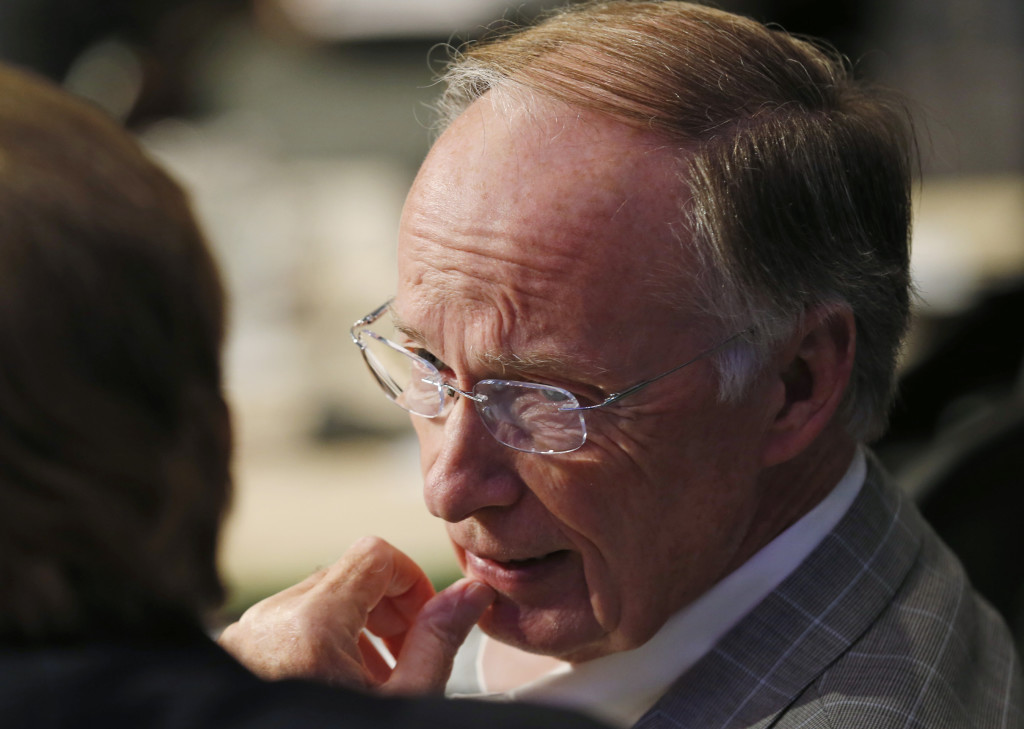
Alabama Governor Robert Bentley hinted at the possibility of a Special Session of the State Legislature to make up a shortfall in the state’s Medicaid funding, which fell short of the agency’s requested budget by $85 million. “I have not made a decision on that yet. I met yesterday with my commissioner for Medicaid. You know, there’s some real problems there,” said the governor during a visit to Birmingham Wednesday, adding he has several months left to make his decision. Depending on the breadth of the governor’s call for the special session, any number of measures that were shot down in the Regular Session could be back on the table. Among the issues mentioned by Bentley were the $640 million BP oil spill settlement compromise and a $800 million prison construction bill. The governor, who has been mostly avoiding questions from the media in the last several weeks, also took the time to reiterate to reporters that he believes he has done nothing improper in his alleged relationship with former senior aide Rebekah Mason. It would be the second year in a row with a Special Session, should the governor follow through with his threat to call one. Meanwhile, a special legislative committee is currently investigating the claims made against Bentley in the articles of impeachment filed during the legislative session. Impeachment of the Governor is one of the few mechanisms through which the Legislature can call itself into session. Should that happen, and the House pass the articles of impeachment, there is some question on how to adjudicate the issue in the Alabama Senate. Under normal circumstances, the hearings would be presided over by the chief justice of the state’s Supreme Court, but Chief Justice Roy Moore was suspended this week by the Alabama Judiciary Inquiry Commission for his attempts to block gay marriage following the U.S. Supreme Court ruling.
