
Conservative group to hold rally in support of suspended Roy Moore
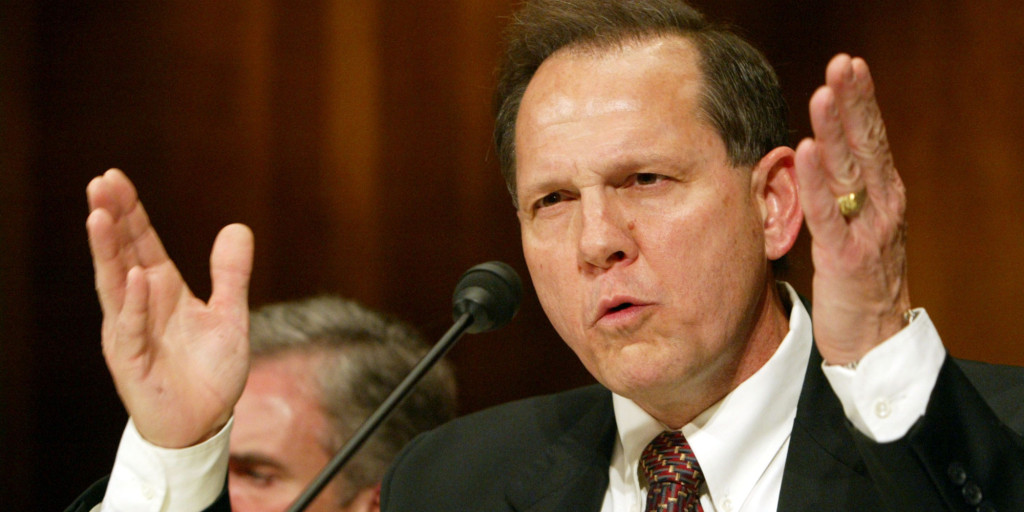
A coalition of conservative groups is hosting a rally near the Capitol building Saturday, May 21, in support of suspended Alabama Supreme Court Chief Justice Roy Moore, saying liberal groups have unfairly targeted him for his stance on same-sex marriage. “We can’t believe what’s unfolding before our eyes here in Alabama and across the nation,” wrote the group’s spokesperson Hannah Ford in a news release. “If you’ve ever wanted to be a voice for truth, for God, for marriage, for morality, for the Gospel, for your children and grandchildren, for the Constitution of the United States, and the laws of Alabama, this is your time. Chief Justice Moore has been a lone voice for God’s law and for a proper interpretation of the Constitution in the midst of those who hate both and now they’re trying to take him down.” Moore was suspended from his position following complaints made to the Judicial Inquiry Commission by the ACLU and other civil rights activism groups. The appointed body, which oversees the state’s judges, said the 69-year-old jurist “abused his office by issuing an administrative order to probate judges in January telling them an Alabama court order and law banning same-sex marriages remained in effect despite the U.S. Supreme Court decision affirming same-sex marriage six months earlier,” according to a report by The Associated Press. The suspension is Moore’s second, his first ending in an eventual removal from office in 2003 for violating a federal judge’s order to remove a large Ten Commandments monument from public property. Moore was subsequently re-elected to his position in 2010 in a landslide win. The rally will be held at the Heflin-Torbert Judicial Building, 300 Dexter Avenue in Montgomery, from 11 a.m. to noon on Saturday, May 21. For more information about the event, including parking instructions, click here.
Mystery of abandoned human ashes and American flag baffles South Alabama cops
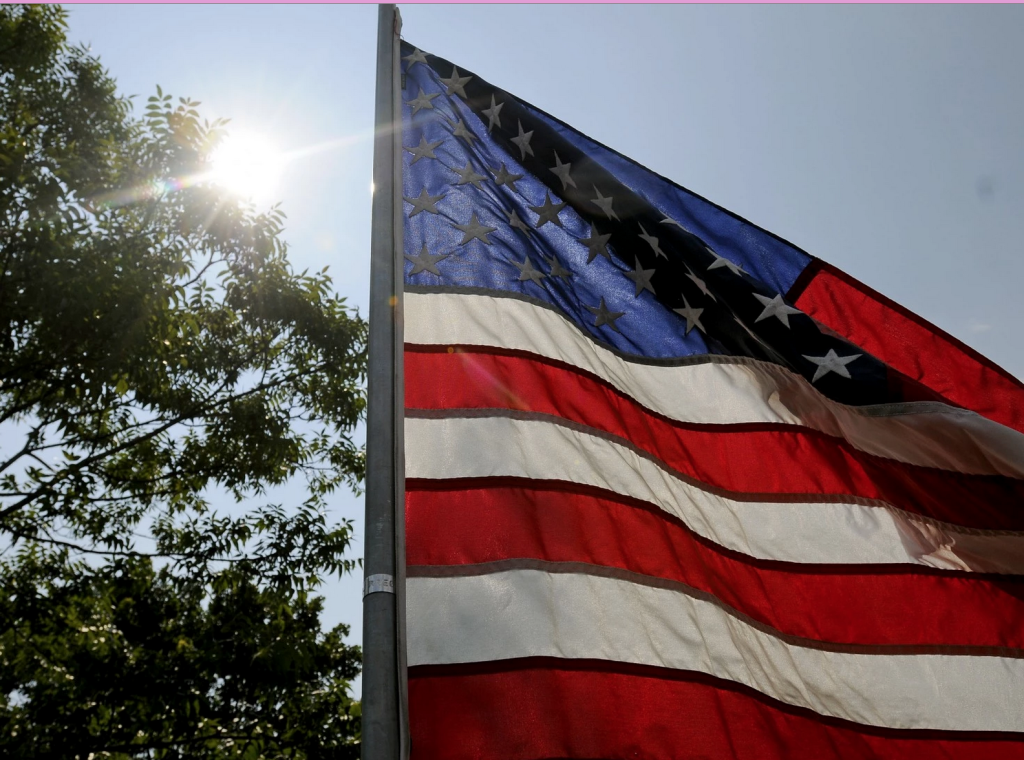
A south Alabama police chief says he has a few leads but still no answers to explain how a box of human ashes was abandoned, along with a neatly folded, framed American flag, beside a highway near the Florida line. A power line crew found the small pine box with a rusted lock in the grass along the road about four weeks ago. News of the discovery was published last week. At least four people have inquired about the box, including a Tennessee man who said his father’s remains and a flag were stolen from his truck a few months ago, Florala Police Chief Sonny Bedsole stated in a phone interview Tuesday. Bedsole said he emailed photos of the box and flag — folded military-style — to those who inquired and is waiting to hear back. The flag is displayed in a framed case, much like a shadow box. “We took it out of the case to see if there was a name or business card or anything to go by, and of course, there was nothing in it,” the chief said. Florala, a town of about 2,000 people, is just north of the Alabama-Florida line. The remains were found not far from U.S. 331, a popular route for motorists heading to and from the Florida Panhandle, Bedsole said. That means whoever left the items might be from out of state. “We get a lot of traffic headed to the beach that comes through here,” Bedsole said. One theory is that the remains belong to a military veteran since the flag was found nearby and folded in the conventional way for servicemen and women. “Somebody somewhere knows this box that contains these ashes, what it looks like,” Bedsole said. Republished with permission of The Associated Press.
Robert Bentley announces 115 new preschool classrooms, $15 million in VPK grants

Gov. Robert Bentley announced an action on Tuesday that aims to boost Alabama’s troubled public education regime. Bentley’s office says they have approved 115 new First Class Pre-K classrooms, bringing the total number of classes in the voluntary early education program to more than 800 statewide. The expansion will be bolstered by $15 million in new state grants, which will give some 2,700 additional Alabama 4-year-olds access to pre-Kindergarten schooling. Experts say preschool can be decisive for students’ future educational attainment. The additional classrooms will go into effect for the 2016-17 school year, according to Bentley. “Voluntary Pre-Kindergarten is a proven program that prepares students for success,” said Bentley in a statement. “Only 20 percent of Alabama’s 4-year-olds are currently enrolled in the First Class program. Along with the support of legislative funding, we will continue to expand access to this program until every Alabama parent who wants their child to attend has access. I appreciate the staff at the Department of Early Childhood Education for working hard to help organizations receive grants,” said Bentley. The move required approval by lawmakers, which it received during the 2016 Legislative Session. “Alabama First Class Pre-K is a high-quality program of excellence that provides children the rich learning experiences that significantly impacts school achievement and life success,” Alabama Department of Early Childhood Education Secretary Jeana Ross said. “The First Class Pre-K program model produces real, sustained results in closing the learning gaps for children and fosters the social, emotional and cognitive development of all children. As the access to this high-quality program continues to expand, Alabama will determinedly preserve this standard of quality.” Allison Muhlendorf, executive director of the Alabama School Readiness Alliance, also expressed her gratitude for the new funding. “We are grateful that state leaders once again prioritized some of the growth in the Education Trust Fund budget to expand Alabama’s high-quality, voluntary First Class Pre-K program,” said Muhlendorf. “As a result, more families than ever before will be able to find a First Class Pre-K classroom in their community.” According to ASRA, education funding with the new increased totals changes as follows: FY 2017 Funding: $64.5 million, an increase of $16 million over the current year funding. Number of New First Class Pre-K Classrooms Projected for 2016-17: 155 Approximate # of New First Class Participants Projected for 2016-17: 2,800 Approximate Total # of First Class Pre-K Sites Projected for 2016-2017: 807 Approximate Total # of First Class Participants Projected for 2016-2017: 14,600 Projected Percent of State Four Year Olds with Access for 2016-2017: 25 percent
Bathroom debate: It’s my choice when I introduce sensitive topics to my kids
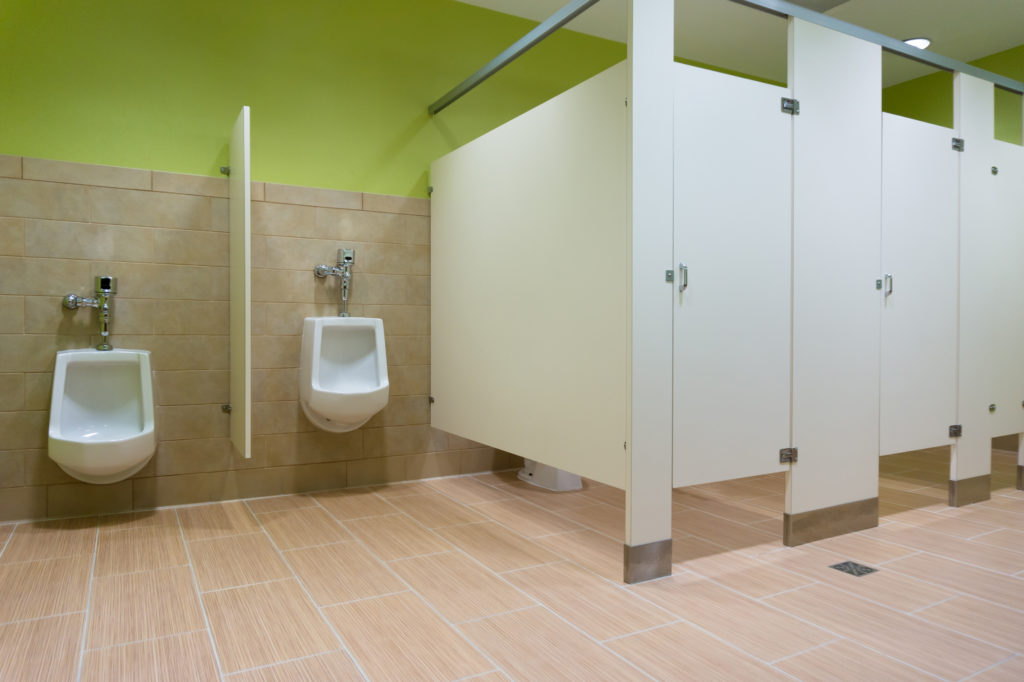
In a sign of the times, bathroom access is the topic du jour. Never mind the more serious issues we face as a nation. Issues such as national security, education policy, oh and the fact Hillary Clinton and Donald Trump look like they’re going to be the best we’ve got for presidential contenders. This debate should really be about two issues: one, public restrooms and two, places where people (namely children or families) are undressing. Thus I have two positions. First, as far as public restrooms where people enter, do their business and leave this should be a states’ rights and private property issue. Pervs will be pervy regardless of laws. I don’t believe transitioning or transitioned transgendered individuals pose a threat. Maybe this discussion will make parents, business owners and security more vigilant about those who seek to enter the wrong bathroom for malicious reasons, but I don’t see much changing in the way of personal safety due to the current discussion. That said, I do take issue with and would actively participate in opposing allowing locker rooms and public school bathrooms where my children would be to be open to transgender students or adults. I believe that parents at a local level or at the level of individual school or facility should have a say in this matter. Life is complicated, and as a parent I have a responsibility to my children to teach them about the more delicate issues of sexuality and alternative lifestyles. Gender identification beyond girl and boy falls in the sensitive and complicated topics that should be explained on the basis of when children are developmentally ready. No one else should decide when it’s the time for my children to be presented with such complex situations. I’ve seen stories of young children under the age of 10 being recognized as transgender. National outlets covered a story about a transgender first grader winning the right to use their identity-based bathroom instead of their birth designation. I believe we are doing those children, as well as those around them, a disservice by behaving as though the concept of gender identity is any more flexible than other genetically-determined factors such as race or ethnicity. If an adult wants to transition understanding the full consequences of their actions. that’s one thing, but to introduce such a conversation into young ages is irresponsible. We as a society understand that children lack the maturity or rational judgment to make lifelong, life-altering decisions. This is why some of the strongest laws we have in the nation focus on child welfare. This is why first graders don’t choose their career paths, decide to tattoo their favorite cartoon character or band member on their bodies, or allow to get married. Children lose their innocence too soon. Kids now are frequently exposed to adult topics such as violence and sexuality before they’re able to recognize their context. I understand that my love of my children is no greater than the love than that of the parent of a child who is experiencing gender identification questions feels. I’m greatly sympathetic to the need for flexibility and accommodations for children with disabilities including severe allergies, learning disabilities, and behavioral issues, but those have a scientific and medically documented explanation that make sense even to children. The accommodations required for standard special needs students also don’t have broader implications for social, religious and political perceptions. Gender dysphoria or gender identity disorder (GID) is still being debated by the medical community as a mental illness or not, with well respected medical professionals believing that it is in fact a mental health issue. Children who believe in the tooth fairy, play with dolls and have imaginary friends shouldn’t be facing discussions about this at a young age. So my two cents: let adults, voters, businesses make accommodations and decisions about public bathrooms and let kids be kids in schools, public pools, at the gym and in sports. We can all acknowledge that regardless of what we think or feel about those living a transgender life, it’s their life and that’s between them, their God, and their loved ones. Oh and for the pervs everyone seems to think will be creeping into all the bathrooms in wigs and dresses let’s change the dialogue of this debate and put a priority on finding them where they are — usually in positions of power or influence of children, lurking on the Internet, sitting beside you at your soccer game — and lock them up and throw away the key.
Jury being selected in Mike Hubbard corruption case
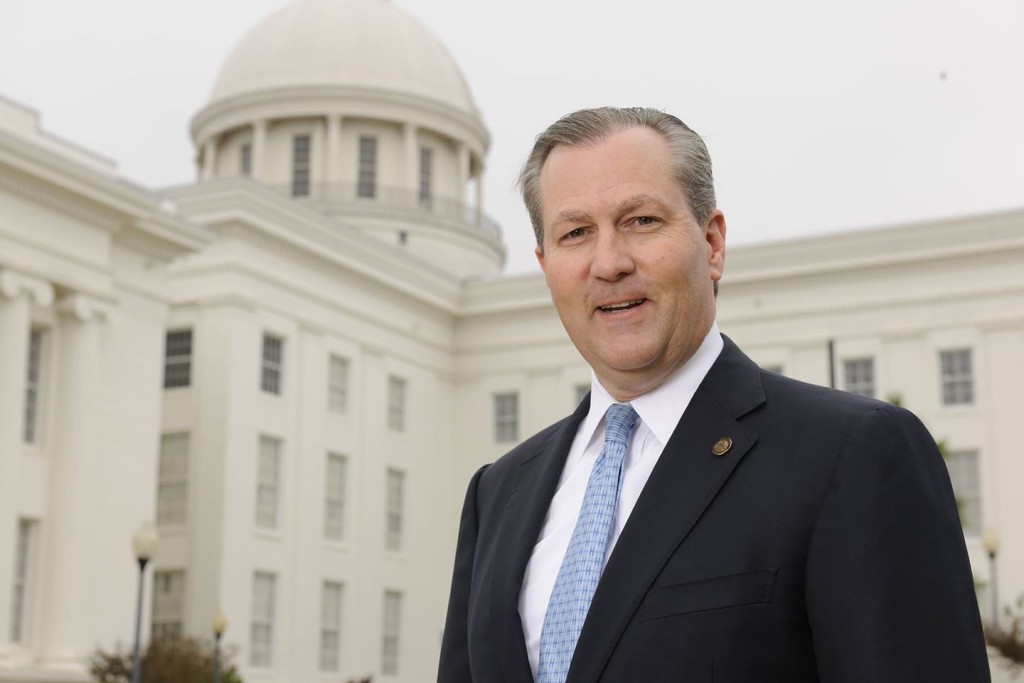
Jury selection began Monday in the corruption trial of Alabama House Speaker Mike Hubbard, who is charged with violating the tough state ethics law passed by the Republican-controlled Legislature he helped bring to power nearly six years ago. Hubbard is accused of using his office as House speaker and past position as Alabama Republican Party chairman to benefit his clients and businesses — 23 felony ethics charges in all, each punishable by up to 20 years in prison. He has maintained his innocence and said his transactions were legal. During legislative sessions, Hubbard, 54, presides with gavel in hand over the Alabama House of Representatives as one of the most powerful politicians in the Deep South state. On Monday, he sat flanked by defense lawyers in a wood-paneled courtroom, looking over at the potential jurors who could decide whether he continues in power or goes to prison. Attorneys began questioning nearly 100 prospective jurors on Monday ahead of opening statements next week. Most said they had read or seen news stories about the case, which has dominated headlines in Alabama since Hubbard’s indictment in 2014. Two potential jurors raised their hands when asked if they already had a fixed opinion about his guilt or innocence. Lee County Circuit Judge Jacob Walker read off the list of potential witnesses that includes some of the most prominent names in state politics and business. Alabama Gov. Robert Bentley, former Gov. Bob Riley and many Alabama lawmakers are expected to be called by the prosecution to testify. Bentley himself is weathering a scandal, facing calls for his impeachment after the exposure of his relationship with a former aide. Meanwhile, Chief Justice Roy Moore has been suspended over accusations that he violated judicial ethics by trying to block same-sex weddings, despite the U.S. Supreme Court decision effectively legalizing gay marriage. Hubbard, first elected to the House in 1998, lashed out at what he called a culture of corruption in state government as he led the Republican takeover in 2010, ending 136 years of Democratic control of the Alabama legislature. One of their first actions with Hubbard as speaker was to pass the tough new ethics law. Hubbard is accused of steering GOP campaign printing work to one of his companies; asking lobbyists and corporate leaders for employment, investments or help finding clients; lobbying the governor’s office on behalf of one of his clients; and taking legislative action that could have steered Medicaid pharmacy business to a client of one of his companies. Prosecutors have painted Hubbard as a politician consumed by greed as he ascended to the top of the state’s political hierarchy. They are expected to introduce emails he sent that make him seem desperate for more work and investments. His defense has suggested that prosecutors are stretching the bounds of the ethics law and trying to criminalize Hubbard’s efforts to make a living. Defense lawyer David McKnight described Hubbard as a salesman and entrepreneur who also happens to be a politician. He asked potential jurors if they ever sent an email they wouldn’t want read aloud in front of strangers, or if they would be offended by emails with “pushy” salesman language. “Admittedly you are going to see some emails where he’s trying to get more business, trying to get more clients, trying to get more customers,” McKnight said. Hubbard has said little about the corruption case in public since a judge issued a gag order. “I’m confident when the truth comes out that I will be exonerated and my name cleared.” Hubbard told The Associated Press in January. Republished with permission of The Associated Press.
Donald Trump’s questioning of the value of data worries Republicans
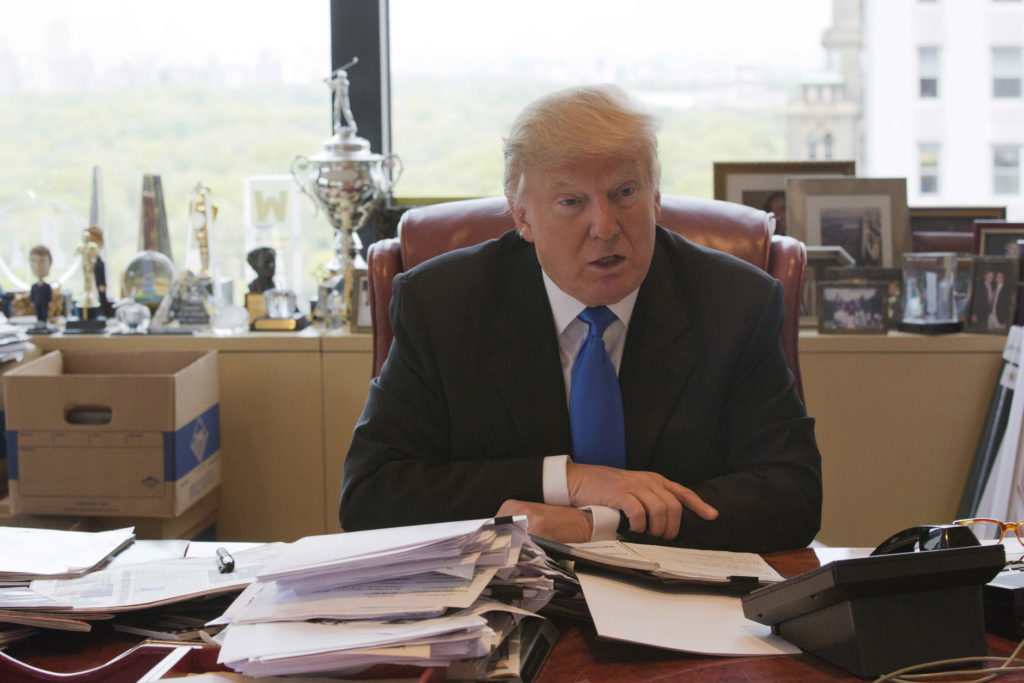
Donald Trump says he plans to win the White House largely on the strength of his personality, not by leaning heavily on complex voter data operations that have become a behind-the-scenes staple in modern presidential campaigns. Shortly after Trump explained his approach in an Associated Press interview — data is “overrated,” he said — one of the presumptive Republican nominee’s top advisers tried to clarify the remarks. Rick Wiley told AP the Trump campaign will indeed tap the Republican Party’s massive cache of voter information. The national Republican Party has spent massive sums of money to develop the database since President Barack Obama‘s election set a new standard for using data in national campaigns, from deciding where to send a candidate and how to spend advertising dollars to making sure supporters cast a ballot. The back-and-forth in the Trump camp leaves Republicans and Democrats alike wondering just how committed the candidate actually is to what has become accepted wisdom among political professionals. Some Republicans worry that Trump risks ceding potential advantages to likely Democratic nominee Hillary Clinton if he’s not willing to invest the money required to keep updating the data, and then use it effectively. “It’s a big risk,” said Chris Wilson, who ran an expansive data operation for Texas U.S. Sen. Ted Cruz, Trump’s stiffest competition in the Republican primaries. Jeremy Bird, who worked for President Barack Obama’s data-rich campaign, said: “Flying blind is nuts.” The use of data has evolved over the past several presidential campaigns into a shorthand for using information — starting with simple lists of potential voters, then mated with extensive details about their habits and beliefs — to guide a campaign toward its ultimate goal: the 270 electoral votes needed to win the White House. In his AP interview, Trump discounted the value of data: The “candidate is by far the most important thing,” he said. He said he plans a “limited” use of data in his general election campaign and suggested Obama’s victories — universally viewed by political professionals as groundbreaking in the way data steered the campaign to voters — are misunderstood. “Obama got the votes much more so than his data processing machine, and I think the same is true with me,” Trump said, explaining that he will continue to focus on his signature rallies, free television exposure and his personal social media accounts to win voters over. Buzz Jacobs, who was on the losing end of Obama’s success in 2008 as an aide to GOP nominee John McCain, said Trump oversimplifies the president’s victories. “We lost in large part because Obama’s ability to use data was so much better than ours,” Jacobs said. According to South Carolina’s Republican chairman, Matt Moore: “Elections to a great degree are won on … that last 1 or 2 percent that shows up or stays home. That group on either edge turns out because of data and digital. That’s a known fact.” Republicans and Democrats with experience running campaigns question why Trump would give up a chance to reinforce with data his ubiquitous presence on television and inarguable success with large-scale rallies — a platform of personality that Clinton has yet to match. Bird, whose consulting firm now works for the Clinton campaign, said Trump is giving himself a false choice. “At a big picture level, sure, Barack Obama got the votes — his bio, his policies, his ability to communicate,” Bird said. “But we wanted to do everything we could to get him and get his message to the right people.” Jacobs, who worked this year for a former Trump rival, Florida U.S. Sen. Marco Rubio, said Trump is an outlier in being uninterested in data. The RNC and private groups, such as the billionaire conservative activist brothers Charles and David Koch, have spent hundreds of millions on their data programs since Obama’s election. “It would be silly to leave those on the sidelines,” Jacobs said. To be sure, Trump has not wholly abandoned data. His campaign spending disclosures show payments to multiple data firms, and the campaign maintains contact information collected when voters register for tickets to his rallies. Wiley, a recent addition to the Trump team who previously worked for the national party, said he is “working with the RNC, putting together a state-of-the-art program.” He predicted it would be able to match what “Obama was able to do in 2008.” But Trump’s in-house data shop is thin, and the candidate has said that he does not give priority to the ground game. Trump’s most significant loss of the primary season came in the leadoff Iowa caucuses, a victory for Cruz that was largely credited to the Texas senator’s sophisticated campaign effort to turn out voters. Wilson said he used the Cruz campaign’s data to run nightly “models” leading up to the caucuses, which predicted turnout and outcomes and allowed the campaign to adjust its approach every day. That means if Wiley and Trump’s other campaign staffers are able to persuade him to pay attention to the data, they’ll also need to persuade him to raise and spend the money to use it effectively in competitive states. “He has to be convinced,” South Carolina chairman Moore said. Then again, he said, “We’ve all been wrong about Trump for pretty much this entire campaign.” Republished with permission of The Associated Press.
