
Email insights: Former Alabama Attorney General makes Donald Trump’s Supreme Court short-list
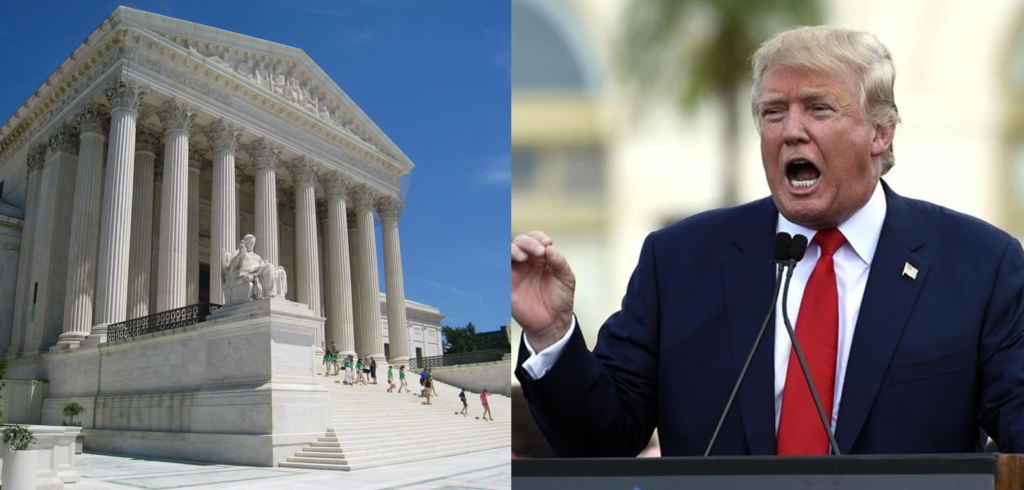
Presumptive Republican presidential nominee Donald Trump unveiled a list Wednesday of 11 federal and state judges he would consider nominating to fill the vacant seat of late Justice Antonin Scalia on the Supreme Court, including former Alabama Attorney General William Pryor. The list also includes: Steven Colloton of Iowa, Allison Eid of Colorado, Raymond Gruender of Missouri, Thomas Hardiman of Pennsylvania, Raymond Kethledge of Michigan, Joan Larsen of Michigan, Thomas Lee of Utah, David Stras of Minnesota, Diane Sykes of Wisconsin and Don Willett of Texas. A highly unusual move for a presidential candidate, the announcement comes as Trump is working to unite a highly fractured Republican Party and win over conservatives still skeptical of his candidacy and views. Trump told Fox News Wednesday: “I have a lot of people that are conservative that really like me, love everything I stand for, but they really would like to know my view, because perhaps outside of the defense of our country, perhaps the single most important thing the next president is going to have to do is pick Supreme Court justices.” In the announcement, Trump said he planned to use the list “as a guide to nominate our next United States Supreme Court Justices” and said the names are “representative of the kind of constitutional principles I value.” Read Trump’s full email announcement below: (New York, NY) May 18, 2016 — Today Donald J. Trump released the much-anticipated list of people he would consider as potential replacements for Justice Scalia at the United States Supreme Court. This list was compiled, first and foremost, based on constitutional principles, with input from highly respected conservatives and Republican Party leadership. Mr. Trump stated, “Justice Scalia was a remarkable person and a brilliant Supreme Court Justice. His career was defined by his reverence for the Constitution and his legacy of protecting Americans’ most cherished freedoms. He was a Justice who did not believe in legislating from the bench and he is a person whom I held in the highest regard and will always greatly respect his intelligence and conviction to uphold the Constitution of our country. The following list of potential Supreme Court justices is representative of the kind of constitutional principles I value and, as President, I plan to use this list as a guide to nominate our next United States Supreme Court Justices.” Steven Colloton Steven Colloton of Iowa is a judge of the U.S. Court of Appeals for the Eighth Circuit, a position he has held since President George W. Bush appointed him in 2003. Judge Colloton has a résumé that also includes distinguished service as the U.S. Attorney for the Southern District of Iowa, a Special Assistant to the Attorney General in the Justice Department’s Office of Legal Counsel, and a lecturer of law at the University of Iowa. He received his law degree from Yale, and he clerked for Chief Justice William Rehnquist. Judge Colloton is an Iowa native. Allison Eid Allison Eid of Colorado is an associate justice of the Colorado Supreme Court. Colorado Governor Bill Owens appointed her to the seat in 2006; she was later retained for a full term by the voters (with 75 percent of voters favoring retention). Before her judicial service, Justice Eid served as Colorado’s solicitor general and as a law professor at the University of Colorado. Justice Eid attended the University of Chicago Law School, and she clerked for Justice Clarence Thomas. Raymond Gruender Raymond Gruender of Missouri has been a judge of the U.S. Court of Appeals for the Eighth Circuit since his 2004 appointment by President George W. Bush. Judge Gruender, who sits in St. Louis, Missouri, has extensive prosecutorial experience, culminating with his time as the U.S. Attorney for the Eastern District of Missouri. Judge Gruender received a law degree and an M.B.A. from Washington University in St. Louis. Thomas Hardiman Thomas Hardiman of Pennsylvania has been a judge of the U.S. Court of Appeals for the Third Circuit since 2007. Before serving as a circuit judge, he served as a judge of the U.S. District Court for the Western District of Pennsylvania since 2003. Prior to his judicial service, Judge Hardiman worked in private practice in Washington, D.C. and Pittsburgh. Judge Hardiman was the first in his family to attend college, graduating from Notre Dame. Raymond Kethledge Raymond Kethledge of Michigan has been a judge of the U.S. Court of Appeals for the Sixth Circuit since 2008. Before his judicial service, Judge Kethledge served as judiciary counsel to Michigan Senator Spencer Abraham, worked as a partner in two law firms, and worked as an in-house counsel for the Ford Motor Company. Judge Kethledge obtained his law degree from the University of Michigan and clerked for Justice Anthony Kennedy. Joan Larsen Joan Larsen of Michigan is an Associate Justice of the Michigan Supreme Court. Justice Larsen was a professor at the University of Michigan School of Law from 1998 until her appointment to the bench. In 2002, she temporarily left academia to work as an Assistant Attorney General in the Justice Department’s Office of Legal Counsel. Justice Larsen received her law degree from Northwestern and clerked for Justice Antonin Scalia. Thomas Lee Thomas Lee of Utah has been an Associate Justice of the Utah Supreme Court since 2010. Beginning in 1997, he served on the faculty of Brigham Young University Law School, where he still teaches in an adjunct capacity. Justice Lee was Deputy Assistant Attorney General in the Justice Department’s Civil Division from 2004 to 2005. Justice Lee attended the University of Chicago Law School, and he clerked for Justice Clarence Thomas. Justice Lee is also the son of former U.S. Solicitor General Rex Lee and the brother of current U.S. Senator Mike Lee. William Pryor William H. Pryor, Jr. of Alabama is a judge of the U.S. Court of Appeals for the Eleventh Circuit. He has served on the court since 2004. Judge Pryor became the Alabama Attorney General in 1997 upon Jeff Sessions’s election to the U.S. Senate. Judge Pryor
Donald Trump says his business flourishing since presidential run
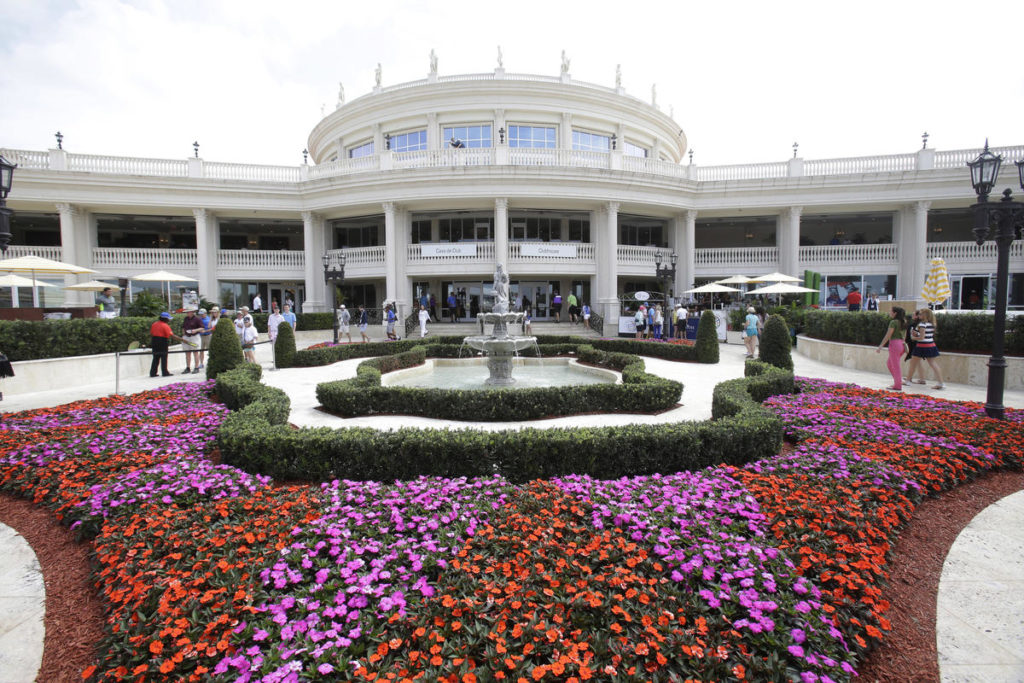
Donald Trump has told the government that his myriad businesses have flourished with rising revenues since his improbable political success, according to financial documents released Wednesday. The presumptive Republican presidential nominee said revenue at his businesses grew by $190 million over the past 17 months, and he had $557 million in earned income. The Federal Election Commission released the personal financial documents that Trump filed with the agency. They provide an overview of the billionaire’s assets and revenues and his roles with hundreds of corporate shell companies. Trump has so far declined to release his tax returns, making it difficult to confirm financial details. The 104-page filing provided little evidence that Trump’s combative campaign hurt his business prospects, despite regular talk of boycotts early in his campaign. Though the disclosure overlaps with one he filed last year — making straight comparisons difficult — revenues from his golf resort businesses are up, with Trump reporting $306 million in revenues from his courses around the world. About $132 million of that came from Trump’s course in Doral, Florida, up from $49 million in revenue the year before. The Mar-a-Lago club, a Trump vacation property and private club that has been a regular backdrop for campaign events, also saw a big jump. It reported $29 million in revenues, far more than the $16 million reported in Trump’s filing last year. The Miss Universe Pageant, which Trump sold after his comments on Mexican immigrants led to a dispute with television networks, went for $49 million. That was far more than the $5 million to $25 million the pageant was listed as worth on his financial disclosures from last year. Trump said late Tuesday that the filing was “the largest in the history of the FEC” and he praised the timely submission. Despite promising at various points during the campaign that he would release his tax returns, Trump has not yet done so. He has said audits by the IRS prevent him from doing so, and speculated that he was being singled out because of his strong Christian beliefs. IRS officials have not said whether they were auditing Trump. They have said Trump could publicly release his filings even if such an audit was occurring. Trump’s personal financial disclosure provides little hint that Trump is winding down his business ventures amid his presidential run. Trump reported new licensing and management companies with international names, including ones that appear to be set up to do business in Kolkata, India, Buenos Aires, Argentina, and Jeddah, Saudi Arabia. He also resigned from about one dozen companies since last year, most of which do not appear to have been active. Among them: companies tied to a failed Trump-branded condo project south of Tijuana, Mexico; a company tied to the Trump SoHo high-rise hotel in Manhattan; a licensing company associated with an Israeli vodka company; and a branding company set up to do business in Dubai, United Arab Emirates. Trump has said he would turn over the reins of his business to his children should he become president. Smaller but notable details of Trump’s business efforts include sales of “Crippled America,” his campaign book published last year. Trump reported that the book generated between $1 million and $5 million in income. The skin care line run by his wife, Melania, generated little or no revenue. The Trump Entrepreneur Initiative, the rebranded name of Trump University, a real estate seminar firm that has drawn multiple class action lawsuits and a suit by New York’s attorney general, reported $13,000 in income. Republished with permission of The Associated Press.
TVA considering small modular reactor near Oak Ridge
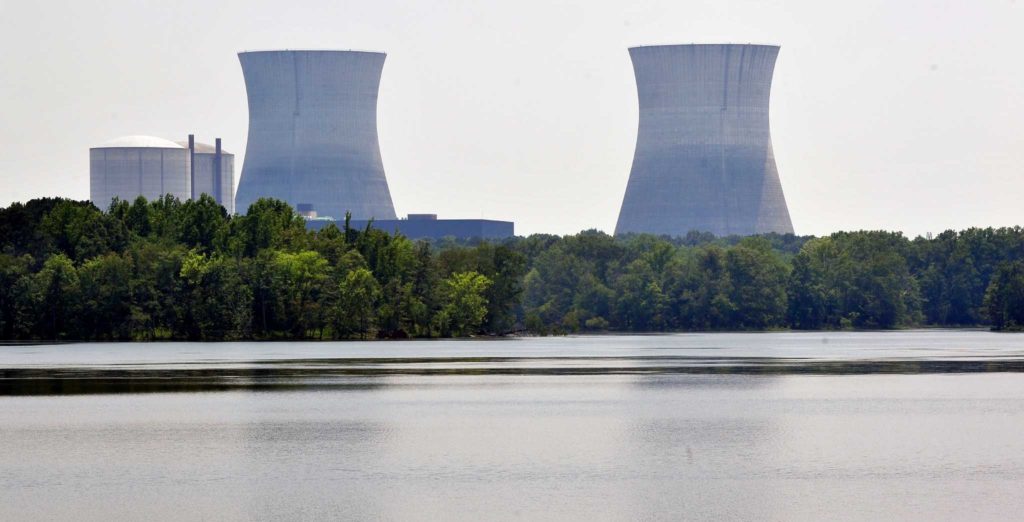
Just a week after voting to scrap an unfinished 1970s-era nuclear power plant in Alabama, the Tennessee Valley Authority began taking steps toward possible future construction of small modular reactors. Several designs for the new generation reactors are in the pipeline to be certified by the Nuclear Regulatory Commission, TVA spokesman Jim Hopson said in a Monday phone interview. TVA is asking the commission to approve a site plan that could accommodate any one of those designs at its 1,200-acre Clinch River site near Oak Ridge. TVA is the first utility in the country to submit any type of application to the NRC related to small modular reactors, Hopson said. The small reactors produce around 80-200 megawatts of power, he said. In comparison, the traditional reactor at TVA’s Watts Bar Unit 2 will produce around 1,150 megawatts. Unlike large reactors, the small reactors can be operated at different power levels and are designed to be used in combination. They are cheaper to build than large reactors and can be brought online in phases, so the utility could start recouping its investment as soon as the first one was online instead of waiting until an entire plant was finished, Hopson said. TVA is exploring siting up to 800 megawatts at Clinch river, he said. Any construction decision is still several years away. In recent years, TVA has moved away from coal-operated power plants and diversified its power-generation portfolio to include more natural gas and solar. But Hopson said there is still a place for nuclear. “Right now the only type of non-carbon-emitting generation that is available 24/7 is nuclear, so it seems to have a role,” he said. TVA is the nation’s largest public utility, serving more than 9 million people in Alabama, Georgia, Kentucky, Mississippi, North Carolina, Tennessee and Virginia. Republished with permission of The Associated Press.
GOP-led House moves ahead with bill to boost military budget
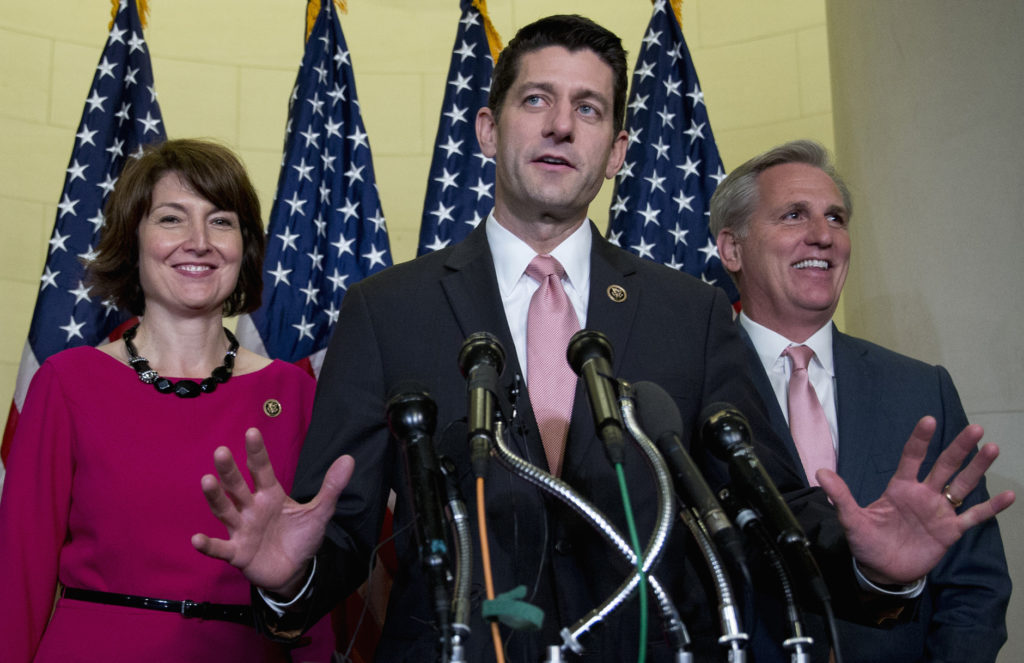
Defying a veto threat, the GOP-led House is pressing ahead with debate on a $602 billion defense policy bill that seeks to halt an erosion of the U.S. military’s combat readiness by purchasing more weapons and forbidding further cuts in troop levels. The legislation also proposes greater oversight of the White House’s National Security Council, prohibits prisoners held at the Guantanamo Bay, Cuba, detention facility from being moved to the U.S., and gives U.S. service members a higher pay raise than the Pentagon recommended. A vote on the bill is expected Wednesday. In a 17-page statement on the policy bill, the White House detailed its objections to numerous provisions and said President Barack Obama would reject the legislation if it reached his desk. Among the measures the Obama administration opposes is a Republican plan to shift $18 billion in wartime spending to pay for additional ships, jet fighters, helicopters and more that the Pentagon didn’t request. To make up for the shortfall in the wartime account, Obama’s successor would submit a supplemental budget to Congress in early 2017, according to U.S. Rep. Mac Thornberry, R-Texas, the plan’s architect and the chairman of the House Armed Services Committee. He and other proponents of the spending increase say it is essential to halt a decline in the military’s ability to respond to global threats that has worsened on Obama’s watch. But Defense Secretary Ash Carter has called the plan a “road to nowhere” that actually degrades combat readiness by retaining troops and buying equipment that can’t be sustained, effectively creating a hollowed out force. In a speech Tuesday, Carter said that the proposal “risks stability and gambles with war funding, jeopardizes readiness, and rejects key judgments of the (Defense) Department.” The House bill would block reductions in the number of active-duty troops by prohibiting the Army from falling below 480,000 active-duty soldiers and adding 7,000 service members to the Air Force and Marine Corps. The legislation also approves a 2.1 percent pay raise for the troops — a half-percentage point higher than the Pentagon asked for in its budget submission. Republicans sidestepped a thorny debate over whether women should be required to sign up for a potential draft after the House Rules Committee stripped from the bill a provision to erase Selective Service gender restrictions. In its place was a measure to study whether the Selective Service is even needed at a time when the armed forces get plenty of qualified volunteers, making the possibility of a draft remote. The U.S. has not had a military draft since 1973, in the waning years of the Vietnam War era. A growing number of lawmakers have suggested abolishing the Selective Service, which costs $23 million a year to operate. “It’s like rethinking dinosaurs,” said U.S. Sen. John McCain, R-Ariz., the chairman of the Senate Armed Services Committee. “They’re not coming back. The draft is not coming back.” Republicans approved an amendment authored by Thornberry to curb what they say is micromanagement of military operations by National Security Council staff. Thornberry said he has personally heard from troops in combat who have received intimidating calls from junior White House staffers even though their role is to coordinate policy and advise the president. To increase oversight and accountability, Senate confirmation of the president’s national security adviser would be required if the size of the National Security Council staff exceeds 100 employees, according to the amendment. Republicans have inserted into the bill a longstanding ban on moving prisoners held at Guantanamo Bay to the United States. The embargo has kept Obama from fulfilling a campaign pledge to shutter the facility. The White House said the restrictions interfere with the executive branch’s authority to decide when and where to prosecute prisoners. The legislation also rejects the Pentagon’s request for another base closure round and adds money to restore and modernize military facilities. The Defense Department wants to shutter excess bases and installations and use the savings to strengthen the armed forces. Republished with permission of The Associated Press.
