
Tom Jackson: After IG report, only Bernie Sanders doesn’t care about Hillary Clinton email treachery
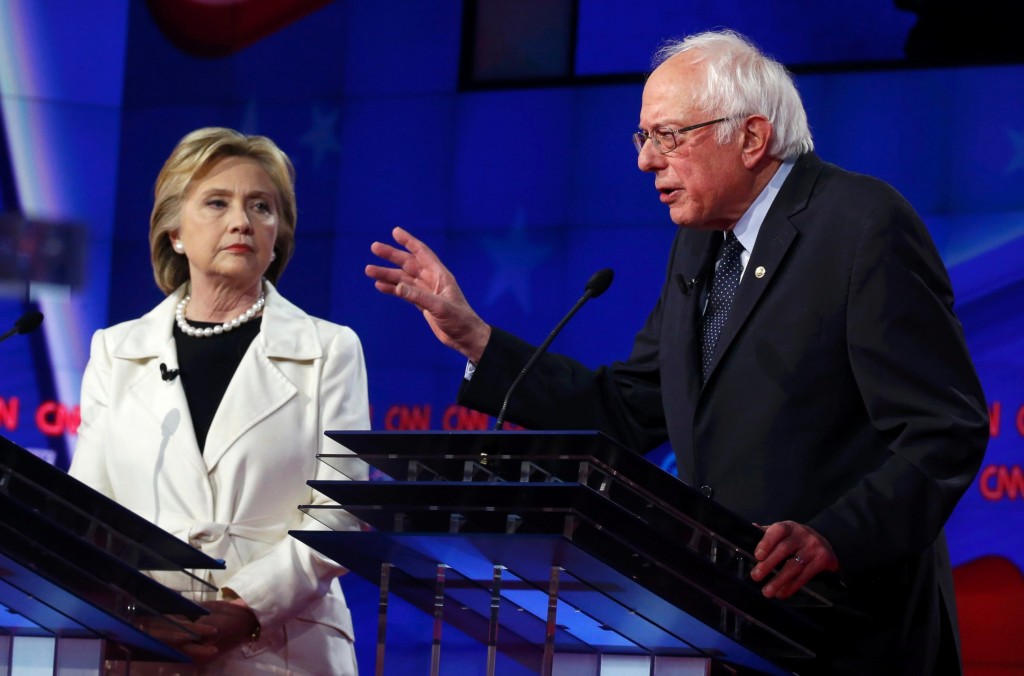
Bernie Sanders might be the only person in America who still doesn’t “care about [Hillary Clinton’s] damn emails.” But the State Department inspector general’s withering report on the matter certainly has everyone else’s attention. And now even those buried deep for more than a year in Ready-for-Hillary denial knows, irrefutably: Everything the Democratic Party’s presidential front-runner has said about her use of private email and her home-brew server is, to apply the correct term, a lie. She neither sought nor obtained permission for her unique email arrangement. She knew at all times her out-of-bounds arrangement put sensitive material at risk. She knew about ongoing attempts to hack her setup, and she took no corrective measures. In other chilling words, this wasn’t just “a mistake.” And it wasn’t merely a failure of judgment — although it surely was that, too. She was cavalier about preserving and surrendering self-identified agency-related emails, leaving the IG to discover certain damning correspondence through other means. And, despite spouting at every turn that she was ready to talk to anybody from the government at any time to help clear up any misconceptions, she ducked every interview attempt by the IG, making her uniquely elusive among secretaries of state, former and current, subject to the probe. Yes, the report provides a smidgen of cover. Other secretaries of state used private accounts. The department itself has a history of records-keeping sloppiness. But these amount to window dressing that cannot obscure the serious nature of Clinton’s reckless, rules-shattering and, indeed, patently illegal behavior. What does Sanders say? He didn’t, actually, having taken himself out of this particular game months ago. Instead, a campaign spokesman offered up a big “meh.” “The IG report speaks for itself.” That’s it? It speaks for itself? This unwillingness to drive home the stake poised over the heart of his adopted party’s soulless front-runner makes you wonder whether Sanders really does want to win the Democratic nomination, or if he’s sticking around just to bust up the living room furniture. Meanwhile, the GOP’s presumptive nominee was typically incoherent and self-distracting, telling supporters in Anaheim, California, Clinton “had a little bad news.” In a response, MSNBC’s “Morning Joe” Scarborough snidely called “Churchillian,” Donald Trump waxed characteristically manic: “She’s as crooked as they come. She had a little bad news today, as you know, from some reports that came down — weren’t so good. Not so good. The inspector general’s report — not good.” He immediately shifted to a rant about “Crazy Bernie” and a long-rumored party-salvaging deus ex machina moment for Vice President Joe Biden. “Bad news”? “Not good”? That’s all you’ve got, Donald? Wow. Just wow. But if Trump essentially blew his opportunity to expand and expound upon Clinton’s national-security-threatening misdeeds, the FBI is unlikely to be satisfied with sentence fragments and eighth-grade zingers. And the FBI is where the action is now. The investigation should, and almost certainly will, pivot on the definition of “gross negligence,” a legal term of art that puts the suspect at risk without regard to whether she was acting intentionally and with knowledge that she knew what she was doing was illegal. Clinton knew she was operating outside the rules — rules, indeed, she took pains to enforce on underlings. And she knew, as the IG’s report makes plain, she was putting sensitive material at risk. But those were rules for others, not for a Clinton. And as Hill and Bill have made plain, rules never are for Clintons. At least, they haven’t been in the past. FBI Director James Comey’s primary lies ahead. Whatever comes from it, voters now have a clearer picture of what yet another Clinton presidency would mean. ___ Recovering sports columnist and former Tampa Tribune columnist Tom Jackson argues on behalf of thoughtful conservative principles as our best path forward. Fan of the Beach Boys, pulled-pork barbecue and days misspent at golf, Tom lives in New Tampa with his wife, two children and two yappy middle-aged dogs.
Mike Hubbard trial day 3: House colleague says Hubbard’s vote ‘probably’ a conflict of interest

It was a busy day on the witness stand Thursday in the case of State vs Michael G. Hubbard as eight witnesses were called to testify. The first witness of the day was Randy Kammerdiener, one of the owners of Majority Strategies, a political consulting firm the Alabama GOP had used for political advertising in 2010. Mike Hubbard is accused of using his previous position, which he held in 2010, as chair of the Alabama GOP to bring money to his company Craftmaster Printers through Majority Strategies. The prosecution asserts Craftmaster received upward of $700,000 from the deals Hubbard made as GOP chair with Majority Strategies. Kammerdiener testified he worked with the Alabama GOP, specifically Hubbard, in 2010. On the stand, Kammerdiener read a damning email he had sent to his business partner, Brett Buerck, saying if they wanted to do business with the Alabama GOP they had to use Craftmaster Printers to print their materials. He also read from a 2010 email he had sent to Alabama GOP political director Michael Joffrion. “Per Mike, we’re printing at Craftmaster and just passing the actual charges on to you all,” Kammerdiener read. During the cross-examination, he explained he “never had a specific conversation with Mike Hubbard saying I had to use Craftmaster.” The second witness of the day was Alabama House Ways and Means Chair, Ozark-Republican Rep. Steve Clouse, who was questioned regarding his knowledge of the legislative language Hubbard is accused of attempting to insert into the 2014 General Fund budget that would have essentially made the American Pharmacy Cooperative Inc. (ACPI) — a client Hubbard consults with the Auburn Network — the only agency with the ability to bid on a pharmacy benefit manager related to Medicaid, and then voting for that budget. Clouse testified the vote was “probably” a conflict of interest, explaining he did not know Hubbard was on the payroll of APCI when the pro-APCI language was added to the budget. Norris Green, director of the Legislative Fiscal Office, was third on the stand. He testified that he too was unaware of Hubbard’s contract with ACPI. Testimony was also heard from Legislative Fiscal Office officials Mary Lawrence and Rachel Riddle, who both testified they attended a meeting about the controversial APCI language. The final three witnesses of the day — Medicaid Commissioner Stephanie Azar, Clinical Services Director Kelli Littlejohn Newman and former state Health Officer Don Williamson — all testified on the state Medicaid Agency’s reaction when they discovered the pro-ACPI language was added to the budget. During the cross-examination, Hubbard’s defense lawyer Bill Baxley tried to suggest a former lawmaker, who has already pleaded guilty to an ethics violation, was responsible for the questionable language. Williamson testified that he was “surprised” when he learned Hubbard had a consulting contract with ACPI, the only company that would qualify for the work under the added budget language. Williamson said Hubbard agreed to remove the language once Medicaid officials raised concerns. Testimony will continue Friday, where the state says they have nine witnesses planned.
Bradley Byrne named ‘Hero of Main Street’ by National Retail Federation
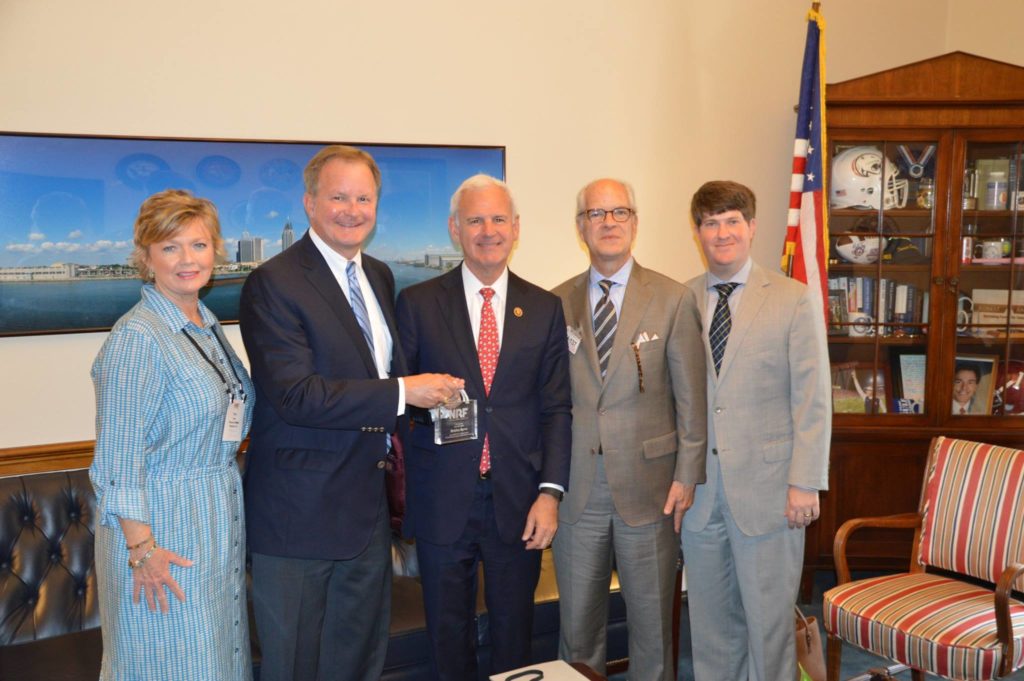
Alabama Congressman Bradley Byrne was named as a “Hero of Main Street” by the National Retail Federation Wednesday for his consistent support of legislation focusing on international trade, workforce policies, tax reform and health care policies that work for both employees and their employers. The “Hero of Main Street” award was created by the NRF in 2013 to recognize members of Congress for support of the retail industry’s public policy priorities. Award eligibility is based on key votes, bill sponsorship, and advocacy to advance the industry’s priorities. The “heroes” have supported initiatives defined by the NRF that recognizes the contributions of the retail industry and worked to encourage a “vibrant, sustained and healthy” retail sector. “Top-down, government-knows-best policies are only making things worse for our local retailers in Alabama and across the country,” said Byrne upon receiving the award. “That’s why I am proud to champion pro-growth solutions that get Washington out of the way and allow retailers to flourish. I am honored to receive this special award, and I vow to continue standing up for our nation’s retailers throughout my time in Congress.” Retail supports one in four jobs nationwide, including more than 590,620 jobs in Alabama. To put it into perspective, Alabama’s retail employees could fill the Crimson Tide’s stadium six times. “Congressman Byrne has shown through his support that he cares about retailers big and small, and values the role these businesses play in communities across the country,” National Retail Federation President and CEO Matthew Shay said. “He is an advocate for his thriving Main Street and the long-term growth of the retail industry — our nation’s largest job creators and the catalyst for continued growth and opportunity for our nation’s economy.” The NRF is the world’s largest retail trade association, representing discount and department stores, home goods and specialty stores, Main Street merchants, grocers, wholesalers, chain restaurants, and Internet retailers from the United States and more than forty-five countries.
Consultant: ‘No choice’ but to subcontract to Mike Hubbard
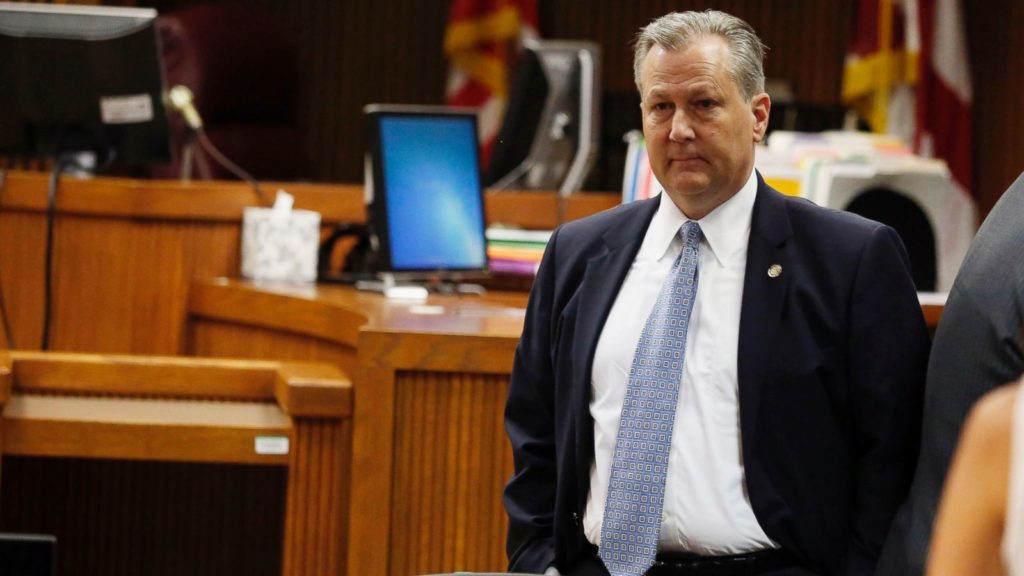
A Florida political consultant testified Thursday that he believed he had no choice but to subcontract Alabama Republican Party campaign printing work back to a firm owned by the party’s chair. The chair at the time was Alabama House Speaker Mike Hubbard, now on trial for ethics violations. On Thursday, jurors heard that about party campaign work that was sent to Hubbard’s company, and conflicting evidence about Hubbard’s role in that. Prosecutors have accused Hubbard of using his political positions as speaker and Republican Party chair to make money and solicit favors such as investments from lobbyists. Defense lawyers argue that the transactions were above board. Randy Kammerdiner, co-owner of Majority Strategies, designed glossy direct mail pieces for the Republicans’ 2010 campaign to take over the Alabama Legislature. He testified that he believed party officials wanted the fliers printed at Craftmaster, where Hubbard was a co-owner. Prosecutor Matt Hart asked Kammerdiner if he felt he had any other option but Craftmaster for the printing work. “No,” Kammerdiner replied. Prosecutors also showed jurors a 2010 email from Kammerdiner to a state party employee, which said: “Per Mike, we’re printing at Craftmaster and just passing the actual charges on to you all.” However, under cross-examination by defense lawyer Lance Bell, Kammerdiner said Hubbard never directed him to use his firm. “I never had a specific conversation with Mike Hubbard saying I had to use Craftmaster.” Kammerdiner said. The political consultant also testified that the firm had previously used Craftmaster before Hubbard became party chair and the party was probably getting a “better deal” because they avoided the normal markup Majority Strategies applies to printing costs. Republished with permission of The Associated Press.
‘Yella Fella’ Jimmy Rane takes over spot as Alabama’s richest person
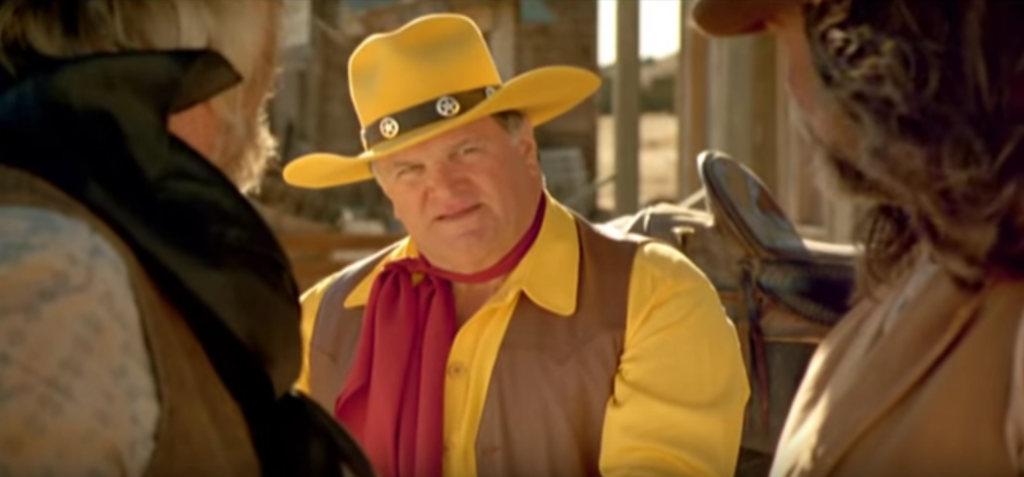
For the last several years coal magnate Garry Neil Drummond has held the spot of Alabama’s richest person, but he lost that crown this week to self-made lumber salesman extraordinaire Jimmy Rane, according to new rankings from Forbes Magazine. As a declining coal market cut into the riches of Drummond, whose net worth hovered around an estimated $600 million for several years, Forbes updated the list with Rane along with a few other changes . The founder of Abbeville-based building materials company Great Southern Wood Preserving, Rane is better known as Yella Fella, the cowboy alter-ego he plays in TV commercials. He got into the lumber business by accident. In 1970, as a law student, Rane stepped in to mediate a family dispute over his father-in-law’s estate and ended up taking control of a small fence post manufacturer. He expanded the company on the side while he ran a private practice and spent five years as a county judge. Eventually Rane shifted his focus to Great Southern Wood, where he remains chairman and CEO. Today the company hauls in more than $700 million of revenue a year, and Rane is personally worth an estimated $610 million. He might have the biggest fortune in Alabama, but Rane is still $1.1 billion shy of making the Forbes 400 list of the wealthiest Americans. Rane gained national notoriety for his comical series of commercials for his treated lumber brand Yellawood several years ago, where he played the character of the “Yella Fella.” Off the screen, the “Yella Fella” is an ardent Auburn fan who sits on the university’s Board of Trustees, and holds a charity golf tournament every year, which is attended by dozens of professional athletes and sports personalities. The Jimmy Rane Foundation was established in 2000, and has since provided millions in scholarships to hundreds of deserving recipients who go through a meticulous application process. “Work hard. Give back. It’s a really simple idea,” says the foundation’s website. “And yet, the Jimmy Rane Foundation has proven that it really works.”
Donald Trump reaches the magic number to clinch nomination
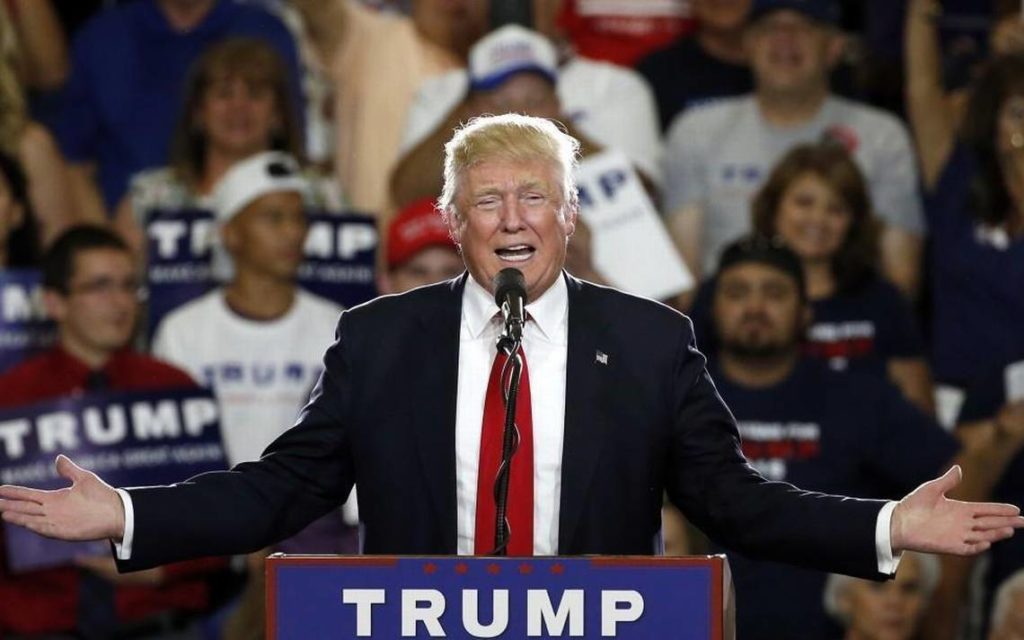
Donald Trump reached the number of delegates needed to clinch the Republican nomination for president Thursday, completing an unlikely rise that has upended the political landscape and set the stage for a bitter fall campaign. Trump was put over the top in The Associated Press delegate count by a small number of the party’s unbound delegates who told the AP they would support him at the national convention in July. Among them is Oklahoma GOP chairwoman Pam Pollard. “I think he has touched a part of our electorate that doesn’t like where our country is,” Pollard said. “I have no problem supporting Mr. Trump.” It takes 1,237 delegates to win the Republican nomination. Trump has reached 1,238. With 303 delegates at stake in five state primaries on June 7, Trump will easily pad his total, avoiding a contested convention in Cleveland. Trump, a political neophyte who for years delivered caustic commentary on the state of the nation from the sidelines but had never run for office, fought off 16 other Republican contenders in an often ugly primary race. Many on the right have been slow to warm to Trump, wary of his conservative bona fides. Others worry about his crass personality and the lewd comments he’s made about women. But millions of grass-roots activists, many of them outsiders to the political process, have embraced Trump as a plain-speaking populist who is not afraid to offend. Steve House, chairman of the Colorado Republican Party and an unbound delegate who confirmed his support of Trump to the AP, said he likes the billionaire’s background as a businessman. “Leadership is leadership,” House said. “If he can surround himself with the political talent, I think he will be fine.” Trump’s pivotal moment comes amid a new sign of internal problems. Hours before clinching the nomination, he announced the abrupt departure of political director Rick Wiley, who was in the midst of leading the campaign’s push to hire staff in key battleground states. In a statement, Trump’s campaign said Wiley had been hired only on a short-term basis until the candidate’s organization “was running full steam.” His hiring about six weeks ago was seen as a sign that party veterans were embracing Trump’s campaign. A person familiar with Wiley’s ouster said the operative clashed with others in Trump’s operation and didn’t want to put longtime Trump allies in key jobs. The person insisted on anonymity because the person was not authorized to publicly discuss the internal campaign dynamics. Some delegates who confirmed their decisions to back Trump were tepid at best, saying they are supporting him out of a sense of obligation because he won their state’s primary. Cameron Linton of Pittsburgh said he will back Trump on the first ballot since he won the presidential primary vote in Linton’s congressional district. “If there’s a second ballot I won’t vote for Donald Trump,” Linton said. “He’s ridiculous. There’s no other way to say it.” Trump’s path to the Republican presidential nomination began with an escalator ride. Trump and his wife, Melania, descended an escalator into the basement lobby of the Trump Tower on June 16, 2015, for an announcement many observers had said would never come: The celebrity real estate developer had flirted with running for office in the past. His speech then set the tone for the candidate’s ability to dominate the headlines with provocative statements, insults and hyperbole. He called Mexicans “rapists,” promised to build a wall between the U.S. and Mexico and proposed banning most Muslims from the U.S. for an indeterminate time. He criticized women for their looks. And he unleashed an uncanny marketing ability in which he deduced his critics’ weak points and distilled them to nicknames that stuck. “Little Marco” Rubio, “Weak” Jeb Bush and “Lyin’ Ted” Cruz, among others, all were forced into reacting to Trump. They fell one-by-one — leaving Trump the sole survivor of a riotous Republican primary. His rallies became magnets for free publicity. Onstage, he dispensed populism that drew thousands of supporters, many wearing his trademark “Make America Great Again” hats and chanting, “Build the wall!” The events drew protests too— with demonstrators sometimes forcibly ejected from the proceedings. One rally in Chicago was canceled after thousands of demonstrators surrounded the venue and the Secret Service could no longer vouch for the candidate’s safety. When voting started, Trump was not so fast out of the gate. He lost the Iowa caucuses in February, falling behind Cruz and barely edging Rubio for second. He recovered in New Hampshire. From there he and Cruz fiercely engaged, with Trump winning some and losing some but one way or another dominating the rest of the primary season — in votes or at least in attention — and ultimately in delegates. Republican leaders declared themselves appalled by Trump’s rise. Conservatives called the onetime Democrat a fraud. But many slowly, warily, began meeting with Trump and his staff. And he began winning endorsements from a few members of Congress. As with other aspects of his campaign, Trump upended the traditional role of money in the race. He incurred relatively low campaign costs — just $57 million through the end of April. He covered most of it with at least $43 million of his own money loaned to the campaign. He spent less than $21 million on paid television and radio commercials. That’s about one-quarter of what Jeb Bush and his allies spent on TV. Trump entered a new phase of his campaign Tuesday night by holding his first major campaign fundraiser: a $25,000-per-ticket dinner in Los Angeles. Trump, 69, the son of a New York City real estate magnate, had risen to fame in the 1980s and 1990s, overseeing major real estate deals, watching his financial fortunes rise, then fall, hosting “The Apprentice” TV show and authoring more than a dozen books. Republished with permission of The Associated Press.
Former U.S. Magistrate tapped to prosecute Roy Moore
A former federal magistrate will prosecute suspended Alabama Chief Justice Roy Moore on judicial ethics charges. The Judicial Inquiry Commission said Thursday it has hired John Carroll to prosecute allegations that could lead to Moore’s removal. Carroll was a federal magistrate before becoming the law school dean at Samford University, where he still teaches. An attorney for Moore is criticizing the decision because Carroll once worked as legal director of the Southern Poverty Law Center, which filed a complaint against Moore over his opposition to same-sex marriage. Moore attorney Mat Staver calls the system “corrupt and unjust.” Both Carroll and an attorney with the Judicial Inquiry Commission declined comment on Staver’s claims. Moore is accused of violating judicial ethics with an order after the U.S. Supreme Court allowed same-sex marriage. Republished with permission of The Associated Press
Pro-Donald Trump Hispanics face ridicule from friends and family
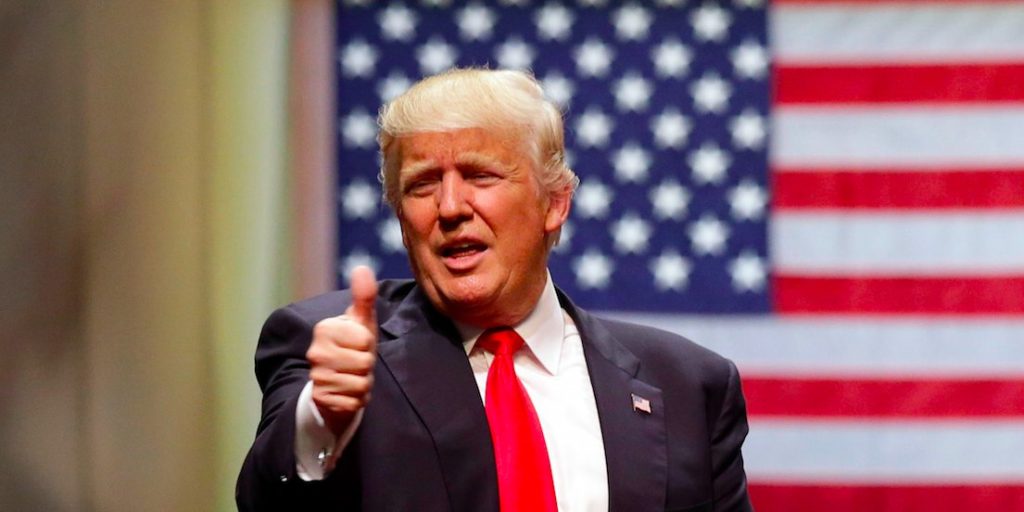
Hispanic voters in Florida, New Mexico and California have waved Mexican flags and bashed Donald Trump piñatas — clashing with police, at times — to protest the Republican presidential contender’s hard-line approach to immigration. Yet far from the protests, an increasingly vocal Hispanic minority is speaking out in favor of the brash billionaire. They are backing Trump even in the face of resentment and suspicion from friends and family, who are among the overwhelming majority of non-white voters opposed to the New York businessman’s candidacy. “I’m not ashamed to vote for Trump. I’d just rather not have the conversation with my family,” said Natalie Lally, a 22-year-old college student from New York City whose large extended family has Colombian roots. She says silence fell over her grandmother’s living room when she admitted her support for Trump during a recent family gathering that included more than 30 relatives. “They just kind of seemed uneasy,” she recalled. “And my uncle just said, ‘Why?’ “ In the border towns of Texas, the working-class neighborhoods of New York, and even inside Trump’s overwhelmingly white rallies, the pro-Trump Hispanic minority is willing to risk public and private ridicule to defend the GOP’s presumptive presidential nominee. So far, however, they’re not getting much help from Trump’s campaign, which has yet to launch an outreach effort to improve his standing with the growing voting bloc. Approximately 23 percent of Hispanics said they’d vote for Trump in a May poll conducted by Fox News. Other recent polling places Trump far lower. The GOP’s last presidential nominee, Mitt Romney, has cited his poor standing with Hispanic voters as one of his biggest regrets from the last election, when he earned 27 percent of the Hispanic vote. Trump’s team acknowledges the importance of the voting bloc, but says there has been little organized outreach so far. “Any demographic that is growing at the rate of the Latino voters obviously will be of the utmost importance to a presidential campaign,” Trump aide Ed Brookover said when asked about Hispanic outreach. “I know it’s been talked about, but I think it’s a touch early. I don’t know of anything organized.” Trump’s team expects to work closely with the Republican National Committee, however, which has had paid Hispanic outreach staff on the ground in nine states. Trump supporters are eager to help. Carlos Guerra, a 24-year-old son of Mexican immigrants who lives along the border in Laredo, Texas, says he wants to do more than wear Trump’s “Make American Great Again” hat around town. “Our town is sick of the violence from Mexico,” he said, applauding Trump’s plan to build a massive wall on the border. “People are dying every day.” Some of his family members also support Trump, but “they’re not as loud about it,” he said. “I have talked to a lot of people and of course they criticize me,” Guerra added. “They ask, ‘Do you hate your race?’ I feel discriminated against, honestly.” Trump’s policies and tone on immigration have sparked passionate — and sometimes violent — reactions from minority voters. His vow to complete a massive wall along the Mexican border is a pillar of his agenda. He has also promised to impose a temporary ban on Muslims entering the U.S., embraced plans to deport more than 11 million immigrants in the country illegally and described Mexican immigrants as rapists and criminals in his announcement speech. He lashed out at protesters who clashed with police outside his Tuesday rally in Albuquerque, New Mexico. The protesters, including many Hispanics, waved Mexican flags while others hurled rocks at police. “The protesters in New Mexico were thugs who were flying the Mexican flag,” Trump wrote on Twitter. “The rally inside was big and beautiful, but outside, criminals!” During a Wednesday appearance in Anaheim, he claimed “a great relationship with the Hispanics.” “The Mexican people are great. They’re going to vote for me like crazy,” he said. Outside the Anaheim event, a small group of protesters pummeled and decapitated a Trump piñata as police arrested more protesters. Heated protests have followed the Republican leader across the country, particularly in urban centers and states, like New Mexico and California, with large Hispanic populations. Yet there are often a handful of Hispanic supporters inside his rallies. Before Trump took the stage in Albuquerque, Mary Jo Andrade, 37, a licensed mental health counselor, said her 17-year-old daughter is often teased in school for backing him. “She hears, ‘Oh, you’re not real Mexican. You’re not true Mexican,’ ” Andrade said and added, “A lot of the time I tell her, ‘Keep your silence because of that.’” Republished with permission of The Associated Press.
Feds question Spencer Collier in Robert Bentley scandal
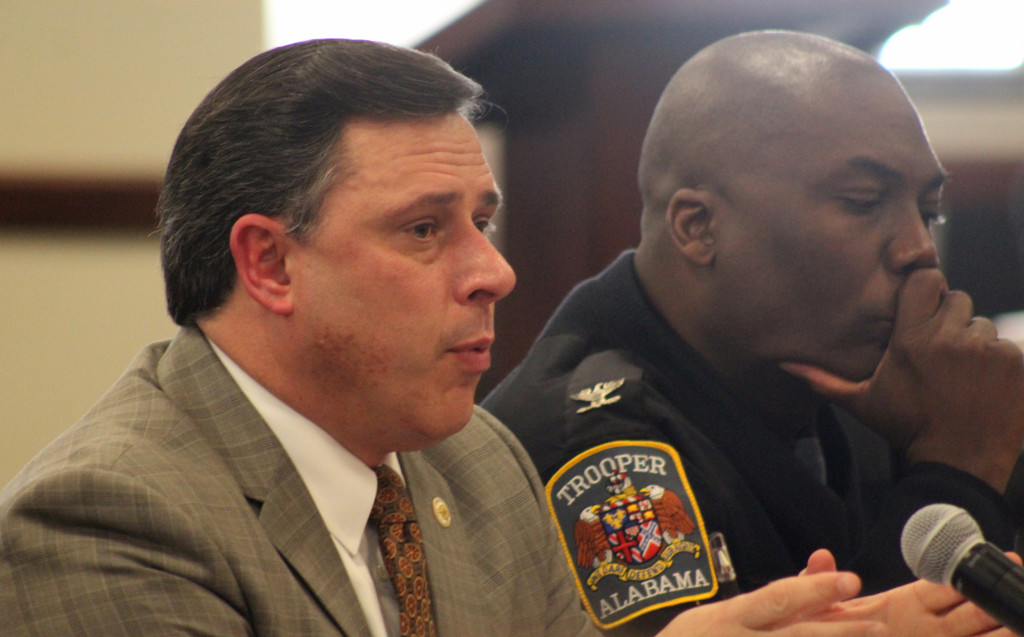
The former law enforcement chief who accused Alabama Gov. Robert Bentley of having an affair with an adviser has been questioned by federal investigators about the governor’s administration, the official’s attorney said Wednesday. Kenny Mendelsohn, who represents former state law enforcement secretary Spencer Collier, would not elaborate on what questions investigators asked. A person close to the administration who also was questioned told The Associated Press FBI agents asked about the use of state grants and other resources. The person spoke on condition of anonymity, fearing retribution. The revelations are the latest sign of trouble for Bentley, who has been the subject of an impeachment push since he admitted making inappropriate comments to the former aide, Rebekah Caldwell Mason. He has denied having an affair with her. A spokeswoman for the governor declined to comment. The AP obtained a letter written by an aide to U.S. Attorney George Beck in Montgomery saying Beck has stepped aside from any possible investigation or prosecution involving the governor’s office. The subject line on the letter, dated last week, states: “Re: Grand Jury Investigation.” However, it is not clear if a grand jury has been empaneled, which could be a sign of a deepening investigation. Beck said Justice Department officials in Washington decided to remove the case from his office, and he is unsure of its status since then. “The office of general counsel makes those decisions when they think it’s in the best interest of the public that if a U.S. attorney’s office is too close to a situation then it’s best to recuse that U.S. attorney us and the entire office,” he said. FBI Director James Comey, in Birmingham for an event about civil rights, declined comment on any federal probe involving Bentley. The impeachment effort began after Collier, the former head of the Alabama Law Enforcement Agency fired by Bentley, accused his former boss and friend of having an affair with a staffer and of interfering with law enforcement business. Bentley acknowledged making inappropriate remarks to Mason but denied the other accusations. However, audio recordings obtained by the AP purportedly captured the governor — before his wife of 50 years divorced him last year – telling a woman he loved her and enjoyed kissing and fondling her. Collier has since sued Bentley for wrongful termination, accusing Bentley of firing him because the two disagreed over a request to file an affidavit saying investigators found no evidence of misconduct by prosecutors in the ethics case against House Speaker Mike Hubbard, who is now on trial in Lee County. Collier said he wanted to file the affidavit, but the governor didn’t want him to. Collier said that Bentley asked him to lie to prosecutors, and that he was unwilling to do that. Bentley asked a judge to throw out the lawsuit earlier this week. — Associated Press writers Kim Chandler in Opelika, Alabama, and Phillip Lucas in Birmingham contributed to this report. Republished with the permission of The Associated Press
