
Testimony: Mike Hubbard hired to open doors for others
The president of an education curriculum company testified Tuesday that he hired Alabama House Speaker Mike Hubbard in a $7,500 a month consulting contract, to open doors with legislative leaders in other states as the company tried to sell digital courses to school systems. Edgenuity President Michael Humphrey said he believed Hubbard – with his legislative and sports background – could get him meetings with legislative leaders that Humphrey said it would take him a year to get on his own. “My idea was to use Mike to say, ‘Get me a meeting with this guy, let me go meet him,’” Humphrey said. Humphrey said Hubbard’s contract specified that he only worked on matters outside Alabama for the company. Humphrey said Hubbard’s work for the company included calling the then-speaker of the South Carolina House of Representatives and emailing Auburn University Athletics Director Jay Jacobs asking for contacts for the company as it tried to get cleared by the NCAA to sell its products for college athletes. Hubbard faces 23 felony ethics charges accusing him of using his political positions to make money and solicit work, investments and clients from people with business before the Alabama Legislature. Prosecutors say Hubbard improperly used the “mantle of his office” to benefit his businesses and clients. Hubbard has maintained that the transactions were legal and permitted under the exceptions that the state ethics law provides for normal business dealings and longstanding friendships. During the questioning of the retired director of the Alabama Ethics Commission, prosecutors and defense lawyers took turns alternately depicting Hubbard as someone who cautiously sought advice about what was allowed under state ethics laws or someone who willfully ignored the advice he was given. Jim Sumner said Hubbard often sought informal ethics advice from him or general counsel Hugh Evans and they repeatedly cautioned him about the restrictions of the law. They gave him an informal letter about his work for a municipal-owned gas utility saying the work would be legal as long as he didn’t use the “mantle of his office” to benefit his clients and businesses. “We always got to the point: I would say, or Hugh would say, ‘You remember the drill. You can’t use your position to benefit yourself, your business or your family,’” Sumner said. Sumner served as an expert witness, providing testimony on both the informal advice given to Hubbard and providing general interpretations about what the law allows and doesn’t allow. Sumner said he once called Hubbard with concerns after hearing rumors that a change to the 2013 budget bill could be a major boon for one of Hubbard’s clients. Hubbard first asked if those rumors were coming from “enemies” and then added that the matter would be taken care of in conference committee. What exactly constitutes using the “mantle” of a public office could be a pivotal point in some of the charges in the public corruption trial. Sumner, under questioning from prosecutors, said it was an intangible that included using the aura of a public office to benefit private business clients. Prosecutors introduced an email from Hubbard in which he described that as boilerplate ethics language and that he was free to introduce himself as speaker of the Alabama House of Representatives. Under cross-examination by defense lawyer Bill Baxley, Sumner acknowledged Hubbard sought more advice about his business dealings than any other legislator. “He said, ‘I want to know where the line is?’” Baxley asked. “Correct,” Sumner replied. “To your knowledge, Alabama has a part-time citizen legislature and almost every member has to make a living,” Baxley added. Hubbard’s defense has made a point of saying that he sought ethical guidance and followed the law. But informal opinions don’t provide the legal protection Hubbard might have received had he sought formal opinions from the five-member Ethics Commission. The charges against Hubbard were brought by a grand jury convened by the Alabama attorney general’s office. Baxley tried to point out that the Alabama Ethics Commission, a panel that reviews allegations of ethics violations, never brought any findings against Hubbard. However, Sumner said that he did not know about several of the speaker’s contracts until after Hubbard was indicted by the grand jury. “More than half of the things that are before this case were never known to the Ethics Commission,” Sumner said. The trial continues Wednesday with a number of high-profile witnesses. Alabama Gov. Robert Bentley could be called to testify as soon as Wednesday. Republished with the permission of The Associated Press.
Mike Hubbard trial day 5: Hubbard didn’t seek approval before making deals, former ethics chief testifies
In the long-awaited trial of indicted Alabama House Speaker Mike Hubbard, more than 20 witnesses were called during the first four days of trial last week. Fellow legislators, business partners, politicians and state executives testified about their knowledge of Hubbard’s actions, providing testimony for many of the 23 charges Hubbard faces. The state endeavors to prove Hubbard used his office for personal gain and used his position as Speaker of the House, and formerly as chair of the Alabama Republican Party, to solicit jobs and investments in businesses with which he was involved. A conviction on any one of the charges would remove the speaker from office. The charges carry potential sentences of two to 20 years and fines of up to $30,000 for each count. The trial resumed Tuesday after the long Memorial Day weekend as prosecutors called Jon Sanderson, a financial officer for investment firm Sterne Agee from 2012 until March 2016. Sanderson testified to writing a check in November 2012 to Hubbard’s company Craftmaster on behalf of the Sterne Agee Group for $150,000, explaining he was instructed by CEO Jim Holbrook to write the check during a meeting. “During the meeting, Mr. Holbrook slid a piece of paper over to me that had Craftmaster Inc. written on it and he whispered to me that he needed a check written for $150,000 right then,” Sanderson explained. Sanderson said the incident was “not totally out of the ordinary.” Later in the morning, former Ethics Commission Director Jim Sumner was an expert witness on the ethics law. Sumner testified that Hubbard did not notify or seek advice from the Alabama Ethics Commission regarding consulting contracts he held with the American Pharmacy Cooperative Inc., Edgenuity and Capitol Cups. “I did not know about those companies until I saw the indictment,” Sumner said of Hubbard’s contracts with Edgenuity and Capitol Cups. Next, executive vice president of the online learning company, Edgenuity, Michael Humphrey, testified part of the reason his company hired Hubbard as a consultant was due to his position as a lawmaker. “I would say part of the reason was that he’s a legislator,” said Humphrey. “He was a legislator with the ability to work outside Alabama. I wanted to take advantage of his relationships.” Humphrey clarified the company never intended to use Hubbard’s consulting services within the state of Alabama. The trial continues Wednesday. Witnesses expected on Wednesday: Billy Canary: Business Council of Alabama president and CEO Dax Swatek: lobbyist Bob Riley: former governor of Alabama Minda Riley Campbell: daughter of former Gov. Bob Riley Robert Bentley: Governor of Alabama Greg Canfield: Department of Commerce secretary
Tom Jackson: Hit that reset button already, Marco Rubio
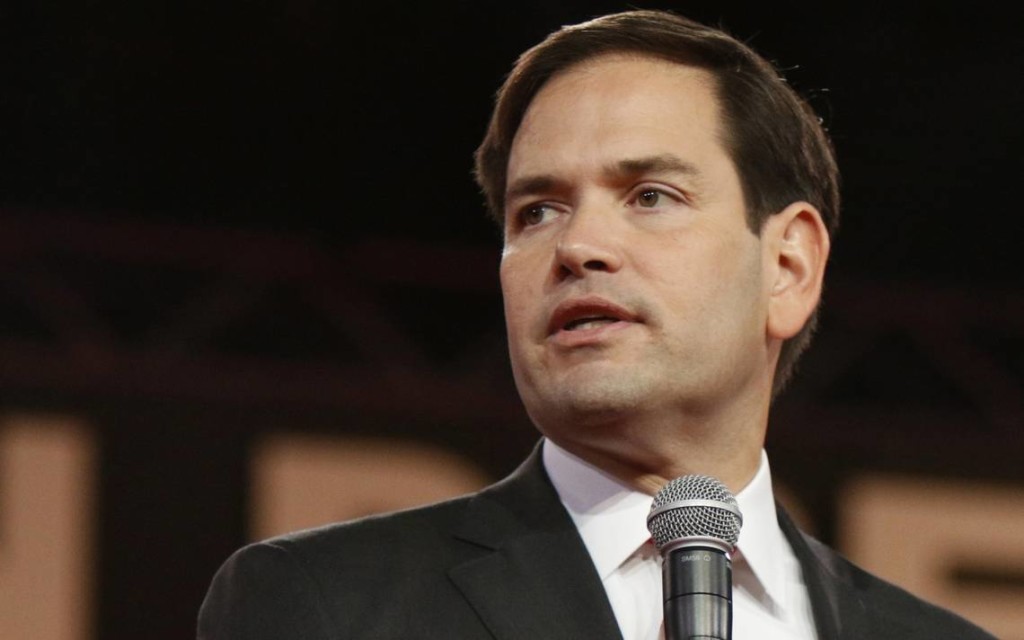
Well past the point that it became abundantly — and, in some circles, painfully — obvious that Marco Rubio should have applied himself to the job he convinced Floridians he wanted in 2010, a fresh question has arisen: Should Rubio declare himself a candidate for re-election? The answer is: Duh. Of course, he should. This is the biggest no-brainer since Captain America rejected United Nations sanctions. It’s hard to believe he’s even hemming, let alone hawing. Listen, everyone gets that Rubio has been that “young man in a hurry” for nearly 20 years, especially those on whose hands he stepped reaching for the next rung. And he almost couldn’t be blamed for seeking the presidency, considering how establishment conservatives rhapsodized about his wonkmanship, his reform policies and his political skills. And maybe, if he’d been quicker with his wits on that New Hampshire stage, maybe the 3-2-1 strategy laid out by his strategists would have prevailed. I mean, suppose Rubio had prefaced his infamous robotic repetitions with a deft qualifier, such as, “Yes, I’m repeating myself, and I will continue to repeat myself because it doesn’t matter how you pose the question, the answer remains the same. What’s true is true: Barack Obama knows exactly what he’s doing.” This is not beyond imagining, no matter how programmed Rubio’s critics think he is. Indeed, those who know him well, and those who covered him closely during the primary, know he is perfectly capable of riffing off-script without sacrificing expertise. But that was then, and this is now, more than two months after the stinging defeat in Florida that ended — for the moment, anyway — his White House dream. And just now, Republicans defending lots of purple-state seats need to field their best team if they have any hope of maintaining their majority in the U.S. Senate. With all due respect to the political talent wrangling to become the GOP nominee — with one tin-eared exception — that team looks better if Rubio is on the roster. The idea might be growing on him, too. Tuesday afternoon, an email landed bearing Rubio’s signature and the subject line “Time to stand together.” It reads, in part, “Our liberal opponents have already launched countless attacks against many of my Republican colleagues. We must protect our Republican Senate majority. “Defeating these Democrats will only be possible if conservatives like us stand together to defend our Republican Senate.” “Stand together.” At the risk of reading way, way, way too much into a fundraising email, this hints that Mr. I’ll-Be-A-Private-Citizen is signaling a fresh course. He ought to be, anyway. With the clarity of retrospect, Rubio shouldn’t have leapt into the awful Republican scrum in the first place. Never mind that he was, with the exception of one memorable debate, clearly the best-informed candidate in the pack. I lost track of the times he fact-checked Donald Trump in real time. (An aside: The fact Rubio says he’s willing to speak nicely about Trump at the Republican National Convention is a problem for supporters who took his eviscerations of the presumptive nominee to heart, but it’s also, unfortunately, a calculated penance. We’ll be listening closely for what he does and, more important, doesn’t say.) Alas, this was not the year for facts, articulated policies or — as Jeb Bush came to appreciate and rue — deeply researched and painstakingly detailed plans to fix what ails America. This, instead, is the year a substantial chunk of voters think the presidency is a reality show. After all, how hard can it be? Barack Obama makes nuke deals with Iran, slows the retreat of glaciers, amends his namesake health plan at will and still squeezes in an afternoon 18 at Fort Belvoir Golf Club. What’s a first-term senator encountering an unanticipated detour to do? Reroute, already. Hit the reset button. Immediately. Not just because it’s what’s in Rubio’s best political interests, but because the other GOP candidates need time before the June 24 filing deadline to make alternate plans. Again, re-election to the Senate also is Rubio’s best path forward. He’s not likely to be elected Florida’s governor anytime soon; Agriculture Secretary Adam Putnam, the most-Florida politician ever, is practically Rick Scott’s heir apparent. And former state House Speaker Will Weatherford, every bit as talented, is almost certain to maneuver himself into future consideration. Besides, being a senator is a cool job, in and of itself. And if Rubio wins again, then buckles down to the work while avoiding past missteps (the Gang of Eight immigration scheme leaps to mind), ratcheting up his constituent service and resisting the lure of another presidential run in 2020, then by 2024 or 2028 at the outside, he’d be in his 50s, experienced, wiser and a little gray at the temples; the game would again be afoot. Indeed, perhaps by then he’ll have served in a Republican administration: Secretary of State Marco Rubio. It could happen. And there are worse launching pads. Hit that button already, Sen. Rubio. It’s the right thing all-around. ___ Recovering sports columnist and former Tampa Tribune columnist Tom Jackson argues on behalf of thoughtful conservative principles as our best path forward. Fan of the Beach Boys, pulled-pork barbecue and days misspent at golf, Tom lives in New Tampa with his wife, two children and two yappy middle-aged dogs.
Retired Alabama ethics chief: Mike Hubbard often got ‘the drill’
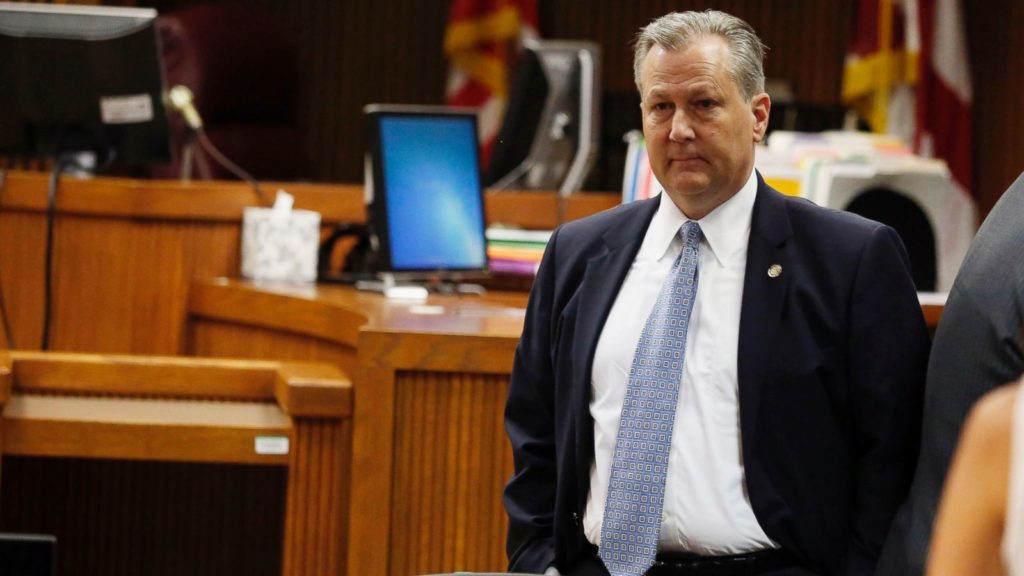
The retired director of the Alabama Ethics Commission testified Tuesday that he often gave “the drill” to House Speaker Mike Hubbard, cautioning him about actions that would violate the state’s ethics law. Prosecutors called Jim Sumner to give jurors a tutorial on the law and to try to show that Hubbard willfully ignored his advice. Sumner said Hubbard often sought informal ethics advice from him or general counsel Hugh Evans. He testified that they generally told Hubbard his consulting contracts would be legal as long as he didn’t use the “mantle of his office” to benefit his clients and businesses. “We always got to the point: I would say, or Hugh would say, ‘You remember the drill. You can’t use your position to benefit yourself, your business or your family,’” Sumner said. Hubbard’s defense has made a point of saying that he sought ethical guidance and followed the law. But informal opinions don’t provide the legal protection Hubbard might have received had he sought formal opinions from the five-member Ethics Commission. And unlike his private conversations with Sumner and Evans, commission opinions are a matter of public record. Hubbard is charged with 23 felony counts of violating the ethics law by using his positions as speaker and state GOP chairman to solicit a total of $2.3 million in work, investments and financial favors. Hubbard has maintained his innocence and said the transactions were within the law’s exemptions for normal business dealings and longstanding friendships. Sumner said the law forbids public officials from: – using their offices to benefit businesses with which they are associated; – soliciting things with monetary value from lobbyists or their employers; – and being paid to lobby. Hubbard is accused of doing all three. Sumner said there is an exemption for longstanding friendships, so that people who had “known each other all their lives” could do things like go on vacation together without violating the law. Hubbard is expected to argue that the friendship exemption applies to his deals with former Gov. Bob Riley, now a lobbyist. Hubbard named his younger son Riley, and has described the former governor as his political mentor. A number of powerful corporation owners and executives were called to testify Tuesday about $150,000 investments they each made in Hubbard’s printing company, Craftmaster. Jon Sanderson, the former chief financial officer at Sterne Agee Group, Inc., testified that his CEO whispered during a meeting that he needed a $150,000 check made out to Craftmaster “right now.” Hubbard isn’t the only Alabama Republican in trouble. Alabama Gov. Robert Bentley faces impeachment after a scandal over his relationship with an aide, and Alabama Supreme Court Chief Justice Roy Moore is suspended and could be removed from office for allegedly violating judicial ethics in the fight over same-sex marriage. Republished with permission of The Associated Press
Inside the origins of Donald Trump’s high-octane Twitter account

Peter Costanzo is the man who helped turn Donald Trump into @RealDonaldTrump. That, of course, is Trump’s Twitter account — a high-octane portal for the presumptive Republican presidential nominee to pump out insults, political attacks and self-promotion to more than 8 million followers. But the billionaire’s foray into the world of social media began with a much simpler purpose, yet one that’s still distinctively Trump: making money. Costanzo crossed paths with Trump in 2009 when he was working as online marketing director for the publishing company putting out the businessman’s book, “Think Like a Champion.” Twitter was still in its infancy at the time. But Costanzo saw the 140-character-per-message platform as a new tool that the real estate mogul could use to boost sales and reach a broader audience. He was given seven minutes to make his pitch to Trump — “Not five minutes, not 10,” Constanzo said — in a boardroom at Trump Tower in Manhattan that appeared to be the same one used on Trump’s reality television show. Trump liked what he heard. “I said, ‘Let’s call you @RealDonaldTrump — you’re the real Donald Trump,’” Costanzo said. “He thought about it for a minute and said, ‘I like it. Let’s do it.’” Costanzo would spend the next several months helping coordinate Trump’s Twitter account, as well as his official Facebook page, often sending out messages for his famous client. He credited Trump with being an early adopter of the service and says he believes Trump understood its potential. “He seemed very excited about the idea of being able to reach people so directly,” Costanzo said. “I think he immediately got it.” Trump’s office confirmed the outlines of Costanzo’s account. Costanzo — a 51-year-old who goes by @PeterCostanzo on Twitter — now works as digital and archival publishing manager for The Associated Press, a position that is separate from the news department. While Costanzo’s moniker for Trump on Twitter may have survived, the early days of the businessman’s account bear little resemblance to the current iteration, which frequently drives news in the White House race. During the roughly eight months when Costanzo was in charge of the burgeoning Trump Twitter account, each missive was carefully crafted by the publishing company or the businessman’s office. Trump got final approval before Costanzo pressed “Tweet.” Most of the messages were quotations from the book, a collection of Trump lessons on life and business. “My persona will never be that of a wallflower — I’d rather build walls than cling to them,” read one early tweet. Sometimes Trump would send word through an associate that he wanted to offer a holiday greeting. His retweets were rare then. Now, Trump starts firing off messages early in the morning and often continues past midnight. He’ll shout out tweets for aides to type during the day and take over himself at night. Spelling and grammar are sometimes amiss, and exclamation points are plentiful. Trump frequently retweets messages from other people’s accounts, something he’s admitted “gets me in trouble.” He faced particular criticism for retweeting an unflattering photo of former rival Ted Cruz’s wife and has since said he wished he hadn’t done that. Costanzo, who no longer has any role with Trump’s Twitter account or books, says he’s marveled at the following his most famous client has built on social media. Asked whether he had any Twitter advice for Trump now, Costanzo said, “He seems to be doing just fine without me.” Republished with permission of The Associated Press.
Intelligence briefings come with presidential nomination

After the political convention confetti is swept away, a more sobering tradition of the presidential election begins: The regular, top-secret intelligence briefings for Donald Trump and Hillary Clinton, the likely Democratic nominee. Started by President Harry S. Truman, the briefings are designed to get the candidates, before they walk into the Oval Office, up to speed on problems around the globe. Truman, who was Franklin D. Roosevelt’s vice president for almost three months before Roosevelt died, first learned about the Manhattan Project to develop an atomic bomb only 12 days into his presidency, and he pledged not to leave any future commander in chief behind the ball. There’s an old political saw about how a White House candidate believes firmly in his or her foreign policy views – until that first top-secret briefing. In his recent book, former CIA Director Michael Hayden says these revelations are known as “aw s—” moments – as in, “Aw s—, wish we hadn’t said that during that campaign stop in Buffalo.” If Clinton is the Democratic nominee, much of the intelligence information she receives probably will sound familiar. As secretary of state until 2013, Clinton was one of President Barack Obama‘s senior advisers who were privy to the President’s Daily Brief – the highest level intelligence document prepared in the United States. The intelligence briefings could be eye-opening for New York businessman Donald Trump. The Republican’s loose-lipped campaign remarks have left some intelligence and foreign policy officials worried about whether he can keep the nation’s secrets. Trump has said in interviews that he’s looking forward to the briefings. Director of National Intelligence James Clapper, whose office arranges the briefings, was asked recently what he would want to say to Trump to help educate the political newcomer about foreign policy and perhaps even counter some of his ideas, such as temporarily banning Muslims from entering the United States. Clapper bristled and said the question falsely implied that the U.S. intelligence agencies would have a separate message for each candidate. “There’s a long-standing practice of briefing each of the candidates once they are officially designated. And that sort of shifts into higher gear, in terms of detail, after the president-elect is known,” Clapper said. “It’s not designed to shape anybody’s world view. We just brief as we normally would – each of them – and they (the briefings) have to be exactly the same.” But Rep. Adam Schiff, the top Democrat on the House Intelligence Committee, said he believes many people share his deep concern about Trump’s inexperience with handling classified information. “I would have to imagine that those concerns are fairly broadly held, so I wouldn’t be at all surprised if the intelligence briefings received by both candidates – which will be identical – will be at a more generalized level than they might otherwise be,” said Schiff, D-Calif. Clinton had her own issues with secret information while secretary of state. The FBI is investigating whether her use of a private server in her home to send and receive work-related emails – including 22 that have since been classified – broke any laws. Intelligence officials have started planning the briefings, which probably will begin right after the Democratic and Republican conventions in late July. After the Nov. 8 election, more detailed briefings for the president-elect will include information about U.S. covert operations. The sitting president has the final decision on how much information is disclosed to the president-elect; typically that includes access to the entire President’s Daily Brief. The ritual began in 1952, when Truman offered intelligence briefings to Republican nominee Dwight D. Eisenhower and Democrat Adlai Stevenson. CIA briefers were in a quandary after the 2000 election, when the country didn’t know for some time whether Republican George W. Bush or Democrat Al Gore had won. Bush had received a four-hour CIA briefing in September before the election at his ranch in Crawford, Texas, but he had never seen the President’s Daily Brief, which Gore saw daily as vice president. As their lengthy ballot recount dragged into December, President Bill Clinton authorized intelligence officials to share the so-called PDB with Bush, too. “The CIA was basically on the edges of their seats waiting for permission to start briefing Bush,” said David Priess, author of “The President’s Book of Secrets,” a history of the President’s Daily Brief. The first one on Dec. 5 almost didn’t happen because water poured through the ceiling of the CIA’s outpost in Austin, Texas, threatening efforts to reproduce the so-called PDB on sensitive communications equipment. Priess said Bush started receiving the PDB later than any other president in recent history, and he is the only person in the modern era to get PDB briefings before he technically was president-elect. The pre-election briefings for Eisenhower’s successor, John F. Kennedy, raised the issue of when presidential candidates should find out about pending U.S. covert operations – in this case what became the failed U.S.-sponsored Bay of Pigs invasion meant to topple Cuban leader Fidel Castro. Ten days after becoming president-elect, Kennedy was given the details at his family’s home in Palm Beach, Florida. Likewise, Trump or Clinton, as early as the day after the election, could learn more about operations against the Islamic State group, for instance, than they know now. Eisenhower, the first to receive the briefings, was commander of allied forces in Europe during World War II, so he was in on his share of secrets before winning the presidency. He received four briefings, including one on a train bound for Grand Central Station in New York, according to a book by former CIA inspector general John Helgerson, who extensively researched the briefings. Another briefing was conducted in Denver where Eisenhower stopped in at a rodeo and toured the grounds in a stagecoach with the CIA briefer riding “shotgun, up top with the driver,” Helgerson wrote. Republished with permission of The Associated Press
Luther Strange to State Board of Education: Ignore Obama’s transgender bathroom rules
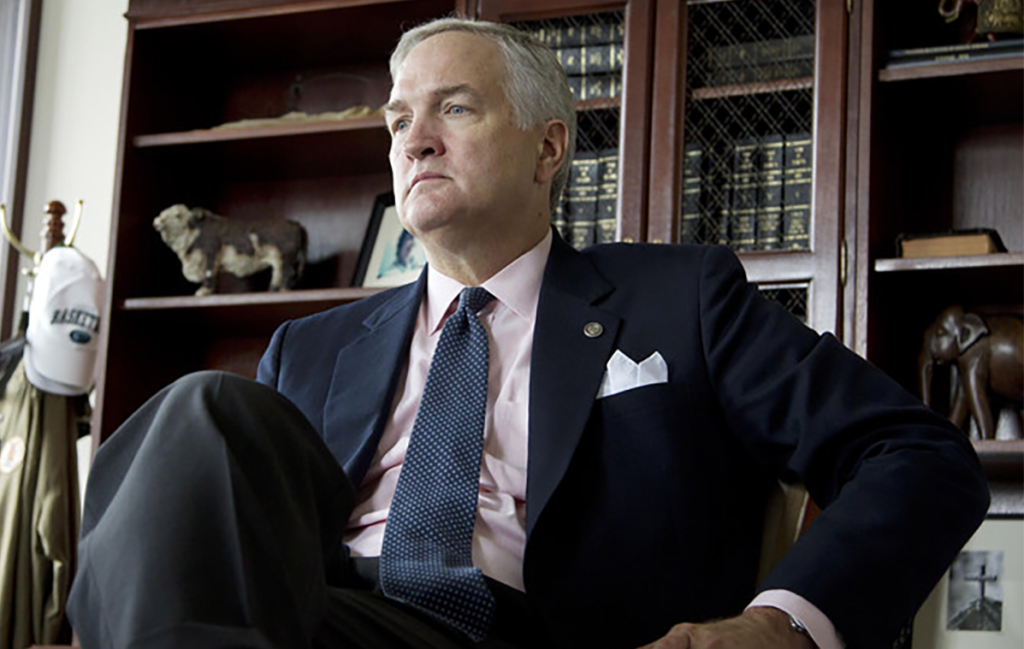
Alabama Attorney General Luther Strange sent a letter to the State Board of Education in response to many questions from Alabama’s school systems on the ramifications of President Obama‘s recent executive actions requiring public schools to allow transgender students to use the restrooms and locker rooms corresponding to their preferred gender. In the letter, Strange advised the school board to simply ignore the president’s directive until the issue is taken up and settled in federal court. “Although the (federal guidance) letter states that it ‘does not add requirements to applicable law,’ it clearly purports to change the law by redefining the word ‘sex’ in Title IX of the Education Amendments of 1972 to mean ‘gender identity,’” wrote Attorney General Strange. “…Title IX is about discrimination ‘on the basis of sex,’ not gender identity.” AG Strange filed suit on behalf of the state against the Obama administration last week, joining 10 other states in pushing back against the executive order. “The Obama administration has taken government overreach to an unprecedented level, directly challenging the personal privacy of America’s school children while threatening to withhold funds from schools which refuse to accept this form of coercion,” said Strange in a press release announcing the lawsuit. “President Obama does not have legal grounds to rewrite the law. Congress was absolutely clear that federal law allows schools to have separate facilities based on the ‘sex’ of the individual, not their gender preference. This disturbing attempt to transform America’s classrooms into laboratories for the Obama administration’s social experiments will not stand up to the test of law.” The issue has become increasingly heated in the weeks following President Obama’s order, with everyone from presumptive GOP nominee Donald Trump to Alabama Today’s own Apryl Marie Fogel weighing in on the subject. Find the entire text of the letter to the State Board of Education below. Dear Members of the Board of Education: My Office has received numerous inquiries from educators and others about the “significant guidance letter” issued by the United States Department of Education and Department of Justice on May 13, 2016. Although the letter states that it “does not add requirements to applicable law,” it clearly purports to change the law by redefining the word “sex” in Title IX of the Education Amendments of 1972 to mean “gender identity.” It is my understanding that principals and teachers in Alabama have considerable discretion in how to accommodate transgendered students. The question of how to accommodate a transgendered student is presently resolved on a case-by-case basis in consultation with the student’s parents, teachers, and principals. But it appears that the most frequent accommodation is to encourage the student to use a single-occupancy bathroom. Unfortunately, that commonsense practice would be inconsistent with the “significant guidance letter,” which states that “a school may not require transgender students . . . to use individual-user facilities.” In my opinion, the guidance letter is based on a legally erroneous interpretation of Title IX. Title IX forbids disparate treatment “on the basis of sex.” 20 U.S.C. §1681(a). But Title IX provides that “nothing contained herein shall be construed to prohibit any education institution . . . from maintaining separate living facilities for the different sexes.” 20 U.S.C. § 1686. Similarly, the 1975 regulation that implements Title IX expressly authorizes “provid[ing] separate toilet, locker room, and shower facilities on the basis of sex.” 33 C.F.R. § 106.33. In other words, Title IX is about discrimination “on the basis of sex,” not gender identity. Unlike subjective gender identity, sex is an objective biological reality. The American Psychological Association defines “sex” as “a person’s biological status” based on indicators such as “sex chromosomes, gonads, internal reproductive organs, and external genitalia.” Gender, on the other hand, “connotes cultural or attitudinal characteristics distinctive to the sexes, as opposed to their physical characteristics.” Hopkins v. Baltimore Gas & Elec Co., 77 F.3d 745, 749 n.1 (4th Cir. 1996). To redefine “sex” as “gender identity,” the guidance letter erroneously relies on judicial decisions that are distinguishable and unpersuasive. Judicial decisions in which transgender plaintiffs have been allowed to pursue discrimination claims have involved penalizing the transgendered person for failing to look, act, or dress the way “real” men or women are culturally expected to. Most of these cases did not even mention bathroom usage, and none of them turned on bathroom-related claims. The guidance letter ignores, however, the numerous courts that have held that schools may provide separate bathrooms on the basis of biological sex differences. E.g., Jeldness v. Pearce, 30 F.3d 1220, 1228 (9th Cir. 1994); R.M.A. v. Blue Springs R-IV Sch. Dist., 477 S.W.3d 185, 187 (Mo. Ct. App. 2015); Johnston v. Univ. of Pittsburgh of Com. Sys. of Higher Educ., 97 F. Supp. 3d 657, 670 (W.D. Pa. 2015); Doe v. Clark Cty. Sch. Dist., No. 206-CV-1074-JCM-RJJ, 2008 WL 4372872 at * 4 (D. Nev. Sept. 17, 2008). Because the guidance letter is based on an erroneous view of Title IX, I believe the threat that schools will lose federal funding for failing to comply with the guidance is ultimately an empty one. On May 25, I filed suit on behalf of Alabama, along with officials from ten other States, to prevent the Department of Justice and Department of Education from enforcing the guidance letter. This lawsuit will determine whether the Department of Justice and Department of Education have the authority to implement the policy announced in the guidance. I have attached a copy of our complaint to this letter. Until the lawsuit is resolved, I would encourage educators to simply ignore the guidance letter. Sincerely, Luther Strange Attorney General
Talk of Jeff Sessions for VP continues as he warns GOP: Adapt to Donald Trump, or else
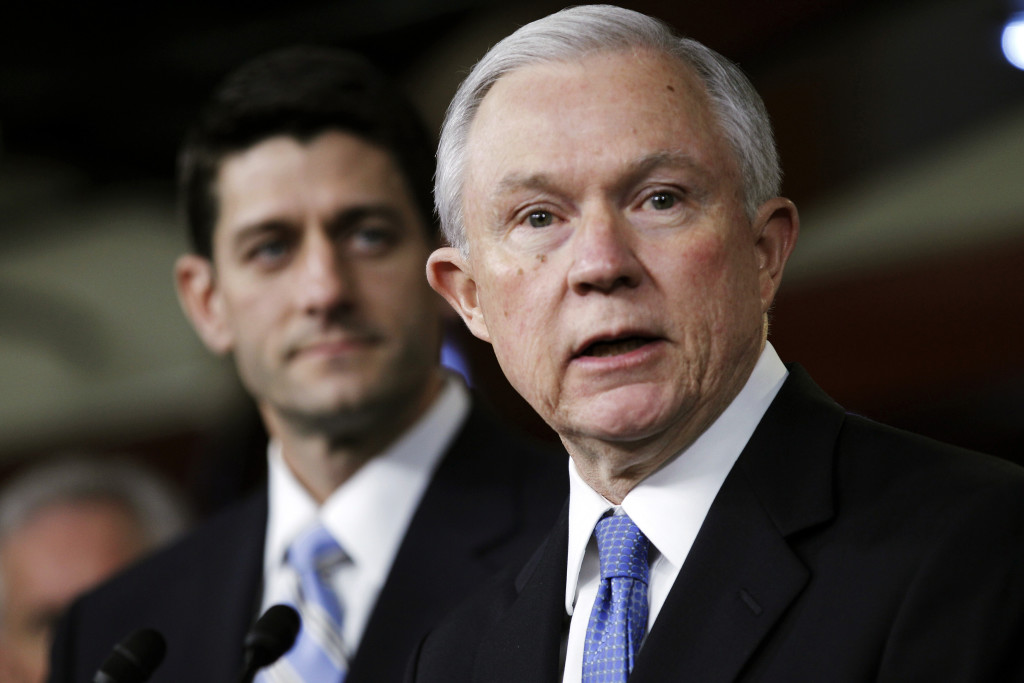
Speculation about the first-ever vice president from Alabama is intensifying as U.S. Sen. Jeff Sessions continues to push GOP leaders in the direction of Donald Trump. The speculation has continued at a more or less constant trickle since Sessions endorsed Trump in February — in a devastating move for U.S. Sen. Ted Cruz — but gained further momentum when he told The Daily Caller he “would consider” taking the VP nod if Trump offered to him, “If I could help him in some way — and he were to ask me — I would consider it like any other citizen should,” said Sessions. But Sessions has also been running a different, though related, sort of campaign — one to move the Republican Party in Trump’s populist direction. Sessions, for instance, challenged legislative leaders like Speaker Paul Ryan to get with Trump’s program when it comes to trade deals and immigration. “I think [Ryan] needs to recognize, on some of these issues, Trump is where the Republicans are and if you’re going to be a Republican leader you should be supportive of that,” said Sessions to POLITICO’s “Off Message” podcast last week. “My advice is to listen and accept the will of the American people, the Republican voters – the Republican Party is the Republican voters,” he added. When confronted with some of the “true conservative” criticisms of Trump by Ryan, as well as “#NeverTrump” advocates like former Florida Gov. Jeb Bush and his backers, Sessions did not abide. “Give me a break! A lot of our drift within our party has gotten away from [the will of the voters] … I think the leaders in all parties tend to adjust to reality. They just have to or they won’t remain in office … Already many are sensing it,” said Sessions. Many national Republican leaders seem to be incessantly re-hashing 2012, said Sessions, where a fiscally conservative GOP governor sought to ascend to the White House on a sensible center-right message. Sessions said that just won’t work nowadays. “[Mitt] Romney didn’t get beyond the numbers,” explained Sessions to POLITICO. “He couldn’t get 50 percent. Romney got killed by the under-$50,000-a-year income voter. He just got killed in that. You cannot win. You cannot be president of the United States if people below $50,000 don’t think you care about them and you have no real communication that motivates them to vote for you. And that’s the trend we’ve been on, and Trump has broken that.” As both parties continue to fight for the growing number of middle- and low-income voters, time will tell if GOP leaders will mimic Trump’s position — and if Sessions will assume a top position in a possible Trump administration.
Testimony set to resume Tuesday in Mike Hubbard ethics trial
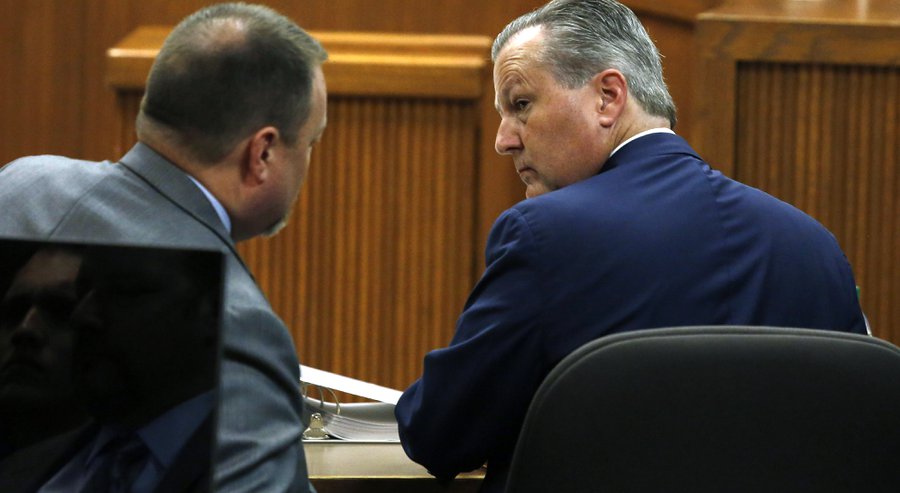
Testimony is set to resume in the ethics trial of Alabama House Speaker Mike Hubbard after the long holiday weekend. Prosecutors have indicated that on Tuesday they will call a number of influential lobbyists and company owners as witnesses. Prosecutors say Hubbard asked them to either make investments in his printing company or to help him find business clients. Hubbard is accused of using his position as GOP chairman and House speaker to generate $2.3 million in work and investments for his companies. Defense lawyers argue the transactions were legal and involved legitimate work. Business Council of Alabama President Billy Canary, the daughter of former Gov. Bob Riley and others are expected to testify. The trial is expected to last three weeks Republished with permission of The Associated Press
On cutting-edge voter data, Donald Trump critically behind Hillary Clinton
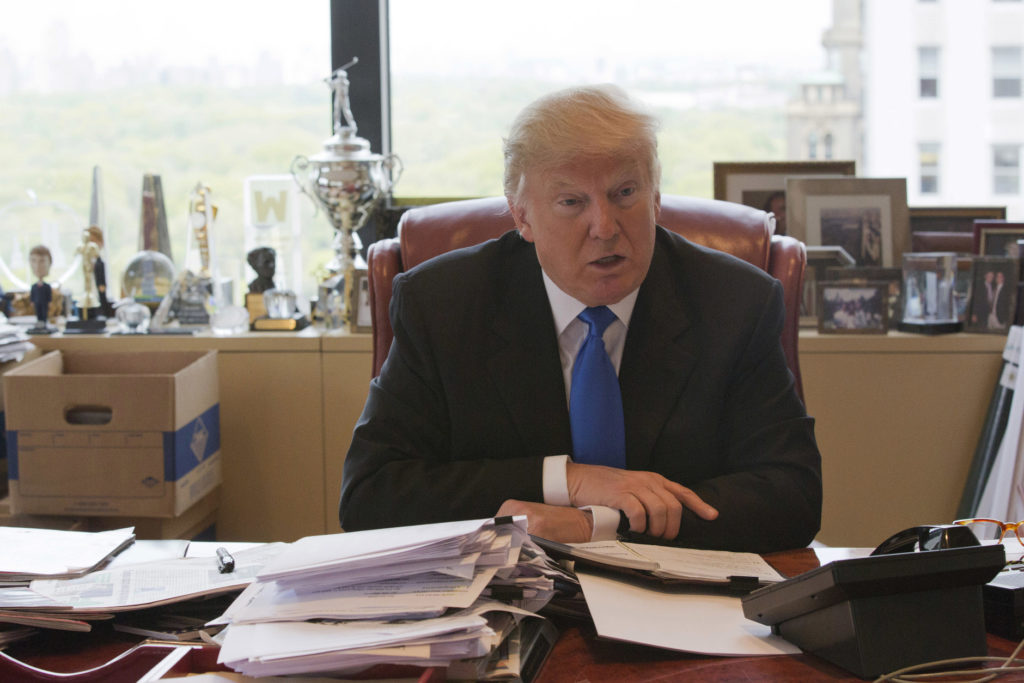
Donald Trump trails Hillary Clinton by months, even years, in using fast-evolving digital campaigning to win over voters, data specialists working with the GOP say. The presumptive Republican presidential nominee has dismissed the science that defines 21st-century political campaigns, a tool that President Barack Obama used effectively in winning two terms and the Clinton campaign has worked on for nearly a year. And while it is too early to tell whether the late start signals trouble for Trump, it illustrates the difference between Trump’s proudly outsider campaign and the institutional knowledge within Clinton’s. “She’s been able to prepare a general election campaign since the beginning,” said Alex Lundry, former senior technology adviser to Mitt Romney‘s 2012 Republican presidential campaign. “That head start in terms of time is extraordinarily valuable.” Precision digital marketing data, a person’s online footprints, have become an electoral science that Democrats have dominated, and Republicans have chased, for a decade. Campaigns used the data at first simply to track supporters. The information now guides a range of decisions, like the types and volume of advertising, where to deploy campaign staff to mobilize voters and where a candidate should visit. Trump’s team has been unclear about its use of data in the general election. Trump told The Associated Press this month the tool was “overrated” and he planned “limited” data use during the general election, though his campaign has worked with firms and a small in-house staff to track voters during the primaries. Later, senior adviser Rick Wiley, who was hired in April, suggested Trump would run a “state of the art” campaign and use data strategically, relying on Trump’s own list of supporters, the Republican National Committee’s voter list and a data service financed largely by the RNC called Data Trust. “All of the data points — whatever they are — our ability to harvest that data is invaluable,” said Wiley, the RNC’s former executive director. He has since left the campaign, after what a source close to the matter said were disagreements with Trump loyalists about who should lead campaign efforts in key states. The person spoke on condition of anonymity, lacking authorization to discuss internal campaign matters publicly. Given how Republicans have long trailed Democrats in digital campaigning, Trump’s grudging talk and Wiley’s departure hardly signal a rush to catch up. Trump spent more than $1 million in April on campaign paraphernalia like caps, T-shirts and signs. Even as he was effectively seizing the nomination, he spent less than a third of that amount on data and related functions such as telemarketing. Obama’s 2008 presidential campaign revolutionized the way technology could be used to identify and keep track of supporters who attended his campaign events and gave money to his candidacy. In 2012, Obama’s re-election campaign profiled potential voters by monitoring what online, mobile, reading and shopping choices they made. The data helped them project election outcomes based on advertising decisions in specific markets aimed at select voter types. Obama’s 2012 re-election was viewed as a breakthrough in the political application of what had been a commercial tool, while Romney’s own data effort started late, was more limited in scope and ultimately crashed. Clinton’s campaign has been collecting data since she announced her candidacy 11 months ago. Elan Kriegel, an analytics director for Obama in 2012, now heads Clinton’s analytics team. And, Jeremy Bird, credited with using the data in 2012 for decision-making that preceded the president’s re-election, is advising the Clinton campaign. Kriegel said the nearly yearlong preparation has allowed his team to build intricate voter turnout models aimed at predicting voter behavior, especially in potential swing states. “If you weren’t doing it several months ago, then you really are starting from scratch,” Kriegel said. Trump’s challenge may be even more difficult, said Andy Burkett, the Republican National Committee’s former chief technology officer. As the party’s nominee, Trump will have full use of the committee’s data program, in which it has invested heavily in recent years. Still, capitalizing on that resource will require Trump’s campaign to view data as central to its bid — and to put its own money behind it to tailor the data to preferences related to would-be Trump voters. The Republican National Committee has recently added data scientists to its staff to assist with the general election. Also, an RNC data specialist first began working directly with the Trump campaign this month. But it takes time to turn raw data into meaningful models, Barkett said. “It would take them six months to build and integrate the systems,” said Barkett, who advised Jeb Bush’s GOP primary campaign. The election is in five months. Republished with permission of The Associated Press.
