
Mike Hubbard trial day 11: Hubbard returns to the witness stand
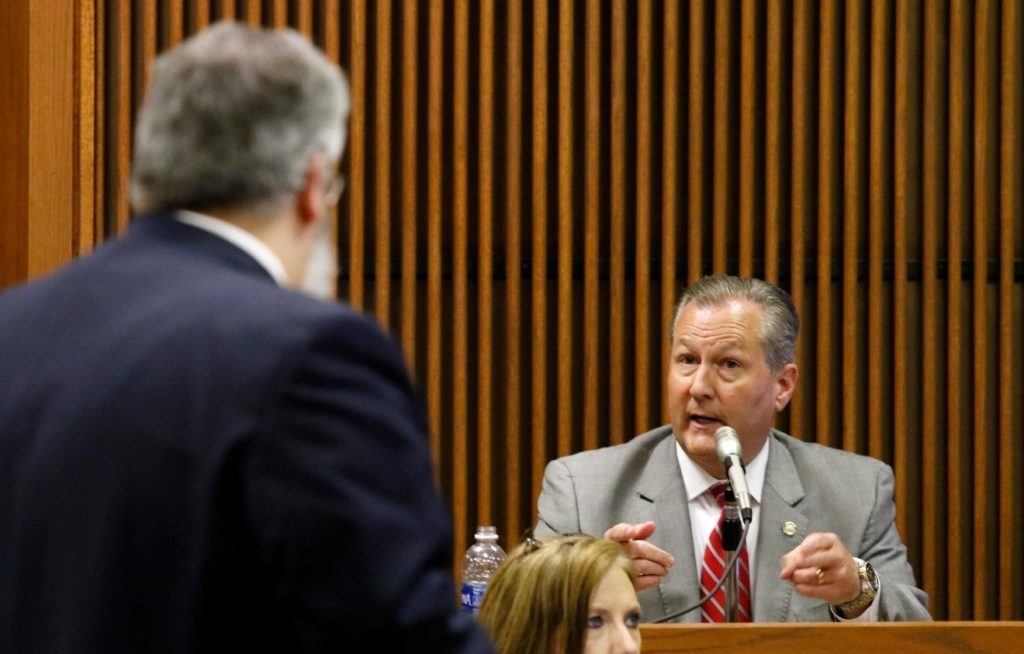
Alabama House Speaker Mike Hubbard continued his testimony on the witness stand Wednesday. There, he adamantly denied intentionally violating any laws, claiming he is “absolutely not” before the courtroom. The defense spent much of the day focused on Hubbard’s consulting work, allowing him the opportunity to explain why his actions were legal in his eyes. During this hourlong testimony before cross-examination, Hubbard often contradicted prior witnesses’ testimony. Before turning Hubbard over for cross-examination, the defense pointedly asked, “Did you ever intend to violate the law?” “Never,” Hubbard answered decisively. The defense went further, “Did you ever knowingly violate the law within these counts?” Hubbard repeated, “Never.” Hubbard was then turned over for cross-examination just after 3 p.m. where Deputy Attorney General Matt Hart questioned Hubbard about his relationship with former Alabama Governor, and current lobbyist, Bob Riley. Earlier Wednesday, Hubbard testified Riley was not only a close personal friend, but he was also like a father to him, which is why he went to the former governor about financial problems with his business. Hart clarified, “He’s a lobbyist, and you’re Speaker of the House.” Hubbard shot back, “He’s my friend.” To drive the point home, Hart referred to the former governor as ‘your friend, the lobbyist’ when speaking to Hubbard the remainder of the day. Repeatedly, Hubbard shot back “my friend, Bob Riley.” Hubbard said he did seek advice from Riley, “but not in my role as speaker.” Hubbard will take the stand again Thursday morning, where cross-examination will continue. He has testified a total of roughly five hours thus far. Hubbard was indicted in October 2013 on 23 felony ethics charges of using his political office for personal gain. If convicted, he faces a maximum penalty of two to 20 years imprisonment and fines of up to $30,000 for each count. He would be removed from office if convicted of any of the 23 charges. Hubbard has since maintained his innocence and continued to serve as Speaker of the Alabama House during the 2016 legislative session.
Mike Rogers votes to delay EPA rule to protect America’s job creators

The GOP-controlled U.S. House of Representatives on Wednesday approved a bill delaying an Obama administration rule setting stricter limits on ozone standards The bill, H.R. 4775: the Ozone Standards Implementation Act of 2016 — approved 234-177 — allows states to pursue cost-effective and practical implementation of the Environmental Protection Agency‘s (EPA) ozone standards. It also protects public health while ensuring practical implementation issues are addressed in an achievable way. “The legislation passed today would delay more EPA regulatory burdens placed on our job creators,” Rogers said in a statement. “This bill also would require EPA Administrator McCarthy to consider feasibility when revising any National Ambient Air Quality Standards, a requirement that will halt out-of-control rule making by the EPA. This bill is a common sense way to fight against the President’s costly environmental agenda and I was pleased to support it.” Under the Clean Air Act, the EPA sets standards for criteria pollutants, including ground-level ozone. EPA established updated ozone standards in 2008, but did not publish implementing regulations for the 2008 standards until March 2015, and states are just beginning to implement those standards. In October of 2015 EPA revised these standards and states are now faced with the prospect of trying to implement overlapping ozone standards.
Phil Williams takes stand against ACLU lawsuit over pro-life law
The American Civil Liberties Union (ACLU) filed a lawsuit against pro-life legislation sponsored by Rainbow City-Republican state Senator Phil Williams during the 2016 Alabama legislative session last week. The lawsuit challenges SB363, the Unborn Child Protection from Dismemberment Abortion Act, which prohibits a procedure called dilation and evacuation (“D&E” abortion), which accounts for approximately 95 percent of all abortions in the second trimester. It allows an exception only in the event of a “serious health risk to the mother.” According to Life News, “the ACLU argued that the laws restrict women’s access to abortion by closing abortion clinics and ‘severely curtailing’ second-trimester abortions in Alabama. Its lawyers also argued that dismemberment abortions are safe, common second-trimester procedures that women should have access to.” Williams responded Tuesday and slammed the ACLU for the lawsuit. “Last week, the ACLU filed a misguided legal challenge against the Unborn Child Protection from Dismemberment Act (SB363), which prohibits the gruesome abortion of unborn children by dismemberment,” Williams said in a statement where he cited a U.S. Supreme Court opinion in the case of Stenberg v. Carhart by Justice Anthony Kennedy, describing the procedure: “The fetus, in many cases, dies just as a human adult or child would: It bleeds to death as it is torn limb from limb.” “Life is a gift from God and protecting life is a primary duty of any court or legislature,” Williams continued. “The people’s representatives in the Alabama Legislature overwhelmingly approved the passage of the Unborn Child Protection from Dismemberment Act, and I am confident the courts will uphold its legality.” The law has been signed by Gov. Robert Bentley and is slated to go into effect August 1.
Mike Hubbard trial: Alabama House speaker continues testimony in own defense
The latest on the public corruption trial of House Speaker Mike Hubbard (all times local): 4:50 p.m. Alabama House Speaker Mike Hubbard squared off with a state prosecutor over consulting contracts and other money the Republican’s companies received. Hubbard and prosecutor Matt Hart exchanged testy remarks Wednesday during the first day of a contentious cross-examination at Hubbard’s ethics trial. Hart questioned Hubbard about $2.3 million his companies received and emails he sent former Gov. Bob Riley, now a lobbyist, seeking help finding a job. Hart referred to Riley as a lobbyist. Hubbard in his responses referenced Riley as “my friend.” Hubbard faces 23 felony ethics charges accusing him of using his political positions to obtain $2.3 million in work and investments for his companies. His defense has argued the transactions fall within exemptions for longstanding friendships and normal business dealings. He returns to the witness stand Thursday. ___ 4:00 p.m. Alabama House Speaker Mike Hubbard returned to the witness stand in his public corruption trial, denying accusations that he used his office to make money and help his business clients. Hubbard on Wednesday said he never knowingly violated the ethics law. Hubbard at several points contradicted testimony from prior witnesses. Hubbard said he had not seen language in a 2013 budget that could have benefited one of his clients until shortly before the House vote. He also denied asking a lobbyist for a $150,000 investment in his printing company. The Republican said calls to a patent office he made on behalf of another client, the owner of a drinking cup company, was because he was a constituent and employer in his district. The company was also paying Hubbard $10,000 a month. Hubbard said the company hired him because of his connections to college sports. ___ 3:35 a.m. Alabama House Speaker Mike Hubbard is testifying in his own defense at his ethics trial. Hubbard will return to the witness stand Wednesday afternoon as he offers jurors his explanation of contracts his companies received and emails he sent seeking work. Hubbard faces 23 felony ethics charges accusing him of using his political positions to obtain $2.3 million in work and investments for his companies. The Republican speaker testified Tuesday that he took precautions to obey the law and sought input from the director of the state ethics commission before accepting contracts. The speaker said he sought advice from friends after being laid off and he vented his financial stress in emails to former Gov. Bob Riley. Prosecutors will get a chance to question Hubbard later. Republished with permission of The Associated Press.
Daniel Sutter: Tenure and the cost of college

The cost of college has risen dramatically in recent decades. According to the College Board, the cost of attendance at public and private universities has increased 78% and 60% over the last two decades, adjusted for inflation. The Board’s net cost of attendance, which includes aid given by colleges to students, has increased somewhat less: 54% and 29% faster than inflation. College graduates earn substantially more than high school grads, 60% or more on average, making access an important component of economic opportunity. The potential that many Americans may be unable to attend college without taking on crushing debt has made higher education inflation an important policy issue. One of the unique elements of the professorial life is tenure, commonly viewed as guaranteeing lifetime employment. Many people presume that guaranteed employment makes professors lazy, which suggests that tenure may contribute to higher education inflation. A closer examination I think reveals otherwise. To begin, tenured faculty can legally be fired, as economists Ryan Amacher and Roger Meiners explain in their book Faulty Towers. The authors served as a university president and provost respectively, and offer the insights of economists and administrators. Tenure just increases the cost of firing a faculty member. Yet even terrible tenured faculty are rarely fired. Why is this? Amacher and Meiners argue that the non-profit organization of private and public universities explains this, and their point provides insight on the challenge of controlling the cost of college. Top administrators must spend money to fire tenured faculty, including legal expenses and typically a settlement with the faculty member. The costs of poor performance are less tangible and fall largely on students. Managers of for-profit businesses might spend money to avoid alienating customers and reducing future profit. Amacher and Meiners argue that without the bottom line of profit, university administrators will rarely bear this expense. Non-profit organization generally serves universities well, but leads to some waste. Tenure emerged about a century ago, while higher education inflation is a recent problem. Colleges kept tuition in check for decades with tenure. This suggests the influence of another factor, like federal government financing since 1965, but that is a topic for another day. Even though guaranteed employment might be presumed to result in slacking, most tenured professors work hard. Tenure ensures that a university reflects the values of faculty, since firing all the tenured faculty is too costly. Administrators must (at least sometimes) accommodate faculty demands. Faculty work hard, but on things that we value. Most faculty value the integrity of our courses and degree programs. Tenure helps faculty resist pressures for grade inflation and the watering down of the curriculum, one of the ways tenure benefits universities. Many faculty also value doing research, or writing books and papers with lengthy and incomprehensible titles. Faculty produce lots of research; by one count, English professors have written over 20,000 papers on Shakespeare. Reduced teaching loads give faculty time to do research, suggesting a possible link to cost. But the inflation-adjusted cost of instruction per student has increased only slightly in recent decades. Administration and student services are the components of spending that have been growing much faster than inflation. Furthermore, faculty research contributes to a university’s reputation and so is not a pure cost. A strong reputation raises the value of degrees, both on the job market and for admission to graduate school. The connection is imprecise, and because reputation is often based on the opinions of university administrators (themselves mostly former faculty), reputation based on research may be self-referential. Pursuing reforms unlikely to control higher education inflation has two costs. First, reforms almost always add to administrative costs, which are driving higher education inflation. Second, reformers could waste an opportunity to do something that would address the problem. Higher education inflation demands serious examination. But despite the appearance of waste, the connection between tenure and rising costs seems at best weak. Of course, as a tenured professor, I may be hopelessly biased on this issue. ••• Daniel Sutter is the Charles G. Koch Professor of Economics with the Manuel H. Johnson Center for Political Economy at Troy University and host of Econversations on TrojanVision.
Jim Zeigler says Robert Bentley impeachment proceedings ‘too slow’
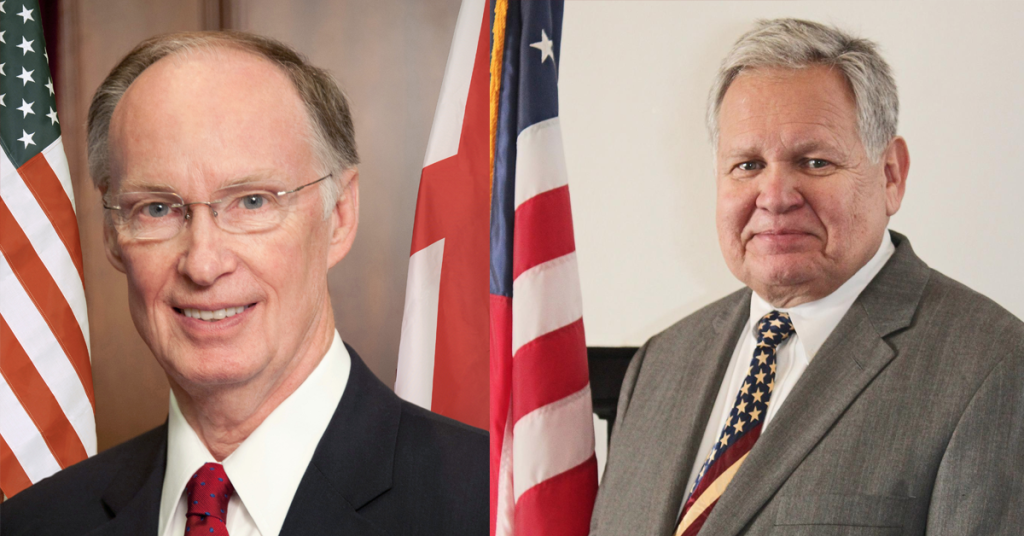
State Auditor jim Zeigler is champing at the bit to impeach embattled Gov. Robert Bentley. A legislative panel will convene on June 15 to begin an investigation into allegations Bentley misused his office and made “inappropriate” advances toward a former advisor. But Zeigler said Wednesday he is “disappointed” the proceedings are taking so long. The House Judiciary Committee will get the ball rolling in terms of formal impeachment this month, but Zeigler said that avenue ignores other methods of investigating and punishing the governor for high crimes and misdemeanors. “The citizens of Alabama are weary of the Bentley problems,” said Zeigler. “They want the air cleared on the Bentley administration soon. It appears that an impeachment investigation would not report its results to the full House until February, 2017 when the regular session starts.” “The people of Alabama do not want to wait until 2017 to clear the clouds over the governor’s office. They want something done now, or at least in the next few months. I agree,” Zeigler said. “It is unfair to the taxpayers for their state government to have to operate under a cloud.” Zeigler has filed a separate complaint against Bentley via the state ethics commission. He attempted to subpoena Bentley amid those proceedings, claiming he had the statutory authority to force the governor to appear before a public meeting in his office. Bentley claimed his office did not have the proper authority, and did not appear at a scheduled meeting. Presumably Zeigler still wants to see the impeachment effort to proceed by that avenue, though he said state law prevents him from discussing the matter.
Suspended chief justice Roy Moore gets additional time to respond
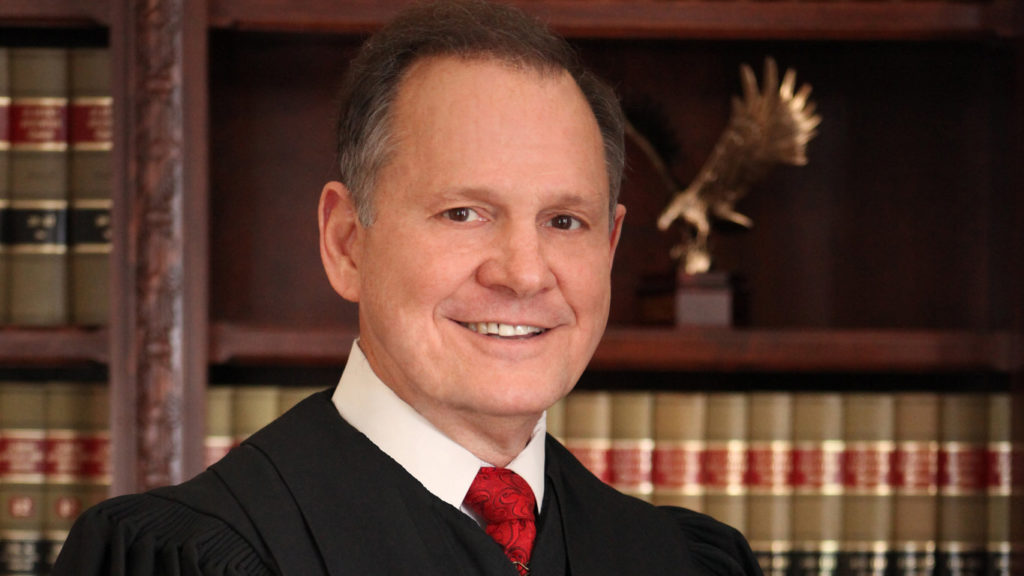
Suspended Alabama Chief Justice Roy Moore has gotten additional time to respond to judicial ethics charges that could result in his ouster. Holly Meade, a spokeswoman for Moore’s attorney, says the Alabama Court of the Judiciary granted a 14-day extension of the deadline for him to file a response to the charges. Monday was the original deadline. The new deadline is June 20. Moore is charged with violating judicial ethics for issuing an administrative order that said Alabama laws against gay marriage remained in place months after the U.S. Supreme Court effectively legalized gay marriage nationwide. Moore is a conservative Christian Republican who opposes same-sex marriage. Moore has filed suit against the Alabama Judicial Inquiry Commission, which investigated complaints against the judge and filed the charges. Republished with permission of The Associated Press.
Tom Jackson: With Donald Trump, GOP faces expensive overhaul
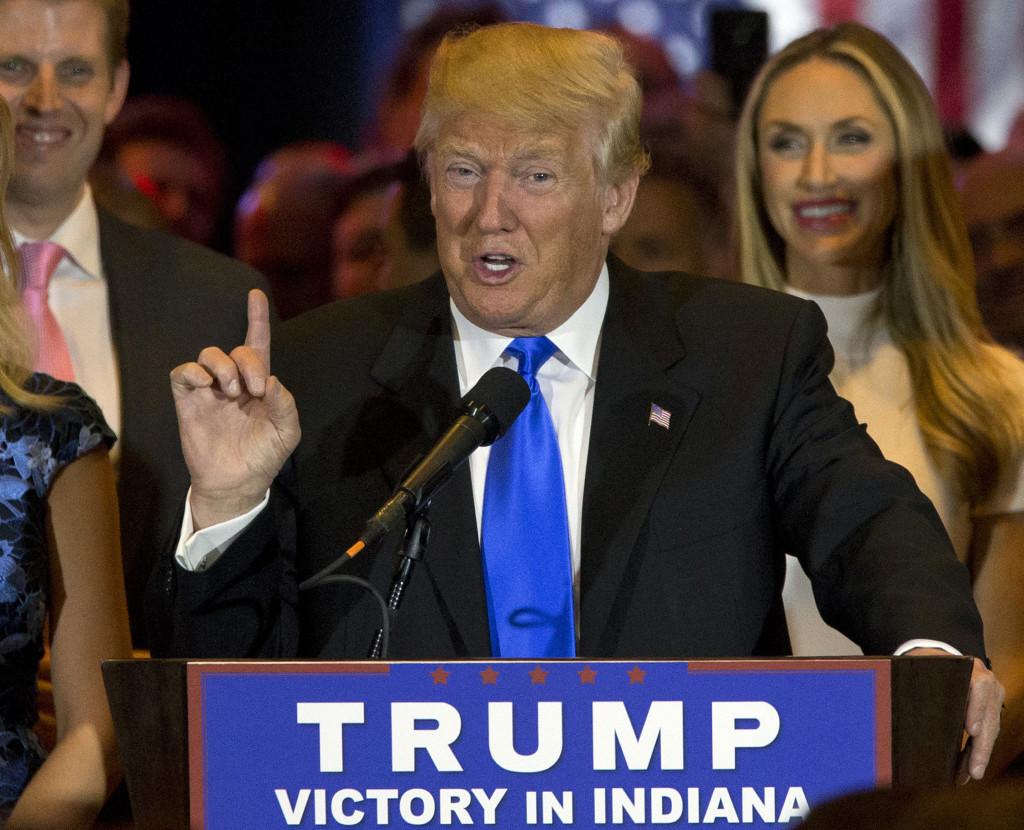
Surveying the conundrum confronting the Republican Party in the age of Donald Trump, an antique TV ad touting Fram oil filters comes to mind. If you bought the Beatles’ White Album the day it was released and remember Muhammad Ali in his prime, you know the spot: A mechanic in the midst of an overhaul pauses to point out the car’s owner could have avoided this wallet-crushing repair if only he’d been punctual about changing the oil. “You can pay me now,” said the mechanic, displaying the filter, “or” — with a nod to the mess over his shoulder — “you can pay me later.” In today’s either-or scenario, Trump is the looming, ugly, costly overhaul; the Republican National Convention might yet be the comparatively thrifty regular-maintenance alternative. Wait. The RNC? Wasn’t the outcome of that settled a month ago? Yes. Probably. Well, maybe. It depends. There was a flurry of activity on that front back in March, when North Dakotan Curly Haugland, a veteran member of the RNC’s standing rules committee, spun up a fascinating theory that no delegates were, in fact, bound to a candidate. Zero. No, not even on the first ballot, and certainly not, as Florida’s rules lay out, three. All of it had something to do with long-standing conflicts within the GOP’s convention rules. The headline on a story few read too deeply was at the time a shocker: “Voters don’t pick the nominee; we do: GOP official.” Trump and his loyalists decried the claim as an attempt to rig the nomination for some oily more-of-what-we-rejected insider. Gary Emineth, also from North Dakota, fretted about the perception of “shenanigans” driving undecided voters toward the Democratic nominee. All that chatter fell silent as Trump pulverized the last of his primary opposition, crested the threshold of the magic 1,237 pledged delegates to become the presumptive nominee, and began piling up oh-all-right-fine endorsements from high-ranking GOP officials. Who but the hardest-shelled #NeverTrump die-hards could blame them? They could risk the shenanigans charge — a potent indictment for a class that still can’t make sense of this unruly new breed of Republican voter — or embrace party loyalty swaddled in loathing of Hillary Clinton. Then, meet now. Since the top guns, including Speaker Paul Ryan, began tumbling into line, Trump has done nothing worthy of their support. Just last week, instead of blistering Clinton over ripe and low-hanging fruit — the withering report on her email practices by a State Department watchdog; an awful monthly jobs report linkable to White House policies she supports; a policy-free foreign policy rant — Trump was lost in an alternative universe of paranoia dipped in ego, topped with racism. Yep. Squandering opportunity in a fit of narcissistic pique, the presumptive presidential nominee of the party of Abraham Lincoln, Calvin Coolidge, Dwight Eisenhower and Ronald Reagan — presidents of high principle affixed to unwavering pole stars — whined about unfair treatment by a judge in a civil lawsuit, because the judge, born in Indiana, is Mexican and he — Trump — means to build a wall on the southern border. Listen. Even if, against scant supporting evidence, Trump is absolutely right, he sacrificed the privilege of waging his claims sometime around Super Tuesday, when voters elevated him from mad-as-hell novelty to viable contender, let alone now that he’s bundled more than sufficient delegates to avoid a contested convention. Or has he? Suddenly, Haugland’s gambit seems worth revisiting. South Carolina Sen. Lindsey Graham rescinded his commitment, charting a detour for other dismayed Republicans in his “off-ramp” speech. “I think it’s very un-American for a political leader to question whether a person can judge based on his heritage,” he said. And also, “If anybody was looking for an off-ramp, this is probably it. There’ll come a time when the love of country will trump hatred of Hillary.” Trump, naturally, offered a statesman’s retort: “Lindsey Graham is a disgrace.” Well. Takes one, etc. In fact, Graham is onto something. Rescinding endorsements is a good place to start. Responsible Republicans must put distance between themselves and Trump’s destructive rants. But it has to be more than a start, which introduces the pay-me-now part of the equation. Figuring out how to head Trump off in Cleveland seems, increasingly, like a necessary payout. Is Haugland right? Can RNC delegates vote their conscience — assuming they have one — from the get-go? The party, urged on by Arizona Sen. Jeff Flake, may have to figure that one out. Would there be fallout? You betcha. Lots of voters fueled by confused, anti-Federalist rage and keen to, well, shenanigans, might boycott Election Day. But the alternative — charging into November behind the drawn sword of an unstable, unhinged, uncurious, thin-skinned rouser of rabbles — would set back genuine, necessary, thoughtful conservative reforms for a generation. As for Republicans shouldering the pay-me-later alternative, the price of a post-Trump overhaul might be impossible to meet. ___ Recovering sports columnist and former Tampa Tribune columnist Tom Jackson argues on behalf of thoughtful conservative principles as our best path forward. Fan of the Beach Boys, pulled-pork barbecue and days misspent at golf, Tom lives in New Tampa with his wife, two children and two yappy middle-aged dogs.
