
Orlando killer appears to have been ‘homegrown extremist’
The gunman whose attack on a gay nightclub left 49 victims dead appears to have been a “homegrown extremist” who espoused support for a jumble of often-conflicting Islamic radical groups, the White House and the FBI said Monday. As Orlando mourned its dead with flowers, candles and vigils, counterterrorism investigators dug into the background of 29-year-old Omar Mateen, the American-born Muslim who carried out the deadliest mass shooting in modern U.S. history. “So far, we see no indication that this was a plot directed from outside the United States, and we see no indication that he was part of any kind of network,” said FBI Director James Comey. But he said Mateen was clearly “radicalized,” at least in part via the Internet. Comey said the bureau is also trying to determine whether Mateen had recently scouted Disney World as a potential target, as reported by People.com, which cited an unidentified federal law enforcement source. “We’re still working through that,” Comey said. The FBI chief defended the bureau’s handling of Mateen during two previous investigations into his apparent terrorist sympathies. As for whether there was anything the FBI should have done differently, “so far, the honest answer is, I don’t think so,” Comey said. Despite Mateen’s pledge of fealty to the Islamic State, a murky combination of other possible motives and explanations emerged, with his ex-wife saying he suffered from mental illness and his Afghan-immigrant father suggesting he may have acted out of anti-gay hatred. He said his son got angry recently about seeing two men kiss. The Orlando Sentinel and other news organizations quoted regular customers at the gay bar as saying they had seen Mateen there a number of times. “Sometimes he would go over in the corner and sit and drink by himself, and other times he would get so drunk he was loud and belligerent,” said Ty Smith. Smith said he saw the killer inside at least a dozen times. Wielding an AR-15 semi-automatic rifle and a handgun, Mateen opened fire at Pulse Orlando early Sunday in a three-hour shooting rampage and hostage siege that ended with a SWAT team killing him. During the attack, he called 911 to profess allegiance to the Islamic State group. At the White House, President Barack Obama said there is no clear evidence so far that Mateen was directed by the group, calling the attack an apparent example of “homegrown extremism.” More details of the bloodbath emerged, with Orlando Police Chief John Mina saying Mateen was “cool and calm” during phone calls with police negotiators. But the chief said he decided to send the SWAT team in and bash through a wall after Mateen holed up with hostages in a bathroom and began to talk about bombs and an explosive vest. “We knew there would be an imminent loss of life,” Mina said. As it turned out, Mateen had no explosives with him. Five of the wounded were reported in grave condition, meaning the death toll could rise. A call went out for blood donations. In Orlando, mourners piled bouquets around a makeshift memorial, and people broke down in tears and held their hands to their faces while passing through the growing collection of flowers, candles and signs about a mile from the site of the massacre. About 300 employees of the Red Lobster restaurant chain — some in business suits, some in chef’s uniforms — emerged from the company’s corporate headquarters and walked two-by-two across the street to the memorial, each carrying a red or white carnation. “We will not be defined by the act of a cowardly hater,” vowed Mayor Buddy Dyer, whose city of a quarter-million people is known around the globe as the home of Walt Disney World and other theme parks. The tragedy hit the city’s gay and Hispanic communities especially hard. It was Latino Night at the club when the attack occurred. “As the names come out, they are overwhelmingly Latino and Hispanic names,” said Christina Hernandez, a Hispanic activist. “These were not just victims of the LBGT community, but of the Hispanic community, as well. This was senseless bloodshed.” Mateen’s grasp of the differences between Islamic extremist groups appeared shaky. During three calls with 911 dispatchers, Mateen not only professed allegiance to ISIS but also expressed solidarity with a suicide bomber from the Syrian rebel group Nusra Front, and a few years ago he claimed connections to Hezbollah, too – both ISIS enemies, according to Comey. The FBI became aware of Mateen in 2013 when co-workers reported that the private security guard claimed to have family connections to al-Qaida and to be a member of Hezbollah, too, Comey said. He was also quoted as saying he hoped that law enforcement would raid his apartment and assault his wife and child so that he could martyr himself. The FBI launched a 10-month preliminary investigation, following Mateen, reviewing his communications and questioning him, the FBI chief said. Mateen claimed he made the remarks in anger because co-workers were teasing him and discriminating against him as a Muslim, and the FBI eventually closed the case, Comey said. His name surfaced again as part of another investigation into the Nusra Front bomber. The FBI found Mateen and the man had attended the same mosque and knew each other casually, but the investigation turned up “no ties of any consequence,” Comey said. Mateen was added to a terror watch list in 2013 when he was investigated, but was taken off it soon after the matter was closed, according to Comey. People who are in that database are not automatically barred from buying guns, and in any case Mateen purchased his weapons in June, long after he was removed from the list. On Sunday, the bloodshed started after Mateen approached the club around 2 a.m., exchanged fire with an off-duty officer working security, and then went inside and started gunning people down, police said. After two other officers arrived and exchanged gunfire with Mateen, the gunman holed up in
Walker County grabs national headlines as a hot spot for painkiller abuse

Walker County is usually nowhere to be found in the pages of The Washington Post. But this week, the rural county one hour away from Birmingham was front and center in a long-form story about a family torn asunder by pill mills and opioid addiction. With a dateline from the county seat of Jasper, population 14,222, the article details in depth the suffering of thousands of mostly white, low-income Alabamians resigned to a life that revolves around the cycle of drug abuse, poverty, and recovery. Everyone, writes Anne Hull in Saturday’s version of The Post, has a theory of how things got so bad that painkillers like OxyContin and Roxicodone are commonly used as currency traded for everyday items like lawn mowers and clothing. It was the global economy that took away the coal-mining jobs. It was Purdue Pharma marketing OxyContin as a less-addictive painkiller. It was greedy doctors who needed to pay for their beach condos in Gulf Shores. It was the druggies and scammers abusing the system. It was God being taken out of the schools. It was the government allowing Medicaid patients to get $800 worth of painkillers for a $6 copay. It was too few jobs and too many with headsets. It was 21st-century America, a place so lonely for some that only pills could fill the void. The crisis, in particular, has struck women like a 33-year-old profiled by Hull: The void runs deepest in one group — white, working-class women in rural areas. In the past 15 years, their death rate has risen more sharply than any other demographic in the United States, studies show. Opioid drugs, alcohol and suicide have been the main contributors, with assistance from economic isolation, anxiety over a loss of security and the comfort offered by Purdue Pharma. … Two generations of prescription painkillers have changed the way people die here. Even more, they have changed the way people live. Great-grandparents are now raising the children of addicted parents and grandparents. Four out of 5 arrests in the county are drug-related. Every week a local newspaper called Just Busted publishes the arrest photos, the exhausted faces on display in most minimarts next to the $14.99 synthetic urine products guaranteed to fool drug screenings. Stuck in this landscape where she has spent her whole life, Jessica Kilpatrick drove home from the courthouse on a two-lane road. She had a splitting headache but feared aspirin might show up in her urine so she rubbed her temples. The employee discount hamburger on the seat beside her was for her husband. In four days, he was leaving for prison. Jessica had just found out. “They say God won’t give you more than you can handle,” she said as she turned into the driveway. “I’m beginning to wonder.” Kilpatrick became addicted after a volleyball injury for which doctors would prescribe her 330 pills a month. Now years later, her husband Jeremy now faces four years in prison for a drug-related violent crime, after an extended period of peaceful sobriety. In the meantime, Jessica sustains herself — and distracts herself from a gloomy outlook — by working at a Burger King in town. Her hopes, and so much of Walker County’s hopes, depend on getting her 18-month period of sobriety to last just one more day. And then another. Read the full story here.
Did a delay in police response give Orlando shooter more time?
As the largest mass shooting in modern U.S. history began to unfold, an off-duty police officer working at a gay nightclub exchanged gunfire with the suspect. But three hours passed before a SWAT team stormed the building and brought the attack to an end. The decision by law enforcement to hold off on entering the Pulse club — where more than 100 people were shot, 49 of them killed — immediately raised questions among experts in police tactics. They said the lessons learned from other mass shootings show that officers must get inside swiftly — even at great risk — to stop the threat and save lives. “We live in a different world. And action beats inaction 100 percent of the time,” said Chris Grollnek, an expert on active shooter tactics and a retired police officer and SWAT team member. Authorities in Orlando say the situation changed from an active-shooter scenario to a hostage situation once gunman Omar Mateen made it into one of the bathrooms where club-goers were hiding. He first had a shootout with the off-duty officer at the club’s entrance. Then two other officers arrived and the firing continued. Experts say there’s a big difference between responding to a lone gunman and a shooter who has hostages. In active-shooter situations, police are now trained to respond immediately, even if only one or two officers are available to confront the suspect. In a hostage crisis, law enforcement generally tries to negotiate. Once in the restroom, Mateen called 911 and made statements pledging allegiance to the Islamic State, Orlando Police Chief John Mina said Monday. That’s when the shooting stopped and hostage negotiators began talking with him, the chief said. “We had a team of crisis negotiators that talked to the suspect, trying to get as much information as possible, what we could do to help resolve the situation … He wasn’t asking a whole lot, and we were doing most of the asking,” Mina said. But Mateen soon began talking about explosives and bombs, leading Mina to decide about 5 a.m. to detonate an explosive on an exterior wall to prevent potentially greater loss of life. The explosives did not penetrate the wall completely, so an armored vehicle was used to punch a 2-foot-by-3-foot hole in the wall about 2 feet from the ground. “We knew there would be an imminent loss of life,” Mina said. Hostages started running out, as did Mateen, who was killed in a shootout with SWAT team members. It turned out there were no explosives. Police tactics changed after the 1999 massacre at Columbine High School, where the first officers to arrive exchanged fire with the gunmen but then stopped and waited for the SWAT team. That took 45 minutes. By then, Eric Harris and Dylan Klebold had killed 12 students and a teacher. At the time, the standard police practice was to set up a perimeter, wait for SWAT officers and then go inside. Authorities began to realize that the delayed response gave suspects more time to kill. “We can’t just let him have free rein and continue to shoot,” said Ben Tisa, a former FBI agent and former SWAT team member. Experts point to other mass shootings where a delay in confronting the shooter probably gave the gunman time to maneuver and attack. A mass shooting in 1984 at a McDonald’s in San Ysidro, California, offered one of the earliest lessons, with 21 people being killed and 19 wounded before a SWAT team killed the gunman about 45 minutes later. Incorrect or incomplete information is typical during police emergencies. And the gravity of the decisions is not lost on SWAT teams and their commanders. Civilian lives are at risk, along with those of police officers who are often outgunned by suspects. “You have split seconds,” said Thor Eells, commander of the Colorado Springs Police Department and chairman of the board of the National Tactical Officers Association. Almost immediately after the shooting began, the nightclub posted a note on its Facebook page telling people to get out and “keep running.” Grollnek, a consultant who conducts active shooter training for law enforcement, said that’s another lesson from other mass shootings: Civilians can’t expect to stay safe by heeding the old advice to hide or shelter in place. “The problem is we’re failing to evolve by learning the lesson that hiding does not work,” he said. “Running works. Everyone who escapes to tell their story says, ‘I ran away. I heard a noise on my left, and I went to my right and I got out.’” But Grollneck reserved his anger for the police commanders in Florida who didn’t allow SWAT team members to enter until several hours after the shooter began the attack. “How have we failed so poorly that we did not learn our lesson … when we see SWAT teams respond and not making entry creates victims,” he said. “Period. End of story.” Republished with permission of the Associated Press.
Martin Dyckman: By electing pro-gun politicians, we are allies of home-grown terrorists
What fools we are. What willful, stubborn, persistent, incurable fools. Americans submit by the millions to the Transportation Security Administration’s multiple indignities and inconveniences. The TSA will cost us $5.1 billion this year. We’ll fill its trash barrels with tons of cosmetics, lotions and bottled water that we can’t carry on board. This is in the hope of preventing terrorists from committing more mass murders, such as those of September 11, 2001. And there haven’t been any more in that manner. But that guards only one gate, while leaving another gaping. Even as you next pose like a prisoner with arms raised or stand still for a TSA officer to wand you, some terrorist with massacre in mind could be walking into any gun shop and walking out with the means to carry it out. That’s what Omar Mateen did last week in Florida, where no permit is needed to buy or possess any firearm other than a machine gun. Florida allows even an AR-15 or its equivalent. Such weapons were invented for use in war, not self-defense. They fire as rapidly as a finger can pull a trigger. With a technique called bump fire, a trained shooter supposedly can achieve a rate of 700 rounds per minute. And so Florida is now the site of America’s worst mass shooting, with 49 innocent people dead and 53 others wounded, many grievously, at an Orlando night club named Pulse. Mateen appears to have been the most dangerous type of terrorist — homegrown, out of sight of any border control, virtually undetectable. And yet, there were warnings. His employer, a British-based security firm whose clients include the U.S. government, reportedly was told, according to The New York Times, that he spoke racial, ethnic and sexist slurs and talked about killing people. The FBI looked into him twice. Whether there was negligence is an appropriate question for investigation. The bigger question, though, is how many more Americans must die en masse, in nightclubs and restaurants and movie theaters and churches and schools, in as few seconds as it takes to read the sentence, before we learn to prohibit the sale and possession of such weapons of mass destruction? How many more terrorists will we arm? Predictably, of course, Donald Trump right away scapegoated the entire Muslim community, asserting without a shred of evidence that someone must have known what Mateen intended. In fact, most of the victims of mass shootings in the United States — 621 dead, 594 injured since 1982, according to Mother Jones — were killed by non-Muslims. Do we blame Christianity for Charleston, Virginia Tech, or for Newtown, Aurora, and Columbine? Or for the bombings and shootings, some fatal, at abortion clinics? Radicalism exists in nearly every religious faith and is the enemy of them all. Right after the San Bernardino massacre, the Senate voted 45-54 against prohibiting persons on the terrorism watch list from buying firearms. If the list is faulty, as some senators objected, it should be fixed. But as of now, there can be no confidence that someone on that list won’t be the next mass murderer. We’ll hear the gun lobby, doubtlessly, argue yet again that the best defense — the only defense — against the consequences of its insane demands is for everyone to have guns everywhere. Now suppose that half the people in that crowded, dimly lighted club had weapons when the shooting began. Think about it. Many more than 49 innocent people would be dead. Even when highly trained police stormed the scene, they couldn’t be sure that Mateen would be the only fatality. Someone posted to Facebook the other day that the NRA is America’s ISIS. Not so. The NRA does not set out to massacre innocent people. But the NRA and its associates in the gun lobby are indeed the allies of ISIS and of every other terrorist individual or organization, whatever its roots, where hatred is harbored against Americans because of their faiths, their origins, their race, or their nationality, or where mental illness inspires inchoate rage. And we — you and I, fellow citizens, are also terrorism’s allies, however unwilling or unwitting me may believe we are. We are terrorism’s allies so long as we submit to electing people to public office who are so stupid, selfish and cowardly that they would rather enact the insanities of the gun lobby than take reasonable and necessary steps to avert mass murder. There is no sound reason why any private citizen needs semi-automatic weapons, especially not AR-15s. Their possession and sale should be criminalized, except perhaps for gun clubs where the weapons would not be allowed off the premises. For a fraction of what the TSA is costing, we could buy back every such weapon and pay the owners a bonus for their troubles. The Second Amendment, of which the Supreme Court and the gun lobby have such a distorted view, was written in an age when no firearm on earth could be discharged more than three or four times a minute. Time and technology have rendered the gun lobby’s interpretation functionally obsolete. How many more Americans must be slaughtered before we, and our politicians, face that fact? ___ Martin Dyckman is a retired associate editor of the newspaper now known as the Tampa Bay Times. He lives in Asheville, North Carolina.
Tom Jackson: Jihadi wannabe shoots up Orlando; Obama blames us
Once again, a great city that rightly prides itself on multicultural tolerance has been shredded by a fanatical hater whose worldview is rooted in 7th Century mysticism and hero worship. London. Madrid. Paris. Brussels. Now, Orlando. America’s getaway destination. Home. And once again, leaders of a political party with roots that trace to the Enlightenment are blaming the tools of destruction, not the backward extremism that put those instruments to evil use. Thus, in an otherwise down market Monday morning, did gun stocks — Smith & Wesson and Sturm Ruger, in particular — surge. This is perfectly understandable. When certain of America’s leaders target firearms after the ideologically charged slaughter of unarmed innocents, Americans know they are not serious about eradicating the next potential triggerman’s vile inspiration. Yes, I know. Among one-point-six-billion Muslims, only a statistically tiny portion are truly bad actors. But even if it’s only one percent, that’s a whole lot of radicalism for one small planet to manage. Along those lines, it’s darn near impossible to manage that which you refuse even to identify. Alas, such is President Obama’s M.O. Once again the moment came upon him to make plain the war forced upon us, and once again he dashed to a nonsense prescription — we require more extensive regulation of inanimate objects — while aggressively ignoring the jihadi in the room. What drivel. What insidious misdirection. Yes, we had a so-called “assault weapons” ban once upon a time, and the country didn’t collapse. Should we reinstate it? Only if we think meaningless flourishes will solve the raging trouble at hand. Studies indicate the ban made virtually no difference in gun crime. Bad dudes merely switched weapons of choice. Wait. The president wasn’t finished. There was an outrage ahead. Besides guns, Obama’s blame fell on, well, us. Really. Because, after all, in the president’s assessment, we all are denizens of the swamp that produced the execrable Omar Mateen. Obama: “We need to demonstrate that we are defined more — as a country — by the way [the victims] lived their lives than by the hate of the man who took them from us.” This blame-shifting is indefensible, even monstrous. A feverish Islamist extremist inflamed by ISIS acts on orders laid out plainly in sharia law and espoused by respected Muslim holy men, and Obama tells us to check our consciences. Yes, the people who love “Will & Grace” and “Modern Family,” who at worst sighed in capitulation over the Supreme Court’s same-sex marriage ruling; and who adore Neil Patrick Harris playing heterosexual romantic leads — we are the ones who need to make plain what defines us. That’s unreservedly disgusting. We didn’t establish a pattern of sweaty bigotry for Jews, African Americans, gays and women. We weren’t interviewed three times in two years by the FBI for linking ourselves to terror organizations and having had contact with a subsequent suicide bomber. We didn’t perpetrate such violence on our spouses that they had to flee half the country away to feel safe. We didn’t make a 911 call to proclaim allegiance to ISIS before hauling a small arsenal into an Orlando nightspot and start shooting up the place. That, and more, is all on Mateen, the vermin ISIS warrior/martyr wannabe. But that’s a subject too uncomfortable for President Obama, who called out hate and terror, but, when it came to honestly identifying the animating energy, flinched. Because blaming Americans is what he does. Every time. Every damn time. ___ Recovering sports columnist and former Tampa Tribune columnist Tom Jackson argues on behalf of thoughtful conservative principles as our best path forward. Fan of the Beach Boys, pulled-pork barbecue and days misspent at golf, Tom lives in New Tampa with his wife, two children and two yappy middle-aged dogs.
Obama says no signs Orlando shooter was part of larger plot
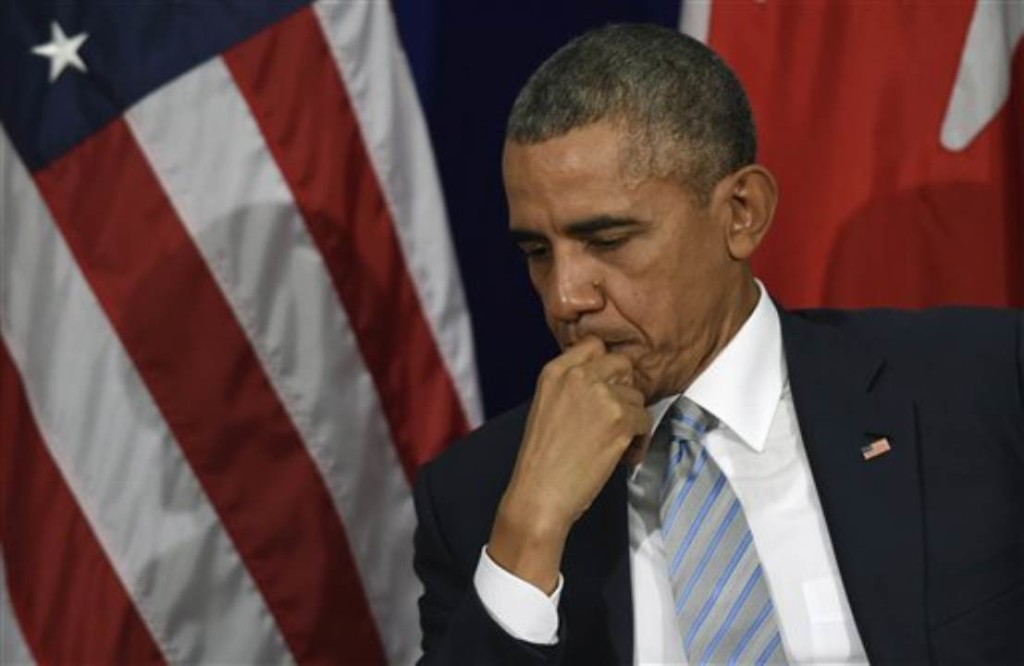
The gunman in the attack that killed 49 people at an Orlando nightclub was inspired by extremist information over the Internet, President Barack Obama said Monday, calling it an apparent example of “homegrown extremism” that U.S. officials have been worrying about for years. Obama, speaking in the Oval Office after meeting with the FBI director, said the attack appears similar to the shooting late last year in San Bernardino, California, though he added that “we don’t yet know.” Investigators in that attack determined the killers weren’t directed from overseas but were at least partly inspired by the Islamic State group. “At this stage, we see no clear evidence that he was directed externally,” Obama said, referring to suggestions that the Islamic State group or other extremists had orchestrated the attack. “It does appear that at the last minute, he announced allegiance to ISIL,” he said, using an acronym for the extremist group. He said the probe was being treated as a terror investigation and that investigators were examining materials from the Internet that the shooter may have consumed. Obama said investigators are still looking into the motivations of the shooter and considering all possibilities. He said organizations like IS, al-Qaida and others target gays and lesbians because of their “vicious, bankrupt ideology” and their religious beliefs about homosexuality. “The fact that it took place at a club frequented by the LGBT community I think is also relevant,” Obama said. The attack took place at a gay nightclub. Obama spoke after getting briefed on the investigation by FBI Director James Comey, Homeland Security Secretary Jeh Johnson and other officials. Republished with permission of The Associated Press.
Mike Hubbard: Working to come to terms with ethics trial verdicts, maintains his innocence
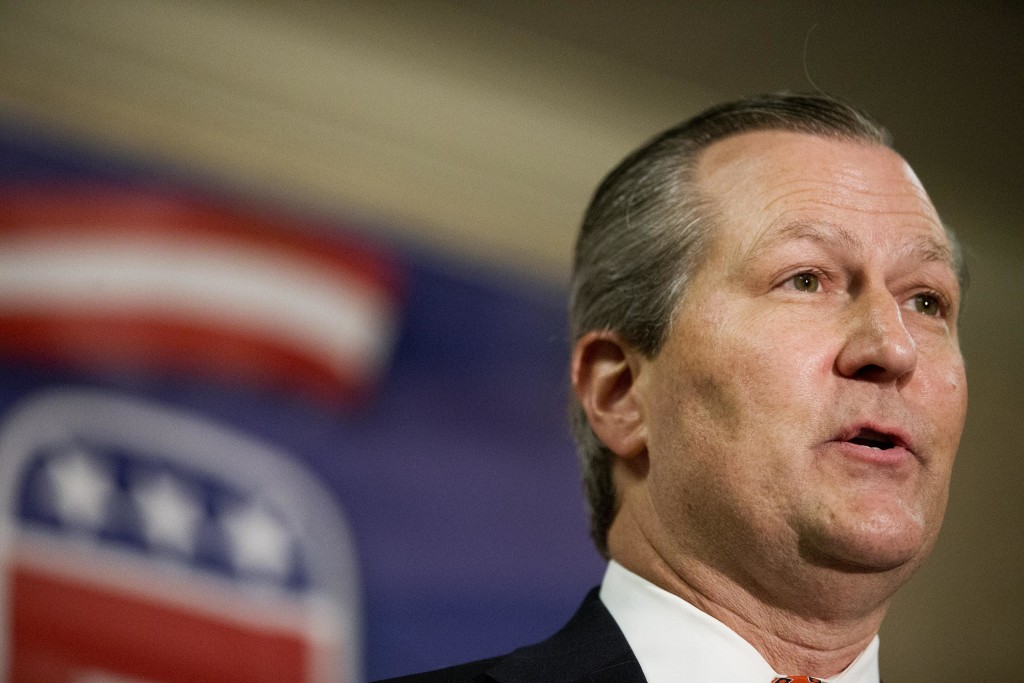
The former speaker of the Alabama House of Representative said he is leaving politics with his head held high and working to come to terms with the ethics conviction that removed him from office. The statement to The Associated Press was Mike Hubbard‘s first public comment since his conviction Friday on ethics charges. He also maintained his innocence. “My family and I are working to come to terms with the disappointing verdicts, and I continue to steadfastly maintain my innocence. We have every confidence that the coming appeals process will be successful,” Hubbard said. A jury found Hubbard guilty on 12 charges that he wrongly solicited consulting contracts and investments and used his office to benefit his businesses and clients. Each count is punishable by up to 20 years in prison. The convictions resulted in Hubbard’s automatic removal from office. The former speaker thanked the people of his Auburn district for allowing him to represent them for the last 18 years. “It has been an honor that I will always remember and hold close to my heart no matter what the future may hold,” Hubbard said. Hubbard’s removal from office adds to ongoing political turmoil in Alabama involving GOP leaders in all three branches of government. A House Judiciary Committee holds its first meeting Wednesday on calls to impeach Gov. Robert Bentley following a sex-tinged scandal involving a former aide. Chief Supreme Court Justice Roy Moore is suspended from office and faces possible ouster over accusations that he violated judicial ethics during the fight about same-sex marriage. Hubbard was elected to the Alabama House of Representatives in 1998. As state GOP chairman, he spearheaded Republicans’ 2010 successful offensive to win control of the Legislature for the first time in 136 years. The Auburn Republican said he hoped the accomplishments of the Alabama Legislature during the six years under his leadership would not be overshadowed. Hubbard said he was proud of the legislature’s record on education, job creation and other issues. Prosecutors in closing arguments to the jury depicted Hubbard as a politician who put a “For Sale” sign on his office and used the power and prestige of his position to make money and benefit his businesses. Defense lawyers argued the transactions involved legitimate business dealings or requests to longtime friends, and members of the Legislature must be able to earn a living. Hubbard in his statement said it is “a scary and dangerous” precedent if it is, “impossible for citizen-legislators to serve in public office.” “I now take leave of the political arena with my head held high and with eternal thanks for the unconditional love of my wife, Susan, and Clayte and Riley, the two fine young men we have raised together,” Hubbard said. Republished with permission of The Associated Press.
Hillary Clinton talks teamwork in wake of Orlando tragedy
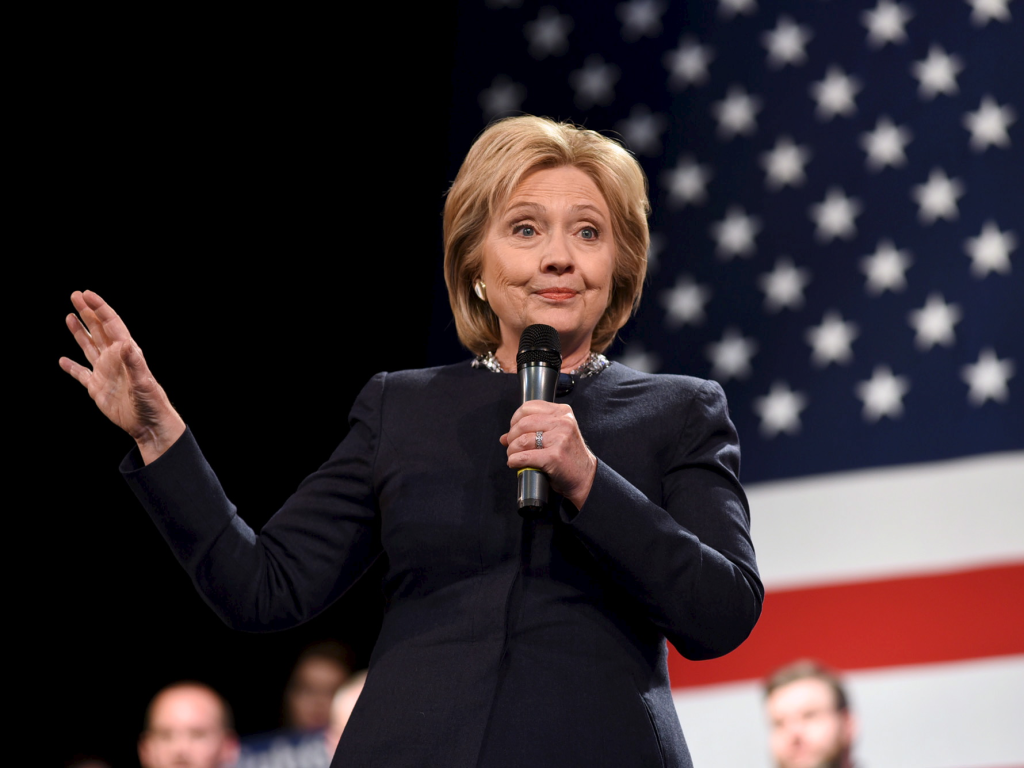
Hillary Clinton on Monday said that the Orlando nightclub massacre called for “statesmanship, not partisanship.” The presumptive Democratic presidential nominee spoke on MSNBC’s “Morning Joe” program. “This is a moment for Republicans, Democrats and Independents to work together as one team,” she said, according to a rush transcript. “The American team.” “I think that our fellow American citizens expect that … I remember we all came together as one nation after 9/11 and we should recapture that spirit,” she added. A gunman with a AR-15 assault rifle opened fire inside Pulse Orlando, a popular gay nightclub, early Sunday morning. Police say 49 people were killed, and another 53 were seriously injured. The shooter has been identified as Omar Mateen of Fort Pierce. He was killed at the scene. Authorities say Mateen called 911 during the attack and pledged allegiance to the Islamic State terror group, also known as ISIS. “You know, let’s have a very clear, rational discussion about what we do right and what we can improve on and how we’re going to protect Americans both from the threats of terrorism and ISIS, how we’re going to defeat ISIS and how we’re going to try to save people’s lives from the epidemic of gun violence now that we’re seeing terrorists use these assault weapons,” Clinton said. “That has to be part of the debate,” she said. The clip can be viewed here.
As the shootings unfolded, a horror for one mother via text

Mina Justice was sound asleep when she received the first text from her son, Eddie Justice, who was in the gay nightclub when a gunman opened fire, leaving 50 dead and more than 50 wounded. This is the conversation she had over text message with her 30-year-old son: “Mommy I love you,” the first message said. It was 2:06 a.m. “In club they shooting.” Mina Justice tried calling her 30-year-old son. No answer. Alarmed and half awake, she tapped out a response. “U ok” At 2:07 a.m., he wrote: “Trapp in bathroom.” Justice asked what club, and he responded: “Pulse. Downtown. Call police.” Then at 2:08: “I’m gonna die.” Now wide awake, Justice dialed 911. She sent a flurry of texts over the next several minutes. “I’m calling them now. U still in there Answer our damn phone Call them Call me.” The 911 dispatcher wanted her to stay on the line. She wondered what kind of danger her son was in. He was normally a homebody who liked to eat and work out. He liked to make everyone laugh. He worked as an accountant and lived in a condo in downtown Orlando. “Lives in a sky house, like the Jeffersons,” she would say. “He lives rich.” She knew he was gay and at a club – and all the complications that might entail. Fear surged through her as she waited for his next message. At 2:39 a.m., he responded: “Call them mommy Now.” He wrote that he was in the bathroom. “He’s coming I’m gonna die.” Justice asked her son if anyone was hurt and which bathroom he was in. “Lots. Yes,” he responded at 2:42 a.m. When he didn’t text back, she sent several more messages. Was he with police? “Text me please,” she wrote. “No,” he wrote four minutes later. “Still here in bathroom. He has us. They need to come get us.” At 2:49 a.m., she told him the police were there and to let her know when he saw them. “Hurry,” he wrote. “He’s in the bathroom with us.” She asked, “Is the man in the bathroom wit u?” At 2:50 a.m.: “He’s a terror.” Then, a final text from her son a minute later: “Yes.” More than 15 hours after that text, Justice still hasn’t heard from her son. She and a dozen family and friends are at a hotel that has become a staging area for relatives awaiting news. Any news. “His name has not come up yet and that’s scary. It’s just …” she paused and patted her heart. “It’s just, I got this feeling. I got a bad feeling.” Republished with permission of the Associated Press.
Friends, family remember victims of Florida shooting
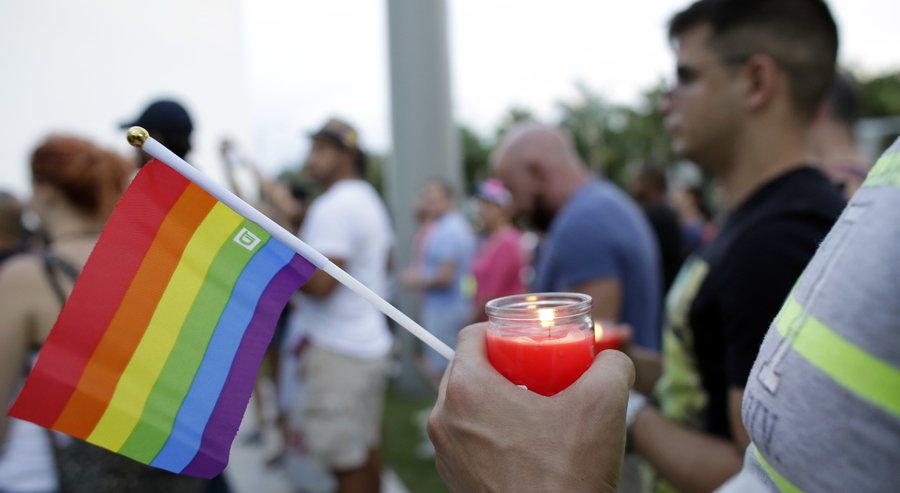
A gunman wielding an assault-type rifle and a handgun opened fire inside a crowded gay nightclub in Orlando, Florida, early Sunday, killing at least 50 people in the deadliest mass shooting in modern U.S. history. Here are stories of some of the victims. ___ Edward Sotomayor, 34, was a caring, energetic man known for wearing a silly top hat on cruises, according to David Sotomayor, who said the two discovered they were cousins after meeting at Orlando’s annual Gay Days festival around a decade ago. David Sotomayor, who lives in Chicago, told The Associated Press Sunday that Edward worked for a company that held gay cruises and often traveled to promote the company’s events. “He was just always part of the fun,” David Sotomayor said. The two texted regularly and kept in touch, last seeing each other earlier this year at a filming of the television reality show “RuPaul’s Drag Race,” David Sotomayor said. David Sotomayor is a drag queen who appeared on a season of the show using the name “Jade.” He said Edward Sotomayor supported him and often sent him Facebook messages. They last exchanged messages late last week. “You never think that’s going to be the last time you speak to him,” David Sotomayor said. “It’s just heartbreaking to know it just can happen anytime.” ___ Juan Ramon Guerrero, 22, told his cousin Robert Guerrero he was gay about two years ago, but he was worried about how the rest of his family would react. He did not tell them until just before the beginning of this year. And when he did? “They were very accepting,” said Guerrero, 19. “As long as he was happy, they were OK with it.” On Sunday morning, after learning that so many people had died at a gay nightclub, Pulse, that his cousin had gone to once in a while, Guerrero started to become concerned. Later in the day, his fears were realized when the family learned that Guerrero was identified as one of the victims. Robert Guerrero said his cousin worked as a telemarketer and in recent months he started attending college at the University of Central Florida. Guerrero said his cousin didn’t quite know what he wanted to study, but he was happy to be in school. And he was happy in a relationship with a person his relatives came to regard as a member of the family, Guerrero said. “He was always this amazing person (and) he was like a big brother to me,” he said of his cousin. “He was never the type to go out to parties, would rather stay home and care for his niece and nephew.” ___ Stanley Almodovar III’s mother had prepared a tomato-and-cheese dip for him to eat when he came home from his night out. Instead, Rosalie Ramos was awakened by a call at 2 a.m. Sunday telling her something had happened. Ramos told the Orlando Sentinel her son, a 23-year-old pharmacy technician, posted a Snapchat video of himself singing and laughing on his way to Pulse nightclub. “I wish I had that (video) to remember him forever,” she told the newspaper. A friend, Hazel Ramirez, told The Washington Post she also saw a video from Almodovar on Snapchat and learned Sunday afternoon what had happened. Ramirez described Almodovar as “kind, but sassy,” and someone who was comfortable with his own sexual identity. “He was so proud of who he was,” she told the Post. “He would do his makeup better than anyone else. It was so easy to be myself with him. Republished with permission of The Associated Press.
