
Hillary Clinton warns Donald Trump would plunge economy into recession
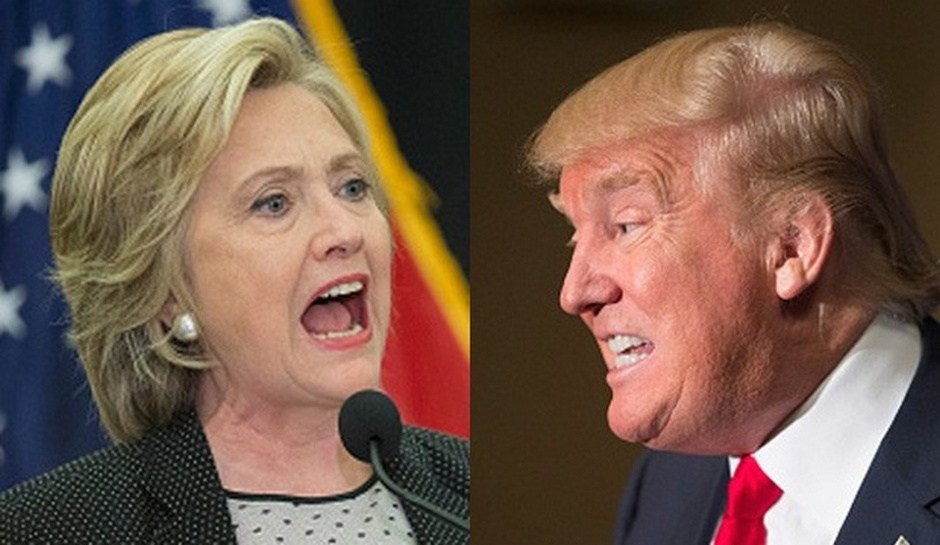
Hillary Clinton said Tuesday that Donald Trump would send the U.S. economy back into recession, warning his “reckless” approach would hurt workers still trying to recover from the 2008 economic turbulence. Clinton’s address in Ohio, one of the most important battleground states, sought to define Trump as little more than a con man, whose ignorance and ego would tank the global economy, bankrupt Americans and risk the country’s future. “Every day we see how reckless and careless Trump is. He’s proud of it,” the Democratic presidential candidate said. “Well, that’s his choice. Except when he’s asking to be our president. Then it’s our choice.” The speech was similar to one earlier this month in San Diego in which Clinton tried to undercut the Republican candidate’s foreign policy credentials. This time, at an alternative high school in Columbus, she questioned whether Trump has the temperament to guide the economy and repeatedly pointed to his business record as evidence of how he would treat small businesses and working families. “Just like he shouldn’t have his finger on the button, he shouldn’t have his hands on our economy,” Clinton said. Her speech included stinging one-liners, including a takedown of Trump’s best-selling books. “He’s written a lot of books about business. But they all seem to end at Chapter 11,” she said, in an allusion to the U.S. bankruptcy code. Trump responded on Twitter as Clinton delivered her address, writing in one tweet: “How can Hillary run the economy when she can’t even send emails without putting entire nation at risk?” He appeared to be referring to Clinton blending her personal and official emails on a homebrew server in her house, while she was secretary of state. The businessman later appeared to embrace one of Clinton’s attack lines, writing: ‘I am “the king of debt.’ That has been great for me as a businessman, but is bad for the country. I made a fortune off of debt, will fix U.S.” Republican National Committee chairman Reince Priebus said Clinton was “the last person qualified” to talk about improving the economy, pointing to “eight years of disastrous Obama policies.” Clinton used Trump’s own statements to undercut his economic credentials, citing remarks he made that that U.S. could sell off assets, default on its debt and that wages are too high. She also repeated a comment he made that pregnant employees are an “inconvenience.” Clinton said financial markets often “rise and fall” on comments by presidential candidates. Suggesting the United States could default on its debt could cause a “global panic,” she added. She also seized on a report Monday by Moody’s Analytics which found Trump’s plans would lead to a “lengthy recession,” costing nearly 3.5 million American jobs. The analysis by Moody’s Mark Zandi, a Clinton donor and former economic adviser to Republican Sen. John McCain‘s 2008 campaign, predicted Trump’s approach would swell the federal debt as the U.S. economy becomes more isolated by less trade and cross-border immigration. Trump has pointed to trade as a major difference with Clinton, saying last week that her support of past trade deals, such as the North American Free Trade Agreement, has cost the country “millions of jobs.” He also has assailed her promotion of the Trans-Pacific Partnership trade deal as Obama’s secretary of state as a sell-out of U.S. workers. Clinton announced her opposition to the TPP last October, saying it failed to meet her test of providing good jobs, raising wages and protecting national security. Brushing it aside, Clinton said there was a difference between “getting tough on trade” and “recklessly starting trade wars.” She noted that many of Trump’s products are made in countries like China, Mexico, Turkey, India and Slovenia. Bolstered by more than $40 million in television advertising, Clinton and her Democratic allies are trying to use this period before next month’s Democratic National Convention to disqualify Trump among moderate voters on the economy and prevent him from successfully wooing working-class voters in battleground states like Ohio, Wisconsin and Michigan. Fundraising reports filed Monday showed Clinton with a big advantage, starting the month with $42 million in the bank compared with Trump’s $1.3 million. Clinton was expected to talk about “ambitious new goals” for the economy Wednesday in Raleigh, North Carolina. Republished with permission of The Associated Press.
Alabama slips to 46th nationally in child welfare report

More than one in four Alabama children live in poverty, according to the Annie E. Casey Foundation‘s 2016 Kids Count Data Book. The Casey Foundation is a philanthropic organization focused on improving the well-being of American children. The study ranks child welfare by evaluating data across four areas: economic well-being, education, health, and family and community. The data book focuses on trends over the six-year period from 2008 to 2014 to give each state a composite score. The well-respected annual report, released Tuesday, shows Alabama slipping to 46th in a national ranking of the top states to be a child. That’s one spot worse than 2015’s 45th ranking, making it the second year in a row the state has seen its overall national ranking drop. Here’s how Alabama ranks across the four categories: Overall rank: 46th Economic well-being rank: 46th Education rank: 48th Health rank: 42nd Family and community rank: 43rd The report found “unacceptable levels of childhood poverty, an increasing number of children in single-parent families and a rising number of children who lived in high-poverty neighborhoods, which pose risks to children and are associated with diminished prospects later in life.” “While we are certainly pleased to see progress in some of the Kids Count Data Book indicators over the last six years, it is hard to applaud where we stand relative to the rest of the country,” said Melanie Bridgeforth, executive director of VOICES for Alabama’s Children, in a news release. “In order to improve our state standing, we must look beyond the rankings and study the story behind the numbers.” Those numbers included a 37 percent decrease in teen pregnancy rates since 2008, while the percentage of Alabama children who live in families where the head of household lacks a high school diploma fell by 13 percent. But there were also stark reminders of the work that remains for child welfare advocates: the study found no change or worsening results in all four economic measurements, including childhood poverty (up 27 percent), percentage of children whose parents lack steady jobs (up 13 percent), percentage of children living in households with a difficult time paying the rent or mortgage (up about 30 percent). The rate of teens neither working nor in school remained unchanged, while the percentage of children living in high-poverty areas also grew by 31 percent compared to 2006-2010 and the percentage of children living in single-parent families increased by 11 percent compared to 2008. “Alabama leaders have begun taking steps to improve our children’s educational outcomes, but the results will take time before we start to see our test numbers come up,” Bridgeforth continued. “The Kids Count Data Book demonstrates how important it is for Alabama to stay the course with its College- and Career-Ready Standards, and why we must continue to increase access to high-quality Pre-K classrooms. We will continue to work with state leaders to identify where they should focus their attention.”
Donald Trump’s campaign fundraising falling far short of Hillary Clinton’s
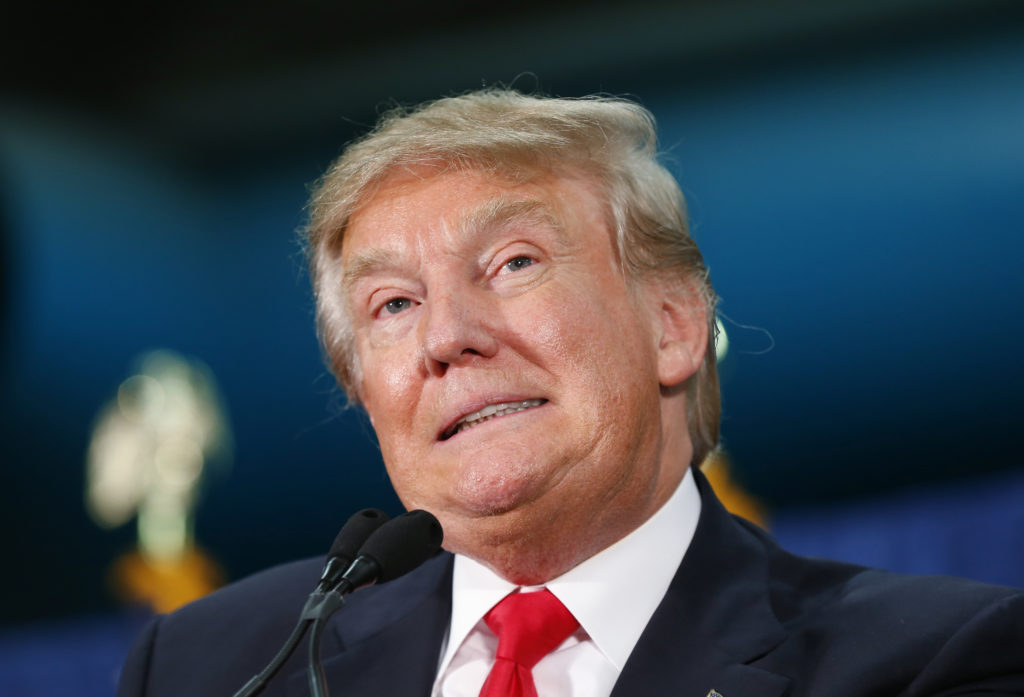
By any measure, Donald Trump’s fundraising is falling far short of his Democratic rival, Hillary Clinton. Together, Trump and the Republican National Committee brought in about $18.6 million in May, including another loan from the candidate. Clinton and the Democratic National Committee raised more than double that. His campaign started June with $1.3 million in the bank; hers, with $42 million. Wealthy Clinton donors also chipped in another $12 million for a super PAC supporting her, while one backing Trump pulled in just over $1 million. Here are the highlights of the most recent fundraising reports in the 2016 federal elections: TRUMP AND GOP CASH SLOW Neither Trump nor his party saw an immediate fundraising boost last month, even though he emerged victorious on May 4 after a primary contest once crowded with 16 opponents. Donors gave just over $3 million to Trump’s campaign. The billionaire businessman lent his effort another $2.2 million, bringing his total outlay over the past year to about $46 million. The RNC — which Trump says he is counting on to provide much of his general election operations — took in about $13 million last month. That’s about what it raised in April, without a presidential candidate to generate fundraising enthusiasm. The party began June with about $20 million in the bank and $7 million in debt. By comparison, four years ago, the RNC began June with about $60 million in the bank. In May 2012, presumptive nominee Mitt Romney and the RNC raised more than $76 million, about quadruple this May’s haul. The figures appear to undercut Trump’s comments that money is “pouring in” to the party. TRUMP PACS Great America PAC, one of several groups that say they want to help Trump win the White House, took in $1.4 million last month, the most it has raised so far. One of its top donors was Stanley Hubbard, a Minnesota-based broadcasting executive who decided to back Trump after putting money behind many of his GOP rivals in the primary contest. He gave $25,000. Douglas Kimmelman, an investment manager at Energy Capital Partners, gave $50,000. The super PAC also benefited from about $83,000 in donated television production by Rapid Response Television, which lists an address in Stafford, Texas. Most of the other pro-Trump groups were not due to file Monday, having either just formed recently or being subject to a different reporting schedule. CLINTON MONEY Clinton’s campaign raised more than $26 million in May, her fundraising report shows. Throughout May, Clinton was embroiled in a primary contest with Vermont Sen. Bernie Sanders, and she spent about $14 million, the May report shows. For his part, Sanders raised $16.4 million and spent $12.9 million last month. He started June with $9.2 million in cash, which was better than he did in April, when he ended the month with only $5.7 million on hand. Clinton also had a hand in bringing in money for the DNC in May. The committee reported raising $12.3 million, but continued to report millions in debt. At the start of this month, the committee reported about $9 million cash on hand, but it also reported $7.9 million in debt. Additionally, a super PAC helping Clinton’s general election effort raised $12 million in May. Some of that group’s biggest contributors include billionaire financier Donald Sussman of New York, who gave $2 million, and Chicago media billionaire Fred Eychaner, who gave $3 million. New York financier Bernard Schwartz contributed $1 million. SENATE CASH Donors are beginning to give big to efforts beyond the presidential race. On the Republican side, the Freedom Partners Action Fund, a political group led by conservative billionaire industrialists Charles and David Koch, collected $8 million, mostly in large donations, last month. Among the key donors: Charles Koch, who gave $3 million; Wisconsin roofing company executive Diane Hendricks, who gave $2 million; and Virginia developer Richard Gillam, who gave $1 million. Arkansas-based poultry company Mountaire Corporation contributed $2 million. Freedom Partners is focusing on retaining the Republican Senate majority. The group has already produced ads against Democratic candidates Ted Strickland in Ohio and Russ Feingold in Wisconsin, among others, and began June with almost $14 million in available cash. Democratic super PACs active in the House and Senate races include House Majority PAC and Senate Majority PAC. Eychaner gave $2 million to each group. Hollywood billionaire Haim Saban gave $1 million to the Senate Majority PAC, which raised a total of $4.7 over the month and had about $11.4 million as of June 1. House Majority PAC raised almost $3 million in May and began this month with just under $12 million in the bank. Republished with permission of The Associated Press.
Alabama has 5th highest incarceration rate in the world

If the United States were divided up into 50 independent nations, Alabama’s rate of incarceration would be the fifth-highest of any country across the globe. That’s according to the Prison Policy Initiative‘s (PPI) newly released The States of Incarceration report, which looks at states as if they were independent countries by per-capita rate of incarceration. According to the PPI, “the U.S. incarcerates 693 people for every 100,000 residents, more than any other country. In fact, [the U.S.] rate of incarceration is more than five times higher than most of the countries in the world. Although [the U.S.] level of crime is comparable to that of other stable, internally secure, industrialized nations, the U.S. has an incarceration rate that far exceeds every other country.” Here’s a look at the top 22 states with the highest incarceration rates, which all rank above the U.S. as a whole. No other countries are listed, because when it comes to incarceration rates per 100,000 people, more than half of these United States rank above all nations with at least a half million people in total population. The findings show states from the Deep South lock up more of their residents than the rest of the country. Louisiana incarcerates 1,143 people per 100,000 state residents, Georgia’s imprisonment rate is 1,004 per 100,000 state residents, and Alabama’s rate of incarceration of 987 people locked up for every 100,000 inhabitants. With a prison system designed only to house 14,000, Alabama’s prisons are severely overcrowded — over 190 percent over capacity — despite the fact the state’s incarceration rate continues to climb. On May 23, 2011, the United States Supreme Court in Brown v. Plata upheld a court order requiring California to release up to 46,000 prisoners to relieve serious overcrowding in the state’s prisons and remedy grossly inadequate medical and mental health care. Alabama is hoping to avoid a similar fate. That is why Gov. Robert Bentley has made it one of his missions to reform and improve the Alabama prison system with a plan that would “reduce overcrowding and improve safety conditions for inmates and corrections officers, allow for additional inmate re-entry programs and to improve operational practices and procedures for the Alabama Department of Corrections (ADOC).”
