
Cleveland, a fractured city, an apt place for GOP convention

Donald Trump‘s effort to unite a splintered Republican Party around his candidacy is about to take center stage in a city that is itself deeply fractured. Once an industrial powerhouse, Cleveland is one of the poorest and most segregated big cities in America. Two out of five people live below the poverty line, second only to Detroit. Infant mortality rates in its bleakest neighborhoods are worse than in some Third World countries. The city’s mostly blighted east side is almost entirely black, the slightly more prosperous west side more mixed. And there’s deep distrust between the black community and police, in part because of police shootings such as the killing of 12-year-old Tamir Rice and a U.S. Justice Department report that found a pattern of excessive force and civil rights violations by the department. Yet there are also islands of prosperity, created in part by a wave of college-educated young people moving into downtown neighborhoods, a trend that has reshaped the city’s image and helped attract the Republican National Convention, which will be held July 18-21. “It’s a city full of neighborhoods and a city full of divides,” said John Grabowski, a local historian. ___ This is the place that in the 1970s — when the city was in default and a quarter of its population was moving out — embraced the slogan “Cleveland: You Gotta Be Tough.” Tough is a good way to describe Cleveland’s east side, where blacks from the South filled industrial jobs and settled during and after World War II. It’s now marked by high crime and abandoned factories. Over half the children live in poverty. Chris Brown, a 41-year-old black man and lifelong Clevelander, admits he was part of the problem in his younger days. “I was a thug, almost. On a highway going nowhere fast,” he said. Caught selling drugs, he went to prison for three years. Afterward, getting by was a struggle until he started working at a commercial laundry four years ago. Funded by civic leaders, foundations and local institutions, the laundry is part of a wider mission to stabilize east side neighborhoods by creating jobs. Built inside a former torpedo factory, it employs about 40 people, most of whom have done time in prison, and operates as a worker-owned cooperative. The employees can use their wages to buy a piece of the company and get a split of the profits. Brown took advantage of its loan program to buy his first house on the east side, where 1 in 5 homes is vacant. “Where we come from, there ain’t many guys like that,” Brown said. Those behind the cooperative, which also operates a greenhouse and a renewable-energy business, aren’t selling it as a solution to pervasive unemployment. But it’s a bright spot in an area desperately needing something positive, said plant manager Claudia Oates. “It shows we work, we believe in work,” she said. The convention will mean more hotel sheets for the laundry to wash, but apart from that, Brown said, the money the event will bring into the city won’t show up where he lives. “I don’t know many black people who’ve got anything to do with convention,” he said. “Nobody else I know is getting a job or money from the convention.” ___ Downtown is where delegates will spend their money at souvenir shops and sidewalk cafes. It’s also where millennials are moving into renovated warehouse apartments and new condominiums. Once a ghost town at night, it’s now home to 14,000 people. In the two years since the GOP awarded the convention, vacant downtown storefronts have been filled with new businesses, and the Public Square underwent a $50 million renovation. Health care and high-tech jobs are drawing young people, stabilizing the city’s population at about 388,000 after a peak of over 900,000 in the 1950s. “Cleveland’s got a long way to go. I’m not going to sugarcoat it,” said Bill Mangano, a white man who bought a downtown apartment after growing up in the city’s western suburbs. “We’re never going to be New York or Chicago, but we can carve out our own place.” Peter Karman, a 27-year-old white man, left behind a two-hour commute in San Diego for a job within walking distance. “All of my family and friends asked, why Cleveland?” he said. Here, he said, he can afford a lifestyle not possible in California, living in a downtown warehouse overlooking the Cuyahoga River. ___ The crooked river that caught fire during the 1950s and ’60s from industrial pollution sparked an environmental movement resulting in the federal Clean Water Act. But in Cleveland it was the city’s racial boundary for many generations. Blacks stayed east of the river and out of the white neighborhoods to the west, fearing unwelcome stares and police harassment. Kevin Conwell, a black city councilman, remembers his parents warning him 40 years ago not to cross certain streets or risk having the police haul him back home. “People my age still tell kids not to go over there,” he said. “How do you break down that gap?” To this day, many of the east side neighborhoods are at least 90 percent black, according to census data. But over the past 15 years, more blacks are moving to areas once off-limits, creating neighborhoods that are more racially diverse yet still poor. Overall, blacks make up about 53 percent of the city’s residents, whites 37 percent, Hispanics 10 percent. What’s holding back the neighborhoods now, Conwell said, are companies and unions that won’t hire minorities and lenders that won’t offer them home loans. “When you’re not working, you tear your neighborhood apart,” he said. “That’s your great divide.” Republished with permission of the Associated Press.
Robert Bentley called before special grand jury
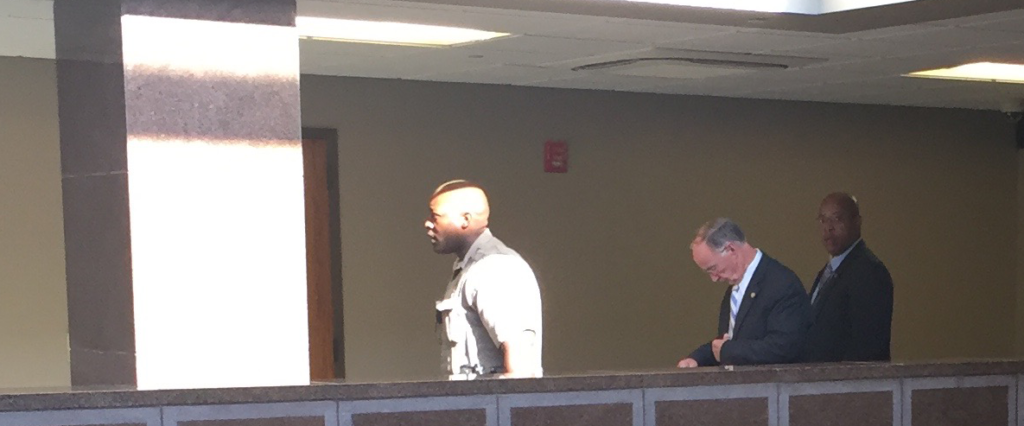
Acting on orders from Alabama Attorney General Luther Strange, Montgomery County Circuit Judge Gene Reese ordered a special grand jury to convene this week to investigate the firing of former Alabama Law Enforcement Agency Secretary Spencer Collier by Governor Robert Bentley. Collier was fired by Bentley in March for allegedly misusing funds in his role as ALEA secretary. The special grand jury was impaneled on Monday, July 11. Multiple sources confirm, Ray Lewis, the former head of Bentley’s security detail, testified Monday and Tuesday. Bentley himself testified to the grand jury Wednesday, followed by Hal Taylor, the former Chief of Staff to former Alabama Law Enforcement Agency Secretary Spencer Collier and current ALEA head Stan Stabler. “At 8:39 am, Wednesday, Gov. Robert Bentley walked into the Special Grand Jury being held in Montgomery County as Alabama Political Reporter reported yesterday. Bentley’s entourage included legal counsel David Byrne and one of his personal attorneys, Bill Espy,” the Alabama Political Reporter reported in an article published on Thursday. The Attorney General’s Special Prosecutions Division, under the direction of Division Chief Matt Hart — who most recently made headlines for successfully prosecuting and convicting former House Speaker Mike Hubbard — is handling the investigation.
Bradley Bryne blocks Obama from using offshore drilling revenue to implement climate program

The U.S. House of Representatives on Tuesday adopted an amendment to block the Obama administration’s proposal to transfer money away from Alabama and other Gulf states to help fund the president’s “Coastal Climate Resilience” program that would help communities “prepare for and adapt to climate change.” The amendment, introduced by Alabama 1st District U.S. Rep. Bradley Bryne, prohibits any efforts to redirect funds allocated under the Gulf of Mexico Security Act (GOMESA) of 2006. GOMESA allows four Gulf states — Alabama, Louisiana, Mississippi and Texas — to receive 37.5 percent of federal oil revenue from drilling off their coasts, capped at $500 million a year, beginning in 2017. In February, President Barack Obama proposed transferring GOMESA money away from the Gulf States to pay for the Coastal Climate Resilience program by redirecting the funds toward climate projects, including $400 million to help Native American tribes in Alaska deal with climate change. Calling the GOMESA payments “unnecessary and costly” the Obama administration has complained they go to only a “handful of States under current law.” Meanwhile, GOMESA states argue they have long received a lower percentage of revenue than interior states for federal drilling within their borders, explaining the money will help offset damage to the environment and infrastructure caused by oil drilling. Prior to the amendment’s passage, Byrne spoke on the House floor in support of it. “These Gulf States not only provide a significant share of the infrastructure and workforce for the industry in the Gulf, but they also have inherent environmental and economic risks,” said Byrne. “Unfortunately, in his budget proposal this year, President Obama recommended that the money be taken away from the Gulf States and instead be spread around the country to implement his radical climate agenda.” Byrne continued, “Not only does this proposal directly contradict the current federal statute, it vastly undermines the purpose of the law — to keep revenues from these lease sales in the states that supply the workforce and have the inherent risk of a potential environmental disaster.” The amendment passed by unanimous voice vote. Watch Byrne’s floor speech on the amendment below:
Federal judge blocks Alabama’s new anti-abortion laws

A federal judge has temporarily blocked enforcement of two new Alabama abortion laws banning abortion clinics near schools and outlawing a commonly used second-trimester dismemberment abortion procedure. U.S. District Judge Myron Thompson ruled Wednesday that enforcement of the two new abortion laws in Alabama will be on hold until after a hearing in October. The laws, passed by the Alabama Legislature this spring and signed by Gov. Robert Bentley, were scheduled to take effect on Aug. 1. The American Civil Liberties Union in June filed a lawsuit against the restrictions, saying they would dramatically cut abortion access and close the state’s two busiest clinics — the West Alabama Women’s Clinic in Tuscaloosa and the Alabama Women’s Center in Huntsville. According to the Alabama Department of Public Health, the clinics in Huntsville and Tuscaloosa performed 72 percent of the 8,080 abortions in Alabama in 2014. Judge Thompson granted a temporary restraining order on enforcement of the laws — agreed to by both parties — to allow the state time to respond and to allow the court to consider the case. Thompson has scheduled an Oct. 4 hearing on a request from abortion providers to permanently block both laws.
Personnel note: Jeff Sessions’ communications advisor Garrett Murch joins LifeZette team
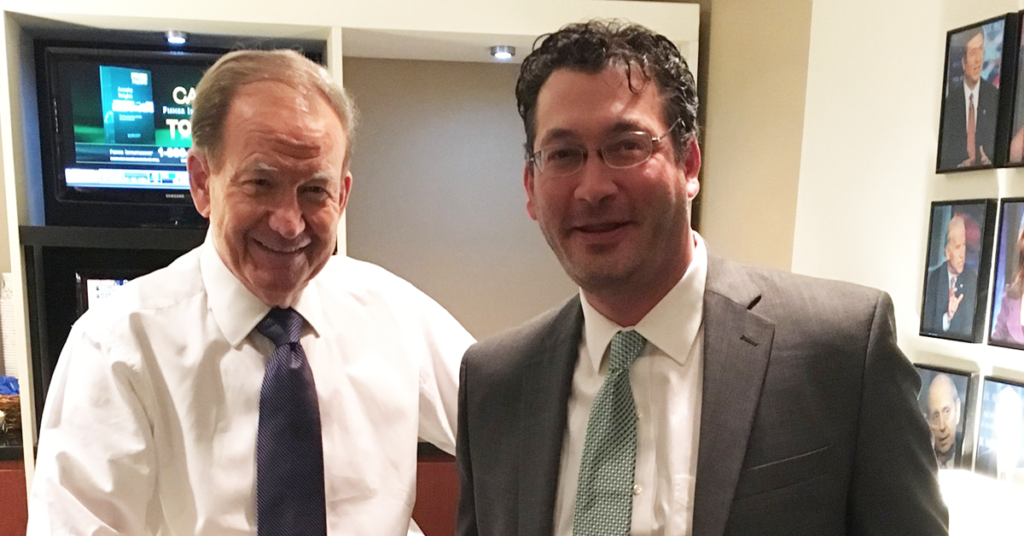
Wednesday, U.S. Sen. Jeff Sessions‘ Communications Advisor Garrett Murch announced his departure from the office to join the news website LifeZette. “After five tremendously rewarding years working as communications advisor to America’s senator, the great Jeff Sessions of Alabama, I want to let you know I have accepted a position with Laura Ingraham’s LifeZette, where on Monday I will begin as senior editor,” Murch said in an email and posted on Facebook Wednesday. Murch, who brings with him more than a decade of political, policy, and editorial experience, will join LifeZette’s political leadership team and work to expand the reach and influence of the outlet’s political coverage, commentary, and analysis. “It’s hardly surprising I developed a strong relationship with Laura and her team during my years working proudly for America’s greatest senator, Jeff Sessions,” Murch said. “Their shared attributes of intelligence, commitment, and integrity cannot be topped — at least in DC — so it is only natural I would be drawn to them both, as so many are.” LifeZette founder and Editor-in-Chief Laura Ingraham hailed the addition of Murch as a crucial step forward in the site’s expansion. “We are always seeking the smartest, most insightful, most courageous thinkers on politics and the culture as we build out our operation.” Ingraham noted. “Garrett Murch checks every box— and then some.”
Large number of GOP senators skipping Donald Trump’s convention
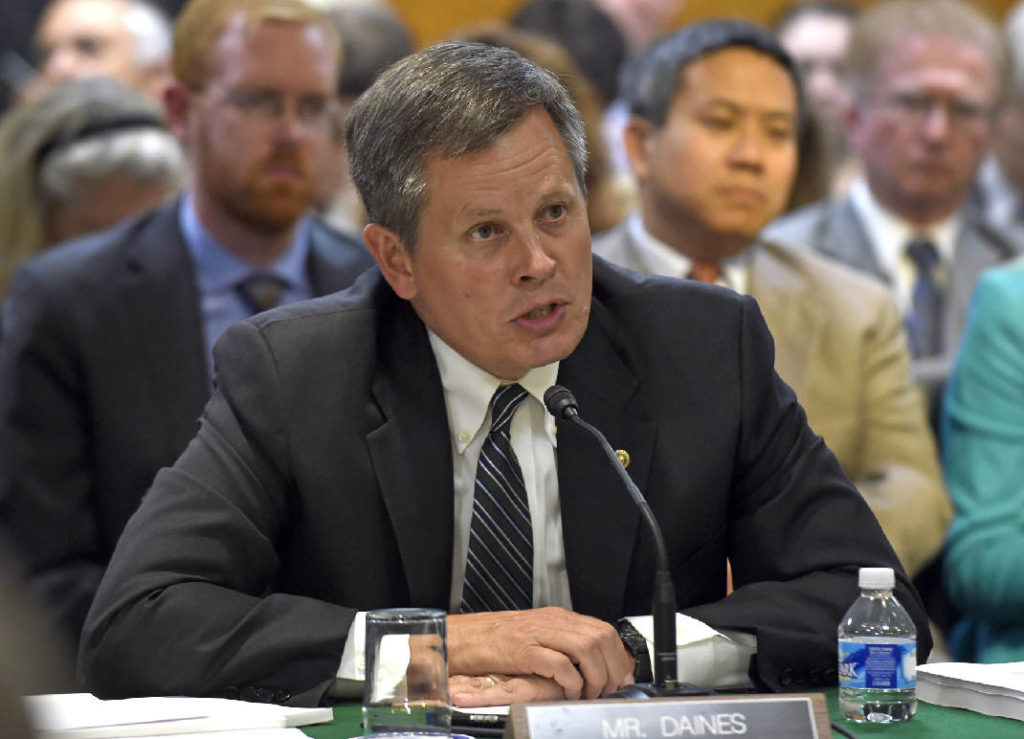
Sen. Steve Daines of Montana will be fly-fishing with his wife. Sen. Jeff Flake of Arizona said he has to mow his lawn (yes, he has one even in Arizona). Sen. Lisa Murkowski of Alaska will be traveling her state by bush plane. And Sen. John McCain of Arizona will be visiting the Grand Canyon, and joked that his friend Sen. Lindsey Graham of South Carolina would be coming along and might even fall in (just kidding, an aide later clarified). All are among the GOP senators who will be skipping next week’s convention in Cleveland where Donald Trump will claim the Republican Party presidential nomination. A majority of Republican senators do plan to attend, and it’s not unusual for lawmakers to skip their party’s convention, especially if they’re up for re-election and need to spend time campaigning. But the level of rank-and-file congressional defections from this year’s Republican convention is unusually high. Perhaps that’s unsurprising, given the GOP establishment’s well-documented discomfort with the man who stands on the cusp of becoming their presidential standard-bearer. But in the halls of the Capitol this week, some senators seemed to visibly squirm when asked about their convention plans. Sen. John Thune of South Dakota, a member of the party leadership, gave a lengthy series of responses to questions earlier this week that ultimately left his plans unclear. “I think it’s going to be a different and unique convention experience. You know I’ve been to a number of them in the past, and this year is different, and we’ll see how it goes,” Thune said. “For most people they go because it’s the Republican convention, and it’s our party’s effort in a presidential election year to talk about what we’re for and what we’re about. So that will go on.” The next day, Thune said he was still “firming up” his plans. Confronted for months with uncomfortable questions about Trump, some senators can still seem aggrieved to get asked about the presumptive nominee, and uncomfortable giving an answer. But at this late date, just days from when the convention will start on Monday, nearly all have at least decided whether or not they’re going to Cleveland. Nearly all, but not quite all. “I’m not sure yet,” Idaho Sen. Jim Risch said Wednesday, adding there are “other things going on and I’ve got to weigh where I can do the most good.” Of the Senate also-rans in the White House chase, only Sen. Ted Cruz of Texas will attend the convention and deliver a speech. Sens. Marco Rubio of Florida, Rand Paul of Kentucky and Graham are skipping the event. For the nearly two dozen GOP senators up for re-election this year, the considerations are particularly sensitive, and that’s especially true for the handful of vulnerable Republican senators in swing states. They must weigh sharing a convention hall with a nominee whose comments have offended women, minorities and others who can decide general elections. There are also concerns that given the “Never Trump” sentiments still nursed by some delegates, the convention could go off the rails and turn into a chaotic spectacle. But few senators were interested in wading into such considerations on the record. “No,” Sen. Roy Blunt of Missouri said tersely when asked if he was staying away from the convention out of a desire to distance himself from Trump. Murkowski said she had only a month to visit the remotest areas of Alaska by plane before her Aug. 16 primary. “For me, this was an easy choice” and “nothing to do” with Trump, Murkowski said. Sen. Ron Johnson of Wisconsin, one of the most vulnerable members, said he could not go to Cleveland because “I’ve got to spend as much time in Wisconsin as possible.” As for his views on Trump, Johnson said: “I support all of the areas of agreement … I’m supporting him. Let’s put it this way, I will not vote for Hillary Clinton.” Even Sen. Rob Portman of Ohio, a vulnerable senator whose state is playing host to the convention, said he will only be dropping into the convention hall from time to time, but not delivering a speech or staying to watch speeches from others. Instead, he’ll be spending his time on his own campaign events in and around Cleveland, including building a Habitat for Humanity home and holding a kayaking charity fundraiser, “Paddling with Patriots on the Cuyahoga River.” “I’m not going to have much time to listen to ’em because I’ll be out and about,” Portman said of the convention speakers. ___ Republished with permission of the Associated Press.
