
GOP team addresses America Saturday
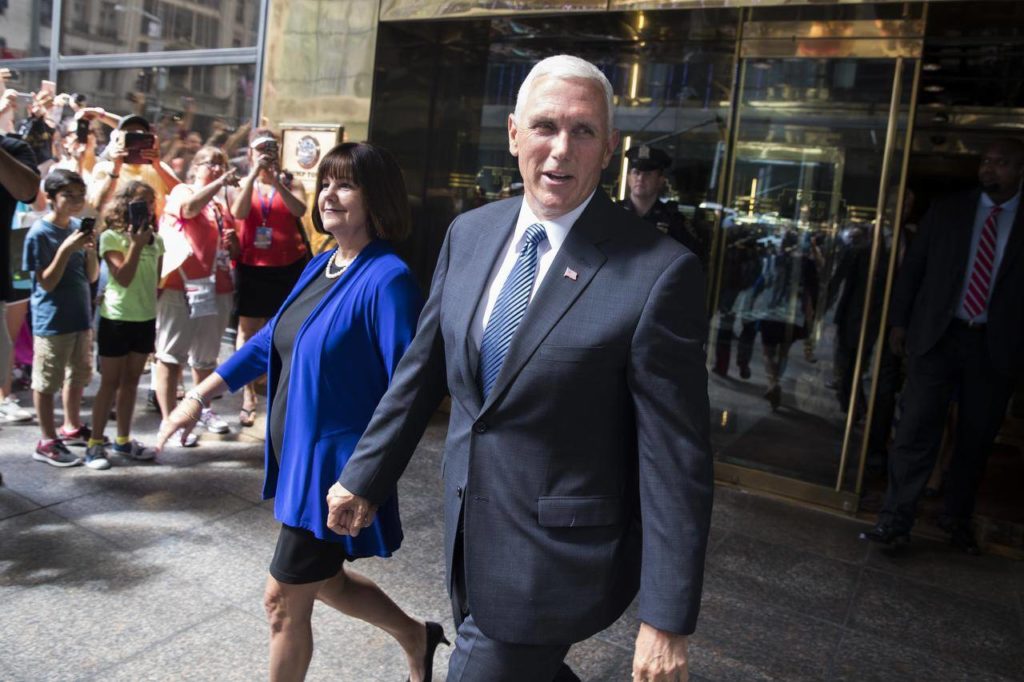
After frenzied, final decision-making, Donald Trump announced Indiana Gov. Mike Pence as his running mate Friday, adding an experienced politician with deep Washington connections to the Republican presidential ticket. Trump’s pick was aimed in part at easing some Republicans’ concerns about his temperament and lack of political experience. Pence spent 12 years in Congress before being elected governor and his demeanor is as calm as Trump’s is fiery. While some conservatives are skeptical of Trump’s political leanings, Pence has been a stalwart ally on social issues. Yet Pence is largely unknown to many Americans. And his solidly conventional political background runs counter to Trump’s anti-establishment mantra. The two men scheduled a news conference for Saturday in New York to present themselves to America as the Republican team that will take on Hillary Clinton and her Democratic running mate in November. The duo will head to Cleveland next week for the Republican National Convention. As Pence arrived for a private meeting with Trump Friday, he told reporters he “couldn’t be more happy for the opportunity to run with and serve with the next president of the United States.” In choosing Pence, Trump appears to be looking past their numerous policy differences. The governor has been a longtime advocate of trade deals such as NAFTA and the Trans-Pacific Partnership, both of which Trump aggressively opposes. Pence also has been critical of Trump’s proposed temporary ban on foreign Muslims entering the United States, calling the idea “offensive and unconstitutional.” The reaction to the Pence choice from Republican officials was overwhelmingly positive — no small feat for Trump, given how polarizing he’s been within his own party. “It was a pick that clearly shows he is pivoting to the general election,” said GOP chairman Reince Priebus, who was in the midst of an interview with The Associated Press when Trump announced his decision. “He is choosing a person who has the experience inside and outside Washington, Christian conservative, very different style that I think shows a lot of maturity.” Pence, a staunchly conservative 57-year-old, served six terms in Congress before being elected governor and could help Trump navigate Capitol Hill. He is well-regarded by evangelical Christians, particularly after signing a law that critics said would allow businesses to deny service to gay people for religious reasons. Clinton’s campaign moved quickly to paint him as the “most extreme pick in a generation.” “By picking Mike Pence as his running mate, Donald Trump has doubled down on some of his most disturbing beliefs by choosing an incredibly divisive and unpopular running mate,” said John Podesta, Clinton’s campaign chairman. Clinton spent Friday holding meetings in Washington about her own vice presidential choice. Massachusetts Sen. Elizabeth Warren, a favorite of liberals and one of the Democrats’ most effective Trump critics, and Colorado Gov. John Hickenlooper, were seen in separate cars that left Clinton’s home. Housing Secretary Julian Castro also met with Clinton, according to a person familiar with the meeting who spoke on condition of anonymity to describe the private gathering. Trump spent weeks weighing vice presidential contenders, including former House Speaker Newt Gingrich and New Jersey Gov. Chris Christie, and only zeroed in on Pence in recent days. In fact, the selection process appeared on the verge of sliding out of control in the final hours before the announcement, sparking speculation that Trump might be changing his mind. Word that Pence would be joining the Republican ticket began trickling out in news reports Thursday before Trump had made a final decision or called Pence to offer him the job, according to a Republican familiar with the situation. Trump was in California for fundraisers, separated from his closest aides, and was fuming about leaks that he viewed as an attempt to pressure him into the decision. Still, Trump called Pence Thursday afternoon to offer him the job and ask him to fly to New York for a Friday morning news conference. Pence accepted and boarded a private plane, along with his wife. A few hours later, a huge truck barreled through a crowded holiday celebration in Nice, France, killing more than 80 people. With Pence sitting in a New York hotel, Trump decided to postpone the announcement. The billionaire businessman then went on Fox News to say he had not yet settled on his “final, final” choice. He also held a midnight conference call with his top aides to discuss the situation, according to two people with knowledge of the call. By Friday, plans were back on track. Trump sent out a Twitter message saying he was pleased to announce Pence as his running mate. Moments later, one of Pence’s aides filed paperwork with the Indiana Secretary of State’s office withdrawing him from the governor’s race. Pence was up for re-election, and state law prohibits candidates from being on ballots in two contests. Trump’s formal announcement came about an hour before Pence’s noon Friday deadline for withdrawing. Paul Manafort, Trump’s campaign chairman, strongly rejected suggestions that the candidate considered changing his mind about Pence. “Never waffled once he made his decision,” Manafort wrote in an email. Gingrich, one of the finalists for the vice presidential spot, said he was “very comfortable” with Trump’s decision and praised Pence as someone who could help unite the party. But as of Friday afternoon, Gingrich had yet to share his support with Trump himself. He told The Associated Press he had not received a call from Trump telling him he wasn’t getting the job. Meanwhile, Trump did speak with Christie, according to a person familiar with their conversation. Ironically, Christie traveled with Trump to Indiana in April to help introduce the candidate to Pence when Trump was trying to win his endorsement ahead of India’s primary. Pence endorsed Trump’s rival Ted Cruz instead. Republished with permission of the Associated Press.
Running mate Mike Pence: Conservative but not angry about it
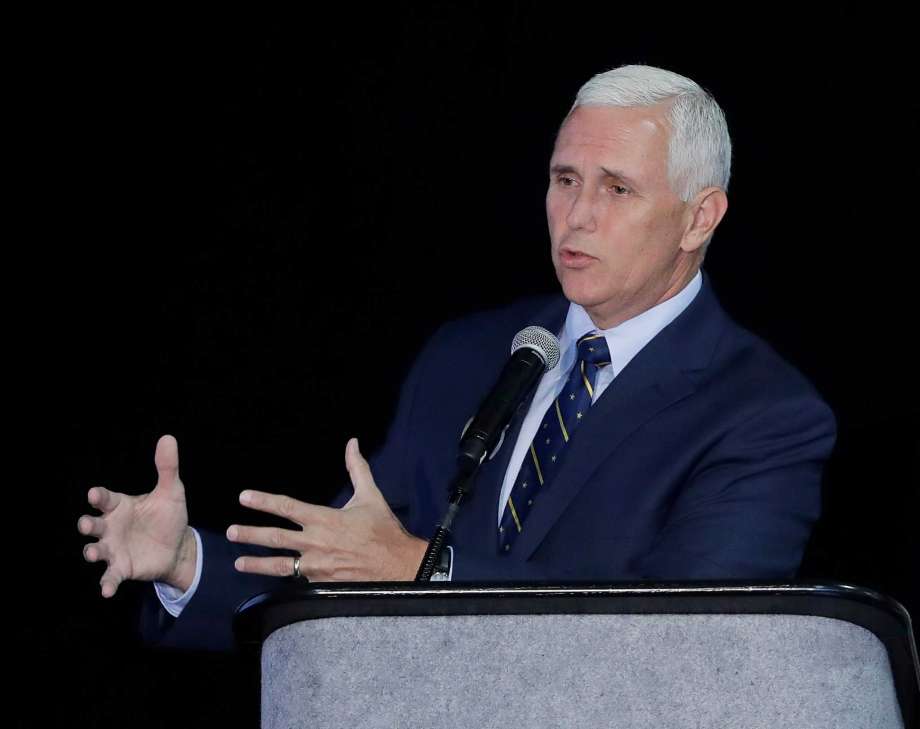
As a conservative talk-radio host in the 1990s, Mike Pence described himself as “Rush Limbaugh on decaf.” Two decades later, Pence is the unflappable conservative governor of Indiana who’s being plucked by Republican presidential contender Donald Trump as his running mate. Where Trump is impulsive, Pence is cool-headed. Where Trump makes conservatives suspicious, Pence has credibility. And where Trump struggles to draw evangelical Christians, Pence is well-regarded by them. A favorite quote highlights how Pence might smooth some of the sharp corners of the Trump campaign and its supporters. “I’m a conservative,” Pence says. “But I’m not angry about it.” The former congressman also is a proven fundraiser with close ties to billionaire industrialists David and Charles Koch and their network of wealthy donors, many of whom have been dismissive of Trump. “One thing you can say about Mike Pence is he’s got a very calm, steady demeanor that in some ways is a little Reaganesque,” said Christine Mathews, a Republican pollster for former Indiana Gov. Mitch Daniels. “He’s a counterbalance to Trump in that way.” Trump announced on Twitter Friday morning that he’s selected Pence as his running mate, capping a wild 24 hours of speculation interrupted by the truck attack in Nice, France, that left scores dead. Not so long ago, their relationship was a little awkward. Trump met privately with Pence before Indiana’s primaries, seeking his endorsement. Instead, Pence, under pressure from national conservatives, tepidly endorsed Trump’s rival, Texas Sen. Ted Cruz, while still lavishing praise on Trump. Trump won that primary. Before the night was over, Cruz had quit the race. For Pence, a former six-term congressman, Trump’s selection offers a return to national politics after his embrace as governor of conservative social issues sidelined his own presidential ambitions. Pence describes himself as “a Christian, a conservative and a Republican, in that order.” In 2015 he provoked a national backlash after signing a law that critics said would have allowed businesses to deny service to gay people for religious reasons. Even some Indiana Republicans have questioned his decisions, suggesting Pence has at times seemed more interested in appealing to national conservatives than doing what’s best for the state. Pence’s support of the state’s religious objections law led to a revolt from the business community, which joined gay rights advocates in successfully pushing for changes to the law. Raised in Columbus, Indiana, in an Irish-Catholic family, Pence revered the Kennedys growing up and has said he voted for Jimmy Carter in 1980. He later identified as an evangelical Christian and was inspired to join the Republican Party by former President Ronald Reagan, whose “happy warrior” rhetorical style Pence has since tried to emulate. After attending Hanover College, Pence graduated from Indiana University Law School in 1986. He met his wife, Karen, around the same time and twice unsuccessfully ran for Congress before taking a job at Indiana Policy Review, a conservative think-tank. In a 1991 essay titled “Confessions of a Negative Campaigner,” Pence swore off harsh political tactics he used in “one of the most divisive and negative campaigns in Indiana’s modern congressional history” while calling for “basic human decency.” “That means your First Amendment rights end at the tip of your opponent’s nose — even in the matter of political rhetoric,” Pence wrote, though he backtracked in the face of a difficult re-election campaign in Indiana. In Congress, Pence sponsored a few bills that became law as amendments in other legislation. But he built a national following among conservatives for his willingness to buck his own party after opposing President George W. Bush‘s Medicare expansion and the No Child Left Behind education overhaul. During the early years of President Barack Obama‘s administration, Pence helped lead the opposition to the Democrat’s agenda. “He has a particularly strong talent, a gift if you will, for being able to stick to principle while making his political opponents or those who disagree with him feel like they are being heard and respected,” said Ryan Streeter, a former Pence aide and George W. Bush staffer who is now a public affairs professor at the University of Texas. Pence’s congressional experience is one trait that Trump, who has never held public office, wanted in a running mate. Marc Short, a former Pence aide and top Koch brothers operative, elaborated: “He’s worked with (House Speaker) Paul Ryan. He’s worked with the team in House leadership. He’s somebody who has deep relationships in the evangelical movement, and he’s somebody who has foreign affairs experience.” Pence’s one term as governor has drawn mixed reaction, and he has managed to alienate moderate Republicans over social issues. Groups threatened boycotts over last year’s religious objections law and late-night television hosts mocked the policy, leading lawmakers to approve changes. This year Pence clashed with the local Catholic archdiocese by opposing the settlement of Syrian refugees in Indianapolis. Pence was also slammed for the planned 2015 launch of “JustIN,” a state-operated news service that was ditched after critics panned it as “Pravda on the Plains.” But he has also presided over Indiana’s improving economy and plummeting unemployment rate, which Republicans credit to the state’s low taxes, limited regulation and pro-business climate. Republished with permission of the Associated Press.
Mike Pence with Donald Trump on blocking some immigration

The Latest on the 2016 presidential campaign (all times local): 10:40 p.m. Indiana Gov. Mike Pence says he supports Donald Trump‘s call to “temporarily suspend immigration from countries where terrorists’ influence and impact represents a threat to the United States.” Pence spoke Friday on Fox News Channel’s “Hannity,” giving his first TV interview since Trump invited him to join the Republican ticket for the White House. Last year, Pence came out against Trump’s proposed temporary ban on foreign Muslims entering the United States, calling such a ban “offensive and unconstitutional.” Trump’s spokeswoman recently said he no longer supports his proposed religious test. Pence says he “stepped up without hesitation” when Trump asked him to be his running mate. He says Trump “understands the anxiety and the aspiration of the American people” like no leader since President Ronald Reagan. __ 9:10 p.m. Hillary Clinton is expressing support for the government of Turkish President Recep Tayyip Erdogan after an attempted military coup rocked Turkey’s capital. The Democratic presidential candidate is urging “calm and respect for laws, institutions, and basic human rights and freedoms — and support for the democratically elected civilian government.” She says, “All parties should work to avoid further violence and bloodshed, and the safety of American citizens and diplomatic missions must be ensured.” Turkish officials say the government appears to have repelled the attempted coup following a night of explosions, air battles and gunfire across Ankara. __ 8:10 p.m. A leader of conservatives making a last-ditch attempt to block Donald Trump’s nomination says she’s dropping her effort to force the Republican National Convention to vote on her plan to let delegates back any presidential candidate they want. The convention rules committee has already rejected Colorado delegate Kendal Unruh‘s proposal to “unbind” delegates from the candidates they were committed to by state primaries and caucuses. Unruh had been saying that despite that defeat, she’d get enough support to force a full convention vote next week on her plan to let delegates vote their conscience. But she said Friday that the Trump campaign and party officials have peeled away that support. She says she and her supporters believe delegates already have the right to vote their conscience and will oppose Trump’s nomination. ___ 5:35 p.m. Donald Trump says the taxes he pays are a private matter. But for candidates auditioning to be his running mate, similar reluctance wasn’t an option. Vice presidential search finalist Newt Gingrich said Thursday that Trump’s campaign required him to submit more than a decade worth of tax returns as part of the vetting process. Vetting potential vice presidents’ tax returns is a standard practice for candidates in both parties — but Trump has so far refused to make his own returns public on the grounds that he is being audited by the Internal Revenue Service. But tax scholars and former IRS officials have noted there is no rule against releasing tax filings during audits and say Richard Nixon released his returns while under audit in 1973. __ 5:15 p.m. Housing and Urban Development Secretary Julian Castro has met with Hillary Clinton at her Washington home as the presumptive Democratic presidential nominee considers her choice for vice president. That’s according to a person familiar with the Friday gathering, who spoke on condition of anonymity to discuss the private meeting. Two other senior Democrats also appeared to meet with Clinton on Friday. Massachusetts Sen. Elizabeth Warren and Colorado Gov. John Hickenlooper were seen in separate cars that departed Clinton’s home Friday afternoon. Clinton is also vetting Virginia Sen. Tim Kaine for the vice presidency and campaigned with him in his home state Thursday. Castro is considered a rising star in the party and is a former mayor of San Antonio. ___ 4:40 p.m. Colorado Gov. John Hickenlooper has visited Hillary Clinton’s Washington home as the presumptive Democratic presidential nominee ponders her choice for vice president. Hickenlooper was in a car that departed Clinton’s Washington home Friday afternoon. The Democratic governor declined to comment on his visit. The apparent meeting came after Massachusetts Sen. Elizabeth Warren visited Clinton’s house earlier Friday. Other candidates Clinton is known to be vetting are Virginia Sen. Tim Kaine and Housing and Urban Development Secretary Julian Castro. A person who spoke on condition of anonymity to discuss internal matters said earlier that Clinton was holding meetings Friday about her running mate selection. ___ 4 p.m. Delegates to the Republican National Convention are embracing Donald Trump‘s choice for vice president — even those who have yet to warm up to Trump. Some delegates hope the choice of Indiana Gov. Mike Pence will help unite Republicans and fire up the party base to support Trump. Not everyone is on board. But at the very least, Trump has all but assured that next week’s convention vote for vice president will go smoothly. Pence has a strong reputation among fellow Republicans as a social conservative. The former congressman has plenty of Washington experience and a calm, thoughtful demeanor that stands in stark contrast to the bombastic Trump. New Hampshire delegate Tom Rath called Pence a solid pick who should reassure a lot of people in the party. __ 3:40 p.m. An application by Bernie Sanders‘ campaign for a permit to rally during the Democratic National Convention has been denied. A spokeswoman for Philadelphia Mayor Jim Kenney says it was rejected because of the requested location in a park across from the convention site. She says the campaign sought to use a certain field that can only be used for recreational purposes. The application said the July 24 rally would be in support of Sanders’ campaign and estimated the crowd size at 15,000 to 40,000 people. Kenney’s spokeswoman, Lauren Hitt, says it’s not too late for the campaign to apply for a different location, if it is still interested. Sanders said Friday he won’t be holding any large rallies during the July 25-28 convention, but will focus on attending smaller events and talking to delegates. __ 3:30 p.m.
