
Personnel note: Ed Paulk retires, Scott Pilgreen named State Fire Marshal
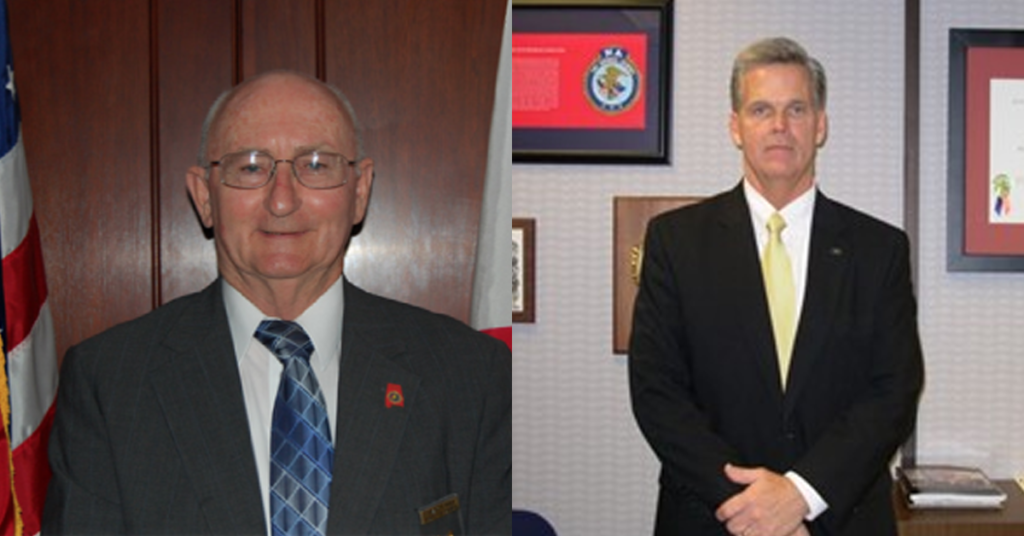
A new Alabama fire marshal was named Friday morning as veteran Marshal Ed Paulk retired after nearly 40 years of public service. Scott Pilgreen, was tapped to replace Paulk by Alabama Insurance Commissioner Jim Ridling. A 32-year law enforcement veteran, Pilgreen has served 27 years in the State Fire Marshal’s office, the past 10 as assistant fire marshal. “I am pleased to name Scott Pilgreen as Alabama’s new state fire marshal,” Ridling said in a news release. “Scott is an outstanding law enforcement professional and he will do an excellent job for the people of Alabama.” Ridling continued, “Scott’s background and training fits perfectly for this position. He has served side-by-side with outgoing State Fire Marshal Ed Paulk for the last 10 years. He is well respected by law enforcement across the state and around the nation.” Paulk formally retired at an event today at Riverwalk Stadium in Montgomery after nearly 40 years of public service, including 32 with the State Fire Marshal’s office, 10 of them as the state fire marshal. “There is simply no way to properly express to Ed Paulk my deep appreciation for his many years of outstanding service to the people of Alabama,” Ridling said of Paulk’s retirement. “Ed possesses a rare combination of vision, fairness, and a deep understanding of the law and regulations of his office — crucial qualities for an effective manager.” Pilgreen will officially take his new position Monday, Aug. 1. “I look forward to working with Scott in this new role and I know that all Alabama citizens will have reason to feel safe with Scott Pilgreen as the state fire marshal,” Ridling concluded.
Despite public sentiment, new study shows red light cameras save lives

Across the country, Americans bemoan the idea of having red light cameras in their hometowns. But according to a new study, getting rid of them may have fatal consequences. The Insurance Institute for Highway Safety (IIHS) released a new study this week making the case for keeping red light cameras around. Researchers from the IIHS looked at red light camera programs in 79 large U.S. cities and found they saved nearly 1,300 lives through 2014. According to the data, shutting down such programs costs lives, with the rate of fatal red-light-running crashes shooting up 30 percent in cities that have stopped using the cameras. “We know we have a problem: people dying at signalized intersections because of people running red lights,” IIHS President Adrian Lund explained Thursday when he presented the study’s finding at a red light camera forum hosted by the Institute. “We know red light cameras are part of the solution.” While many U.S. cities continue to add cameras at intersections with traffic signals, at least 158 communities across the country have ended their red-light camera programs in the past five years amid complaints they are designed primarily to raise money through tickets rather than to enhance public safety. Jonathan Adkins, executive director of the Governors Highway Safety Association, which represents state highway safety offices, said it’s disappointing the total number of communities with red-light camera programs has dropped from 533 in 2012 to 467 last year. “Too often,” Adkins said, “a vocal minority leading the charge to suspend these programs are costing lives in their communities.” The findings of the study hit particularly close to home for Alabamians. Earlier this month, the city of Montgomery ended their use of controversial use of speeding cameras in unmanned police cars, but kept red light cameras installed at intersections across the city, which according to the study, may ultimately prove to be a very wise decision.
Joe Henderson: Convention wrap up — is it November yet?
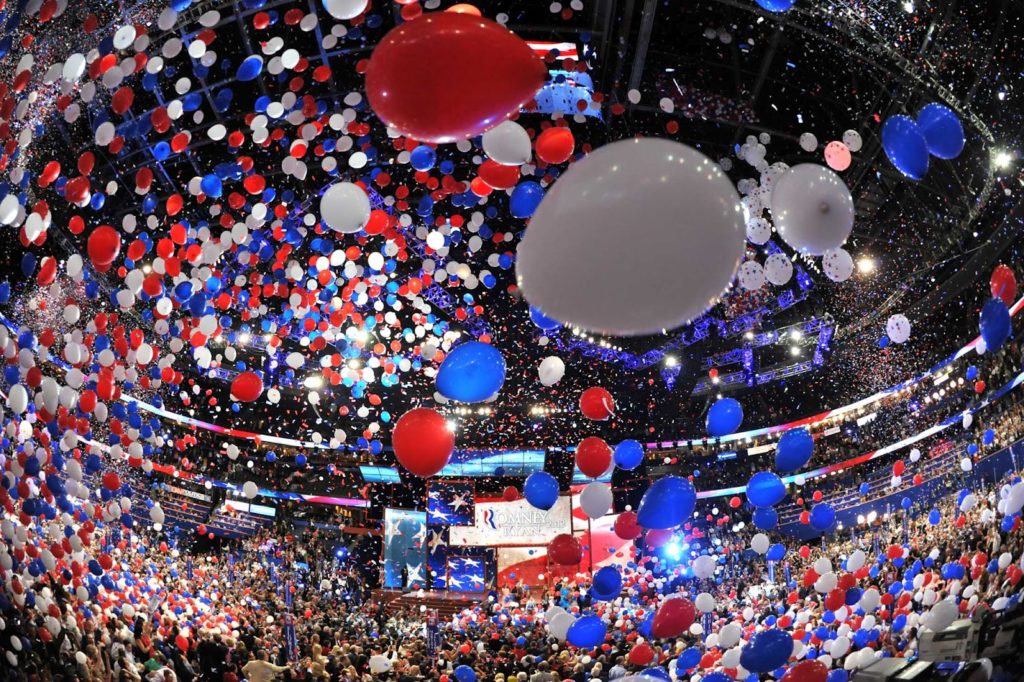
A convention two weeks that marked plagiarism from Donald Trump’s wife and a small-but-noisy insurrection by Bernie Sanders’ supporters has concluded with, what? Good question. It appears the American public is flummoxed over the choice of an obnoxious and potentially dangerous billionaire against a scandal-coated representative from the nation’s ruling class. Or, maybe it’s a huuuugely successful businessman against a woman of considerable accomplishment who is shattering the glass ceiling. Definitely one or the other. The most recent Rasmussen poll with a 3-point margin of error showed 28 percent of voters have switched their preferred candidate since the start of the year. Hillary Clinton has a 43-42 percent lead nationally over Trump in that poll, which doesn’t mean squat. It’s all about electoral math and that’s too fuzzy right now to hazard anything more than a guess that’s likely to be wrong. At least the conventions this year were able to clearly present the themes of their respective parties. Republicans seem to be trying to convince voters that we’re all going to die if Clinton is elected because she is weak, crooked and, if Ben Carson is to be believed, a devotee of Satan. Democrats counter with a vision of Donald Trump as a man of with no principles who is campaigning to be dictator-in-chief and will unleash nuclear holocaust while playing footsie with Vladimir Putin. With the trend toward early voting taking hold around the country, neither party has much time to change the negatives about their candidate. That’s why the conventions were perhaps their best opportunity to make an impression. So, let’s go to the tale of the tape. Who won? SIGNATURE QUOTE — Trump: “I alone can fix it.” Clinton: “I will be a president for Democrats, Republicans and independents. … For those who vote for me and those who don’t. For all Americans.” Winner: Draw. Clinton as a unifier is tough to picture, and Trump already doesn’t care if anyone likes him. QUOTE THEY’D LIKE YOU TO FORGET — Trump: “America is far less safe and the world is far less stable than when Obama made the decision to put Hillary Clinton in charge of America’s foreign policy. I am certain it is a decision he truly regrets.” Clinton: “The truth is, through all these years of public service, the service part has always come easier to me than the public part.” Winner: Trump. Even after President Obama’s vigorous endorsement of his former secretary of state, Clinton’s renowned penchant for secrecy, right down to her private mail server, makes her quote likely to show up in an attack ad. BEST ACCEPTANCE SPEECH — Trump’s rambling, lengthy and cataclysmic forecast for America may have boosted Xanax sales but it also probably did scare the bejeebers out of at least some people who might vote for him now. Clinton laid out specifics in a speech that was surprisingly liberal but plodding. And like her or not, the speech was history unfolding. Winner: Clinton, for making history while not making viewers crawl under the covers while listening to her. BEST NONCANDIDATE MOMENT — Republicans: Donald Trump Jr. emerged as a possible rising star, both with his impassioned speech for his father and the fact that he got to announce the votes that officially gave his father the nomination. Democrats: Several candidates, starting with first lady Michelle Obama’s landmark speech and including Rev. William Barber’s drop-the-mic firebrand address Thursday and the one-for-the-ages address by Kazir Kahn, father of a Muslim American soldier killed in action. Winner: Democrats, if only for this quote by Kahn directed at Trump: “Have you ever been to Arlington cemetery? Go look at the graves of brave patriots who died defending the United States of America. You will see all faiths, genders and ethnicities. You have sacrificed nothing.” NEW CAMPAIGN SLOGAN — Republicans: “If Hillary wins, the nation is doomed.” Democrats: “If Trump wins, the nation is doomed.” Americans: “When does November finally get here?” Winner: No one. ___ Joe Henderson has had a 45-year career in newspapers, including the last nearly 42 years at The Tampa Tribune. He has covered a large variety of things, primarily in sports but also hard news. The two intertwined in the decade-long search to bring Major League Baseball to the area. Henderson was also City Hall reporter for two years and covered all sides of the sales tax issue that ultimately led to the construction of Raymond James Stadium. He served as a full-time sports columnist for about 10 years before moving to the metro news columnist for the last 4 ½ years. Henderson has numerous local, state and national writing awards. He has been married to his wife, Elaine, for nearly 35 years and has two grown sons — Ben and Patrick.
True or false? Fact checking Hillary Clinton’s DNC speech
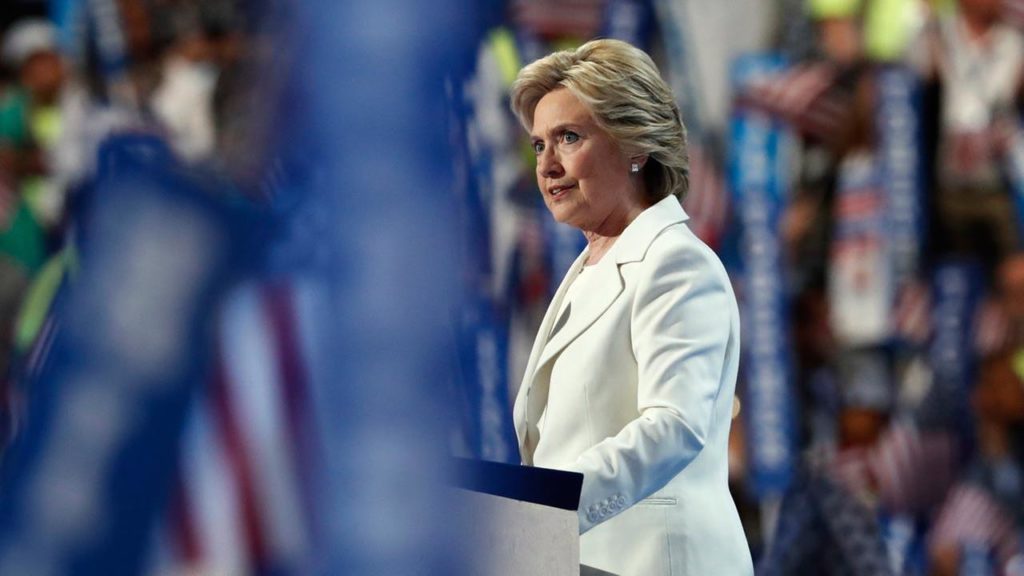
In her speech accepting the Democratic nomination, Hillary Clinton wrongly implied Donald Trump has proposed banning Islam in America and sketched out a plan for defeating Islamic State militants that merely mirrors what the U.S. is already trying to do. Clinton spoke Thursday night to the largest TV audience she is likely to have until the presidential debates, meaning many Americans were probably hearing of her agenda for the first time. Although she brings plenty of policy detail when stacked against the broad-brush ideas of her Republican rival, in some cases there’s less than meets the eye to what she says she will do. A college education, for example, might not end up as debt-free for everyone as she suggested. For his part, Trump spun a story about the Iran nuclear deal that was more fiction than fact at an Iowa rally that preceded Clinton’s convention speech. A look at some of the claims from the political maelstrom: CLINTON: “I’ve laid out my strategy for defeating ISIS. We will strike their sanctuaries from the air, and support local forces taking them out on the ground. We will surge our intelligence so that we detect and prevent attacks before they happen. We will disrupt their efforts online to reach and radicalize young people in our country. It won’t be easy or quick, but make no mistake – we will prevail.” THE FACTS: Clinton might as well have said she laid out President Barack Obama‘s strategy for defeating Islamic State militants. Everything she mentioned, the Obama administration already is trying to do. — CLINTON: “Bernie Sanders and I will work together to make college tuition-free for the middle class and debt-free for all.” THE FACTS: Tuition-free for students who go to an in-state public college or university. Debt-free is a harder lift. Clinton has adopted parts of Sanders’ plans to defray some of the costs of higher education. Under her proposal, the government would pay for tuition at in-state colleges and universities for students from families earning less than $125,000 a year. That would leave students still bearing the cost of room and board, which makes up more than half of the average $18,943 sticker price at a four-year public university, according to the College Board. Experts worry about other impacts: Will colleges raise tuition once the government starts paying, increasing the cost to taxpayers? Will more students flock to public colleges because of the subsidy, also raising costs? — CLINTON: “In my first 100 days, we will work with both parties to pass the biggest investment in new, good-paying jobs since World War II.” THE FACTS: It would be the biggest since World War II only if you don’t count Obama’s $814 billion 2009 stimulus. Clinton doesn’t have price tags on all her proposals, but the bulk of the investment appears to be her plan to spend $275 billion over five years on roads, bridges and other infrastructure. Obama’s stimulus included infrastructure as well as tax cuts and aid to state and local governments, all intended to boost the economy and hiring. — CLINTON: “We will not ban a religion.” THE FACTS: Trump never proposed banning Islam in the U.S., as Clinton seems to suggest. He proposed a freeze on the entry of all foreign Muslims into the U.S., then adapted the idea with several iterations. Recently he said he’d stop immigration from any country compromised by terrorism, or impose “extreme vetting” on people coming from places with a history of terrorism. He’s also spoken in support of surveillance on mosques in the U.S. As contentious as his thinking has been on the subject, it hasn’t extended to outlawing a religion. — TRUMP, boasting about how he would have conducted talks with Iran over reducing its nuclear weapons capabilities: “I would have said sorry, we can’t give you the $150 billion back. We want to give you the money back, but we don’t have it. It’s not there.” THE FACTS: The Iranians immediately would have called Trump’s bluff. That’s because the U.S. never had $150 billion to give back in the first place. Iran had foreign assets spread across numerous banks and countries before it struck a deal with the U.S. and other countries to limit its nuclear program in exchange for the lifting of international sanctions. The sanctions meant Tehran couldn’t access these funds abroad. But Iran’s government knew very well where its money was. Much of the revenue came from Iran’s oil sales to China, India, Japan and South Korea. These countries were able to purchase Iranian petroleum before the July 2015 nuclear agreement, but U.S. financial restrictions made it all but impossible to facilitate payments. So the money mainly sat in escrow in those countries, instead. These were not funds within the grasp of a U.S. president. Trump’s comment also doesn’t reflect how banks work. Money is fungible. If you have a bank account, it doesn’t mean specific bills of currency or bars of gold are sitting in a box waiting for you to pick them up. The can’t-find-your-money argument doesn’t work. Trump got the sum wrong, too. Iranian and U.S. officials agree that the amount of frozen funds totaled about $100 billion. — CLINTON, on taxing the wealthy and corporations: “Because when more than 90 percent of the gains have gone to the top 1 percent, that’s where the money is.” THE FACTS: While vague, Clinton’s claim probably relies on outdated figures and exaggerates inequality. Her assertion echoes similar claims made by Sanders during the primary campaign, though it’s not clear if she is referring to income or wealth or over what time frame. According to Emmanuel Saez, the University of California at Berkeley economist whose research on the wealthiest 1 percent helped spark the Occupy Wall Street protests, income gains have been more widely shared in recent years. The top 1 percent captured 52 percent of the growth in incomes from 2009 through 2015, still a hefty amount. But that’s down from the 2009 through
Robert Bentley announces date for lottery special session
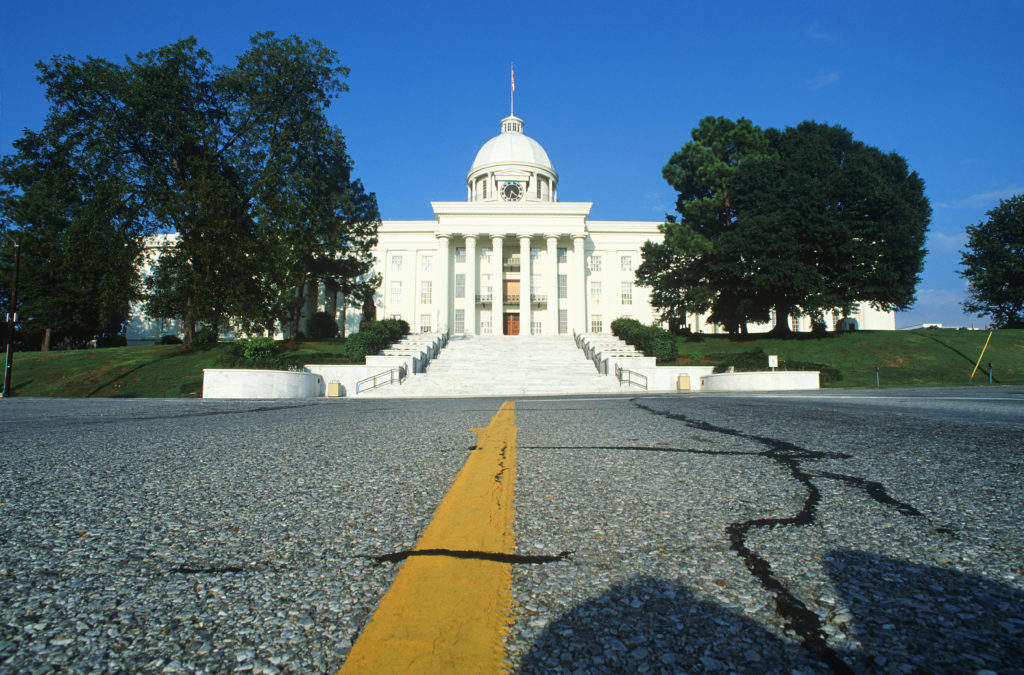
Gov. Robert Bentley has announced the date for a special legislative session for Alabama lawmakers to discuss the possibility of a statewide lottery. The special session will begin Aug. 15. Wednesday, the governor announced the special session, saying it would generate $225 million a year to help pay for basic state services, but he didn’t announce the date at that time. “I will not, as your governor and as a physician, watch as our most helpless and vulnerable people go without a doctor’s care,” Bentley said in the video Friday. “I can’t bear to think of the half-million children who, through no fault of their own, are born into poverty and have no way to get basic medical treatment they need to grow healthy and strong.” Bentley hopes to have the lottery legislation on the Nov. 8 general election ballot. In order for that to happen, the Legislature would need to approve it no later than Aug. 24. Alabama is one of only six states across the country without a state lottery. Voters rejected a lottery proposal under Gov. Don Siegelman in 1999 amid heavy opposition from church groups opposed to gambling. The governor called a lottery the best option for solving the state’s ongoing budget problem, telling Alabamians “this is not just about a lottery, this is about our people.” Watch Bentley’s announcement below:
