
Interviews underway for six state Superintendent of Education finalists

The state school board conducted interviews for six state superintendent finalists Thursday. Gov. Robert Bentley, chairman of the state Board of Education, kicked-off the daylong process shortly before 9 a.m. “It’s very important that we choose a leader that has in mind improved achievement for our students so they can be prepared to live a quality life, get a job, support themselves and support their families,” said Bentley. “If education doesn’t do that, then we’ve failed.” The board is interviewing six educators from across the country to replace former superintendent Tommy Bice, who retired this spring after working for four years in the Alabama State Department of Education. Here’s the list of the six candidates vying to lead Alabama’s public school system: Bill Evers: research fellow at Stanford University Dee Fowler: superintendent of Madison City Schools Craig Pouncey: superintendent of Jefferson County Schools and former deputy state superintendent Jeana Ross: secretary of the Alabama Department of Early Childhood Education Michael Sentance: former Massachusetts Secretary of Education and regional representative to the U.S. Department of Education. Janet Womack: superintendent of Florence City Schools Each candidate spent an hour with the state Board of Education where they were allowed a three-minute introduction, and each board member had five minutes to ask individual questions. The board will announce their pick for superintendent Aug. 11.
Top Donald Trump aide acknowledges campaign split over backing Paul Ryan
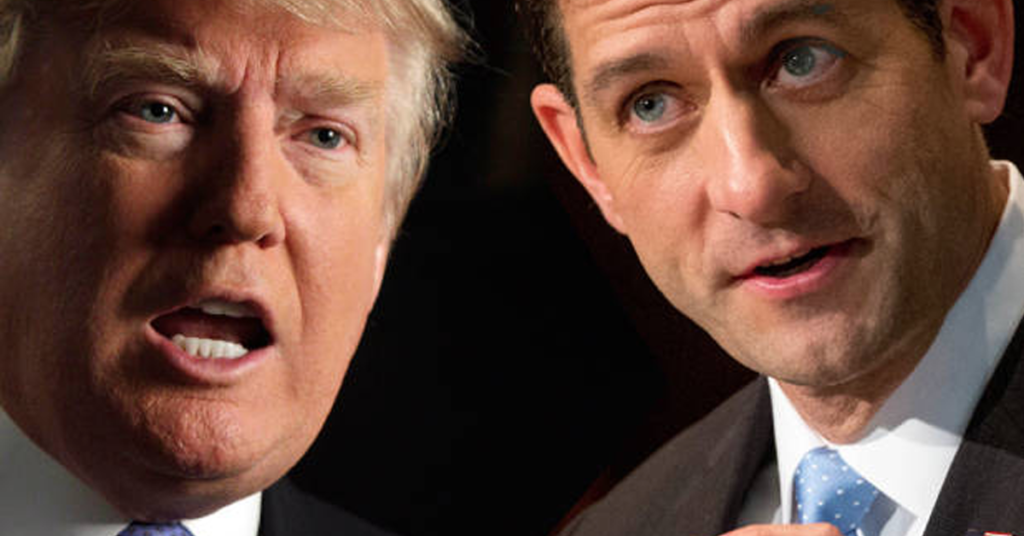
Donald Trump‘s campaign chief acknowledged Thursday the GOP presidential nominee’s team is divided over whether to endorse House Speaker Paul Ryan, but promised Trump would work with the Republican speaker if elected. “There’s a conflict within the Trump campaign,” campaign chairman Paul Manafort told ABC’s “Good Morning America.” ”We’ve sort of had a rule of not getting involved in primaries because it’s usually not a good situation for the presidential candidate. Of course, he’s going to work with Paul Ryan.” Vice presidential nominee Mike Pence split with Trump and endorsed Ryan on Wednesday. Trump’s operation has been beset by internal discord in recent days, including growing concern about general election preparedness and a lack of support from Republican leaders, according to two people familiar with the organization’s inner workings. One of the people said Trump privately blames his own staff for failing to quiet the backlash from his own party after he criticized an American Muslim family whose son, U.S. Army Capt. Humayun Khan, was killed in Iraq. The tensions come as GOP Chairman Reince Priebus and a handful of high-profile Trump allies consider whether to confront the candidate directly to encourage a new approach following a series of startling stances and statements. In the midst of the uproar over his criticism of the Khan family, Trump infuriated Priebus and other party leaders by refusing to endorse Ryan’s re-election ahead of a primary contest Tuesday. The officials, including one with direct knowledge of Priebus’ thinking, were granted anonymity to discuss internal strategy because they were not authorized to discuss the sensitive issue during one of the most tumultuous weeks of Trump’s presidential campaign. Ryan, addressing the issue for the first time this week, said it was “distressing” that Trump isn’t more focused on Democrat Hillary Clinton “and all of her deficiencies.” But the speaker also reiterated his support for Trump: “None of these things are ever blank checks – that goes with any situation in any kind of race. But right now I just think it’s important that the voters, you know, he won the delegates he won the thing fair and square.” Former New York Mayor Rudy Giuliani on Thursday dismissed reports that he was planning an “intervention” with Priebus and former House Speaker Newt Gingrich to urge Trump to abandon divisive tactics that have triggered sinking poll numbers and low morale. “I meet with Donald Trump all the time,” Giuliani told the Fox Business Network, suggesting that Gingrich used the word, “intervention,” in a recent memo. “He is a new candidate,” Giuliani said of Trump. “That adds a little bit of – more of a learning curve, that would normally be the case.” Trump on Wednesday dismissed suggestions that the GOP frustration was hurting his campaign, even as he openly contemplated an Election Day loss. “Wouldn’t that be embarrassing to lose to crooked Hillary Clinton? That would be terrible,” he said during a campaign stop in battleground Florida. He also insisted, “We’ve never been this united.” In an interview later with Florida’s WPEC-TV, Trump was asked if he was being “baited into battles.” “I think that’s probably right,” he acknowledged. “We’re going to focus more on Hillary Clinton.” The most powerful Republicans in Washington and New York’s Trump Tower concede things will not change unless Trump wants them to. “The candidate is in control of his campaign,” Manafort told Fox News Channel on Wednesday, highlighting his inability to control the nominee. “And I’m in control of doing the things that he wants me to do in the campaign.” Clinton, meanwhile, kept up her assault on Trump’s business practices, holding up a Trump-branded tie as she spoke at the Knotty Tie Company in battleground Colorado. “I really would like him to explain why he paid Chinese workers to make Trump ties,” she told employees in Denver, “instead of deciding to make those ties right here in Colorado.” Trump blamed the media – “so dishonest” – for growing criticism of his recent statements and his unwillingness to accept guidance from senior advisers. Privately, however, Trump has concerns about his own team. He was deeply upset when GOP leaders “took the other side” during his quarrel with the Khans, one person said, and blames his staff for not keeping top Republicans in line. Another person said Trump is irritated that planning in battleground states isn’t further along with less than 100 days until Election Day. Trump stunned Republicans by telling The Washington Post this week that he wasn’t ready to endorse Ryan, ahead of his primary. Ryan has backed Trump despite deep differences on policy and temperament, and has encouraged other Republicans to unite behind the party’s nominee. Trump on Wednesday reported raising $80 million in July for his campaign and the Republican Party, a significant improvement from past months. Clinton raised about $90 million over the same period. Republished with permission of the Associated Press.
Decision 2016: municipal candidates’ forums to provide information for Shelby County voters
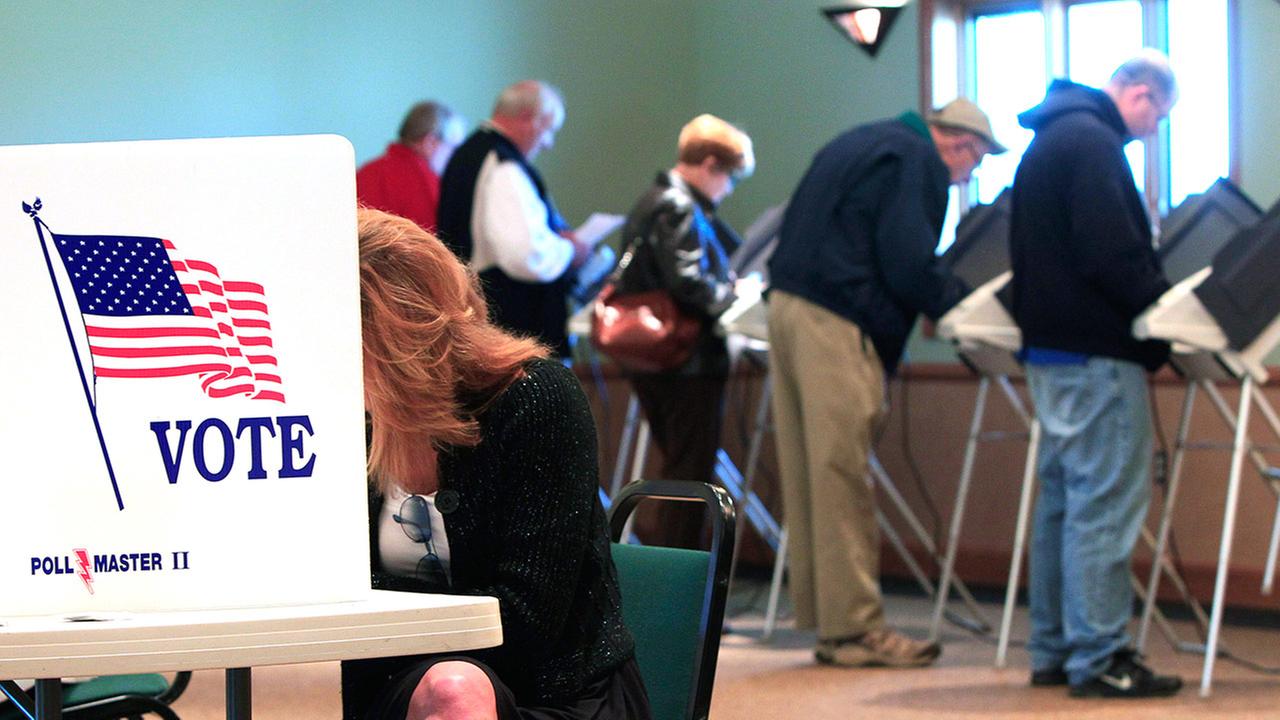
Voters in several Shelby County municipalities will head to their respective voting places Tuesday, Aug. 23 to cast their ballots for candidates running for mayor and city council. Hoping to get to know this year’s candidates a little better before Election Day? The Greater Shelby County Chamber of Commerce, in partnership with the South Shelby Chamber of Commerce, Montevallo Chamber of Commerce and Shelby County Newspapers, have you covered. They will be co-hosting forums prior to Election Day to help residents make the important decision of whom to vote for a little easier. “The purpose of these forums is to provide an opportunity for citizens and business people in these communities to meet and gather information from the candidates running for city council and mayor in these races, and ultimately make an informed decision prior to Aug. 23,” said Greater Shelby County Chamber President & CEO Kirk Mancer. Below at the dates of the Shelby County candidate forums: Thursday, Aug. 11 Westover 6:15-7:30 p.m. ServPro Training Center 11063 U.S. Highway 280, Westover Chelsea (Hosted by Chelsea Business Alliance) 7 p.m. Chelsea High School 10510 County Road 11, Chelsea Monday, Aug.15 Alabaster 6-8 p.m. Alabaster Municipal Building 1953 Municipal Way, Alabaster Tuesday, Aug. 16 Pelham 6-8 p.m. Pelham High School — Auditorium 2500 Panther Circle, Pelham Wednesday, Aug. 17 Montevallo 6-8 p.m. Montevallo City Hall 541 Main St., Montevallo “With these municipal elections quickly approaching, it’s important for voters in these communities to make the most of their right to vote,” Mancer continued. “We’re pleased to collaborate with our partners at the Montevallo and South Shelby chambers in hosting this series of candidates’ forums. These forums will allow voters to meet the candidates, as well as learn how the issues shaping each race will affect them and their cities.”
No hearing for suspended Chief Justice Roy Moore, federal judge dismisses suit
A federal judge has dismissed the lawsuit filed by suspended Alabama Chief Justice Roy Moore against the Judicial Inquiry Commission (JIC) that filed charges against him in May. U.S. District Court Judge W. Harold Albritton threw the suit out in an order issued Thursday morning. Wednesday, the same judge had cancelled the previously scheduled Aug. 4 hearing on the JIC’s motion to dismiss Moore’s lawsuit. Albritton explained all parties involved had come to an agreement regarding the issues listed in the court filings and that a hearing was not necessary. “The voters in the State of Alabama adopted a far-ranging and comprehensive new Judicial Article to the State’s Constitution, Article VI, a part of which created a method of dealing with allegations of misconduct by any of the judges of the State,” Albritton stated in his opinion. “It created a Judicial Inquiry Commission, with authority to investigate and bring complaints of misconduct against a judge, functioning in a manner similar to a grand jury. A Court of the Judiciary was created to try and determine any such complaints brought and an adverse decision by that court could be appealed to the Supreme Court of Alabama.” The JIC is considering judicial ethics charges that could lead to Moore’s permanent removal from office. In July the JIC argued Moore should be immediately and permanently removed from office. Albritton stated in his opinion that the process should continue without federal court interference, except under limited circumstances. “He (Moore) has chosen not to allow the state courts to determine his federal constitutional challenges, but instead to ask this federal court to act,” Albritton wrote. “This court, out of respect for the state court’s proceedings for determining discipline of the state’s elected judges, in the manner provided by the state’s own constitution, declines to do so.” Moore, a conservative Christian Republican, opposes same-sex marriage on the basis of faith and the law. In January, he issued an administrative order to state probate judges that said state laws against gay marriage remained in place months after the U.S. Supreme Court had effectively legalized gay marriage nationwide. In May, the JIC filed judicial ethics charges against him for that order. Moore then sued the JIC saying it violated his rights by suspending him when it filed the ethics charges. A hearing is set for Aug. 8 on the ethics charges before the Alabama Court of the Judiciary. Moore continues to seek a dismissal of those charges.
Luther Strange praises SCOTUS stay of transgender restroom policy
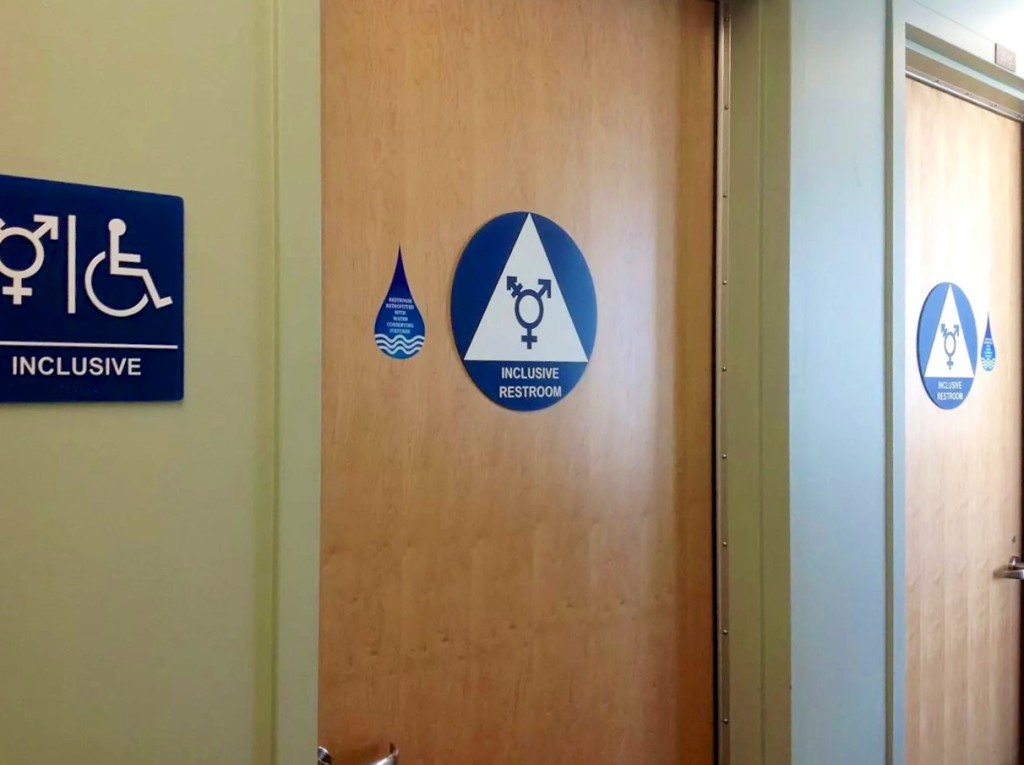
The U.S. Supreme Court Wednesday intervened for the first time in the controversy over transgender rights and granted a stay sought by a Virginia school district to prohibit a transgender boy from using the high school restroom that fits his “gender identity” when the school re-opens in September. The court voted 5-3 to grant the stay sought by the Gloucester County school district after Chief Justice John G. Roberts Jr. referred the stay application he received last month to the full court. Roberts was joined by Justices Anthony M. Kennedy, Clarence Thomas, Stephen G. Breyer, and Samuel A. Alito Jr. in granting the stay. Breyer said in a short statement he was voting for the stay “as a courtesy.” Without Breyer’s vote, a 4-4 split on the question would have meant no stay. Justices Ruth Bader Ginsburg, Sonia Sotomayor, and Elena Kagan said they would deny the stay. Alabama Attorney General Luther Strange welcomed the high court’s decision. “This is a positive development and an indication that the U.S. Supreme Court could eventually overturn the Obama administration’s order mandating that America’s public schools allow students access to restrooms and locker rooms of their gender identity rather than sex,” said AG Strange. “The Supreme Court’s five-to-three decision in the case of Gloucester County School Board v. G.G. certainly raises the possibility that the high court will also rule in support of a separate legal challenge against the Obama administration filed by Alabama and 10 other states in May. “As I stated in my letter to the Alabama State Board of Education in May, the recent federal transgender restroom directive to America’s public schools is based on a legally erroneous interpretation of federal law and will not stand up to legal scrutiny,” Strange added.
Alabama is failing new parents, earns ‘F’ in new study of supportive workplace policies

A new report says Alabama is “among the nation’s worst” when it comes to doing more for new and prospective parents than required by the federal Family and Medical Leave Act. A new state-by-state analysis, released two days before the 23rd anniversary of the day the federal Family and Medical Leave Act (FMLA), by the National Partnership for Women and Families says few states have expanded upon the FMLA’s unpaid leave protections, or adopted other supports, to assist expecting and new parents who are employed. The study — Expecting Better: A State-by-State Analysis of Laws That Help Expecting and New Parents — gave Alabama an “F” for “failing to enact a single supportive policy beyond federal law.” The study graded all 50 states and the District of Columbia based on their passage of select laws that offer greater leave or workplace protections than what federal laws provide. California was the only state to receive an “A.” The District of Columbia and New York earn grades of “A-” and 11 states earned grades of “B.” However, 10 states scored grades of “C,” 15 states were given “D,” and 12 states, including Alabama, were given an “F” for failing to enact a single workplace policy to help expecting or new parents. “Despite some meaningful progress, too many working families in this country struggle at the very time they should be focused on giving children their best possible starts in life,” said Debra L. Ness, president of the National Partnership. “Twenty-three years after the country took its first major step to help people manage job and family by implementing a national unpaid family and medical leave law, our new study reveals that people in too few states are guaranteed access to paid leave and other workplace protections they urgently need.” The poor grades are striking, Ness said, considering women make up nearly half of the country’s workforce and 68 percent of children live in households in which all parents are employed “At this time when women are both caregivers and breadwinners, and when voters want and need supportive workplace policies, too many lawmakers are letting them down,” Ness continued. “America’s families expect and deserve much better.” Check out how the rest of the country compares to Alabama:
Campaign chair plays down Donald Trump-Paul Ryan rift
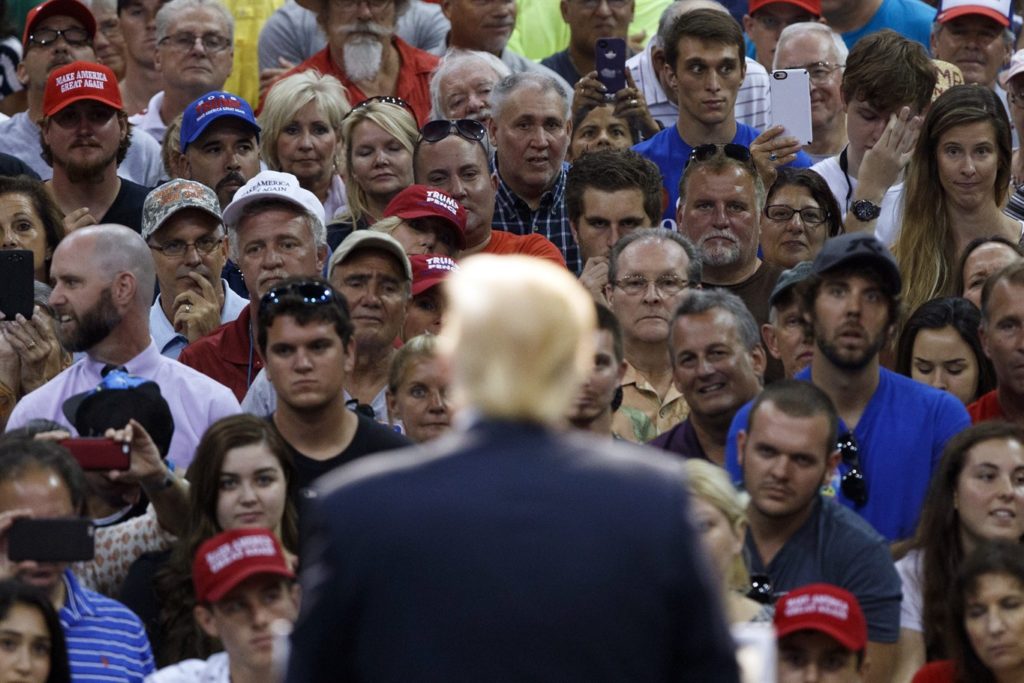
The Latest on the U.S. presidential campaign (all times local): 7:55 a.m. Donald Trump‘s campaign chairman is playing down a rift between the Republican nominee and House Speaker Paul Ryan. Paul Manafort acknowledged “a conflict within the Trump campaign” after vice presidential candidate Mike Pence endorsed Ryan a day after Trump declined to do so. Manafort spoke on ABC’s “Good Morning America.” Manafort the campaign has “sort of had a rule of not getting involved in primaries.” He said Ryan’s primary rival “is not going to win,” but noted he has supported Trump. “Of course, he’s going to work with Paul Ryan,” Manafort said Trump has “tried to bridge the party together” with Ryan. 3:20 a.m. Donald Trump’s running mate Mike Pence has tried to focus on winning over conservatives who are skeptical of the New York billionaire, but his new boss keeps getting in the way. The Indiana governor has been called on several times to do damage control this past week after the Republican presidential nominee made incendiary remarks. Trump feuded publicly with the family of deceased Army Capt. Humayun Khan after they criticized Trump’s anti-Muslim rhetoric. Trump also refused to endorse Arizona Sen. John McCain and Republican House Speaker Paul Ryan. Pence responded by saying Khan’s family should be cherished. He also had a meeting with McCain and publicly endorsed Ryan. There’s no indication Trump is unsatisfied with Pence’s approach. Some supporters hope Pence will counterbalance Trump’s more provocative remarks. Republished with permission of the Associated Press.
Daniel Sutter: Drones, self-driving vehicles, and the future

Two firsts occurred recently for drones and self-driving vehicles. On June 30, the first highway death in a self-driving car occurred when a Tesla Model S on autopilot hit a tractor-trailer near Gainesville, Florida. Then in July, a Reno, Nevada, 7-Eleven conducted the first Federal Aviation Administration (FAA) approved drone delivery. The historic delivery included Slurpees, donuts, coffee, and chicken sandwiches. Drones and self-driving systems for vehicles are both emerging under Federal regulation. While we need rules governing these technologies, the government can also make rules to protect established commercial interests. Whether politics will bless these technologies or block them to protect established economic interests remains to be seen. So far regulators are allowing development. In June the FAA released its long-awaited rules for commercial drones, to replace the current system of special permits. Drones will have to be registered and operated by holders of a drone pilot license, with operation at night or out of the pilot’s sight restricted. Many commercial users seem ready to move forward under these rules. National Highway Traffic Safety Administration (NHTSA) director Dr. Mark Rosekind strongly supported self-driving vehicles last month in San Francisco. This was noteworthy, because although self-driving cars have had encouraging road tests, the inevitable fatal accident could have afforded an opportunity to apply regulatory brakes. Dr. Rosekind announced in San Francisco, “I can tell you that no one incident will derail the Department of Transportation and NHTSA from its mission to improve safety on the roads by pursuing new life saving technologies.” Drones and self-driving cars illustrate the never-ending economic clash between the past and the future. The successful economic practices of the past have built the established businesses of today. New products and technologies threaten established businesses. Life is good in America today, with a high standard of living, people living longer than ever, and the ability do things that would have been unimaginable 100 years ago. For the future to prevail over the past, we must be able to envision how a future that does not exist yet could be even better than today. Both drones and self-driving cars could significantly improve the future. The Association for Unmanned Vehicle Systems International projects that drones could generate $14 billion in economic value annually within three years. Such projections are often self-promoting hooey, but uses for drones in surveying and agriculture surely indicate enormous potential value creation. And I await drone package delivery from Amazon. The benefits of self-driving vehicles loom even larger. Over 30,000 fatalities and 2 million injuries occur on America’s highways annually. The NHTSA calculates that if we put a dollar value on all of the losses, auto accidents cost our nation $1 trillion a year. And 94% of traffic accidents are attributable to driver error. Even assuming an occasional crash, self-driving cars could potentially eliminate a majority of accidents. Self-driving cars could provide the handicapped or elderly mobility comparable to other Americans. Adults could consume alcoholic beverages without killing or injuring themselves or others when driving home. Americans drove 3 trillion miles in 2014, and these drivers’ time could be freed up to safely text, talk on the cell phone, or read. Self-driving technology could reduce costs in transportation, as 3.8 million people work as motor vehicle operators. Trucking has provided America millions of good jobs, but companies have been struggling to recruit younger drivers. Technology might avert a truck driver shortage and lower the price of many goods for consumers. The legal burdens the taxi industry has placed on ridesharing companies Uber and Lyft, however, illustrate why regulation might deny us the benefits of drones and self-driving vehicles. Cities have used regulation to protect existing taxi monopolies. Just recently, Austin, Texas, voted for regulations ending ride sharing service there. The NHTSA’s Dr. Rosekind may sincerely want to allow self-driving cars to develop. But numerous businesses threatened by self-driving vehicles (or drones) could seek to throttle the competition. If politicians side with the established interests, even the best intentioned regulators will not prevent regulation from being used to protect the past from the future. ••• Daniel Sutter is the Charles G. Koch Professor of Economics with the Manuel H. Johnson Center for Political Economy at Troy University and host of Econversations on TrojanVision. The opinions expressed in this column are the author’s alone and do not necessarily reflect the views of Troy University.
Will Lochamy: An Uber success?
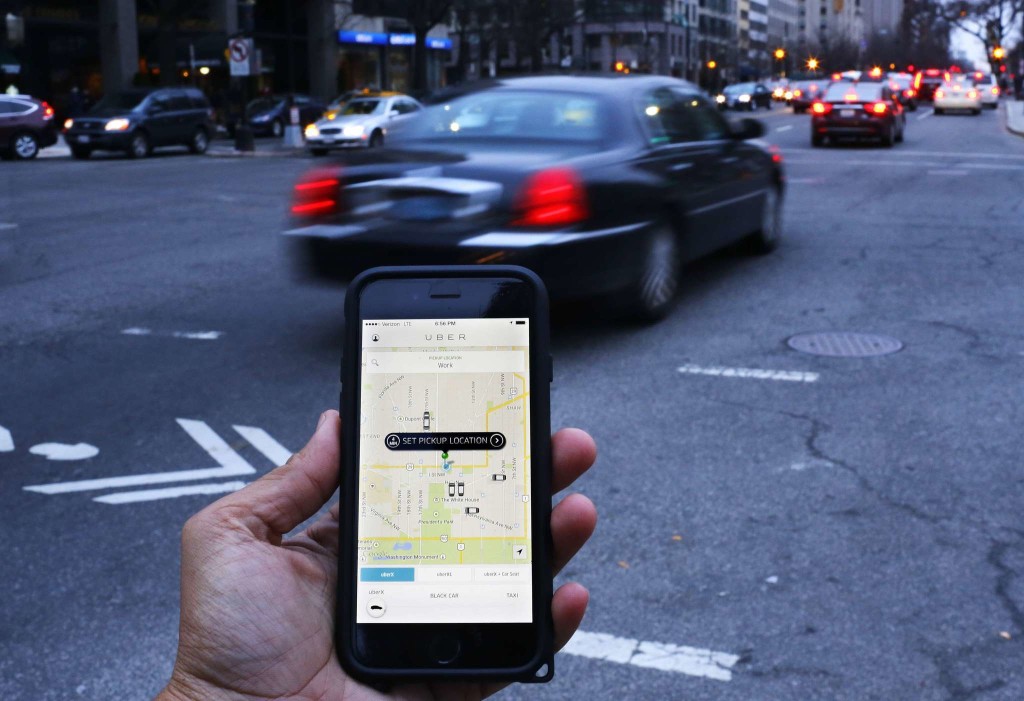
Can you believe we’ve made it? I mean, it’s a miracle that we’re still here! Think about it … Y2K, quicksand, Zima, the Mayan calendar, and even Uber. We’ve survived, folks! Chicken Little’s whole “acorn story” was more convincing than Birmingham City Councilor Kim Rafferty’s anti-Uber charade. While supposedly only representing the community, she appeared on a national propaganda video produced by the Taxi, Limousine, and Paratransit Association. Speaking about Uber, Henny Penny… I mean Rafferty, said, “Just because you need a ride, doesn’t mean you have to be abused or taken advantage of.” It get’s better. She actually said, “We continue to stand before a millennial groundswell that is manipulated and tantalized by shiny, newfangled app gadgetry, convenience, and self-service with no concept of public service and no care for public safety. Social media may be pretty, but it will not serve you well when the battery goes dead.” I’m assuming she thinks we should stop driving cars as well, because, you know … they might run out of gas. Thank goodness our batteries haven’t died. We’ve now been using Uber for over seven months in Birmingham. That’s right; the scary, unregulated, bogey man-driven, rideshare service that everyone warned us about. Close your eyes, because here is what people have experienced: People from 45 different countries have used Uber in Birmingham. “Since Uber came along, I’ve personally witnessed a complete transformation in the landscape of transportation in Birmingham. Where there are STILL no cabs, we now have Uber. Our customers now have a reliable, affordable, safe option to get around when they make the choice to not drive,” said Cliff Atkins, owner of 41st Street Pub and Rowe’s Avondale. “Uber is a valuable service and safety enhancement to our citizens. There is no other way to see it unless you’re serving some other end.” Birmingham City Councilor Sheila Tyson said, “We haven’t had any complaints. If they had complaints, trust me, they would blow our phones up.” “There are no longer lengthy wait times. Also, an added bonus has been the paper trail Uber leaves. Knowing exactly when you rode, who drove you, and the route you took home is extremely helpful to our customers,” said Joseph Hoskin, general manager of Innisfree Irish Pub. The average wait time for an Uber in Birmingham is four minutes. “The first six months (with Uber) have been all we had envisioned: creation of jobs, decreased incidents of DUI, and satisfied out-of-town visitors who have more reliable transportation to and from the Birmingham airport. It’s an all-around success story for our city,” said Hoover City Councilor John Lyda. It took Birmingham 18 long months to get past the red tape. I don’t want to think about the negative things that might have happened during that time without ridesharing. The proof is in the pudding. I stood before an Alabama State House in 2015 that didn’t know what Uber was. There’s no excuse now. Drinking and driving, reliable transportation, and outdated thinking isn’t a just a Birmingham thing. It’s time to take this out of the local municipalities’ hands and pass statewide legislation. Oh, and thanks to the drivers. You guys and gals have been on your best behavior. Let’s keep it that way. We’d hate for one of you to mess it up for the rest of us. Will Lochamy is co-host of the radio show, “Oh Brother Radio” on Birmingham Mountain Radio (107.3FM).
