
Panel sends Alabama chief justice’s ethics case to trial
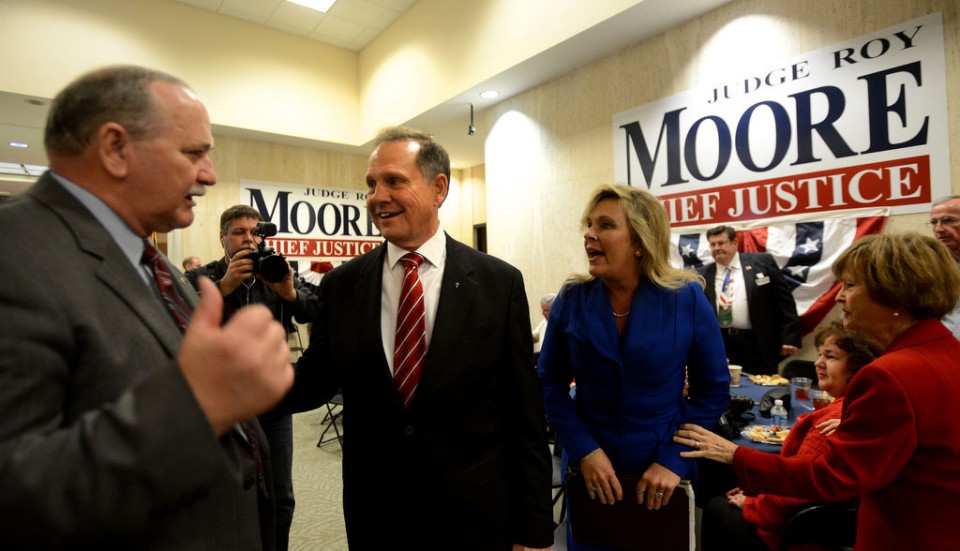
A state judicial panel on Monday refused to dismiss an ethics complaint against Alabama Chief Justice Roy Moore, saying that Moore will go to trial in September on accusations that he urged 68 probate judges to defy the federal courts on same-sex marriage. The Alabama Court of the Judiciary, a state panel that disciplines judges, refused dueling requests to either dismiss the complaint against Moore outright or go ahead and remove him from office. Chief Judge Michael Joiner said the case will go to trial Sept. 28. The panel of nine judges will hear the case and decide whether Moore violated judicial ethics and if so, what punishment he will face. The decision came down shortly after the conclusion of a 60-minute hearing in which Moore was alternately portrayed as a politician on a mission to block gay couples from marrying in Alabama or a judge who was merely trying answer questions from confused probate judges. Moore — who was ousted from office by the court in 2003 for refusing to remove a Ten Commandments monument from the state judicial building — could be removed as chief justice for a second time. “We are here to talk about Chief Justice Roy Moore and his repeated refusal to follow the rule of law,” John Carroll, a former federal magistrate representing the Judicial Inquiry Commission, told the court. Carroll said Moore abused his power as chief justice to promote a private agenda against same-sex marriage. The complaint stems from a Jan. 6 memo he sent probate judges. Moore wrote that a March order from the state Supreme Court to refuse marriage licenses to gay couples remained in full force and effect. The order came even though the U.S. Supreme Court had effectively legalized same-sex marriage nationwide six months prior and a federal judge said Alabama should follow that decision. A lawyer for Moore said the chief justice was only clarifying the status of the state injunction that was issued in March because probate judges were asking questions about it. “The probate judges were flapping in the wind. They were wondering what to do,” his lawyer, Mat Staver, told the court. Moore’s order was merely a legal “truism” that the order had not been lifted by the state court, he argued. Staver, in defending Moore, repeatedly emphasized a section of the January order where Moore told the probate judges that he was not at “liberty to provide any guidance to Alabama probate judges on the effect of (the U.S. Supreme Court ruling) on the existing orders of the Alabama Supreme Court.” Carroll countered that Moore’s intent was clear: to try to urge probate judges to fight against same-sex marriage. Moore acted on his own by sending the order after unsuccessfully urging his fellow justices to take some action regarding the March order in the wake of the U.S. Supreme Court decision, something pointing out by both sides in the hearing. The Monday hearing took on some of the theater and spectacle that accompanied the 2003 dismissal with passionate protests outside the court. Moore’s supporters and opponents held dueling rallies outside the court building ahead of the hearing, at times standing within a few feet of each other as they chanted and waved competing signs such as “No Moore” or “Judge Moore is right.” Moore entered the packed courtroom to applause from his supporters. After the hearing, he spoke to a sign-waving crowd outside, saying there is “no evidence” he broke judicial ethics and that he never told judges what to do. “They said I tried to influence them. I said it’s their decision,” Moore said. Moore said the complaint was filed against him by people who “don’t want anybody opposing any agenda of the homosexual movement.” The Southern Poverty Law Center, a civil rights legal advocacy group, filed the complaint against Moore that led to the ethics charges, and its director said Moore was clearly urging the judges to defy the courts on gay marriage and was now trying to “save his skin by playing word games.” “Alabama is a great state and deserves better than a chief justice who thinks he is above the law. We’ve said it many times. He acts as if he is the ayatollah of Alabama,” SPLC President Richard Cohen said after the hearing. Ambrosia Starling, the stage name of a small-town Alabama drag queen, was among the speakers against Moore. “We lost the war between the states. That means the Supreme Court holds the final authority over jurisdiction of law,” Starling drawled. Linda Chasom drove three hours from Georgia to attend the rally in support of Moore. She said she thought Moore was being persecuted for his conservative Christian beliefs. “My family is being persecuted. Judge Roy Moore is part of my family as a believer,” Chasom said. Republished with permission of the Associated Press.
Hillary Clinton sets out most efficient path to get to 270

Hillary Clinton doesn’t appear all that interested in making scenic stops on her state-to-state quest to become president. The Democratic nominee is instead programming her GPS to take her on the quickest route to collect the 270 Electoral College votes she needs to win the White House. With three months until Election Day, Clinton’s campaign is focused on capturing the battleground states that have decided the most recent presidential elections, not so much on expanding the map. Clinton’s team doesn’t rule out an effort at Arizona, a state with a booming population of Latino voters that polls find are loath to support Trump. And Georgia, a bastion of the Deep South, echoes recent population trends in other Southeastern states where Clinton is competing aggressively. But neither is among the 11 battleground states that Clinton’s television advertising plans and her travel schedule point to as her focus. Those states are the perennial top-tier targets Florida and Ohio, plus Colorado, Iowa, Michigan, Nevada, New Hampshire, North Carolina, Pennsylvania, Virginia and Wisconsin. President Barack Obama carried them all in 2008, and missed out on only North Carolina during his 2012 re-election campaign. “The last two elections have given Democrats an electoral path for victory,” said Clinton campaign adviser John Anzalone. “And our strategy is to efficiently use our resources to lock down the support we need to reach 270 electoral votes.” After a bump in support for Clinton in national polls that followed the Democratic convention and tracked Trump’s recent gaffes, the number of states where Clinton will invest her time and money may get smaller than 11. When the Clinton campaign booked more than $23 million in new television ad time late this past week to start on Monday, it spent most of the money in just three states: Florida, Pennsylvania and Ohio. Feeling good about Colorado and Virginia, the campaign passed on giving those states a fresh injection of ad dollars, though they remain heavily staffed with organizers. Likewise, officials with the pro-Clinton group Priorities USA say they have put its advertising plans there on hold. Meanwhile, Trump’s travel following the Republican convention suggests he’s given up on plans to force Clinton to defend traditional Democratic bastions California and New York. Beyond that, it’s not clear how he plans to chart his course to 270. “I have states that no other Republican would do well in that I think I’m going to win,” Trump told The Washington Post this past week. “But I don’t want to name those states.” Trump’s campaign has yet to run a single television ad and has made curious decisions about where to send its candidate. This past week, for example, Trump spent a day in Portland, Maine, chasing after the single electoral vote at stake along the state’s largely Democratic southern coast. There have been no such distractions for Clinton since the end of her convention, aside from a quick stop in Nebraska, a visit that was probably as much about spending time on stage with billionaire investor Warren Buffett than picking up the one electoral vote in the Omaha area. (Maine and Nebraska are the two states that award electoral votes by congressional district instead of a statewide winner-take-all vote.) This coming week, Clinton will be in Florida. So will Trump. That’s no surprise, as a win there plus victories in every state (and the District of Columbia) that have voted Democratic since 1992 would give Clinton a winning total of 271 electoral votes. Florida Republican consultant Brett Doster said simply of his state: “If we don’t win here, I just don’t see how we win.” Despite the 2016 campaign’s unscripted form, Democrat and Republican pollsters alike said in the past week that Florida is competitive and is expected to stay that way into the fall. The largest share of single-state spending in Clinton’s most recent ad buy came in Florida, at more than $4.2 million, and that, plus an aggressive pursuit of Latino voters, may give her a narrow edge. In Florida’s Orange County, which includes Orlando, the Democratic edge among registered voters has grown by 15 percent since 2008. Since late last year, roughly 1,000 Puerto Rican families a month have relocated to Florida due to the U.S. territory’s fiscal crisis, many of them concentrating in and around Orlando’s heavy service-sector job scene. Bilingual teams of Clinton employees are registering first-time Puerto Rican voters at grocery stores, malls and community centers. Republican pollster Whit Ayres said Trump’s problems in Florida go deeper than his lack of advertising and overwhelmingly unpopular standing among Latinos. He said Trump’s recent criticism of the Muslim family of a fallen U.S. soldier is not likely to sit well in a state with 22 military installations and more than 1.5 million veterans. “The attack on the Gold Star family makes it unlikely for him to expand in Florida beyond where he is right now,” said Ayres, an adviser to Republican Sen. Marco Rubio of Florida. While Trump may not have a path without Florida, Clinton can lose the state and still find another way through the battlegrounds to reach 270. That’s no doubt why from June 8 through Monday, Clinton and Democratic groups supporting her will have outspent Republican groups by 15 to 1 in those states, according to data from Kantar Media’s CMAG political advertising tracker. The Clinton campaign and deep-pocketed Democratic groups such as Priorities USA have poured a combined $66 million into television and radio advertising in those 11 states. Trump’s campaign hasn’t spent a dollar on television advertising, while Republican groups have only spent about $4.3 million. Put simply, Anzalone said, Clinton has options. “But this is a dynamic race and we will continue to look at all pathways as this race develops,” he said. Republished with permission of the Associated Press.
August Recess agenda: Alabama U.S. Senator Richard Shelby
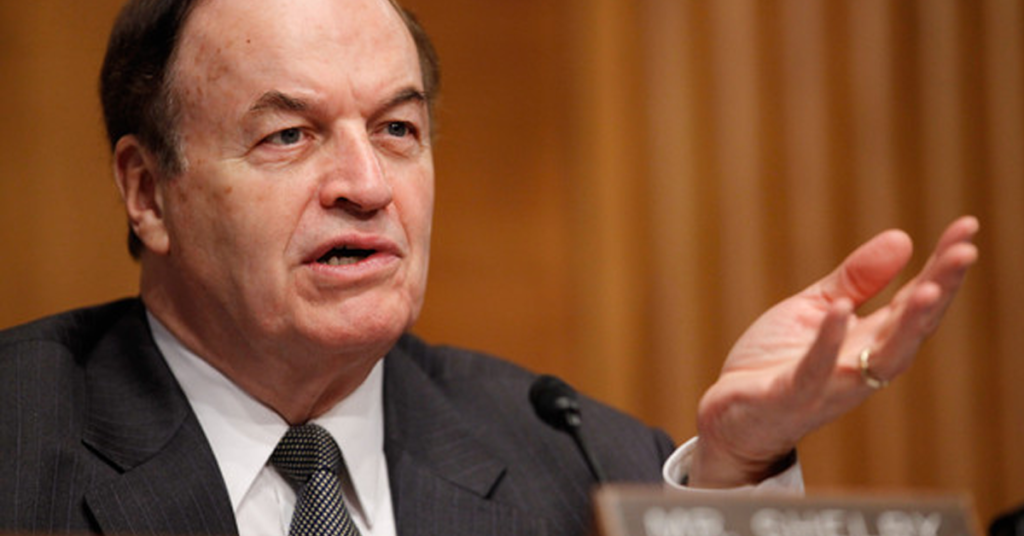
It’s August, and that means the Alabama Delegation has put business on hold in Washington, D.C. until after Labor Day and members have made their way back to the Yellowhammer state for August Recess. This year’s recess is an unprecedented seven-weeks, with Congress taking additional time off to attend the presidential conventions. While “recess” may sound like a vacation, it’s actually a block of time designed to give members of Congress an opportunity to get back home for more than a week or weekend and reconnect with the constituents they represent. Alabama U.S. Senator Richard Shelby is making the most of his time this August, staying busy across the Yellowhammer State. He began his time away from D.C. in his Tuscaloosa office. There he held office hours and took time to meet with the Juvenile Diabetes Research Foundation (JDRF) Alabama chapter, where he renewed his commitment to supporting critical funding for juvenile diabetes research. Over this past weekend, Shelby attended the Business Council of Alabama’s 2016 Governmental Affairs Conference in Point Clear. There, he had the opportunity to connect with fellow lawmakers, business leaders and governmental affairs professionals to discuss politics and policy. While he may be away from Washington, Shelby has not stopped working on policy issues that impact his constituents. At the end of last month, he joined Calhoun County Sheriff Larry Amerson in calling on President Barack Obama “to reverse his dangerous restrictions on the Section 1033 program.” The program, which transferred surplus military equipment to law enforcement agencies, was valuable to local law enforcement during the terrorist attacks in Orlando and San Bernardino and according to Shelby could be the key to protecting Americans and police from future attacks. He’s also publicly questioned the recent news that the Obama Administration secretly sent $400 million dollars to Iran in an unmarked cargo plane at the same time four American hostages were released earlier this year. Shelby’s staff also has a busy schedule this recess. Three members of his team will be attending the 19th Annual Space & Missile Defense Symposium — the leading educational, professional development and networking event in the space and missile defense community — in Huntsville next week. There they will network and collect valuable information on programs and policies that impact the aerospace industry on behalf of the Senator.
Jim Zeigler asks House committee to meet, present impeachment article to Robert Bentley

State Auditor Jim Zeigler has asked the Alabama House Judiciary Committee to report at least one impeachment article against Gov. Robert Bentley when the Alabama Legislature returns Aug. 15 for a special session. Zeigler will release a copy of the request to the committee in a speech and news conference noon, Tuesday, Aug. 9 at the Wetumpka Rotary Club. Read Zeigler’s official request below: I ask that you schedule a meeting of the House Judiciary Committee before or during the early stage of the August 15th special session. The purpose would be to consider at least one article of impeachment against Gov. Bentley. This would allow the full House to take up impeachment in the special session. There is widespread discouragement among Alabama citizens about the impeachment proceedings. Many believe that the impeachment proceedings are not moving ahead. The people want the air cleared on the Bentley administration sooner rather than later. If an impeachment resolution is not reported out of your committee in time for consideration in the special session, it would likely mean that the full House would not take up impeachment until the February 7 regular session. That is simply too long to let this sore fester. I do not buy the notion that a committee consideration of impeachment at all deliberate speed is not doing it right. Nor do I buy that a slow process like the one now being done is a correct and deliberate process. Slowness does not mean doing it right and a speedy hearing does not mean doing it wrong. Please let me know if you will schedule a meeting of the judiciary committee to consider one or more impeachment articles. Thank you. Jim Zeigler, Citizen
Personnel note: Tuscaloosa Co. DA named to State Pardons and Paroles Board
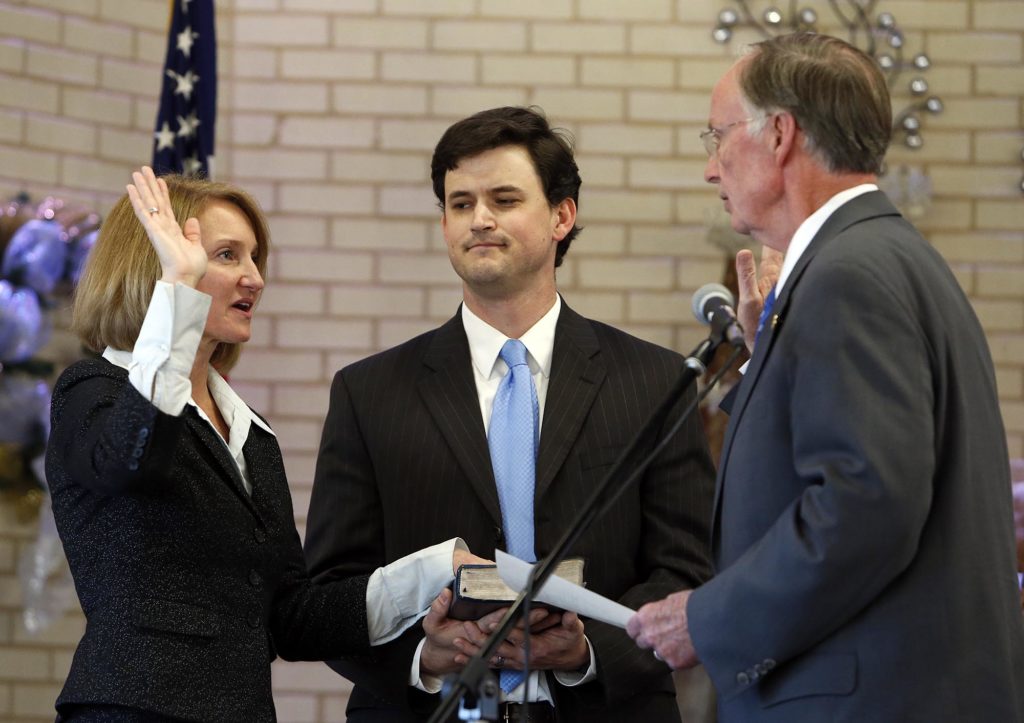
Tuscaloosa County District Attorney Lyn Head has been appointed to the Alabama Board of Pardons and Paroles by Alabama Gov. Robert Bentley Friday. Bentley chose Head over four other candidates nominated by a committee to replace retiring board member William Wynne. She will join the three-member pardons board Sept. 6 and Bentley will appoint someone to fill the DA position by that time. Head has served as the DA since the governor appointed her in 2013. Head began her career as a prosecutor in 1997, when she filled an assistant district attorney position in the Bessemer Division of the Jefferson County District Attorney’s Office. In February of 1999, she became a deputy district attorney in the Tuscaloosa County District Attorney’s Office. Over the course of her career, Head has tried more than 200 cases, including capital murder, sexual assaults, abuse of children, robbery, drug crimes, and other felony offenses.
Don Siegelman to be released from prison one year from today
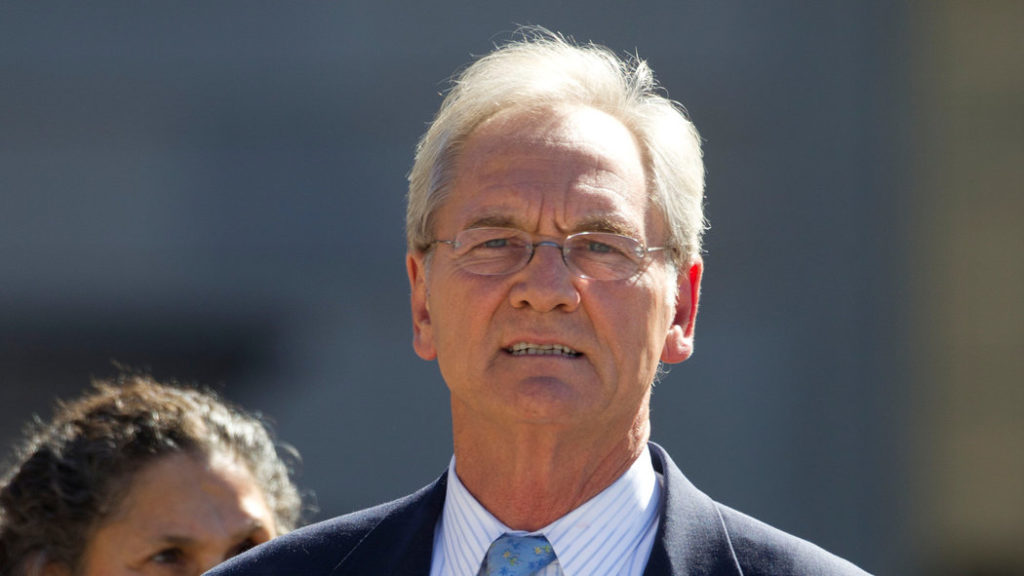
Former Alabama Gov. Don Siegelman is scheduled to be released from prison one year from today, August 8, 2017. Alabama News Network reported Monday Siegelman is “is keeping his spirits up” as his family and other supporters still hope the former governor could be released earlier via a presidential pardon. In April, more than 100 former state attorneys general from across the country sent a request to President Barack Obama asking him to pardon Siegelman, who’s serving a 6½ year prison sentence for bribery and obstruction of justice. In 2006, a federal jury convicted Siegelman of federal funds bribery on allegations that he sold a seat on a hospital regulatory board to former HealthSouth CEO Richard Scrushy in exchange for $500,000 in donations to Siegelman’s unsuccessful 1999 campaign to get Alabama voters to approve a state lottery. Siegelman was also convicted of obstruction of justice. In January, the U.S. Supreme Court refused to hear an appeal from Siegelman, making a presidential pardon his last hope to reduce his sentence. Siegelman, now 70, has been serving his sentence at a Louisiana prison camp since his conviction.
Donald Trump to try to steady campaign with economic speech
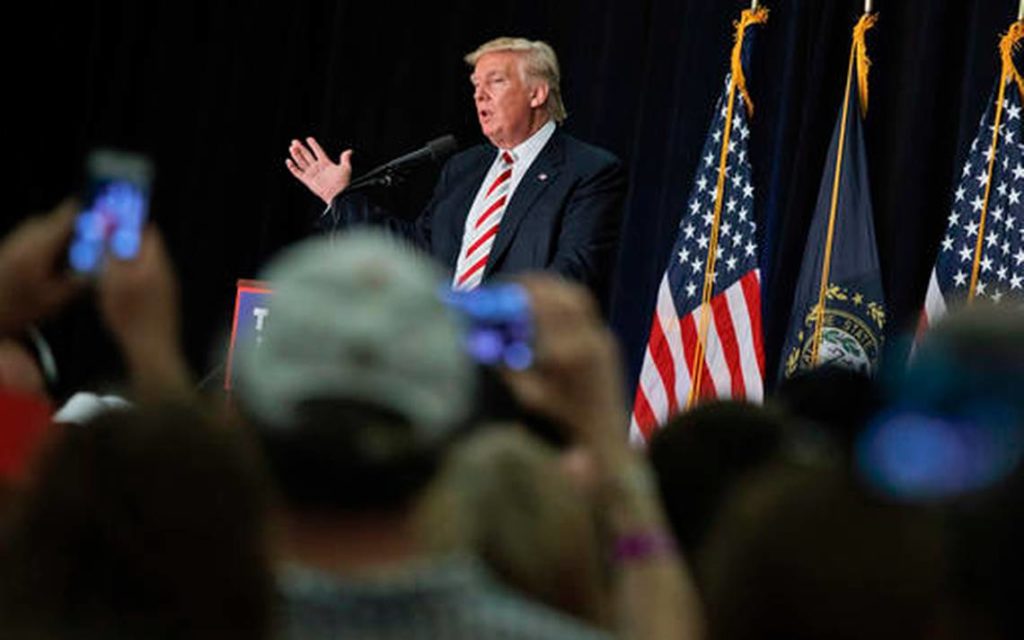
Donald Trump is trying to shift from a disastrous stretch of his presidential campaign to one focused on policy and party unity. But even as his allies speak of lessons the political newcomer has learned, two of his staunchest Republican critics warn that he could be heading for losses in a pair of battleground states. Trump is set to deliver an economic speech on Monday to the prestigious Detroit Economic Club in his effort to step past his spats over the past 10 days with the Muslim-American parents of a slain Army captain and the leaders of a Republican Party he has promised to unite. “Mr. Trump on Monday will lay out a vision that’s a growth economic plan” that will focus on cutting taxes, cutting regulation, energy development and boosting middle-class wages, campaign chairman Paul Manafort said in remarks broadcast Sunday on Fox Business. “When we do that, we’re comfortable that we can get the agenda and the narrative of the campaign back on where it belongs, which is comparing the tepid economy under Obama and Clinton, versus the kind of growth economy that Mr. Trump wants to build.” What came before Monday’s speech, Manafort suggested, doesn’t count in the race to Election Day on Nov. 8. “It’s a three-month campaign,” he said. Trump may have done irreversible damage in two critical states, Arizona and Ohio, with an approach to immigration reform that some say is divisive, two fellow Republicans say. Trump wants to build a wall between the United States and Mexico and now says he wants to suspend immigration from “terror countries” — though he has yet to say what those are. Ohio Gov. John Kasich, who lost the Republican nomination to Trump, has not endorsed the billionaire and skipped the party’s convention in Cleveland, said Trump faces a difficult climb in a state that’s a must-win for Republican presidential candidates. “He’s going to win parts of Ohio, where people are really hurting. There will be sections he will win because people are angry, frustrated and haven’t heard any answers,” Kasich said on CNN’s “State of the Union.” ”But I still think it’s difficult if you are dividing, to be able to win in Ohio. I think it’s really, really difficult.” In an interview on CBS’s “Face the Nation,” Sen. Jeff Flake, R-Ariz., said, “Yes, it is possible” that Democrat Hillary Clinton could beat Trump in his state, noting that Bill Clinton won Arizona in 1996 and that Hispanics represent about a third of the Arizona population. “You can’t just throw platitudes out there about a wall or about Mexico paying for it and then be taken seriously here,” Flake said. Clinton is expected to deliver her own economic plan to the Detroit Economic Club on Thursday. That’s who Republicans want to see Trump fighting — the former senator and secretary of state, not Republicans and others. It’s a message furious senior members of the party carried to Trump privately and publicly in the days after Trump last week refused in a Washington Post interview to endorse the re-election bids of House Speaker Paul Ryan, Sen. John McCain of Arizona and Sen. Kelly Ayotte of New Hampshire. The trio had strongly disapproved of Trump’s fight with Khizr and Ghazala Khan, Muslim-Americans whose son, Capt. Humayun Khan, was killed in Iraq in 2004. On Friday at a Wisconsin rally not attended by Ryan or Gov. Scott Walker, Trump reversed course and endorsed all three lawmakers, saying, “We have to unite.” “If you look at the last few days, I think he’s gotten the messages,” former House Speaker Newt Gingrich said on “Fox News Sunday.” ”It’s very tricky if you’ve never run for public office, to jump from being a businessman to being one of the two leaders fighting for the presidency, and he’s made some mistakes.” Former New York City Mayor Rudy Giuliani said on ABC’s “This Week” that Trump’s endorsements show he “has the ability and the understanding to realize that there are going to be disagreements and you’ve got to be able to reach out to the entire party.” Republished with permission of the Associated Press.
Alabama is 2016’s third-worst state to have a baby
August is one of the most popular months for having babies, and Americans pay some of the highest delivery costs in the world. A conventional delivery on average costs $10,002 — tack on another $5,238 for a C-section. If you don’t have insurance, those costs may double or triple, the study says. Health and child care costs vary wildly from state to state — where does Alabama rank? In their latest study, WalletHub took an in-depth look at 2016’s Best & Worst States to Have a Baby, and found Alabama is the third-worst state in the country to have a child. Using government data, WalletHub compared all 50 states and the District of Columbia across three key dimensions — delivery budget, health care and baby-friendliness — using 17 different metrics ranging from the number of pediatricians per capita to the infant mortality rate in each state. Having a baby in Alabama (1=Best; 25=Average) 51st: Infant-mortality rate 49th: Rate of low birth-weight 47th: Number of midwives and OB-GYNs per capita 46th: Number of pediatricians and family doctors per capita 35th: ‘Parental leave policy’ score 49th: Rate of preterm births In one bright spot in the study, Alabama was ranked as having the second-best delivery budget rank. According to the study, the best three states to have a child are Vermont, Maine and Connecticut, while the three worst are Mississippi, Louisiana and Alabama. Here’s a look at how Alabama compares to the rest of the country: Source: WalletHub
Trussville Mayor Gene Melton surrounded by multiple ethics questions, rebukes opportunity to address them
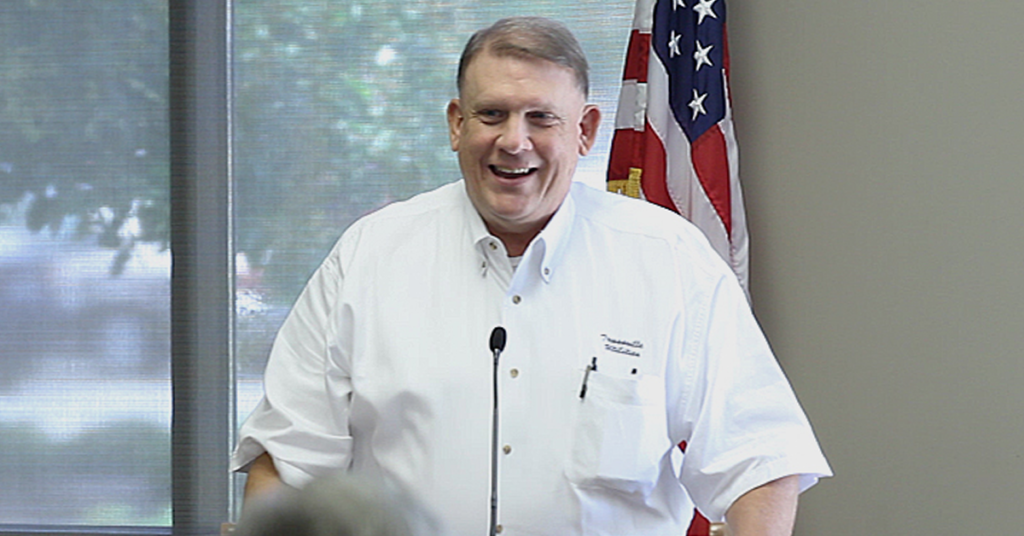
Trussville Mayor Gene Melton has been elected five times, beginning in 1996. While some that this is too long and that the city needs to move forward, Melton believes he deserves yet another term. This year, Melton has drawn two opponents, current City Council President Anthony Montalto and fellow City Council member Buddy Choat. In an unusual move, local residents have also started the “Take Back Trussville” movement, which endorses neither of Melton’s opponents but makes clear their goal is to move the city beyond another Melton mayorship. The founder of the movement, Butch Cole, spoke to Alabama Today after its launch and made clear the fact the group, and himself, wanted a new mayor, saying, “20 years is too long for anyone to be in office.” Last week, Alabama Today spoke to Melton about the race and his opponents, and pointed out a number of errors on his Statement of Economic Interests made from 2011 forward. Speaking about his campaign, Melton emphasized that he was born and raised in the area and that a lot of people in Trussville not only know him, but also know about his history in law enforcement. He stressed the strides in improving education, infrastructure and even the certification of local first responders that have occurred on his watch as ways he has been successful. As for his opponents, Mayor Melton said: “I take the high road, I’m not going to go out there and bash them. I’m running on my record and experience.” Today however, one can only hope he’s taking a break from campaigning and his mayoral duties to address errors on his ethics reports posed by Alabama Today last week. During our interview we had the opportunity to ask Melton about a number of inconsistencies, missing data and wrong information reported in his ethics reports throughout the last five years. Melton has several discrepancies on income and assets on multiple reports filed over a five-year period. Reports Melton noted he personally filled out and filed. The reports in question are his “Statement of Economic Interests,” legally mandated by the Alabama Ethics Commission. The commission’s website cites the appropriate state statutes that cover false and incorrect filings on these statements saying: (e) A person who intentionally violates any financial disclosure filing requirement of this chapter shall be subject to administrative fines imposed by the commission, or shall, upon conviction, be guilty of a Class A misdemeanor, or both. Any person who unintentionally neglects to include any information relating to the financial disclosure filing requirements of this chapter shall have 90 days to file an amended statement of economic interests without penalty. According to his Statement of Economic Interest, Melton claimed he made less than $1,000 as mayor in 2013, a job that pays $60,000 per year and will increase to $75,600 next term. When asked about it, he said, “That had to be a typo or error on my part. I didn’t take a cut in pay and I don’t recall not cashing my checks.” He also noted that, “During all this time, I draw state retirement.” Melton also owns a property at the Country Club Estates, which features properties on Logan Martin Lake in Talladega. On the Talladega property, which appears to make appearances on and off the reports, Melton says, “It’s been there the whole time.” He went on to clarify, “If it’s off, I just failed to disclose it.” The property doesn’t appear on the 2011 or the 2015 reports. Melton admitted it “should be on both of those.” In response to the low price he reportedly paid for the property, he explained, “I got it from my brother-in-law in 1972.” After our interview early last week Melton said, “Now that I’ve been made aware, I’ll go back and make the proper corrections.” Alabama Today reached out to the Alabama Ethics Commission just before their office closed on Friday and was told that they have yet to receive any amended reports. Melton is up for re-election in the upcoming Aug. 23 municipal elections.
