
Mike Hubbard seeks new trial post-conviction
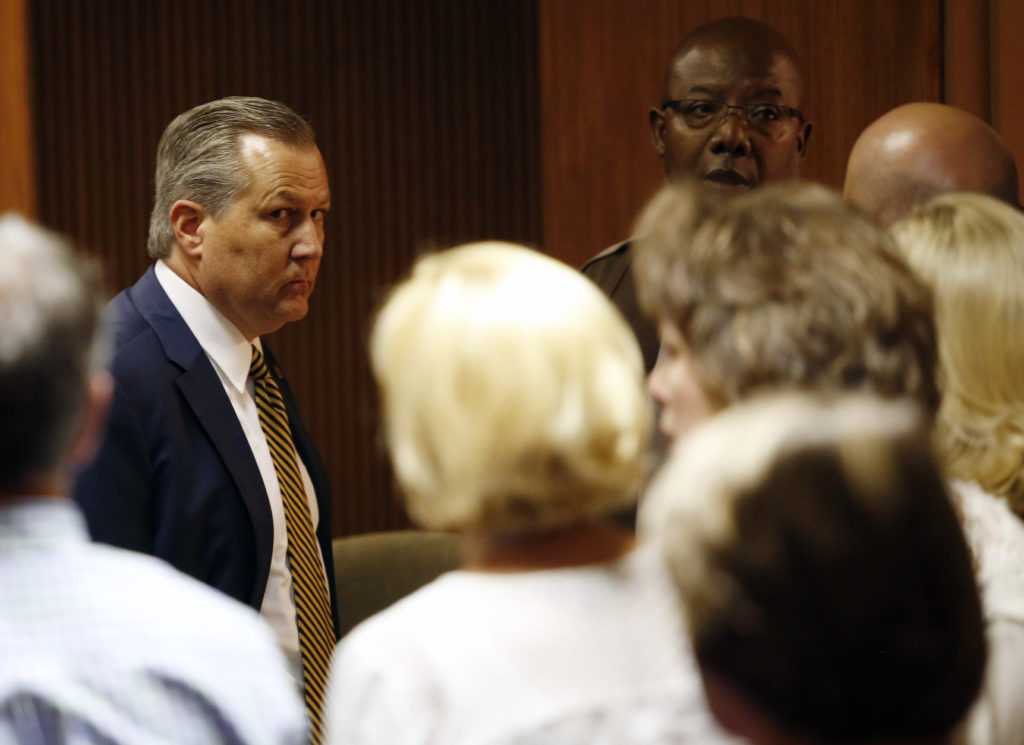
Former Alabama House Speaker Mike Hubbard has asked for a new trial, saying, among other claims, the state allowed improper expert testimony regarding Alabama ethics law, in their efforts to secure convictions against him. Hubbard’s attorney Bill Baxley claims former Alabama Ethics Commission Executive Director Jim Sumner was improperly allowed to testify about the intent of the state’s ethics law. Hubbard’s attorneys filed the request Friday asking a judge to reverse Hubbard’s conviction, or allow a new trial, contending Hubbard did not receive a fair and impartial trial. On June 10, Hubbard was convicted on 12 of 23 counts of corruption, which automatically removed the powerful Republican from both the Legislature and the speaker’s office, ending the upward trajectory of the one-time GOP star whose career previously appeared to have no limits. On July 8, he was sentenced to a total of four years in prison, eight years on probation and ordered to pay a $210,000 fine. Hubbard is currently out on bond.
Jim McClendon to introduce Alabama Lottery bill in special session
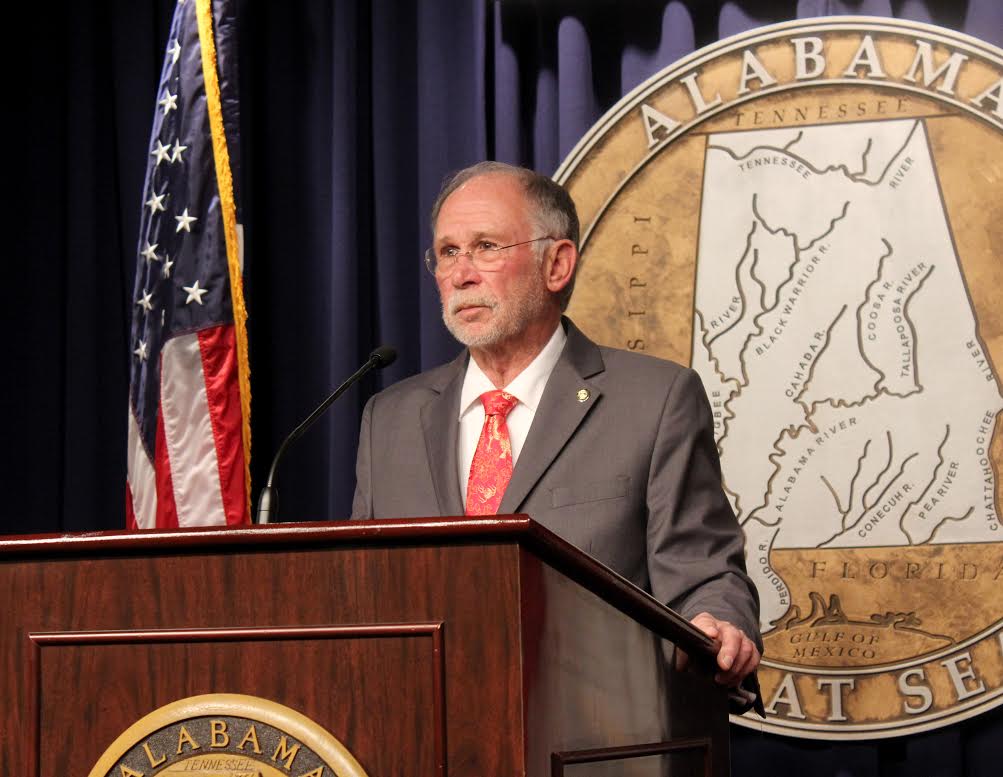
Alabama could be getting a state lottery soon, with the money going to fund Medicaid and schools statewide. State Sen. Jim McClendon, a Springville Republican, will be sponsoring a bill for the upcoming special session of the Alabama Legislature, scheduled to meet starting Aug. 15. A study by the nonpartisan Legislative Fiscal Office says McClendon’s lottery proposal could raise as much as $427 million annually. If approved, the revenue would be used toward a projected $85 million budget shortfall for Medicaid in 2017, as well as add $100 million annually for Alabama schools. “It is time to let the people vote on a lottery,” McClendon said in a statement Tuesday. “For thousands of families and children, the Medicaid budget shortfall is a personal crisis that we must solve now. “This lottery proposal will resolve the Medicaid problem and inject $100 million annually in new funding for our classrooms.” The bill would authorize Gov. Robert Bentley to negotiate a compact with the Poarch Creek Indians, and allow electronic lottery terminals in Birmingham and Mobile, as well as Macon and Greene counties. There would also be a bond issue based on expected revenue from the lottery, estimated at $75-85 million, to help close Medicaid’s 2017 budget gap. “Every year, thousands of Alabamians drive to neighboring states to play lotteries,” McClendon added. “That is money that should stay right here in our own state, to fund Alabama’s hospitals and schools. “And let me dispel a persistent myth: creating a lottery will not open the door to casino gaming. There is not one single instance in the United States where creating a lottery opened the door to legalizing gambling.” To be included on the November ballot, a lottery bill would have to pass by Aug. 24. Final approval will then be up to voters. “We must once and for all solve problems that have held our state back for decades. The state of Alabama has not and cannot at this time pay for the most basic services we must provide to our people,” Bentley said in a video message posted on social media July 27. “I am asking that each legislator allow the people back home the right to vote on a statewide lottery. I have faith in the people of this state to make the right and the best choice. I trust the voters and our legislators must do the same.”
Bradley Byrne: A busy August
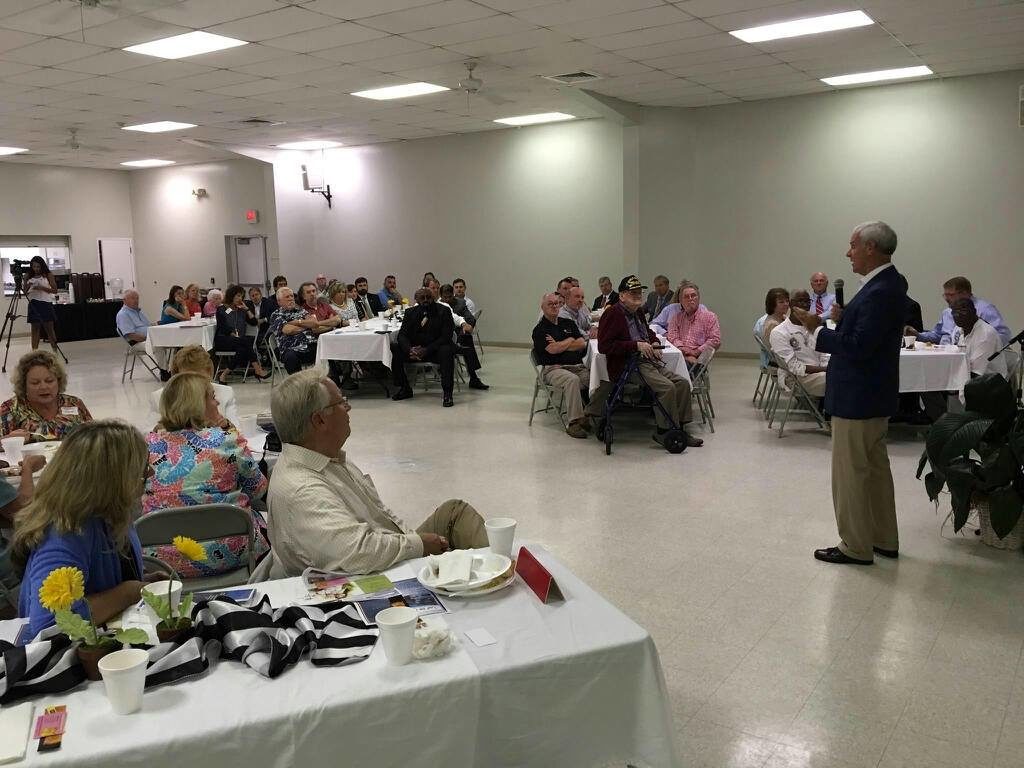
Each August, the House of Representatives goes out of session and members of Congress spend time back in their home state for a District Work Period. While these District Work Periods are sometimes known as “recess,” that does not mean members of Congress are on vacation. Instead, some of the most valuable time I have comes in August when I travel throughout Southwest Alabama and engage directly with the people I represent in Congress. I kicked off the District Work Period last week with a “Better Way to Fight Poverty” tour in Mobile and Washington counties. I toured organizations in Fruitdale, Chatom, and Mobile that are leading the way in the fight against poverty. I also held a joint roundtable discussion to talk about what works and what does not work in the war on poverty. In addition to our roundtable on poverty, I will also hold roundtable discussions with economic developers, our local school superintendents, and the leaders of our colleges and universities. These roundtable meetings help me to better understand issues facing our area, but they also allow for the sharing of ideas and collaboration among the other attendees. Another important way I spend the District Work Period is visiting local businesses to listen to their ideas and concerns. It is so helpful to spend time on the production line or behind the scenes to see how businesses operate and learn more about the various challenges facing their industry. August also gives me an opportunity to visit with local organizations and civic clubs. For example, last week I spoke to the Southwest Mobile Chamber of Commerce in Tillman’s Corner. We had a great discussion about the economic progress in our area and ways we can continue to move Southwest Alabama in the right direction. Later in the month, I will be speaking to other groups ranging from farmers to school groups about ways they can be a part of our area’s impressive progress. I also want to make sure everyone has an opportunity to share their concerns with me, so we have scheduled a number of town hall meetings. These meetings give you an opportunity to ask me any questions you may have or to share your concerns. This August, my town hall meetings will be in Citronelle, Grand Bay, Stockton, and Summerdale. We will also have more town hall meetings throughout the year. Later in August, my wife, Rebecca, and I will host our annual “Women’s Forum.” The theme this year is “Charting Your Own Course,” and the event provides networking opportunities for women in our area. I am especially excited this year’s event will include a special appearance by Congresswoman Cathy McMorris-Rodgers, the highest ranking woman in Congress. You can get more information about all of these events online at Byrne.House.Gov or by calling my office in Mobile at 251-690-2811. At each of these stops and events, I am talking about the Better Way agenda, which offers an alternative to the big-government policies that have become all-too-common over the last eight years. My hope is to share the ideas of the agenda with you, so I can get your feedback about what you like and what you disagree with. That way, when I head back to Washington in September, I can share your feedback with my House colleagues. You elected me to serve as your voice, and in order to do that, I must hear from you. That is why the August District Work Period is so important. I hope to see you around this month! • • • Bradley Byrne is a member of U.S. Congress representing Alabama’s 1st Congressional District.
Hillary Clinton spends big on Rio Olympics ads
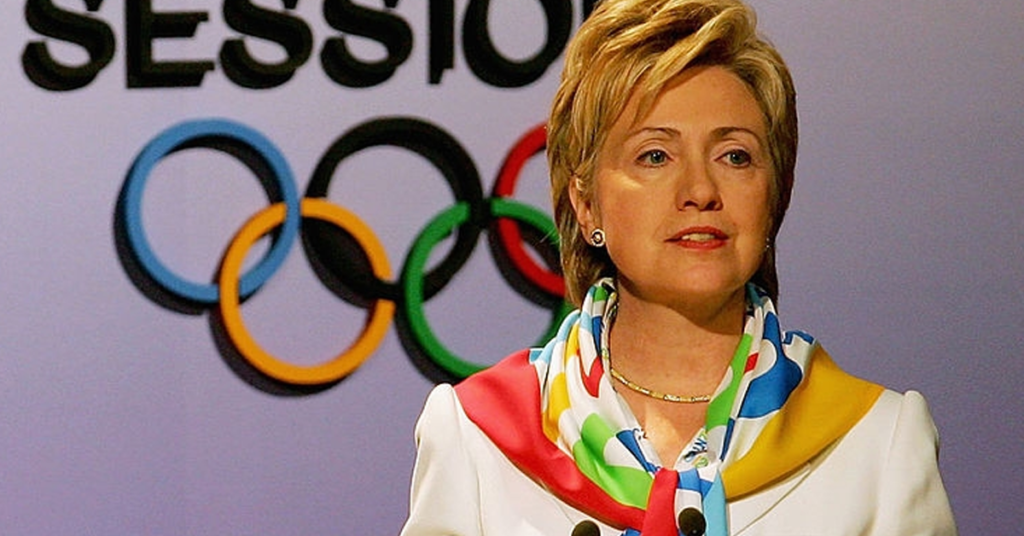
The Rio Olympics are in full swing: Michael Phelps is back to winning races in the pool, Simone Biles is running up the score in the gym and Hillary Clinton is advertising with eyes on doing just as well on Election Day. Donald Trump isn’t even competing. The Democratic presidential nominee is airing $13.6 million in campaign commercials during the Summer Games, seeking to reach the millions of television viewers who can’t skip past the commercials as they watch live coverage of the Olympics. She has the audience to herself, as Trump has yet to air his first paid TV ad of the general election campaign. It’s a striking change from four years ago, when then-cash-strapped Mitt Romney and his allies scrounged up the estimated $18 million needed to match what President Barack Obama was spending to advertise during the three weeks of the London Games, according to Kantar Media’s political advertising tracker. While Trump’s campaign has requested advertising rates from stations in key states, including Florida, the Olympics are quickly slipping beyond his reach. The opening ceremony was Friday and this week features some of the most popular sports, including swimming and women’s gymnastics. “I’d love to know what they’re waiting for,” said Will Ritter, a Republican ad maker and veteran of Romney’s presidential bids. Trump’s eschewal of political norms such as advertising “cannot survive the professionalized deconstruction that Hillary is doing every day,” he said. As anyone watching the games can attest, Clinton’s advertising is as omnipresent as NBC’s commercial breaks. Her spots appear alongside those of corporate behemoths such as McDonald’s and Chevrolet. Over the first three weeks of August, Clinton is spending $8 million on the national NBC network, which carries the games, and at least another $4.5 million on local NBC affiliates, an Associated Press analysis of Kantar Media data found. The campaign is also spending another $1.1 million on NBC’s cable channels Bravo, USA and MSNBC. One Clinton ad in heavy rotation is an awkward clip from David Letterman‘s late-night talk show. In it, the host holds up Trump shirts and ties and points out that they were made in Bangladesh and China, not America. To that, Trump smiles sheepishly. The commercial ends with the text: “He’s outsourced jobs to 12 countries.” And it digs at his campaign slogan: “Make America great again.” Clinton is following Obama’s Olympics playbook. The president debuted several commercials during the games in 2012, including one during the ratings-heavy – and expensive – opening ceremony. His spots were a mix of positive messages about his presidency and his contrasts with Romney. Romney and his allies also took advantage of the games. But the GOP nominating convention was still weeks away when the London Games began, putting money he raised for his general election campaign out of reach. The pro-Romney super political action committee Restore Our Future aired an ad featuring Olympic athletes talking about Romney’s business sense. He was tapped to run the 2002 Salt Lake City winter games, the first after the Sept. 11 terrorist attacks. “We made the determination the Olympics offered a large, captive audience who weren’t channel surfing,” former Restore Our Future leader Carl Forti said. “And in the case of Mitt Romney, we had a candidate who turned around the Salt Lake Olympics and had a unique story to tell.” Although neither Trump nor Clinton has as personal a connection to the Olympics, presidential candidates usually cannot resist the ratings bonanza, even if the ads come at a higher cost. Trump isn’t short on funds, having announced recently that he and his Republican allies raised more than $80 million last month. Asked about Trump’s decision to stay off the air, Trump’s spokeswoman Hope Hicks said the campaign was not yet ready to provide details about its TV advertising strategy. There are a few pro-Trump groups doing a relatively minor amount of advertising. Rebuilding America Now is spending about $2 million in the first three weeks of this month, but has nothing on the national NBC network. Its spending is concentrated on national cable and in four states: Florida, Ohio, North Carolina and Pennsylvania, Kantar Media shows. The NRA’s political arm also has $1.3 million in anti-Clinton spots up during the same time period – but again, not on the national NBC network. Steve Duprey, a Republican national committeeman from New Hampshire, conceded that Trump is missing a chance to connect with millions of voters. He suggested it may not matter. “While the decision not to have big ad buy during Olympics is unconventional,” he said, “I’m not sure conventional rules apply.” Republished with permission of the Associated Press.
Steven Kurlander: The election may be over, but not for Donald Trump
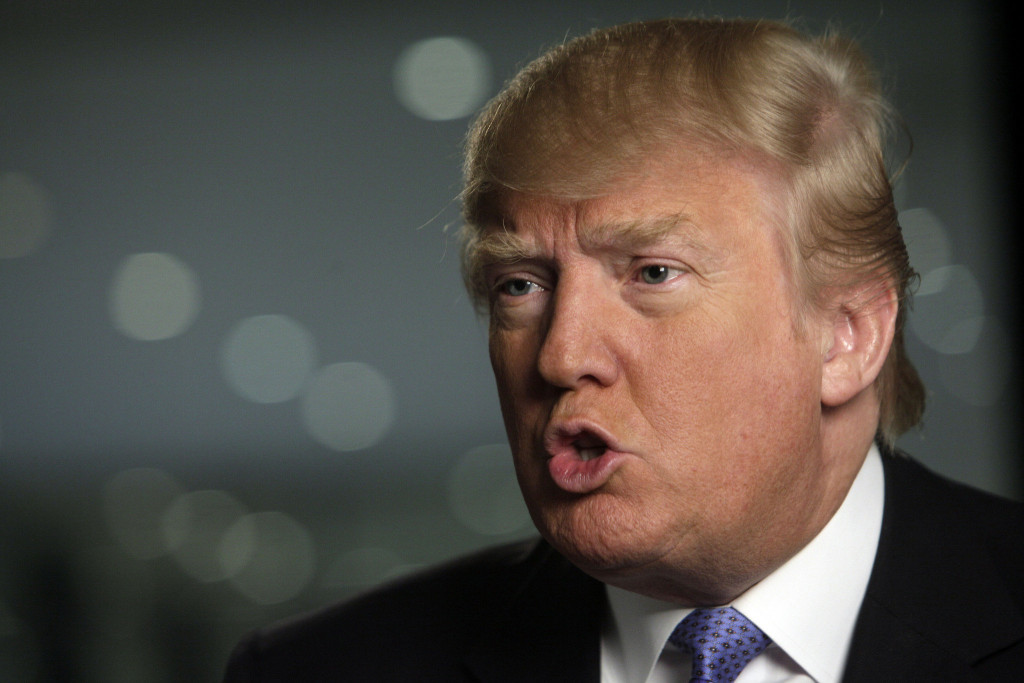
With at least three months to go, the mainstream press (once again) is writing the obituary of GOP nominee Donald Trump’s bid for the White House. Trump has lately endured withering criticism on a number of fronts: The controversy continued over his sarcastic remarks about the bereaved parents of a killed Muslim American soldier who spoke against him at the Democratic convention. President Obama, among others, called him “unfit” to be president. A number of Republican candidates and donors across the nation were expressing bootstrap angst about Trump’s impact on GOP campaigns or were just endorsing Hillary Clinton (and Bill too). Even his wife’s erotic lesbian poses as a young model were front-page news in New York. All that, in turn, was being touted as the beginning of the end of his campaign. The BBC News item “Trump campaign teeters on the brink” began by stating: “Like a boxer on the ropes, the Trump campaign has weathered a flurry of body blows over the past few weeks. Is this the beginning of the end, a full three months before Election Day? Should Donald Trump throw in the towel before the inevitable November knockout?” But Donald Trump’s campaign — and his political revolution too — is far from being kaput. It’s just wishful thinking by a press and political establishment that hates him and all he stands for to mark Trump’s downfall. It’s a regrettable failure to recognize the potency and Teflon durability of Trump’s ShockReality brand of politics (see my article last August: “Donald Trump “phenomenon” defines new age of American ShockReality politics”). Beating conventional wisdom, Trump is the anti-politician who has a knack for connecting at a rudimentary level to a majority of Americans by bombastically exploiting their frustrations with their politically correct and inept government and politics. According to plan, Americans continue to be bombarded daily with incredulous negative articles and continuous talking heads bemoaning him — but they all have Donald Trump on their lips and in their headlines. So, as it was during his primary run, bad news is good news for Trump — his focus continues to be that Americans solely hear his name and that news is made by his politically incorrect tweeting and speeches. Here’s another epic mistake made by his opponents: You can’t begin to analyze the race between Trump and Clinton (and Bill too) like past contests for the White House. This is a presidential campaign far from being like any other — and one that will change American politics forever. Forget what any poll says. Unless they are leftover teabaggers, many of those supporting Trump (especially Democrats) will never admit to a biased pollster, much less even best friends or family members, that they will be secretly voting for Trump, or against Clinton (and Bill too), in November. The reality of the 2016 campaign is that a good majority of Americans have already decided who they are voting for, or against, for president. And they are not changing their minds, no matter what. It’s the Election of Dissatisfaction, pure and simple. As absurd as it is, Donald Trump can and will continue to test the boundaries of decency and truth to win the votes a majority of angry Americans — that strategy will, in turn, win him the needed votes in the Electoral College in both critical battleground — and what were once traditional red and blue — states too. The best thing the mainstream press can do at this point if they gleefully want to write the Trump campaign obituary is to starve the fire-breathing proverbal dragon by not overindulging, or even reporting, on Trump’s hyperbolic messaging and behaviors. The fewer the Trump headlines and talking points, the better for both entrenched Republicans and Hillary Clinton (and Bill too). ___ Steven Kurlander blogs at Kurly’s Kommentary (stevenkurlander.com) and writes for FloridaPolitics.com and The Huffington Post and can be found on Twitter @Kurlykomments. He lives in Monticello, New York.
