
Judge orders Hillary Clinton to answer questions on email use
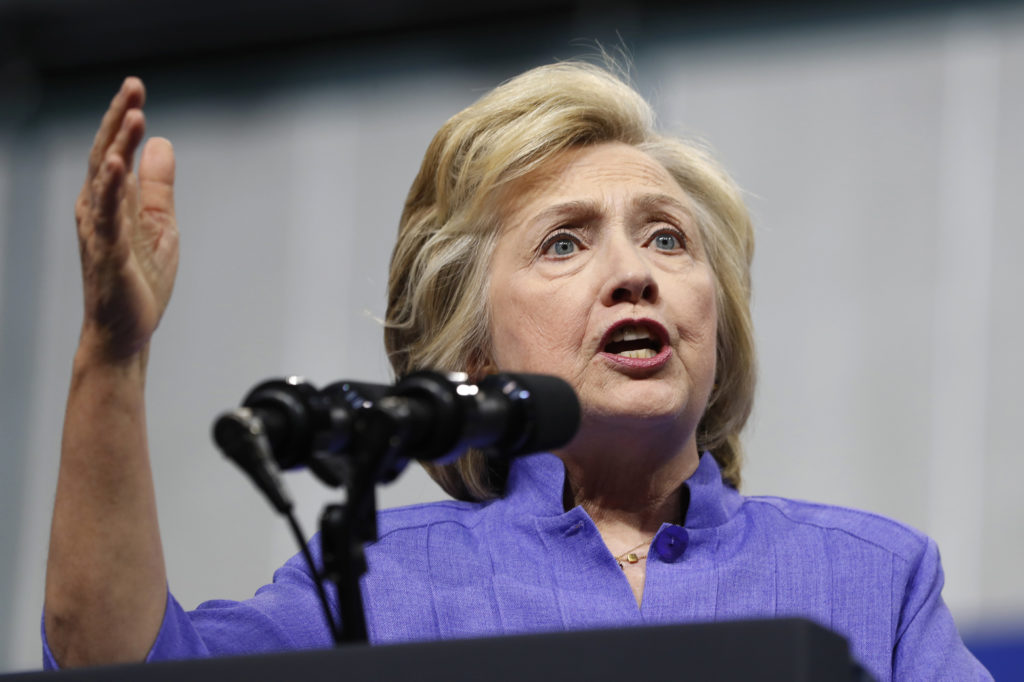
A federal judge on Friday ordered Hillary Clinton to answer questions in writing from a conservative legal advocacy group about her use of a private email server during her tenure as secretary of state. U.S. District Court Judge Emmet G. Sullivan issued the order as part of a long-running public records lawsuit filed by Judicial Watch. The judge’s decision is only a partial victory for the group, which had sought to question the Democratic presidential nominee in person and under oath. The judge said Judicial Watch must submit its questions to Clinton by Oct. 14 and gave Clinton 30 days to respond – a timetable that could push Clinton’s answers past the November presidential election unless Judicial Watch sends its questions earlier than mid-October. Judicial Watch is among several groups, including The Associated Press, that have sued the State Department over access to government records from Clinton’s tenure as the nation’s top diplomat between 2009 and 2013. Republicans are pressing to keep the issue of Clinton’s email use alive after the FBI closed its investigation last month without recommending criminal charges. In a separate development Friday, former Secretary of State Colin Powell said he once sent Clinton a memo touting his use of a personal email account for work-related messages after she took over at the State Department in 2009. In a statement provided to the AP, Powell said he emailed Clinton describing his use of a personal AOL account for unclassified messages while leading the State Department under President George W. Bush. Powell, a Republican, said he told Clinton his use of personal email “vastly improved” communications within the department, which at the time did not have an equivalent internal system. Powell said the FBI may have obtained a copy of his memo to Clinton during its yearlong investigation into Clinton’s use of a private email server to handle sensitive information during her time as secretary. It was not immediately clear whether Powell’s email to Clinton was among the documents from its case file shared earlier this with select congressional committees at the request of House Republicans. Powell, a retired Army general and former chairman of the Joint Chiefs of Staff, said he used a secure computer on his desk at the State Department to manage classified information. Unlike Clinton, Powell relied on a commercially available service to host his personal email account. Clinton’s private server was located in the basement of the New York home she shared with her husband, former President Bill Clinton. Powell issued the statement after veteran political journalist Joe Conason released an excerpt from his upcoming book about Bill Clinton that recounts a 2009 dinner party for Hillary Clinton hosted by former Secretary of State Madeleine Albright. Powell was in attendance, along with other former secretaries including Henry Kissinger and Condoleezza Rice. During dessert, Powell advised Clinton to use a personal email account while in office, as he had done, according to the passage from the book “Man of the World: The Further Endeavors of Bill Clinton” provided to AP. Powell reportedly told Clinton that his use of personal email to communicate with his staff had been “transformative for the department.” According to Conason’s retelling, Clinton replied that she had already decided to continue using the private server in her home she had relied on during her 2008 presidential bid. The Clinton campaign declined to comment on whether the account of the dinner conversation described in Conason’s book is accurate. In his statement, Powell said he has “no recollection” of his purported dinner conversation. Republished with permission of the Associated Press.
Analysis: For at least this week, Donald Trump playing to win

Donald Trump‘s turbulent summer has been shadowed by a nagging question: Does the Republican nominee actually want to win the presidency? For at least this week, Trump answered with an emphatic yes. He moved to steady his struggling campaign with a late-in-the-game staff shakeup, replacing controversial campaign chair Paul Manafort with a veteran pollster and a conservative media executive who shares his populist views. He delivered a series of more formal speeches, unheard of for a candidate who prefers unscripted rallies. And in an address Thursday evening, he uncharacteristically volunteered that he regretted some of his caustic comments – though he notably did not specify which ones. “Sometimes in the heat of debate and speaking on a multitude of issues, you don’t choose the right words or you say the wrong thing. I have done that,” Trump said during his appearance in Charlotte, North Carolina. “And believe it or not, I regret it – and I do regret it – particularly where it may have caused personal pain.” Taken together, the moves suggest a candidate still straining for a way to win a White House race rapidly slipping out of his reach. Opinion polls show Trump trailing Democrat Hillary Clinton nationally and in key battleground states less than three months from Election Day and just weeks before early voting begins in some locations. There’s no certainty Trump’s shifting strategy can reverse that trend. It’s not even clear whether Trump can maintain this new posture through the weekend. If his previous attempts at a “pivot” are any indication, the odds are low. But what if Trump really is in the midst of a lasting reset? The grim reality for the businessman is that it may not be enough to help him make up the significant ground he’s lost. Clinton’s campaign has spent the summer flooding the airwaves with television ads, building out field operations in the states and attracting Republican support. Trump, meanwhile, has made little effort to reach out to new voters or capitalize on Clinton’s vulnerabilities, including the FBI director’s criticism of her email practices. His attempts at rolling out policy proposals have been overshadowed by numerous controversies of his own making, none more damaging than his feud with an American Muslim family whose son was killed in Iraq while serving in the military. According to a recent Washington Post-ABC News poll, just 33 percent of registered voters believe Trump has the temperament to be president – a damning assessment that won’t be reversed by a few staffing changes and a conciliatory speech. Trump’s inability to course-correct has caused some political observers to question whether the real estate mogul actually wants to win the election and spend the next four years as president. There’s speculation he’s eying starting a media business after the campaign. He’s even raised the prospect he might lose, saying he would go on a “very, very nice long vacation.” But the businessman’s willingness to at least entertain a new approach at this stage of the campaign suggests he’s not ready for that vacation just yet. Indeed, the blueprint Trump has stuck to for much of this week has the potential to resonate with voters deeply frustrated with Washington and career politicians. He’s emphasized his outsider credentials, casting his missteps as a consequence of his lack of political polish. He’s focused on his core message of boosting security by tightening immigration laws, both in speeches and in his first television ad of the general election. And he’s stepped up his focus on Clinton, casting her as a dishonest agent of Washington. “Trump, to his credit, wants to run a truly deep race of contrasts,” former House Speaker Newt Gingrich, a Trump ally, said of the GOP nominee’s goals for the coming weeks. The relative steadiness of Trump’s message was all the more surprising given that one of the staffing changes he made this week was bringing on Stephen Bannon, the combative head of Breitbart News, a pro-Trump website that frequently targets Republican leaders and promotes false conspiracy theories about Clinton. Bannon’s hiring was seen as a signal Trump would double-down on some of his more controversial impulses, though that hasn’t proven to be the case in the first few days of their new partnership. Republicans inside and outside the campaign give much of the credit for Trump’s stronger week to Kellyanne Conway, the new campaign manager. Conway has gained Trump’s trust and is seen as someone who can communicate campaign weaknesses to the businessman better than Manafort, who irritated Trump with his emphasis on moderating in the general election. Conway, in an interview on ABC, insisted it’s Trump who is driving the reboot. “All the people who have been saying, ‘Let’s get Trump to pivot, let’s get him to be more presidential.’ That is presidential,” she said. Republished with permission of the Associated Press.
In spite of email controversy, Hillary Clinton holds edge over Donald Trump
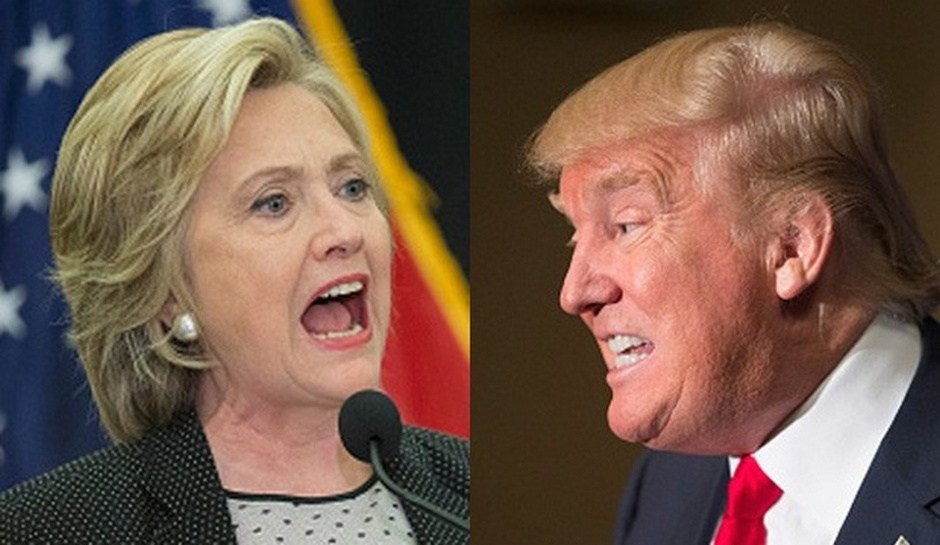
Hillary Clinton can’t seem to escape her use of a private email server as she runs for president. But faced with the choice of Donald Trump, voters seem willing to tolerate the questions it raises about Clinton’s honesty because of their distaste for the Republican nominee. This week, it was the FBI’s delivery to Congress of notes from its investigation into Clinton’s email habits that put one of the most uncomfortable parts of her State Department tenure back in the headlines. It’s an issue unlikely to go away: At hearings planned for next month, Republicans in Congress say they’ll ask FBI officials whether those notes indicate she may have lied to lawmakers in response to questions about her handling of classified material. Yet for all the attention the emails get, recent preference polls show Clinton with a solid and steady lead over Trump in a series of competitive battleground states. Voters also give her higher marks on her readiness for the White House and handling of foreign policy. Those same polls show that much of the public doesn’t like Clinton and find her untrustworthy, and she has acknowledged as much. But it’s worse for Trump, and compared with the billionaire, the perceptions of dishonesty the public has of Clinton appears to be an attribute many Americans are willing to live with. “All of this calculation over the emails will probably be drowned out by the determination that he’s not fit to be president,” said Matt Bennett, once an aide to former Vice President Al Gore and a senior vice president at the centrist think tank Third Way. Should Clinton win the election, questions about her honesty are likely to trail her into the White House and could complicate her ability to push through a policy agenda. It’s a political challenge that mirrors the one her husband, former President Bill Clinton, faced nearly a quarter century ago. As a candidate, Bill Clinton was dogged in 1992 by questions about his honesty, but voters ultimately viewed him as a better caretaker of the economy, which had stumbled during President George H.W. Bush‘s administration. “It will be a challenge,” said Mickey Kantor, a longtime Clinton supporter who chaired his 1992 campaign. “He overcame it and was re-elected. She can overcome it. Not easily, but she can overcome it.” The tone Hillary Clinton sets during a transition and inauguration will likely be key to potentially improving her image, said Chris Lehane, who worked in opposition research in her husband’s administration. “You’ll have a moment there where potentially people will be interested in getting what you rarely get in life, a second look,” he said. According to polls conducted by Gallup, her favorability ratings have fallen from a high of around 65 percent during her tenure as secretary of state to just over 40 percent after the Democratic convention, a historic low for a presidential candidate, surpassed only by Trump. “She will have a significant challenge in persuading the voters of the country that she is indeed honest and trustworthy,” said Republican pollster Whit Ayres, who worked for GOP primary candidate Marco Rubio’s presidential bid. “A great many people will vote for her because they can’t stand voting for Donald Trump. But she’ll still have work to do.” Old Clinton hands see echoes of their strategy in Hillary Clinton’s approach. In early 1992, voters knew Bill Clinton as an Ivy League graduate who avoided serving in Vietnam and had been accused of extramarital affairs, said Paul Begala, a key strategist for the then candidate who now works for the main Democratic super PAC supporting Hillary Clinton’s White House bid. Their goal was to expand public perceptions of Bill Clinton to encompass other, more positive facts, such as his poor upbringing, difficult family life, college scholarships and decision to return to Arkansas as a public servant rather than accept a high-paid corporate job. In 2016, Clinton’s campaign, says Begala, has similarly tried to fill out her public image. It has run ads highlighting her mother’s abusive childhood and Clinton’s early commitment to helping women and children as a legal advocate, while much of the Democratic convention was devoted to Clinton’s personal biography. “Sure, she has had Secret Service protection since she became first lady in 1993 – she needs it. But she was not born in the White House,” Begala said. Clinton and her campaign attribute much of her low approval ratings to a belief that voters like Clinton more when she’s working than campaigning, a view that they say is intertwined with the scandals of her husband’s administration, years of relentless GOP attacks and how Americans view female candidates. But in recent weeks, they’ve preferred to focus on the failings of their opponent. “He’s been unraveling for weeks, since the convention,” Joel Benenson, Clinton’s chief strategy said Thursday in an interview with MSNBC. “He’s a failed candidate and failing campaign.” But even Clinton admits that fixing her trust problem will take time. “I’ve made mistakes. I don’t know anyone who hasn’t. So I understand people have some questions,” Clinton told black voters at a June luncheon in Chicago. “You can’t just talk someone into trusting you. You’ve got to earn it.” Republished with permission of the Associated Press.
Andrew A. Yerby: Looking at the lottery math
“Which is the most immoral,” Gov. Robert Bentley mused philosophically to the press last week, “buying five lottery tickets with money you earned or allowing a child to die?” A state lottery in Alabama is “the only real choice,” he warned ominously. “There is no plan B.” Gov. Bentley was making an extremely serious argument, to wit: children would die if Alabama did not approve a state lottery. The argument is of such seriousness that one would assume he had scrupulously studied the numbers to arrive at such a dire determination. And, indeed, Gov. Bentley has adumbrated as much through his confident pronouncements about a state lottery to the people of Alabama. “The time has come for us to find a permanent solution,” he stated in his remarks announcing the 2016 Special Session, explaining that a lottery could “provide funding that we can count on year after year.” The revenue he said would result was astounding. “An Alabama lottery,” he claimed, “is expected to generate approximately $225 million annually.” Even more astounding, he said that the amount was merely the minimum — an intentional underestimation on his part, reflecting his fiscal prudence. “We wanted to put a low number in there to begin with,” Gov. Bentley explained, “but we feel like that it will generate at least that amount.” He declared his lottery proposal would prove “a means through which we can get $225 million to $300 million” per year. There was, however, an unanswered question. “How did you determine $225 million?” a reporter finally asked late last week. Gov. Bentley’s answer was revelatory: “Actually, my, uh, Executive Business [sic] Office, uh, worked, uh, on this. They looked at other states our size.” Those two sentences are, in fact, an accurate précis to how the determination was made. The methodology underlying the $225 million calculation can be described in a single sentence. The Executive Budget Office picked four states — Arkansas, Louisiana, Kentucky, and South Carolina — averaged the per capita lottery revenue of those four states, and multiplied that average by the population of Alabama. Yet, those four states are not all that comparable to Alabama, aside from having similar per capita personal incomes — which tells us how much money people have to spend, but not what they are likely to spend it on (e.g., Alabama and Louisiana might only be separated by one state, but each is worlds apart in myriad ways)–and they certainly are not the most comparable states to Alabama out of others that could have been chosen. The calculation is unsophisticated, unreliable, and untruthful as employed by Gov. Bentley. We can, therefore, make short work of both of Gov. Bentley’s claims. First, his claim that a lottery would be a “permanent solution” to the state’s budget problems by bringing in “at least” $225 million is conclusively false. No reasonable person could have honestly made those declarations based on a mere one year of data from a mere four states. Second, his claim that children would die unless a lottery were approved is manifestly false. No reasonable person who truly believes that human lives hang in the balance would be so reckless as to not be thorough in studying whether a lottery would actually bring in the revenue necessary to save those lives. Both claims are, in short, sophistry. ••• Andrew A. Yerbey is Senior Policy Counsel for the Alabama Policy Institute. API is an independent, nonpartisan, nonprofit research and educational organization dedicated to the preservation of free markets, limited government, and strong families.
Alabama unemployment rate lowest since 2008
Alabama’s total unemployment rate continued to fall in August, dropping to 5.7 percent from the June rate of 6.1 percent, according to data released Friday by Gov. Robert Bentley‘s office. July’s rate represents 123,095 unemployed persons, compared to 130,298 in June and 130,098 in July 2015. “We continue to see decreases in Alabama’s unemployment rate, and increases in both of our employment measures over the year, which is a testament to the strong economic development efforts we have prioritized,” Bentley said in a news release. “We haven’t seen an unemployment rate this low in eight years. Not only did the rate decrease since last month, there are also nearly 28,000 more people working this year than there were last year.” “July registered the fewest number of unemployed people since 2008 and the good news also trickled down to the counties this month as well,” Alabama Department of Labor Secretary Fitzgerald Washington said. All major Alabama cities, metro areas, and 66 Alabama counties experienced drops in the unemployment rate. Fitzgerald continued, “Every county in Alabama saw its rate decrease over the month, and 66 of 67 counties saw their rates decrease over the year, some by more than two percentage points. This is excellent news!” Counties with the lowest unemployment rates are: Shelby County: 4.2% Elmore County:4.7% Baldwin County: 4.8% Counties with the highest unemployment rates are: Wilcox County: 14.3% Perry County: 12.1% Clarke County: 11.4%
Paul Manafort to resign from Donald Trump campaign
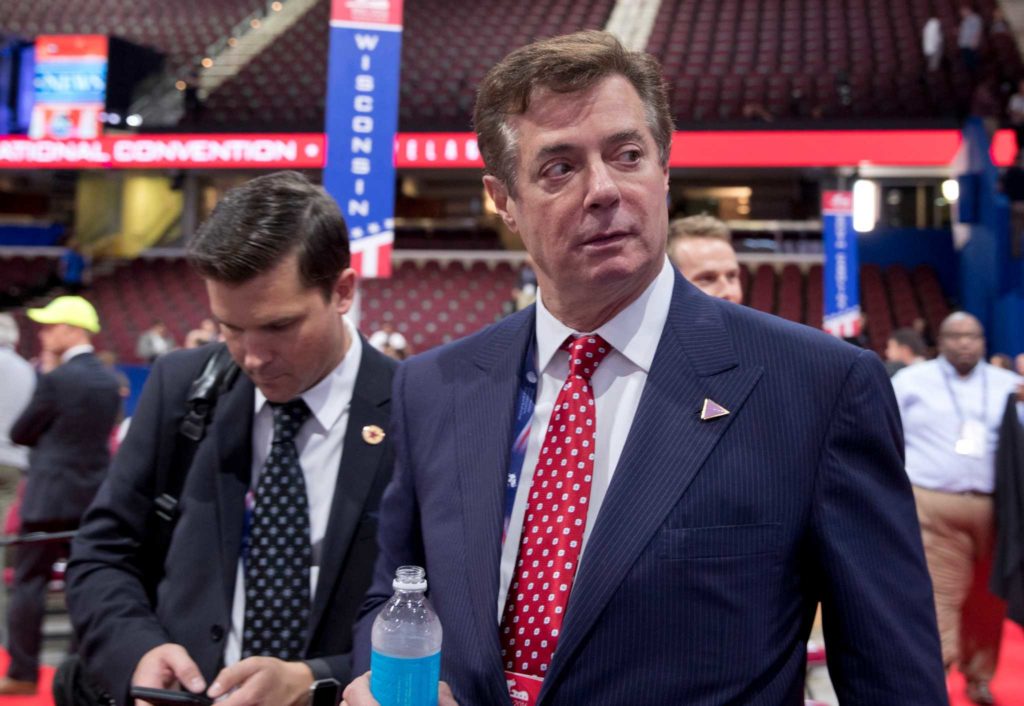
Donald Trump’s campaign chairman Paul Manafort is resigning from the campaign. In a statement, Trump praised Manafort’s work on the campaign and called him a “true professional.” Manafort is stepping down in the wake of a campaign shake-up, as well as revelations about his work for a pro-Russian political party in Ukraine. According to the statement from Trump’s campaign: “This morning Paul Manafort offered, and I accepted, his resignation from the campaign. I am very appreciative for his great work in helping to get us where we are today, and in particular his work guiding us through the delegate and convention process. Paul is a true professional and I wish him the greatest success.” Republished with permission of the Associated Press.
Donald Trump to travel to flood-stricken Louisiana
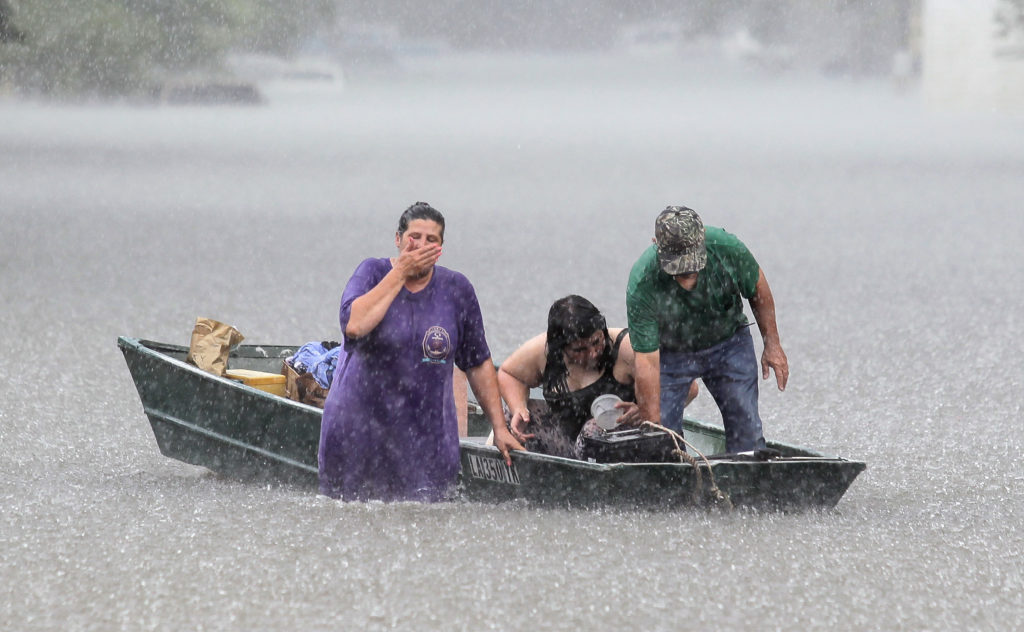
Donald Trump will tour the flood damage in ravaged Louisiana on Friday, but was quickly warned by a spokesman for the state’s Democratic governor not to come merely for a photo-op. A campaign official familiar with the plans says the GOP nominee and his running mate Mike Pence will travel to the state on Friday. The person spoke on the condition of anonymity to discuss the plans before they were officially announced. At least 13 people have died as a result of the flooding, and at one point 11,000 were in shelters. Trump said at a rally Thursday that his prayers are with the people affected. However, Louisiana’s governor’s office said later it had not been contacted by the Trump campaign concerning a possible tour of the state’s flood damage. Richard Carbo, spokesman for Gov. John Bel Edwards, says Trump “hasn’t called the governor to inform him of his visit.” The spokesman said Mr, Trump is welcome to Louisiana, “but not for a photo-op.” Republished with permission of the Associated Press.
Conservative presidential candidate Evan McMullin fails to make Alabama ballot
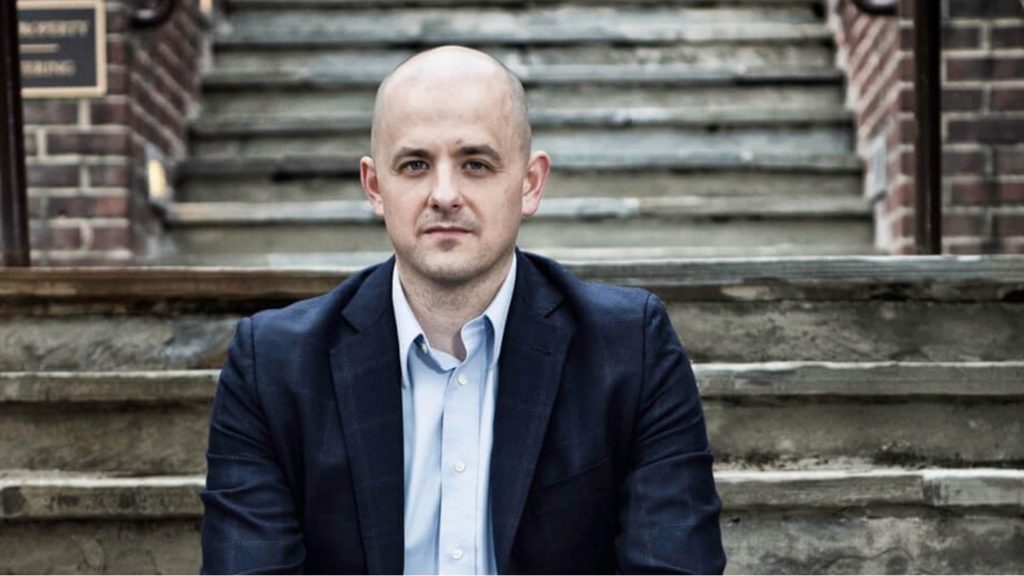
Evan McMullin will not be on the ballot in Alabama. POLITICO reports the newly announced conservative independent presidential candidate failed to submit required signatures for a spot on Alabama’s general election ballot The deadline for independent candidate filing, writes Caroline Kelly, was 5 p.m. Thursday, as verified by the Alabama secretary of state’s office. “We haven’t gotten any, none at all,” said Deputy Chief of Staff John Bennett of McMullin signatures. Bennett confirmed the office did receive signatures for Libertarian candidate Gary Johnson, Green Party candidate Jill Stein, and Rocky de la Fuente, running on the Reform Party ticket. Signatures of registered Alabama voters still need verification before the final results are announced, Bennett told POLITICO. Although McMullin will be on both the Colorado and Utah ballots, the former CIA employee failed to make nearly one-third of the 24 states with remaining deadlines. Thursday was also the deadline for Tennessee, which required 250 signatures, but Secretary of State Director of Communications Adam Ghassemi could not confirm to POLITICO that McMullin, who had announced his candidacy last week, had submitted any signatures. Filing deadlines are Friday for Iowa and Louisiana.
Martin Dyckman: Supreme Court nominees no reason to elect Donald Trump
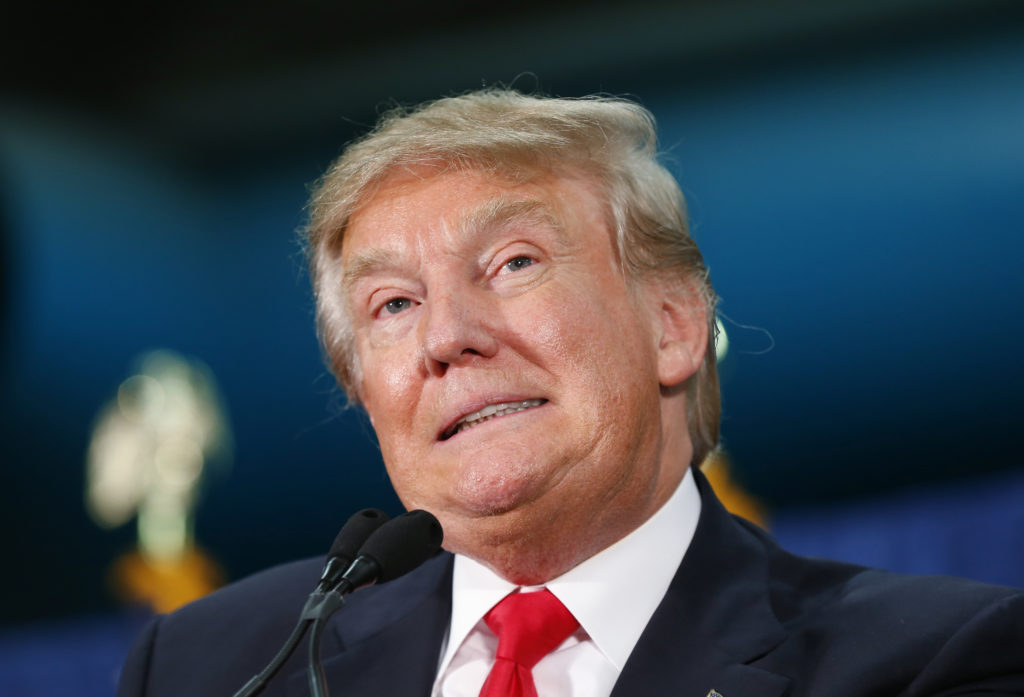
Some Republicans to whom Donald Trump is the skunk at their garden party would have you elect him president nevertheless. Mark Sanford is one. When last heard of, he was the governor of South Carolina, canoodling with a mistress in Argentina while his office pretended that he was hiking the Appalachian Trail. Now he’s a congressman, and he had an op-ed in The New York Times last week (Aug. 14) strongly criticizing Trump for refusing to release his tax returns. Trump’s obstinacy “will have consequences,” Sanford said. It “would hurt transparency in our democratic process, and particularly in how voters evaluate the men and women vying to be our leaders. “Whether he wins or loses, that is something our country cannot afford.” Hear, hear. But Sanford also hedged his bets. “I am a conservative Republican who, though I have no stomach for his personal style and his penchant for regularly demeaning others, intends to support my party’s nominee because of the importance of filling the existing vacancy on the Supreme Court, and others that might open in the next four years,” he wrote. There you have it. To Sanford, keeping Hillary Clinton from appointing new justices is worth letting everything else go to hell. The government, the country, maybe the world and certainly the court. Trump might even nominate his conspicuous Florida cheerleader Pam Bondi. Sanford isn’t the only Republican who has sold out for fear of a liberalized Supreme Court. That’s probably a factor with Paul Ryan, Mitch McConnell and John McCain too. Independents and die-hard Hillary-hating Democrats need to pay attention. If they don’t vote for her, they could have themselves to blame for making the Supreme Court a right-wing rat hole for another generation. Republicans want a court that would uphold their state-by-state voter suppression schemes, shut its eyes to maliciously partisan gerrymandering, and make it impossible rather than merely difficult to sue people like Trump for consumer fraud, environmental pollution and other white collar crimes. The Citizens United atrocity would continue to leave Congress in the grip of the Koch brothers and their allied oligarchs. Clinton vows to appoint justices who would repeal that monumentally bad Supreme Court decision. Trump doesn’t make that promise. He does, however, assure the religious right that his justices would repeal Roe v. Wade. Exacting such commitments from future judges is another of those developments the Founders didn’t anticipate. They had the idealistic, if naive, view that integrity and competence would govern who got appointed. But we have to take the world as it is, and there’s no shortage of capable lawyers who have declared that Citizens United was wrongly decided. Four of the justices at the time said so too. The court has a history of renouncing prior decisions as wrongly decided or simply no longer applicable. It trashed two precedents in Citizens United. Although Justice Anthony Kennedy’s majority opinion more or less rationalized that full disclosure would restrain corporate election spending, that hasn’t happened. Dark money by the billions is sinking the ship of state. And in South Dakota, the Kochtopus is fiercely fighting a ballot initiative that would require public disclosure of donors to advocacy campaigns, create a state ethics commission and provide public financing of political campaigns. Fortunately, there are Republicans who disagree that the court is reason enough to sacrifice everything else. John Yoo and Jeremy Rabkin, law professors in California, are two of them. Writing in the Los Angeles Times Aug. 14, they described the dangerous world we live in and warned that a Trump presidency “invites a cascade of global crises.” Moreover, they argued, conservatives should not take Trump’s word that he would appoint suitable justices or that the Senate would confirm them. “Even if Trump were to win in November, it is in the legislative and executive branches that conservatives will have to win their most important battles,” they wrote. “Does Trump look like the man to lead them?” Yoo’s opposition is really noteworthy. He was the deputy attorney general in the George W. Bush administration who wrote the notorious memos condoning extreme methods of interrogating terrorism suspects, including waterboarding. That’s a form of torture that Trump is salivating to resume. If even Yoo can’t stomach Trump, what does that tell us? ___ Martin Dyckman is a retired associate editor of the newspaper now known as the Tampa Bay Times. He lives in suburban Asheville, North Carolina.
